
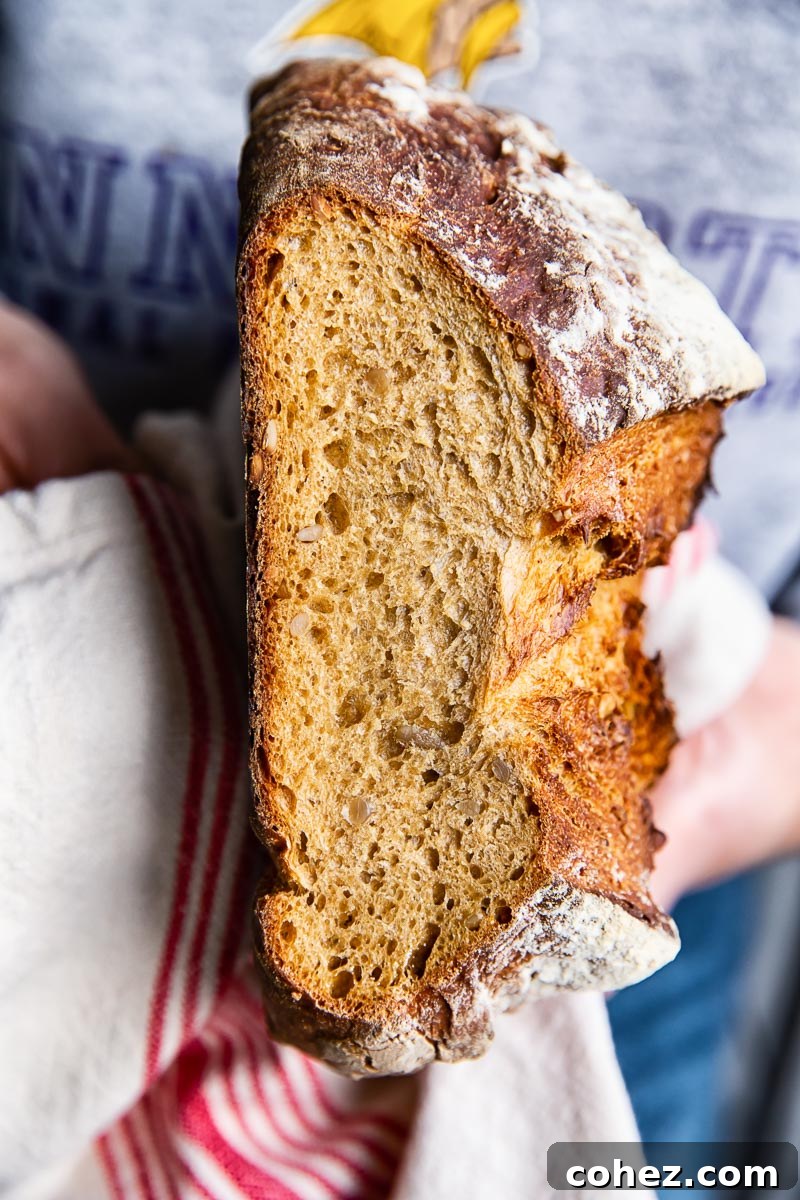
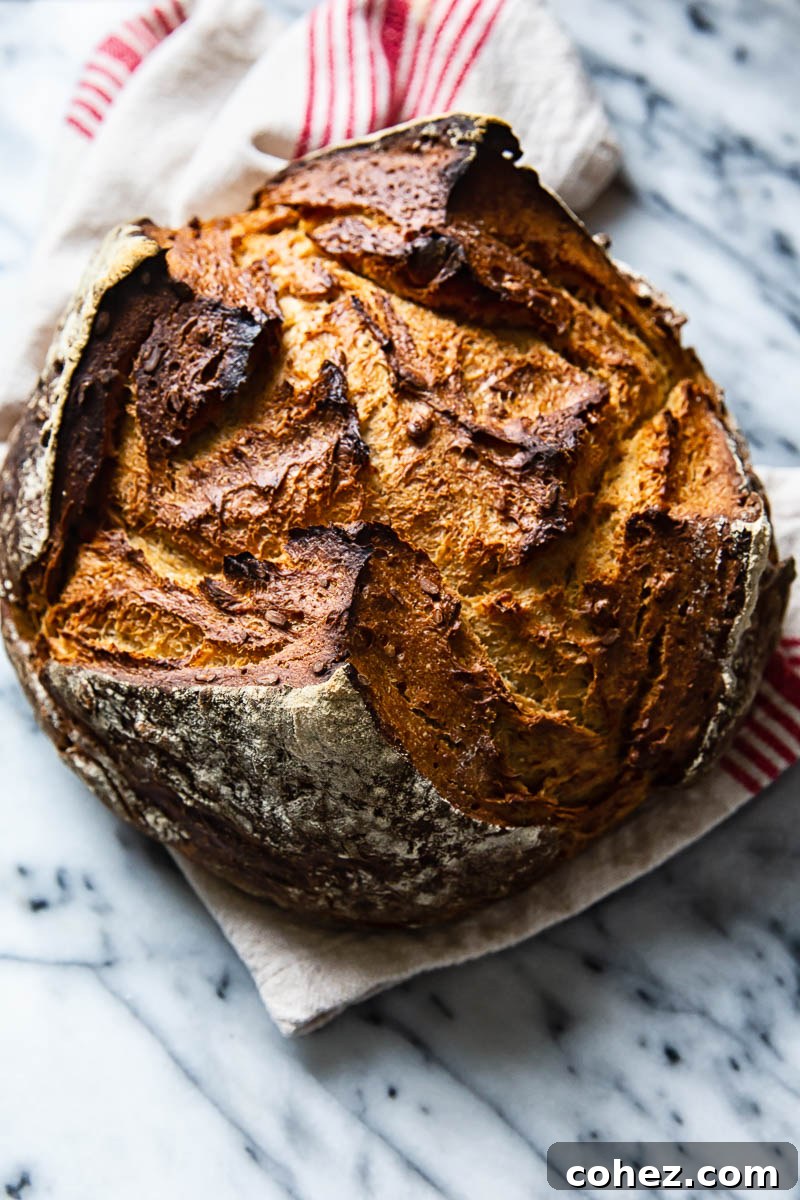
Embark on a delightful baking journey and conquer the art of homemade rye bread with this comprehensive, step-by-step guide. Baking with rye flour unlocks an exciting new realm of flavors, textures, and aromas that will elevate your bread-making skills. We’ve meticulously tested and refined this recipe multiple times, ensuring your success in creating a truly exceptional loaf.
For those eager to explore more delicious homemade bread recipes, be sure to check out our popular No-Knead Farmhouse Bread, a perfect starting point for any aspiring baker.
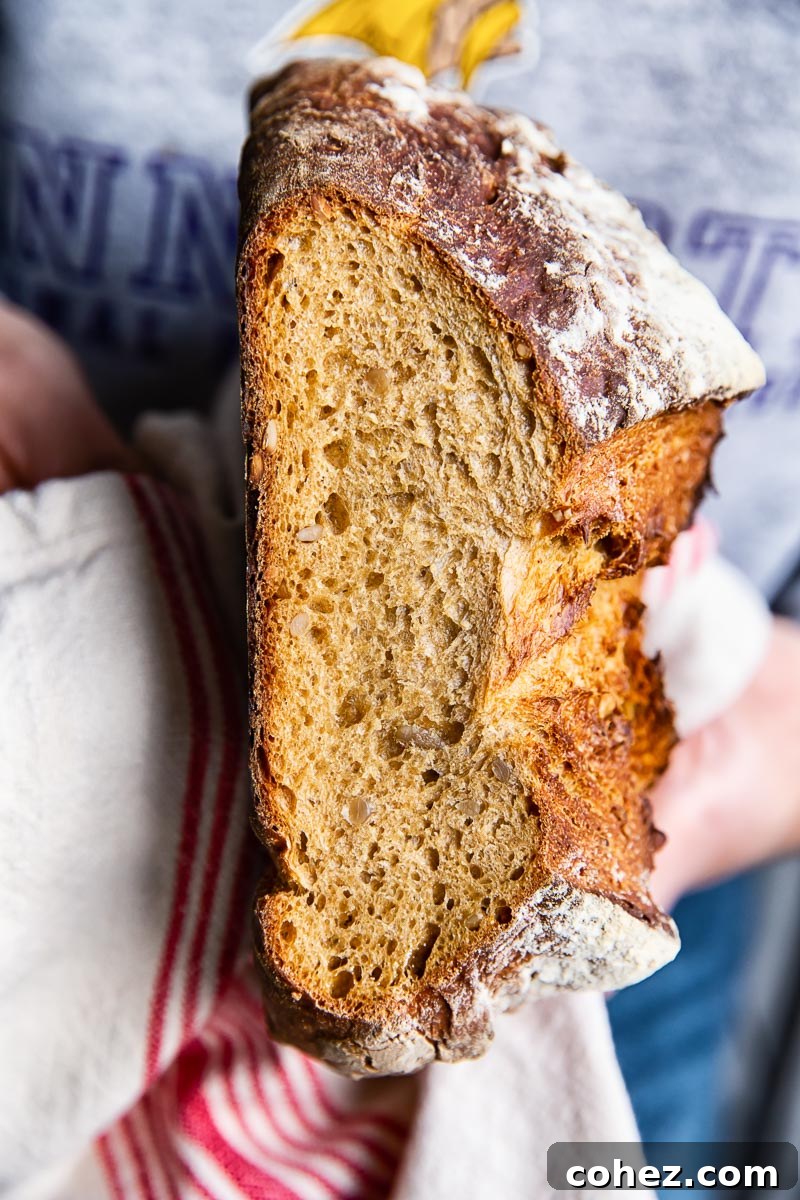
Master the Art of Homemade Rye Bread: A Step-by-Step Guide to Baking with Rye Flour
It feels like a lifetime ago that we first ventured into the world of bread making, though it’s only been five years. In that relatively short span, we’ve transformed from hesitant novices to confident bakers, regularly experimenting with a diverse range of flours. Our kitchen has seen the delights of spelt flour and the rustic charm of buckwheat flour. Today, we’re thrilled to present a recipe that has been a long-standing desire: a magnificent loaf crafted with the distinctive character of rye flour.
Developing a recipe for truly authentic and delicious dark rye bread has been a passion project, particularly for Julia, who grew up in Russia where this robust and flavorful bread is a staple. Despite our enthusiasm, we initially felt intimidated by the perceived complexities of baking with rye flour. Rumors of its difficulty often circulated, making us hesitant to dive in. However, we’re here to demystify the process and share our findings – dispelling those myths and proving that baking with rye flour can be a truly rewarding experience for home bakers.
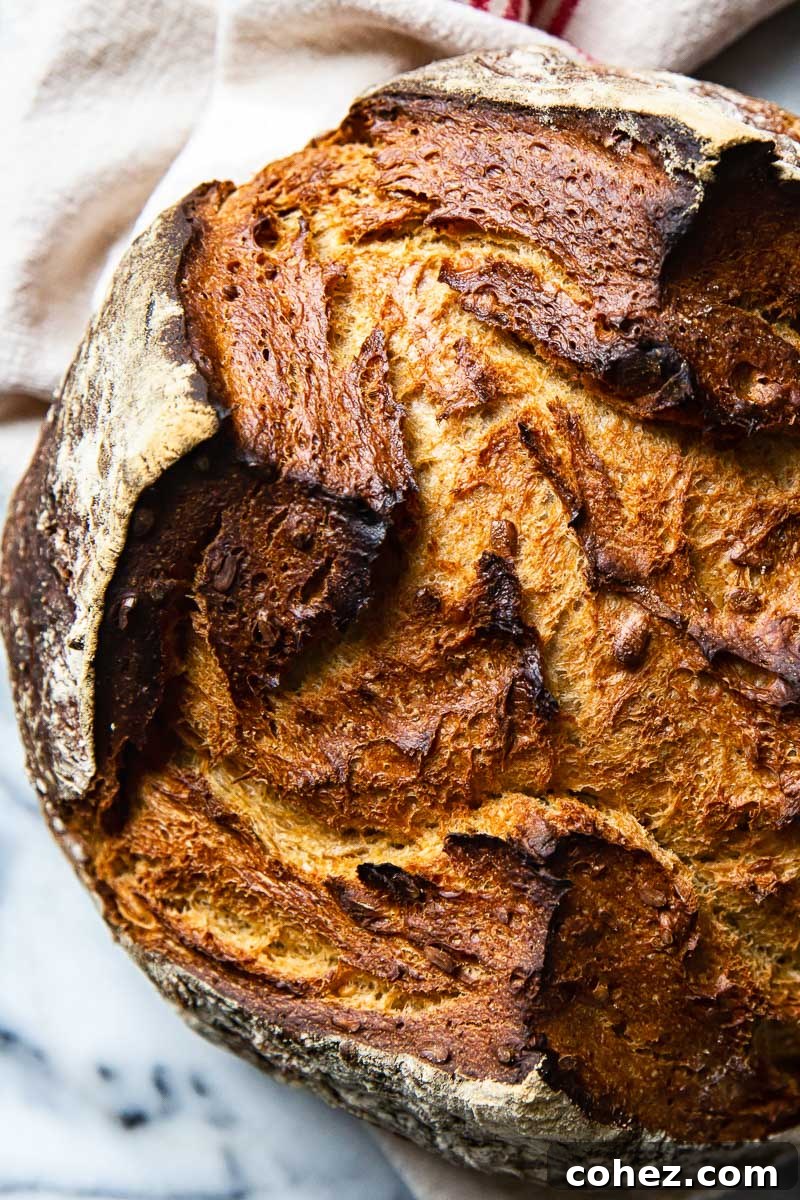
The Allure of Dark Rye Bread: Flavor, Texture, and Cultural Roots
Before diving into our specific recipe, it’s important to understand the broad spectrum of rye breads available globally. Baking with rye flour is a cherished tradition across many cultures, from the Nordic countries and Germany to Russia and other Eastern European nations. While there’s a shared appreciation for rye’s distinctive taste, the variations in recipes are endless, differing in flour proportions, baking methods, and the unique ingredients added to enhance their profiles.
Rye flour itself comes in various types, with light and dark being the most common. We conducted extensive tests with both and ultimately settled on light rye flour for this particular recipe. Our preference stemmed from a desire for a softer, less dense crumb that still retained rye’s characteristic flavor without becoming excessively heavy. This choice allows us to achieve a beautiful balance between traditional rye taste and a more approachable texture for many home bakers.
What Gives Dark Rye Bread Its Unique Color and Flavor?
One common misconception is that the deep, rich color of dark rye bread comes solely from the rye flour itself. While rye flour contributes to a slightly darker hue than wheat flour, it’s not the primary source of that signature deep brown. The truly dark color, along with the complex, sweet-sour notes that define classic dark rye, primarily comes from additional ingredients.
In our recipe, barley malt extract and molasses (or black treacle in the UK) are the stars. These ingredients not only impart a stunning deep color but also contribute significantly to the bread’s distinctive, slightly sweet, and earthy flavor. They are essential for creating that authentic dark rye experience. To further enhance the aromatic complexity and evoke the flavors of the famous Russian Borodinsky bread, we also incorporated ground coriander. This spice adds a fragrant, slightly sweet, and utterly delicious note that complements the rye perfectly, making each slice a delightful experience.
Crafting Your Perfect Loaf: A Detailed Rye Bread Recipe Guide
The rye bread recipe we’re sharing today features a balanced blend of light rye flour and white wheat flour, used in equal parts. While it’s certainly possible to bake a loaf made entirely with 100% rye flour, it’s crucial to understand that such a bread will have a dramatically different texture and will require an entirely different recipe and approach. Pure rye bread tends to be much denser, often with a gummy and sticky crumb, which can be a surprise for those accustomed to traditional wheat-based breads.
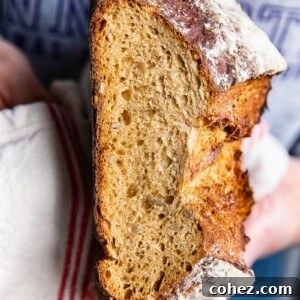
The reason for this difference lies in the gluten content. Rye flour is naturally much lower in gluten compared to wheat flour. Gluten is the protein network responsible for giving bread its elasticity and structure, allowing it to rise and achieve an airy texture. Without the support of wheat flour’s gluten, a 100% rye loaf will not rise as dramatically and will maintain a much heavier consistency. Our recipe, therefore, strikes a harmonious balance: a “hybrid” loaf that marries the beloved taste of the rye bread Julia remembers from her childhood in Russia with the satisfying, hearty texture reminiscent of many European breads. This thoughtful combination ensures a loaf that is flavorful, has a pleasant rise, and is a joy to eat.
To further enhance the texture and add an extra layer of flavor, we love incorporating either sunflower seeds or chopped walnuts into our dough. These additions are entirely optional but they lend a delightful crunch and nutty depth that complements the earthy notes of the rye beautifully. Feel free to experiment with other seeds or nuts that you enjoy, or omit them for a simpler loaf.
Step-by-Step Baking Method for Success
The overall method for our rye bread recipe is surprisingly similar to our popular Dutch Oven Wheat Bread. The beauty lies in its simplicity. You’ll begin by thoroughly mixing all your ingredients together. After mixing, the dough needs time to rise in a warm, draught-free environment. This initial proofing stage is critically important. We’ve observed a noticeable difference in the final bread’s density when the house temperature dropped, emphasizing the need for a consistent, warm spot for your dough to thrive.
While this rye bread recipe does require a small amount of kneading to develop its structure, it’s not an arduous task. If you own a stand mixer, it can easily handle the kneading for you, making the process even simpler. Once kneaded and risen, the dough is then baked in a Dutch oven. We highly recommend this method as it creates a superior crust texture and provides a consistent, steamy environment that significantly aids in the bread’s rise, resulting in a beautifully formed and perfectly baked loaf every time.
Rye Bread and Your Health: More Than Just Delicious
Beyond its incredible flavor and satisfying texture, rye bread offers several notable health benefits. Rye flour is exceptionally rich in essential vitamins and minerals, making it a nutritious choice. In this regard, it stands shoulder-to-shoulder with other wholegrain flours, providing a good source of vital nutrients for your diet.
What truly sets rye flour apart, however, is its naturally higher fiber content. This is a significant advantage, as dietary fiber is crucial for digestive health, helps regulate blood sugar levels, and contributes to a feeling of fullness, which can aid in weight management. Furthermore, as previously mentioned, rye flour is lower in gluten than traditional wheat flour. While not gluten-free, this characteristic can make rye bread a more easily digestible option for some individuals sensitive to higher gluten levels, offering a hearty bread alternative without compromising on flavor or nutritional value.
Perfect Pairings: What Goes Well with Rye Bread?
The versatility of homemade rye bread makes it an outstanding addition to almost any meal. Its robust flavor profile allows it to shine in a multitude of culinary contexts. Serve it proudly in your bread basket at a sophisticated dinner party or as part of a comforting holiday meal, and watch it disappear. It’s also an exceptional choice for sandwiches, adding a depth of flavor that ordinary bread simply can’t match. Imagine a classic reuben or a simple cheese and pickle sandwich elevated by the earthy notes of rye.
Beyond sandwiches, rye bread is a perfect companion for hearty dishes. It pairs beautifully with warming soups, rich stews, and savory casseroles, soaking up all the delicious broths and sauces. For a simpler pleasure, a slice of freshly baked rye bread smeared with a generous dollop of creamy butter is pure bliss. Alternatively, top it with a slice of sharp, aged cheese, some smoked salmon, or a spread of your favorite pâté for an instant gourmet snack. The possibilities are truly endless with this adaptable and flavorful bread.
Explore More Unique Bread Recipes to Expand Your Baking Horizons
Once you’ve mastered this delightful rye bread, we encourage you to venture further into the exciting world of diverse bread recipes. Here are a few more unusual and equally delicious options from our collection that are sure to inspire your next baking adventure:
- Rhubarb Jam Swirled Bread
- Savoury Onion and Poppyseed Buns Bialy
- Russian Easter Bread Kulich
Rye Bread Recipe
Ingredients
- 100ml/1/2cup boiling water
- 3 tbsp black treacle/molasses
- 2 tbsp barley malt extract
- 1 tsp ground coriander
- 240g/2 cups light rye flour
- 240g/2 cups white bread wheat flour
- 7g/2 tsp dry active yeast
- 2 tsp salt
- 50g/1/2 cup sunflower seeds or chopped walnuts
- 2 tbsp vegetable oil or rapeseed oil
- 250ml/1 cup tepid water
Instructions
-
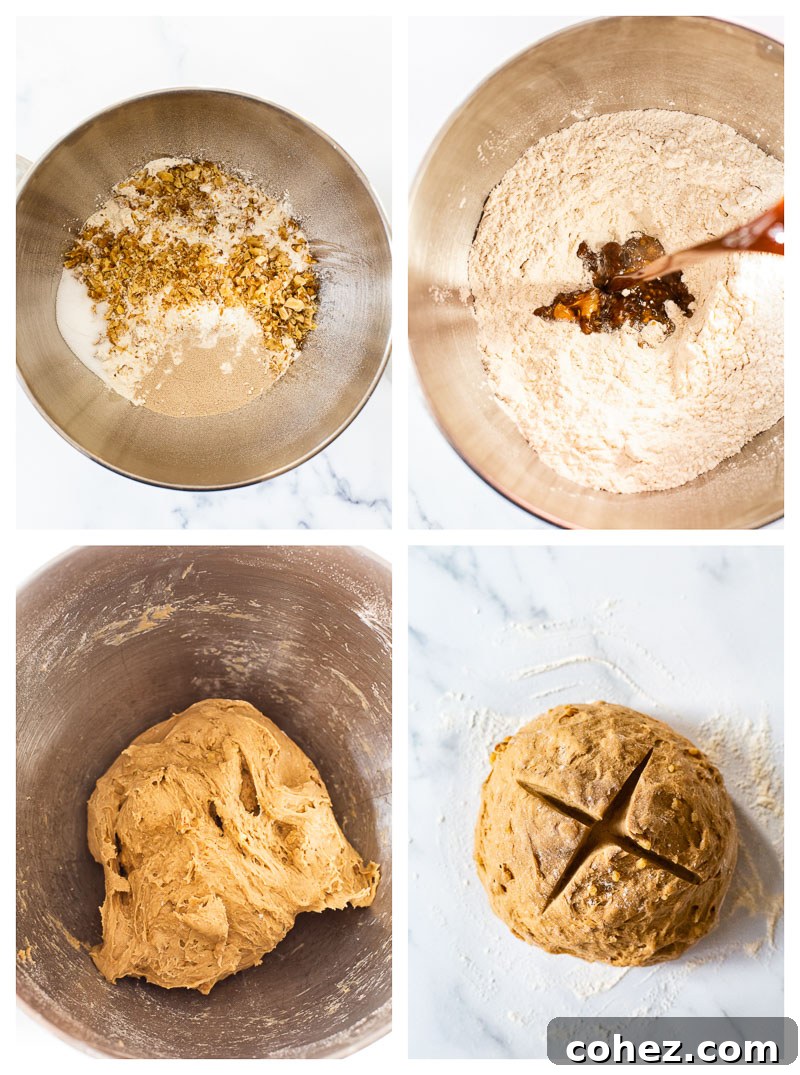
In a measuring cup, combine the boiling water, black treacle or molasses, and barley malt extract; stir until well blended. In a large mixing bowl, thoroughly combine both flours, yeast, salt, ground coriander, and your optional sunflower seeds or chopped walnuts. Create a well in the center of the dry ingredients and pour in the liquid mixture, along with the oil and two-thirds of the tepid water. Mix well, gradually adding more of the remaining water if the mixture seems too dry. The exact amount of water may vary depending on the humidity in your kitchen.
-
Allow the dough to rest for 5 minutes. Then, knead it directly in the bowl for 1 minute. Transfer the dough out of the bowl onto a lightly floured surface and continue kneading for at least 5 more minutes, until the dough is smooth and elastic. Cover the kneaded dough with a clean kitchen cloth and let it rise in a warm, draught-free place for 1.5 hours.
-
Once risen, gently punch down the dough and shape it into a boule (a round ball) using a simple stretch and fold method. Lightly stretch each side of the dough outwards and then tuck it towards the center, repeating until you have formed a taut, round ball. Place the shaped dough seam-side down on a lightly floured surface, sprinkle with a little more flour, cover it again, and let it rise for another hour.
-
While the dough is completing its second rise, preheat your oven to its maximum temperature, typically around 260°C (500°F), with your Dutch oven placed inside to heat up simultaneously.
-
Carefully remove the preheated Dutch oven from the oven. Before placing the dough inside, use a sharp knife or a bread lame to slash a cross on top of the loaf. This helps with even rising and creates a beautiful pattern. Gently transfer the dough into the hot Dutch oven, cover it with its lid, and bake for 20 minutes. After 20 minutes, remove the lid and continue baking for another 15-20 minutes, or until the bread achieves a deep, dark color and the top crust is satisfyingly crispy. Once baked, remove the bread from the Dutch oven and cool it completely on a wire rack before slicing and serving.
Nutrition
Nutrition information is automatically calculated, so should only be used as an approximation.
Tried this recipe?Let us know how it was!
The Journey from Flour to Flavor: Your Rye Bread Story Awaits
Baking homemade rye bread is a deeply satisfying experience, transforming simple ingredients into a rich, flavorful loaf that speaks of tradition and craftsmanship. We hope this guide has not only eased any initial intimidation you may have felt but has also ignited a passion for exploring the unique world of rye flour. From understanding its distinctive characteristics to mastering the simple steps of our carefully crafted recipe, you now have all the tools to create a truly memorable dark rye bread.
Whether you’re sharing it with family, impressing guests at a dinner party, or simply savoring a slice with butter, the aroma and taste of your homemade rye bread will be a testament to your efforts. Don’t hesitate to experiment with the optional additions, adjust spices to your liking, and make this recipe truly your own. We encourage you to embark on this rewarding baking journey, savor every step, and most importantly, enjoy the incredible flavor that comes from baking with rye flour. Happy baking, and we can’t wait to hear about your rye bread triumphs!