
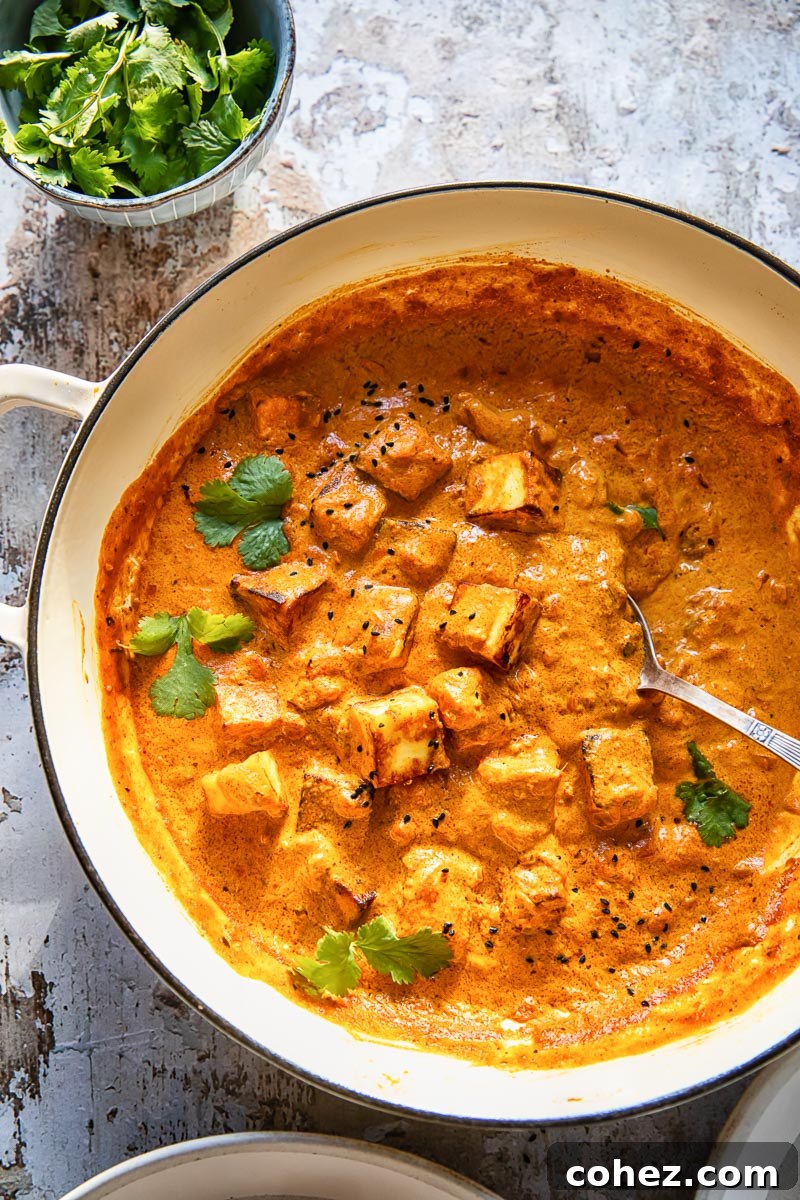
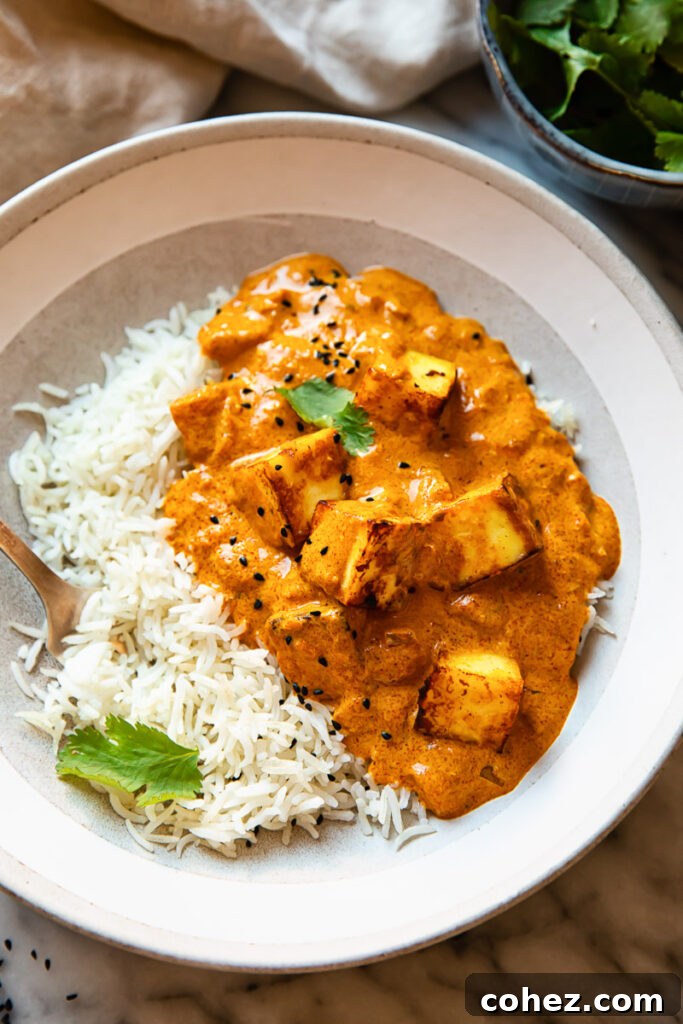
Experience the rich, aromatic flavors of India with this exquisite Paneer Tikka Masala recipe. A delightful vegetarian take on a universally beloved classic, this dish offers all the creamy indulgence and satisfying tang of traditional tikka masala, perfectly complemented by the wholesome goodness of paneer. It’s an ideal choice for anyone seeking a flavorful, meat-free meal that doesn’t compromise on taste or texture.
For those who love the vibrant flavors of tikka masala, explore our Chicken Tikka Masala for a classic experience, or try our hearty Vegetable Tikka Masala with Potatoes and Cauliflower for another fantastic meat-free option.
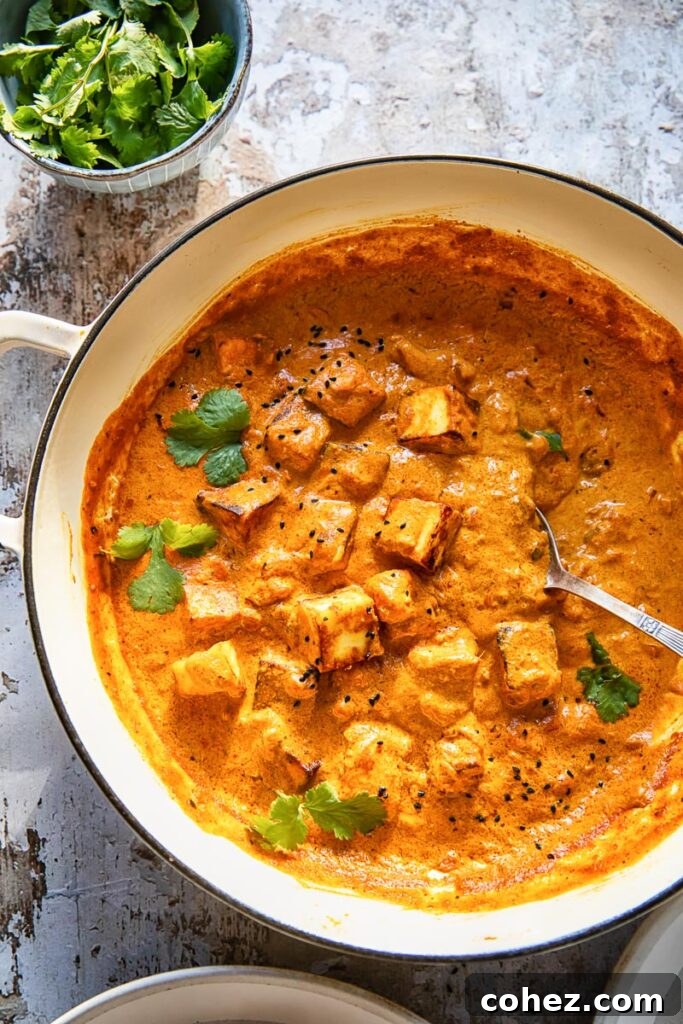
There’s an undeniable comfort that comes with a beautifully crafted curry. For many, it’s a go-to dish when a culinary pick-me-up is needed, a warm embrace in a bowl that transports you to a world of exotic spices and soothing textures. Tikka Masala stands out as an absolute classic, renowned for its vibrant color, complex flavors, and creamy consistency. While often associated with chicken, this versatile curry lends itself perfectly to a vegetarian rendition using paneer, offering a similarly satisfying and equally delicious experience right from your home kitchen.
The beauty of Indian cuisine lies not only in its diverse flavors but also in its rich tradition of vegetarian cooking. This makes it a fantastic source for innovative and satisfying meat-free meals, and Paneer Tikka Masala is a shining example. This recipe proves that you don’t need meat to enjoy a deeply satisfying and authentically Indian curry.
Tikka Masala: A Global Favorite
Tikka Masala has transcended its origins to become a culinary icon, cherished in countless kitchens and restaurants around the globe. Its irresistible combination of smoky, tangy, and subtly sweet flavors, bathed in a rich, creamy tomato-based sauce, makes it a perennial favorite. The precise origins of Tikka Masala are a subject of much debate and delightful speculation, adding to its mystique.
One popular theory suggests that the dish evolved in India, a natural progression within the country’s vast and ancient culinary landscape, adapting traditional spices and cooking methods to create a new classic. However, another widely recounted and perhaps more colorful story places its birth in the United Kingdom. Legend has it that an Indian chef, responding to a diner’s request for chicken with “gravy,” improvised by adding a mild cream sauce to his existing chicken tikka. This spontaneous creation, designed to appease a British palate, inadvertently gave birth to the creamy, flavorful Tikka Masala that has since captured the hearts of millions. Regardless of its exact birthplace, Tikka Masala’s universal appeal is undeniable, celebrated for its unique ability to blend robust spices with a comforting, smooth finish.
This very same remarkable sauce, with its characteristic smokiness and tangy zest, provides a magnificent flavor profile for paneer. The delicate, creamy texture of paneer absorbs these flavors beautifully, creating a dish that is both deeply comforting and refreshingly sharp. It’s a testament to the sauce’s versatility that it can elevate any core ingredient, turning a simple meal into an extraordinary culinary journey.
Paneer: The Versatile Indian Cheese
At the heart of our vegetarian tikka masala lies paneer, a fresh, non-melting cheese integral to the culinary traditions of the Indian subcontinent. Typically made from cow or buffalo milk, paneer is prized for its unique texture – pleasantly soft yet firm enough to hold its shape beautifully even after extended cooking. When prepared correctly, it develops an incredibly satisfying chew, making it a wonderful substitute for meat in a variety of dishes.
Paneer’s mild flavor acts as a perfect canvas, readily absorbing the rich, complex spices and sauces it’s cooked with. This characteristic makes it an ideal ingredient for curries, where each piece can become infused with the vibrant flavors of the sauce. Beyond curries, paneer’s versatility shines in numerous Indian recipes, from grilled starters like paneer tikka to rich main courses such as palak paneer (paneer with spinach) or shahi paneer (a royal, creamy paneer dish). Its ability to provide both substance and a delightful mouthfeel makes it a convenient and wholesome replacement for meat, offering a protein-rich option for vegetarian diets.
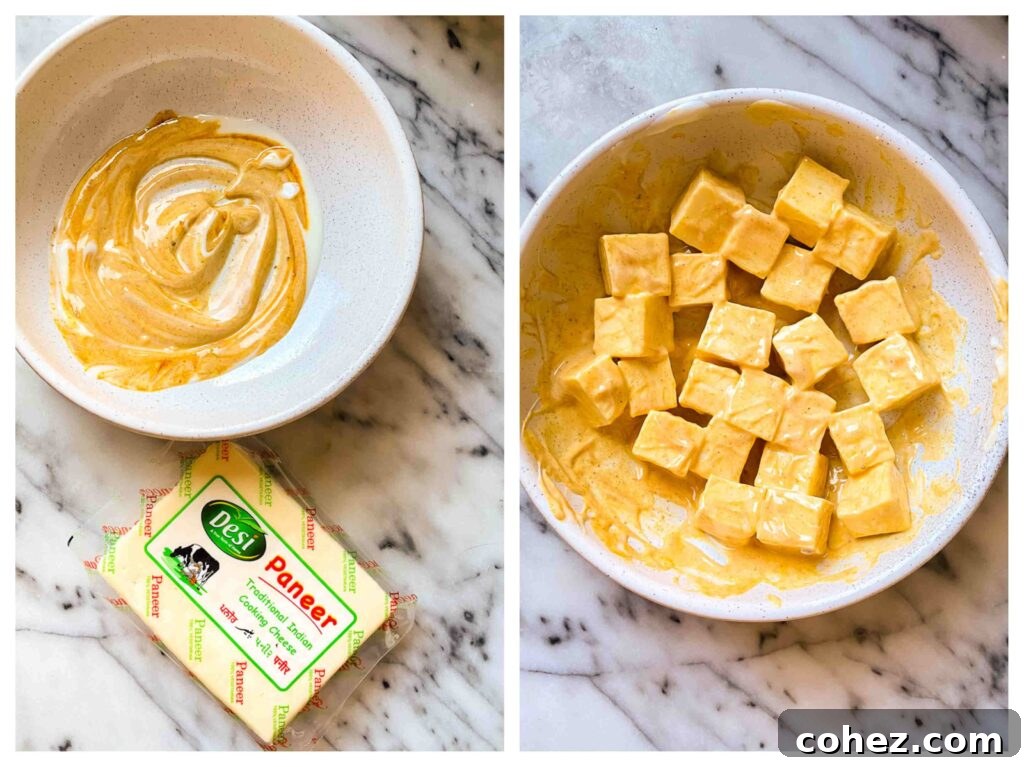
Traditional chicken tikka masala relies on chicken that has been marinated in yogurt and a blend of aromatic spices. Paneer benefits immensely from a similar marination process, allowing it to soak up those beautiful, fragrant spices. In this recipe, cubed paneer is coated in a simple yet potent mixture of yogurt and tikka masala paste. A quick twenty-minute marination is all it takes to prepare the paneer for cooking. Once marinated, the paneer is lightly browned over medium heat until it achieves a lovely golden hue. This brief searing process not only adds an appealing color but also enhances the texture, creating a slight crust on the outside while keeping the inside tender. It’s a quick step that significantly boosts the flavor and overall appeal of the final dish.
How to Make Paneer Tikka Masala
Creating a delicious Paneer Tikka Masala is a rewarding culinary journey that, while requiring a bit of time, is far from difficult. Follow these steps to bring this vegetarian masterpiece to life:
- Marinate the Paneer: Begin by cutting your paneer into evenly sized cubes. In a bowl, combine the yogurt with 1 teaspoon of tikka masala paste. Add the paneer cubes, tossing gently to ensure each piece is well coated. Let the paneer marinate for at least 20 minutes, allowing it to absorb the flavors.
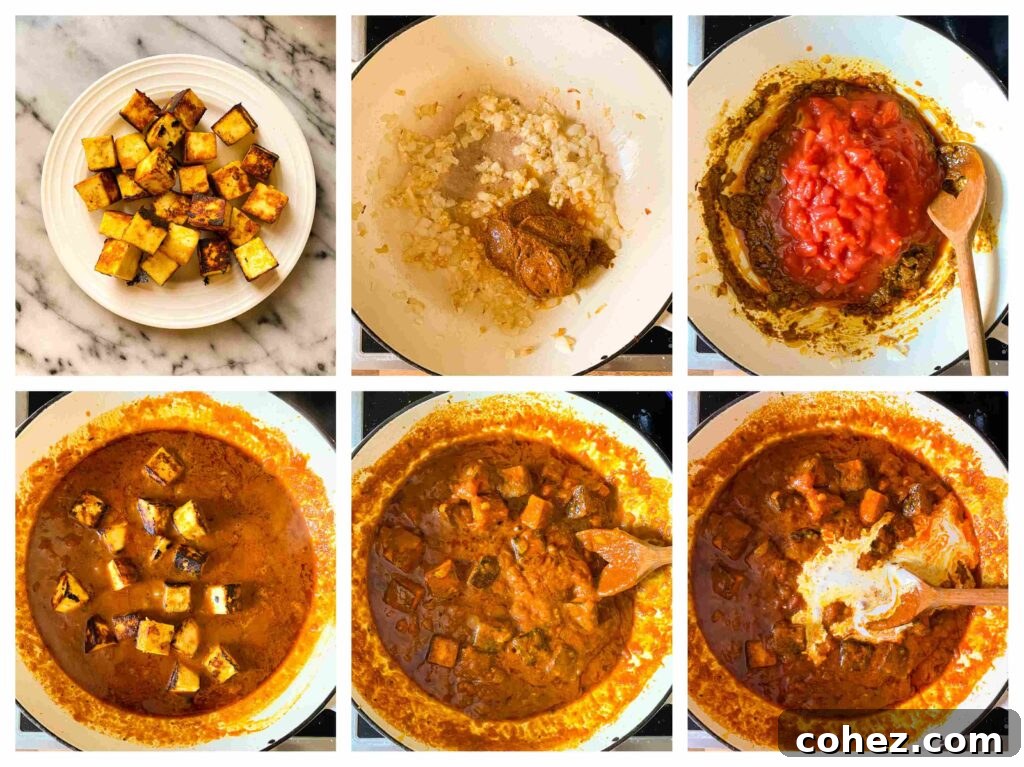
- Brown the Paneer: Heat 1 tablespoon of vegetable oil in a large pan or skillet over medium heat. Once hot, add the marinated paneer cubes in a single layer, being careful not to overcrowd the pan. Cook for a few minutes on each side until they turn beautifully golden brown. Remove the browned paneer to a plate and set aside.
- Sauté the Aromatics: In the same pan, add 1-2 teaspoons of fresh vegetable oil (or ghee, if using). Add the finely chopped onion and cook over medium heat for 7-10 minutes, stirring occasionally, until the onion softens and turns translucent, developing a slight caramelization that adds depth to the sauce.
- Infuse with Ginger and Garlic: Stir in the grated ginger and minced garlic. Cook for another minute, until fragrant, being careful not to burn them. Their aroma will form the foundational layer of your curry.
- Build the Sauce: Add the remaining 125ml (1/2 cup) of tikka masala paste to the pan. Cook for 2-3 minutes, stirring constantly, to heat through and allow the spices to bloom. Then, pour in about ¼ cup of water and the chopped tomatoes. Bring the mixture to a gentle boil.
- Simmer and Combine: Reduce the heat to low. Carefully return the browned paneer to the pan, ensuring it’s nestled in the sauce. Cover the pan with a lid and let it simmer for 20 minutes. This allows the paneer to fully absorb the rich flavors of the sauce and ensures all ingredients are perfectly cooked.
- Finish with Cream and Sugar: Remove the lid. Stir in the heavy cream (or double cream) and brown sugar. The cream will add a luxurious richness and mellow the spice, while the sugar balances the tanginess of the tomatoes.
- Serve: Taste and adjust seasonings if necessary. Garnish generously with freshly chopped cilantro (coriander) just before serving for an added burst of freshness and vibrant color.
Recipe Tips and Notes for Perfection
Tips for Success
- Uniform Paneer Cubes: It’s crucial to cut your paneer into evenly sized cubes. This ensures that they cook at a consistent pace and brown uniformly, preventing some pieces from overcooking while others remain undercooked. When browning, keep a close eye on the paneer as it can burn quickly due to its high milk solid content. Aim for a beautiful golden-brown crust, which adds both texture and a nutty flavor.
- Ghee vs. Vegetable Oil: While vegetable oil works perfectly well, consider using ghee (clarified butter) for an extra layer of authentic flavor. Ghee has a higher smoking point than regular butter, making it ideal for sautéing, and it imparts a wonderful nutty aroma that enhances the overall taste of the curry. Making your own ghee at home is surprisingly simple and a rewarding endeavor!
- Choosing Your Tikka Masala Paste: While creating your own tikka masala paste from scratch can be an ambitious project involving numerous spices, a high-quality store-bought tikka masala paste is a fantastic shortcut for the average home cook. Look for brands with good reviews and natural ingredients, as a good paste provides an authentic flavor base without the hassle of grinding individual spices. Don’t hesitate to invest in a quality paste; it truly makes a difference.
- The Cilantro Touch: Fresh cilantro (coriander) is more than just a garnish; it adds a bright, herbaceous freshness that cuts through the richness of the curry, elevating its flavor profile. While not strictly essential, it significantly enhances the dish, both in taste and visual appeal. Chop it finely and sprinkle generously just before serving.
- Adjusting Spice Levels: If you prefer a milder curry, you can reduce the amount of tikka masala paste slightly or add a little extra cream at the end. For more heat, a pinch of cayenne pepper or a chopped green chili can be added along with the ginger and garlic.
- Tomato Choice: Canned chopped tomatoes are convenient and consistent, but if fresh, ripe tomatoes are in season, blend them for a fresher taste.
Serving Suggestions: For a Complete Indian Meal
Paneer Tikka Masala is a star on its own, but it truly shines when served as part of a larger Indian feast. The beauty of Indian cuisine lies in its ability to combine various textures and flavors into a harmonious meal. Here are some delightful serving suggestions:
- Rice is Essential: The creamy sauce of tikka masala demands a perfect companion, and rice is undoubtedly it. Classic basmati rice, known for its long grains and aromatic qualities, is a traditional and excellent choice. For an elegant twist and added fragrance, consider pairing it with coconut rice, which adds a subtle sweetness.
- Indian Breads: No Indian meal is complete without warm, fluffy bread. Freshly baked naan is fantastically good, whether served plain or brushed with garlic butter. Roti or paratha are also wonderful alternatives, perfect for scooping up every last bit of that delicious sauce.
- Complementary Side Dishes: To build a truly authentic and satisfying Indian meal, consider adding a side dish. Hearty options like red lentil dahl or the rich dal makhani provide a different texture and flavor profile. For a potato lover, spiced roasted baby potatoes (aloo chat) make an excellent addition.
- Pickles and Chutneys: Enhance your meal with a side of Indian pickle, especially a tangy lime pickle, or a sweet mango chutney. These condiments offer a burst of contrasting flavor that brightens the entire plate. Most sizeable grocery stores carry a good selection.
- Refreshing Drinks: Pair your meal with a cooling glass of mango lassi or a simple, refreshing mint-infused water to balance the spices.
Storage and Enjoying Leftovers
One of the best qualities of many curries, including this Paneer Tikka Masala, is that they often taste even better the next day. The flavors have more time to meld and deepen, resulting in a more complex and satisfying experience. Proper storage is key to enjoying these delightful leftovers:
- Refrigeration: Store any leftover Paneer Tikka Masala in an airtight container in the refrigerator for 3-4 days. Ensure it cools down completely before transferring it to the container.
- Freezing: This curry can also be frozen for longer storage, typically up to six months. However, be aware that freezing and thawing can sometimes alter the texture of paneer, making it a bit more crumbly or slightly tougher. To minimize this, ensure the curry is completely cooled before freezing. For best results, thaw it gradually in the refrigerator overnight before reheating.
- Reheating Instructions:
- Stovetop (Recommended): For the best texture and flavor, reheat paneer tikka masala on the stovetop. Transfer the curry to a saucepan and warm it over medium to medium-high heat, stirring frequently. If the sauce appears too thick after thawing or reheating, add a splash of water, milk, or a bit more cream to achieve the desired consistency.
- Microwave: While convenient, reheating in the microwave can sometimes make the paneer a little chewier. Place the curry in a microwave-safe dish, cover it loosely, and heat in 1-2 minute intervals, stirring in between, until heated through. Add a little liquid if needed.
More Vegetarian Curry Recipes to Explore
If you loved this Paneer Tikka Masala, you’re in for a treat! Indian cuisine offers an incredible array of vegetarian curries that are equally rich in flavor and satisfying. Expand your culinary repertoire with these delicious options:
- Easy Coconut Lentil Curry with Butternut Squash: A comforting and hearty curry, perfect for a cozy evening.
- Chickpea and Butternut Squash Curry: A vibrant and nutritious dish packed with plant-based protein.
- Simplified Cauliflower and Potato Curry (Aloo Gobi): A classic Indian staple, simple to make and bursting with flavor.
★
★
★
☆
Paneer Tikka Masala
Equipment
-
Cast iron casserole dish
Ingredients
- 250g/9oz paneer
- 1 tbsp vegetable oil
- 2 tbsp yogurt
- 1 tsp tikka masala paste
- 1-2 tsp vegetable oil
- 1 onion
- 1 tbsp grated ginger
- 1 clove garlic, minced
- 125ml/1/2 cup tikka masala paste
- 400ml/14oz chopped tomatoes
- 125ml/1/2 cup double cream/heavy cream
- 3 tsp brown sugar
- Fresh cilantro/coriander, chopped, for garnish
Instructions
-
Mix 2 tablespoons yogurt and 1 teaspoon tikka masala paste in a bowl. Add cubed paneer and marinate for 20 minutes. In a pan, brown the marinated paneer over medium heat until golden on all sides, then remove to a plate and set aside.
-
Add 1-2 teaspoons oil to the same pan and heat. Add the chopped onion and cook for 7-10 minutes until soft and translucent. Then add grated ginger and minced garlic and cook for 1 minute longer until fragrant.
-
Stir in 125ml (1/2 cup) curry paste and cook for 2-3 minutes. Add ¼ cup water and chopped tomatoes, bring to a boil. Reduce heat to low, return paneer to the pan, cover with a lid, and simmer for 20 minutes.
-
Finally, pour in the heavy cream (or double cream) and brown sugar. Mix gently. Garnish with freshly chopped cilantro/coriander before serving.
Nutrition
Carbohydrates: 85g |
Protein: 17g |
Fat: 13g |
Saturated Fat: 7g |
Polyunsaturated Fat: 2g |
Monounsaturated Fat: 3g |
Cholesterol: 28mg |
Sodium: 2811mg |
Potassium: 3746mg |
Fiber: 21g |
Sugar: 52g |
Vitamin A: 6017IU |
Vitamin C: 186mg |
Calcium: 688mg |
Iron: 20mg
Nutrition information is automatically calculated, so should only be used as an approximation.
Let us know how it was if you tried this recipe!