
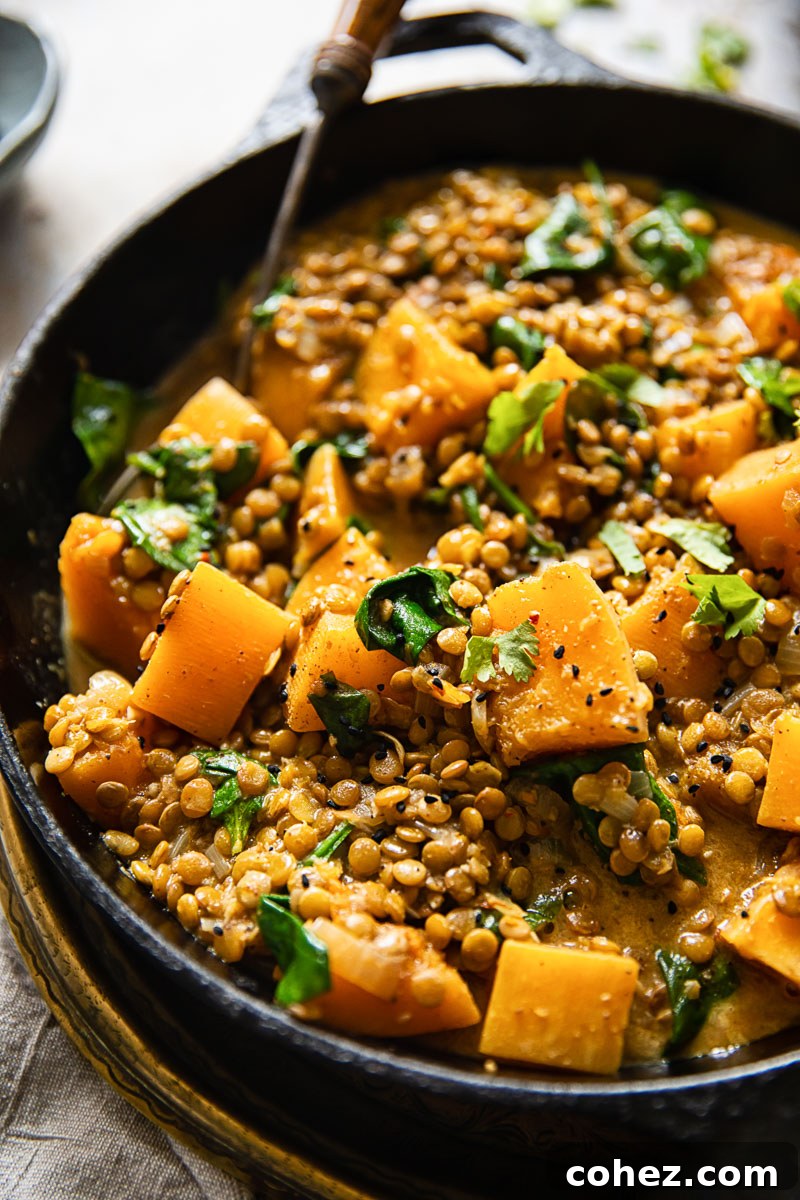
This wholesome and incredibly creamy coconut lentil curry, abundant with tender butternut squash simmered in rich, aromatic coconut milk, is destined to become your absolute favorite. Give it a try, and you’ll discover a dish that not only delights the palate but also keeps things wonderfully simple, featuring ingredients perfectly suited for both vegetarians and vegans.
If you are a devoted fan of delicious and innovative vegan curry recipes, we highly recommend you also explore our equally satisfying Chickpea and Butternut Squash Curry for another delightful plant-based meal option!
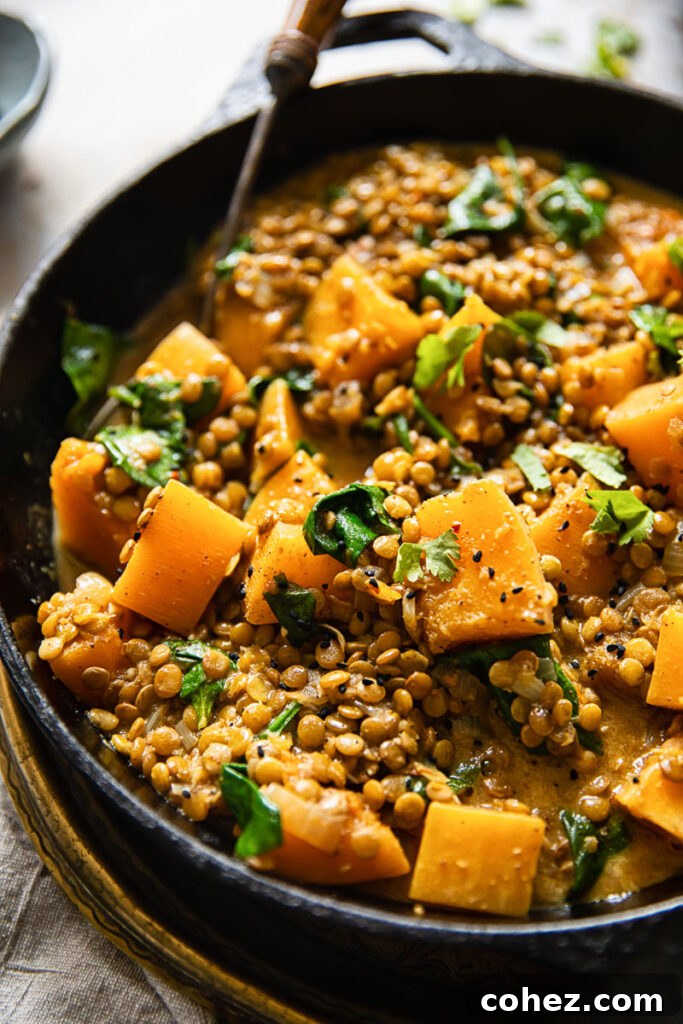
The Ultimate Creamy Coconut Lentil & Butternut Squash Curry: Your Easy Vegan Weeknight Meal
In the whirlwind of modern life, finding a meal that effortlessly balances incredible flavor with genuine ease of preparation can often feel like a culinary triumph. This exquisite coconut lentil curry, generously filled with sweet butternut squash and bathed in the luxurious creaminess of coconut milk, is precisely that triumph. It’s more than just a recipe; it’s a celebration of how simple, wholesome ingredients can harmoniously combine to create something truly extraordinary. For countless households, including my own, a comforting and easy lentil curry has firmly established itself as an indispensable weekday staple. Its harmonious blend of warm, inviting flavors and a subtle hint of spice is universally cherished, bringing consistent joy and hearty satisfaction to the dinner table. Furthermore, the immense satisfaction of serving such a deeply nutritious and utterly delicious meal that every family member enthusiastically enjoys is a victory in itself!
When developing this recipe, my primary objective was to craft an effortless dinner solution, prioritizing ingredients that are not only accessible but likely already reside in your pantry. There’s no need to embark on a scavenger hunt for obscure spices or exotic produce. By harnessing the inherent goodness of protein-packed lentils, vibrant vegetables like the naturally sweet butternut squash, and the velvety texture of rich coconut milk, this curry proudly stands as a naturally vegan, inherently gluten-free, and remarkably wholesome option. It thoughtfully caters to a diverse range of dietary preferences and nutritional needs without ever compromising on its robust flavor or profound sense of satisfaction. This makes it an exemplary choice for embracing healthy, plant-based eating, proving that nourishing meals can indeed be both simple and spectacularly tasty.
The Heart of the Home: Why This Coconut Lentil Curry Will Become Your Go-To
The culinary magic of this particular curry recipe lies in the perfect, symbiotic relationship between coconut milk and lentils. These two ingredients are, without question, the best of friends in the vast and vibrant world of curries, each bringing indispensable qualities to the dish. Coconut milk, especially when you opt for the full-fat variety, bestows a delicate, nutty undertone and an astonishingly creamy texture that elevates the curry from merely good to truly exceptional. It forms a rich, luxurious base that beautifully cradles and amplifies all the other layered flavors. Lentils, conversely, contribute substantial body and a satisfying bulk, transforming what could otherwise be a light soup into a profoundly filling and satisfying main course. They possess an incredible ability to absorb the complex aromatic spices and the creamy liquid, becoming tender, flavorful powerhouses of both taste and nutrition.
A common barrier that frequently discourages home cooks from embarking on the delightful journey of making curries from scratch is the often-intimidating list of individual spices required. The prospect of purchasing numerous distinct spices – many of which might only see infrequent use before languishing in the cupboard – can be both daunting and economically impractical. This is precisely where a high-quality, pre-made curry paste emerges as a brilliant, convenient, and truly indispensable solution. These pastes are meticulously crafted by culinary experts, featuring an ideal combination of fresh and dried spices, along with other aromatic ingredients, all perfectly blended to deliver that authentic, complex, and deeply satisfying curry taste without any of the fuss or extensive spice collection.
The strategic use of a pre-made curry paste means you only need to acquire one essential ingredient, rather than an entire assortment of individual spices, offering significant savings in both precious time and culinary budget. This approach dramatically streamlines the entire cooking process, making curry accessible even on your busiest days. However, it’s a valuable point to remember that the quality and flavor profiles of curry pastes can vary widely depending on the brand and specific type (for example, a vibrant Red Thai, a fragrant Green Thai, a fiery Madras, or a classic Indian Tikka Masala). I wholeheartedly encourage you to embark on a small culinary adventure by experimenting with different brands and varieties available at your local supermarket. This exploration will help you discover which paste best resonates with your personal palate, consistently delivering the rich, nuanced flavors you love most in your homemade curries. Such a small investment in exploration can yield remarkably significant dividends in your overall culinary results, transforming your curry-making experience.
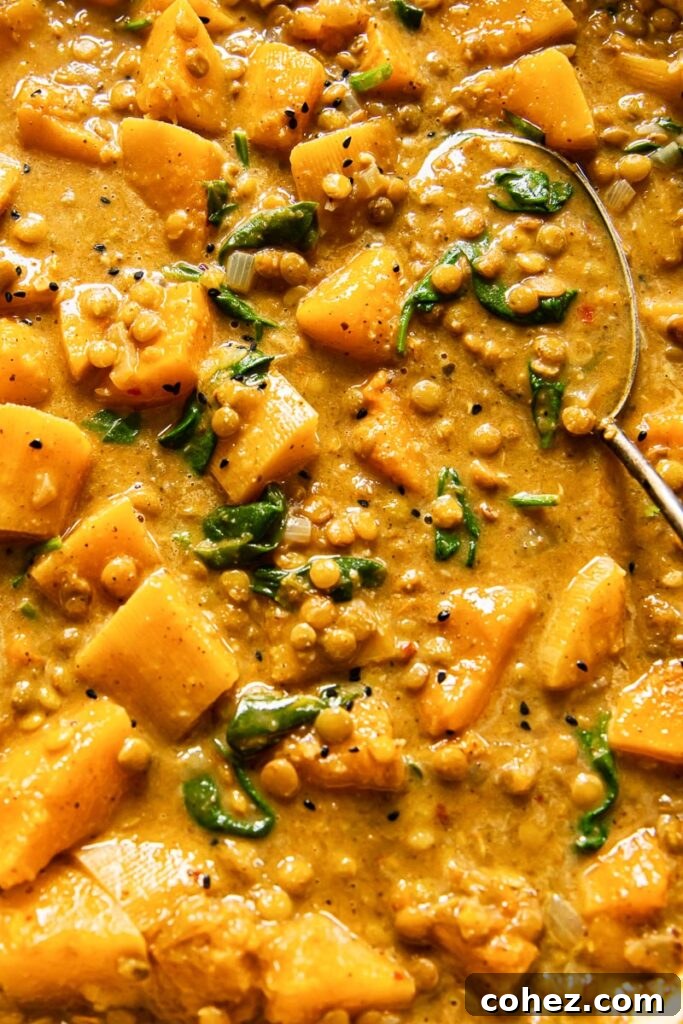
Crafting Your Perfect Coconut Lentil Curry: A Detailed Step-by-Step Guide
One of the most appealing characteristics of cooking with lentils is their remarkable efficiency. Unlike many other legumes that demand lengthy pre-soaking, most varieties of lentils can be introduced directly into the pan alongside your other ingredients. This notable feature significantly reduces overall preparation time, making this recipe an ideal choice for those hectic weeknights when time is a precious commodity. For this particular culinary creation, I have specifically chosen green lentils. They are an exceptional selection due to their impressive ability to maintain their structural integrity throughout the cooking process, contributing a delightful, firm texture to the finished curry. Furthermore, green lentils impart a distinctively robust and subtly peppery flavor that beautifully complements the inherent sweetness of the butternut squash and the rich creaminess of the coconut milk, creating a wonderfully balanced taste profile.
While it is true that green lentils typically require a slightly longer cooking duration compared to their red or brown counterparts, I am firmly convinced that the additional few minutes of simmering are thoroughly justified by their superior texture and unique, earthy taste. However, if your schedule demands an even quicker preparation, or if you simply prefer a softer, more disintegrated lentil texture, red lentils are a fantastic alternative. They are perfect for a faster-cooking curry or a smooth, velvety dahl, as they tend to break down more readily during cooking. Should you be inclined to explore different lentil culinary experiences, you might greatly enjoy trying our Nepalese Red Lentil Dahl, which offers a distinct yet equally delicious and comforting lentil-based dish.
Building the Flavor Foundation for an Unforgettable Curry
The journey toward an exceptionally flavorful and memorable curry invariably commences with the meticulous construction of a strong aromatic base. My culinary process consistently begins by gently sautéing finely chopped onions until they achieve a state of translucence and acquire a hint of delicate caramelization. This initial step is profoundly critical, as it unlocks the onions’ natural sugars and inherent sweetness, thereby establishing the fundamental first layer of flavor depth for the entire curry. After approximately five minutes, once the onions have become suitably softened, I carefully introduce minced garlic and freshly grated ginger into the pan. These potent, fragrant aromatics are then sautéed briskly for an additional thirty seconds, precisely until their tantalizing essential oils are fully released, permeating the kitchen with an irresistible aroma. It is imperative to exercise caution during this stage to prevent any burning, which can introduce bitterness. This foundational step not only fills your home with incredible, inviting aromas but also ensures the development of a complex, well-rounded, and deeply satisfying flavor profile that will define the character of your finished dish.
Incorporating the Curry Paste and Lentils for Depth
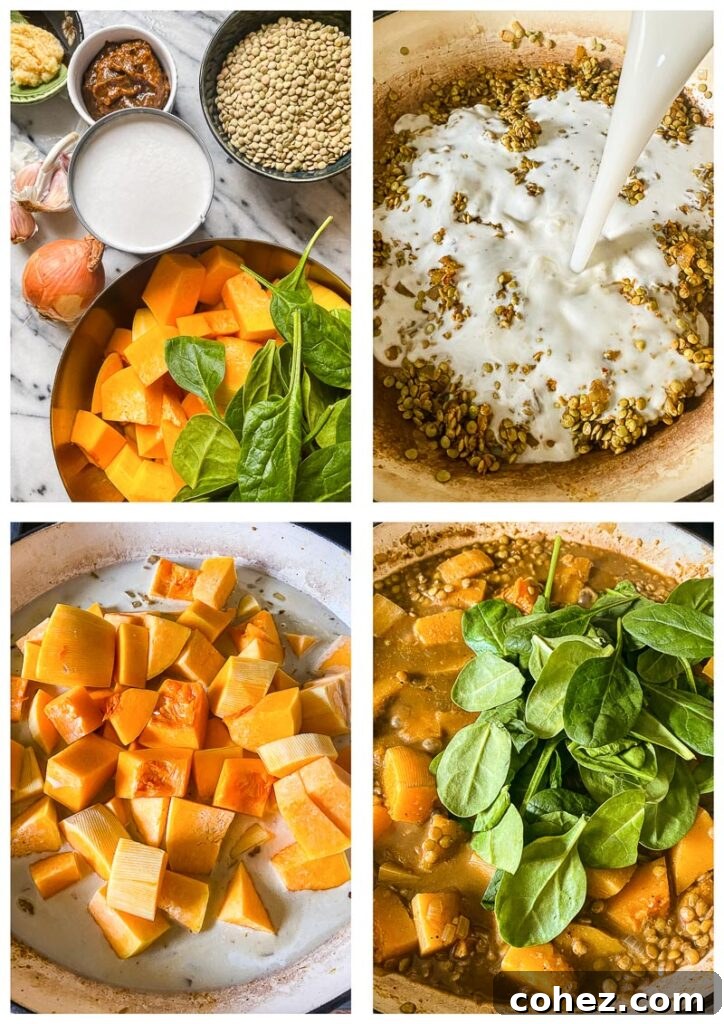
Once your aromatic foundation has been meticulously prepared and perfectly softened, the moment arrives to introduce the dish’s central flavor enhancer: the chosen curry paste. Add the paste to the pan and vigorously stir it into the fragrant mixture of sautéed onion, garlic, and ginger. Continue to fry this combination for another thirty seconds, allowing the curry paste to ‘bloom’ effectively in the hot oil. This crucial process of blooming intensifies the paste’s intricate flavors and releases its full spectrum of aromas, resulting in a curry that is significantly more vibrant and complex. Following this, incorporate the dry, uncooked lentils into the pan, stirring them thoroughly to ensure each individual lentil is generously coated with the rich and aromatic curry paste. This preliminary coating is vital, as it allows the lentils to begin absorbing the deep, savory flavors right from the very inception of the cooking process, laying the groundwork for a truly flavorful final product.
Simmering to Perfection: Unifying Flavors and Textures
With the robust, flavorful base and the well-coated lentils now firmly in place, it’s time to introduce the essential liquids and the star vegetable. Gently pour in the luxurious coconut milk, followed by the water or vegetable broth, and finally, add the butternut squash, carefully cut into appealing, uniformly bite-sized cubes. Stir all the ingredients together with a gentle hand to ensure they are thoroughly combined and well-submerged in the liquid. Bring the entire mixture to a soft, gentle boil, then immediately reduce the heat to a low simmer. Cover the pan securely with a lid and allow the curry to cook undisturbed for approximately twenty minutes. This critical simmering period is fundamental for allowing the lentils and butternut squash to soften beautifully to a wonderfully tender consistency, and, crucially, for all the distinct flavors to meld and deepen into a cohesive, harmonious, and exquisitely balanced dish. The squash should be easily pierced with a fork, and the lentils should be perfectly cooked through, yet still retain their satisfying shape and a slight bite.
To conclude the preparation of this vibrant and nutritious dish, gently stir in one cup of fresh spinach during the final one or two minutes of cooking. The residual heat retained within the simmering curry will cause the spinach to wilt rapidly, adding a refreshing burst of vibrant green color and an additional dose of vital nutrients without any risk of overcooking. Serve the curry immediately, allowing yourself to savor the rich rewards of your culinary efforts!
Expert Recipe Tips and Notes for a Flawless Curry
- Embrace the Convenience of Curry Paste: As previously emphasized, a high-quality curry paste is an absolute game-changer for preparing delectable homemade curries. Rather than accumulating and maintaining a vast assortment of individual spices, a good paste offers a perfectly balanced and complex blend of flavors in one convenient package. While dedicated chefs might prefer to build their spice blends from scratch using cumin, coriander, turmeric, cardamom, and more, a ready-made paste simplifies the cooking process immensely and is remarkably versatile, suitable for a wide array of curry types. Don’t be afraid to experiment with different varieties – a Madras paste for a pronounced spicy kick, a Korma for a milder, more subtly creamy profile, or the Tikka Masala I frequently use, which provides a wonderfully rich and balanced flavor.
- Explore Diverse Vegetable Alternatives: Butternut squash is a truly fantastic selection for this recipe, not only contributing natural sweetness but also developing a lovely creamy texture when fully cooked. However, if you have a particular fondness for sweet potatoes, they make an equally delicious and nutritious addition to the curry. Keep in mind that sweet potatoes tend to cook slightly faster than butternut squash, so you may wish to incorporate them a couple of minutes later in the simmering process or cut them into slightly larger cubes to ensure they cook evenly. Other excellent vegetable additions could include regular russet or gold potatoes, tender cauliflower florets, hearty pumpkin chunks, or even added chickpeas for an extra boost of plant-based protein and delightful texture.
- Smart Shortcuts for Maximum Time-Saving: To further streamline and accelerate your curry preparation, do not hesitate to leverage convenient pre-prepared ingredients. Consistently keeping jars of minced ginger paste and garlic paste readily available in your refrigerator is an invaluable shortcut that can shave precious minutes off your initial prep time. Similarly, frozen spinach serves as an outstanding and equally effective alternative to fresh spinach, wilting into the hot curry with the same beautiful color and nutritional benefits. These minor conveniences, though seemingly small, can cumulatively make a significant positive impact, especially on those evenings when your schedule is tight, yet you still crave a wholesome, lovingly homemade meal.
- Maximizing the Creaminess Factor: While utilizing light coconut milk can be a strategic option for those consciously aiming to reduce calorie intake, for the most sumptuously luxurious and deeply satisfying creamy texture, opting for full-fat coconut milk is highly recommended. The difference in the resultant richness and velvety mouthfeel is quite significant, and for many culinary enthusiasts, the slight caloric trade-off is more than compensated by the profoundly enhanced gastronomic experience. If you genuinely prefer a lighter dish, feel absolutely free to use light coconut milk, but be prepared for a texture that might be slightly less decadent and indulgent.
- Elevating the Liquid Base for Richer Flavor: In the comprehensive recipe card, I present the option of using either vegetable broth or plain water as the liquid component. While water will certainly fulfill the functional requirement, choosing vegetable broth will unmistakably infuse your curry with an additional, profound layer of savory depth and aromatic complexity. It represents a simple yet remarkably effective substitution that can substantially enhance the overall flavor profile of your finished dish, pushing it towards a richer, more nuanced taste. Always remember to taste your curry as it simmers and adjust the seasoning (salt, pepper, a touch more spice) as needed to suit your personal preference.
- The Art of Finishing Touches and Flavor Boosters: Never underestimate the transformative power of carefully selected garnishes and condiments to truly elevate your curry from good to gourmet. A generous sprinkle of freshly chopped cilantro not only adds a vibrant burst of fresh green color but also imparts a refreshing herbaceous note. A final squeeze of fresh lime juice just before serving can magically brighten all the existing flavors, adding a zesty counterpoint to the richness. For an authentically immersive Indian dining experience, serving your lentil coconut curry alongside traditional Indian pickles or chutneys is highly recommended. A zesty chilli-lime pickle, with its invigorating spicy and tangy notes, is a personal favorite that impeccably complements the creamy richness and subtle sweetness of the curry, creating an unforgettable flavor symphony.
Perfect Pairings: Serving Suggestions to Complete Your Curry Experience
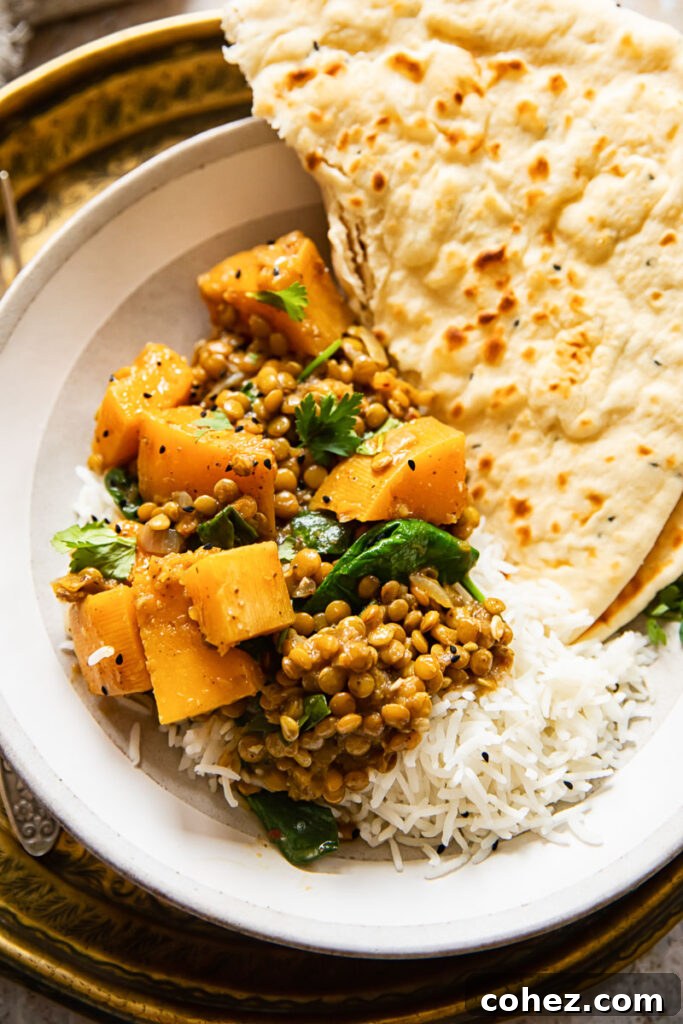
A lovingly prepared and beautifully cooked curry inherently merits an equally thoughtful accompaniment to truly complete the dining experience. The traditional and arguably most universally beloved pairing for curries remains a warm, exquisitely fluffy bed of white rice. There exists a compelling reason why this classic combination has endured and been celebrated across countless generations and cultures – the perfectly cooked rice acts as an ideal canvas, eagerly soaking up the rich, creamy sauce and providing a comforting, balanced foundation that highlights the vibrant and complex flavors of the curry. To introduce a delightful and aromatic twist, you might consider preparing coconut rice, which effortlessly infuses your meal with an extra layer of subtle sweetness and an alluring fragrance. This specialized rice is surprisingly straightforward to prepare, particularly efficiently when made in an Instant Pot, and undeniably elevates the entire dining experience to a more exotic and memorable level.
For those health-conscious diners keen on enhancing the fiber content and boosting the overall nutritional value of their meal, brown rice stands out as an exceptionally commendable alternative to its white counterpart. Its inherently nutty flavor and slightly chewier, more substantial texture provide a wonderful contrast and perfectly complement the robust and creamy nature of the curry. Beyond various rice options, soft, pillowy, and delightfully chewy naan bread presents itself as another outstanding accompaniment. It is impeccably suited for scooping up every last delicious drop of the rich sauce, and can be savored either as a standalone bread or enjoyed harmoniously alongside your chosen rice. Other traditional Indian flatbreads, such as roti or chapati, also serve as excellent and authentic choices. And for an extra touch of freshness and contrast, don’t overlook the simple elegance of a cooling dollop of plain vegan yogurt or a generous sprinkle of freshly chopped cilantro to add brightness and a herbaceous counterpoint.
To truly awaken your palate and introduce another dimension of exquisite flavor, seriously consider serving your curry with a selection of traditional Indian chutneys or pickles. These time-honored condiments are meticulously crafted and specifically designed to enhance and amplify the curry’s intricate flavor profile, delivering a delightful splash of heat, a tantalizing sourness, or a subtle sweetness that masterfully cuts through and balances the inherent richness of the main dish. Options such as a sweet and tangy mango chutney, a zesty lime pickle, or even a simple raita (a cooling cucumber and vegan yogurt salad) can collectively transform your meal into a truly authentic, multifaceted, and unforgettable culinary adventure, offering a delightful interplay of tastes and textures.
Storage, Leftovers & Smart Meal Prepping Tips
One of the numerous practical advantages of preparing this delicious coconut lentil curry is its remarkable ability to taste even better as leftovers, making it an outstanding candidate for efficient meal prepping. When stored correctly, your leftover curry will retain its deliciousness and inviting texture for several days, allowing you to enjoy a quick, flavorful meal whenever you desire. Simply ensure that any cooled curry is transferred into an airtight container and then promptly refrigerated. Under proper refrigeration, it will safely last for 3-4 days. It’s a widely acknowledged culinary secret that many curries, including this one, actually develop deeper, more integrated flavors overnight, often tasting even more delicious the day after they are initially prepared!
Furthermore, this versatile curry freezes exceptionally well, providing a fantastic and convenient solution for those inevitably busy weeknights when you require a quick, wholesome, and satisfying meal without the added effort of cooking from scratch. For optimal storage, portion the cooled curry into freezer-safe, airtight containers or robust heavy-duty freezer bags. Properly stored, it can be maintained in the freezer for an impressive period of up to three months. When you’re ready to savor your pre-prepared meal, simply transfer the frozen curry to the refrigerator and allow it to thaw completely overnight before proceeding with reheating. For the best quality and utmost food safety, once the curry has thawed, it should be consumed within 48 hours.
Reheating your delicious leftovers is a straightforward process. You can gently warm the curry in a saucepan over a medium-low to medium heat on the stovetop, stirring it occasionally to ensure even heating until it is thoroughly warmed through. Alternatively, for the ultimate in convenience, individual portions can be efficiently reheated in a microwave. Should the curry appear to have thickened considerably after refrigeration or freezing, a simple remedy is to add a splash of water, vegetable broth, or a little extra coconut milk during the reheating process. This adjustment will help achieve your desired creamy consistency, ensuring your curry is just as inviting and flavorful as it was on the very first day you made it.
Explore More Delicious Curry Recipes
If you’ve thoroughly enjoyed the comforting flavors and the straightforward preparation of this coconut lentil curry, we warmly invite you to delve into and explore our other enticing curry recipes. While some of these selections may not adhere to strict vegan guidelines, they beautifully showcase the incredible versatility and rich diversity of curry dishes and might just ignite the spark for your next exciting culinary adventure:
- Butter Chicken Curry
- Chinese Chicken Curry
- Easy Chicken Curry with Potatoes
- Chicken Katsu Curry
Easy Coconut Lentil Curry with Butternut Squash Recipe
Rating: 4 out of 5 stars (based on 1 vote)
By: Julia Frey of Vikalinka
Prep Time: 15 mins
Cook Time: 20 mins
Total Time: 35 mins
Servings: 8
Print Recipe
This wholesome vegan coconut lentil curry with piles of hearty butternut squash simmered in creamy coconut milk will become your favorite if you give it a try.
Equipment
- Cast iron casserole dish (or large deep pan with a lid)
Ingredients
- 1kg / 2⅕ lb butternut squash, peeled, deseeded, and cubed into 1-inch pieces
- 1 tbsp vegetable oil
- 1 large onion, finely chopped
- 2 cloves garlic, minced (or 1 tsp garlic paste)
- 1 tbsp fresh ginger, grated (or 1 tbsp ginger paste)
- 3 tbsp curry paste (e.g., Tikka Masala, Madras, or a favorite red/green curry paste)
- 200g / 1 cup green lentils, thoroughly rinsed under cold water
- 400ml / 14oz coconut milk, 1 can (full-fat recommended for creaminess)
- 375ml / 1½ cup water or high-quality vegetable stock (broth adds more flavor)
- 225g / 1 cup fresh spinach (or an equivalent amount of frozen spinach, thawed and squeezed dry)
Instructions
- Prepare Ingredients: Begin by carefully cleaning and cubing the butternut squash. Finely chop the onion, mince the garlic, and grate the fresh ginger (or use convenient pre-made pastes).
- Sauté Aromatics: Heat the vegetable oil in your chosen large cast iron casserole dish or a sturdy deep pan over medium heat. Add the finely chopped onions and sauté them gently for approximately 5 minutes until they become wonderfully softened and translucent. Next, introduce the minced garlic and grated ginger, frying briefly for just 30 seconds until their fragrant aromas are fully released. Be mindful not to let them burn.
- Bloom the Curry Paste: Stir in your chosen curry paste and cook this mixture for an additional 30 seconds, stirring continuously. This crucial step allows the spices within the paste to ‘bloom’ in the hot oil, intensifying their flavors and aromas.
- Add Lentils and Liquids: Now, add the uncooked, thoroughly rinsed green lentils to the pan and stir diligently to ensure they are well combined and coated with the aromatic base. Pour in the creamy coconut milk, followed by the water or vegetable stock. Finally, add the cubed butternut squash. Stir all the ingredients gently to ensure they are well submerged in the liquid.
- Simmer to Perfection: Bring the entire mixture to a gentle boil, then immediately reduce the heat to a low simmer. Cover the pan securely with a lid and allow it to cook undisturbed for approximately 20 minutes. This simmering period is essential for both the lentils and the butternut squash to become wonderfully tender. The lentils should be cooked through but still hold their shape, and the squash should be easily pierced with a fork.
- Wilt Spinach & Serve: During the final 1-2 minutes of cooking, stir in the fresh spinach. The residual heat from the curry will cause the spinach to wilt quickly, adding a beautiful burst of fresh green color and vital nutrients. Serve the curry piping hot with your preferred accompaniments, such as fluffy rice and warm naan bread.
Nutrition Information
Please note: Nutrition information is automatically calculated and should be used only as an approximation. Per serving (approx. 1/8 of the recipe):
- Calories: 200 kcal
- Carbohydrates: 24g
- Protein: 6g
- Fat: 11g
- Saturated Fat: 9g
- Polyunsaturated Fat: 0.3g
- Monounsaturated Fat: 1g
- Sodium: 37mg
- Potassium: 817mg
- Fiber: 6g
- Sugar: 4g
- Vitamin A: 16813 IU
- Vitamin C: 37mg
- Calcium: 115mg
- Iron: 4mg
Tried this delicious recipe?
We would absolutely love to hear about your experience! Let us know how it turned out in the comments section below. Your feedback helps us and others!