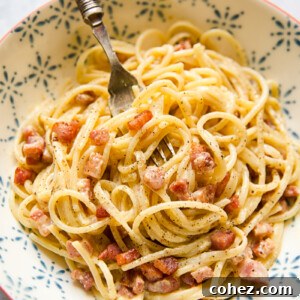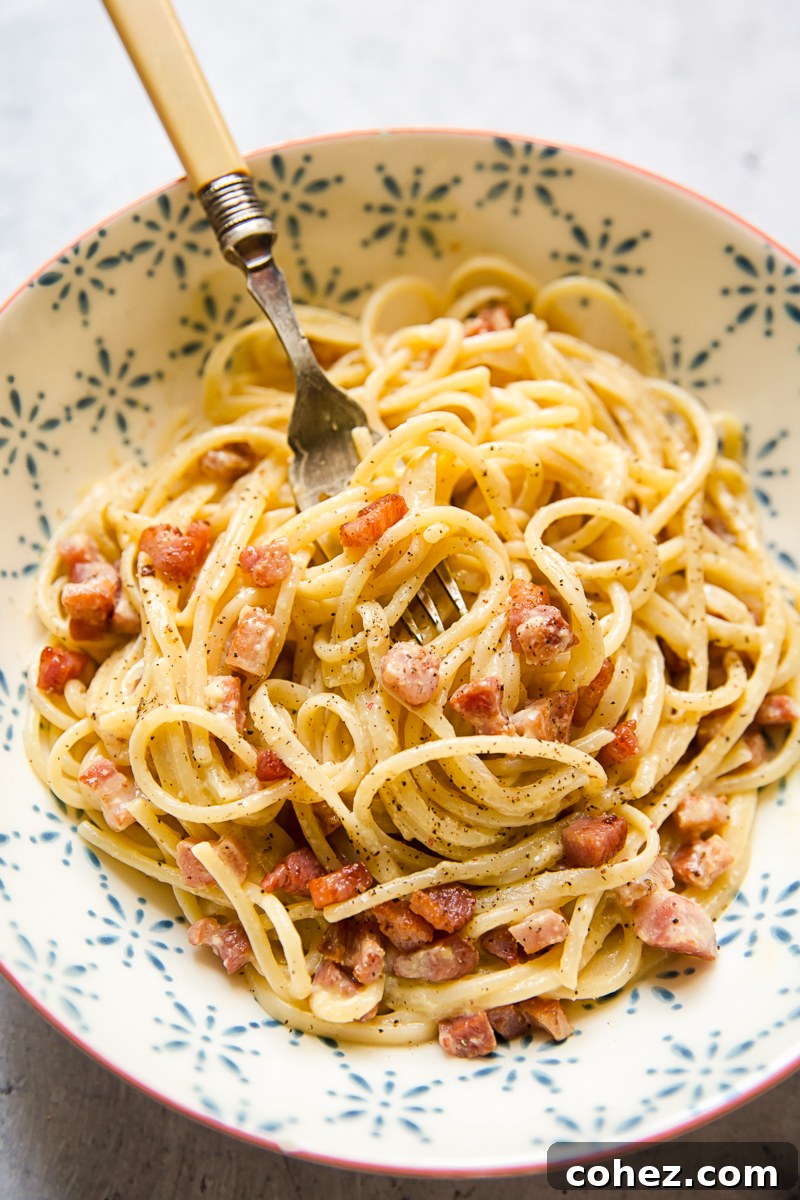
Welcome to the ultimate guide for crafting authentic Spaghetti Carbonara, a truly legendary Italian dish that’s surprisingly simple to master. Forget everything you thought you knew about Carbonara if it involved heavy cream – our recipe celebrates the traditional method, relying solely on eggs and Parmesan cheese (or its more authentic cousin, Pecorino Romano) to achieve its signature rich, velvety sauce. Prepare for a step-by-step culinary journey, complete with essential tips and techniques to bring true Italian flavors to your kitchen.
For those seeking a delightful vegetarian alternative, explore our Vegetarian Mushroom Carbonara, a fantastic meatless version that captures the spirit of this beloved pasta.
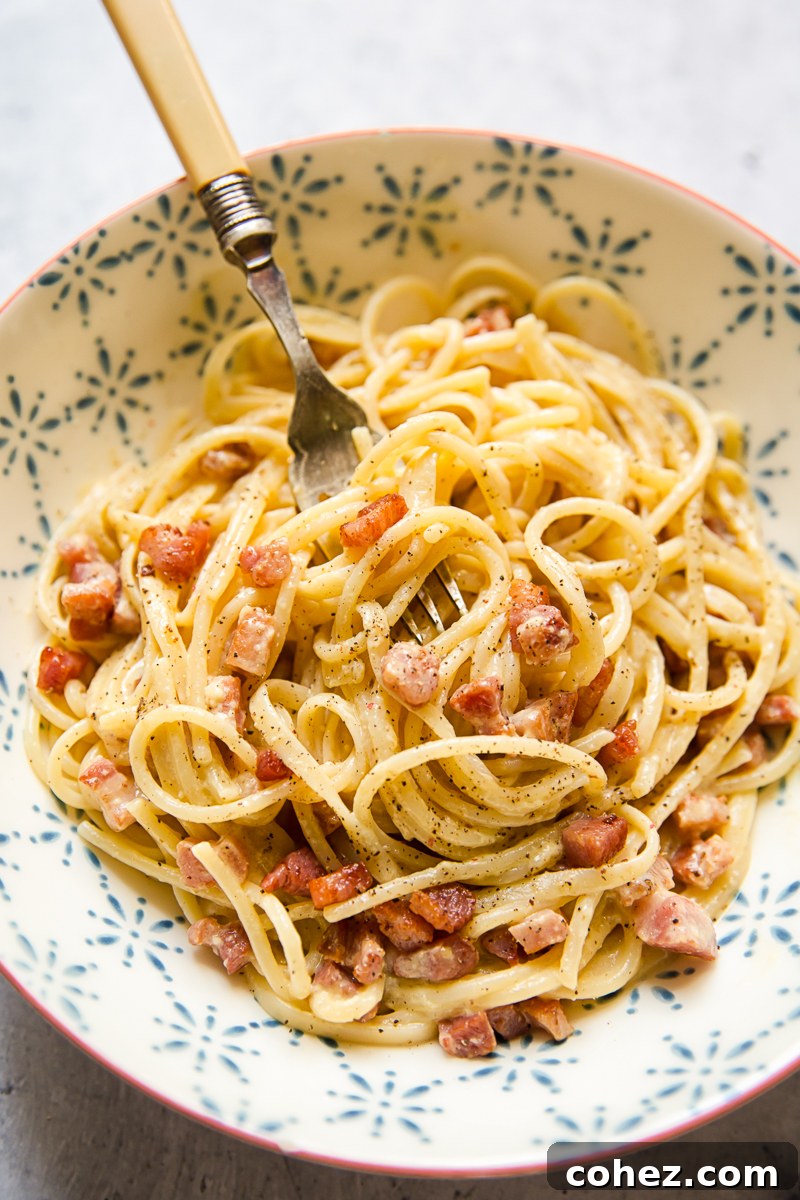
Our adventures in Italy have always led us away from the bustling tourist traps, into the heart of genuine Italian homes. Here, meals are lovingly prepared not by celebrity chefs, but by the hands of real Italian women – the mammas, nonnas, and aunts who embody generations of culinary wisdom. Our Italian friends ensure we experience this authentic side of the country, where the true essence of Italian cuisine flourishes.
Ask any Italian where to find the best food, and you’ll invariably hear “my mamma’s house.” This sentiment holds a profound truth: some of Italy’s most delicious and cherished dishes are born in home kitchens. Carbonara stands as a shining example of this philosophy. It’s a testament to the power of simplicity, transforming a handful of humble ingredients into a dish of unparalleled creaminess, savory depth, and pure satisfaction.
There’s a well-known anecdote attributed to Julia Child, where she reportedly expressed a dislike for Italian cooking, claiming there was “no actual cooking involved.” While an amusing statement, it misses the very heart of Italian culinary genius: the magic of minimal ingredients transformed through precise technique and deep understanding. For us, this “lack of cooking” is precisely what makes Italian food, and especially Carbonara, so appealing. Imagine arriving home after a long day, perhaps a little tired, yet still being able to whip up a gloriously satisfying spaghetti carbonara in minutes, ready to share with loved ones around the dinner table. This ease and inherent joy are what make this dish truly special.
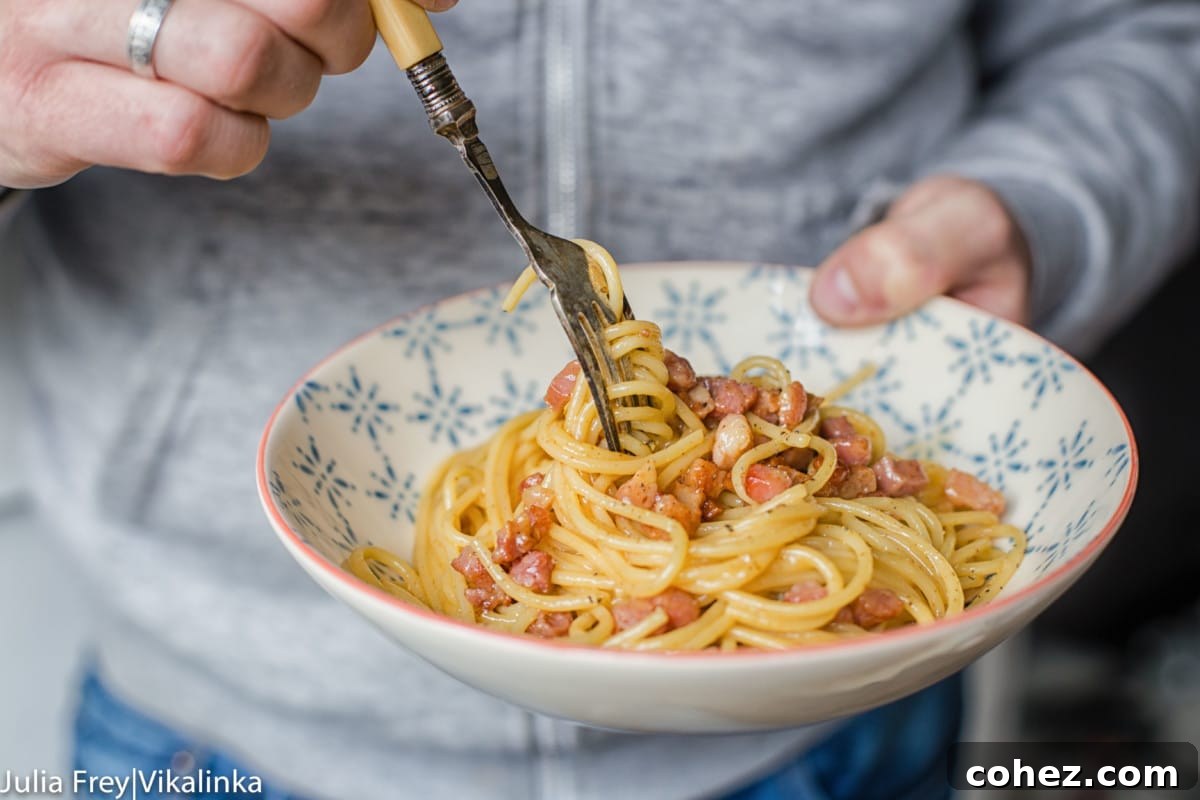
The Enduring Appeal of Carbonara Sauce
While Spaghetti Carbonara is firmly ingrained in our minds as a timeless Italian classic, its true origins are a subject of spirited debate among culinary historians and passionate foodies alike. Unlike many ancient Italian recipes, Carbonara’s history might be more recent than commonly perceived, adding an intriguing layer to its iconic status.
One widely circulated theory suggests that Carbonara was born out of necessity during World War II. According to this account, an Italian chef, catering to American soldiers stationed in Italy, ingeniously combined locally available ingredients with the bacon and eggs provided by the Allied forces. This adaptation quickly became a favorite among the servicemen, who then carried their fond memories and the recipe back to their home countries, thus popularizing Carbonara across continents. This narrative, while romantic, is often contested.
Conversely, other food historians point to earlier culinary texts, revealing mentions of strikingly similar pasta dishes that predate WWII. These older recipes, often featuring cured pork, eggs, and cheese, suggest a more gradual evolution of Carbonara, rather than a singular invention during a specific historical event. It is this more organic, historical development that resonates most with the authentic spirit of Italian cuisine, hinting at roots deeply embedded in regional culinary traditions.
Regardless of its precise origins, one aspect of Carbonara remains universally clear: its authentic preparation stands in stark contrast to many modern restaurant versions. It’s a common lament among purists that contemporary interpretations often load the dish with heavy cream, transforming it into a rich, albeit often overly decadent, meal. This addition fundamentally alters the character of the sauce, moving it away from the delicate balance of flavors and textures that define traditional Carbonara. The result is often a “hefty dish” that leaves one feeling guilty and overly full.
But what if we told you that the same luxurious creaminess and satisfying richness could be achieved without a single drop of cream, and without the unnecessary calories? The secret lies not in adding more, but in understanding the simple magic of its core ingredients and the art of their preparation. This recipe will guide you to that authentic, guilt-free, intensely satisfying Carbonara experience.
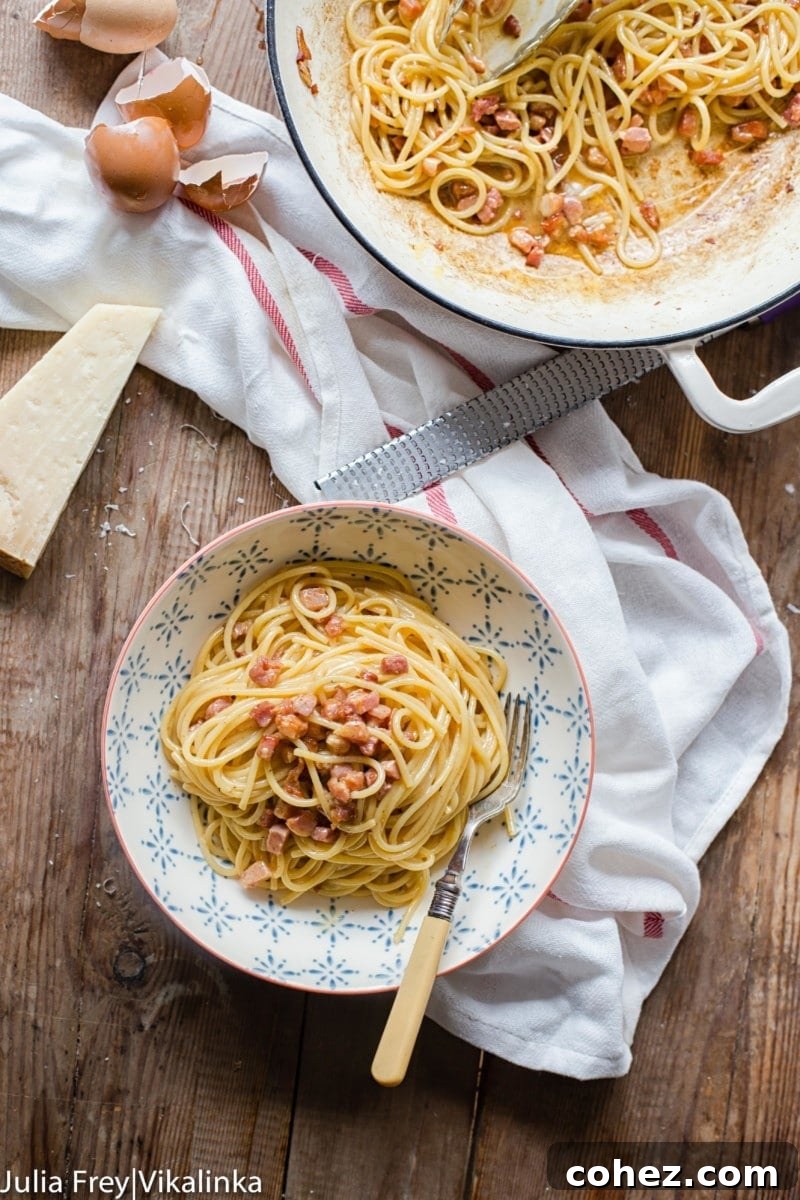
Essential Ingredients for Authentic Carbonara
The beauty of true Carbonara lies in its minimalist ingredient list, where each component plays a crucial role. While Italian markets offer very specific items for an authentic preparation, delicious results can still be achieved with readily available substitutions.
Traditionally, Carbonara calls for guanciale, a cured meat made from pork jowl. Guanciale offers a distinct depth of flavor and a unique texture, rendering fat that is richer and more complex than other cured meats. Paired with this is Pecorino Romano, an aged, sharp, salty cheese made from sheep’s milk, which provides a pungent tang that is characteristic of authentic Carbonara.
Finding genuine guanciale and Pecorino Romano outside of Italy or specialty Italian delis can sometimes be a challenge, and these premium ingredients often come at a higher cost. However, do not despair! High-quality pancetta (Italian cured pork belly) or even thick-cut bacon can serve as excellent, more accessible alternatives for the cured pork. For the cheese, freshly grated Parmesan (Parmigiano-Reggiano) is a fantastic substitute for Pecorino Romano, offering a nutty, savory profile that works beautifully.
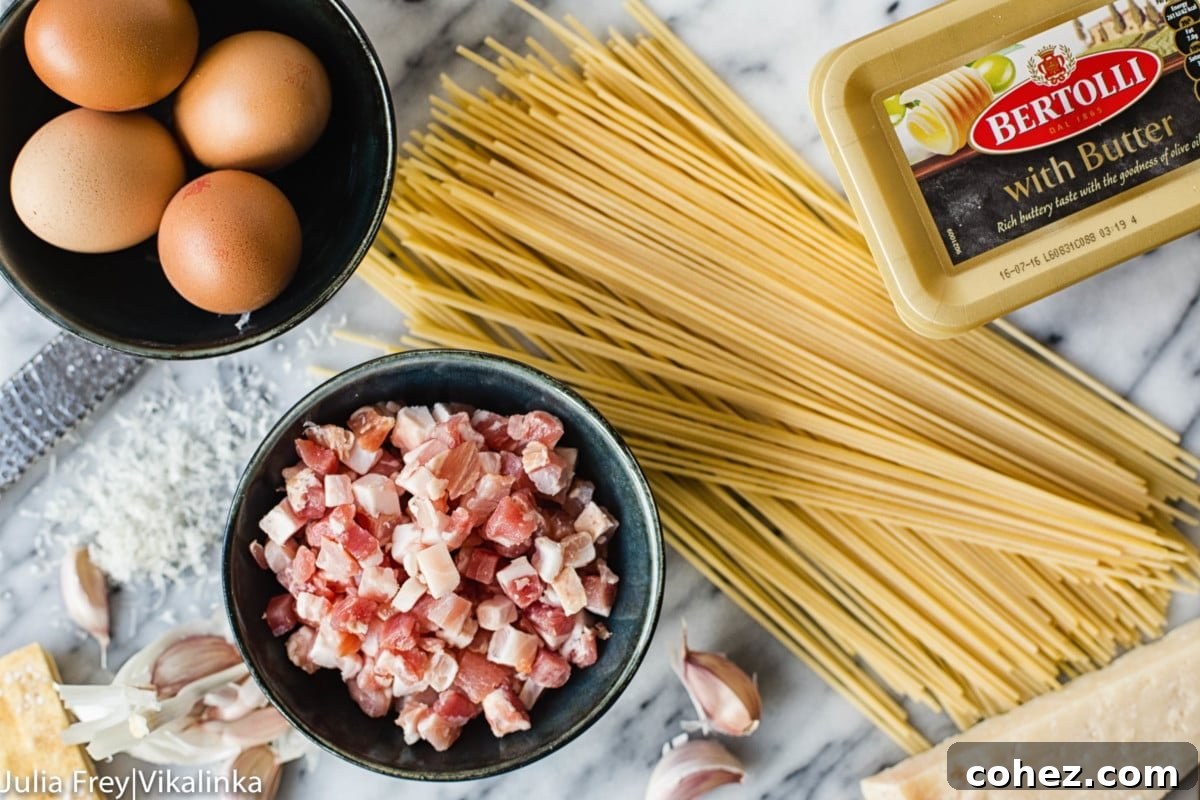
For such a luxuriously creamy sauce, the actual ingredient list is surprisingly short and sweet, emphasizing quality over quantity:
- Eggs: The heart of the sauce, providing both richness and emulsification.
- Parmesan or Pecorino cheese: For its salty, umami kick and role in creating the creamy texture.
- Pancetta or bacon: The savory foundation, lending crispy texture and flavorful fat.
- Salt and freshly cracked black pepper: To season and enhance all the other flavors.
- 1 tablespoon of butter (optional): Can be used to render the pork or to add extra richness if desired, but not both with cream.
The real question, then, is how to achieve that famously creamy Carbonara sauce with just these few, straightforward ingredients, bypassing the need for cream entirely?
The Secret to Carbonara’s Creaminess: No Cream Needed
The magic behind Carbonara’s signature velvety sauce, achieved without a single drop of cream, lies primarily in the masterful use of eggs and a crucial component often overlooked: pasta water.
Eggs are the star: Specifically, it’s the egg yolks that are primarily responsible for the luxurious, emulsified creaminess. By using a higher ratio of yolks to whole eggs (typically one whole egg and a few extra yolks), we maximize the richness and ensure a silky smooth texture. The fat and proteins in the yolks, when gently cooked, create a liaison that coats each strand of pasta beautifully, delivering that satisfying mouthfeel without any greasiness.
The Power of Pasta Water: This starchy, salty liquid is your best friend in Carbonara. As pasta cooks, it releases starch into the water, turning it slightly cloudy. This starchy water is vital for several reasons:
- Emulsification: When added to the egg and cheese mixture, the starch in the pasta water helps to emulsify the sauce, creating a smooth, cohesive consistency that adheres perfectly to the pasta.
- Texture: It thins the sauce just enough to make it luscious, allowing it to coat the spaghetti without becoming clumpy or dry.
- Flavor Carrier: The salt from the pasta water also helps to carry and distribute the savory flavors throughout the dish.
A Little Fat (Optional but Helpful): While strictly not required if you’re using flavorful cured pork, a small amount of added fat can enhance the sauce. A trick some traditionalists employ is to start by adding one tablespoon of butter to the pan when cooking the pancetta or guanciale. This helps render the fat and adds another layer of richness. Alternatively, for a slightly looser finish, a tablespoon of cream *could* be added at the very end, though purists would argue against it. The key is to choose one or the other, not both, and recognize that with proper technique, even these additions become optional rather than essential.
The synergy between perfectly cooked pasta, flavorful rendered pork fat, an egg-and-cheese mixture, and hot, starchy pasta water creates a symphony of textures and tastes. When combined with the right technique, these elements transform into the truly authentic, incredibly creamy Carbonara sauce that has captivated palates for generations.
Mastering Carbonara: Step-by-Step Perfection
Creating an authentic Carbonara is a delightful culinary dance where precision and attention to detail are paramount, especially given its incredibly short ingredient list. The exquisite flavor hinges not just on the quality of your chosen ingredients but also on the subtle finishing touches and timing during preparation. Here’s a detailed guide to perfecting this Roman classic:
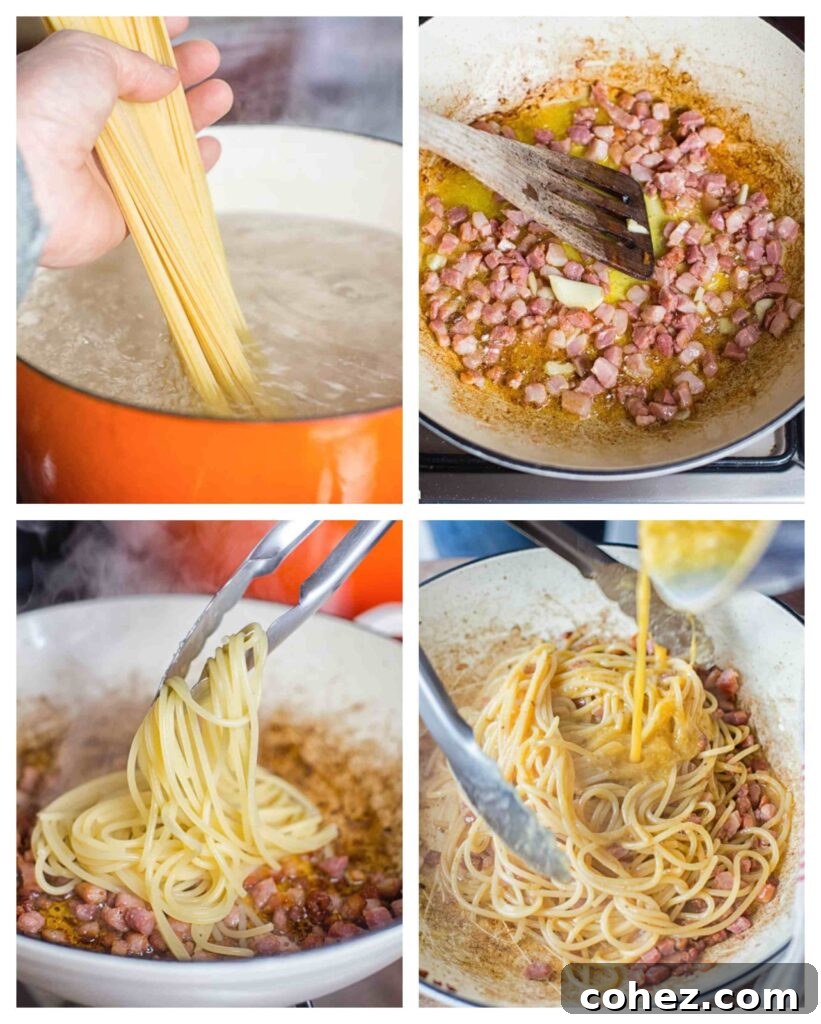
- Perfectly Cooked Pasta: Begin by cooking your spaghetti (or preferred pasta shape) in a large pot of generously salted boiling water. This step is crucial: salting the water properly ensures that the pasta absorbs flavor from within, rather than just having seasoning on its surface. Cook the pasta until al dente – firm to the bite – as it will continue to cook slightly when tossed with the hot sauce. Remember to reserve about 1 cup of the starchy pasta water before draining! This liquid is gold for your sauce.
- Crispy Pork, Fragrant Fat: While the pasta is bubbling, heat a large, heavy-bottomed pan. Add your finely chopped pancetta (or guanciale/bacon) to the dry pan. If using leaner bacon, you might want to add 1 tablespoon of butter to help render the fat and prevent sticking. Here’s a little secret for an extra layer of flavor: add one whole, peeled, and lightly crushed garlic clove to the pan while the pork renders. The garlic infuses the rendering fat with its aromatic essence, adding a delicate background note without overpowering the dish. Cook until the pork is beautifully crispy and its fat has rendered down. Once the pork is cooked, remove the garlic clove; its job is done. If using bacon, drain off most of the rendered fat, leaving just 1-2 tablespoons for flavor.
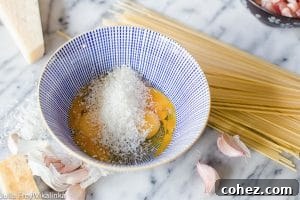
- The Creamy Egg & Cheese Mixture: In a separate bowl, prepare your sauce base. Crack one whole large egg and three additional large egg yolks into the bowl (save those egg whites for another recipe, like meringues or an omelet!). Grate a generous amount of fresh Parmesan or Pecorino Romano cheese into the bowl. Whisk vigorously until the eggs and cheese are thoroughly blended and slightly frothy. This mixture is what will transform into your luxurious sauce.
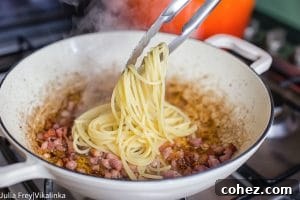
- Bringing it All Together: The Toss: This is where the magic happens and timing is key. Once your pasta is al dente, use tongs to transfer it directly from the boiling water into the pan with the cooked pancetta and its rendered fat. Do not drain the pasta completely through a colander; the residual water on the pasta strands is beneficial. Add about half of your reserved starchy pasta water to the pan. Toss the pasta vigorously with the pancetta and water, ensuring every strand is coated. This initial toss begins to create a light, flavorful base.
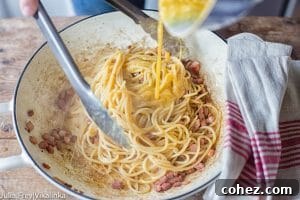
- The Delicate Emulsion: Now for the trickiest, yet most rewarding, step: creating the classic Carbonara emulsion. Immediately take the pan *off the heat*. It’s crucial that the pan is no longer on the burner when you add the eggs, as direct heat will scramble them. With the pan off the heat, pour the egg and cheese mixture over the hot pasta while simultaneously and continuously tossing the spaghetti with tongs. The residual heat from the pasta and the pan will gently cook the eggs, creating a smooth, creamy, and velvety sauce that clings to the pasta, rather than curdling them into scrambled eggs. Keep tossing rapidly until the sauce thickens and perfectly coats the pasta. If the sauce seems too thick, add more of the reserved pasta water, one tablespoon at a time, until you reach your desired consistency.
-
Season and Serve: Taste your Carbonara and season with additional salt if needed (remember the cheese and pancetta are salty already) and a generous amount of freshly cracked black pepper. Serve immediately, topped with even more freshly grated Parmesan or Pecorino Romano. The contrast of the hot pasta, creamy sauce, and crisp pork is best enjoyed fresh.

Recipe Tips and Notes for Perfect Carbonara
- Choose Your Cured Pork Wisely: For the most authentic flavor, I highly recommend sourcing guanciale if possible. Its unique fat renders beautifully and imparts an unparalleled depth. If guanciale isn’t available, pancetta is an excellent second choice. If neither is an option, opt for thick-cut, good quality bacon, but be aware that its smokier flavor will alter the traditional taste slightly.
- The Delicate Touch of Garlic: While traditional Carbonara strictly omits garlic, a single crushed clove added to the pan with the rendering pork can infuse a subtle, delicious aroma without overwhelming the dish. Just be sure to remove it before adding the pasta to maintain that delicate balance.
- Preventing Scrambled Eggs: This is the most common pitfall. Always remove the pan from the heat before adding the egg and cheese mixture. The residual heat from the freshly cooked pasta and the warm pan is sufficient to gently cook the eggs into a creamy sauce. If you’re concerned about using raw eggs, opt for organic, pasteurized, free-range eggs, known for their superior quality and safety.
- Yolks for Ultimate Creaminess: If you’re particularly worried about the eggs scrambling or desire an even richer, more luscious sauce, consider using only egg yolks (e.g., 4-5 yolks instead of 1 whole egg + 3 yolks). Yolks are less prone to curdling and contribute to a supremely creamy texture.
- Freshly Grated Cheese is Non-Negotiable: Skip the pre-grated Parmesan! It often contains anti-caking agents that dull the flavor and can make the sauce gritty. Freshly grated Pecorino Romano (for authenticity) or high-quality Parmigiano-Reggiano will melt beautifully, integrate seamlessly into the sauce, and provide the best flavor and texture.
- The Power of Pepper: A generous amount of freshly cracked black pepper is not just a garnish; it’s an integral part of traditional Carbonara. Its pungent kick balances the richness of the eggs and pork. Don’t be shy!
- Pasta Water is Your Secret Weapon: Always reserve more pasta water than you think you’ll need. This starchy liquid is essential for adjusting the sauce’s consistency, helping it emulsify and coat the pasta perfectly. Add it gradually until your sauce reaches the desired creaminess.
- Practice Makes Perfect: If this is your first time making Carbonara, don’t hesitate to watch a video tutorial (many are available online!) to see the technique in action, especially the crucial step of tossing the pasta while adding the egg mixture. Visual guidance can be incredibly helpful.
Serving Suggestions for Your Carbonara Feast
One of the true joys of Carbonara lies in its quick preparation and inherent simplicity, a hallmark of Italian cooking. This means you won’t need to labor over elaborate side dishes! The focus should remain on the star of the show – your perfectly prepared pasta.
If you’re in the mood to begin your meal with some delightful appetizers, consider light and flavorful options. Mushroom crostini, with its earthy flavors, or a vibrant variety of bruschetta (perhaps with fresh tomatoes and basil, or creamy spreads) would be wonderful choices. These starters are easy to prepare and won’t overshadow the main course.
Another excellent way to elevate the meal while maintaining an effortless feel is to serve an Italian-style charcuterie board. Arrange a few slices of high-quality cured meats (like prosciutto or salami), a selection of Italian cheeses (such as fresh mozzarella, gorgonzola, or aged provolone), a bowl of marinated olives, and some crispy breadsticks or artisan bread. This creates a convivial atmosphere and offers a range of complementary flavors and textures.
Personally, I find that a simple, fresh salad is the ideal accompaniment to a rich and creamy pasta dish. A crisp green salad with a light vinaigrette provides a refreshing counterpoint. Even better is a Caprese salad – a ridiculously easy yet incredibly fresh and fragrant option. The vibrant tomatoes, creamy mozzarella, and aromatic basil, drizzled with olive oil and balsamic glaze, offer the perfect palate cleanser and a burst of freshness against the savory Carbonara.
It’s important to note that combining the egg and cheese mixture into the pasta properly becomes significantly more challenging when preparing large quantities of Carbonara. The speed and continuous tossing required for a perfect emulsion are hard to achieve with massive batches. While tempting to make for a large gathering, I’ve found that preparing for about four people is the sweet spot, allowing for optimal control and a consistently creamy result.
Storage and Leftovers: Best Enjoyed Fresh
As tempting as it might be to make a large batch of Carbonara to enjoy over several days, this is one recipe that truly shines brightest when served immediately after preparation. The delicate emulsion of eggs, cheese, and pasta water is at its peak creaminess and texture right off the stove. Over time, the sauce tends to thicken and can lose its silky consistency, making leftovers a pale imitation of the freshly made dish.
For this reason, I strongly recommend preparing only as much Carbonara as you anticipate eating in a single sitting. This might mean adjusting the serving size down, or cooking in smaller batches if you have more diners.
However, if you do find yourself with a bit of leftover Carbonara, it can be stored. Transfer any remaining pasta to an airtight container and refrigerate it promptly. It will keep safely in the fridge for approximately 3-4 days. When reheating, the best method is usually a microwave on a low setting, stirring occasionally, or gently in a pan with a splash of water or broth to loosen the sauce. Be mindful that the sauce’s texture will likely be different, and it may not be as luxuriously creamy as when fresh. Freezing Carbonara is generally not recommended, as the delicate egg-based sauce will almost certainly separate upon thawing, resulting in an unappetizing texture.
More Authentic Italian Pasta Recipes to Explore
- Spaghetti Bolognese
- Creamy Tomato Pasta (with cream, for a different style)
- Spaghetti Puttanesca
- Spaghetti alla Siciliana
Easy Carbonara Sauce
By Julia Frey of Vikalinka
Prep: 5 mins | Cook: 15 mins | Total: 20 mins | Servings: 6Pin
PrintA step by step recipe for an easy and delicious, no cream Carbonara sauce.
Ingredients
- 100 g / 3.5 oz pancetta, or guanciale, finely chopped
- 80 g / 1/2 cup Parmesan cheese, or Pecorino Romano
- 4 large eggs
- 450 g / 1 lbs spaghetti
- 1 garlic clove, peeled and crushed
- 1 tbsp butter, optional
- Salt
- Black pepper
Instructions
-
Cook the spaghetti according to package instructions in a large pot filled with salted water.
-
While the spaghetti is cooking, cook the chopped pancetta or bacon in a large pan with 1 or 2 whole cloves of garlic and 1 tbsp of butter until the fat is rendered, then discard the garlic. If using bacon, discard all but 1-2 tablespoons of fat.
-
In a small bowl, mix 1 whole egg and 3 egg yolks (reserve the whites for another use or freeze them) and freshly grated parmesan cheese until blended.
-
Once the pasta is cooked, drain it while reserving 1/2 cup of pasta water. Add the pasta directly to the pan with pancetta and about half of the reserved pasta water. Stir to allow the pasta to be coated with the sauce, then take the pan off the heat.
-
Pour the egg and Parmesan mixture into the spaghetti while tossing it with a pair of tongs the entire time. Toss quickly not to let the eggs to curdle. Then taste and season with more salt if needed and pepper as well as more grated parmesan if desired. You might want to add the rest of the reserved pasta water to make it saucier.
Video
Notes
Omit butter if using bacon for this recipe.
Nutrition
Calories: 461kcal | Carbohydrates: 57g | Protein: 20g | Fat: 15g | Saturated Fat: 6g | Cholesterol: 134mg | Sodium: 774mg | Potassium: 254mg | Fiber: 2g | Sugar: 2g | Vitamin A: 320IU | Calcium: 190mg | Iron: 1.7mgNutrition information is automatically calculated, so should only be used as an approximation.
Tried this recipe?
Let us know how it was!