
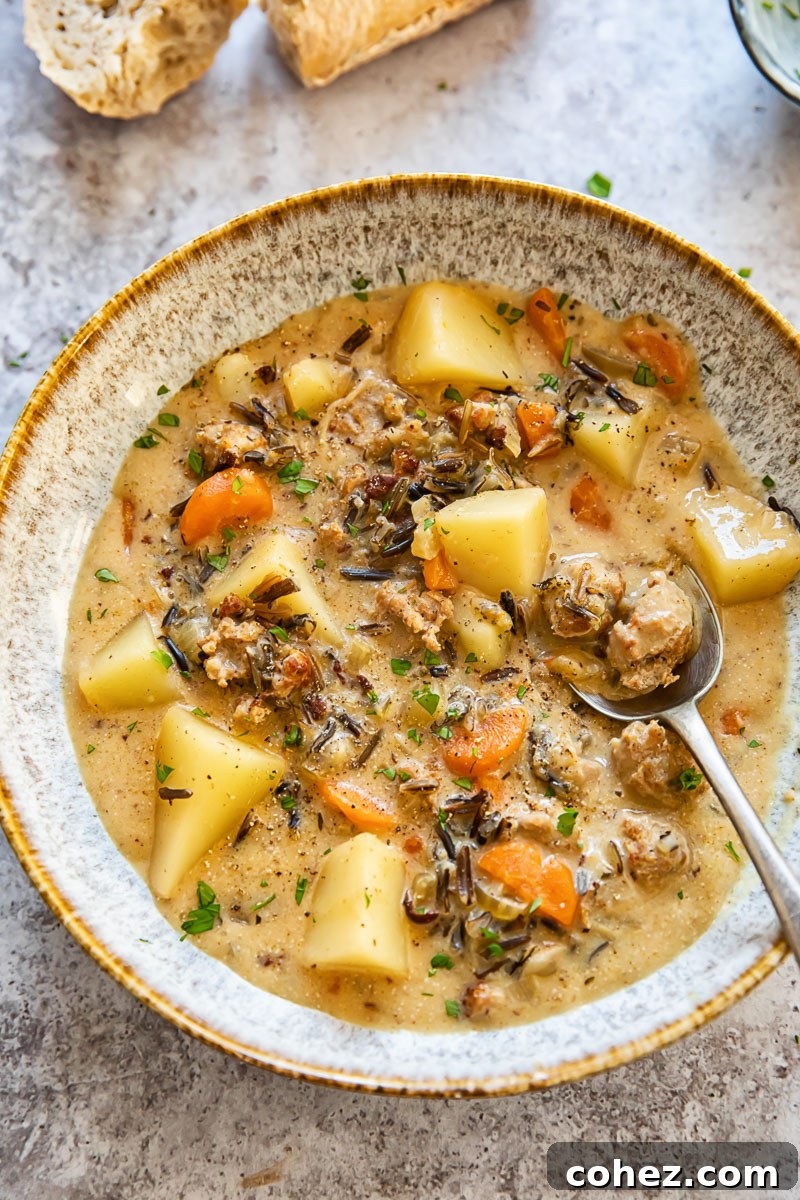
Hearty Sausage and Potato Chowder: A Comfort Food Masterpiece
Step aside, seafood! While traditional chowder often conjures images of rustic fishing boats battling stormy seas, this recipe takes a delicious detour. Prepare to abandon the clams and dive into a steaming, incredibly creamy bowl of potato chowder, elevated with the rich, satisfying flavor of sausage. It’s the ultimate comfort food, reimagined for a cozy night in.
And what’s a hearty bowl of soup without some delicious homemade bread to soak up every last drop? For those eager to bake, try our recipe for Sourdough Bread for Beginners.
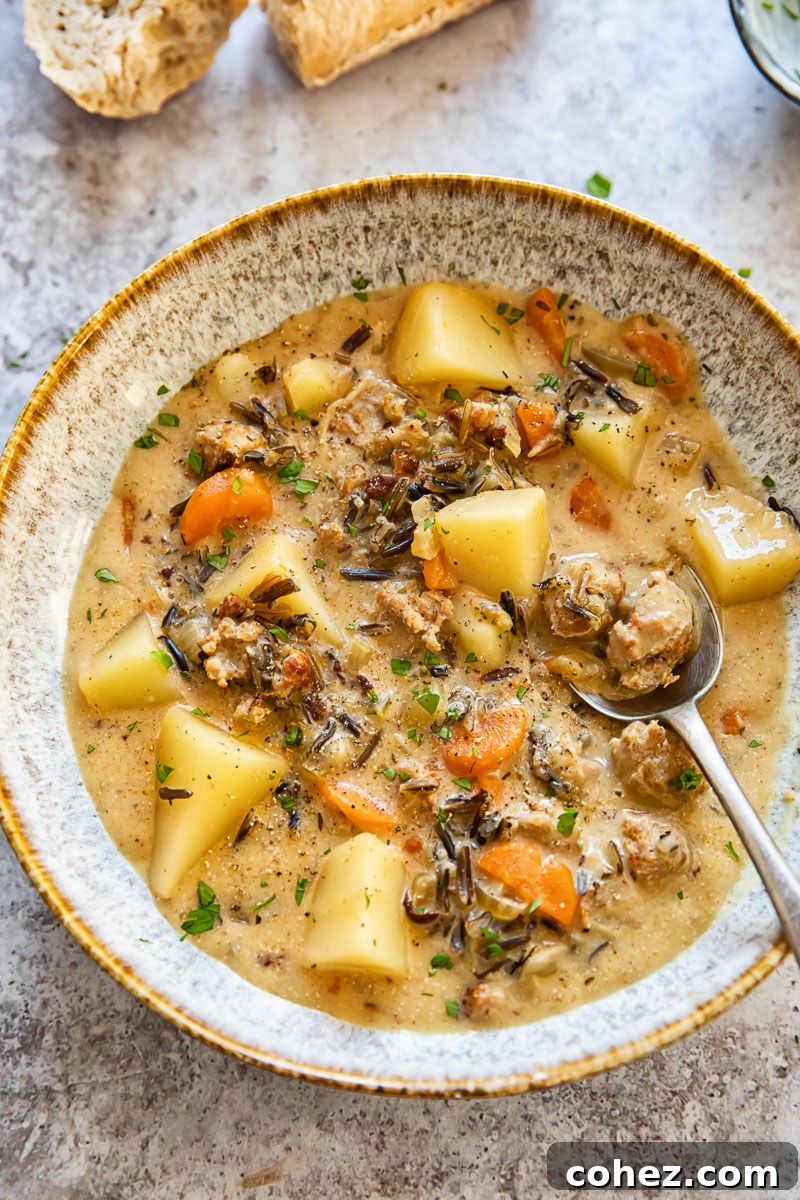
Why Sausage is the Perfect Chowder Twist
Choosing sausage as the star of this chowder isn’t just a departure from tradition; it’s a culinary revelation. Not only is sausage generally more affordable and readily available than many types of seafood, but it’s also incredibly versatile and remarkably easy to work with in the kitchen. For home cooks, this means less prep time, no elaborate cleaning, and a guaranteed crowd-pleasing flavor that even the most ambitious seafood critics will adore.
The beauty of sausage lies in its immense variety. From mild and sweet to spicy and robust, the options allow you to tailor your chowder precisely to your family’s preferences. Imagine a classic pork and leek sausage for a universally appealing, comforting flavor, or spice things up with a Hungarian paprika-spiced sausage for an adventurous twist. For a truly deep, wintry warmth, smoked sausage introduces an unparalleled depth that transforms the entire dish. Don’t be afraid to explore your local butcher’s selection or grocery store aisles to find a sausage that truly speaks to your palate. Each choice brings a unique character to this already phenomenal potato chowder.
Crafting the Ultimate Creamy Potato Base
As any seasoned cook will tell you, the secret to an outstanding potato soup or chowder lies squarely with the humble potato itself. The right potato can make all the difference in achieving that luxurious, creamy texture without needing excessive dairy. For this recipe, we highly recommend starchy varieties like Russet potatoes (known as Maris Piper in the UK). These potatoes break down beautifully during cooking, naturally releasing their starches to create a thick, velvety broth that clings to every spoonful.
However, if you crave a chowder with more textural intrigue – that delightful combination of smooth and chunky – consider incorporating a portion of waxy potatoes alongside the starchy ones. Varieties such as Yukon Gold or Red Bliss hold their shape better, offering firm, bite-sized pieces that contrast wonderfully with the creamy base. Using a mix truly gives you the best of both worlds: a rich, thick consistency from the starchy potatoes, and satisfying chunks from the waxy ones.
For an even silkier finish, you might consider an optional step: after the potatoes are cooked, carefully remove about half of the chowder, blend it until smooth using an immersion blender or a regular blender (be cautious with hot liquids!), and then stir it back into the pot. This technique deepens the creamy texture while still retaining those beloved hearty chunks, creating a truly irresistible eating experience.
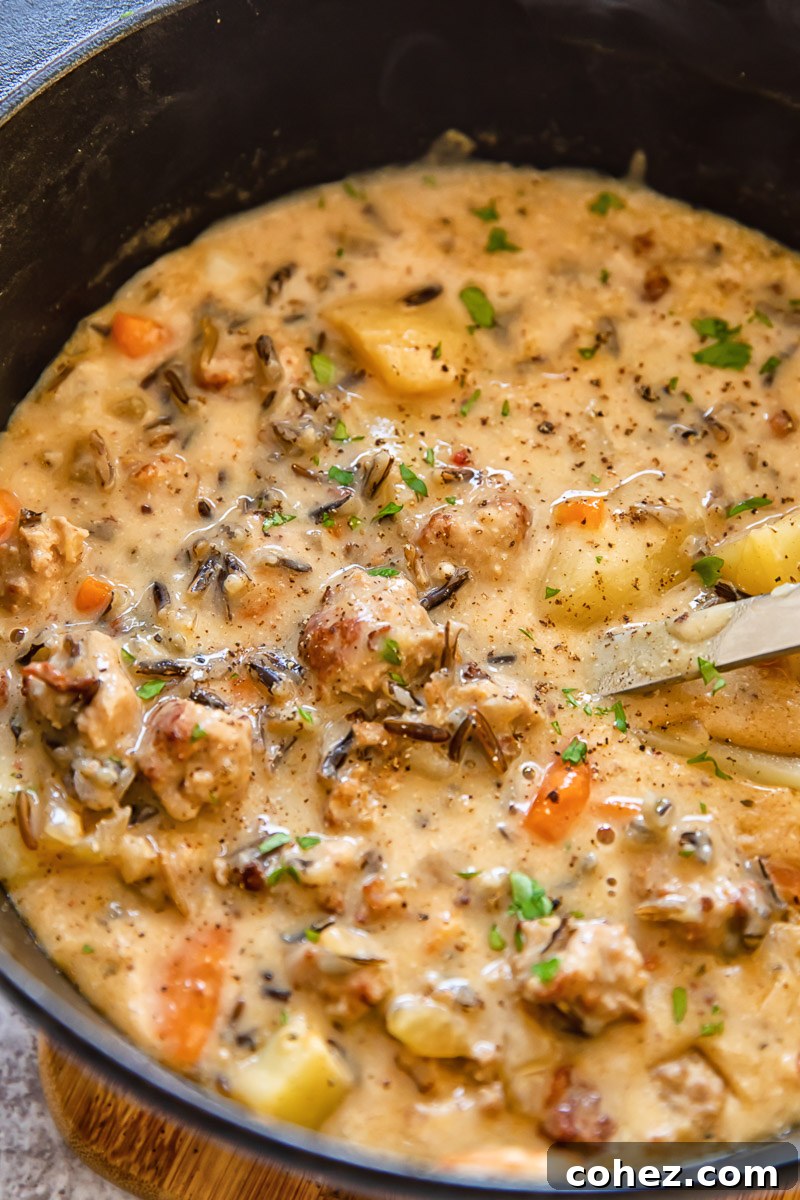
Understanding the Hearty World of Chowder
What exactly is chowder, and what sets it apart from a regular soup? Historically rooted in the North Eastern United States and Atlantic Canada, a true chowder is more than just a thick soup; it’s a meal in a bowl. It’s defined by its characteristically rich, creamy base, often thickened with flour or a roux, and generously packed with substantial chunks of ingredients. Traditionally, these often include seafood like clams or fish, along with hearty vegetables such as potatoes, corn, and onions.
The origins of chowder can be traced back to European fishing communities as early as the 16th century, where fishermen would combine their day’s catch with whatever vegetables and dairy products were available, creating a filling and warming meal to combat the cold. The name itself is believed to come from the French word “chaudière,” referring to the large cauldron in which the dish was cooked. Classic examples like New England Clam Chowder or creamy Corn Chowder perfectly embody these characteristics, delivering comforting warmth and robust flavor.
However, culinary traditions are meant to be honored, and sometimes, innovated upon. While we pay homage to the rich history and defining characteristics of chowder – particularly its creamy base and hearty potato chunks – this recipe dares to break the seafood mold. By introducing savory sausage, we create a chowder that is both deeply comforting and refreshingly different, proving that history can inspire without confining the imagination in the kitchen.

Expert Tips and Delicious Variations
- Sausage Alternatives: While sausage provides a fantastic flavor, feel free to substitute it with bacon. Crispy bacon bits add an incredible smoky depth and a delightful textural contrast that is equally delicious and comforting. You can render the bacon fat and use it to sauté the vegetables for even more flavor.
- Grain Choices: The elegant, dark grains of wild rice offer a striking visual and textural contrast to this creamy potato soup. However, if wild rice isn’t readily available or you’re looking for different options, brown rice or pearl barley are excellent and affordable alternatives. They will still provide a satisfying chewiness and boost the heartiness of the chowder. Ensure to cook them according to package directions, or integrate them into the simmering phase as specified for wild rice.
- Thickening Options: To achieve your desired consistency, you can use either all-purpose flour or cornflour (cornstarch). Flour creates a classic roux, adding a subtle richness, while cornflour is a great gluten-free option that provides a smooth, clear thickening. If using cornflour, create a slurry with a small amount of cold water before adding it to the hot soup to prevent lumps.
- Sweet Potato Swap: For a slightly different flavor profile and an extra boost of nutrients, consider using sweet potatoes instead of regular white potatoes. They lend a subtle sweetness to the chowder and often cook a bit quicker, making them a helpful time-saver when you’re in a hurry. Just be mindful that their texture will be slightly softer.
- Achieving Creaminess: The creamy texture is fundamental to a good chowder. You can use traditional dairy cream (like single/light cream or half and half) for a classic rich flavor. For those preferring a dairy-free alternative, plant-based creams such as soya cream, oat cream, or even full-fat coconut milk (for a subtle tropical hint) can create a wonderfully creamy texture.
- Seasoning is Key: Always taste your soup before serving! Seasoning levels can vary greatly depending on the saltiness of your stock and sausage. Don’t hesitate to add more salt, fresh black pepper, or even a pinch of cayenne for a little kick, to perfectly balance the flavors.
- Herbal Touches: Fresh herbs can brighten up the chowder significantly. A sprinkle of fresh chopped parsley, chives, or even a few sprigs of fresh thyme added at the end can elevate the aroma and presentation.
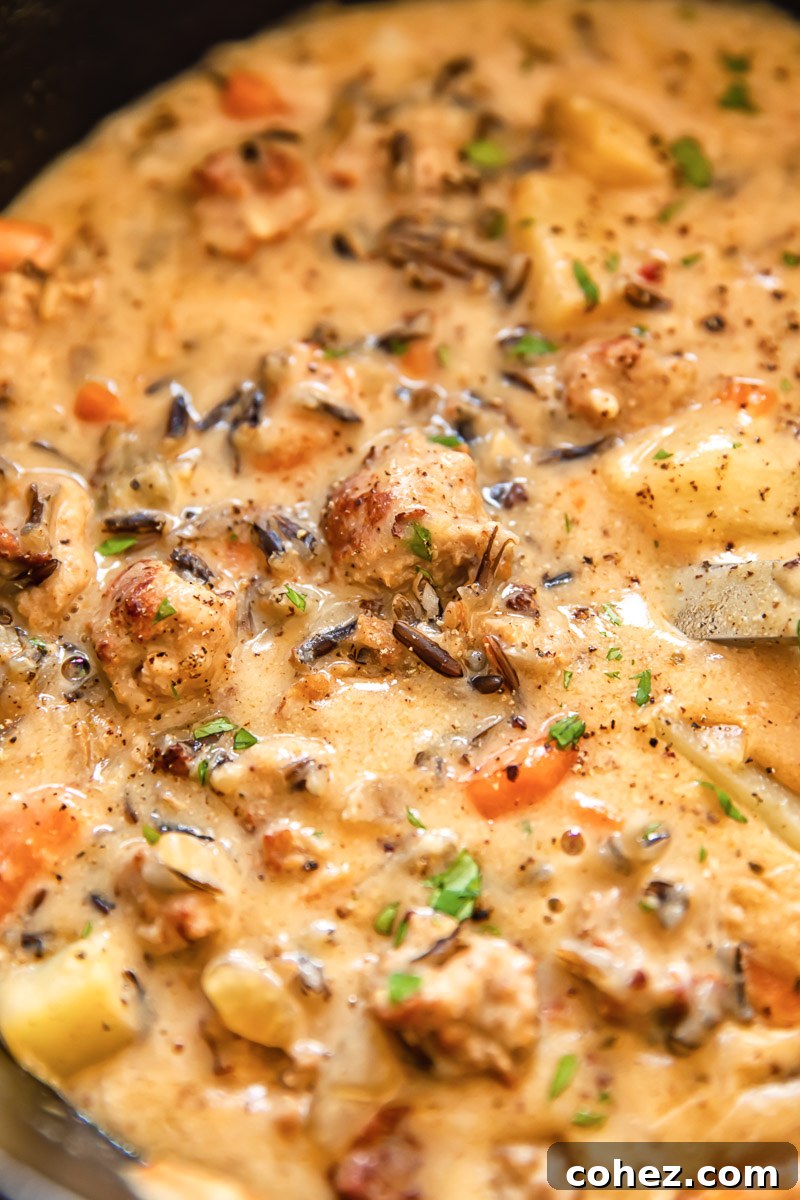
Storage and Reheating Best Practices
While the temptation to create a massive batch of this delicious chowder might be strong, exercise caution when it comes to freezing. Potatoes, especially once cooked and incorporated into a creamy soup, tend not to freeze well. Upon thawing, they can become grainy, watery, and lose their desirable texture, diminishing the overall quality of your chowder.
For the best experience, this hearty sausage and potato chowder is truly at its peak when enjoyed fresh, straight from the stovetop, steaming and ready to warm you from the inside out. If you do have leftovers, allow the chowder to cool completely before transferring it to an airtight container. It can be safely stored in the refrigerator for 2-3 days. To reheat, gently warm it on the stovetop over low to medium heat, stirring occasionally, until it’s heated through. You might need to add a splash of milk or stock to restore its original consistency, as it can thicken slightly upon refrigeration. Avoid aggressive boiling to maintain the integrity of the potatoes and cream.
More Creamy Soup Recipes to Explore
- Creamy Chicken Bacon Gnocchi Soup
- Curried Parsnip Soup
- Creamy Chicken Wild Rice Soup
- Cauliflower Cheese Soup
Potato and Sausage Chowder
Julia Frey of Vikalinka
10 mins
55 mins
1 hr 5 mins
6

Equipment
-
Soup pot
Ingredients
- 1 tbsp olive oil
- 400g (6) sausages, any flavour
- 1 onion, chopped
- 2 stalks celery, sliced
- 2 carrots, sliced
- 2 cloves garlic, minced
- 1/2 tsp dried thyme
- 3 tbsp plain/all-purpose flour
- 1 litre/4 cups chicken or vegetable stock
- 2 bay leaves
- 100g/1/2 cup wild rice
- 3 potatoes, medium, peeled and cut into chunks
- 375ml/1 1/2 cups single/light cream or half and half
- salt to taste
- fresh parsley, chopped (for serving, optional)
Instructions
- Heat the olive oil in a large soup pot over medium heat. Remove the sausage from its casing, add it to the pot, and break it up with a spatula. Fry the sausage until it’s golden brown and cooked through. Once cooked, remove the sausage to a separate plate. (If your sausage releases a lot of fat, drain off the excess, leaving about 2 tablespoons in the pot for the vegetables).
- To the same pot, add the chopped onion, sliced celery, and sliced carrots. Cook over low heat for about 10 minutes, stirring occasionally, until the vegetables begin to soften. Stir in the minced garlic and dried thyme, and cook for another 30 seconds until fragrant. Sprinkle the all-purpose flour over the vegetables and stir well to combine, forming a paste (roux). Continue cooking the roux for a couple of minutes to cook out the raw flour taste. Return the cooked sausage to the pot.
- Gradually pour in a small amount of chicken or vegetable stock, stirring constantly to ensure the roux is fully incorporated and no lumps form. Once smooth, pour in the remaining stock, add the bay leaves and wild rice. Bring the mixture to a gentle simmer, then reduce the heat to low-medium and cook for 30 minutes, or until the wild rice is partially tender. Add the cubed potatoes and continue to cook for another 15 minutes, or until both the wild rice and potatoes are fully cooked and tender. Finally, stir in the single/light cream or half and half. Season generously with salt and pepper to taste. Allow the cream to warm through for a few minutes without boiling, then remove the pot from the heat. Serve hot, garnished with fresh chopped parsley if desired.
Notes
- I use sausage because I like the flavour, but feel free to substitute with bacon. Bacon will add a smoky depth which is equally delicious.
- The long, black grains of wild rice offer a striking contrast in this creamy potato soup. But brown rice or pearl barley are accessible and affordable alternatives that will still provide bite.
- Flour or cornflour can be used to thicken the soup. The latter will make the soup gluten-free.
- You could try using sweet potatoes instead of regular ones if you prefer them, or have them to use up. They also cook quicker so a helpful time-saver if needed!
- To make this soup creamy you can use dairy cream or plant based substitute like soya cream.
- Finally, taste your soup! You may want to add more salt and freshly ground black pepper for optimal flavor.
Nutrition Facts (Approximate per serving)
Please note that nutrition information is an approximation and can vary based on ingredients and preparation methods.