
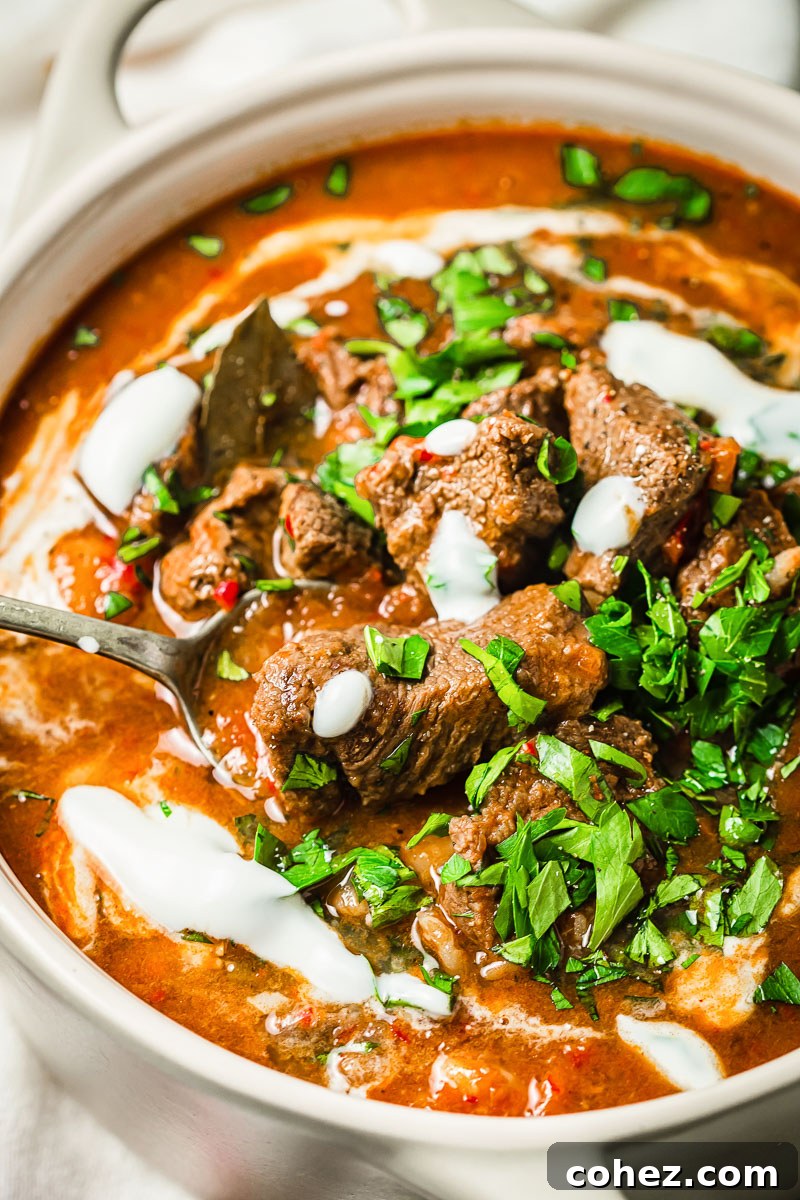
Hearty Beef Goulash: A Comforting Winter Warmer Recipe
As the cold embrace of winter settles in, there’s nothing quite as satisfying as a warm, hearty meal that fills your home with an inviting aroma and your stomach with pure comfort. Our Beef Goulash recipe delivers just that: tender chunks of beef slow-cooked in a rich, deeply flavored gravy, infused with the distinctive warmth of paprika. This classic winter warmer is a true culinary hug, perfect for chasing away the chill and bringing joy to your dinner table. Prepare to discover the secrets to a melt-in-your-mouth goulash that will become a cherished staple in your cold-weather cooking repertoire.
For an authentic Eastern European dining experience, we highly recommend serving this delightful stew alongside our homemade rye bread, perfect for soaking up every last drop of its delicious, savory sauce.
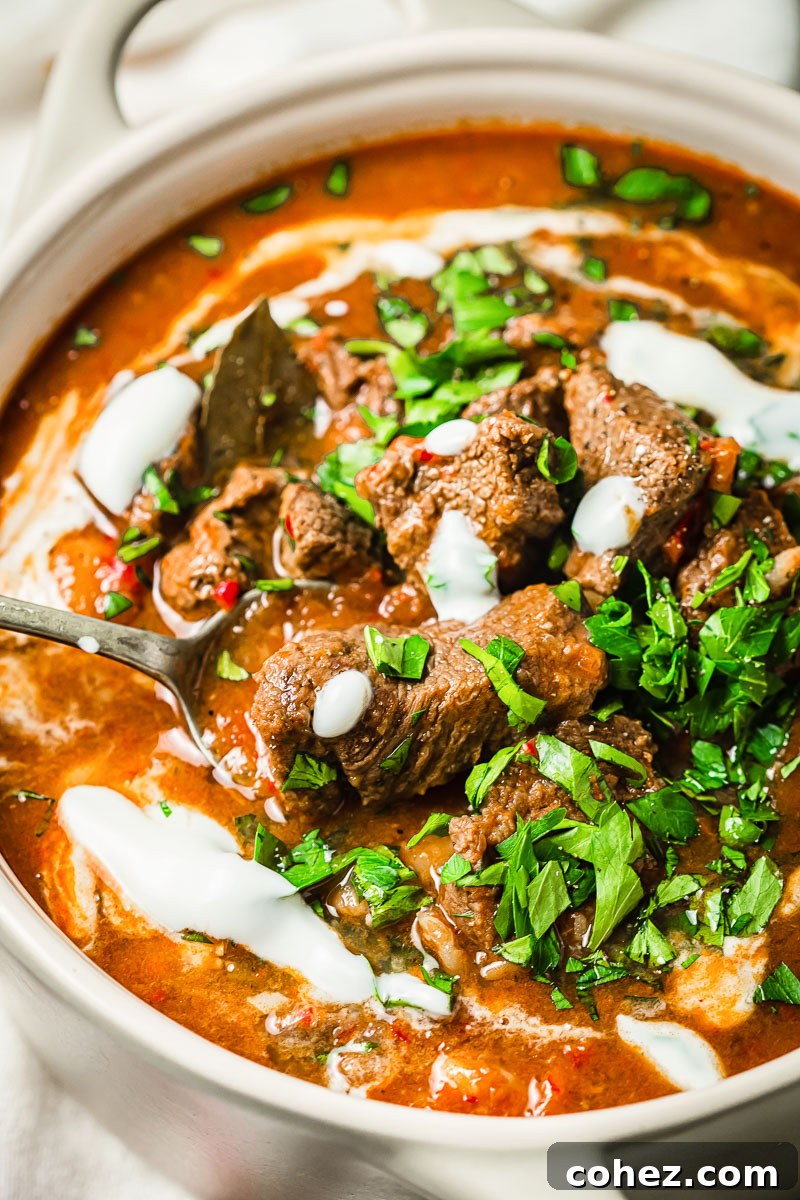
When the crisp air of winter truly bites, there’s an undeniable craving for dishes that not only warm the body but also soothe the soul. This isn’t just about a drop in temperature; it’s about the season demanding sustenance, flavor, and a touch of culinary magic. It’s in these moments that a fantastic beef goulash emerges as the perfect antidote to the cold.
While the idea of preparing a traditional Hungarian stew might sound daunting, especially one known for its deep, paprika-infused flavors and fall-apart beef, rest assured that this recipe is more about patience than complex techniques. The truth is, while proper goulash takes hours for the flavors to fully meld and for the beef to achieve that coveted melt-in-your-mouth tenderness, much of this time is hands-off. It’s a labor of love that rewards you with an exceptionally flavorful and deeply comforting meal, making it an ideal choice for a cozy weekend or a satisfying weeknight dinner when you have time to let it simmer.
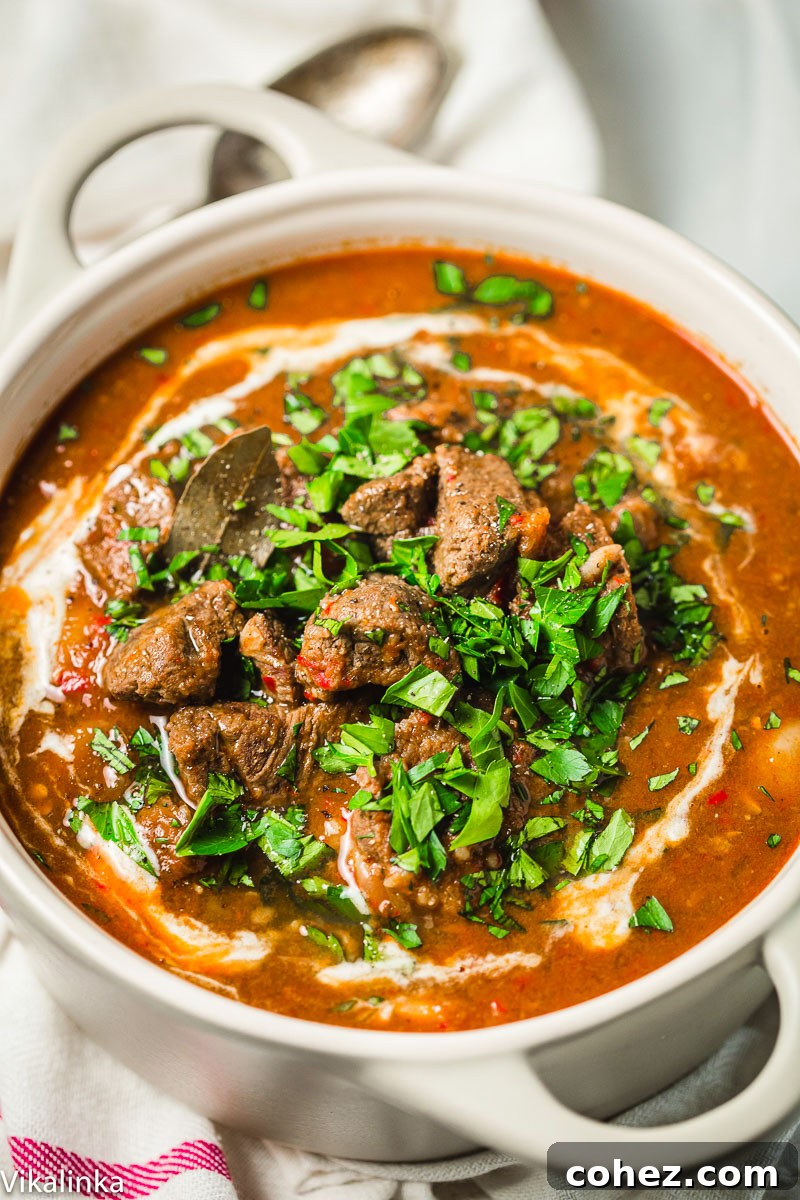
What is Beef Goulash? Exploring Its Rich Heritage
Beef Goulash, or “Gulyás” as it’s known in its homeland, traces its origins back to Hungary, where it began as a simple, hearty meal prepared by herdsmen. Over centuries, it evolved from a thick soup to the rich stew many of us recognize today, though its consistency can still vary greatly from region to region. What began as a practical dish to sustain hardworking shepherds has blossomed into a culinary icon, celebrated across Central and Eastern Europe. You’ll find it proudly featured on menus in charming eateries throughout Prague, Vienna, and countless other cities, each offering its unique twist on this beloved classic.
While some versions maintain a thinner, more soup-like consistency, others, like our recipe, lean towards a thicker, more substantial stew. Regardless of your preferred thickness, the defining ingredient that truly sets goulash apart from other beef stews is undeniably paprika. This vibrant spice is not just for color; it’s the soul of goulash, imparting a complex flavor that is at once sweet, earthy, and subtly peppery.
To truly capture the authentic essence of Hungarian goulash, sourcing the best quality sweet Hungarian paprika is paramount. Its delicate sweetness and deep red hue are irreplaceable. However, don’t shy away from experimenting! If you crave a bolder, more robust profile, consider using smoked paprika to add an intriguing depth and a touch of smoky allure to your stew. The key is to use fresh, aromatic paprika, as its flavor diminishes over time.
Interestingly, while many modern goulash recipes include tomatoes, they were not a traditional ingredient in the dish’s earliest forms. However, the addition of crushed tomatoes brings a wonderful sweet and slightly tangy note that complements the rich beef and paprika beautifully. It adds an extra layer of complexity and a vibrant depth of flavor that we absolutely adore in this stew.
If you’re fond of these comforting flavors but prefer poultry, be sure to explore our classic Chicken Paprikash recipe. It offers a similar warming experience with a delightful chicken base.
Recipe Tips for a Flawless Goulash
Creating an unforgettable beef goulash is truly an enjoyable process, and while it requires patience, these tips will ensure your efforts are richly rewarded:
- Embrace the Slow Cook: As mentioned, the recipe itself is straightforward, but time is your most crucial ingredient. Allowing the goulash to slowly braise for at least 2.5 hours, especially in the oven, is what guarantees the most tender beef and a deeply integrated flavor profile. Don’t rush this step – it’s where the magic happens!
- Choosing the Right Beef: The most common question for any stew is about the cut of meat. For goulash, we strongly recommend using stewing beef, often labeled as chuck, beef stew meat, or even shoulder. These cuts are known for their marbling and connective tissue, which break down beautifully during slow cooking, transforming into succulent, melt-in-your-mouth morsels. Buying it already diced in bite-sized pieces makes preparation even more convenient.
- Paprika Power: The quality and freshness of your paprika cannot be overstated. Aim for the best quality sweet Hungarian paprika you can find, and always check its freshness before adding it. A good paprika should have a vibrant color and a noticeable, pleasant aroma. If it smells dull or looks faded, it’s past its prime and won’t impart the rich flavor your goulash deserves. Don’t be afraid to smell it directly from the jar – your nose knows!
- The Caraway Seed Debate: Traditional Hungarian goulash often features a pinch of caraway seeds, which contributes a unique, slightly anisy, and peppery flavor that is distinctly Eastern European. While it adds an authentic touch, caraway has a very strong and specific taste that might be overwhelming for palates not accustomed to it. Our recipe omits it for broader appeal, but if you’re truly seeking that traditional Hungarian profile, add 1/2 to 1 teaspoon of whole or ground caraway seeds along with the paprika.
- The Creamy Finish: Just before serving, a generous dollop of full-fat sour cream or plain yogurt is a non-negotiable step. Not only does it add a wonderful creamy texture and luscious richness to the goulash, but it also gently tames the intense paprika flavor, balancing the dish beautifully. It’s the perfect counterpoint to the savory depth of the stew.
- Cooking Vessels Matter: A heavy-bottomed Dutch oven is ideal for goulash, as it distributes heat evenly and can go from stovetop to oven seamlessly. If you don’t have one, a deep, oven-safe pot with a tight-fitting lid will work just as well for oven cooking, or you can simmer it on the stovetop over very low heat.
- Flavor Development: Like many stews, goulash often tastes even better the next day. The flavors continue to meld and deepen overnight, creating an even more harmonious and complex dish. Consider making it ahead of time if you can!
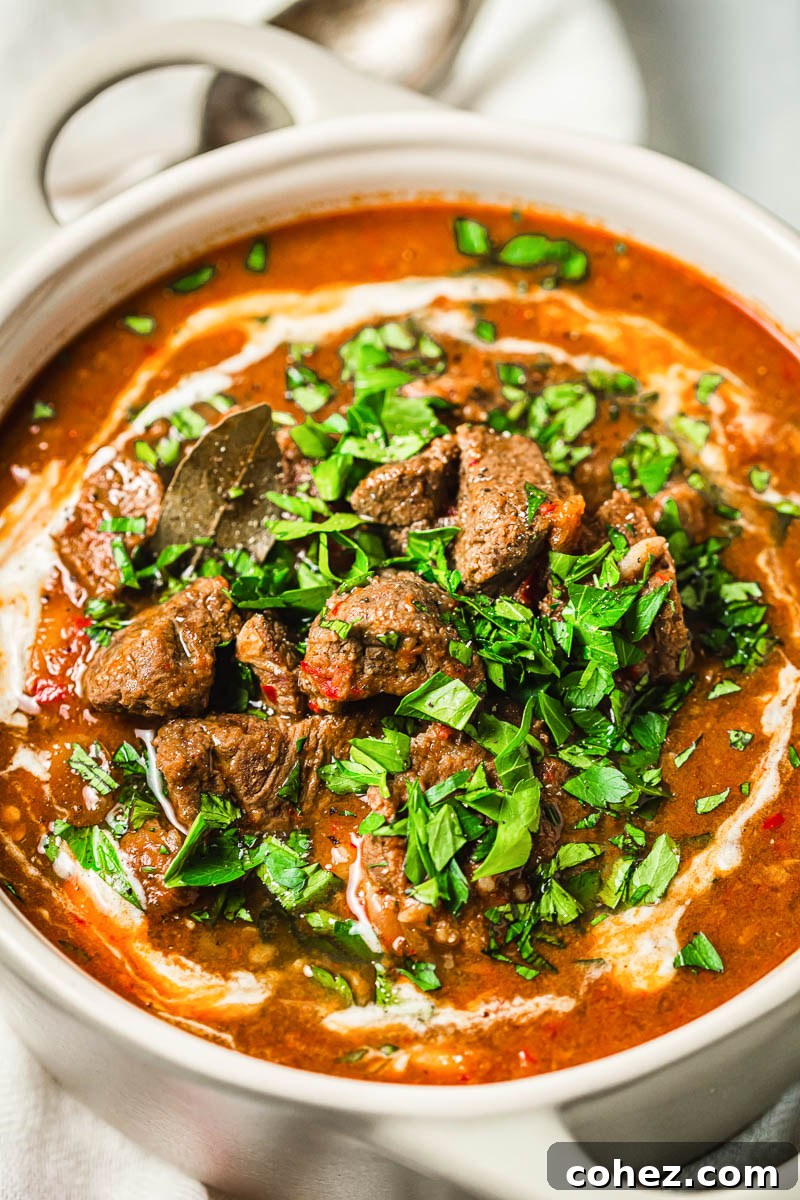
Serving Suggestions: Perfect Pairings for Goulash
Beef Goulash is wonderfully versatile and pairs beautifully with a variety of sides that complement its rich flavors and hearty texture:
- Classic Carbs: Serve it steaming hot over fluffy egg noodles, traditional Eastern European dumplings (such as Nokedli or Spätzle), or creamy mashed potatoes. These staples are excellent for soaking up every drop of the savory gravy.
- Bread is a Must: A crusty bread is essential! Think slices of rustic sourdough bread (try our easy sourdough recipe), fresh rye bread, or a simple baguette. It’s perfect for dipping and ensuring no flavorful sauce goes to waste.
- The Creamy Swirl: Don’t forget the finishing touch! A generous swirl of full-fat sour cream or plain yogurt is crucial. It adds a delightful creamy texture, a tangy counterpoint to the rich stew, and helps to mellow the paprika’s intensity.
- Freshness and Color: A sprinkle of freshly chopped flat-leaf parsley not only adds a burst of vibrant green color but also provides a fresh, herbaceous note that brightens the entire dish.
- Pickled Vegetables: For a true Eastern European experience, serve alongside a small bowl of pickled cucumbers or other fermented vegetables. Their acidity cuts through the richness of the goulash beautifully.
- Simple Green Salad: A light, fresh green salad with a vinaigrette dressing can offer a refreshing contrast to the hearty stew.
Storage and Leftovers: Flavor That Improves with Time
One of the many joys of beef goulash, much like other hearty stews, is how incredibly well it keeps, and often, how its flavors improve over time. The ingredients have more opportunity to mingle and intensify, resulting in an even more delicious meal the day after it’s cooked.
- Refrigeration: Store any leftover goulash in an airtight container in the refrigerator for 3-4 days.
- Freezing: For longer storage, goulash freezes exceptionally well. Portion it into freezer-safe containers or bags and freeze for up to three months. Thaw overnight in the refrigerator before reheating.
- Reheating: Gently reheat your goulash in a saucepan on the stovetop over medium-low heat, stirring occasionally until heated through. Alternatively, you can reheat individual portions in the microwave. If the goulash appears too thick after storage, add a splash of water or beef stock to achieve your desired consistency.
- Sour Cream Note: If you anticipate having leftovers, it’s best to add sour cream to individual bowls just before serving, rather than stirring it into the entire pot. Dairy products, especially sour cream, do not hold up as well during reheating or prolonged storage, and can sometimes separate or alter the texture of the stew.
More Comforting Stew Recipes to Explore
If you’ve fallen in love with the comforting nature of goulash, you’ll be thrilled to discover other hearty stews from our collection, perfect for any occasion:
- Slow Cooker Campfire Stew: A rustic and easy stew, perfect for minimal effort.
- Irish Beef Stew: A classic with tender beef and root vegetables, rich in traditional flavors.
- Russian Beef Stew Solyanka: A unique sweet and sour beef stew with pickles and olives.
- Slow Cooker Italian Beef Stew: Infused with Mediterranean herbs and savory goodness.
Beef Goulash
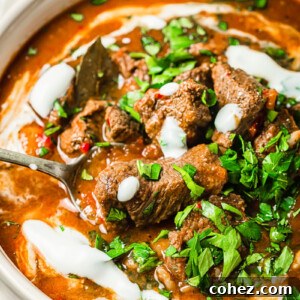
Robust aroma of sweet Hungarian paprika and tender, melt-in-your-mouth chunks of beef are what make this Beef Goulash an absolute winner!
Ingredients
- 1kg / 2 lbs stewing beef
- 2 medium onions, chopped
- 4 garlic cloves, minced
- 1 large red pepper, diced
- 2 tbsp plain flour
- 2 tbsp olive oil
- 3 tsp sweet paprika, or smoked paprika for a bolder taste
- 2 bay leaves
- 400g / 14 oz crushed tomatoes, or canned diced tomatoes
- 750ml / 3 cups beef stock
- Salt to taste
- Pepper to taste
- Flat leaf parsley, for garnish
- Sour cream or plain yogurt, to garnish
Instructions
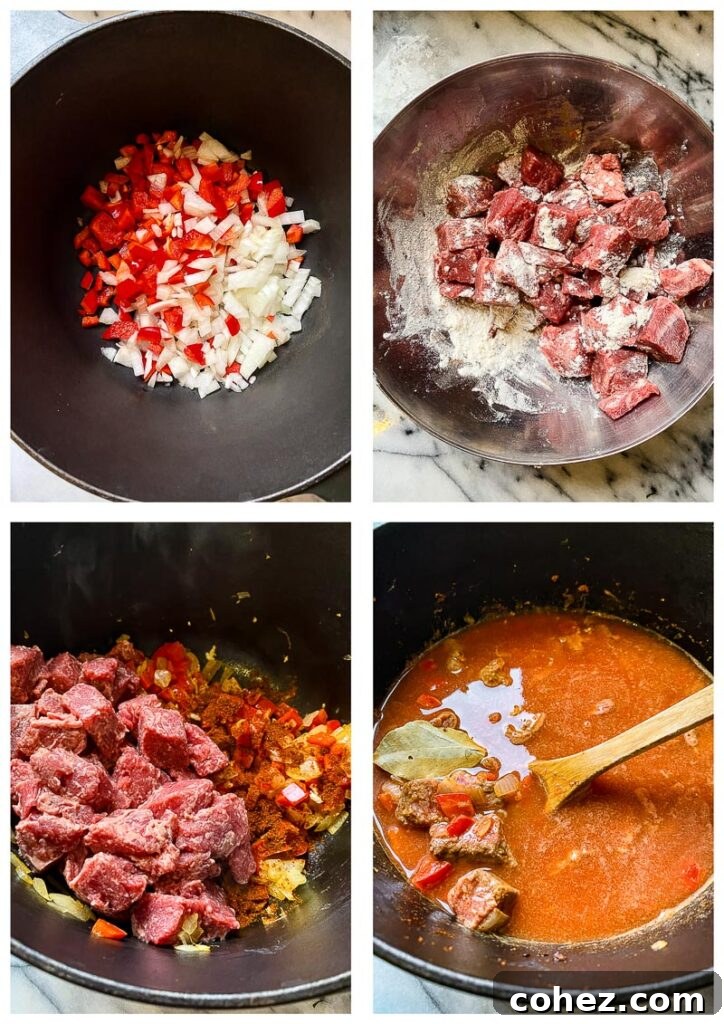
- Peel the onions and garlic. Chop onions and red pepper into desired size. Dice the beef into bite-sized pieces and toss with plain flour until lightly coated.
- Heat the olive oil in a large Dutch oven or a deep, heavy-bottomed pan over medium-low heat. Add the chopped onions and red peppers and cook for 7-10 minutes until they are softened and translucent. Add the minced garlic and cook for 1 minute more until fragrant.
- Stir in the paprika and the floured beef chunks. Cook for 2-3 minutes, stirring constantly, ensuring the paprika doesn’t burn (this can make it bitter).
- Add the crushed tomatoes, beef stock, a generous pinch of salt and pepper, and the bay leaves to the pot. Bring the mixture to a boil over high heat, then immediately reduce the heat to low, cover the pot, and simmer gently for 1 hour and 30 minutes.
- After 1 hour and 30 minutes, remove the lid and continue to cook for 1 more hour, allowing the sauce to thicken and the flavors to concentrate. Alternatively, you can cook this in a preheated oven at 300°F/150°C for 1 hour 30 minutes covered, and then 1 hour uncovered. The beef should be incredibly tender and easily pulled apart.
- Serve the goulash hot with your chosen accompaniments such as noodles, dumplings, or mashed potatoes. Swirl a dollop of sour cream or plain yogurt into each serving and sprinkle with fresh chopped parsley for a final flourish.
Notes
- If you are on a gluten-free diet, omit the flour in step 1. To thicken the sauce, you can blend 1 can of butter beans and add them to the goulash 30 minutes before it finishes cooking.
Nutrition
Approximate nutritional values per serving:
- Calories: 498 kcal
- Carbohydrates: 14g
- Protein: 31g
- Fat: 35g
- Saturated Fat: 12g
- Trans Fat: 2g
- Cholesterol: 107mg
- Sodium: 818mg
- Potassium: 955mg
- Fiber: 3g
- Sugar: 6g
- Vitamin A: 1260 IU
- Vitamin C: 35mg
- Calcium: 76mg
- Iron: 5mg
Nutrition information is automatically calculated and should only be used as an approximation.
Conclusion: Enjoy Your Homemade Beef Goulash
This Beef Goulash is more than just a meal; it’s an experience. It’s the kind of dish that warms you from the inside out, brings people together, and truly embodies the spirit of home cooking. The deep, complex flavors, the tender beef, and the comforting aroma make it a standout choice for any cold-weather day or special gathering. We hope this comprehensive guide inspires you to create your own unforgettable pot of goulash.
We absolutely love hearing from you! If you tried this Beef Goulash recipe and have any thoughts, tips, or beautiful photos to share, please let us know in the comments below. Your feedback helps us and other home cooks in our community. Happy cooking!