
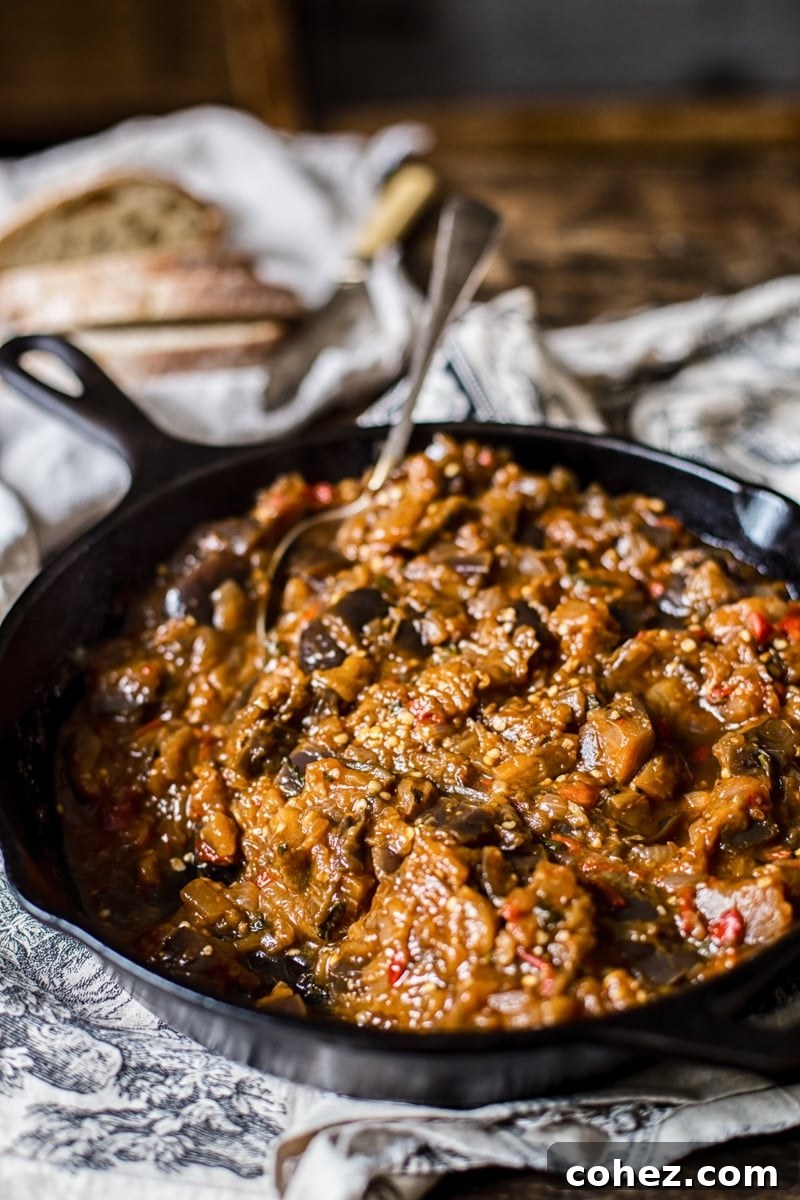
Looking for an extraordinary and savory addition to your culinary repertoire? Discover the timeless appeal of Russian Eggplant Caviar, affectionately known as Ikra. This traditional Eastern European spread, celebrated for its rich flavors and versatile nature, is a must-try for anyone seeking to elevate their meals. Enjoy it warm or cold, infused with aromatic spices, as a delectable spread, a delightful dip, or a flavorful topping for grilled meats and fish.
Eggplant, often an underestimated vegetable, transforms into something truly magnificent when prepared correctly. Its inherent creaminess and ability to absorb flavors make it an ideal candidate for spreads and dips. If you’ve enjoyed the smoky notes of my Baba Ghanoush, you’re in for another treat that showcases this vegetable’s incredible potential.
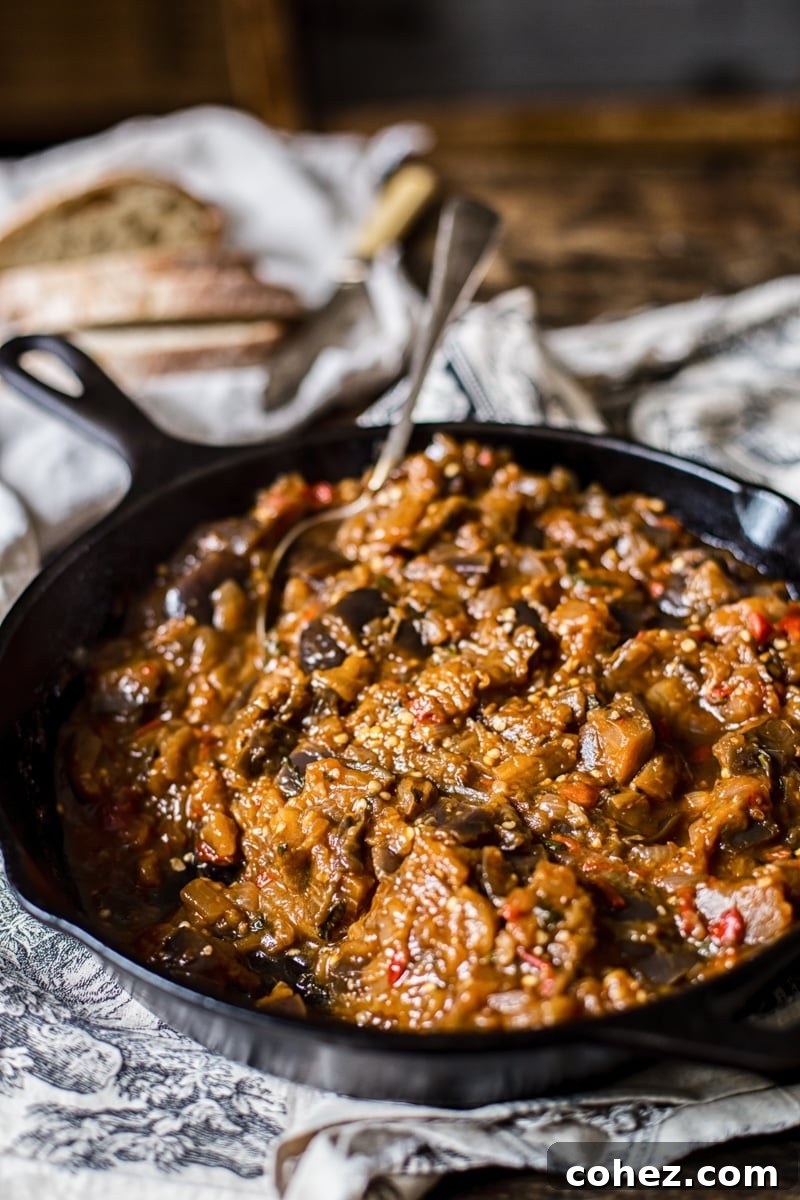
It’s a genuine shame that many people haven’t yet experienced the sheer culinary delight that eggplant can offer. A single taste of this exquisite eggplant caviar is enough to convert even the staunchest skeptics. This dish isn’t just a vegetable spread; it’s a comforting food that embodies how we wish all vegetables could taste – deeply flavorful, satisfying, and utterly delicious.
The recipe I am honored to share with you today is a heartfelt homage to the eggplant caviar my grandmother used to lovingly prepare, a taste that lingers fondly in my memory. While every cook brings their unique touch to this classic, my grandmother’s version, with its distinctive aromatic twist, has always been my benchmark for perfection.
Eggplant caviar, or ‘baklazhannaya ikra’ as it’s known in Russian, holds a cherished place in summer cuisine across Russia and several other Eastern European nations. It’s a staple at family gatherings, picnics, and everyday meals, especially when eggplants are in peak season. However, what makes this dish particularly fascinating is the incredible variety found in its preparation; no two recipes are exactly alike.
Even within my own family, the recipes passed down from my mother and grandmother had their subtle differences. This rich tapestry of variations primarily stems from the availability of seasonal ingredients and, of course, the personal preferences of the cook. This flexibility is part of the charm of traditional Eastern European cooking, allowing for creativity and adaptation.
What is Russian Eggplant Ikra? A Deep Dive into a Flavorful Tradition
The notion that Russian cuisine is “bland” is a misconception often heard, primarily because many main dishes are rarely served in isolation. The true magic of Eastern European meals lies in the ensemble: a vibrant spread of accompanying dishes like crisp salads, tangy pickles, and savory ferments. Together, these elements weave a complex and harmonious flavor profile that is anything but plain.
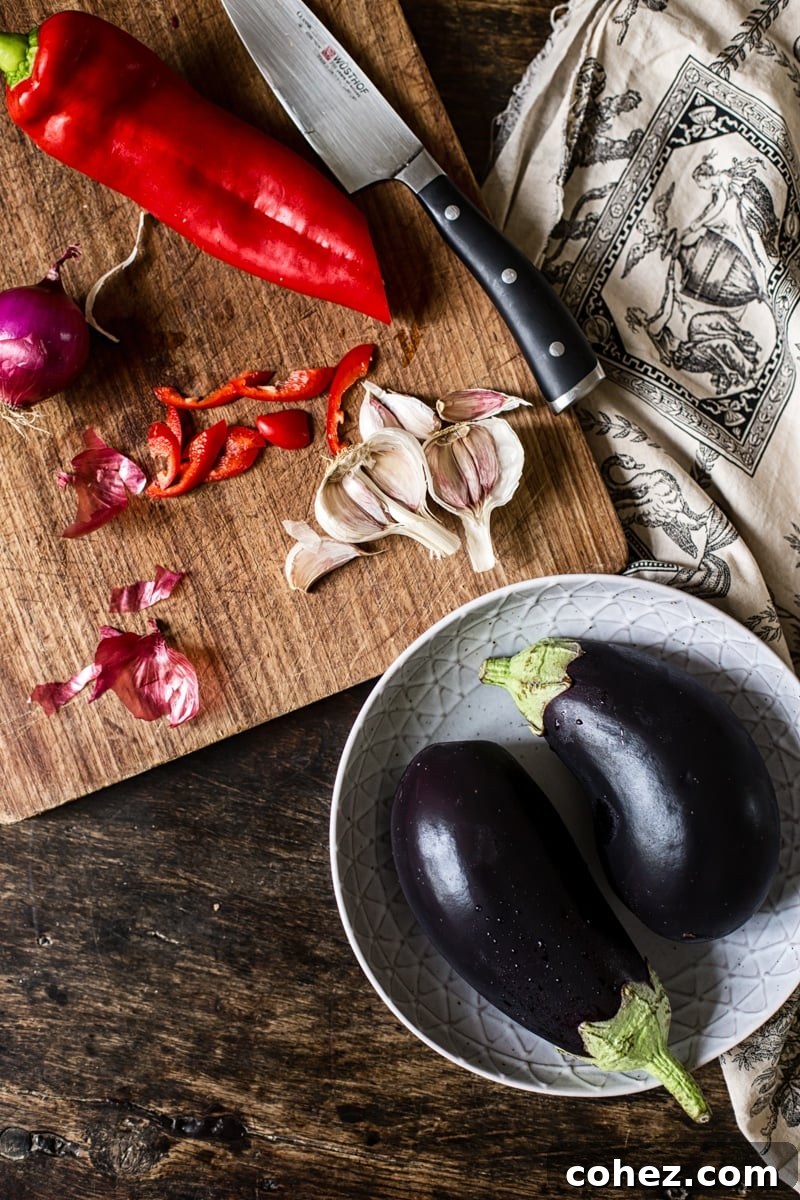
This Russian eggplant caviar, or “ikra” (meaning “caviar” in Russian, often used for any spread made from finely chopped vegetables), is a prime example of such a “flavor maker.” It’s not just a side dish; it’s a cornerstone of the meal, offering a burst of savory depth and texture. The preparation is key: eggplants are slow-cooked with aromatic garlic, sweet onions, and vibrant red peppers over gentle heat for an extended period.
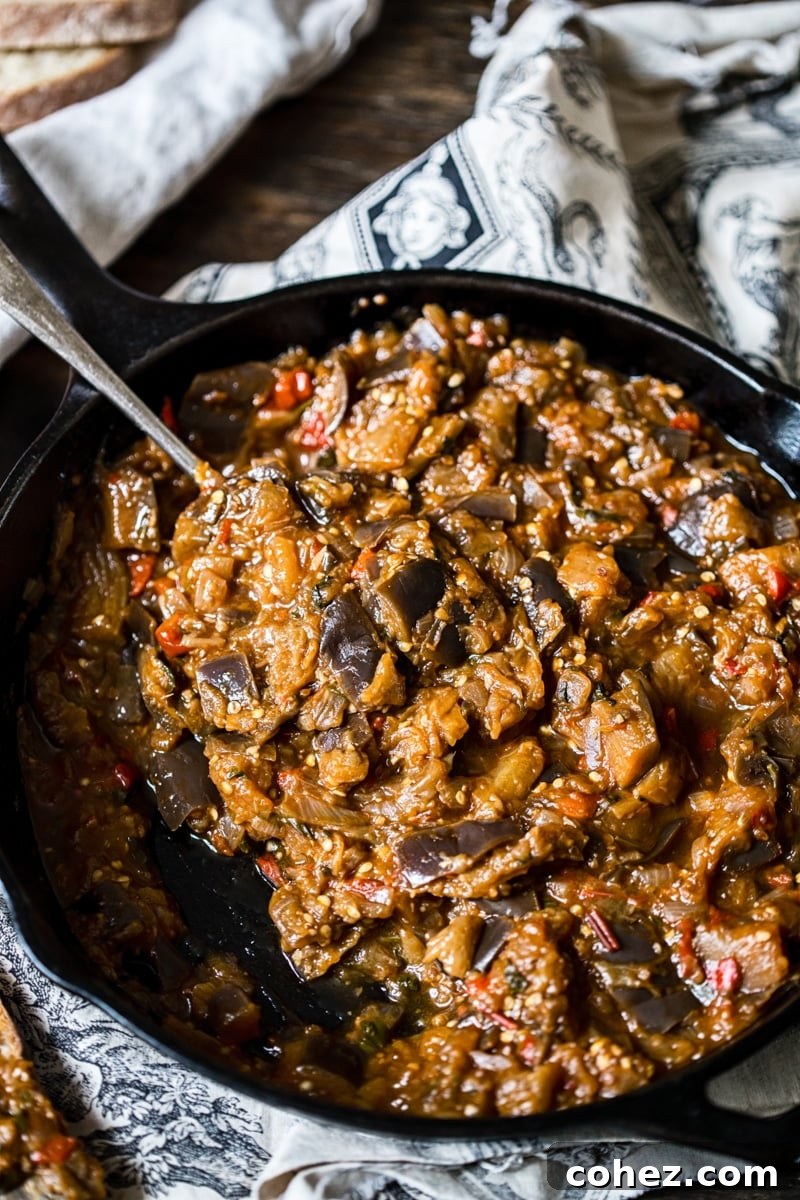
As the mixture simmers, the naturally spongy eggplant gradually collapses and transforms into a luxuriously smooth and silky spread. This slow cooking process allows all the added flavors to thoroughly infuse the eggplant, creating a deeply satisfying taste experience. While traditionally, spices are kept minimal, typically featuring black pepper, fresh dill, and parsley, my grandmother’s unique addition of cracked coriander seeds elevated her ikra to an unparalleled level. It rendered her eggplant caviar incredibly fragrant, distinctly delicious, and with an alluringly exotic whisper that set it apart.
The culinary traditions of Eastern Europe remain profoundly seasonal to this day. Home cooks pride themselves on utilizing the freshest ingredients available at any given time, fostering a culture of flexibility and resourcefulness in the kitchen. Recipes are often treated as guidelines rather than strict mandates, and there’s little stress over precise measurements. This adaptable approach means that while the core essence of eggplant ikra remains consistent, you’ll encounter a wonderful array of preparations and preferences. There’s no single “right” way to make it; what truly matters is personal taste, and for me, this method, inspired by my grandmother’s wisdom, is absolutely irresistible.
Expert Tips for Perfect Eggplant Ikra
- Eggplant Preparation: The eggplant will need to be cubed before being added to the pot. While the exact size can be a matter of personal preference—some cooks favor larger chunks for a heartier texture, others prefer smaller pieces for a smoother spread—what’s most important is consistency. Aim to cut your eggplant pieces to roughly the same size, approximately 2.5 cm or 1-inch cubes, to ensure they cook evenly. A slight variation is inevitable and perfectly acceptable, but strive for uniformity.
- Cooking Time & Texture: The ultimate goal is a tender, non-spongy eggplant that has completely broken down into a spreadable consistency. After the recommended cooking time, test your eggplant. If it still feels somewhat firm or spongy, don’t hesitate to extend the cooking duration by another 20-30 minutes, or even longer if needed. Patience is key to achieving that signature silky texture.
- Monitoring During Cooking: To prevent sticking and ensure even cooking, remember to check on your eggplant caviar every 20 minutes or so. Give it a good stir, especially scraping the bottom, to ensure it doesn’t burn and that all the flavors meld beautifully.
Serving Suggestions: Versatility on a Plate
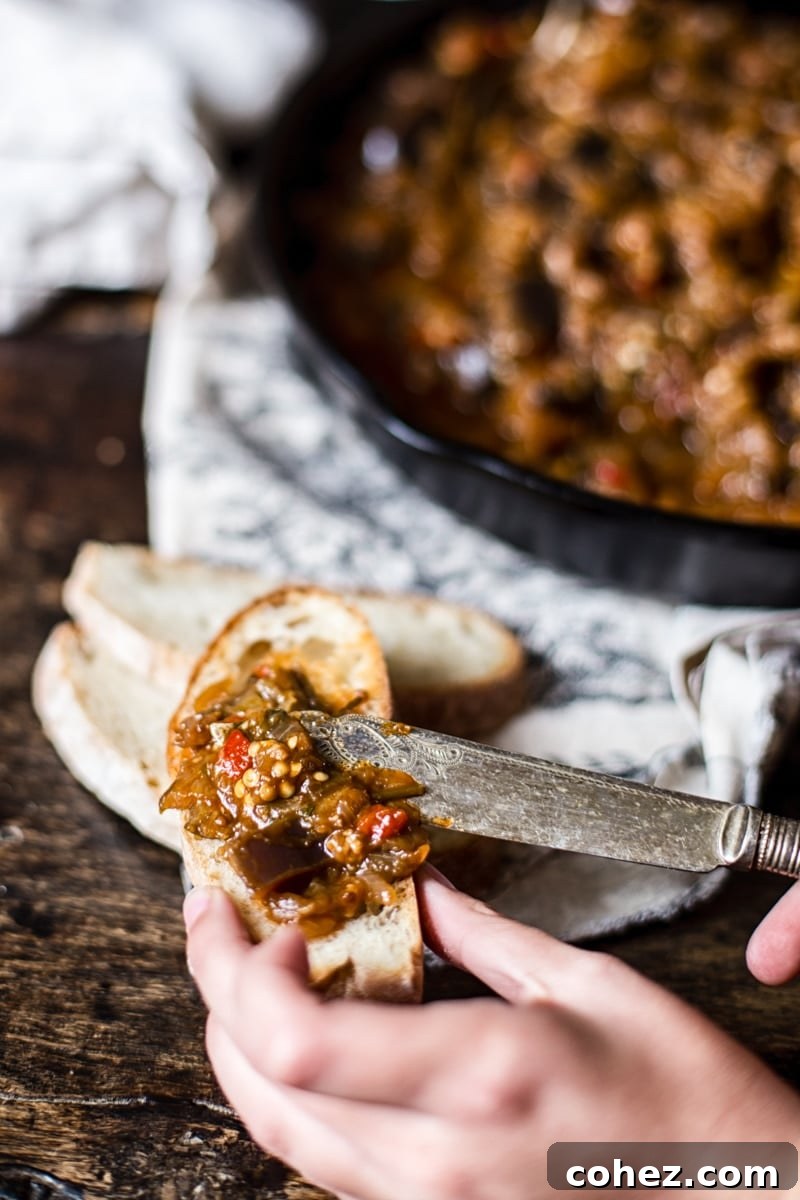
The beauty of Russian Eggplant Ikra lies in its incredible versatility. It shines as a sophisticated side dish alongside any meat, from roasted chicken to pan-seared fish. For a simple yet satisfying snack, spoon it generously onto crunchy crackers or slices of our homemade Sourdough Bread. I’m also particularly fond of layering a liberal amount onto a sandwich, transforming an ordinary meal into something special – try it with this delightful Goat’s Cheese Sandwich.
This flavorful spread makes for a fantastic anytime snack, which is why I often keep a jar readily available in my fridge, perfect for when a craving strikes. Beyond casual snacking, it’s equally impressive served in a elegant bowl on the table as part of a larger meal, or as a key component of an appetizer spread at a barbecue, picnic, or festive gathering. Its rich taste and smooth texture make it a crowd-pleaser that disappears quickly!
Storage and Leftovers: Enjoying Your Ikra for Days
One of the many benefits of this homemade eggplant caviar is its excellent keeping quality. Once prepared, Ikra can be stored in the fridge for 3-4 days. For optimal freshness and safety, allow it to cool completely to room temperature before transferring it to an airtight container. Because this delightful eggplant caviar is traditionally meant to be served cold, it’s incredibly convenient – simply grab what you need from the fridge and enjoy its rich flavors instantly!
Frequently Asked Questions About Eggplant Ikra
New to making eggplant caviar? Here are some common questions to help you master this delicious recipe:
Can I roast the eggplant instead of cooking it in a pot?
While this traditional recipe calls for slow-cooking in a pot to achieve a specific soft, almost jam-like consistency, you can certainly roast the eggplant first. Roasting will impart a smoky depth of flavor. If you choose to roast, cube the eggplant, toss with a little olive oil, and roast at 200°C (400°F) until very tender, about 25-30 minutes. Then add it to the pot with the other ingredients, reducing the initial cooking time slightly, but still allowing it to simmer for at least an hour to meld flavors.
What type of eggplant is best for ikra?
Globe eggplants (the large, dark purple ones commonly found in supermarkets) are perfect for this recipe. They have a good amount of flesh that breaks down beautifully. While other varieties like Italian or Japanese eggplants can work, they might yield a slightly different texture or require adjustments to cooking time due to varying water content.
Can I freeze eggplant caviar?
Yes, eggplant caviar freezes remarkably well! Once it has cooled completely, transfer it to freezer-safe containers or heavy-duty freezer bags, leaving a little headspace. It can be stored in the freezer for up to 3 months. Thaw overnight in the refrigerator before serving. The texture may be slightly softer after thawing, but the flavor will remain excellent.
Can I add other vegetables to this recipe?
Absolutely! The beauty of homemade ikra is its adaptability. Many regional variations include diced carrots, bell peppers of different colors, or even a touch of finely chopped zucchini. If adding carrots, sauté them with the onions and red peppers to ensure they soften adequately. For other vegetables, consider adding them with the eggplant to ensure they cook through evenly and blend into the spread.
What makes the cracked coriander seeds special?
Cracked coriander seeds offer a more intense, fresh, and citrusy aroma compared to ground coriander, which can sometimes be more muted or earthy. By lightly cracking them with a mortar and pestle just before adding, you release their volatile oils, infusing the ikra with a vibrant, unique fragrance that elevates the overall flavor profile beyond what typical recipes offer.
Embrace the Flavors of Tradition
This Russian Eggplant Caviar is more than just a recipe; it’s a culinary journey rooted in tradition, flavor, and the simple joy of good food. With its silky texture and depth of flavor, it promises to become a beloved staple in your kitchen. We encourage you to try this recipe, share it with loved ones, and discover the delightful richness of ‘baklazhannaya ikra’ for yourself.
More Eggplant Recipes to Explore
- Healthy Eggplant Parmesan
- Rustic Three Cheese Eggplant Lasagna
- Harissa Beef Stuffed Eggplant
- Miso Aubergine (Eggplant)
- Roasted Aubergine with Garlic Tahini Sauce
Russian Eggplant Caviar with Cracked Coriander Seeds
Equipment
-
Cast iron Dutch oven
-
Mortar and pestle
-
Garlic press
Ingredients
- 2 tbsp olive oil, extra virgin
- 1 large onion, chopped
- 1 large red pepper, sliced
- 4 cloves garlic, minced
- 1 tbsp coriander seeds, cracked
- 4 medium eggplants, cubed
- 125ml / 1/2 cup tomato juice
- 2 tbsp ketchup
- 10g / 1/4 cup cilantro, chopped
Instructions
-
In a large cast iron pot, heat olive oil. Add chopped onions and sliced red pepper, then cook over low heat for 15 minutes until they become translucent and soft but without significant browning. Next, add the minced garlic and cracked coriander seeds (which you can crush using a mortar and pestle just before adding). Stir this mixture for approximately 1 minute until fragrant.
-
Add the cubed eggplant, tomato juice, and ketchup to the pot. Stir all the ingredients together thoroughly, then cover the pot with a lid. Continue to cook on low heat for 1 1/2 hours, or until most of the liquid has evaporated and the eggplant has achieved a smooth, spreadable consistency. Remember to check on your eggplant caviar every 20 minutes or so and stir it to prevent any sticking or burning at the bottom of the pot.
-
Once the mixture has reduced considerably and reached the desired consistency, season it with salt to taste. Then, stir in the freshly chopped cilantro. If, at this point, your eggplant still feels spongy rather than tender, continue cooking it for an additional 20-30 minutes, or until perfectly soft.
-
Serve your delicious eggplant caviar warm or cold, ideally with fresh bread or crispy crackers.
Notes
- The size of the eggplant pieces can vary depending on preference. Mine were approximately 2.5 cm/1″ cubes.
- Make sure that the pieces are cut to roughly the same size. This will ensure that they cook at the same rate.
- If your eggplant is spongy after 1 1/2 hours, leave it to cook for 20-30 minutes longer.
Nutrition
Nutrition information is automatically calculated, so should only be used as an approximation.
Tried this recipe?Let us know how it was!