
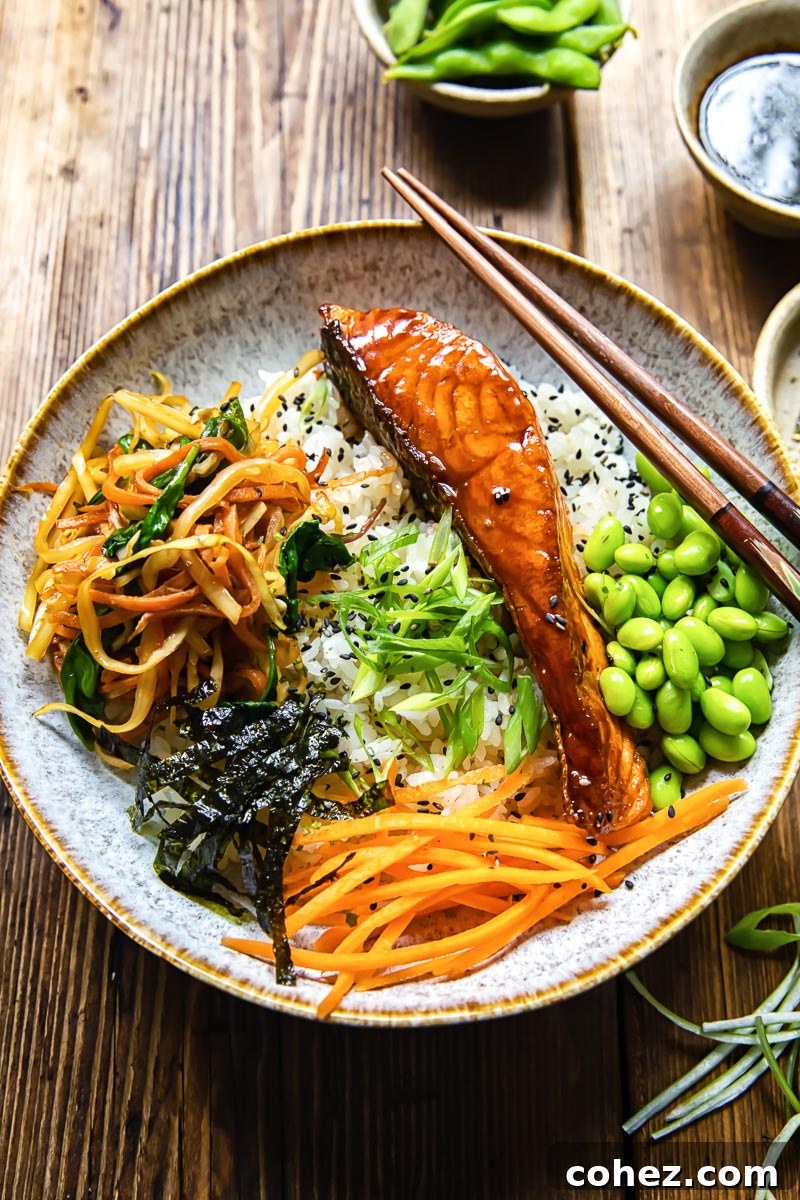
Discover the delight of Donburi bowls right in your own kitchen! This recipe guides you through creating a restaurant-quality meal with perfectly cooked teriyaki salmon and fresh, vibrant vegetables. Forget takeout – in about 30 minutes, you can enjoy this healthy, satisfying, and visually stunning Japanese classic at home.
Craving more teriyaki goodness? Explore these delicious recipes for Teriyaki Beef or Teriyaki Meatballs!
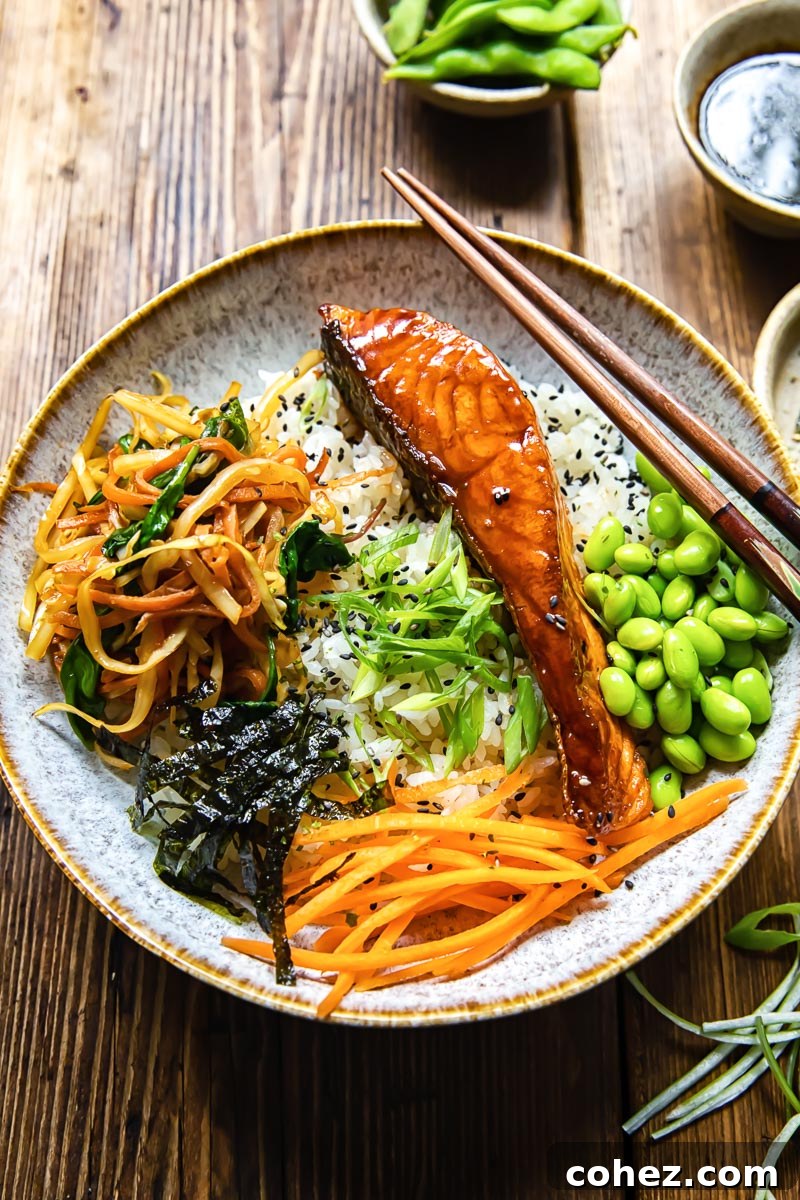
Mastering the Art of Teriyaki Salmon Donburi Bowls at Home
Japanese cuisine has undeniably captured the hearts and palates of many families around the globe, including my own. There’s an undeniable allure to its fresh ingredients, balanced flavors, and thoughtful presentation. When time is short and the desire for a nourishing, flavorful meal calls, Japanese food often becomes our go-to, often surpassing other cuisines in frequency. While our journey into Japanese culinary exploration began with the ever-popular sushi, it quickly broadened to encompass a wealth of other beloved dishes. Among these, the versatile and deeply satisfying Donburi stands out as a true family favorite.
Preparing a Donburi bowl isn’t just cooking; it’s an art form. Each ingredient is carefully chosen and arranged, transforming a simple meal into a vibrant, edible masterpiece. The beauty of Donburi lies not only in its taste but also in its incredible visual appeal, making every bowl a unique creation that delights both the eyes and the stomach. It’s a dish that truly celebrates the joy of cooking and eating.
What Exactly is Donburi? The Ultimate Japanese Rice Bowl
At its core, “Donburi” (丼) simply translates to “rice bowl” in Japanese. This deceptively simple definition belies the incredible diversity and flexibility inherent in these dishes. A Donburi bowl is essentially a generous serving of freshly cooked rice topped with various savory ingredients, often simmered together or prepared separately and then artfully arranged. The beauty of Donburi is its adaptability; you can truly fill your bowl with anything your heart desires, making it an ideal meal for using up whatever fresh ingredients you have on hand.
In our household, the options are endless. My children particularly love Donburi bowls topped with succulent Teriyaki Salmon, flavorful Teriyaki Chicken, or even rich duck. For me, the ultimate Donburi experience involves a generous helping of stir-fried vegetables, crowned with a sprinkle of furikake. This traditional Japanese seasoning blend, typically made from toasted sesame seeds, dried nori seaweed, salt, and sometimes dried fish flakes or other ingredients, adds an irresistible layer of umami and texture. The possibilities for Donburi are truly infinite, ensuring this dish never grows tiresome. Beyond being incredibly tasty and often quite lean, a well-prepared Donburi bowl is also a feast for the eyes, offering a stunning presentation that makes every meal feel special.
Selecting and Preparing the Perfect Rice for Your Donburi
Given that rice forms the foundation of any Donburi bowl, choosing and preparing it correctly is paramount. Growing up in a European household, I confess I once believed “rice was rice” until a year-long stay in the Philippines unveiled a whole new world of rice varieties and culinary applications. I quickly learned that the type of rice can profoundly impact a dish, and Donburi is a perfect example.
For authentic Japanese Donburi, the ideal choice is short-grain rice, specifically sushi rice or Japanese rice. This type of rice is known for its distinct stickiness and plump texture when cooked, which is crucial for holding together the various toppings in your bowl. When shopping, look for packages explicitly labeled “sushi rice” or “Japanese short-grain rice.” If these aren’t readily available, you can find suitable substitutes in other short-grain varieties, such as Italian Arborio rice (commonly used for risotto), Spanish Bomba rice (the go-to for Paella), or Thai sticky rice. While they offer similar characteristics, Japanese short-grain rice remains the gold standard for that authentic Donburi experience.
The cooking method for this specific rice is straightforward, but attention to detail ensures perfect results. My preferred method is using an Instant Pot, which consistently delivers perfectly fluffy and sticky rice with minimal effort. A dedicated rice cooker is another excellent option, as it’s designed to achieve optimal texture. However, a simple stovetop method can also yield fantastic results:
- **Rinse the rice:** Place the rice in a fine-mesh sieve and rinse under cold running water until the water runs clear. This removes excess starch, preventing the rice from becoming overly gummy.
- **Soak (optional but recommended):** For a better texture, soak the rinsed rice in cold water for 20-30 minutes. Drain well.
- **Cook:** Combine the rinsed (and soaked, if applicable) rice with fresh water in a heavy-bottomed pot. The general ratio is 1 cup of rice to 1.25 cups of water.
- **Boil:** Bring to a boil over medium-high heat.
- **Simmer:** Once boiling, reduce the heat to the lowest setting, cover tightly with a lid, and simmer for 15-20 minutes, or until all the water is absorbed. Do not lift the lid during this time!
- **Rest:** Remove from heat and let it rest, covered, for another 10 minutes. This allows the steam to redistribute and the rice to firm up.
- **Fluff:** Gently fluff with a rice paddle or fork before serving.
Flavors of Teriyaki Salmon: A Central Element
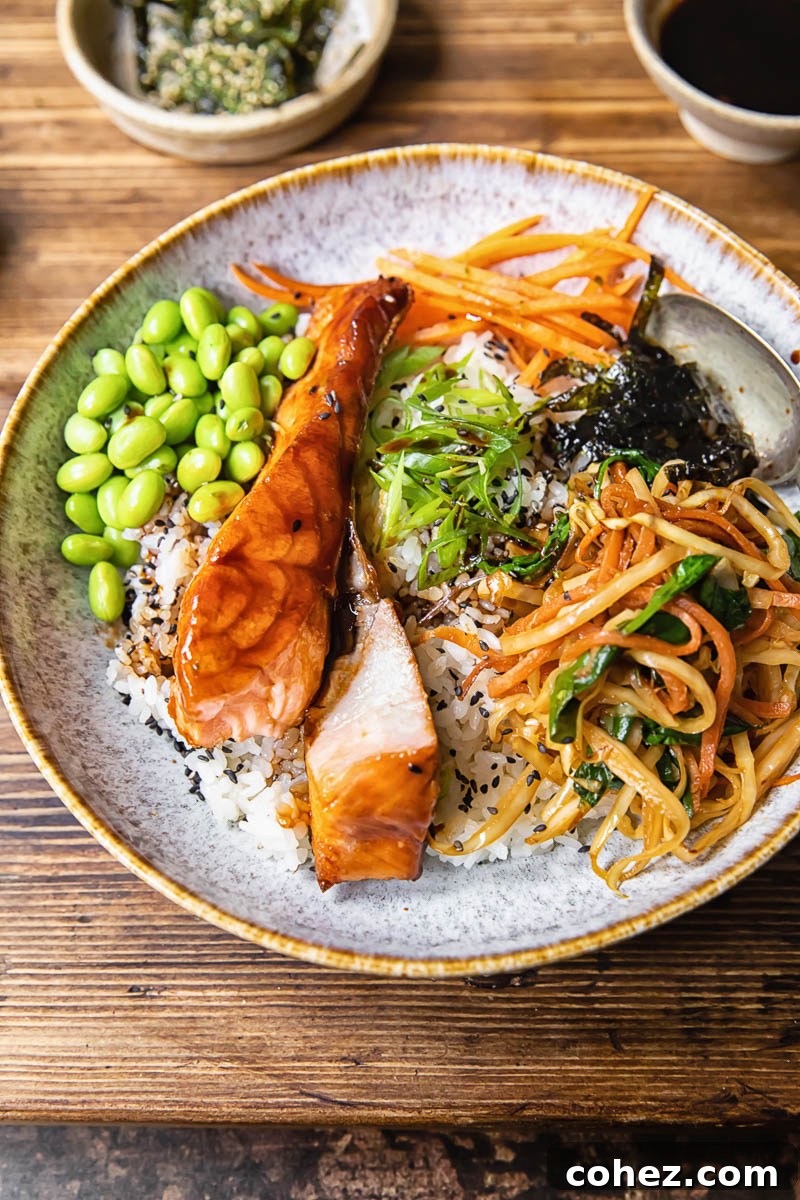
The star of our Donburi bowl is undoubtedly the teriyaki salmon, offering a harmonious blend of sweet, savory, and umami flavors. Teriyaki, a classic Japanese cooking method, involves grilling or broiling meat or fish with a glaze of soy sauce, mirin, sake, and sugar. This creates a beautifully caramelized crust and a moist, tender interior. Salmon is particularly well-suited for teriyaki due to its rich, fatty texture, which readily absorbs the marinade and develops a magnificent depth of flavor when cooked.
To achieve that restaurant-quality finish, the key lies in both the marinade and the cooking technique. A good teriyaki marinade should strike a balance between sweetness and saltiness, with the mirin adding a subtle tang and glossy finish. When cooking the salmon, a multi-stage approach ensures all sides are perfectly golden and the fish is cooked through without drying out. Starting skin-side up allows the skin to crisp slightly before flipping to achieve an even sear. The final step of basting the salmon with the simmering teriyaki sauce in the pan creates a thick, glistening glaze that clings to the fish, elevating its flavor and appearance. This dedication to technique transforms a simple piece of salmon into a succulent, flavorful component that anchors the entire Donburi bowl.
Adding Vibrant Stir-Fried Vegetables
While salmon takes center stage, the stir-fried vegetables bring essential freshness, texture, and color to the Donburi bowl. Often, you’ll find tender, wilted spinach as a common vegetable choice in traditional Donburi. However, the beauty of this dish lies in its versatility, allowing you to customize your vegetable selection entirely based on preference and seasonal availability. I personally favor a vibrant combination of thinly shredded cabbage, julienned carrots, and fresh spinach, which provides a delightful mix of crunch and tenderness.
My approach to cooking these vegetables is wonderfully simple yet packed with flavor. A quick stir-fry with a hint of minced garlic, grated fresh ginger, and a splash of soy sauce is all it takes. If you slice your cabbage very thinly, the entire stir-frying process can be completed in less than 10 minutes, making it an incredibly efficient way to add healthy greens to your meal. Beyond my preferred trio, other vegetables like earthy mushrooms, crisp broccoli florets, or even thinly sliced bell peppers are equally delicious and complement the sticky rice and teriyaki salmon wonderfully. Don’t hesitate to do a little “fridge foraging” – Donburi is an excellent opportunity to utilize any leftover vegetables you might have, turning them into a delicious and wholesome addition.
Elevating Your Donburi with Thoughtful Toppings
What truly transforms a good Donburi bowl into an extraordinary one are the thoughtful finishing touches – the additional toppings added just before serving. These elements contribute crucial layers of flavor, texture, and visual appeal, making each bite an exciting experience. My personal absolute favorite is a generous sprinkle of furikake seasoning. Its blend of savory, slightly sweet, and umami notes, combined with the crunch of sesame seeds and the subtle chewiness of nori, enhances the entire dish in a magical way.
My teenagers, with their keen sense of culinary adventure, convinced me to incorporate thinly sliced julienned carrots and black sesame seeds, and now I simply can’t imagine a Donburi bowl without them. The fresh, crisp julienned carrots provide a refreshing contrast to the cooked elements, while black sesame seeds add a striking visual accent and nutty depth. Sliced green onions (scallions) are another fantastic addition, offering a mild, pungent bite and a splash of vibrant green color that brightens the bowl. If you’ve ever made sushi at home, you likely have leftover nori sheets; these can be cut into narrow strips and sprinkled over your Donburi, contributing a delightful oceanic umami flavor that is quintessentially Japanese. Finally, don’t forget the edamame beans! These young soybeans, either shelled or served in their pods as an appetizer, provide an excellent source of plant-based protein and a satisfying tender-crisp texture. Each topping, no matter how small, plays a vital role in creating a balanced, flavorful, and visually stunning Donburi bowl.
Expert Tips for Crafting Restaurant-Quality Donburi Bowls
- **Precision Cuts for Carrots:** Achieving those long, thin, uniform carrot strips, known as “julienne,” can be tricky with just a knife. For consistent, professional-looking results, a julienne peeler is an invaluable tool that makes this task simple and quick.
- **Embrace Vegetable Versatility:** While this recipe suggests carrots, cabbage, and spinach, Donburi bowls are incredibly forgiving. This is your chance to get creative and use whatever fresh vegetables you have in your fridge! Mushrooms, broccoli, snap peas, bell peppers, thinly sliced cucumber, or even blanched asparagus can all work wonderfully, adding their own unique textures and flavors.
- **Don’t Skimp on Toppings:** The toppings might seem like mere garnishes, but they are crucial for a truly authentic and satisfying Donburi experience. They contribute significant layers of flavor, contrasting textures, and vibrant colors that elevate the dish from good to exceptional. Without them, your bowl might feel incomplete, missing that final flourish that makes Donburi so special.
- **Attention to Detail is Key:** Japanese cooking, including Donburi, often emphasizes meticulous preparation and presentation. Taking the time to properly prepare your ingredients, especially slicing vegetables carefully to achieve uniform sizes, will make a significant difference in both the appearance and the overall enjoyment of your Donburi bowls. This precision is what often sets restaurant-quality dishes apart.
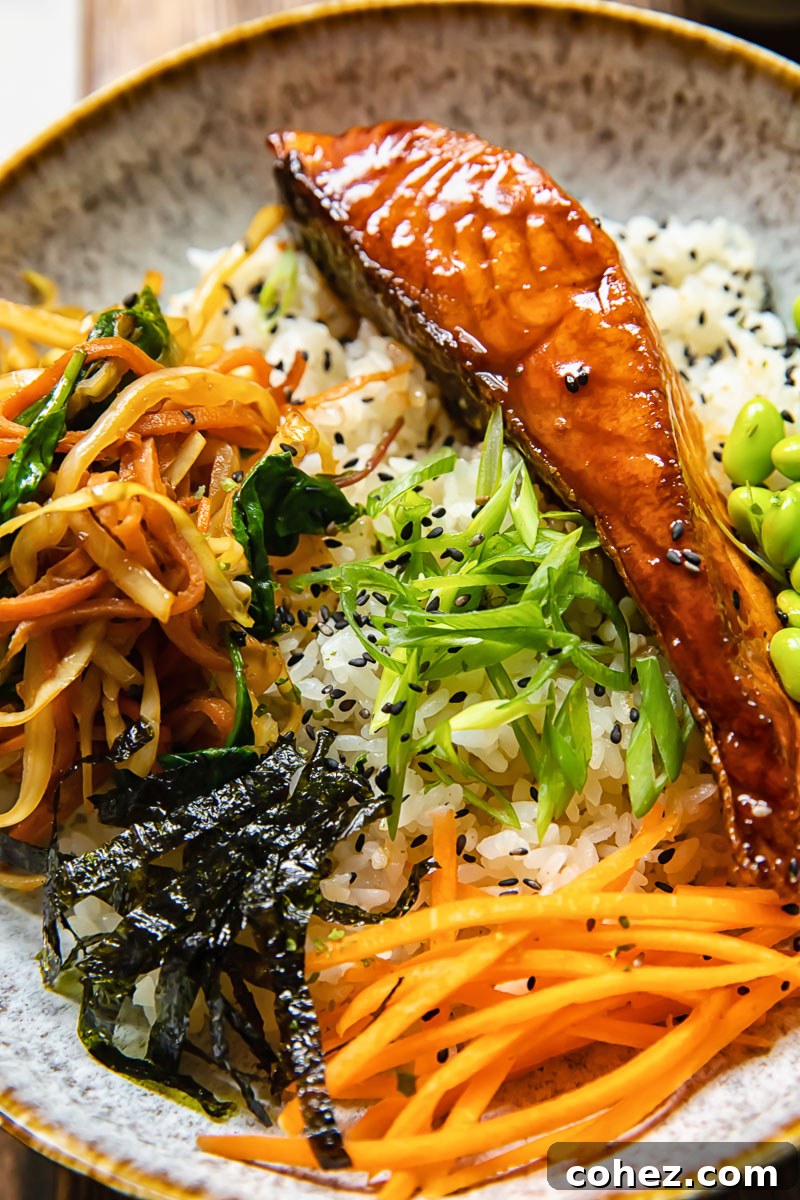
Serving and Savoring Your Teriyaki Salmon Donburi
Unlike a cold poke bowl, a traditional Donburi bowl is always meant to be served warm, offering comforting warmth and delightful aromas. The presentation is key: serve each portion in individual, deep bowls to best showcase the layers of ingredients. Start by piling the hot, fluffy rice into the bottom of the bowl, forming a solid base. Next, artfully arrange the stir-fried vegetables over one side of the rice, followed by the perfectly cooked teriyaki salmon on the other. Finally, drizzle any remaining teriyaki sauce from the pan over the salmon and rice, allowing its rich glaze to seep into the components below. Crown your creation with the chosen additional toppings – the sliced green onions, fresh julienned carrots, black sesame seeds, furikake, nori strips, and edamame beans. While a fork will certainly work, for a truly authentic experience, try to enjoy your Donburi with chopsticks!
Storage and Leftovers: Maximizing Freshness
While incredibly delicious when fresh, Donburi bowls, particularly those assembled with rice, do not store well as leftovers. Cooked rice, once combined with other ingredients and allowed to cool, can quickly develop an undesirable texture and is best enjoyed immediately after preparation. This means that a freshly assembled Donburi is truly at its peak right off the stove.
However, if you find yourself with extra components, the best approach for potential future meals is to store the ingredients separately. Cooked salmon will keep well in an airtight container in the refrigerator for 3-4 days, and stir-fried vegetables can last even longer. When you’re ready for another Donburi experience, simply cook a fresh batch of short-grain rice, warm your stored salmon and vegetables, and assemble a brand-new, delicious bowl. This method ensures that each Donburi you create is as fresh and flavorful as the first, without compromising on texture or taste.
More Japanese Recipes to Explore
- Chicken Yaki Udon
- Udon Noodle Soup
- Chicken Katsu Curry
- Shoyu Chicken (Soy Sauce Chicken)
Teriyaki Salmon Donburi Bowl
By Julia Frey of Vikalinka
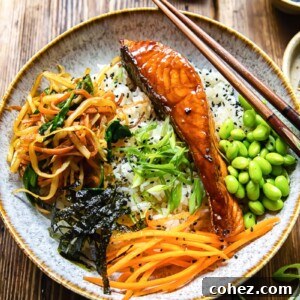
This donburi bowl is chock full of delicious sticky rice, teriyaki salmon, stir-fried vegetables and lots of extra toppings for a perfect meal.
Equipment
- Julienne peeler
- Frying pan
- Wok
Ingredients
- 210g / 1 cup sushi rice
- 2 pieces salmon fillet, 120g / 4 oz each
- 4 tbsp teriyaki marinade
- 2 tbsp light soy sauce
- 2 tsp mirin
- 1 tsp sugar
- 1 tbsp vegetable oil
- 1 clove garlic, minced
- 100g / 1 cup cabbage, thinly sliced
- 1 carrot, julienned
- 30g / 1 cup spinach
- 1 tbsp soy sauce
Toppings
- 2 green onions, sliced
- 40g / 1/4 cup edamame beans, defrosted (optional)
- 1/2 carrot, julienned (for fresh topping)
- 1 tbsp furikake seasoning (optional)
- 1 sliced nori sheet, cut into thin strips (optional)
- Black sesame seeds (optional)
Instructions
- Prepare the sushi rice using your preferred method (stovetop, rice cooker, or Instant Pot). Refer to the “Selecting and Preparing the Perfect Rice” section for detailed stovetop instructions.
- In a small bowl, whisk together the teriyaki marinade, light soy sauce, mirin, and sugar to create the sauce. Thinly slice the cabbage and julienne one large carrot. Mince the garlic and grate the ginger (if using fresh ginger for vegetables). Set these aside.
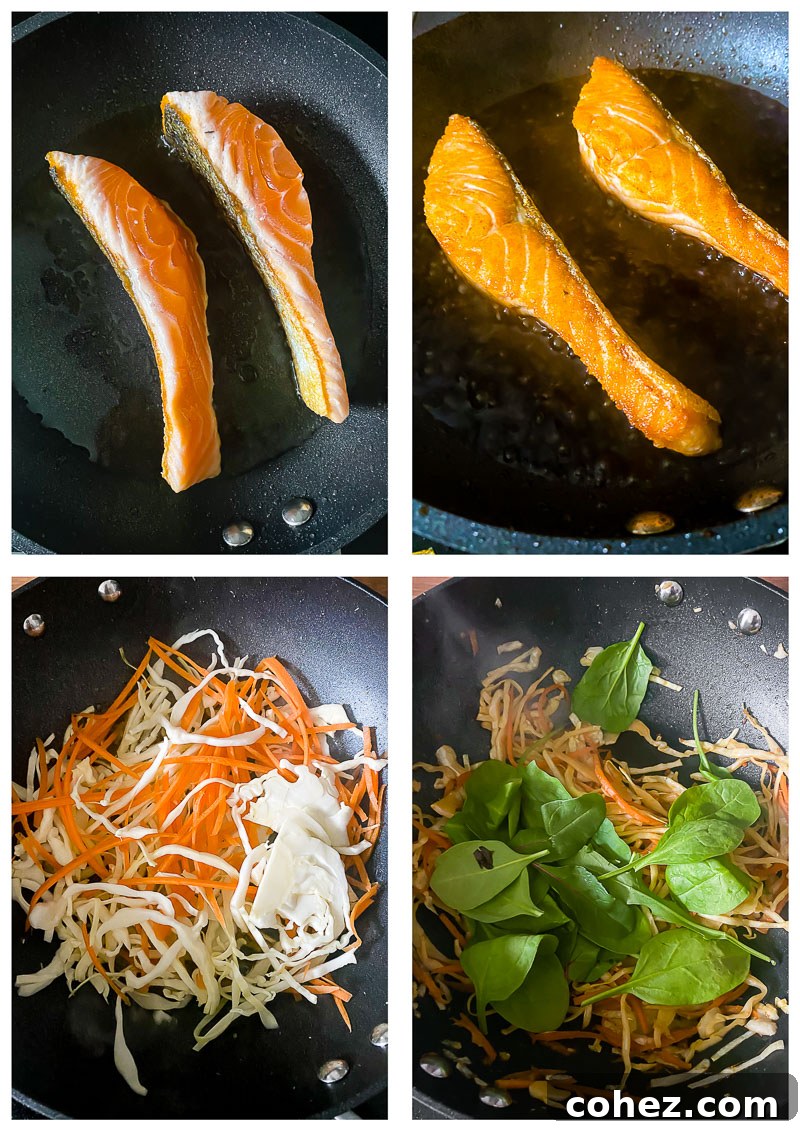
- Heat 1 tbsp of vegetable oil in a frying pan over medium-high heat. Place the salmon fillets skin side up and cook for 2-3 minutes until lightly seared. Flip to one side and cook for 1 minute, then to the other side for another minute. Finally, place the salmon top side up and continue to fry for 2 minutes longer, until all sides are golden and the fish is nearly cooked through.
- Pour the prepared teriyaki sauce into the pan with the salmon. Let it simmer gently. Tilt the pan slightly to collect some sauce, then spoon it over the salmon, basting continuously. Continue simmering and basting until the sauce thickens and becomes glossy, coating the salmon beautifully. Remove from heat and keep warm.
- In a separate pan or a wok, heat 1 tbsp of vegetable oil over medium-high heat. Add the minced garlic and grated ginger (if using), and stir-fry briefly for a few seconds until fragrant. Add the sliced cabbage and julienned carrots to the pan and stir-fry for 2-3 minutes. Then, add the 1 tbsp of soy sauce and the spinach. Continue cooking for a few more minutes until the vegetables have softened but still retain a slight bite.
- To assemble the Donburi bowls, divide the cooked rice evenly between two individual serving bowls. Arrange the teriyaki salmon and stir-fried vegetables attractively on top of the rice. Drizzle any remaining glossy teriyaki sauce from the salmon pan over the entire bowl.
- Finish with your desired toppings: sprinkle with sliced green onions, fresh julienned carrots, black sesame seeds, furikake seasoning, sliced nori strips, and defrosted edamame beans (if using). Serve immediately and enjoy!
Notes
- For more details on the delicious and essential toppings, refer to the “Elevating Your Donburi with Thoughtful Toppings” section in the main post.
- Ensure carrots are cut into long, thin strips (julienne) for optimal texture and presentation. A julienne peeler makes this task significantly easier and more consistent than a knife.
- While carrots, cabbage, and spinach are suggested, Donburi bowls are highly customizable. Feel free to use almost any vegetables you have on hand, making it a perfect dish to clean out your produce drawer.
- The toppings are not merely decorative; they add considerable flavor and textural complexity to the dish. Do not skip them for the best Donburi experience!
- Paying attention to detail in vegetable preparation, especially careful slicing to achieve uniform sizes, is key to achieving a truly restaurant-quality Donburi bowl.
Nutrition (per serving)
Nutrition information is automatically calculated, so should only be used as an approximation.
- Calories: 695kcal
- Carbohydrates: 110g
- Protein: 40g
- Fat: 10g
- Saturated Fat: 1g
- Polyunsaturated Fat: 4g
- Monounsaturated Fat: 3g
- Cholesterol: 66mg
- Sodium: 3054mg
- Potassium: 1310mg
- Fiber: 8g
- Sugar: 14g
- Vitamin A: 12177IU
- Vitamin C: 31mg
- Calcium: 121mg
- Iron: 5mg
Tried this recipe? Let us know how it was!