
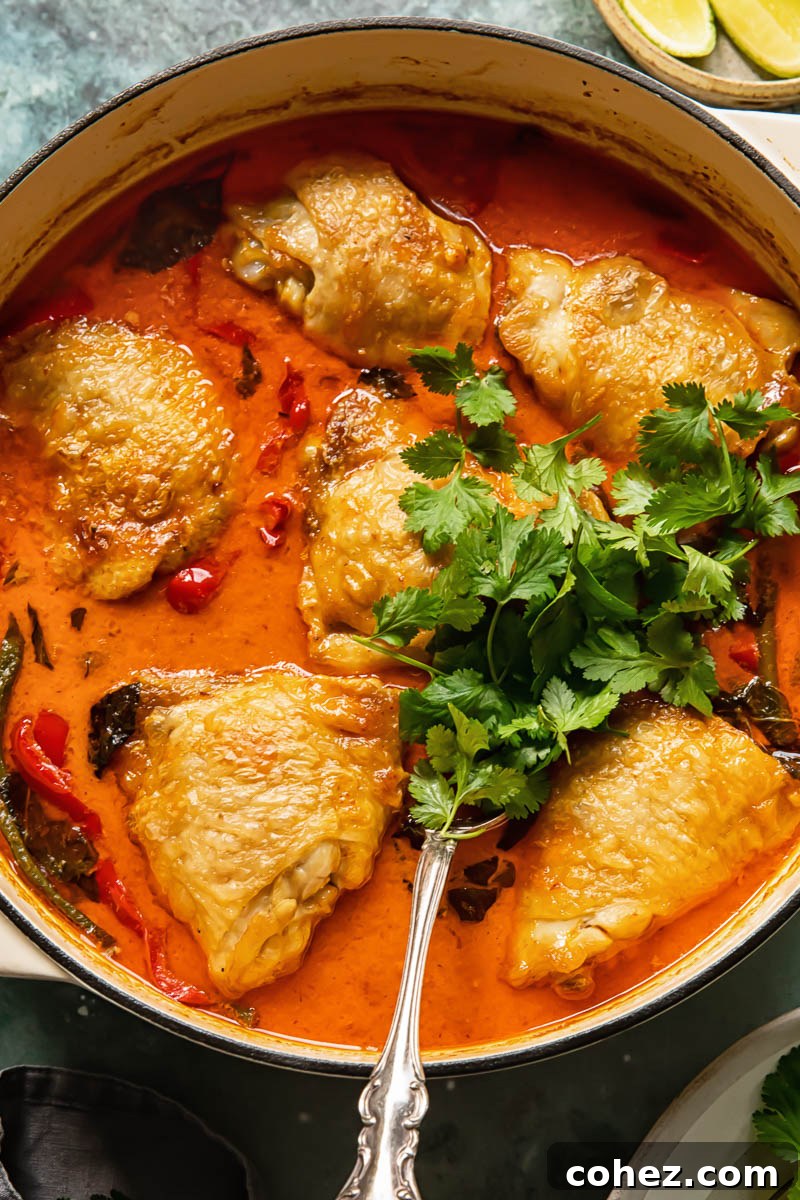
Welcome to a culinary journey that transports your taste buds straight to the vibrant streets of Thailand, right from your kitchen! This recipe for Braised Coconut Curry Chicken Thighs perfectly blends the rich, complex flavors of Thai cuisine with the comforting, tender perfection of a classic braise. Imagine succulent, juicy chicken thighs, slow-simmered in a luxurious, fragrant red curry sauce. Each bite bursts with a harmonious balance of spicy, sweet, and savory notes, complemented by the bright crunch of fresh green beans and vibrant red pepper strips. This isn’t just a meal; it’s an experience – a one-pot wonder designed for maximum flavor with minimal fuss, ready to be served over a bed of fluffy jasmine rice.
For those who love to dial up the heat and explore more plant-based options, our vegetarian Thai green curry offers a fantastic, veg-packed alternative to satisfy your spicy cravings.
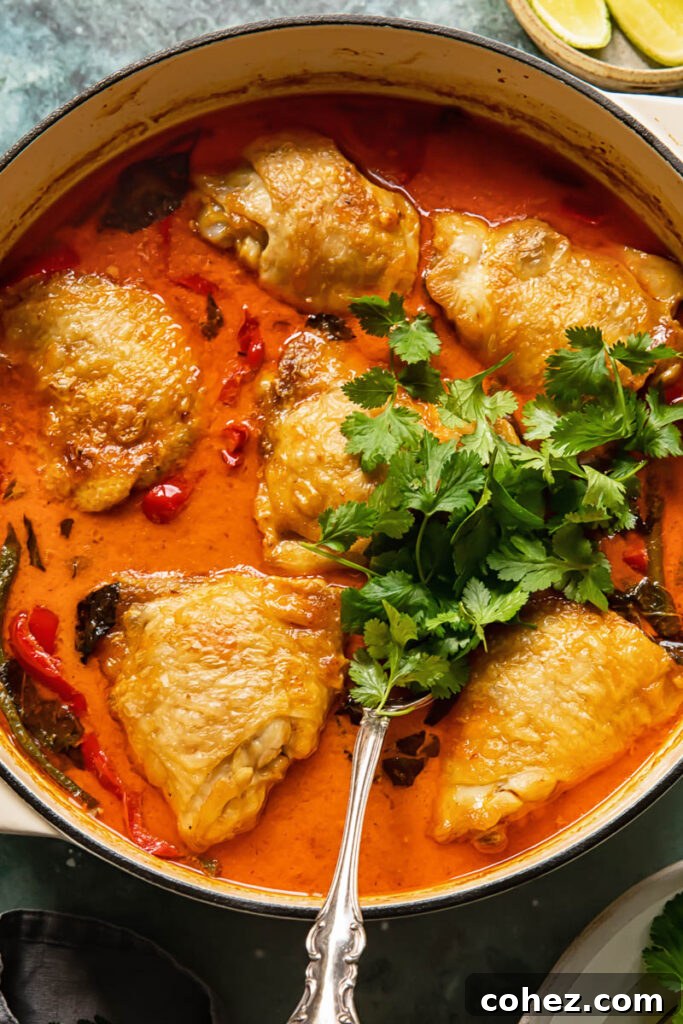
Braised Coconut Curry Chicken Thighs: The Ultimate Thai Comfort Food
There’s an undeniable magic that happens when chicken thighs are braised. This classic cooking technique, often associated with French culinary traditions, elevates humble cuts of meat into something truly extraordinary. Braising involves two key stages: first, a dry heat searing to achieve a beautiful golden crust, followed by a slow, moist cook in a flavorful liquid. This method is particularly transformative for chicken thighs, rendering them incredibly tender, juicy, and infused with deep, complex flavors that simply can’t be achieved with quicker cooking methods.
The Art of Braising: Why It Works Wonders for Chicken Thighs
Many home cooks might be tempted to skip the initial searing step, but I implore you: don’t! This crucial stage is where much of the magic happens. Searing the chicken thighs in a hot pan achieves a few vital things:
- Locks in Moisture: While some believe searing “seals” juices, its primary role is to develop flavor and texture. It creates a barrier that helps the meat retain its moisture during the longer braising process, preventing it from drying out and ensuring a succulent interior.
- Develops Rich Flavor (Maillard Reaction): The golden-brown crust isn’t just for looks; it’s the result of the Maillard reaction – a chemical process that transforms amino acids and reducing sugars under high heat, creating hundreds of new flavor compounds. This scientific reaction contributes immensely to the depth and aroma of the finished dish, providing a foundational layer of savory goodness.
- Irresistible Texture: Let’s be honest, who can resist the allure of beautifully browned, slightly crispy chicken skin? It adds a textural contrast that elevates the entire meal.
After searing, the chicken thighs gently simmer in a rich liquid, absorbing all the aromatic spices and flavors of the curry sauce. This slow-cooking process breaks down connective tissues, making the meat fall-off-the-bone tender. While braising is often associated with wine-based liquids, like our chicken in sage cream sauce which combines Madeira, chicken stock, and cream, or this autumnal French chicken casserole à la Normande featuring apple cider, it’s incredibly versatile. You can achieve equally stunning results with non-alcoholic bases. For example, our spiced chicken thighs braised in milk offers a surprisingly tender and flavorful experience, and the tomato-based Spanish chicken in bravas sauce yields equally succulent results. Each method promises thighs that are brimming with flavor and melt-in-your-mouth tender.
Feel free to conduct your own kitchen experiments and put the theory to the test. Or simply take my word for it – braising is a game-changer for chicken thighs!
Exploring the World of Thai Chicken Curry Flavors
Thai curries are renowned globally for their vibrant colors, aromatic spices, and signature creamy texture, largely thanks to coconut milk. Almost all traditional Thai curries feature a delicate balance of sweet, sour, salty, and spicy notes, often enhanced by fresh herbs like Thai basil, and typically combine meat and vegetables in a single, soup-like pot. In Western kitchens, three main types of Thai curries dominate in popularity and recognition:
- Thai Green Curry: Often considered the hottest of the trio, its vivid green hue comes from a generous amount of fresh green chillies and the bright, zesty essence of lime. It’s known for its refreshing herbal notes.
- Thai Red Curry: Characterized by its beautiful reddish-orange color, this curry gets its warmth and depth from dried red chillies and the distinctive, citrusy aroma of lemongrass. Our Thai fish curry is a prime example of its rich potential.
- Thai Yellow Curry: Milder and richer, yellow curry is laden with turmeric, giving it its golden color, and often features a creamy texture with a milder spice profile. It frequently includes ingredients like potatoes and sweet potatoes, lending a heartier feel.
Beyond these popular varieties, countless regional variations exist across Thailand, some incorporating more substantial ingredients like peanuts or potatoes, as seen in this delightful chicken and sweet potato curry. The beauty of Thai curry lies in its flexibility: you can pair any type of curry paste with your preferred protein – be it chicken, beef, pork, fish, prawns, tofu, or simply a medley of fresh vegetables.
Authentic Thai curries are traditionally crafted from an exotic blend of aromatics – such as lemongrass, galangal, kaffir lime, and various chillies – aggressively ground together with a pestle and mortar to form a fragrant paste. While sourcing these fresh, raw ingredients can be a challenge outside of Asia, there’s absolutely no shame in using a high-quality store-bought curry paste. It’s a convenient hack that doesn’t compromise on flavor. I personally swear by the Mae Ploy brand for its authentic taste and fiery kick. (This is an affiliate link.)
However, if you’re not in the mood for a rich curry but still crave those signature sweet and spicy Thai flavors, a grilled Thai chicken salad serves up all that crave-worthy goodness on a refreshing bed of cool rice noodles.
Mastering Your Braised Coconut Curry: Essential Tips and Notes
Creating this flavorful Braised Coconut Curry Chicken is simple, but a few key tips will ensure your dish reaches its full potential, delivering an authentic and unforgettable taste experience:
- The Golden Rule: Sear Your Meat! I cannot emphasize this enough. Searing is not just for appearance; it’s fundamental for flavor development. The Maillard reaction created by browning the chicken thighs adds incredible depth and complexity to the curry sauce, beautifully fusing Eastern aromatics with Western braising traditions. This step significantly enhances the overall taste of your curried chicken thighs.
- Choosing Your Chicken Thighs: I prefer to use skin-on, bone-in chicken thighs for this recipe. The bone adds extra flavor to the braising liquid, and the skin renders down to a delightful crispness (especially when the lid is removed towards the end of cooking), contributing to a richer final dish. However, if you prefer, skinless and boneless chicken thighs will also work; just be mindful that they may cook slightly faster. I typically reserve chicken breasts for quick grilling or sautéing, as their leaner nature doesn’t benefit as much from the slow braising process.
- Select Your Curry Paste Wisely: The quality of your curry paste is paramount to the authenticity and flavor of your Thai curry. There’s a vast array of brands on the market, and their quality can vary dramatically. My personal obsession is with the Mae Ploy brand (This is an affiliate link.). They offer red, yellow, and green curry pastes, all of which I find to taste incredibly authentic – meaning fragrant, intensely flavorful, and often with a genuine Thai-level spiciness that avoids any synthetic notes.
- Adjusting the Heat: Thai curry pastes, especially green and red, can be quite potent. If you’re sensitive to heat, simply reduce the amount of paste you use. Remember, you can always add more spice, but it’s hard to take it away once it’s in the dish. Start with a smaller amount and taste as you go. Be warned: Mae Ploy’s green curry paste, in particular, is notoriously HOT!
- Full-Fat Coconut Milk is Non-Negotiable: For a truly rich, creamy, and satisfying curry, full-fat coconut milk is the only way to go. Do not be tempted by reduced-fat versions! These are essentially just diluted coconut milk, sacrificing both flavor and texture. If you want a lighter consistency, you can always dilute the full-fat version yourself with a bit of water or stock, but starting with the full-fat variety ensures the best possible outcome.
- Vegetable Versatility: I’ve opted for vibrant green beans and crisp red bell peppers in this coconut curry, which add both color and texture. However, Thai curries are incredibly versatile when it comes to vegetables. Popular additions include eggplant (aubergine in the UK), tender snow peas, zucchini, bamboo shoots, or mushrooms. Feel free to use whatever fresh vegetables you have on hand or your personal favorites to customize your curry.
- The Authenticity of Thai Basil: For that truly authentic Thai curry experience, a few leaves of Thai basil are indispensable. Its unique, slightly anise-like aroma instantly transports you to the white sands of Koh Samui or the bustling chaos of downtown Bangkok. However, don’t fret if you can’t get your hands on a fresh bunch; the curry will still be delicious, but Thai basil truly provides that special, aromatic edge.
Serving Your Thai Culinary Masterpiece
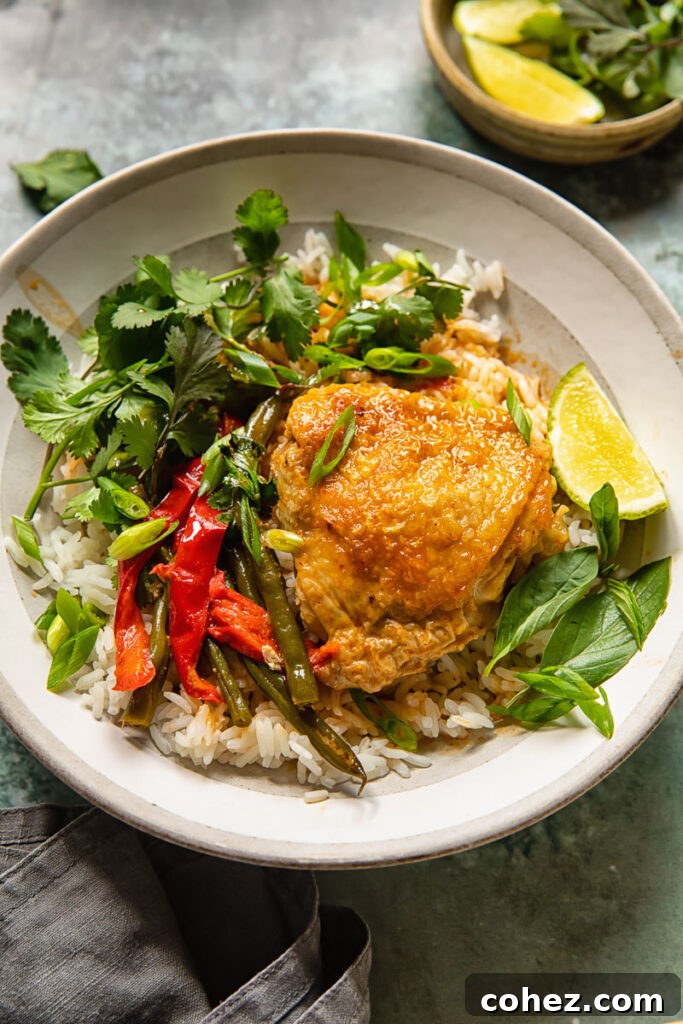
The perfect accompaniment to this Braised Coconut Curry Chicken Thighs is, without question, rice. Rice, rice, and more rice! I highly recommend serving it with fragrant jasmine rice, which complements the rich curry beautifully. For a truly traditional experience, sticky rice is an excellent choice. If you want to double down on the coconut goodness, consider making coconut rice – its subtly sweet flavor pairs wonderfully with the spicy curry. And if you prefer something plain and simple, perfectly boiled white rice is always a reliable option.
This coconut chicken curry is a complete and balanced meal in itself, requiring very little else. However, if you’re planning an elaborate tropical Thai feast, don’t miss out on the refreshing tang of som tam, or Thai green papaya salad. It is, without question, my favorite of all Thai dishes and provides a fantastic counterpoint to the rich curry. And while you’re exploring the exciting world of Thai street food, why not make some mini versions of these salmon burgers? They’re reminiscent of those tiny, traditional Thai fishcakes often served on a stick with a bag of sweet chilli sauce. Anyone else already looking up flights to Thailand?
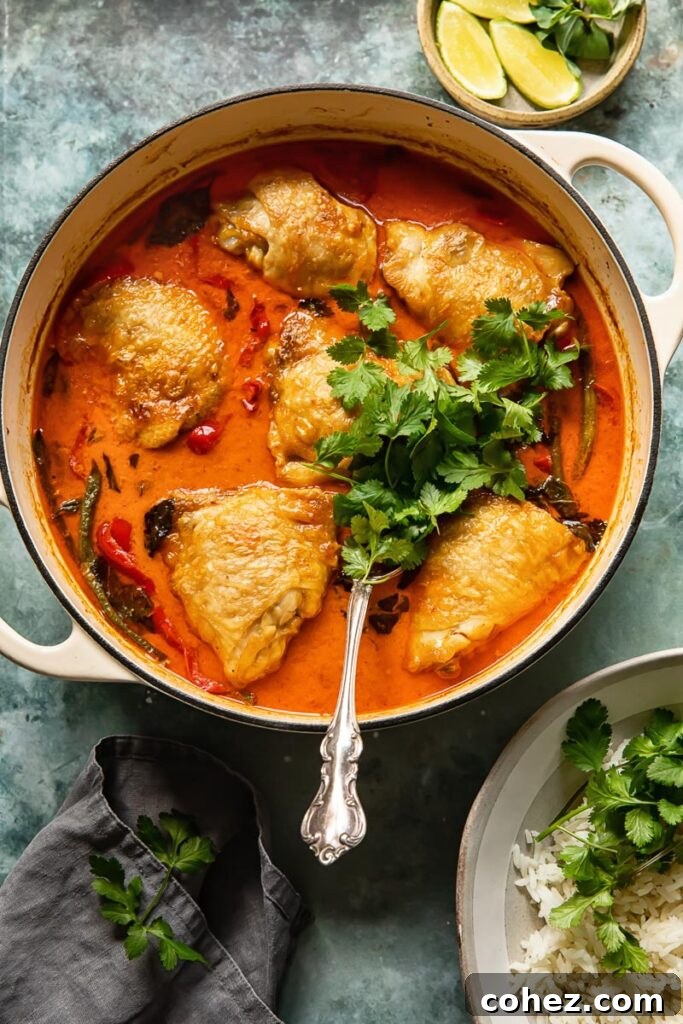
Storage and Leftovers: Enhanced Flavor for Days
One of the many wonderful qualities of curry dishes is how their flavors deepen and intensify with time. This Braised Coconut Curry Chicken is no exception! A little refrigerated rest allows the spices to meld and mature, ensuring that those chunky chicken thighs will offer an even spicier, more complex wallop on day two. Leftovers can be stored safely in an airtight container (This is an affiliate link.) in the fridge for up to 3 days, making it an excellent option for meal prep.
This Thai chicken curry is also remarkably freezer-friendly, provided you heed our crucial warning about coconut milk: only full-fat coconut milk will freeze and thaw beautifully. Reduced-fat versions tend to separate and become grainy upon defrosting, losing their desirable creamy texture. To freeze, allow the curry to cool completely, then transfer it to freezer-safe containers or bags. It will keep well for up to 3 months in the freezer. When you’re ready to enjoy, simply transfer it to the fridge the day before to defrost overnight, then gently reheat it on the hob or in the microwave until the chicken thighs are piping hot all the way through. Enjoy the intensified flavors!
More Delicious Chicken Thigh Recipes to Explore
- Italian Rosemary Chicken Stew
- Braised Chicken in Creamy Sage Sauce
- Chicken Cacciatore
- One Pan Lemon Chicken Orzo
Braised Coconut Curry Chicken Thighs
Tender chicken thighs slow-simmered in a spicy, sweet red coconut curry sauce with crunchy green beans and red bell pepper strips. A delicious one-pot meal that’s perfect for a weeknight dinner or entertaining.
Ingredients
- 1 tbsp vegetable oil
- 1kg / 2lbs chicken thighs (skin-on, bone-in preferred)
- Salt, to taste
- 50g / 2½tbsp Thai red curry paste (I use Mae Ploy brand, affiliate link)
- 400ml / 14oz unsweetened coconut milk, full fat
- 1 tbsp brown sugar
- 1 tsp fish sauce, optional (for authentic savory depth)
- 125ml / ½ cup water
- 1 red bell pepper, sliced
- 200g / 7oz green beans, trimmed (optional, but highly recommended for texture)
- 4-5 leaves Thai basil (for aromatic freshness)
Instructions
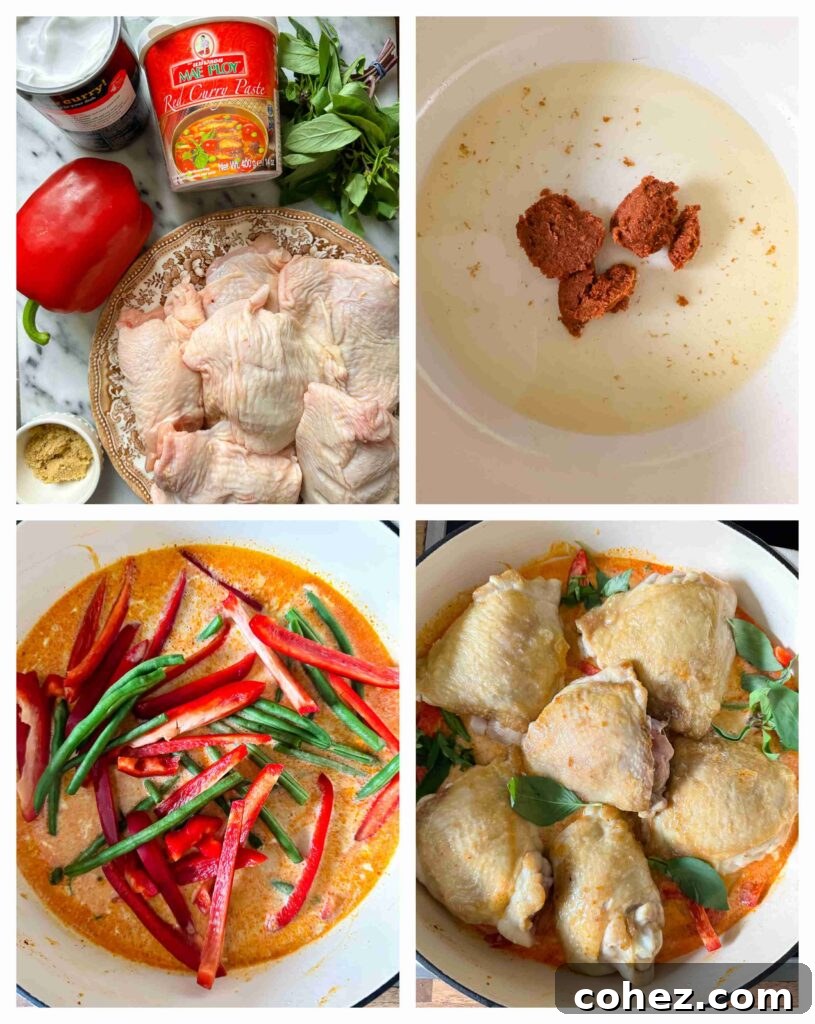
- Preheat your oven to 180C/350F. Heat the vegetable oil in a deep, oven-safe pan or Dutch oven over medium-high heat. Season the chicken thighs generously with salt. Brown them on both sides until they are beautifully golden, but not cooked all the way through. Remove the chicken to a separate plate and set aside.
- Carefully drain off most of the rendered fat from the pan, leaving approximately 1 tablespoon behind. Add the Thai red curry paste to the hot pan and cook, stirring constantly, for about 30 seconds until fragrant. Pour in the full-fat coconut milk, brown sugar, fish sauce (if using), and water. Stir well to combine all ingredients and bring the mixture to a gentle simmer.
- Add the sliced red bell pepper, green beans, and Thai basil leaves to the simmering curry sauce. Nestle the browned chicken thighs on top of the vegetables and sauce. Cover the pan with a lid and transfer it to the preheated oven. Cook for 25 minutes. After 25 minutes, remove the lid and continue to cook for another 15-20 minutes, or until the chicken thighs are deeply golden brown and cooked through, and the sauce has slightly thickened. Serve immediately with fragrant jasmine rice and a fresh lime wedge for an extra burst of zest.
Nutrition
Calories: 554kcal | Carbohydrates: 10g | Protein: 30g | Fat: 45g | Saturated Fat: 22g | Polyunsaturated Fat: 6g | Monounsaturated Fat: 12g | Trans Fat: 0.1g | Cholesterol: 163mg | Sodium: 609mg | Potassium: 638mg | Fiber: 3g | Sugar: 7g | Vitamin A: 2311IU | Vitamin C: 32mg | Calcium: 53mg | Iron: 3mg
Nutrition information is an approximation and should only be used as a guide.