
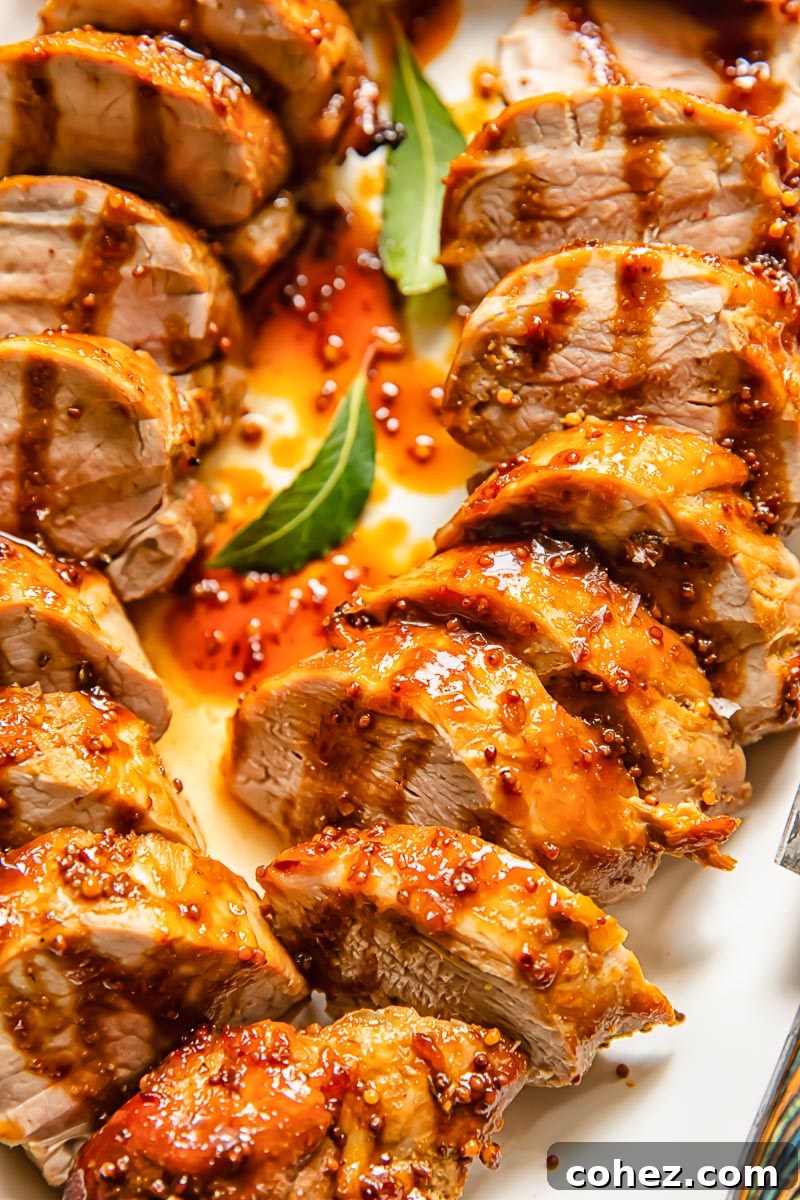
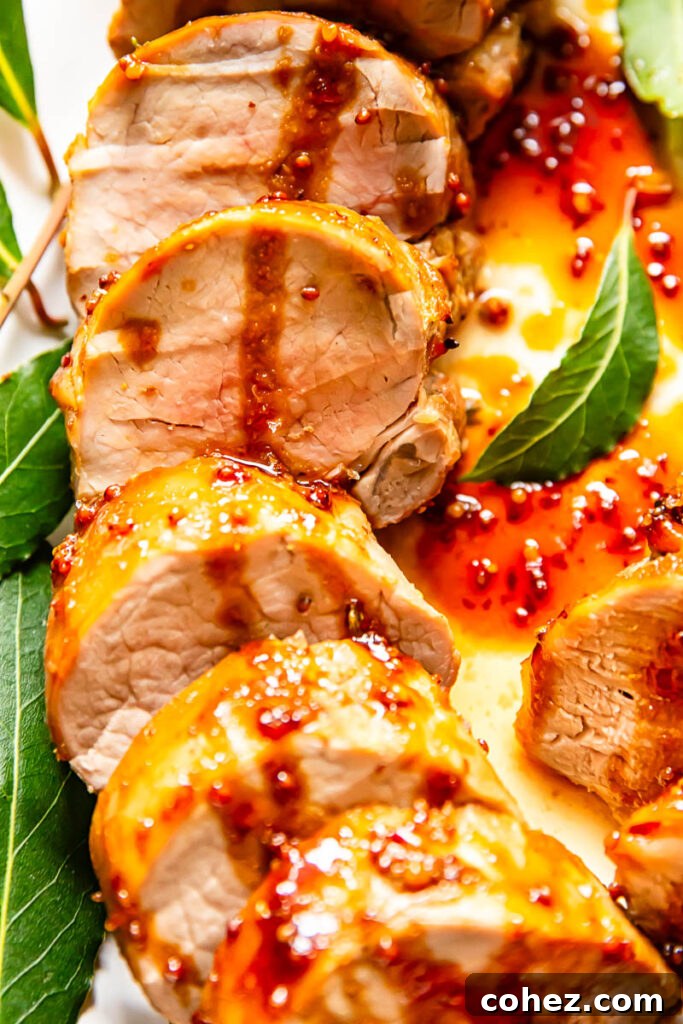
Mustard and molasses glazed pork tenderloin is a midweek treat. It’s a slender cut of lean meat that cooks in 30 minutes, coated in a mustard and molasses glaze that’s a mouthwatering mix of sweet and sour.
Irresistible Mustard and Molasses Glazed Pork Tenderloin: Your New Weeknight Favorite
Discover the ultimate weeknight culinary delight with this incredible mustard and molasses glazed pork tenderloin recipe. This dish is a true game-changer for busy evenings, offering a gourmet experience without the fuss. Imagine a perfectly cooked, tender, and succulent pork tenderloin, generously coated in a sticky, savory-sweet glaze that will tantalize your taste buds. This recipe isn’t just fast; it’s a symphony of flavors, bringing together the bold tang of mustard with the rich, earthy sweetness of molasses. Ready in just 30 minutes, it promises a satisfying meal that’s both healthy and utterly delicious.
Please note, pork tenderloin is not the same as pork loin. While both are fantastic cuts, they have distinct characteristics. If you’re looking for a larger, chunkier cut with a bit more marbling and fat, you might be interested in a classic pork loin roast. However, for a lean, quick-cooking option that delivers on tenderness and flavor, pork tenderloin is the undisputed champion.
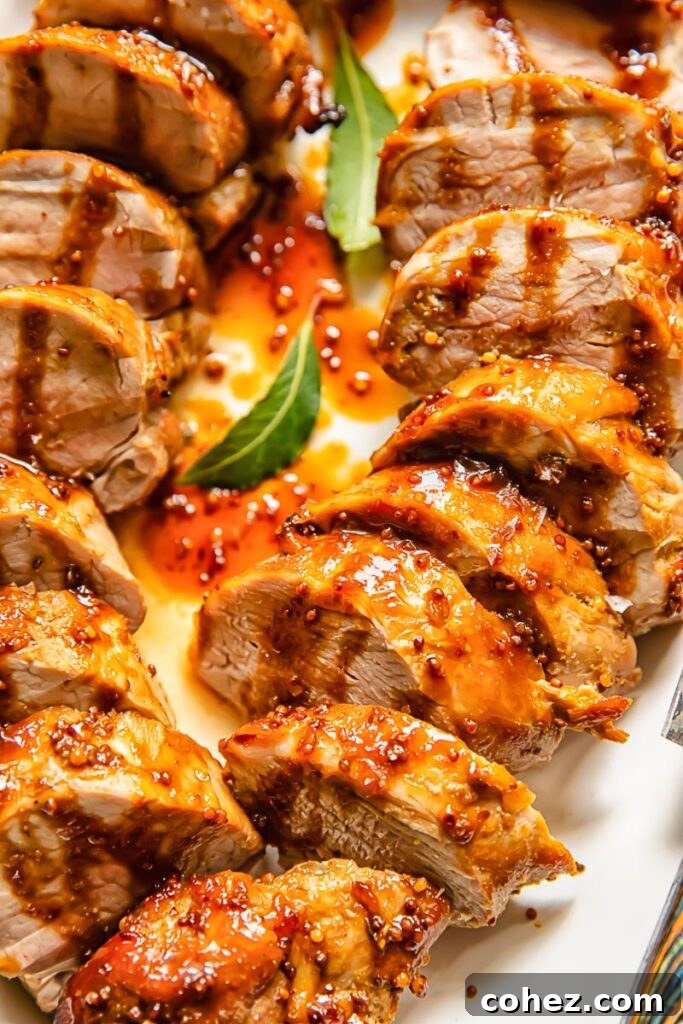
What Exactly is Pork Tenderloin? A Prime Cut Explained
Pork tenderloin is often lauded as the “fillet mignon” of the pork world, a comparison that speaks volumes about its quality and tenderness. Yet, it comes at a fraction of the cost of its beef counterpart, making it an accessible luxury for any home cook. This long, slender, and boneless cut of meat is almost pure muscle, containing very little to no fat. Understanding this lean nature is key to cooking it perfectly.
Despite being a muscle, the tenderloin is an underused muscle during the pig’s life, which is precisely why it remains incredibly soft and tender. Its lack of marbling, unlike fattier cuts such as pork belly, means it doesn’t inherently rely on fat for flavor. This isn’t a drawback, but rather an opportunity! Pork tenderloin boasts a wonderfully mild flavor and a velvety texture, making it an ideal canvas for robust seasonings. It truly shines when rubbed with spices, marinated to absorb deep flavors, or, as in this recipe, glazed to perfection, allowing it to become infused with rich, complex notes.
Unlike many larger pork joints that benefit from slow, low-temperature cooking, pork tenderloin thrives under high heat and quick cooking methods. Grilling, pan-searing, or roasting are all excellent choices that ensure this exquisite cut remains juicy and succulent. For a simple weeknight meal, roasting is my go-to method. It’s a hands-off approach that allows me to focus on preparing delicious side dishes while the oven does most of the work.
A crucial step often overlooked, but vital for any roasted meat, is resting. After cooking, it’s essential to allow the pork tenderloin to rest for at least 10-15 minutes before carving. This period of respite permits the internal juices, which have been driven to the center by the heat, to redistribute evenly throughout the meat. Skipping this step means those precious juices would simply seep out onto your cutting board, leaving you with dry, less flavorful slices. Patience is truly a virtue when it comes to maximizing the tenderness and juiciness of your pork.
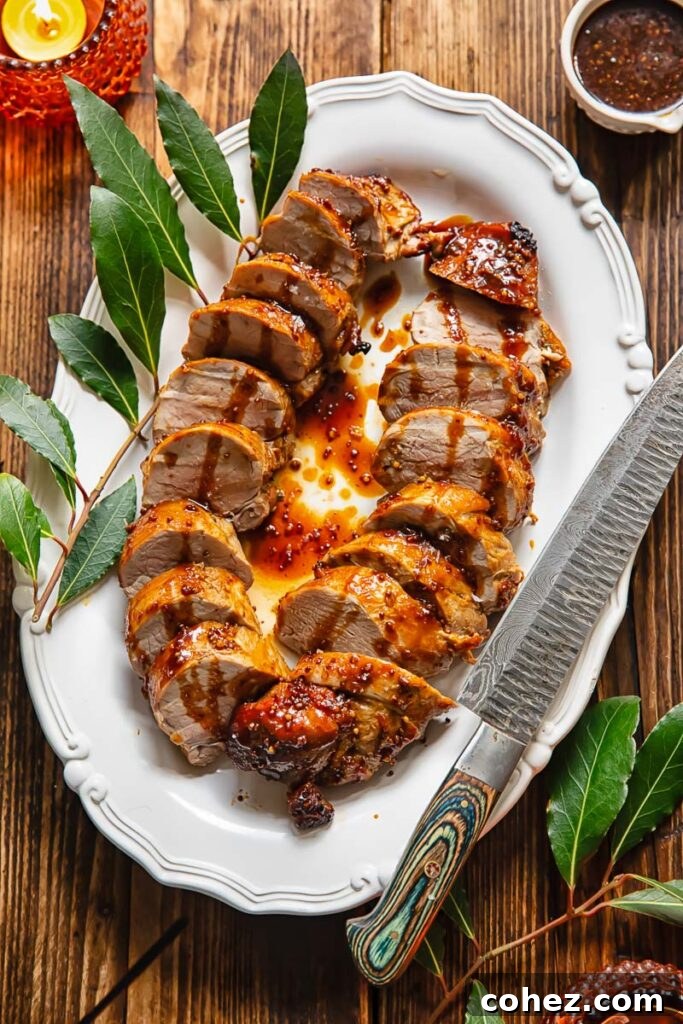
Mastering the Cook: How to Prepare Perfect Pork Tenderloin
Achieving perfectly cooked pork tenderloin is simpler than you might think, especially when you understand its unique characteristics. Since it’s a lean cut, the key is to cook it quickly and at a high temperature to prevent it from drying out. Roasting is an excellent method for even cooking and minimal fuss. Preheat your oven to a good hot temperature, typically 200°C (400°F), to ensure the exterior caramelizes nicely while the interior cooks through without overdoing it.
Before roasting, pat the tenderloin dry with paper towels. This step is often underestimated but makes a significant difference in achieving that desirable golden crust. Moisture on the surface will steam the meat rather than sear it, hindering the development of rich flavor and texture. Once patted dry, it’s ready to be slathered with our incredible mustard and molasses glaze.
Monitoring the internal temperature is paramount for juicy pork. While our recipe suggests approximately 20-25 minutes, individual ovens and the thickness of your tenderloins can vary. The ideal internal temperature for pork tenderloin, according to USDA guidelines, is 63°C (145°F) for medium-rare, with a short resting period. For this recipe, we aim for 60°C (140°F) in the thickest part, allowing it to reach the perfect 63°C (145°F) as it rests. A good meat thermometer is your best friend here, ensuring you never overcook this delicate cut.
The resting phase, as mentioned, is non-negotiable. Covering the roasted tenderloin loosely with foil helps to retain heat and allows the muscle fibers to relax, reabsorbing the juices. This results in an exceptionally tender, moist, and flavorful final product. Slice against the grain for the most tender bites, and prepare to be amazed at how such a simple recipe can yield such outstanding results.
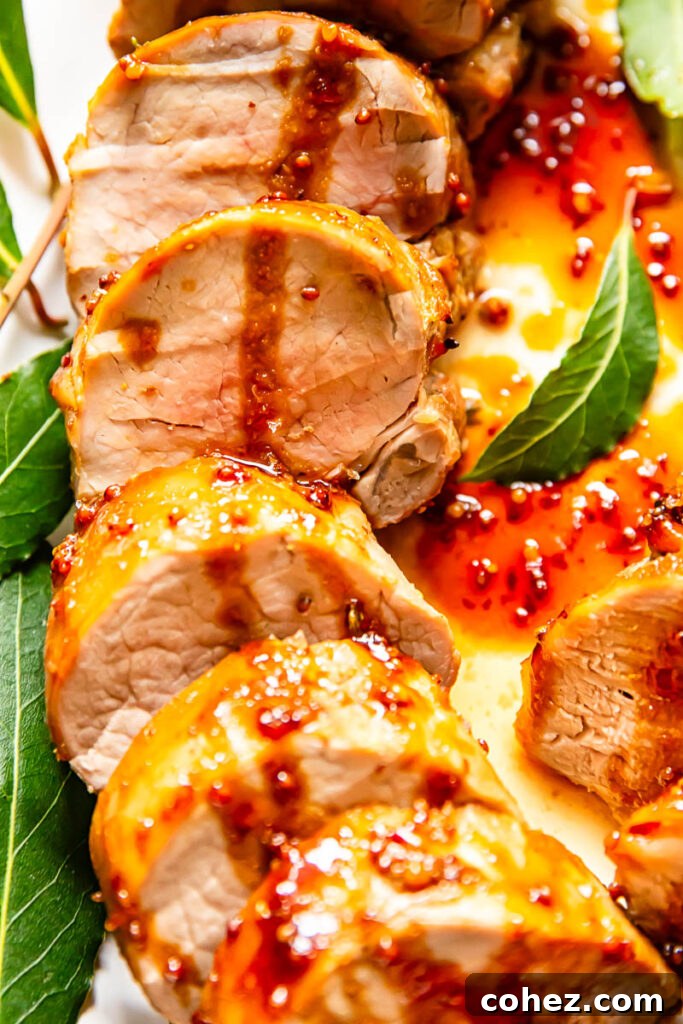
The Secret Sauce: Crafting the Mustard and Molasses Glaze
As I’ve highlighted, the tenderloin’s mild flavor means it greatly benefits from a robust flavor boost. In this recipe, that enhancement comes from a thick, sticky, and utterly irresistible glaze. Beyond delivering a punch of delicious flavor, this glaze also performs a vital function: it seals in the meat’s natural juices during cooking, contributing to its incredible succulence.
This sweet and savory glaze is, quite simply, EVERYTHING. It perfectly complements and enhances the pork’s subtle natural sweetness. The foundation of this glossy, mouthwatering sauce includes rich, unctuous butter and pungent mustard. I personally prefer wholegrain mustard for its delightful coarse texture and tangy bite, which adds another layer of complexity. Molasses, known as black treacle in the UK, provides a deep, almost smoky sweetness with a hint of bitterness, beautifully balanced by the simpler sweetness of brown sugar. These ingredients combine to form a truly spectacular base.
To further amplify the flavor profile, we add a teaspoon of garlic powder for aromatic depth and a touch of salt to heighten all the inherent tastes. A sprinkling of fresh, citrussy thyme leaves provides an uplifting, herbaceous note that cuts through the richness of the glaze, adding brightness and fragrance. The combination of these elements creates a multifaceted glaze that’s both comforting and exciting.
This is a true glaze, not a marinade, meaning there’s no need for lengthy steeping. You simply slather the sauce generously over the tenderloins just before roasting. For an added layer of aromatic wonder, I highly recommend placing fresh bay leaves around the meat in the roasting pan. Pork tenderloin is incredibly absorbent, readily taking on any flavors you introduce to it, making it perfect for layering complex aromas and tastes. The bay leaves impart a warm, woody essence that beautifully permeates the meat as it cooks, transforming your kitchen into a fragrant haven.
Essential Tips for Success
- Trust the Timing: For this beautiful cut, 20-25 minutes of cooking is typically all it needs. Don’t second-guess it! Overcooking is the tenderloin’s worst enemy, leading to a tough, dry, and ropey texture that loses its signature tenderness.
- Flavor is Key: Pork tenderloin is a lean and mild-flavored cut, meaning it needs a helping hand in the flavor department. It’s imperative to rub, marinate, or glaze it to infuse it with character. The reward is its unparalleled, melt-in-your-mouth softness.
- Aromatic Boost (Optional but Recommended): I often throw in a handful of fresh bay leaves from my garden bush into the roasting pan. Their warm, woody aroma is simply wonderful and subtly infuses the meat. While completely optional, it’s a simple way to elevate the dish.
- The Golden Rule of Resting: For the juiciest possible meat, allowing it to rest before slicing is absolutely crucial. This is an unforgivably overlooked step in home cooking, and one I sincerely hope you won’t be guilty of skipping! It makes all the difference.
- Use a Meat Thermometer: To ensure perfect doneness without overcooking, always use a reliable meat thermometer. Aim for an internal temperature of 60°C (140°F) for medium-rare, knowing it will rise slightly during resting.
Elevating Your Meal: Serving Suggestions for Glazed Pork Tenderloin
This mustard and molasses glazed pork tenderloin is essentially a super speedy roast dinner, making it perfect for weeknights when time is of the essence. To maintain the quick and easy theme, I always pair it with sides that are also ready in around 30 minutes, minimizing any extra fuss in the kitchen. Here are some delectable suggestions:
- Brown Butter Mashed Potatoes: Creamy, rich mashed potatoes with a nutty brown butter infusion are pure bliss. Smooshed onto a forkful of that glazed pork, it’s a mouthful of sweet, buttery heaven that perfectly balances the savory notes of the meat.
- Crispy Air Fryer Roast Potatoes: If you crave that satisfying crunch, these air fryer potatoes are an ideal choice. They cook up beautifully crisp on the outside and fluffy on the inside, providing a delightful textural contrast to the tender pork.
- Lemon Butter Green Beans: Fresh and vibrant, these green beans, tossed in a bright lemon butter sauce, offer a zesty counterpoint to the syrupy richness of the main dish. They add a refreshing lightness to the meal.
- Miso Roasted Cabbage Wedges: For something a little more adventurous and incredibly flavorful, these cabbage wedges roast until meltingly soft, imbued with an exotic umami depth from the miso butter. They are surprisingly delicious and pair wonderfully with pork.
And since you’ve saved so much time with the main course, you might even have a few extra minutes to whip up a classic dessert. Consider following up this fantastic meal with an Apple and Blackberry Brown Butter Crumble – a comforting and seasonal treat.
Storage and Creative Leftover Ideas
For some recipes, when I get to this section, I can’t help but chuckle and think, “What leftovers?!” But I write it nonetheless, for those families who possess more culinary restraint than mine. So, here it is:
Any leftover pork tenderloin can be stored covered in an airtight container in the fridge for up to 4 days. This sweetly glazed pork is incredibly versatile and lends itself beautifully to creative leftover transformations. For a quick and satisfying lunch, slice the medallions in half again and pile them onto a soft white roll for a sweet, meaty sandwich. It pairs wonderfully with a creamy celeriac and apple remoulade or a crisp, refreshing winter salad. You can also chop it into cubes and toss it into a quick stir-fry with some vegetables and noodles, or use it to top a green salad for a healthy and flavorful meal. Leftover glazed pork can also be shredded and added to tacos or quesadillas for an exciting twist on Mexican night.
More Pork Recipes to Try
- Spanish Meatballs (Albondigas)
- Crispy Honey Soy Pork Belly
- White Bean and Sausage Soup
- Slow Cooker Cuban Pork (Lechon Asado)
Full Recipe: Mustard and Molasses Glazed Pork Tenderloin
Mustard and Molasses Glazed Pork Tenderloin
By Julia Frey of Vikalinka
Prep: 5 mins
Cook: 25 mins
Total: 30 mins
Servings: 8 people

This pork tenderloin is a slender cut of lean meat coated in a mustard and molasses glaze that’s a mouthwatering mix of sweet and sour.
Ingredients
- 2 tbsp butter
- 2 tbsp wholegrain mustard
- 4 tbsp molasses, or black treacle in UK
- 2 tbsp brown sugar
- 1 tsp garlic powder
- 3-4 sprigs thyme, leaves only or 1/2 tsp dried thyme
- 1 tsp salt
- 2 pork tenderloin, approximately 1 lbs each
- Fresh bay leaves, optional
Instructions
- Preheat the oven to 200C/400F. In a small bowl combine the molasses, butter, brown sugar and thyme leaves. Microwave for 30 seconds until the mixture warms up, then mix well. Add the mustard, garlic powder, and salt, and stir until fully combined.
- Generously slather the tenderloins with the prepared glaze all over. Place them in a shallow roasting pan and arrange the fresh bay leaves around the meat to infuse additional aroma. Cook in the preheated oven for 15 minutes.
- After 15 minutes, remove the pan from the oven and brush the tenderloins with more of the glaze. Return to the oven and cook for another 10 minutes, or until the internal temperature reaches 60C/140F in the thickest part of the tenderloin.
- Once cooked, take the tenderloins out of the oven, loosely cover them with aluminum foil, and let them rest for 15 minutes. This crucial step ensures the meat remains juicy and tender. Then, slice and serve immediately.
Notes
- Cook this tenderloin for just 20-25 minutes. Trust the recipe and avoid overthinking it, as overcooking will result in tough meat.
- Because this cut is mild in flavor, it’s essential to glaze, marinate, or rub it to enhance its taste. Its primary appeal is its incredible tenderness.
- Adding bay leaves (especially fresh ones from the garden) provides a wonderful warm and woody aroma, though it is entirely optional.
- Always allow the meat to rest before slicing to ensure maximum juiciness. This is a common but easily avoidable mistake!
Nutrition
Calories: 614kcal | Carbohydrates: 11g | Protein: 94g | Fat: 19g | Saturated Fat: 7g | Polyunsaturated Fat: 3g | Monounsaturated Fat: 7g | Trans Fat: 0.3g | Cholesterol: 302mg | Sodium: 595mg | Potassium: 1946mg | Fiber: 0.2g | Sugar: 10g | Vitamin A: 117IU | Vitamin C: 1mg | Calcium: 55mg | Iron: 5mg
Nutrition information is automatically calculated, so should only be used as an approximation.