
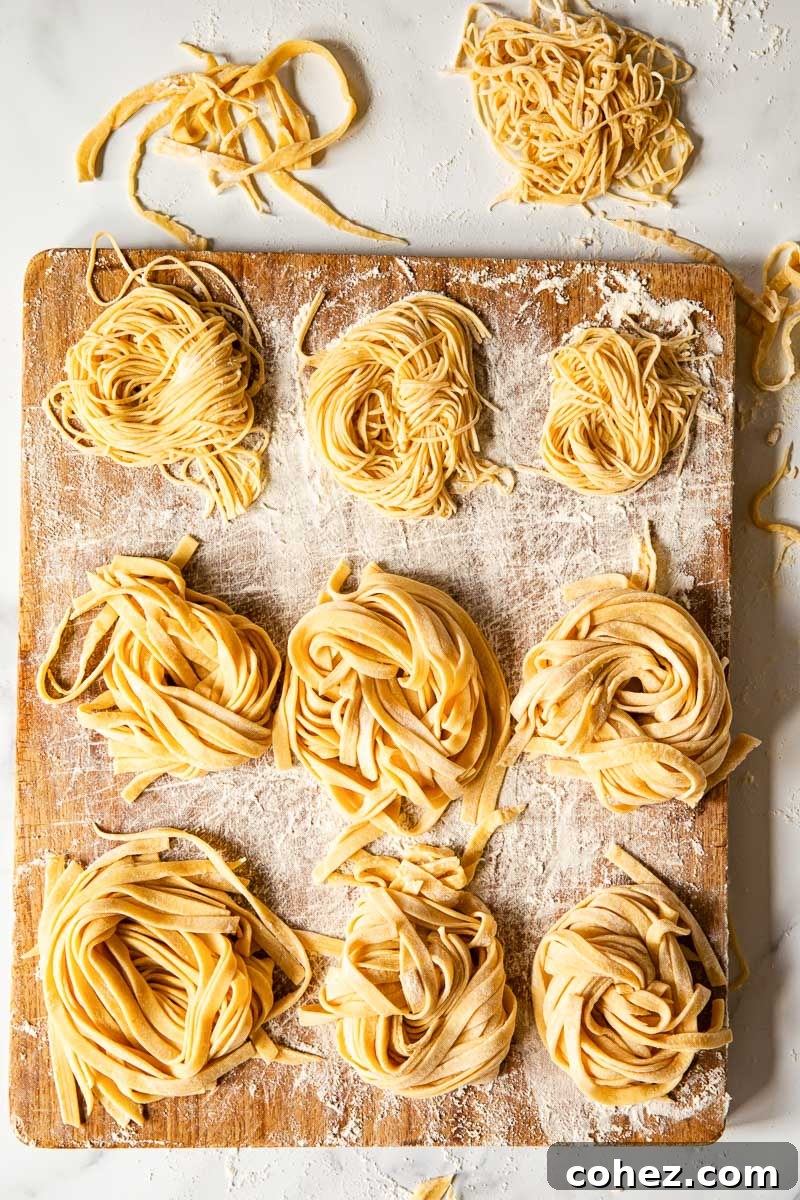
Are you ready to unlock the secret to creating authentic Italian fresh pasta right in your own kitchen? You might be surprised to learn that this culinary art, often perceived as complex, is incredibly simple, requiring just two fundamental ingredients: flour and eggs! This guide will demystify the process, turning you into a confident pasta maker in no time.
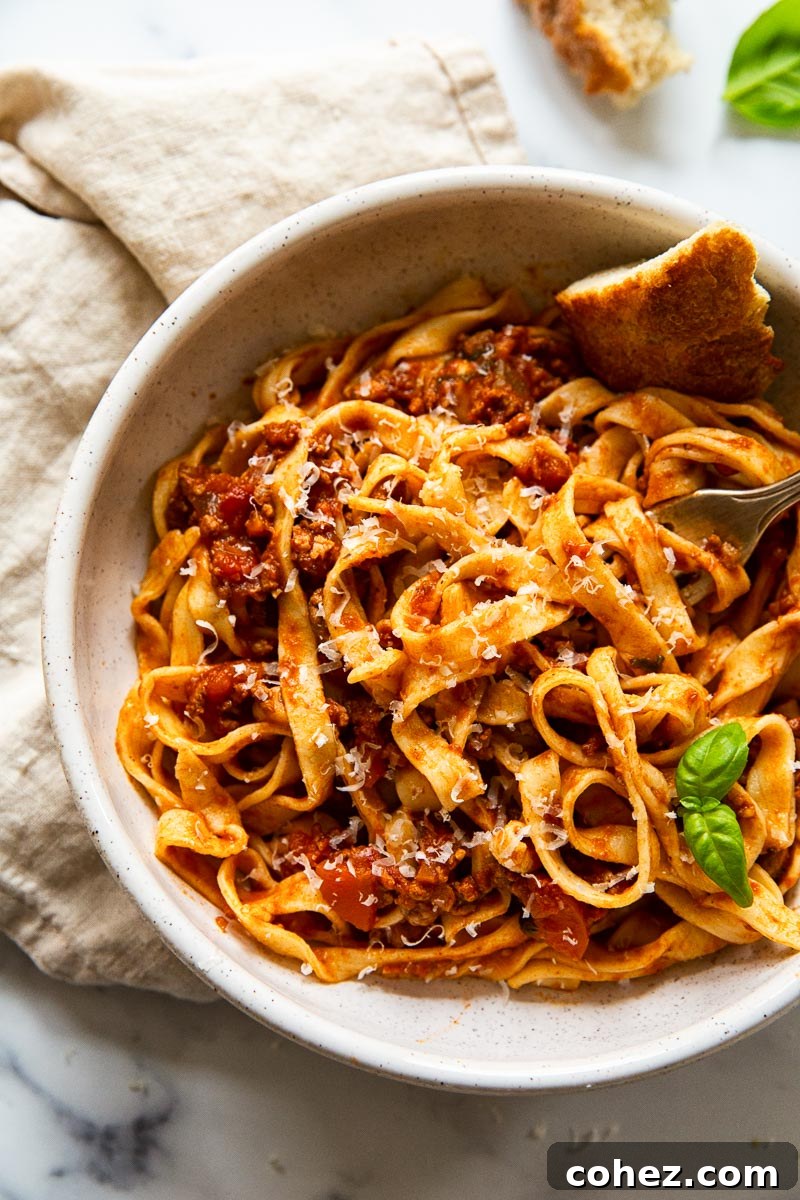
Once you’ve mastered the art of making fresh pasta, elevate your meal with the perfect accompaniment. Consider pairing your homemade delight with my easy Pasta Cream Sauce Recipe or the rich, classic flavors of Bolognese Sauce. These sauces are designed to complement the delicate texture and fresh taste of your handmade noodles.
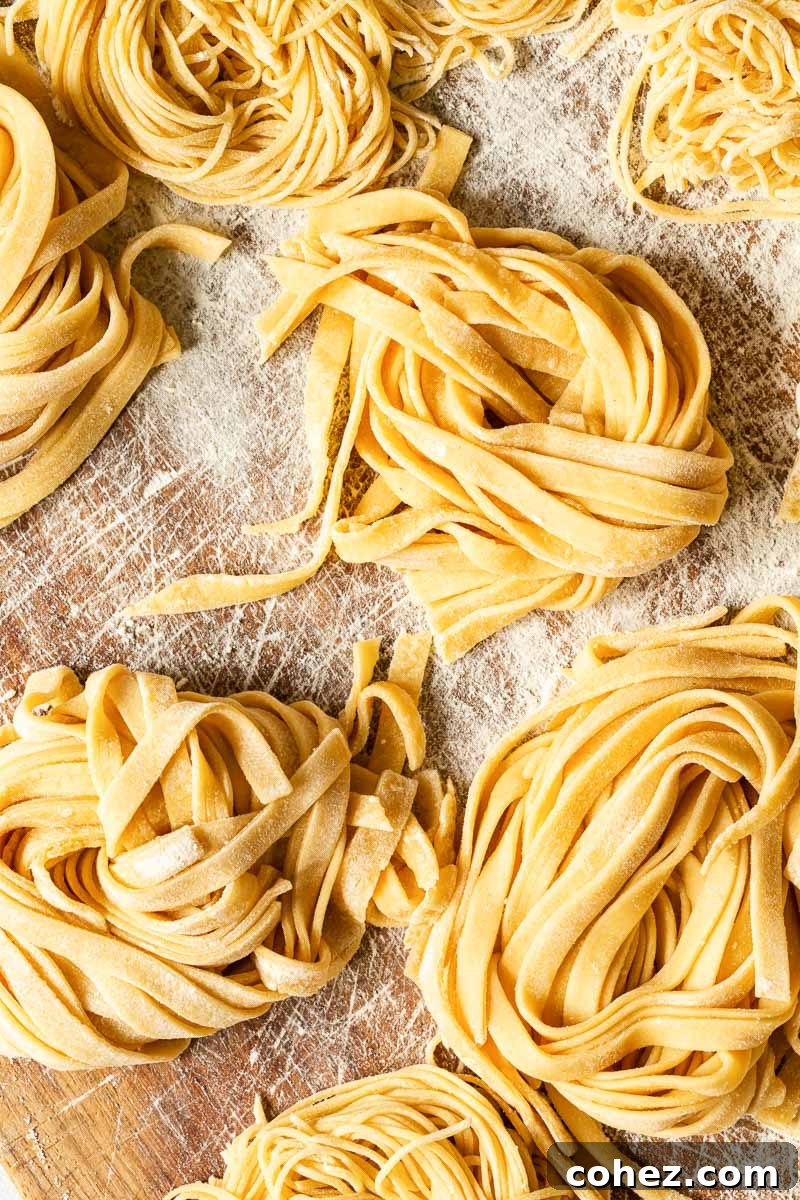
Mastering Homemade Fresh Pasta: An Authentic Italian Journey
For many, the idea of making fresh pasta from scratch at home seems daunting or unnecessary. After all, dried pasta is readily available and convenient. However, I’m confident that once you discover the sheer ease and superior taste of homemade pasta, you’ll be eager to make it a regular part of your cooking repertoire. The difference in texture and flavor is truly remarkable, transforming a simple meal into an extraordinary culinary experience.
My connection to noodle making runs deep, rooted in childhood memories. I grew up watching my grandmother and mother skillfully preparing homemade noodles for comforting dishes like chicken noodle soup. Our family table also frequently featured filled pasta variations such as pierogi and pelmeni. While these traditional dishes share the fundamental principle of dough and filling, the specific recipe and technique differ from classic Italian pasta.
My personal journey into authentic Italian pasta began during a memorable trip to Southern Italy. Booking a hands-on cooking class seemed like a wonderful way to immerse ourselves in the local culture, and it certainly delivered. The class promised to teach us three iconic Italian recipes: Eggplant Parmigiana, Fresh Pasta, and Bolognese Sauce. Initially, I worried that four hours wouldn’t be enough to cover such an ambitious menu. To my delight, I discovered that these traditional dishes, when taught with the right techniques, are surprisingly quick to prepare, allowing ample time for learning and enjoyment.
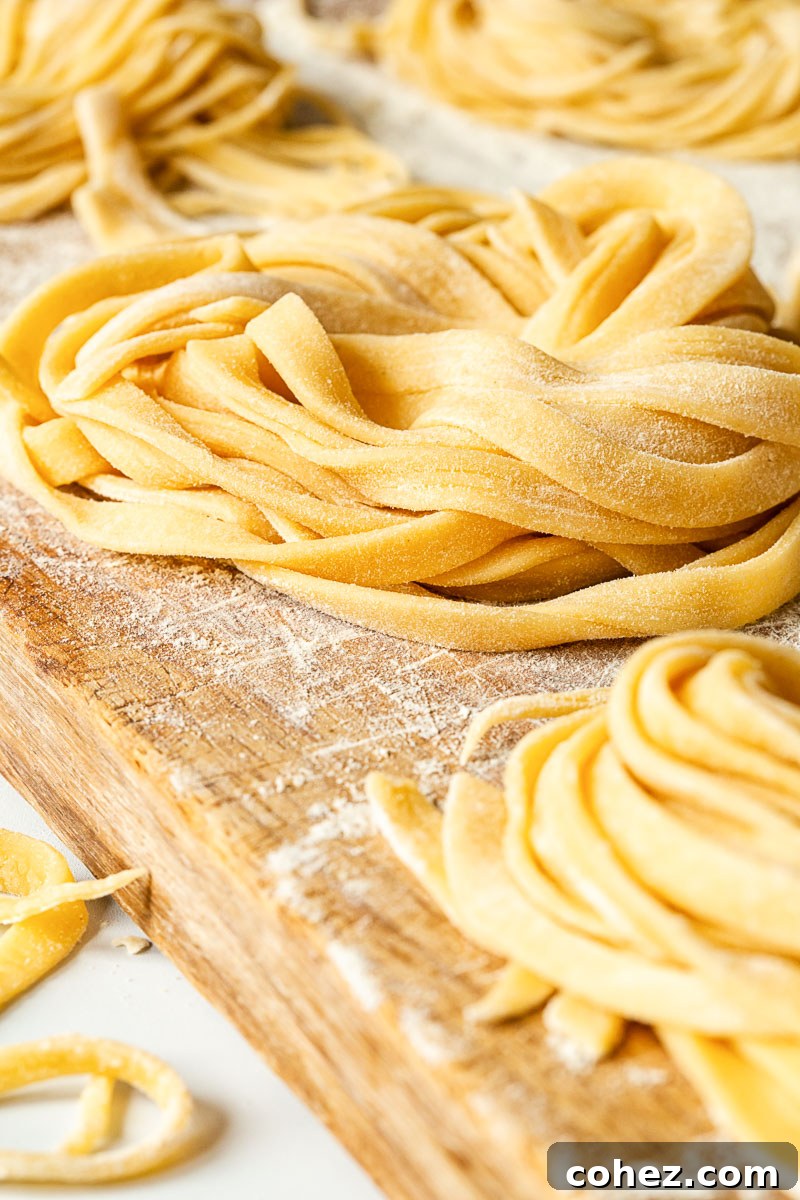
The Core of Fresh Pasta: Ingredients and Proportions
The beauty of authentic fresh pasta lies in its deceptive simplicity. The basic recipe, which we learned in Italy, calls for a straightforward ratio: 100g of pasta flour per large egg per person. This proportion yielded perfect results in the Italian kitchen. However, upon returning home and sourcing the specialized “00” flour, I noticed a slight variation in the dough’s consistency. This experience highlights an important lesson for home cooks: the nuances of ingredients and environment can impact your results.
Understanding “00” Flour and Its Importance
While any all-purpose flour can make pasta, “00” flour (also known as “doppio zero”) is the gold standard for authentic Italian pasta. This finely milled wheat flour has a lower protein content than many American all-purpose flours, resulting in a smoother, silkier dough that is easier to roll thin and produces a wonderfully delicate texture in the cooked pasta. Its fine grind also means it absorbs liquids differently, which is why adjustments might be needed depending on your specific brand and local humidity. Don’t be discouraged if your first attempt requires a touch more flour or a splash of water; this adaptability is part of the craft. The key is to achieve a dough that is firm yet pliable.
Achieving the Perfect Pasta Dough Consistency and Texture
The ideal homemade pasta dough should possess a unique balance: firm enough to handle without sticking, yet pliable enough to stretch and roll without tearing. If your dough is too soft and sticky, your pasta will likely clump together during shaping and cooking. Conversely, a dough that is too hard or dry will be difficult to work with and result in a rubbery, tough pasta.
You might be thinking, “How will I know what ‘perfect’ feels like?” This is a common concern for beginners, and it’s essential to understand that there isn’t a single magic answer. Like bread baking, mastering pasta dough consistency comes with practice and experience. The good news is that even your very first attempt, imperfect as it might be, will undoubtedly taste incredibly fresh and satisfying. Embrace the journey of trial and error; each batch offers valuable learning. With a little patience, you’ll quickly develop an intuitive feel for the right texture.
Mixing Your Pasta Dough: Hand vs. Machine Techniques
Whether you choose to mix your pasta dough by hand or with the aid of a machine, the goal remains the same: a smooth, elastic dough. I’ve personally used both methods, and while hand-mixing is wonderfully traditional and requires no special equipment, it can be quite a workout, especially when preparing pasta for a larger gathering. Both approaches, however, yield virtually identical results in terms of dough quality.
Traditional Hand-Mixing Method
To make pasta the classic way, simply pour your “00” flour onto a clean, flat work surface, preferably a large wooden board. Create a generous well in the center of the flour mound with your hand. Crack the eggs directly into this well. Using your fingertips, gently break the egg yolks and gradually begin to incorporate the flour from the inner walls of the well into the eggs. Work slowly, drawing more flour into the liquid until a shaggy dough forms. You can also use a fork in the initial stages to break up the eggs. Once the dough comes together, begin kneading it with the heel of your hand, pushing and folding, for about 8-10 minutes until it becomes smooth and elastic. If the dough feels too stiff, add water, one tablespoon at a time, until you reach the desired consistency.
Machine-Assisted Mixing
For those who prefer a less strenuous approach, a stand mixer or food processor can simplify the dough-making process. If using a stand mixer with a dough hook attachment, combine the flour and eggs in the mixing bowl and mix on a low speed until a coherent dough forms. Continue mixing for 5-7 minutes to develop the gluten. Alternatively, a food processor offers an even quicker solution: add both ingredients simultaneously, pulse until the mixture forms a ball, then let it run for another 30 seconds to a minute to achieve a smooth dough.
Regardless of your chosen method, always monitor the dough’s consistency and adjust with a little extra flour or a splash of water as needed. Once the dough is mixed, it’s crucial to cover it tightly with plastic wrap or a damp tea towel and let it rest at room temperature for at least 20-30 minutes. This resting period allows the flour to fully hydrate and the gluten to relax, which is vital for achieving a silky, easy-to-roll pasta sheet.
The Art of Shaping Fresh Pasta with a Pasta Machine
The final and most enjoyable step is transforming your rested dough into beautiful pasta shapes. While it’s technically possible to roll and cut pasta by hand, this requires considerable effort and skill to achieve uniform thickness and consistent ribbons. For truly professional-looking and effortless results, a pasta machine is an invaluable tool.
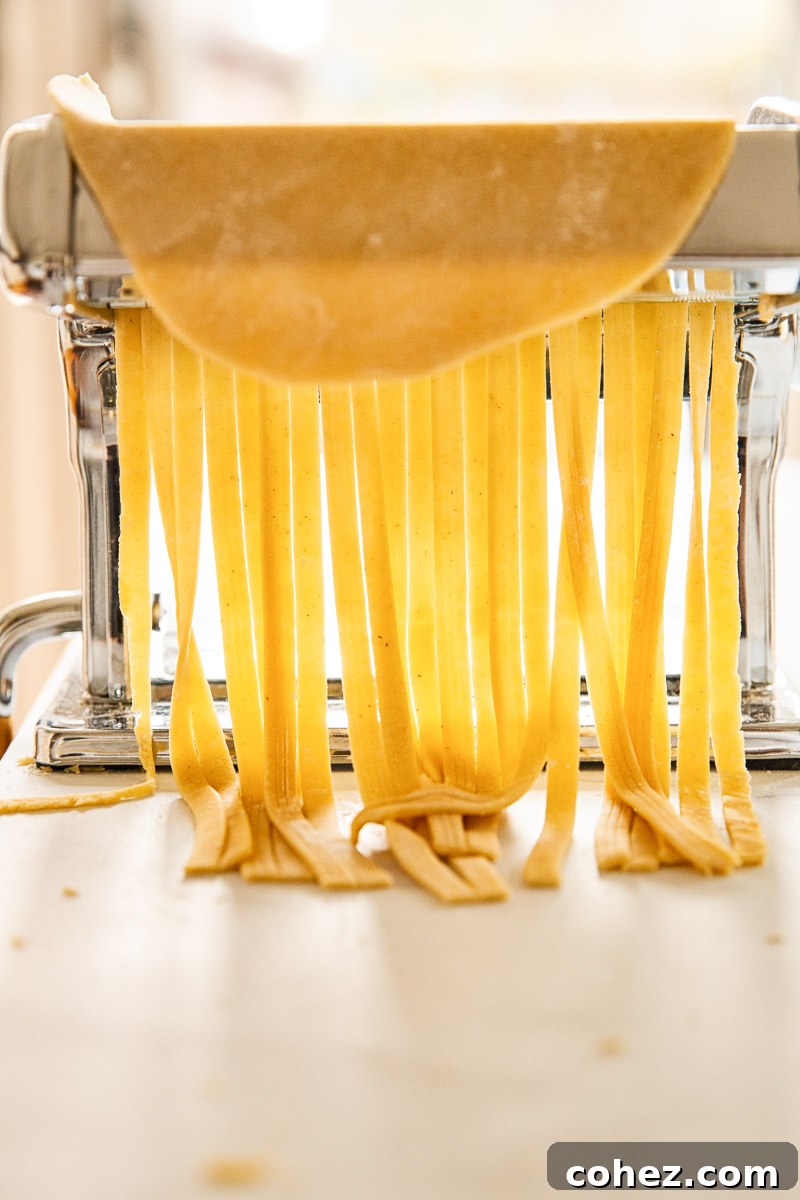
Investing in a good quality pasta machine is highly recommended; it’s a kitchen gadget that will last a lifetime and drastically simplify your pasta-making process. The machine I personally use and recommend is the Marcato Atlas 150. This model often comes with attachments for popular shapes like tagliatelle/fettuccine and tagliolini, both of which are featured in this article.
Fun Fact: Did you know that tagliatelle and fettuccine are essentially the same pasta shape? They are known by different names in Northern and Southern Italy, respectively, a charming example of Italy’s regional culinary diversity.
If you’re feeling adventurous enough to hand-cut your tagliatelle, be aware that Italians take their pasta standards seriously! Traditionally, tagliatelle should be cut into strips measuring 6mm to 7mm wide. Our Italian cooking instructor even brought a ruler to ensure perfect consistency!
Beyond ribbons, the flat, uncut pasta sheets that emerge from the machine are perfect for creating layered dishes such as a rich lasagna recipe.
The Actual Pasta Shaping Process
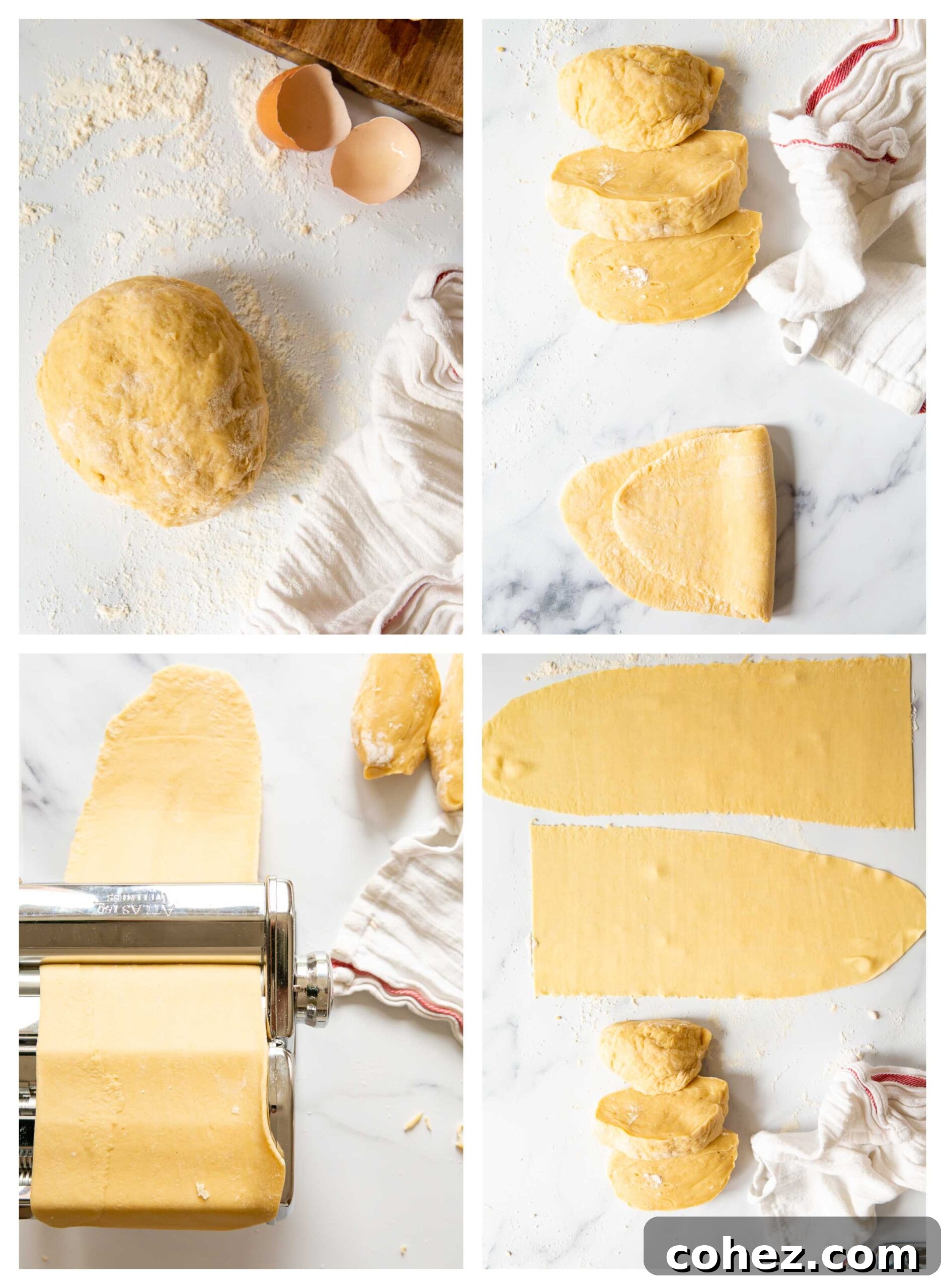
Begin by dividing your rested pasta dough into four equal disks, as illustrated in the photos above. Before feeding each disk through the pasta machine, lightly dust it with flour to prevent sticking. Keep the remaining dough covered under a tea towel to prevent it from drying out.
Start with the widest setting on your pasta machine (usually ‘1’). Pass a dough disk through the rollers. Fold the resulting sheet in half or in thirds, then feed it through the widest setting again. Repeat this step a couple of times to further strengthen the gluten and create a smoother sheet. Next, gradually adjust the machine’s setting to a narrower gauge, typically ‘3’, and pass the dough through once more. Continue reducing the thickness setting, moving up to ‘6’ or ‘7’, depending on your preferred pasta thickness. I usually opt for ‘6’ for classic fettuccine and ‘7’ for finer pasta like tagliolini or delicate ravioli.
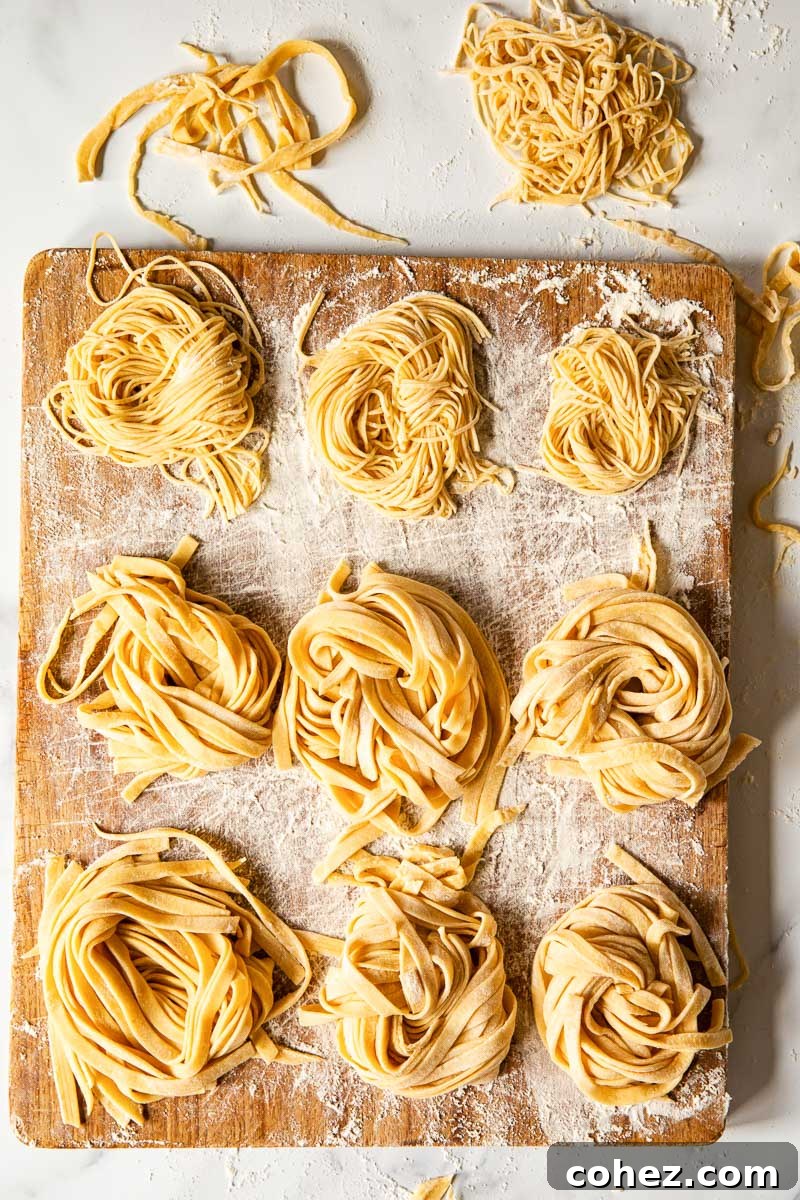
Once your pasta sheet has reached the desired thinness (it will be quite long!), cut it in half for easier handling and dust it lightly with flour. Switch to the pasta cutting attachment on your machine and feed the sheet through to transform it into beautiful, uniform pasta ribbons. Lightly dust the freshly cut pasta with flour and gently gather it into loose nests to prevent sticking. Continue this process with the rest of your dough.
Tagliatelle (or fettuccine) holds a special place as my favorite pasta shape. What’s yours? Share your preferences in the comments below!
Pro Tips for Pasta Perfection
- Dough Consistency is Key: Making pasta is an art of touch. Don’t be afraid to adjust your dough slightly by adding a little more flour if it’s too sticky, or a splash of water if it’s too dry. The ideal dough should be firm yet elastic, not crumbly and not excessively sticky.
- Embrace the Rest: Allowing your dough to rest for at least 20-30 minutes after kneading is crucial. This period gives the flour time to fully hydrate and, more importantly, allows the gluten to relax. A relaxed gluten structure makes the dough much easier to roll out thinly and prevents it from snapping back, ensuring a smooth, pliable sheet.
- The Power of a Pasta Machine: While not strictly essential, a good quality pasta machine makes a world of difference. It significantly reduces the effort required to achieve uniform pasta sheets and ribbons, saving you time and ensuring consistent cooking. Always remember to dust your dough generously with flour before feeding it through the machine to prevent it from sticking to the rollers.
- Hand-Rolling Precision: If you’re committed to making pasta entirely by hand, be mindful of achieving consistent thickness across your pasta sheets. Uneven thickness will lead to uneven cooking, with some parts being undercooked and others mushy. Patience and a good rolling pin are your allies here.
- Drying for Storage: If you don’t plan to cook your fresh pasta immediately, it’s wise to dry it slightly to prevent the strands from clumping and sticking together. You can purchase a dedicated pasta drying rack, or get creative by hanging your pasta over a clean broomstick or even the handles of wooden spoons suspended between two chairs.
- Quick Cooking Time: Fresh pasta cooks much faster than its dried counterpart, typically taking no more than 2-3 minutes to reach the traditional al dente texture. Keep a close eye on it in the boiling salted water to avoid overcooking!
Favourite Recipes Using Your Fresh Pasta Creations
Now that you’ve crafted your own incredible fresh pasta, it’s time to enjoy it with some exquisite sauces. Here are a few recommended recipes that perfectly complement the rich flavor and texture of homemade noodles:
- Creamy Tagliatelle with Bacon, Mushroom and Truffle Oil
- Tagliatelle with Pancetta, Basil and Mozzarella
- Seafood Lasagna
- Easy Lasagna Soup
Homemade Fresh Pasta Recipe
Would you like to learn how to make authentic Italian fresh pasta? It’s the easiest thing in the world as the recipe only has 2 ingredients!
Equipment
-
Marcato Atlas 150 pasta machine
Ingredients
- 400g/3 cups+2 tbsp 00 pasta flour
- 4 eggs, large
Instructions
To make pasta dough
-
Empty your flour onto a clean work surface, form a well in the center with your hand, and break eggs directly into the well.
Then, break up the egg yolks with your fingertips and gradually start working the eggs into the flour until you get a shaggy dough. Alternatively, you can use a fork to break the eggs initially. If your dough is too stiff, start adding water one tablespoon at a time until the right consistency is achieved.
-
If using a KitchenAid mixer or a similar stand mixer, combine the flour and eggs in the mixing bowl and mix them with a dough hook attachment until a smooth dough forms.
-
You can also use a food processor. Just add both ingredients at the same time, hit the ON button, and let it run until a dough ball forms.
-
With both methods, watch out for the right dough consistency and adjust wet or dry ingredients as needed. Cover the pasta dough tightly and let it rest for 30 minutes before shaping it. This allows the gluten to relax, making it easier to roll.
To shape pasta
-
Slice the rested pasta dough into 4 equal disks as shown in the photos. Make sure you dust each dough disk with flour before sending it through a pasta machine to prevent sticking. Keep the remaining dough covered under a tea towel to prevent drying.
Start with the widest setting on your pasta machine. After the first pass, fold the dough over and send it through the machine again. Then, change the setting to 3 and repeat the process. Finally, go up to setting 6 or 7, depending on the thickness you prefer. I prefer using 6 for fettuccine and 7 for finer pasta like tagliolini or ravioli.
-
Once the dough sheet is the desired thickness, cut it in half, as it will be very long, and lightly dust with flour. Switch to the pasta cutting attachment and turn your pasta sheet into beautiful pasta ribbons.
Dust the fresh pasta with flour and gather it into loose nests. Proceed with the rest of the dough.
To cook fresh pasta
-
Cook in a large pot of boiling salted water for approximately 3 minutes, or until al dente. Then, mix immediately with a sauce of your choice.
Nutrition
Nutrition information is automatically calculated, so should only be used as an approximation.