
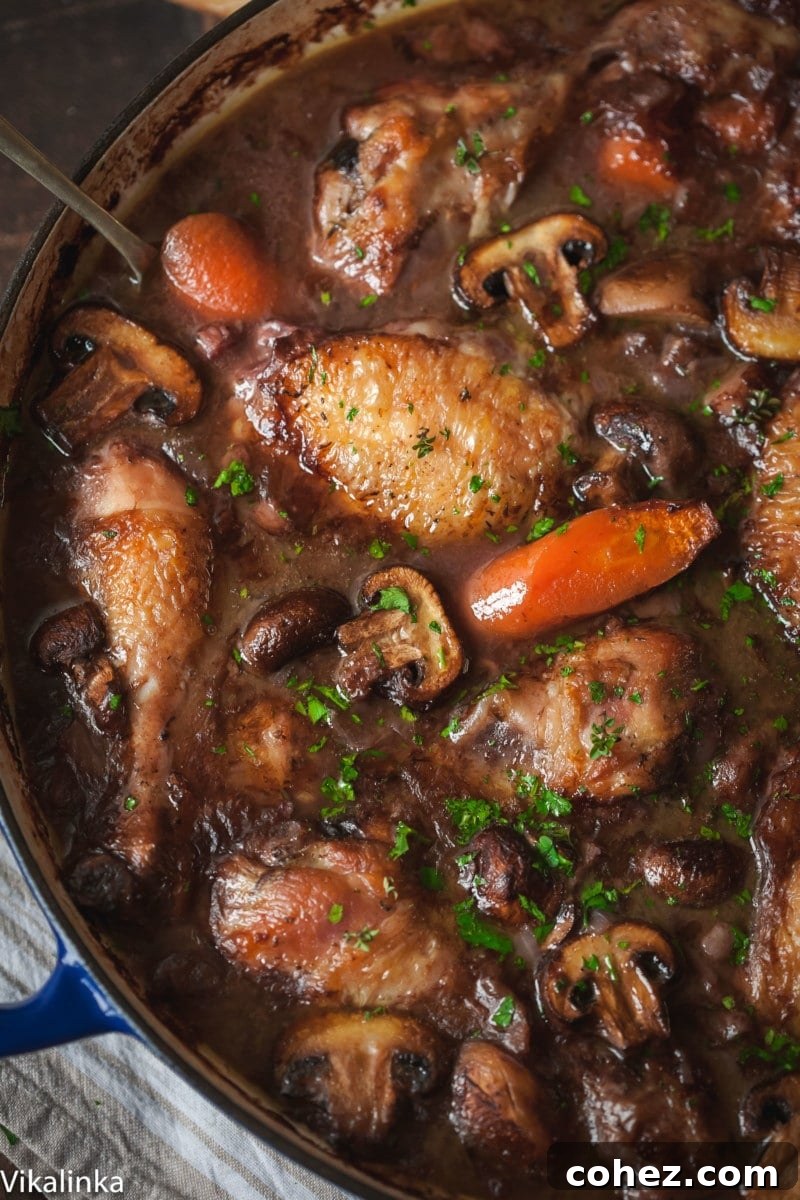
Classic Coq au Vin: The Timeless French Red Wine Chicken Stew
Embark on a culinary journey to the heart of France with this classic Coq au Vin recipe. More than just a meal, it’s an experience – a rich, deeply satisfying French chicken stew where tender chicken pieces are lovingly browned to a golden hue, then slowly braised in a luxurious red wine sauce, infused with aromatic carrots, sweet onions, and earthy mushrooms. This timeless dish is an absolute delight, promising both warmth and sophistication in every spoonful.
The allure of Coq au Vin lies in its ability to transform simple ingredients into a dish of profound flavor and comfort. Originating from the Burgundy region, this rustic yet elegant stew has graced French tables for centuries, becoming synonymous with celebratory meals and cozy family gatherings. Its robust flavors develop beautifully over a slow braise, making it an ideal candidate for a leisurely weekend cook or an impressive make-ahead dinner party star.
To complete your French feast, serve this exquisite chicken with a side of creamy Herb and Garlic Mashed Potatoes, perfect for soaking up every last drop of the decadent sauce. For a refreshing starter that complements the rich main course, consider a vibrant, French-inspired Spinach Apple Salad with Walnuts and Blue Cheese.
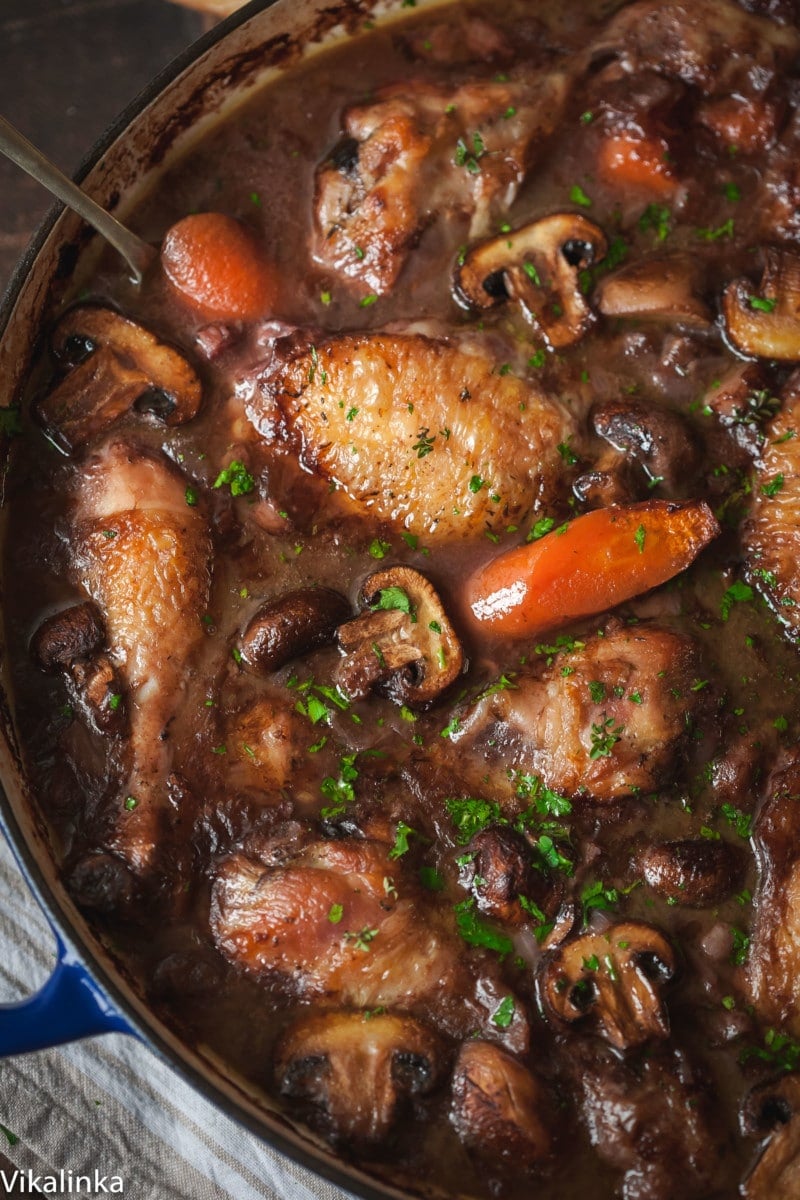
Why Coq au Vin is the Ultimate Comfort Food
As winter’s embrace tightens and the first whispers of snow dust the landscape, my thoughts invariably turn to the comforting embrace of dishes like Coq au Vin. There’s a primal satisfaction in the smell of this incredible stew simmering gently in the oven, filling the kitchen with promises of warmth and flavor. Cold days are undeniably made for cozy, hearty stews, and Coq au Vin stands as a testament to this truth.
Despite its rich heritage and complex flavor profile, this recipe for chicken slowly braised in red wine is truly outstanding for its accessibility. You don’t need years of culinary training to master this French classic. It embodies the definition of rustic food: simple ingredients, straightforward techniques, and incredible results. It’s a dish that takes very little effort in terms of active cooking time but rewards you with a depth of flavor that feels deeply luxurious.
For those who might prefer a different protein, my Beef Bourguignon recipe offers a similarly iconic French stew. It shares many of the same robust flavors and slow-braising techniques, making it an equally beloved and satisfying choice in French cuisine. Both dishes showcase the magic of transforming humble ingredients into extraordinary meals through patience and good wine.
While I cherish the traditional method of preparing Coq au Vin in a deep cast iron pan, which allows for perfect heat distribution and flavor development, I understand that modern life sometimes calls for speed. For those moments, my Instant Pot Coq au Vin offers a fantastic solution. It achieves a remarkably similar depth of flavor in half the time, making this classic French dish achievable even on a busy weeknight.
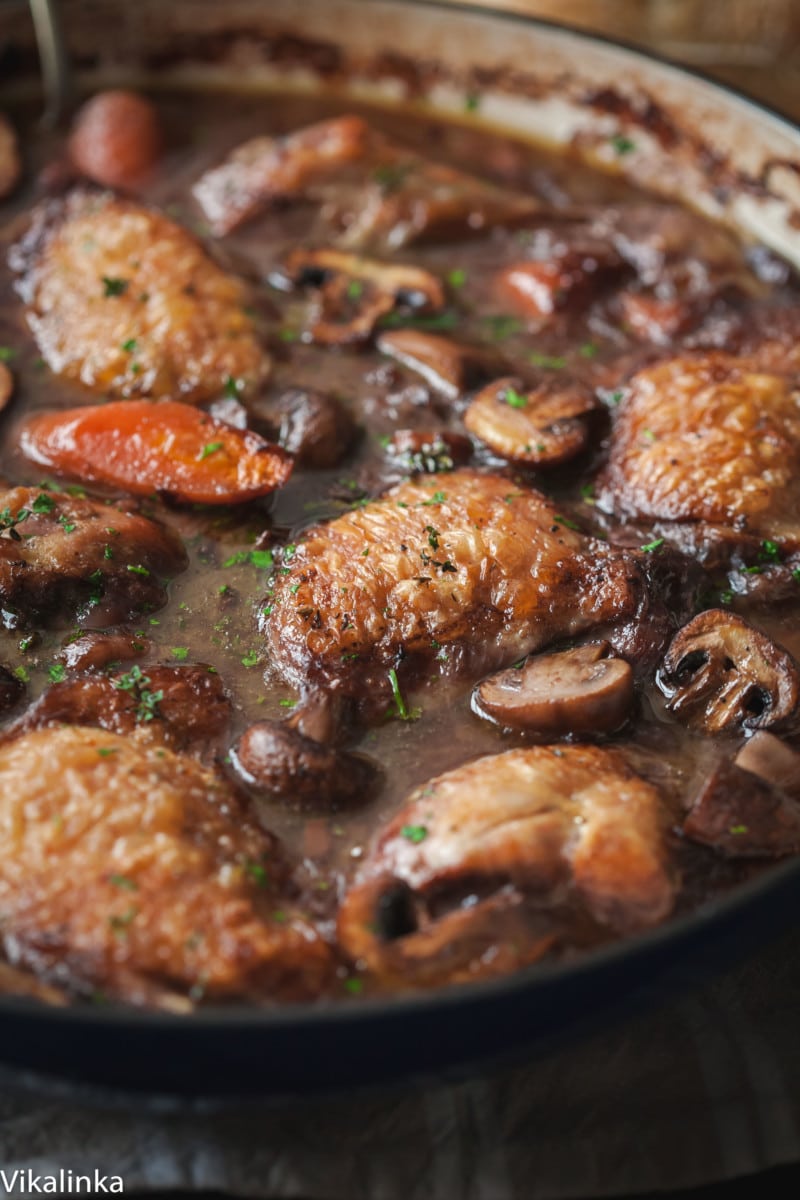
Demystifying Coq au Vin: Is it Difficult to Cook?
Many home cooks shy away from French cuisine, intimidated by its reputation for complexity. However, Coq au Vin is a wonderful entry point into this culinary tradition, proving that sophisticated flavors don’t always equate to difficult cooking. My culinary philosophy revolves around finding recipes that are both incredibly tasty and wonderfully simple, and Coq au Vin perfectly embodies this ideal. Its French name, “Chicken in Wine,” hints at its fundamental simplicity and elegance.
This dish is good enough to impress at the fanciest dinner party, yet it demands surprisingly little hands-on time. The magic happens slowly in the oven, allowing you to relax and enjoy the process. One of the greatest advantages of Coq au Vin is its suitability for making ahead. Preparing it a few hours, or even a day, in advance not only allows the flavors to deepen and meld beautifully but also ensures a stress-free hosting experience. You can reheat it quickly just before dinner, leaving you ample time to get ready and greet your guests with a calm, welcoming demeanor, rather than being flustered from the kitchen.
French cuisine, at its heart, possesses an impressive ability to be both exquisitely sophisticated and profoundly comforting at the same time. Coq au Vin perfectly encapsulates this duality. I have made this dish countless times over the years, and it never fails to be a consistent crowd-pleaser. Its rich, savory flavors and tender chicken make it a dish that truly stands the test of time, never getting old and always delighting those who gather around the table.
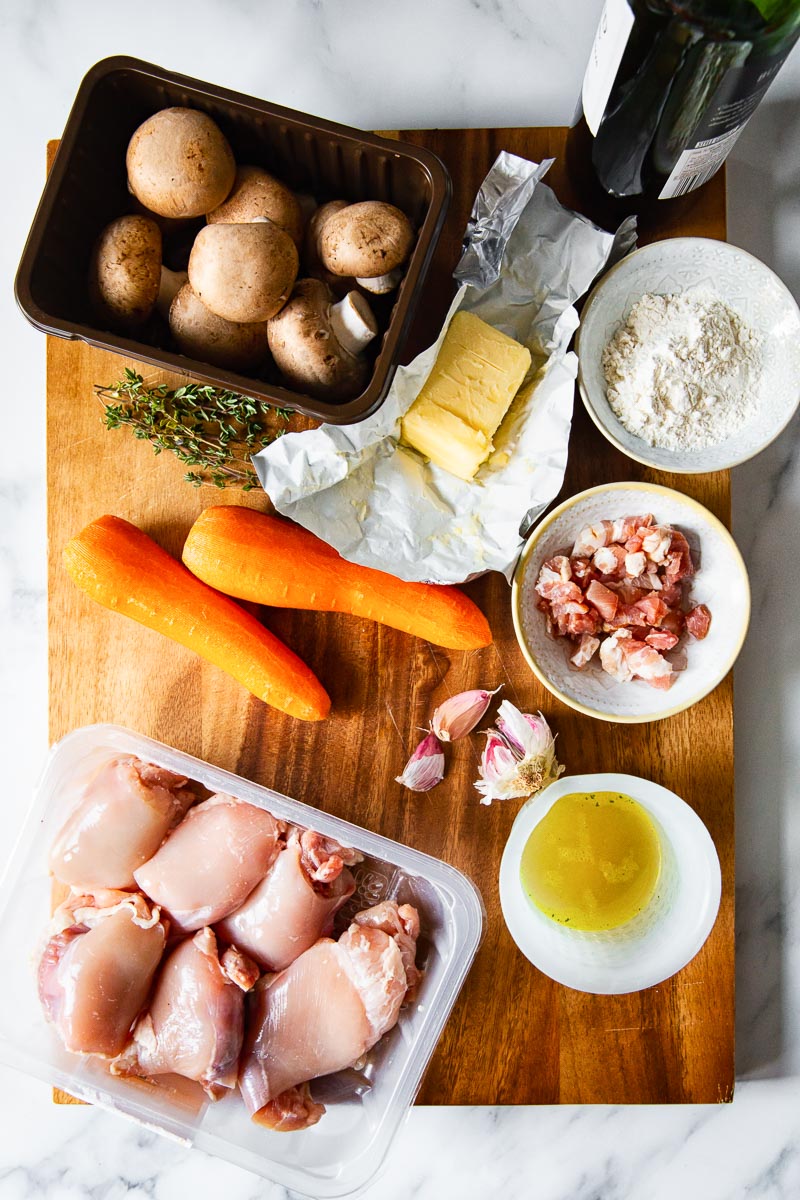
The Anatomy of Flavor: Essential Ingredients for Coq au Vin
The secret to Coq au Vin’s rich and captivating taste lies in the quality of its core ingredients and the thoughtful combination of a few key spices. Each component plays a vital role in building the layered flavors that define this classic French stew.
Here is a detailed look at what you will need, and why each ingredient is essential:
- Chicken Thighs and Legs: For the most authentic and flavorful Coq au Vin, I strongly advocate using bone-in, skin-on chicken pieces, specifically thighs and legs. The bones contribute essential marrow and collagen, enriching the braising liquid and adding incredible depth to the sauce. The skin, when properly browned, renders fat that adds to the stew’s overall richness and provides a delicious textural element. While skinless, boneless chicken can be used for convenience, it will result in a less robust flavor profile. Avoid chicken breasts entirely, as their lean nature makes them prone to drying out and becoming stringy during the long, slow cooking process.
- Aromatic Vegetables: Mushrooms, Carrots, and Onions: These are the trinity of flavor builders. Mushrooms, whether cremini, button, or a wild mix, add an earthy umami depth. Carrots lend a natural sweetness that mellows during cooking, and onions provide a foundational savory base. When sautéed, they release their essential oils, forming a fragrant bed for the chicken.
- Fresh Herbs and Spices: Thyme and Garlic: Fresh thyme is indispensable, imparting a subtle, woody, herbaceous aroma that is a hallmark of French country cooking. Garlic, finely chopped, offers a pungent, warming note that permeates the entire dish. These simple seasonings are surprisingly powerful in their impact.
- Braising Liquids: Red Wine and Chicken Stock: These liquids are paramount. The red wine, discussed in detail below, is the soul of the dish, providing acidity, fruit, and tannins that tenderize the chicken and create a complex sauce. Chicken stock (preferably low-sodium or homemade) adds further savory depth and ensures a perfectly balanced liquid environment for braising.
- Flavor Enhancers: Pancetta or Bacon Lardons & Brandy/Whisky: Traditionally, French lardons (small strips or cubes of cured pork belly) are used for their smoky, savory flavor and the fat they render, which is then used to brown the chicken. Good quality thick-cut bacon or pancetta makes an excellent substitute. Brandy or whisky is used to deglaze the pan, dissolving the caramelized bits stuck to the bottom, adding an additional layer of nuanced, slightly sweet, and warming flavor.
- Thickening Agents: Flour and Butter: At the final stage, a mixture of melted butter and flour (a “beurre manié”) is stirred in to gently thicken the sauce, giving it that luxurious, velvety consistency characteristic of a well-made stew. This also adds another touch of richness. For those following a gluten-free diet, cornstarch mixed with cold water can be used as an alternative thickening agent.
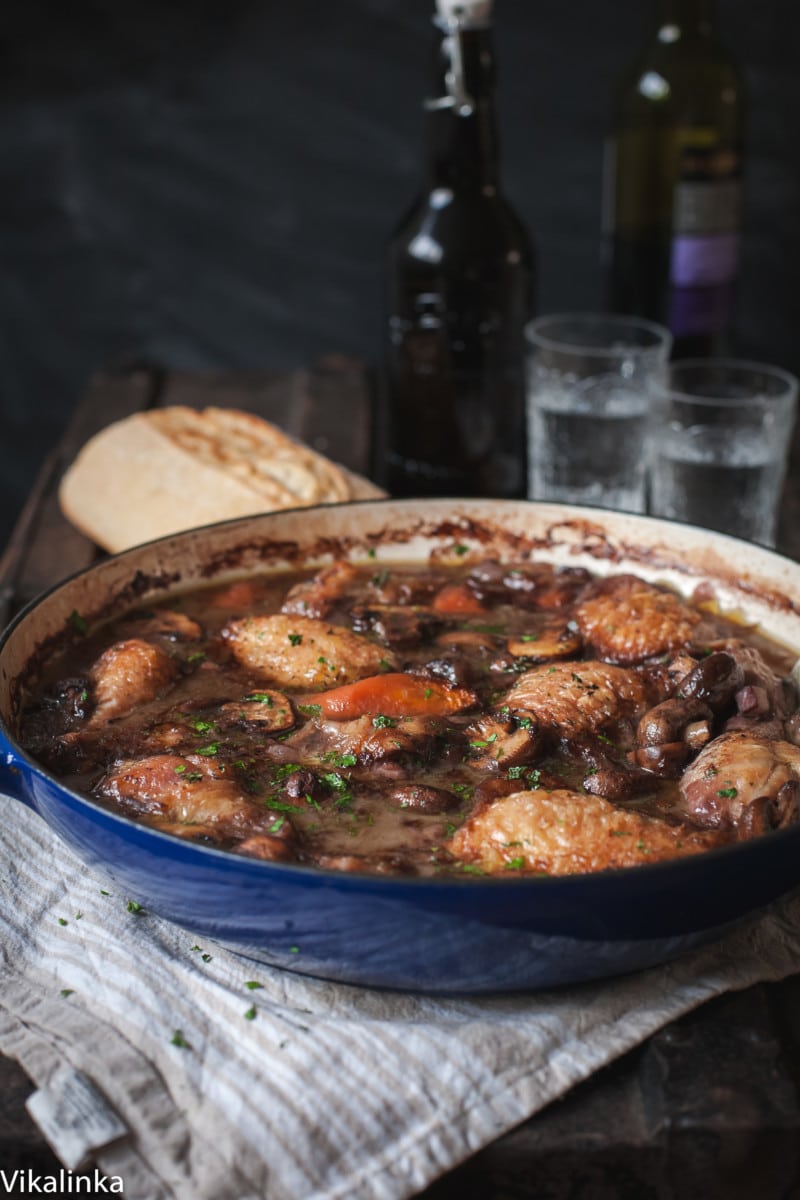
The Heart of the Dish: Selecting the Perfect Red Wine for Coq au Vin
It’s no secret that wine is a principal ingredient in Coq au Vin – indeed, it’s right there in the name! Therefore, the choice of wine is paramount to the success of this dish. The golden rule in cooking with wine is simple yet crucial: only use a wine that you would genuinely enjoy drinking. This isn’t just a snobby recommendation; it’s a practical guide, as the flavors of the wine will concentrate and become the essence of your sauce.
I learned this lesson firsthand years ago. An initial attempt with a bottle of homemade wine, while passable, left the dish good but ultimately unmemorable. It lacked the distinctive character that sets Coq au Vin apart. It took returning to the recipe, armed with a truly decent bottle of red, to unveil the dish’s full magic and understand the timeless quality that has kept it a beloved staple for generations.
Historically, true Coq au Vin from Burgundy demands a Pinot Noir, reflecting the region’s prominent grape varietal. However, fear not if a specific Burgundy isn’t readily available or within your budget. The most important factor is to select a medium-bodied, dry red wine that offers good flavor without being overly sweet or too robust that it overwhelms the delicate chicken and vegetables. My go-to choices for consistent success include Cabernet Sauvignon, Shiraz (also known as Syrah), and Merlot. These varietals provide excellent balance, structure, and fruit notes that perfectly complement the other ingredients.
It’s best to steer clear of very light-bodied wines, which might get lost in the rich sauce, or overly sweet wines, which can make the stew cloying. The goal is a harmonious blend where the wine enhances, rather than dominates, the overall flavor profile. Remember, while the alcohol cooks off during the braising process, the complex aromatic compounds and flavors of the wine remain, building layers of deliciousness.
For those interested in exploring variations, it’s fascinating to note that in the Alsace region of France, a delightful version of this dish is made with Riesling and is known as Coq au Vin Blanc. This offers a lighter, brighter alternative, proving the versatility of the “chicken in wine” concept.
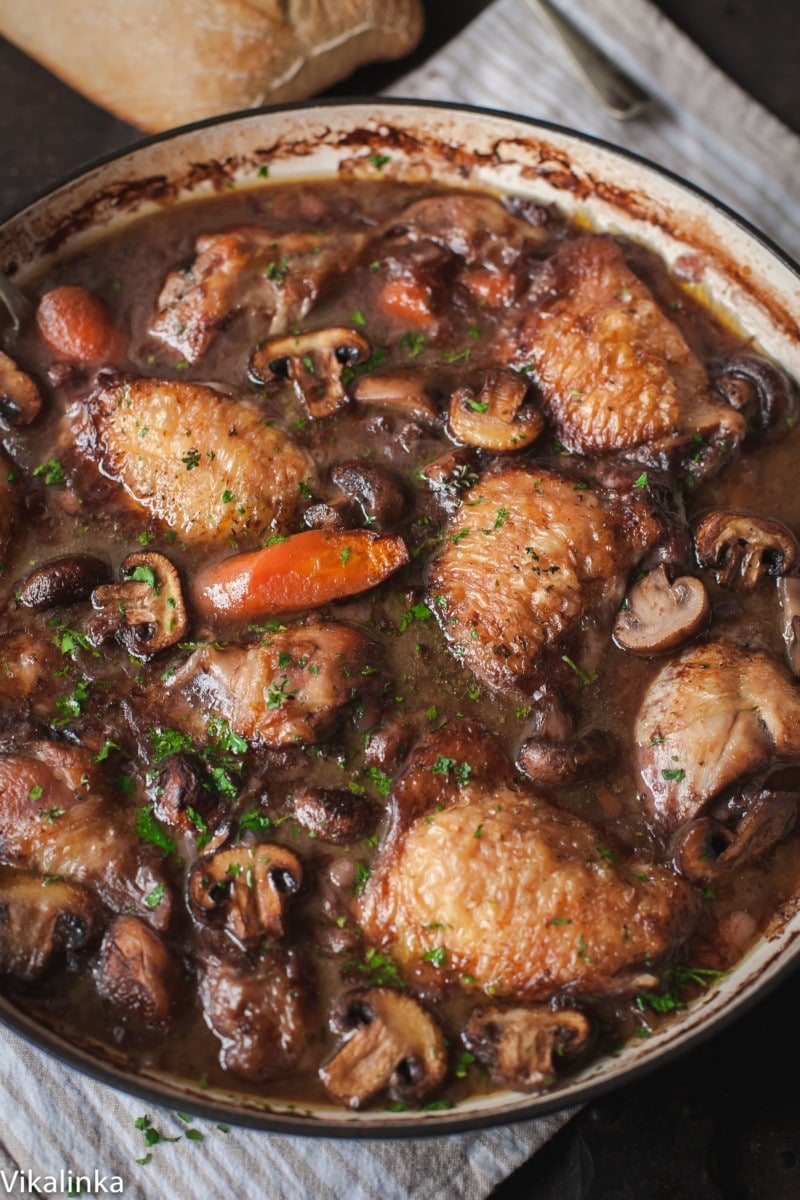
Mastering the Technique: Expert Tips for a Flawless Coq au Vin
While Coq au Vin is straightforward, a few key techniques and considerations will ensure your dish is truly outstanding, brimming with flavor and perfectly tender chicken.
- The Gentle Braise: This recipe calls for cooking in the oven at a relatively low temperature of 120°C (250°F). This lower heat setting allows for a longer, more gentle braising period, which is absolutely critical. Slow cooking breaks down the connective tissues in the chicken, making it incredibly tender and succulent, and gives all the flavors ample time to meld and deepen into a cohesive, complex sauce.
- Choosing Your Chicken: As previously mentioned, bone-in, skin-on chicken thighs and legs are the undisputed champions for Coq au Vin. The bones leach out marrow and collagen, enriching the sauce’s body and flavor, while the skin, when properly seared, provides a crisp exterior and renders fat that adds to the stew’s lusciousness. Resist the temptation to use chicken breasts; their lean meat becomes dry and stringy during the extended cooking time.
- The Art of Browning: Do not underestimate the power of browning your chicken pieces before they hit the braising liquid. This step is not just about aesthetics; it’s about building a foundational layer of flavor through the Maillard reaction. A deep golden-brown crust on the chicken adds incredible depth and complexity to the overall taste of the stew. You don’t need to cook the chicken all the way through at this point; a good sear on both sides is sufficient.
- Authentic Bacon Lardons: For an authentic touch, I use bacon lardons, which are less smoky and fatty than some American bacon varieties. However, don’t hesitate to use regular thick-cut bacon or pancetta, cubed, if lardons are hard to find. The rendered fat is essential for browning and the crispy bits add wonderful texture.
- Deglazing for Depth: The moment you add brandy (or whisky/bourbon) to the hot pan after sautéing the aromatics is crucial. Deglazing helps scrape up all the flavorful browned bits (fond) from the bottom, incorporating them directly into your sauce. This step adds a subtle sweetness and an incredible depth of flavor that cannot be replicated.
- Sauce Color Variations: Don’t be alarmed if the color of your finished sauce varies. Depending on the red wine you choose – its vintage, grape varietal, and how concentrated it is – your sauce can range from a rich brown to a deep, dark purple. As long as you’ve selected a decent quality wine, this variation is purely visual and will not impact the delicious taste of your dish.
- Achieving Perfect Sauce Consistency: The long cooking time in the oven encourages the stew to reduce and thicken naturally, concentrating its flavors. However, if you prefer an even lusher, thicker sauce, you can easily achieve this at the end. Simply stir in a “beurre manié” – a paste made from equal parts melted butter and flour – which will gently thicken the liquid to your desired, velvety consistency.
The Perfect Accompaniments: Serving Your Coq au Vin Feast
A dish as rich, aromatic, and deeply saucy as Coq au Vin deserves equally thoughtful accompaniments to make the meal truly spectacular. The goal is to choose sides that can beautifully soak up that incredible, flavorful sauce.
My heartfelt recommendation is to serve Coq au Vin with classic potato dishes. Creamy mashed potatoes or elegant potatoes au gratin are perfect choices. They provide a delightful textural contrast to the tender chicken and are ideal for absorbing every drop of the luxurious red wine sauce. And, of course, no authentic French meal is complete without a side of good, crusty bread – a fresh baguette or a rustic sourdough loaf is excellent for sweeping your plate clean.
To further enhance the dining experience, compliment the dish with a glass of the same excellent French red wine you used in the cooking, or another dry, medium-bodied red of similar character. This harmonious pairing elevates the flavors of both the food and the drink, creating a truly memorable culinary moment. Consider a simple green salad with a light vinaigrette as well, to cut through the richness and provide a fresh counterpoint. Bon Appetit!
Storage and Reheating Coq au Vin Leftovers Effectively
One of the many joys of Coq au Vin is that it often tastes even better the day after it’s made, as the flavors have more time to fully meld. This makes it an excellent candidate for meal planning or for simply savoring over a few days.
For short-term storage, any leftover Coq au Vin can be kept in an airtight container in the refrigerator for up to 4 days. Always ensure the stew has cooled completely to room temperature before transferring it to the container and refrigerating. This prevents bacterial growth and maintains food quality.
When it’s time to enjoy your leftovers, reheating on the stovetop is the preferred method for preserving the dish’s texture and flavor. Place the Coq au Vin in a pan over low to medium-low heat. To prevent the sauce from becoming too thick or drying out, add a splash of water or additional chicken stock as it reheats. Cover the pan with a lid or foil to ensure the chicken warms through evenly and stays moist. Allow at least 15 minutes for thorough reheating, stirring occasionally, and always check that the meat is hot in the middle before serving.
Coq au Vin also freezes beautifully, making it perfect for long-term storage and convenient future meals. Divide cooled leftovers into individual or family-sized portions and place them in freezer-safe airtight containers or heavy-duty freezer bags. It can be stored in the freezer for up to three months. When you’re ready to enjoy it, thaw the Coq au Vin completely in the refrigerator overnight before reheating using the stovetop method described above. This ensures an even and safe reheating process.
More Classic French Chicken Recipes to Discover
If your journey with Coq au Vin has inspired a deeper appreciation for the nuanced and comforting flavors of French country cooking, explore these other delightful chicken recipes:
- Chicken Provencal: A bright and savory dish featuring herbs, tomatoes, and olives from the south of France.
- Chicken Casserole a la Normande: A creamy and apple-infused casserole reflecting the rich culinary traditions of Normandy.
- Chicken in Wine and Mustard Sauce: A quick yet elegant dish with a piquant, flavorful sauce.
- Chicken Chasseur: A classic hunter’s stew with mushrooms, shallots, and white wine.
Coq au Vin: The Ultimate One-Pot Dinner
Julia Frey of Vikalinka
45 mins
1 hr 10 mins
1 hr 55 mins
6
Chicken pieces browned until golden, then slowly braised in red wine with carrots, onions and mushrooms.
Equipment
-
Cast iron Dutch oven
Ingredients
- 1 tbsp olive oil
- 120g / 4 oz pancetta or bacon lardons, cubed
- 8-10 pieces chicken thighs and legs
- 1 onion
- 2 carrots
- 1-2 cloves garlic, chopped
- 80ml/1/4 cup brandy or whisky
- 375ml / 1½ cup red wine, your choice
- 250ml / 1 cup chicken stock
- 8-10 sprigs fresh thyme
- 1 tbsp unsalted butter
- 1½ tbsp all-purpose flour, for thickening (or corn starch for gluten-free version)
- 250g / 1/2 lbs cremini or button mushrooms, thickly sliced
- salt and freshly ground black pepper to taste
Instructions
-
Preheat your oven to a gentle 120°C (250°F). In a large, heavy-bottomed Dutch oven (a cast iron pot is ideal for even heating), heat one tablespoon of olive oil over medium-high heat. Add the pancetta or bacon lardons and fry for 8-10 minutes until they are deeply browned and crispy. Remove the cooked lardons to a plate lined with paper towels, reserving the rendered fat in the pot.
-
Season your chicken thighs and legs generously with salt and freshly ground black pepper. Working in batches to avoid overcrowding, carefully place the chicken pieces, skin-side down, into the hot pot. Sear for 5-7 minutes per side, until they are beautifully golden-brown. Transfer the browned chicken to the same plate as the lardons. Remember, you’re not cooking the chicken through at this stage, only developing a rich, flavorful crust.
-
Add the medium-sized chunks of sliced onions and carrots to the pot. Season with a pinch of salt and pepper, and cook over medium heat for about 10 minutes, stirring occasionally, until they begin to soften. Stir in the chopped garlic and cook for just 1 minute longer, taking care not to burn it. Pour in the brandy (or whisky) and use a wooden spoon to scrape all the caramelized bits from the bottom of the pot. This crucial step, known as deglazing, adds immense flavor to your sauce.
-
Return the crispy lardons and browned chicken pieces, along with any accumulated juices, to the pot. Pour in the red wine and chicken stock, then nestle the fresh thyme sprigs among the ingredients. Bring the mixture to a gentle boil on the stovetop. Once boiling, cover the pot tightly with its lid and transfer it to your preheated oven. Braise for 55 minutes.
-
After 55 minutes, carefully remove the pot from the oven. In a small separate bowl, combine the melted butter with the all-purpose flour to create a smooth paste (a beurre manié). Stir this paste into the hot stew until it is fully incorporated and the sauce begins to thicken slightly. Add the thickly sliced mushrooms to the pot. Taste the stew and adjust the seasoning with salt and pepper if needed. Return the pot to the oven, this time with the lid off, and continue to cook for another 10-15 minutes. This final step allows the sauce to further reduce and thicken to a perfect, velvety consistency. Serve hot and savor this truly classic French dish!
Notes
- For the most authentic and succulent Coq au Vin, always opt for bone-in, skin-on chicken thighs and legs. Chicken breasts are not recommended for this long-braised stew as they tend to become dry and tough.
- The specified low oven temperature (120°C / 250°F) ensures a slow, gentle braise, which is essential for tenderizing the chicken and developing a deeply rich, complex flavor profile.
- The initial browning of the chicken is a non-negotiable step. It builds a crucial layer of flavor through caramelization (Maillard reaction), contributing significantly to the stew’s overall taste.
- Deglazing the pan with brandy or whisky after sautéing the aromatics is highly recommended. It extracts all the delicious browned bits from the bottom of the pot, adding an extra dimension of flavor to the sauce. Red wine or even extra chicken stock can be used as a substitute if needed.
- The color of your Coq au Vin sauce can naturally range from a deep brown to a dark purple, depending on the red wine you select. This is purely aesthetic and will not affect the deliciousness of your dish, provided you use a good quality wine.
- While the stew thickens naturally during the long cooking process, if you desire a more luscious, velvety sauce, the addition of a butter-flour mixture (beurre manié) at the end provides perfect control over the final consistency.
Nutrition Information
Per Serving (approximate):
Calories: 257 kcal | Carbohydrates: 10g | Protein: 6g | Fat: 13g | Saturated Fat: 4g | Cholesterol: 21mg | Sodium: 230mg | Potassium: 395mg | Fiber: 2g | Sugar: 4g | Vitamin A: 3519 IU | Vitamin C: 6mg | Calcium: 21mg | Iron: 1mg
Nutrition information is automatically calculated and should be used as an approximation only. Values may vary based on specific ingredients and preparation methods.