
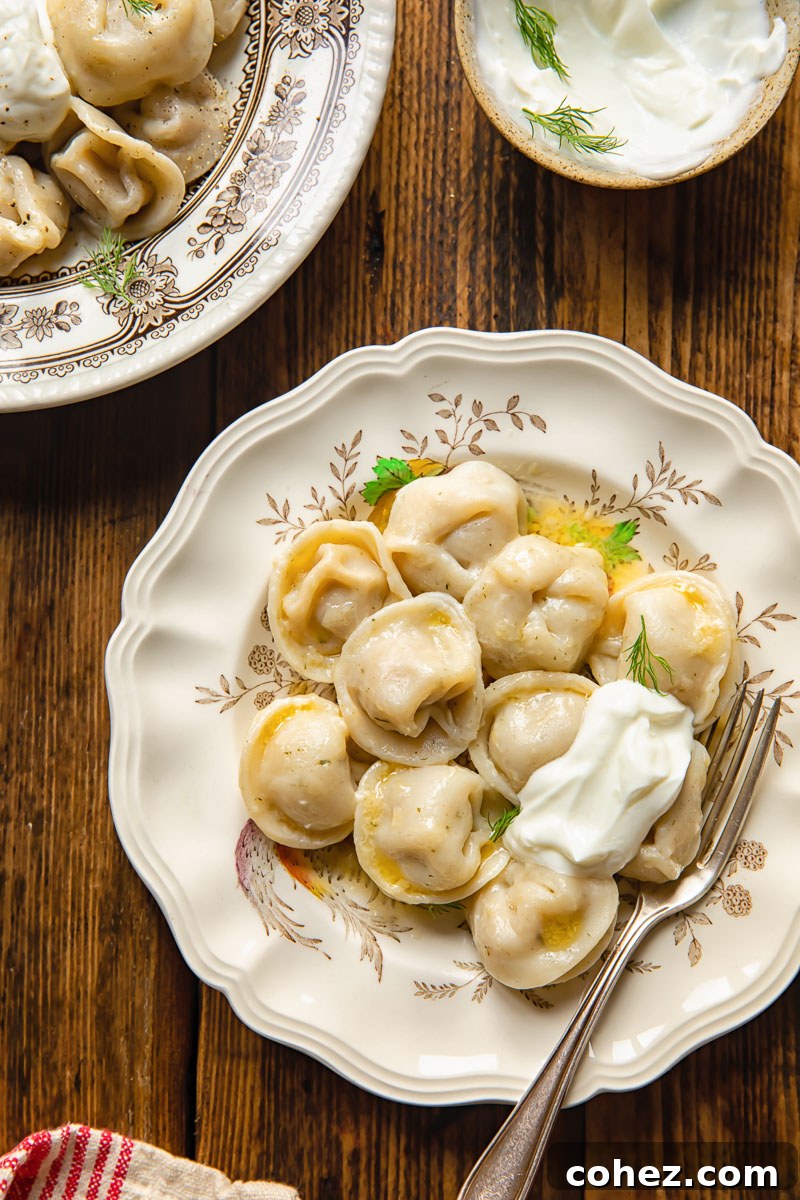
Unlocking the Secrets of Siberian Pelmeni: A Culinary Journey to the Heart of Russia
Embark on a delightful culinary adventure with us as we delve into the world of Pelmeni, Russia’s cherished meat-filled dumplings. While their creation might seem intricate, we promise it’s far simpler and more rewarding than you imagine! These delicate parcels, generously filled with a savory blend of beef and pork, offer a comforting taste of home and tradition. Universally served with a dollop of cool sour cream, Pelmeni are destined to become a staple at your family table, bringing warmth and joy with every bite.
Should you find yourself with an abundance of the delectable meat filling, don’t let it go to waste! It can be creatively repurposed. Blend it with rice to stuff bell peppers for another hearty meal, or transform it into delightful porcupine meatballs in a rich tomato sauce.
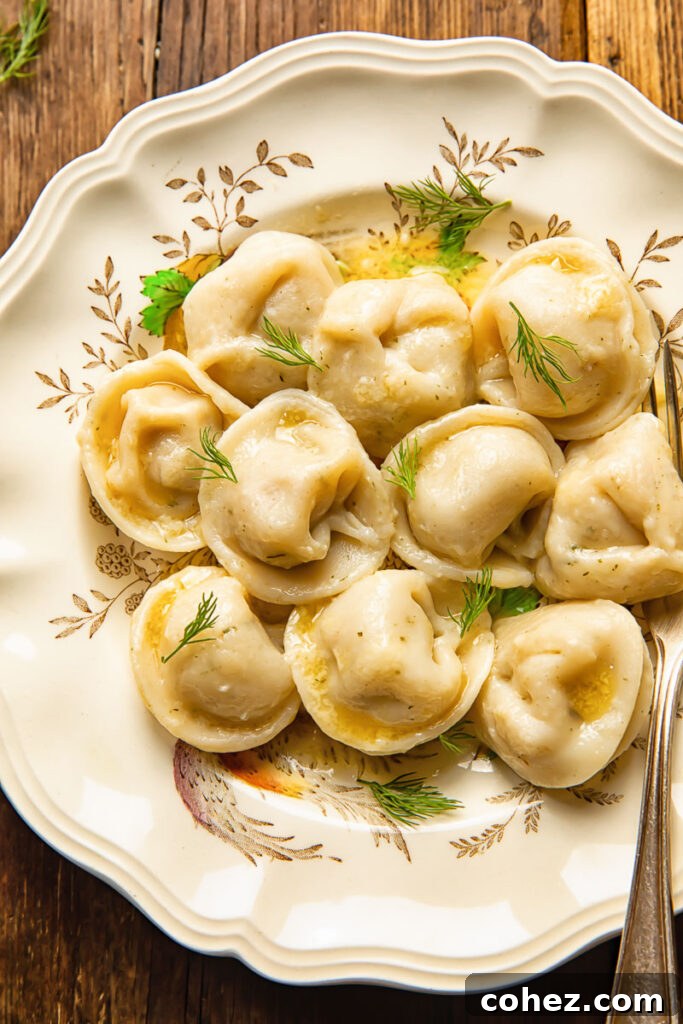
The sheer joy of seeing these perfectly formed, exquisite Pelmeni brings an immediate smile. Sharing the authentic experience of making Siberian Pelmeni has been a long-held aspiration since the very inception of this blog. These aren’t just dumplings; they carry a profound emotional resonance for me. Growing up, our freezer was never without a stash of these hearty meat dumplings, always at the ready to transform into a quick, comforting, and deeply satisfying meal after a busy day. And even today, the tradition continues! A selection is always on hand, and without fail, they are met with enthusiasm and appreciation whenever they grace our dining table.
And why wouldn’t they be? Each dumpling is a small masterpiece of flavor – savory, incredibly juicy, and brimming with a tender, aromatic meat filling encased in a thin, silky dough. Give them a try, and you’ll soon understand why they earn a permanent, beloved spot in kitchens across Russia and, very likely, in your home too!
Siberian Pelmeni: Russia’s Culinary Emblem
When asked to define the essence of Russian cuisine, Pelmeni invariably tops the list. More than just food, Pelmeni represent comfort, celebration, and nostalgia. They are the dish I crave when happy, and the one that soothes when sad. And if there’s one culinary tradition I yearn to pass down to my children, it is the art of making these exquisite meat dumplings.
I learned this craft from my own mother at a tender age, long before my daughter was even a thought. She didn’t just teach me to make them; she taught me to make them “properly,” with beautifully crimped edges – a testament to the care and love poured into each one. While these embellishments aren’t strictly necessary, they add a touch of artistry that truly delights me.
The precise origin of Pelmeni within Russian cuisine remains somewhat debated, but historical accounts suggest their arrival from Siberia, likely influenced by Chinese dumpling traditions. What is undeniably clear is their firm grip on the nation’s heart. Pelmeni – always a plural term, reflecting the abundance in which they are made and enjoyed – are adored by children and adults alike, holding the esteemed title of Russia’s most popular frozen food. While homemade versions are deeply cherished, the convenience of store-bought Pelmeni has made them a common sight today. Even I, a proponent of homemade, occasionally succumb to the ease of a packet from my local Eastern European shop in London.
Traditionally, Pelmeni making is a deeply communal and social affair. It’s almost unheard of to make them alone. Historically, women from extended families would gather, often over several days, to produce vast quantities of these dumplings. These bountiful batches would then be frozen, providing a vital and delicious food source throughout the long, harsh Russian winters – a heartwarming symbol of unity and provision.
The Art of Pelmeni Making: From Scratch to Savory Bites
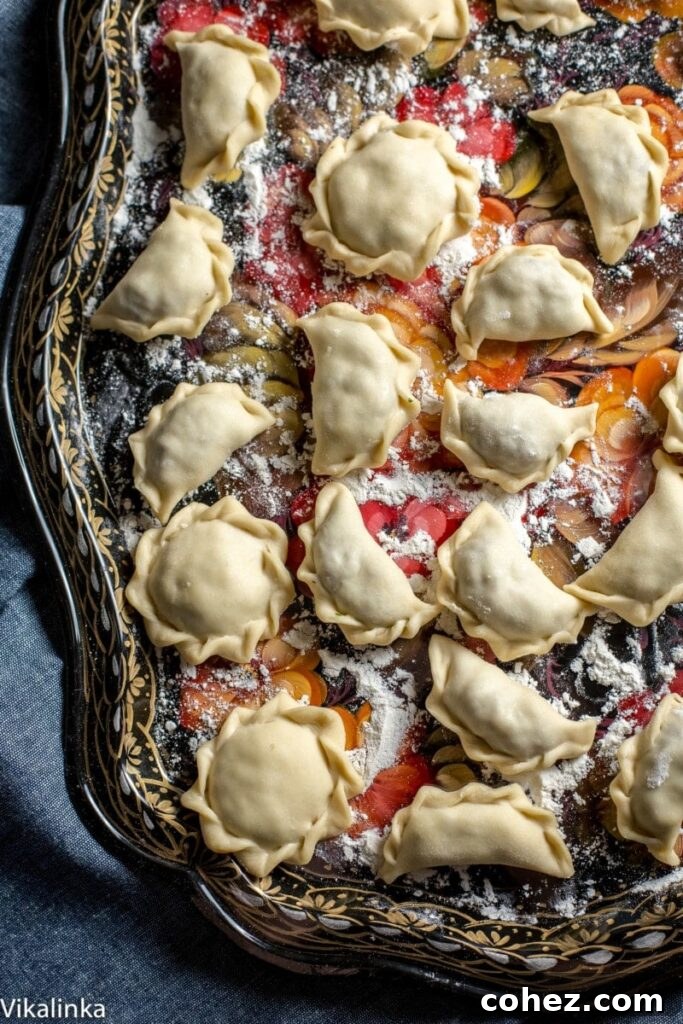
Crafting Pelmeni can be approached in two primary ways: the traditional handmade method, which we will detail, or with the aid of a specialized Pelmeni mould, which dramatically accelerates the process. While we’ll guide you through the satisfying handmade technique, we’ll also share visuals of what mould-made Pelmeni look like, offering a glimpse into both approaches.
The fundamental principle behind these meat-filled dumplings is elegantly simple, bearing a close resemblance to other global favorites like Chinese dumplings, Italian ravioli, or tortellini. They are also close cousins to Polish pierogi and Ukrainian varenyky. However, a key distinction lies in the filling: while pierogi and varenyky can be either savory or sweet, Pelmeni fillings are exclusively savory. Furthermore, when meat is used in Polish pierogi, it is typically pre-cooked, whereas the Pelmeni meat filling begins raw, cooking to tender perfection inside the dough wrapper during boiling.
Essentially, Pelmeni are created from thinly rolled pasta rounds, each generously filled with a raw, seasoned ground meat mixture. These are then meticulously formed into distinctive dumplings, ready to be boiled immediately or frozen for future enjoyment. The beauty of this process is its accessibility; no specialized equipment is required. Forget the need for a pasta machine; a simple rolling pin and your hands are all you need. In a pinch, even a wine bottle can serve as a makeshift rolling pin!
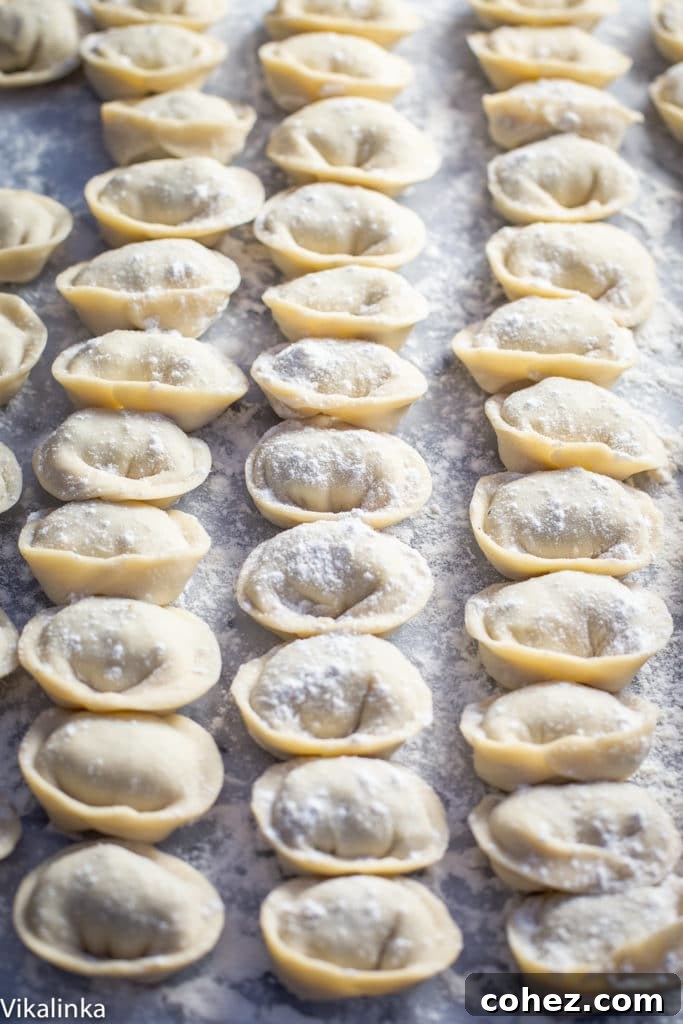
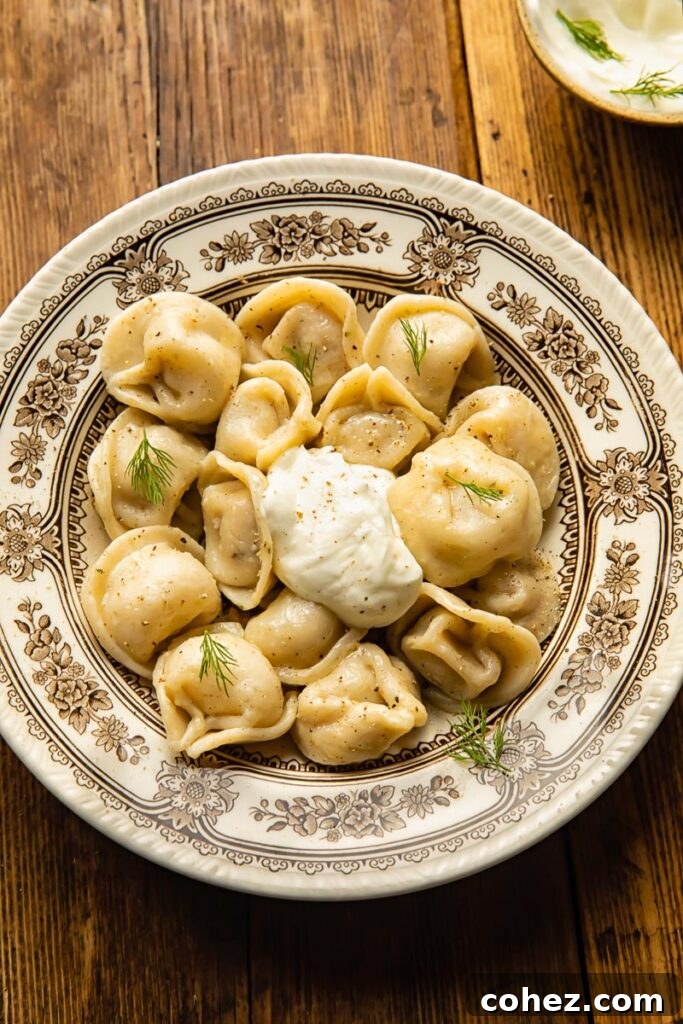
The image below illustrates the most classic Pelmeni shape: a delicate half-moon dumpling, sealed at the edges, with the ends pinched together to form a small, round parcel. While a singular term, “pelmen,” exists, it’s rarely used – after all, who could ever stop at just one?
Diverse Shapes and Savory Fillings Across Russia
Russia’s immense geographical expanse naturally leads to fascinating regional variations in its culinary traditions, and Pelmeni are no exception. While the classic meat filling (typically beef and pork) and the half-moon shape with pinched ends are the most common, different areas boast their own unique takes. In various parts of the country, you might discover Pelmeni stuffed with earthy mushrooms, wholesome buckwheat, or even other grains, often folded into different shapes to distinguish them.
For instance, in the Southwestern regions of Russia, where my grandmother originated, the dumplings often resembled larger Vareniki or Pierogi in shape. This is hardly surprising given its proximity to Ukraine, a country renowned for its varenyky. When my family gathered to make Pelmeni, especially as the task neared its completion, we’d often opt for simpler half-moon shapes, a practical shortcut to utilize the remaining dough and filling more efficiently.
Exploring Pelmeni Fillings Beyond the Classic
If you’re a devoted pasta lover, these succulent meat dumplings are an absolute must-try. They are, at their heart, meat-filled pasta – but with a delightful difference. The filling is so incredibly juicy and flavorful that you’ll want to take care when biting into one, lest the delicious broth within drips down your chin!
The most traditional and beloved Pelmeni filling combines raw minced beef and pork, meticulously seasoned with finely chopped onion, garlic, salt, and freshly ground black pepper. This blend ensures a rich, deeply savory profile. However, regional variations introduce other meats; in the North Eastern parts of Russia, you might encounter Pelmeni made with mutton or even venison, reflecting the local fauna. Modern home cooks have also embraced raw minced chicken as a lighter, equally delicious alternative, though less traditional.
Beyond meat, a historical and equally cherished filling features mushrooms. This isn’t a recent innovation for vegetarians but a long-standing tradition in the European part of Russia, where forests are abundant with various edible fungi. These mushroom-filled Pelmeni offer a wonderful umami depth, proving the versatility of this beloved dish.
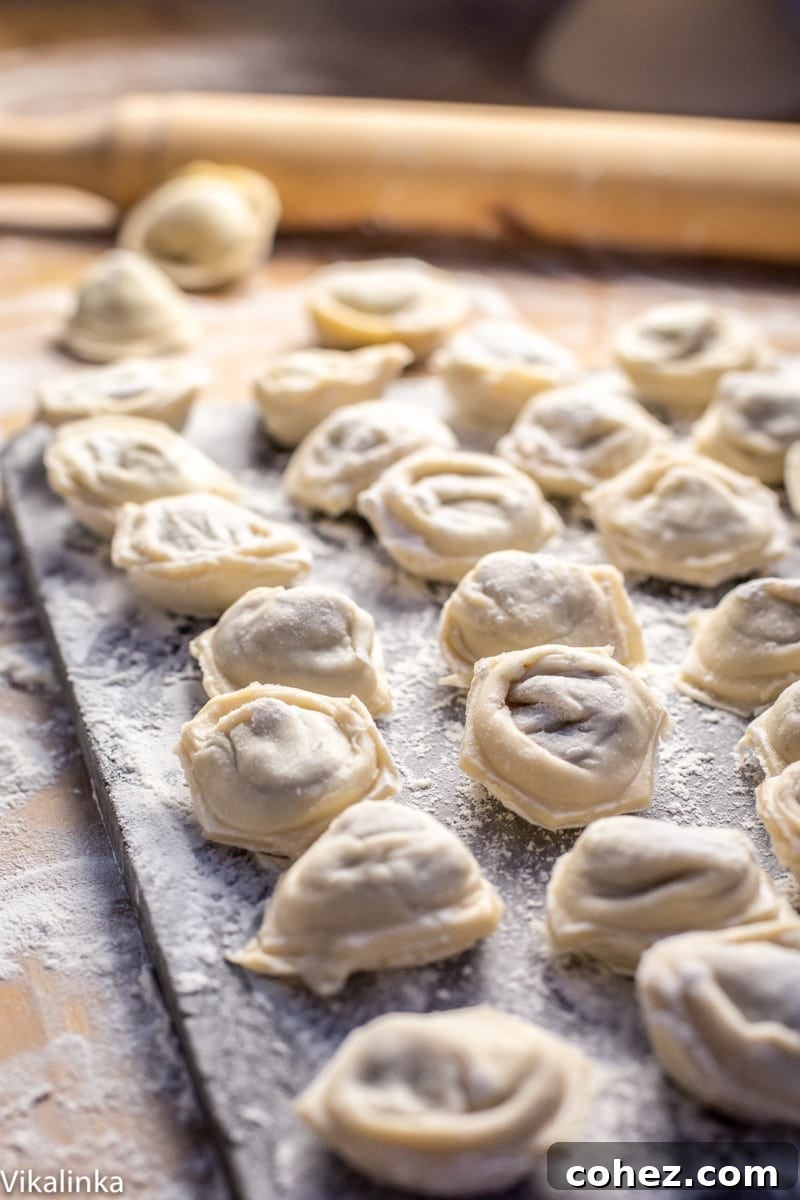
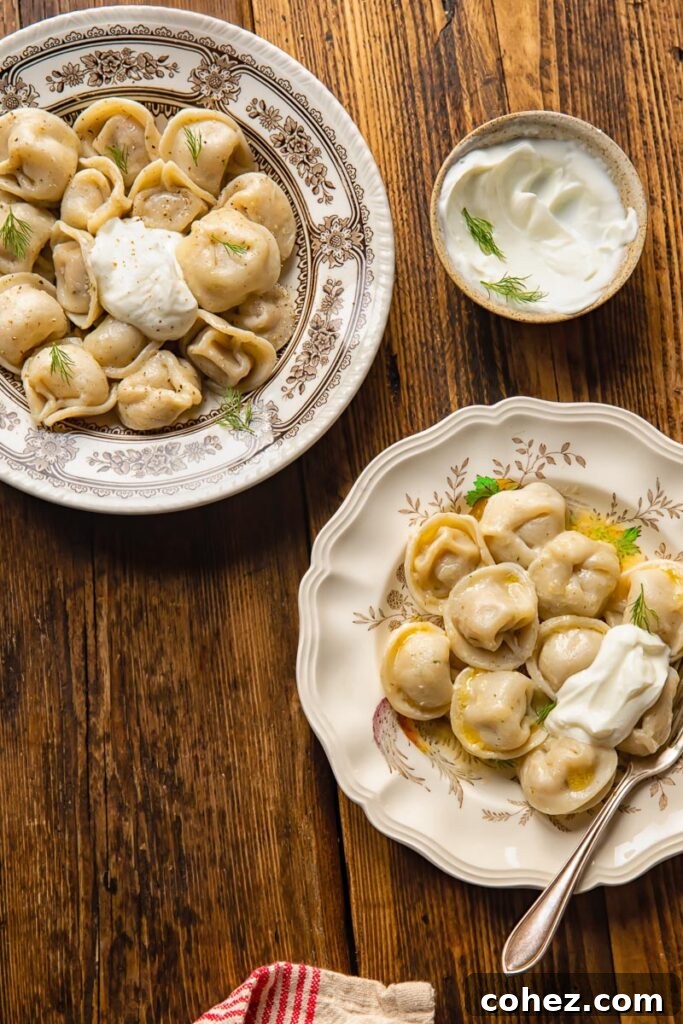
As you can observe in the accompanying photographs, I’ve showcased a few of the most common Pelmeni shapes. Some are lovingly handmade, exhibiting their unique, artisanal charm, while others demonstrate the uniform perfection achieved with a special Pelmeni mould. While the process of making Pelmeni does require a commitment of time, the reward is immeasurable. It’s truly astonishing how such simple, humble ingredients can coalesce to create such an extraordinarily gorgeous and comforting flavor!
Expert Tips for Perfect Pelmeni
- While a Pelmeni mould offers a quick path to perfectly shaped dumplings, crafting them by hand is entirely achievable and deeply satisfying. Use a simple cookie cutter to create uniform dough rounds.
- Achieving the ideal meat-to-dough ratio takes a little practice. The golden rule is to fill each dumpling as generously as possible without stretching or tearing the delicate dough wrapper. Each Pelmen (the singular for Pelmeni) should be plump and promise a burst of juicy flavor.
- The best indicator of doneness is when the Pelmeni float to the surface of the boiling water. Freshly made dumplings typically require an additional 2-3 minutes of cooking after floating, while frozen Pelmeni need 3-5 minutes more. For larger dumplings, allow a slightly longer cooking time. If uncertain, simply remove one, cut it open, and check that both the meat filling and dough are thoroughly cooked.
- For an irresistible variation, try frying cooked Pelmeni in butter over medium heat until they develop a beautiful golden hue and a slightly crispy exterior. This adds a delightful textural contrast.
Delightful Serving Suggestions for Pelmeni
While the Pelmeni recipe itself is relatively standard, the ways people enjoy these dumplings are wonderfully diverse. My personal preference is to serve them buttered, generously sprinkled with fresh dill and black pepper, then dipped into cool, tangy sour cream. My mother, on the other hand, insists on eating hers immersed in a flavorful broth, akin to a comforting soup, which undoubtedly makes them even more hearty and satisfying.
Pelmeni also pair beautifully with dollops of Dijon mustard mixed with sour cream for a sharp, creamy contrast. To elevate the flavor profile even further, consider drizzling them with rich brown butter, which adds a nutty, deep aroma.
Some enthusiasts enjoy their Pelmeni with a splash of vinegar for a bright tang, and more recently, soy sauce has also gained popularity as an unexpected yet delicious condiment.
Here’s a pro tip for the ultimate Pelmeni experience: eat each dumpling in a single mouthful. As the Pelmeni cook, they develop a fantastically delicious, savory broth within their delicate casing. Cutting them open allows this precious liquid to escape. By consuming them whole, you capture the full explosion of flavors and textures these incredible dumplings have to offer!
Beyond being a standalone dish, Pelmeni are also fantastic as the star of a hearty soup, much like tortellini or wontons. I often adapt my standard Chicken and Dumpling Soup recipe, substituting the traditional dumplings with Pelmeni for an authentic Russian twist.
Storage and Freezing Pelmeni for Future Enjoyment
These delectable dumplings are wonderfully filling, and it’s quite common to have leftovers – a fortunate circumstance given how well they store! While cooked Pelmeni are best enjoyed fresh and don’t keep well after preparation, uncooked Pelmeni freeze exceptionally. This makes them an ideal candidate for batch cooking, saving you precious time on busy weeknights.
To freeze any extra uncooked Pelmeni, arrange them in a single layer on a lightly floured baking sheet or tray. Once solid, transfer them to an airtight container, adding a light sprinkling of flour between layers to prevent sticking. Properly frozen, they will keep beautifully for up to six months.
When you’re ready to enjoy them, simply cook the frozen Pelmeni directly from the freezer; there’s no need to thaw them first. They will require slightly longer to cook – typically 5-7 minutes after they float to the surface of the boiling water – but the convenience and delicious flavor make it entirely worthwhile.
More Eastern European Culinary Inspirations
If you’ve enjoyed the journey into Russian cuisine with Pelmeni, we invite you to explore more traditional Eastern European delights:
- Borscht: The iconic beetroot soup, rich in flavor and vibrant in color.
- Beef Goulash: A hearty and tender stew, perfect for chilly evenings.
- Sauerkraut and Mushroom Vareniki: Delicious Ukrainian dumplings with a savory filling.
- Russian Honey Cake Medovik: A layered masterpiece, sweet and wonderfully aromatic.
Rating: 4.85 from 33 votes
Meat Dumplings Pelmeni
By Julia Frey of Vikalinka
Prep: 1 hr | Cook: 15 mins | Total: 1 hr 15 mins | Servings: 12
Pin
Print
Makes 120-130 pelmeni. Russian meat dumplings Pelmeni are little pasta pockets filled with beef, pork and spices. Best served with sour cream and dill.
Ingredients
For the dough
- 360 g / 3 cups all purpose flour
- 1 tsp salt
- 1 large egg
- 225 ml / 1 cup cold water
For the meat filling
- 450 g / 1 lbs extra-lean ground beef
- 450 g / 1 lbs extra-lean ground pork
- 2 medium onions
- 4 cloves of garlic
- 125 ml / 1/4 cup water
- 1/2 bunch flat leaf parsley
- 1/2 bunch dill
- 2 tsp salt
- Pepper (to taste)
- 2 bay leaves
- 2 tbsp butter
- Sour cream (for serving)
- Fresh dill or parsley (for serving)
Instructions
- In a food processor, pulse flour and salt. With the motor running, add the egg through the tube, followed by cold water. Allow the processor to run for approximately one minute until the dough forms around the blade. Transfer the dough to a bowl, cover it with a tea towel, and let it rest for 30 minutes.
- Meanwhile, prepare the meat filling. In a large bowl, combine the ground beef, ground pork, salt, and pepper. In a food processor, blend the onions, garlic, parsley, dill, and water until finely chopped. Add this mixture to the meat.
- Use your hands to thoroughly combine all the ingredients in the meat mixture. Pinch off a small amount and form it into a tiny meatball. Fry this meatball and taste it to ensure the seasoning is perfect. Adjust salt and spices if necessary.
- Divide the rested dough into four equal portions and form each into a ball. Take one dough ball and, on a lightly floured surface, roll it out into a very thin sheet, about 1/16 inch in thickness. Keep the remaining dough covered to prevent it from drying out.
- Using a 2-inch to 3-inch cookie or scone cutter, cut out circles from the rolled dough. Place a teaspoon of the meat filling slightly off-center on each dough circle. Fold the dough over to create a half-moon shape and firmly pinch the edges shut with your fingertips. For a more decorative finish, go over the sealed edge once more, pinching and twisting the dough with your two fingers and thumb to form a ruffled edge. Continue this process with the remaining dough circles and meat filling until all are used.
- Set aside the quantity of Pelmeni you plan to cook for dinner. Freeze the remaining uncooked Pelmeni in a well-floured, airtight container, arranging them in layers with flour in between to prevent sticking. These can be stored for up to 6 months.
- When ready to cook, bring a large pot of salted water to a rolling boil. Add 2 bay leaves to the water. Gently drop the Pelmeni into the rapidly boiling water and stir immediately to prevent them from sticking to the bottom. Once they float to the surface, continue to cook for an additional 3-5 minutes (for fresh Pelmeni) or 5-7 minutes (for frozen Pelmeni).
- Drain the cooked Pelmeni and transfer them to a serving dish. Pour melted butter over them and gently stir or toss to ensure they are evenly coated. Serve immediately with sour cream and a generous sprinkle of freshly chopped dill or parsley.
Notes
Boiled Pelmeni can also be pan-fried in butter after cooking for a crispy exterior.
Do not thaw frozen Pelmeni before cooking. They should be boiled directly from frozen for 5-7 minutes after they float to the top of the pot.
Nutrition
Calories: 297kcal | Carbohydrates: 26g | Protein: 18g | Fat: 13g | Saturated Fat: 5g | Cholesterol: 69mg | Sodium: 653mg | Potassium: 312mg | Fiber: 1g | Sugar: 1g | Vitamin A: 137IU | Vitamin C: 3mg | Calcium: 22mg | Iron: 3mg
Nutrition information is automatically calculated, so should only be used as an approximation.