
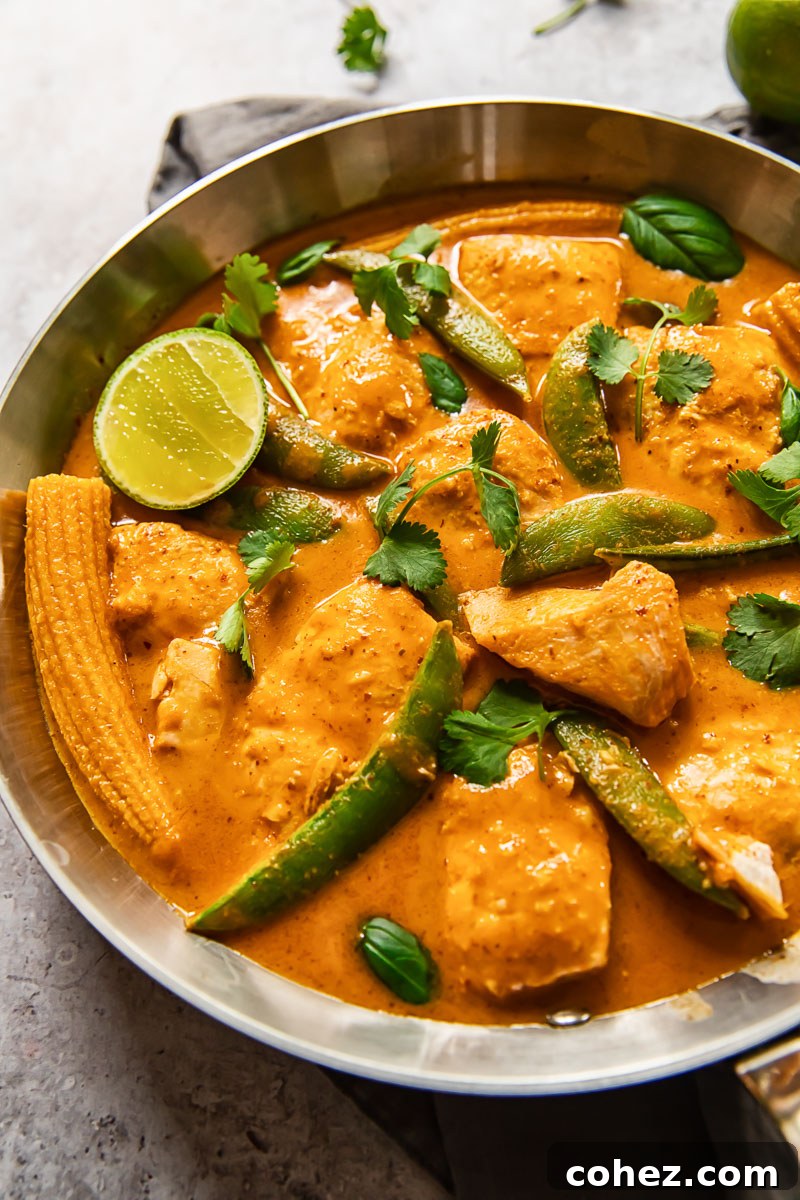
Effortless Thai Salmon Red Curry: Your 30-Minute Weeknight Escape
Craving the vibrant, aromatic flavors of Thailand but short on time? This incredible Thai salmon red curry recipe is your perfect solution. Featuring succulent salmon fillets, crisp sugar snap peas, and tender baby corn, it comes together in less than half an hour, making it an ideal choice for a quick, healthy, and utterly delicious weeknight dinner. Dive into a bowl of rich, spicy, and perfectly balanced Thai goodness without the fuss!
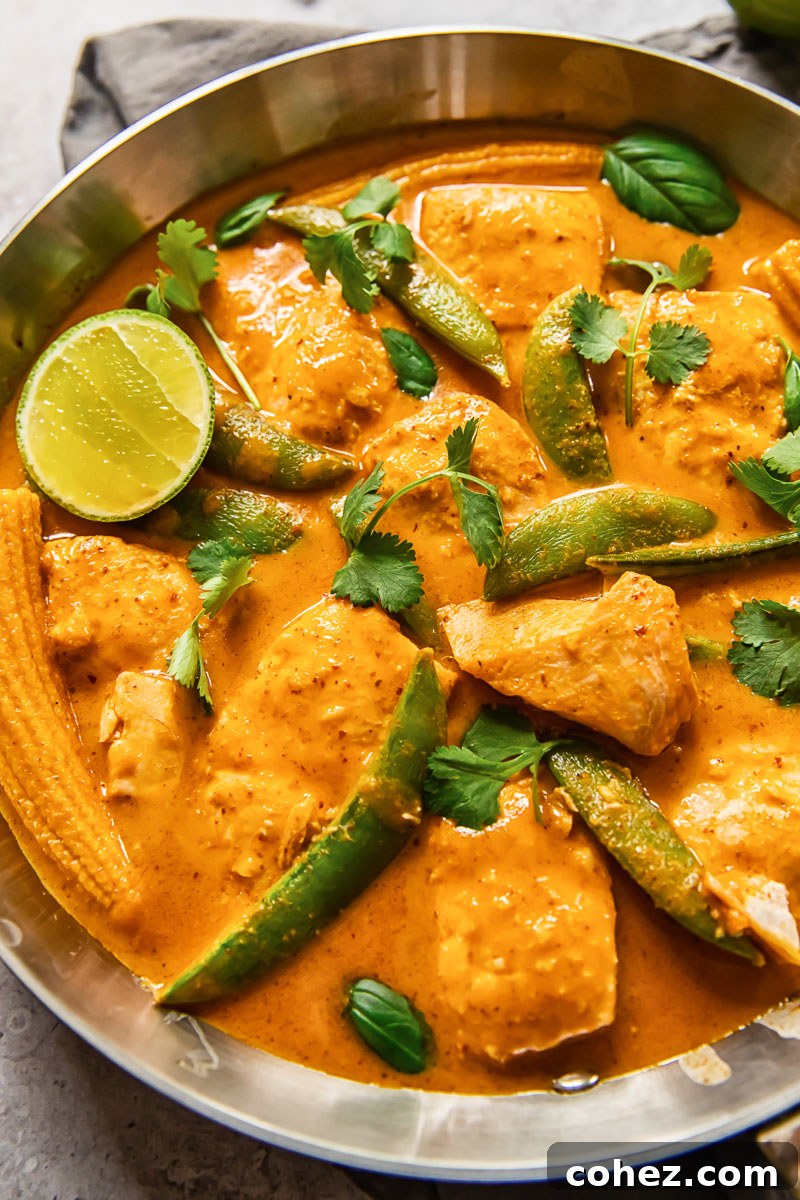
For those who adore Thai cuisine, the thought of recreating restaurant-quality dishes at home can often feel daunting. However, with a few clever shortcuts and high-quality ingredients, authentic Thai flavors are surprisingly accessible. Our family, for instance, simply can’t get enough of Thai food. While takeout is always an option, we find immense satisfaction in preparing these meals ourselves, especially when it’s as simple as this recipe makes it.
We’re proud advocates for embracing the convenience of pre-made curry pastes found in most supermarkets. This simple hack doesn’t diminish the quality of your meal; instead, it empowers you to effortlessly expand your culinary repertoire, adding delightful Indian and Thai influences to your weekly dinner menu with minimal effort. This approach not only saves time but also guarantees a consistent, rich flavor that can be challenging to achieve from scratch without extensive experience.
The Heart of Thai Cuisine: Understanding Red and Green Curry
Thai curries are renowned for their complex and harmonious blend of sweet, sour, salty, spicy, and sometimes bitter notes. Among the diverse range of Thai curries, red and green varieties stand out as the most popular globally. While both offer a captivating culinary experience, they possess distinct characteristics:
- Red Curry: Typically spicier and richer, red curry paste gets its vibrant hue and intense heat from dried red chillies. These chillies are often sun-dried before being pounded into a paste with other aromatic ingredients like galangal, lemongrass, kaffir lime zest, and various spices. The result is a bold and fiery flavor profile that truly awakens the senses.
- Green Curry: Often perceived as milder, green curry paste derives its signature color and fresher taste from fresh green chillies. Alongside these, it typically includes ingredients such as fresh cilantro roots, basil, and a more pronounced use of lime zest. Its flavor is bright, herbaceous, and offers a refreshing contrast to the depth of red curry. If you’re a fan of green curry, make sure to check out our Vegetarian Thai Green Curry.
For this particular recipe, we’ve opted for a red curry paste to deliver a robust and satisfying warmth, perfectly complementing the rich salmon. However, don’t hesitate to experiment with green curry paste if its vibrant, herbaceous notes align better with your personal taste. The beauty of these dishes lies in their adaptability to your preference.
Crafting authentic Thai curry paste from scratch requires a deep understanding of traditional ingredients, precise ratios, and significant culinary practice. It’s a true art form that few can master without extensive research and dedication. Thankfully, high-quality, pre-made curry pastes are now widely available, offering a fantastic shortcut to experiencing genuine Thai flavors at home in as little as 30 minutes. The key is simply to choose a reputable brand and follow this easy recipe!
Mastering Your Thai Fish Curry: Expert Tips and Notes
Recipe Tips and Notes
- Curry Paste Quality is Key: The foundation of any great Thai curry is its paste. Invest in a good quality, authentic Thai curry paste. Whether you choose red or green, a superior paste will deliver a depth of flavor that elevates your entire dish. Look for brands with minimal additives and a strong aroma.
- Coconut Milk Choices: For the richest flavor and creamiest texture, we highly recommend using full-fat, unsweetened coconut milk. It provides a luxurious mouthfeel and carries the curry’s spices beautifully. If you’re seeking a lighter option, light coconut milk can be used, but be aware it may result in a slightly thinner consistency and less intense flavor. Always shake the can well before opening to ensure the cream and liquid are combined.
- Choosing Your Fish: Salmon is a fantastic choice for this curry due to its rich flavor, firm texture, and abundance of healthy Omega-3 fatty acids. Its natural oiliness stands up well to the bold curry spices. However, for a more traditional Thai fish curry or if you prefer a leaner protein, white fish varieties such as cod, tilapia, halibut, or basa are equally delicious. They absorb the flavors of the curry wonderfully and offer a delicate texture. Ensure your fish is fresh and cut into bite-sized pieces for even cooking.
- Versatile Vegetables: This recipe calls for baby corn and sugar snap peas, which add a delightful crunch and sweetness. However, Thai curries are incredibly versatile, allowing you to incorporate a wide array of vegetables based on seasonal availability or personal preference. Other excellent choices include fresh asparagus spears, tenderstem broccoli florets, snow peas, colorful bell peppers (red, yellow, orange), thinly sliced carrots, bamboo shoots, or even mushrooms. Adjust cooking times according to the vegetable’s firmness, adding harder vegetables earlier and softer ones later to prevent overcooking.
- The Fragrance of Herbs: Fresh herbs are crucial for adding a final burst of authentic flavor and aroma. Thai basil, with its distinct anise-like and peppery notes, is traditionally used and adds an unparalleled fragrance. If Thai basil is hard to find, fresh cilantro (coriander) is an excellent and readily available substitute that still offers a bright, herbaceous lift. For an extra layer of complexity, consider adding a few kaffir lime leaves (bruised to release their oils) or a slice or two of fresh ginger or galangal during the initial sautéing of the paste.
- Balancing Act: Thai cuisine is all about balancing the five fundamental tastes. Fish sauce provides the essential salty and umami depth, while brown sugar or palm sugar introduces sweetness, counteracting the spice and harmonizing the flavors. A final squeeze of fresh lime juice adds a crucial tangy, sour note that brightens the entire dish. Always taste and adjust these elements to achieve your desired balance.
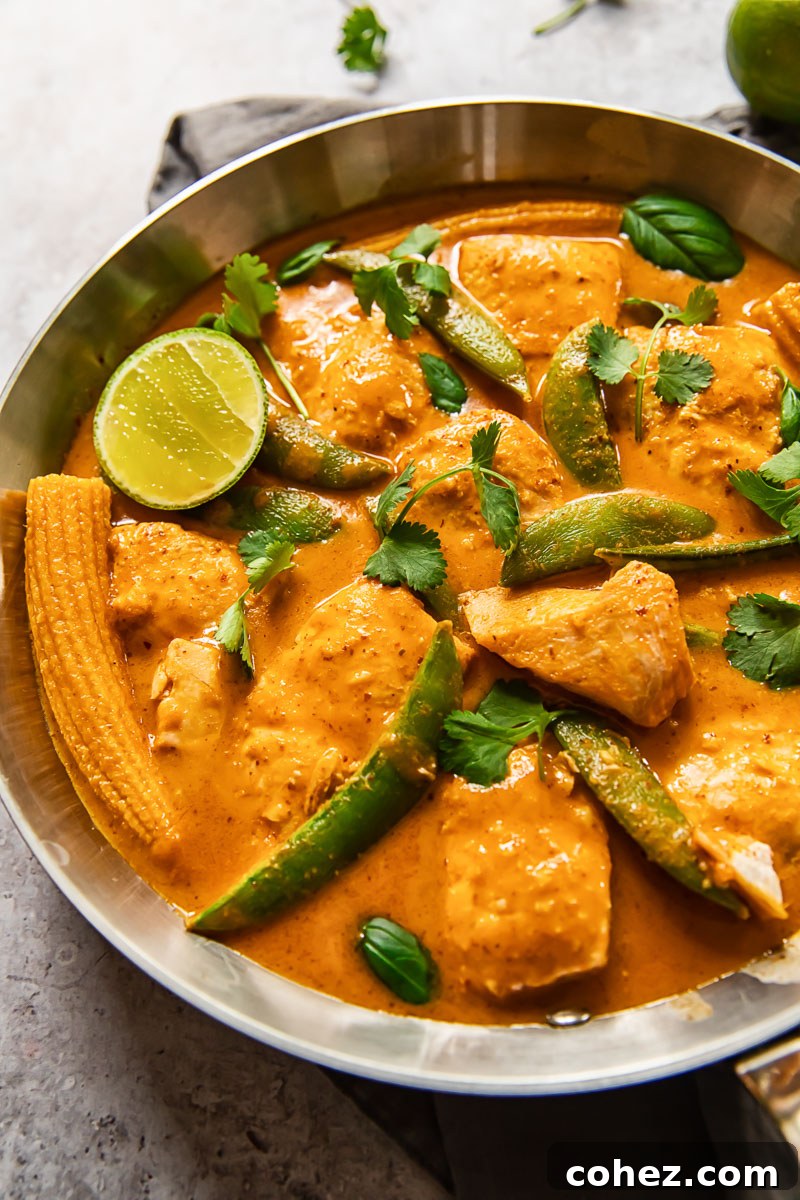
Serving Your Delicious Thai Salmon Curry
This vibrant Thai salmon red curry truly shines when served with the right accompaniments. The creamy, spicy sauce is best enjoyed with a neutral base that can soak up all the incredible flavors.
- Plain Steamed Rice: The classic choice. A bowl of fluffy white jasmine rice provides the perfect canvas for the rich curry. Its mild flavor offers a welcome balance to the intense spices, allowing the intricate notes of the curry to truly stand out. It also acts as a natural sponge, ensuring no drop of that delicious sauce goes to waste.
- Coconut Rice: For an extra layer of tropical indulgence, prepare coconut rice. Cooked with coconut milk instead of water, it adds a subtle sweetness and creamy texture that beautifully complements the curry’s profile.
- Fresh Garnishes: Don’t forget the final touches! A sprinkle of fresh Thai basil or cilantro, extra lime wedges for squeezing, and perhaps a few thinly sliced red chilies for an additional kick can elevate the presentation and flavor even further.
Whether you’re hosting a dinner party or simply enjoying a quiet meal at home, this salmon curry promises a delightful and satisfying experience.
More Irresistible Curry Recipes to Explore
If you’ve fallen in love with the comforting and aromatic world of curries, we have plenty more recipes to tempt your taste buds. Expand your curry repertoire with these fantastic options:
- Chicken Katsu Curry
- Chickpea and Butternut Squash Curry
- Chinese Chicken Curry
- Butter Chicken Curry
Thai Fish Curry
By Julia Frey of Vikalinka

Ingredients
- 1 tbsp vegetable oil
- 2 cloves garlic, pressed
- 60g / 1/4 cup-1/3 cup prepared Thai red curry paste
- 400ml / 14oz unsweetened coconut milk
- 100g / 6-7 baby corn
- 100g / 1 cup sugar snap peas
- 450g / 1 lbs salmon fillet, cut into bite-sized pieces
- 1 tbsp fish sauce
- 1 tbsp brown sugar or palm sugar
- 1/2 lime, juice only
- 3-4 Thai basil leaves or fresh cilantro for garnish
Instructions
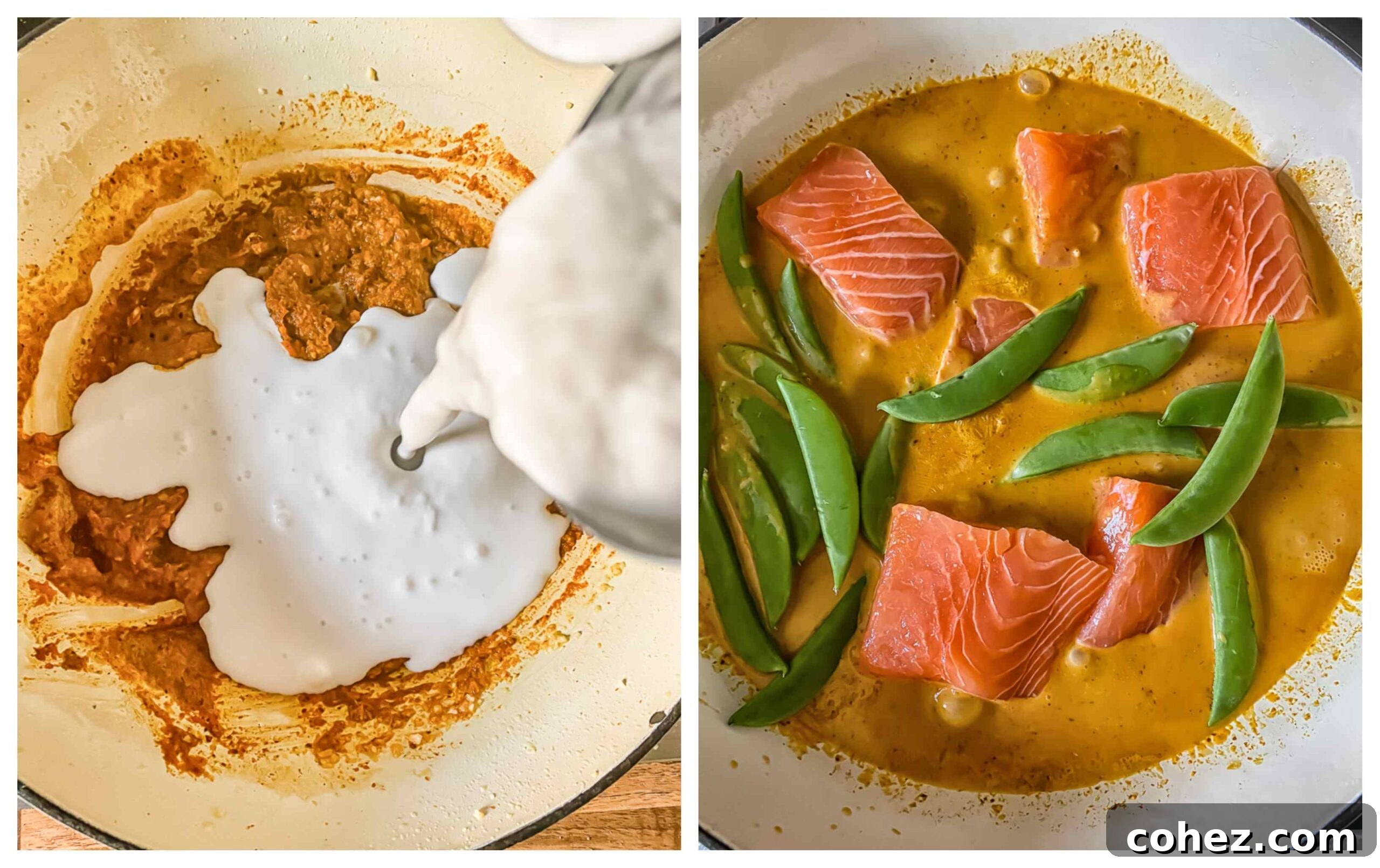
- Saute the pressed garlic in the vegetable oil in a large pan or wok for about 30 seconds until fragrant. Add the Thai red curry paste and 1 tablespoon of the coconut milk. Cook, stirring constantly, for another 30 seconds to a minute until the aroma intensifies.
- Pour in the remaining coconut milk, fish sauce, and brown sugar (or palm sugar). Bring the mixture to a gentle boil, then reduce the heat to a simmer.
- Add the baby corn to the simmering curry and let it cook for 5 minutes. Then, add the sugar snap peas and the bite-sized salmon pieces. Continue to cook for another 8-10 minutes, or until the salmon is cooked through and flakes easily. Be careful not to overcook the salmon to maintain its tenderness.
- Remove the pan from the heat and drizzle the fresh lime juice over the curry. Stir gently to combine. Taste and adjust seasoning if needed – you might want a little more fish sauce for saltiness, sugar for sweetness, or lime juice for tartness.
- Serve immediately with plain steamed rice or coconut rice, garnished with fresh Thai basil leaves or cilantro. Enjoy your homemade, quick, and flavorful Thai fish curry!
Nutrition
Nutrition information is automatically calculated, so should only be used as an approximation.
This quick and easy Thai Salmon Red Curry recipe proves that authentic flavors don’t have to be complicated or time-consuming. With simple ingredients and minimal effort, you can bring the vibrant tastes of Thailand right to your dinner table. Whether you’re a seasoned chef or a kitchen novice, this dish is guaranteed to impress with its rich, creamy texture and perfectly balanced sweet, sour, and spicy notes. So, grab your ingredients, set aside 30 minutes, and prepare to embark on a delightful culinary journey. Your taste buds will thank you!