
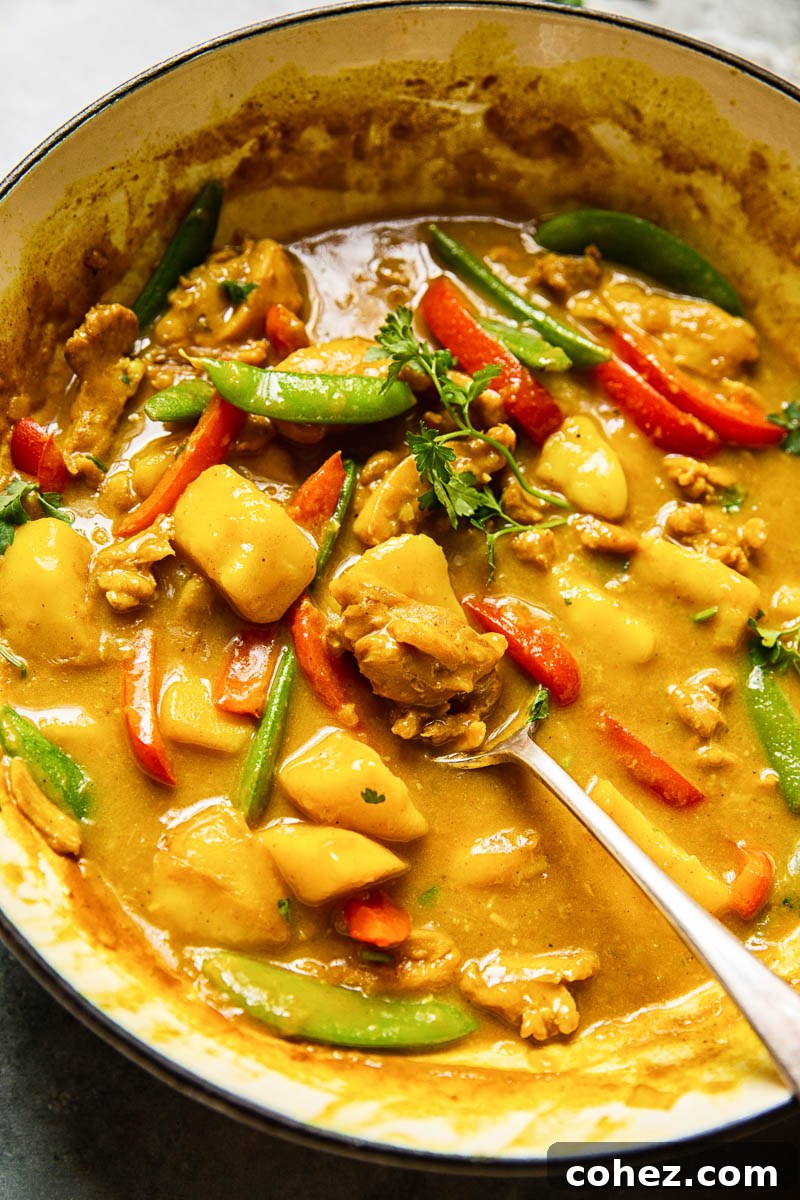
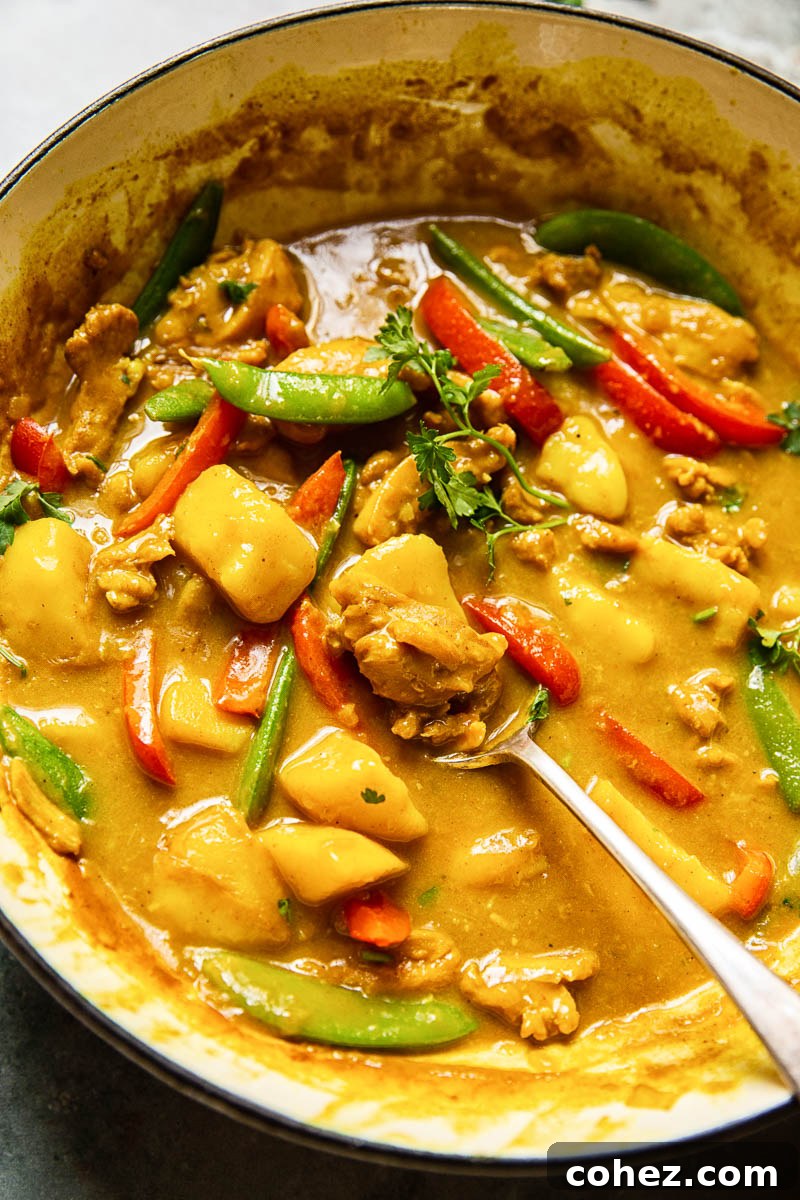
Authentic Chinese Chicken Curry: A Homemade Takeout Favorite Ready in 35 Minutes
Craving the vibrant flavors of your favorite Chinese takeout? Look no further! This incredible Chinese chicken curry recipe delivers all the aromatic, spice-packed goodness you desire, but in a fraction of the time and with far better ingredients. Forget dialling for delivery; this satisfying classic is ready in just 35 minutes, making it the perfect weeknight meal that will undoubtedly become a staple in your kitchen.
Whether you’re new to making curries at home or a seasoned pro, this recipe is designed to be straightforward and rewarding. It’s an ideal choice for those busy evenings when you want something comforting, delicious, and healthier than typical restaurant fare. Dive into the world of homemade Chinese cuisine and discover how easy it is to create a truly memorable meal.
The Irresistible Appeal of Homemade Chinese Curry
We all have those days when the thought of cooking seems like an insurmountable task. The lure of takeout, with its promise of instant gratification, can be strong. It’s easy, it’s convenient, and it often feels like a treat. However, the hidden costs, both financial and nutritional, can quickly add up. A single takeout meal can be surprisingly expensive and often comes loaded with excessive calories, sodium, and unhealthy fats, making it a less-than-ideal choice for those striving for a balanced lifestyle.
This is precisely why mastering a few quick and healthy homemade takeout alternatives, like this Chinese chicken curry, is a game-changer. My family, especially my kids, often asks for Chinese food when we consider ordering in. While I appreciate the concept of Chinese cuisine, my experiences with Westernized versions from local takeaways have often left me feeling unwell. The stark difference between the deep-fried, sugar-and-salt-laden dishes common in many Western establishments and the fresh, nutritious, and balanced meals I enjoyed during a visit to China was truly eye-opening.
Crafting your own Chinese chicken curry at home allows you complete control over the ingredients, ensuring freshness and quality. You can reduce unhealthy oils, moderate salt and sugar, and pack your dish with nutrient-rich vegetables. The result is a meal that not only tastes incredible but also makes you feel good, both physically and mentally. It’s a treat without the guilt, offering the comforting familiarity of a takeout classic with the wholesome benefits of home cooking.
Moreover, the process of making this curry is surprisingly simple and therapeutic. From chopping fresh aromatics to watching the spices bloom, each step is a mindful engagement with your food. Plus, knowing you’ve created a vibrant, flavorful, and healthy dish from scratch provides a profound sense of accomplishment. Say goodbye to greasy containers and hello to a deliciously wholesome Chinese chicken curry experience in your own kitchen.
Exploring Chinese Curry: More Than Just Takeout
For many, the word “curry” immediately conjures images of rich, creamy Indian dishes. While curry undeniably has its roots in India, its influence has spread across countless Asian cuisines, with each region developing its unique interpretation. China is no exception, boasting its own distinct style of curry that offers a delightful departure from its Indian and Thai counterparts. Understanding these differences enhances appreciation for the culinary diversity of curry.
Chinese Chicken Curry vs. Indian Curry: A Flavorful Comparison
The term ‘curry’ broadly refers to a saucy dish flavored by a blend of ground spices. However, the specific spices and preparation methods vary significantly. Chinese curry, especially the popular British-Chinese takeout version, often stands out due to several key characteristics:
- Consistency: Chinese curry typically has a slightly thinner or more watery consistency compared to many Indian curries. Indian curries frequently use ingredients like tomatoes, yogurt, or coconut milk as natural thickeners, which are less common in traditional Chinese curry bases.
- Spice Profile: While turmeric and curry powder are present, Chinese curries often use them in a more subdued way, allowing other flavors to shine. A touch of curry powder and turmeric is complemented by an aromatic blend that might include coriander, star anise, ginger, and garlic, often brightened with a splash of soy sauce. In contrast, Indian curries might feature turmeric and a more complex blend of roasted spices as their primary flavor anchors. The inclusion of Chinese Five Spice powder in many authentic Chinese curries adds a unique sweet, sour, bitter, pungent, and salty dimension that is distinctly Chinese.
- Thickening Agents: In many authentic Chinese curries, the sauce is naturally thinner. However, Western palates often expect a thicker curry sauce. To achieve this desired texture in homemade versions, a common technique is to use cornstarch or xanthan gum. While traditional Indian curries rarely rely on cornstarch for thickening, its use in Chinese curry (especially Westernized versions) is practical and effective for achieving that satisfying, clinging sauce. For those watching carb intake, xanthan gum offers an excellent alternative.
Beyond India and China, other nations offer their own beloved curry traditions. Fans of Thai curries, for instance, will attest to their unique profiles, often characterized by fresh herbs like lemongrass and galangal, coconut milk, and a balance of sweet, sour, salty, and spicy notes.
This rich diversity means there’s a curry for every taste and occasion. Our Chinese chicken curry offers a fantastic entry point into this flavorful world, balancing familiar curry notes with distinctive Chinese aromatics for a truly satisfying experience.
Key Ingredients for Your Perfect Chinese Chicken Curry
The secret to a truly outstanding Chinese chicken curry lies in selecting quality ingredients and understanding how each contributes to the overall flavor and texture. Here’s a breakdown of the stars of this recipe:
Chicken Breasts or Chicken Thighs? Choosing Your Protein
For this recipe, I’ve opted for skinless, boneless chicken thighs. They are typically more economical and, in my opinion, offer a richer, more succulent flavor and tender texture that holds up beautifully in a simmered curry. Chicken thighs are also more forgiving if slightly overcooked, remaining juicy and delicious.
However, personal preference plays a huge role here. If you prefer, feel free to use skinless, boneless chicken breasts. Simply cut them into bite-sized pieces, ensuring any visible fat is removed. The results will be very similar in terms of flavor absorption and cooking time. The key is to cut the chicken consistently so it cooks evenly.
Beyond chicken, this versatile curry base can accommodate other proteins. For a truly authentic Chinese curry experience, consider using firm white fish or succulent shrimp. These alternatives cook quickly and absorb the curry flavors wonderfully, making for an equally delightful meal. Marinating the chicken (or chosen protein) briefly in soy sauce and cornstarch is a crucial step that not only infuses flavor but also tenderizes the meat and helps create a velvety coating as it cooks, contributing to the sauce’s body.
The Essential Aromatic Base: Onion, Garlic, and Ginger
No Chinese dish is complete without a robust aromatic base, and this curry is no different. Finely chopped onion, freshly grated ginger, and minced garlic create a fragrant foundation that elevates the entire dish. These ingredients are sautéed gently to release their pungent, sweet, and spicy notes, forming the backbone of the curry’s flavor profile. Remember, cooking garlic briefly is key to avoid bitterness, adding it towards the end of the sautéing process for maximum aroma.
The Spice Blend That Defines Chinese Curry
Our curry’s distinctive taste comes from a careful balance of spices:
- Curry Powder: While Chinese curry uses it differently than Indian varieties, curry powder provides that undeniable “curry” warmth and depth. Use a good quality blend for the best results.
- Turmeric: This golden spice contributes not only a beautiful yellow hue but also a mild earthy flavor and numerous health benefits.
- Chinese Five Spice Powder: This is where the magic of Chinese flavor truly comes in. This iconic blend typically contains star anise, cloves, cinnamon, Sichuan peppercorns, and fennel seeds. It offers a complex profile that is aromatic, slightly sweet, and savory, giving the curry its authentic character. A little goes a long way with this potent blend!
Bringing in the Vegetables: A Spectrum of Color and Texture
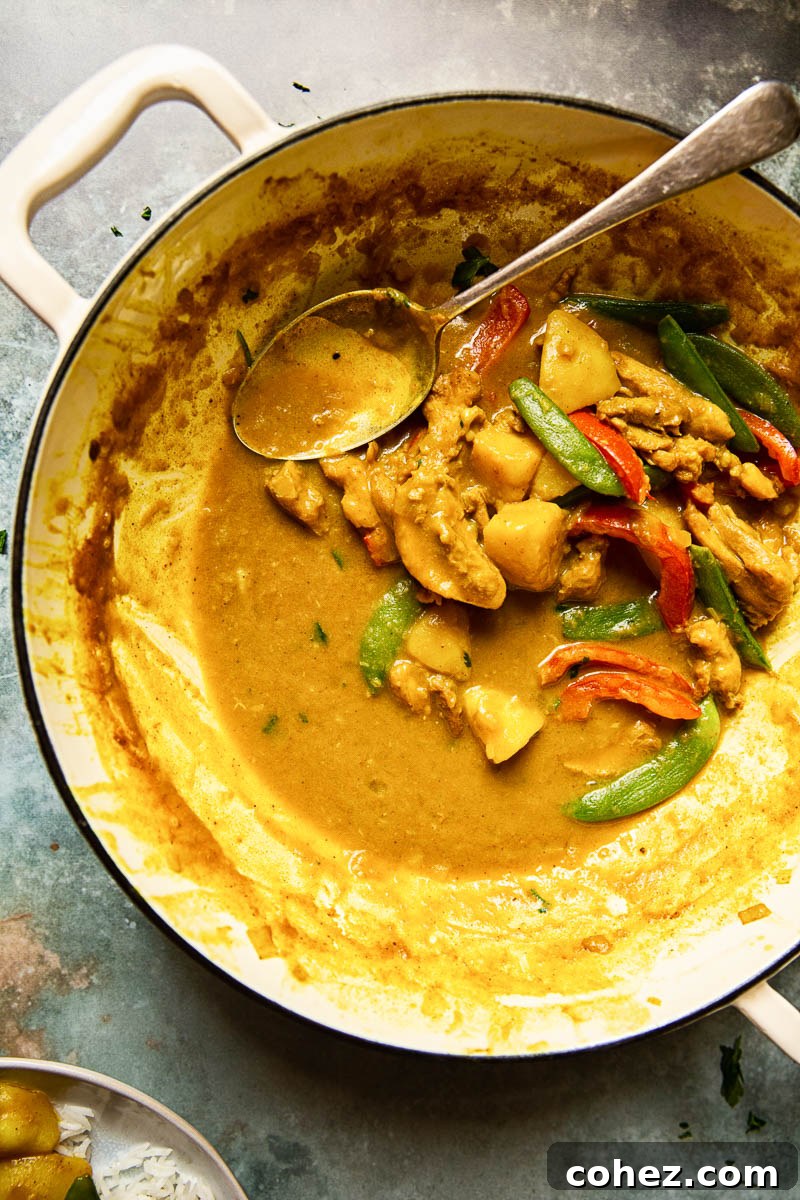
One of the joys of cooking curry is its adaptability when it comes to vegetables. While British Chinese takeaways often feature green peas, our recipe includes a vibrant mix of traditional and customizable options. I’ve chosen red peppers for their sweetness and color, sugar snap peas for their crisp-tender texture and fresh flavor, and potatoes for their hearty sustenance and ability to absorb the rich curry sauce.
When selecting potatoes, waxy varieties like Charlotte or red potatoes are preferred as they hold their shape better during simmering, preventing them from disintegrating into the sauce. However, if you only have floury potatoes (like Maris Piper or Russet), don’t worry! While they might break down slightly, they will naturally help thicken the sauce, which some may even prefer.
The beauty of curry lies in its flexibility. Feel free to “freestyle” with whatever vegetables you have on hand or prefer. Carrots, broccoli florets, mushrooms, bamboo shoots, or water chestnuts would all make excellent additions, allowing you to personalize the dish to your taste and utilize seasonal produce.
Recipe Tips and Notes for Success
- Potato Perfection: Avoid cutting your potatoes too small, as they can fall apart during cooking. Waxy potatoes, such as Charlotte or red potatoes, are recommended for maintaining their shape. If you use floury potatoes (like Maris Piper or Russet), they may break down more, but this can actually help thicken the sauce naturally, which is a desirable outcome for some.
- Chicken Choice: Both skinless, boneless chicken thighs and breasts work well in this recipe. Chicken thighs are generally more flavorful and cost-effective, offering a juicier result.
- Protein Alternatives: For a different take on this Chinese curry, consider substituting chicken with fish or shrimp. Ensure these proteins are cooked through but not overdone.
- Garlic Care: When adding garlic with the onions, be mindful not to burn it. Burnt garlic imparts a bitter, unpleasant taste that can negatively impact the entire dish. Add it towards the end of the sautéing process for maximum aroma.
- Spice Bloom: Briefly cooking the curry powder, turmeric, and Chinese 5 spice powder before adding liquids helps to toast the spices, releasing their full aromatic potential and deepening the flavor of the curry.
- Deglazing for Flavor: Don’t skip scraping up the browned bits from the bottom of the pan when adding the chicken stock. These “fond” bits are packed with concentrated flavor that will enrich your curry sauce.
Serving Your Delicious Chinese Chicken Curry
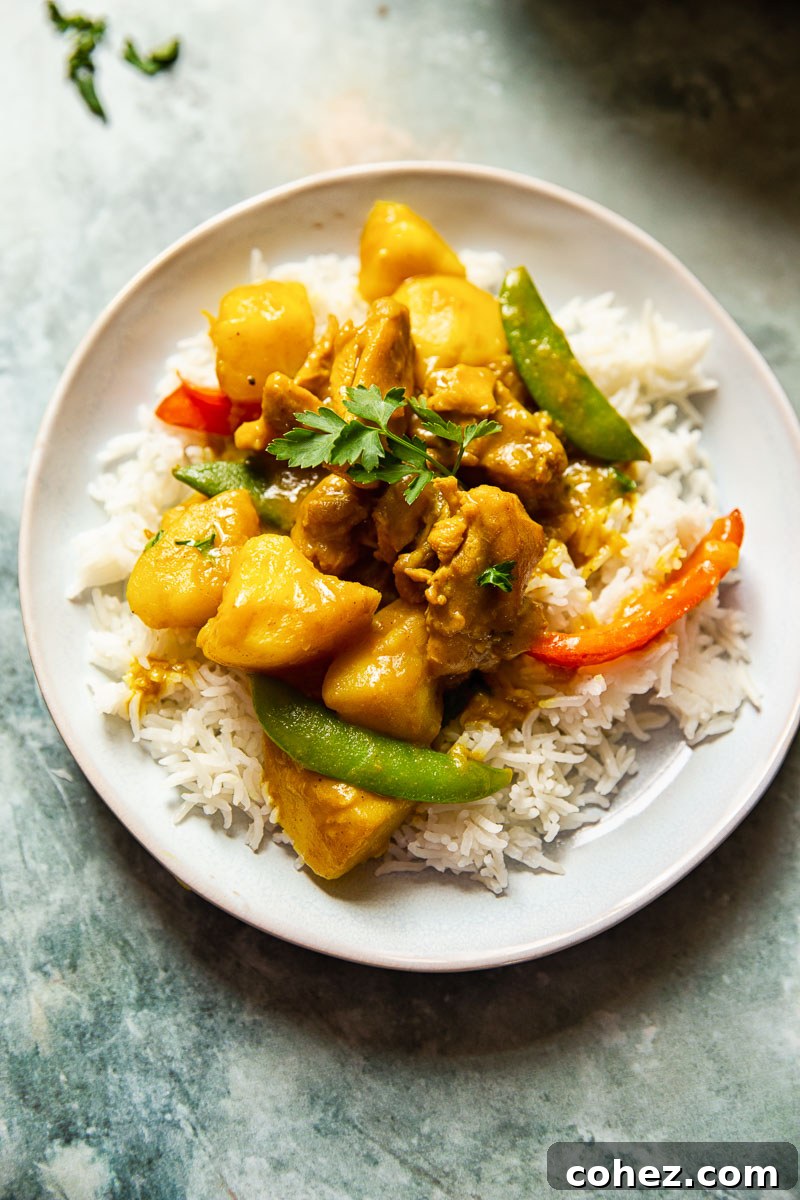
A perfectly cooked Chinese chicken curry deserves an equally complementary accompaniment. While plain steamed white rice or brown rice is a classic and undeniably delicious choice, don’t feel limited! If you’re a noodle enthusiast, serving this flavorful curry over freshly cooked egg noodles or rice vermicelli offers a delightful textural contrast and a satisfying meal.
For those who, like me, enjoy adding a little extra flair to their rice, aromatic coconut rice is an absolute revelation with Chinese chicken curry. Its subtle sweetness and fragrant aroma beautifully balance the savory spices of the curry. It’s surprisingly easy to make, whether you use an Instant Pot or a traditional rice cooker. Additionally, a sprinkle of fresh chopped cilantro (coriander) and sliced green onions (scallions) adds a burst of freshness and color, enhancing both the visual appeal and the taste of your homemade curry.
Meal Prep and Storage: Enjoying Leftovers
One of the many advantages of this Chinese chicken curry recipe is its fantastic freezer-friendliness. It reheats beautifully, making it an ideal candidate for meal prepping. On days when you have a bit more time, consider doubling the recipe. Enjoy half for dinner, and freeze the other half for those truly hectic evenings when the thought of cooking is just too much to bear. Having a wholesome, homemade meal ready to go in your freezer is a genuine lifesaver and a far healthier alternative to last-minute takeout orders.
To reheat, you can simply warm the curry in a microwave until piping hot, or gently heat it on the stovetop over medium-high heat. If the sauce appears a bit too thick after refrigeration or freezing, just add a splash of water or chicken stock to achieve your desired consistency. Always ensure the curry is thoroughly heated through before serving to maintain food safety and optimal taste.
More Delicious Curry Recipes to Explore
- Butter Chicken Curry
- Thai Red Curry with Shrimp and Snow Peas
- Chickpea and Butternut Squash Curry
- Chicken Katsu Curry
Chinese Chicken Curry
Equipment
-
This is an affiliate link.
Mixing bowls
-
This is an affiliate link.
Wok or deep frying pan
Ingredients
-
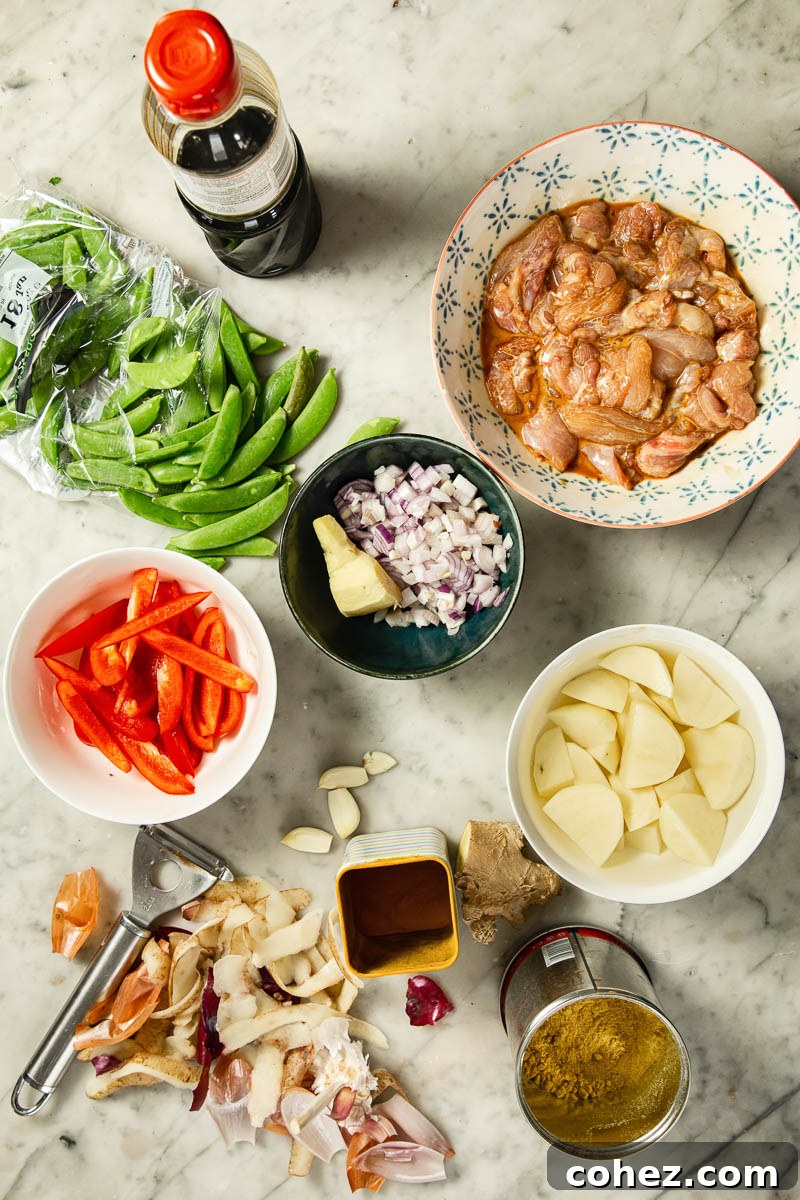
4 skinless, boneless chicken thighs, cut in bite-sized pieces
-
1 tsp This is an affiliate link.soy sauce
-
2 tsp corn starch
-
1 tbsp vegetable oil
-
1 onion, chopped
-
1 tbsp grated ginger
-
2-3 cloves garlic, minced
-
1 tbsp curry powder
-
1 tsp turmeric
-
1/2 tsp Chinese 5 spice powder
-
400ml / 1½ cup This is an affiliate link.chicken stock
-
2 medium potatoes, peeled and cut into 1-inch pieces (waxy variety preferred)
-
1 red pepper, sliced
-
150g / 1 cup sugar snap peas
-
salt to taste
-
chopped cilantro/coriander for serving
-
Green onions, sliced for serving
Instructions
-
In a medium bowl, combine the soy sauce with corn starch. Add the chicken pieces and toss to coat evenly. Set aside to marinate while you prepare the vegetables.
-
Prepare all your vegetables: chop the onion, peel and grate the ginger, peel and cut the potatoes into 1-inch pieces, and mince the garlic. Slice the red pepper and have the sugar snap peas ready.
-
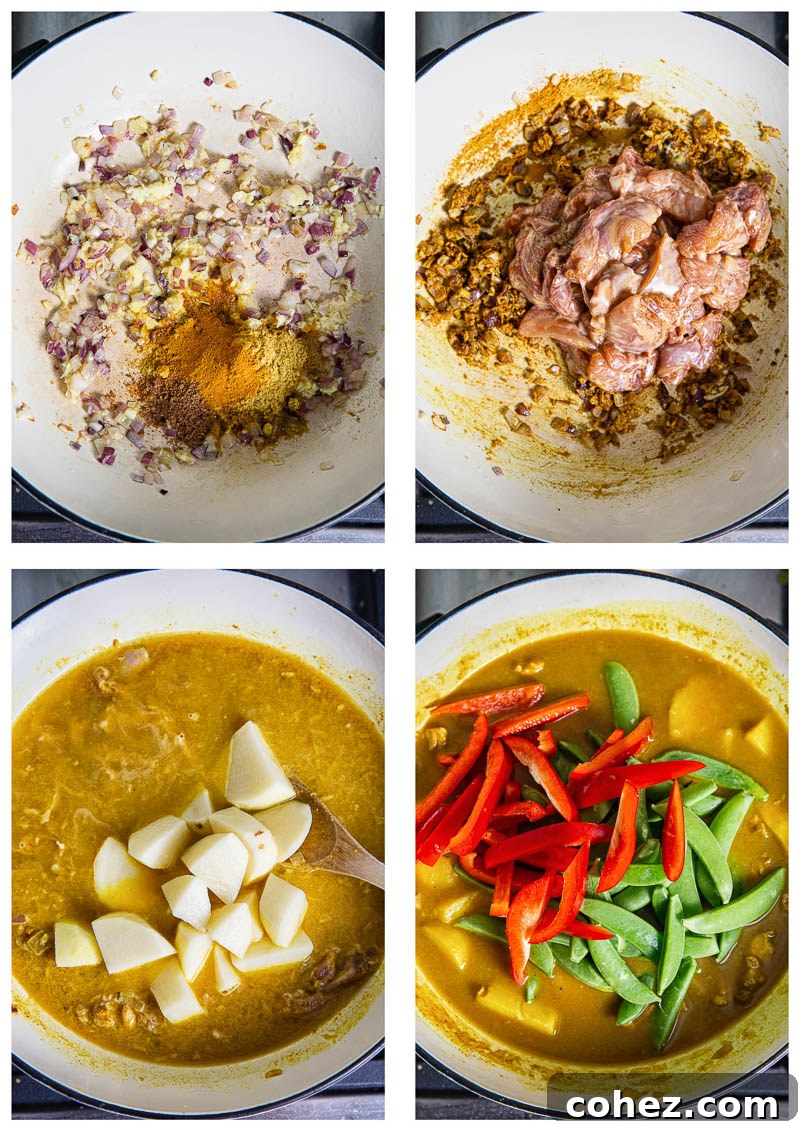
Heat 1 tablespoon of vegetable oil in a deep frying pan or a wok over medium heat. Add the chopped onions and grated ginger and cook, stirring occasionally, for 5 minutes until softened and fragrant. Then, add the minced garlic and cook for just a few more seconds, being careful not to burn it.
-
Stir in the curry powder, turmeric, and Chinese 5 spice powder. Mix briefly and cook for about 30 seconds until the spices are fragrant. Add the marinated chicken along with any remaining marinade to the pan. Cook for a few minutes, stirring, until the chicken is sealed and lightly browned on the outside but not fully cooked through.
-
Pour in the chicken stock and scrape up any browned bits stuck to the bottom of the pan with a wooden spatula – this step, called deglazing, adds immense flavor. Add the potatoes and bring the mixture to a boil. Reduce the heat to a simmer, leave uncovered, and cook for 15 minutes, or until the potatoes are tender.
-
Finally, add the sliced red pepper and sugar snap peas. Continue to cook for another 5 minutes, or until the vegetables are tender-crisp. Taste the curry and add a pinch of salt if necessary.
-
Serve your delicious Chinese chicken curry hot over steamed white or brown rice, or noodles. Garnish generously with fresh chopped cilantro (coriander) and sliced green onions (scallions) for an extra burst of flavor and color. Enjoy!
Video
(Video placeholder – actual video will be embedded here)
Notes
- If potatoes are cut too small, they can fall apart during cooking. Waxy potato varieties are more likely to hold their shape than floury types.
- Both skinless, boneless chicken breasts or thighs can be used. Thighs often provide more flavor and are usually a more economical choice.
- For dietary adjustments, consider using xanthan gum instead of cornstarch for a lower-carb thickening option.
Nutrition
Carbohydrates: 30g |
Protein: 29g |
Fat: 9g |
Saturated Fat: 4g |
Cholesterol: 110mg |
Sodium: 343mg |
Potassium: 1037mg |
Fiber: 5g |
Sugar: 5g |
Vitamin A: 1380IU |
Vitamin C: 75.2mg |
Calcium: 81mg |
Iron: 6.4mg
Nutrition information is automatically calculated, so should only be used as an approximation. It is based on standard ingredient values and may vary.
Tried this recipe?
Let us know how it was!