
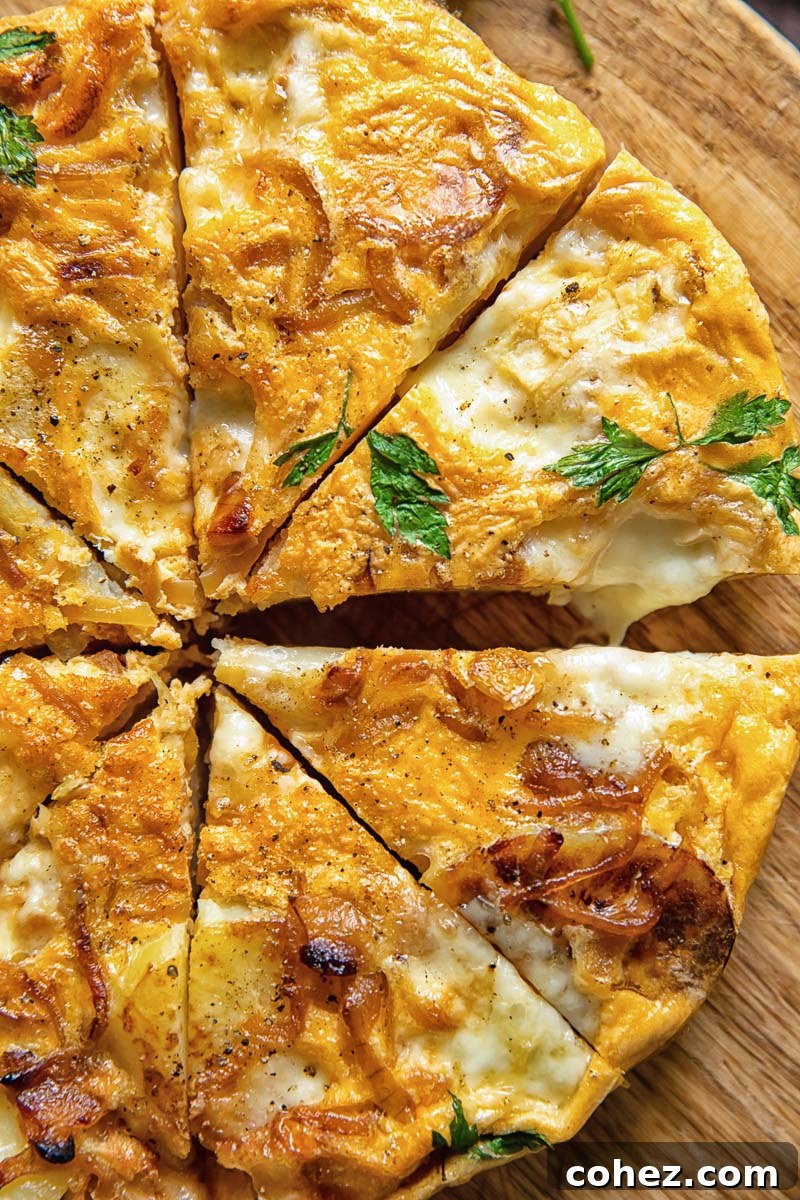
The Ultimate Potato and Onion Frittata with Taleggio Cheese: A Delicious Solution to “Nothing in the Fridge”
Ever stared into your fridge, convinced there’s “nothing to eat,” only to be greeted by a few lonely potatoes, an onion, some eggs, and a forgotten block of cheese? We’ve all been there. But what if we told you those humble ingredients hold the secret to a incredibly satisfying, protein-rich, and versatile meal? Enter the Potato and Onion Frittata with Taleggio (or your favorite) cheese. This Italian-inspired dish is not just an answer to your end-of-week culinary dilemmas; it’s a flavorful experience perfect for any time of day, whether served warm for a hearty breakfast or chilled for a light lunch.
For a vibrant and equally delicious twist, explore variations like our Broccoli Frittata with Aged Cheddar and Bacon.
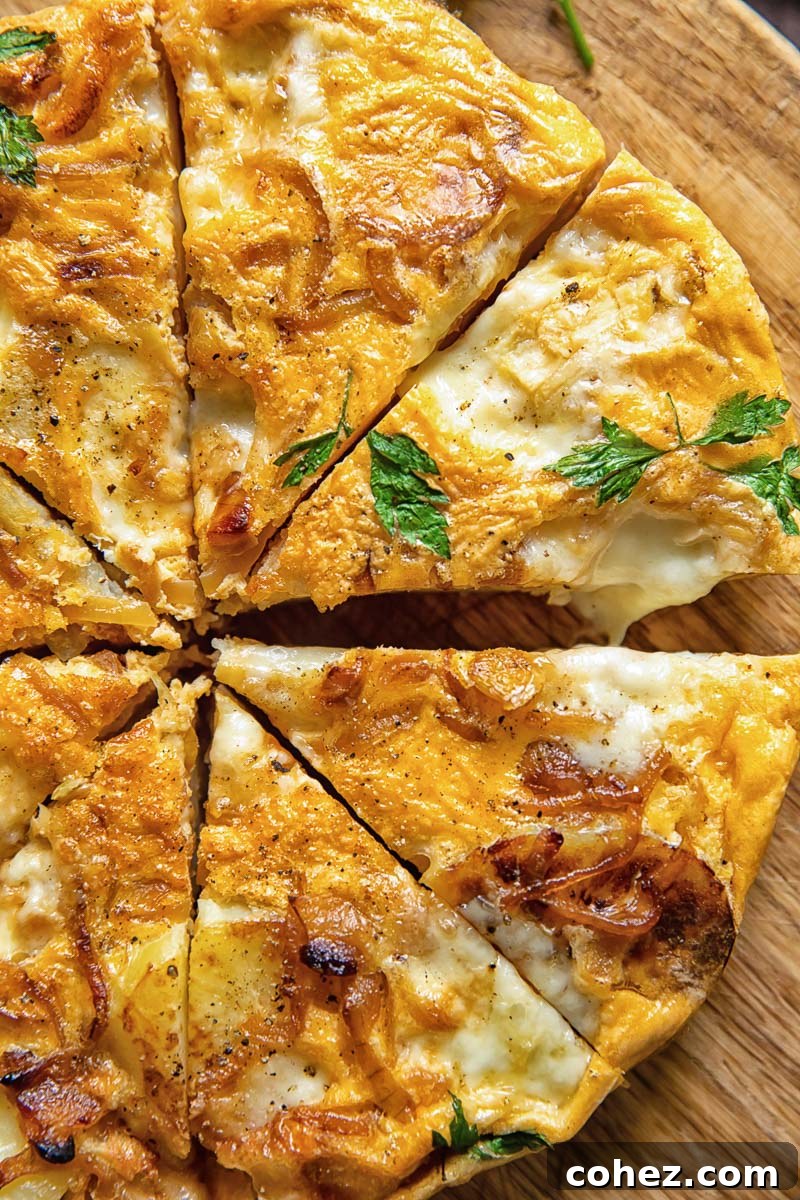
That familiar despair, standing before a fridge that seems to offer only random remnants: three potatoes, a half-used pot of cream nearing its expiration, and a carton of eggs that always seems to accumulate faster than it’s consumed. It’s a common scenario, leading many to declare, “There’s nothing to eat!” Yet, within these seemingly disparate items lies the potential for a culinary masterpiece that is both comforting and incredibly easy to prepare. This frittata recipe transforms those forgotten ingredients into a dish that’s sure to become a regular in your meal rotation, proving that delicious meals don’t always require a trip to the grocery store.
What is Frittata? The Italian Answer to Effortless Elegance
Frittata, often considered Italy’s delightful contribution to the omelette family, is much more than just a fancy egg dish. At its core, it’s a harmonious blend of eggs, often enriched with milk or cream, a common characteristic shared by many beloved eggy breakfast and brunch staples worldwide. However, the frittata distinguishes itself through a unique, two-stage cooking process: initially fried on the stovetop to develop a beautiful crust, then finished in the oven, where it gracefully puffs up, becoming wonderfully light and airy. This dual cooking method ensures a perfectly cooked interior with a desirable golden exterior, setting it apart from its single-stage counterparts.
The true brilliance of the frittata lies in its unparalleled adaptability and welcoming nature towards a diverse array of ingredients. Unlike stricter recipes, the frittata embraces additions with open arms. Feel free to incorporate savory meats, delicate smoked salmon, an assortment of cheeses, vibrant vegetables, or aromatic herbs. The possibilities for frittata recipes are genuinely endless, allowing this incredibly flexible dish to be effortlessly tailored to your specific taste preferences, dietary needs, or whatever bounty your refrigerator offers. Whether you’re crafting a hearty meal for a crowd or a simple, satisfying dish for one, the frittata’s versatility makes it a culinary canvas for your creativity, easily adapting even to a vegetarian diet.
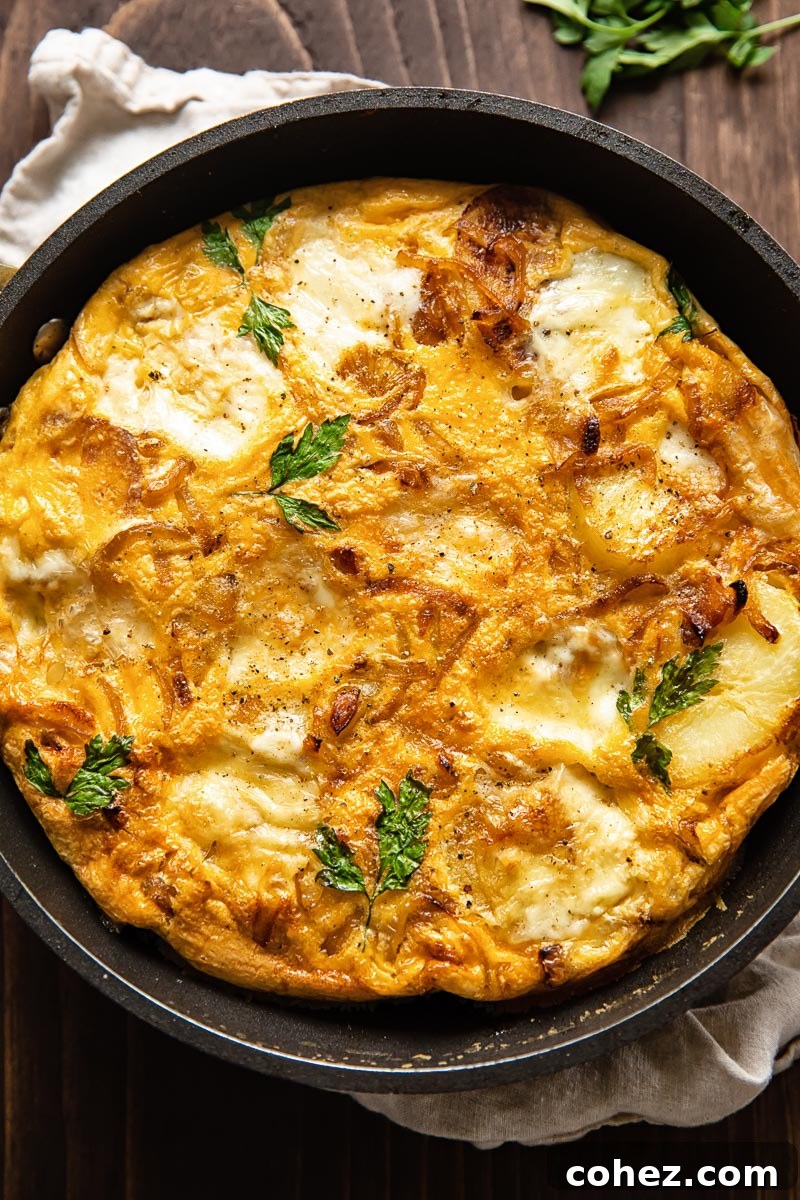
Italian Potato Frittata vs. Spanish Tortilla: A Tale of Two Culinary Cousins
While both the Italian frittata and the Spanish tortilla are celebrated egg and potato dishes, they are distinct culinary entities with unique characteristics shaped by their respective cultural origins. Beyond their country of birth, two primary distinctions define these contrasting yet equally beloved creations.
Firstly: The Dairy Divide. A traditional Spanish tortilla is meticulously crafted without any dairy. Its core components are strictly eggs, onions, and potatoes, adhering to a purist approach that shies away from external enrichments. It’s a dish celebrated for its simplicity and the integrity of its primary ingredients. The Italian frittata, however, is far more accommodating. It often incorporates cream or milk, and in the case of our particular recipe, a generous addition of cheese, such as Taleggio. This inclusion of dairy contributes significantly to the frittata’s characteristic richness and tender texture.
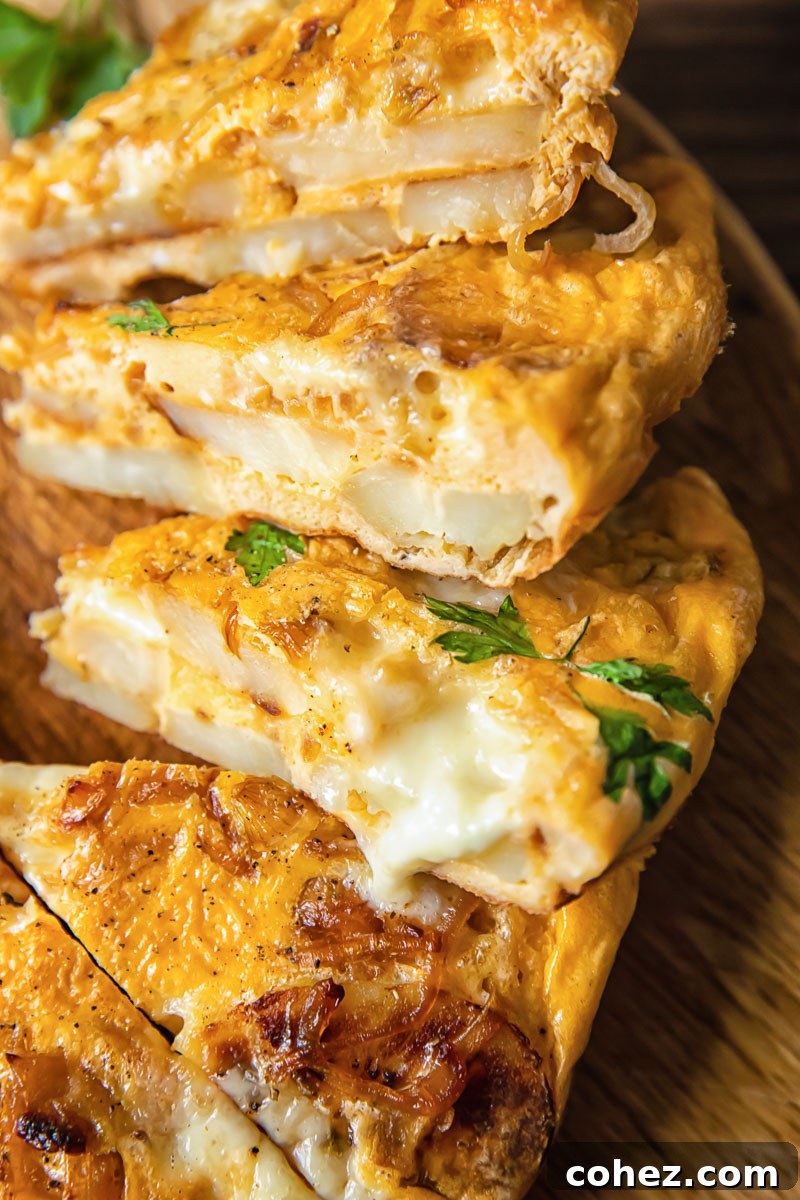
This difference in dairy inclusion profoundly impacts the final texture of each dish. A classic Spanish tortilla is renowned for its often-oozy, almost custardy center—a consistency the Spanish might describe as no bien hecho (not well done), referring to its deliberate softness rather than being overcooked. Its denser composition, attributed to the more tightly packed potato slices, gives it a substantial, satisfying feel. In contrast, the Italian potato frittata typically boasts a more set, yet remarkably lighter and airier, interior, achieving a delicate puffiness thanks to its dairy content and oven finish.
Secondly: The Cooking Method. The Spanish tortilla is a stovetop marvel, prepared entirely within a frying pan. From start to finish, the entire cooking process unfolds over direct heat, requiring careful flipping to ensure even cooking and that signature tender interior. The frittata, on the other hand, embraces a more relaxed, two-stage cooking approach. It begins its journey on the stovetop, acquiring a beautiful golden crust, before being transferred to the oven. This transfer allows for a gentle, even bake that encourages the frittata to rise and achieve its characteristic light and fluffy texture, making it a less hands-on process once it’s in the oven.
Why This Potato Frittata with Taleggio is a Must-Try
Beyond its incredible versatility and ease of preparation, this potato and onion frittata with Taleggio cheese offers a unique blend of flavors and textures that make it truly outstanding. The humble potato provides a hearty and comforting base, absorbing the rich flavors of the caramelized onions and the creamy egg mixture. Onions, when slowly caramelized, transform into sweet, golden strands that add depth and a touch of sophisticated sweetness to the dish. And then there’s the Taleggio cheese.
Taleggio, a semi-soft, washed-rind Italian cheese, is known for its pungent aroma but surprisingly mild, fruity flavor and wonderfully creamy texture when melted. It adds a luxurious richness and a distinctive savory tang that elevates the frittata from simple to sublime. Its ability to melt beautifully creates pockets of gooey, flavorful goodness throughout the dish, complementing the earthiness of the potatoes and the sweetness of the onions perfectly. If Taleggio isn’t available, other melting cheeses like brie, fontina, or even a good quality cheddar can be fantastic substitutes, each lending their own character to the frittata.
This frittata is not just a meal; it’s a celebration of simple ingredients transformed into something extraordinary. It’s high in protein from the eggs and cheese, making it a filling option for any meal, and the potatoes provide sustained energy. It’s also a fantastic way to utilize common pantry staples, reducing food waste and proving that gourmet-level taste doesn’t require exotic ingredients.
Expert Recipe Tips and Notes for Success
- Streamline Your Morning: If the thought of an early start to prepare breakfast frittata is daunting, consider doing some prep work in advance. Boiling the potatoes and caramelizing the onions a day or two before significantly cuts down on active cooking time when you’re ready to make the frittata. This makes it an even quicker and more convenient option for busy mornings or weeknights. Store pre-cooked ingredients in airtight containers in the fridge.
- Cheese Choice is Key: While Taleggio offers a uniquely creamy and aromatic profile that pairs wonderfully with potatoes, the beauty of this frittata is its flexibility with cheese. Don’t feel limited! Use what you and your family enjoy most, or opt for whatever cheese might be nearing its expiration date in your fridge. Brie, fontina, gruyere, or even a sharp cheddar are excellent alternatives that will contribute their own delicious character to the dish. Just ensure it’s a good melting cheese for that desirable gooey texture.
- Choose the Right Pan: This is a crucial step that often gets overlooked. Before you begin any cooking, ensure your chosen frying pan is oven-safe. A cast-iron skillet or an oven-proof non-stick pan with a metal handle are ideal. Transferring a partially cooked frittata from one pan to another is not only messy but also risks compromising its structure. Selecting the correct pan from the outset will make your cooking process seamless and stress-free. For this recipe, an 8-inch pan is recommended to achieve the desired thickness and serving size.
- Pan Size Matters: This recipe is designed to yield an 8-inch frittata. Using a pan that is too large will result in a thinner frittata that cooks faster and may dry out, while a pan that is too small might lead to an overly thick frittata that takes longer to cook through and could be dense. Choose your pan accordingly to achieve the perfect balance of texture and cooking time.
- Enhance Flavor with Fried Potatoes: While optional, taking the extra step to lightly fry the boiled potato slices until golden before adding the egg mixture can significantly enhance the frittata’s flavor. This step adds a layer of crispy texture and a deeper, nuttier potato taste that elevates the overall dish. If you’re short on time, you can skip it, but for maximum flavor, it’s highly recommended.
Storage and Leftovers: A Frittata That Keeps Giving
One of the many charms of this potato and onion frittata is its deliciousness whether served hot or cold. This makes it an exceptional candidate for make-ahead meals and convenient leftovers. Prepare it a day in advance and store it in the refrigerator for an easy grab-and-go option. Any leftover frittata makes for a super filling and flavorful frittata sandwich the next day – a crusty French bread works wonders for this! Alternatively, it can be enjoyed simply sliced, alongside a fresh salad, or as part of a packed lunch. To ensure optimal freshness and safety, store your frittata in an airtight container and consume it within 3 days.
Explore More Favorite Egg Recipes
If you love the versatility and comfort of egg-based dishes, you’ll definitely want to try these other fantastic recipes from our collection:
- Bacon, Stilton and Caramelised Onion Quiche
- Persian Herb Frittata (Kuku Sabzi)
- Healthy Mini Frittatas
- Chorizo Breakfast Hash with Eggs and Feta
- Easy Shakshuka
Potato Frittata with Taleggio Cheese
Julia Frey of Vikalinka
20 mins
35 mins
55 mins
4
Print Recipe
Get the recipe for a filling and protein-rich potato and onion frittata with Taleggio, perfect for breakfast, brunch or a light dinner.
Ingredients
- 2 tbsp olive oil
- 1 onion, sliced
- 1 tbsp apple cider vinegar, optional
- 3 medium potatoes, boiled
- 100g / 3½ oz taleggio cheese or brie
- 6-7 large eggs
- 60ml / 1/4 cup single cream/half and half
- salt and pepper to taste
- 1 sprig parsley
Instructions
-
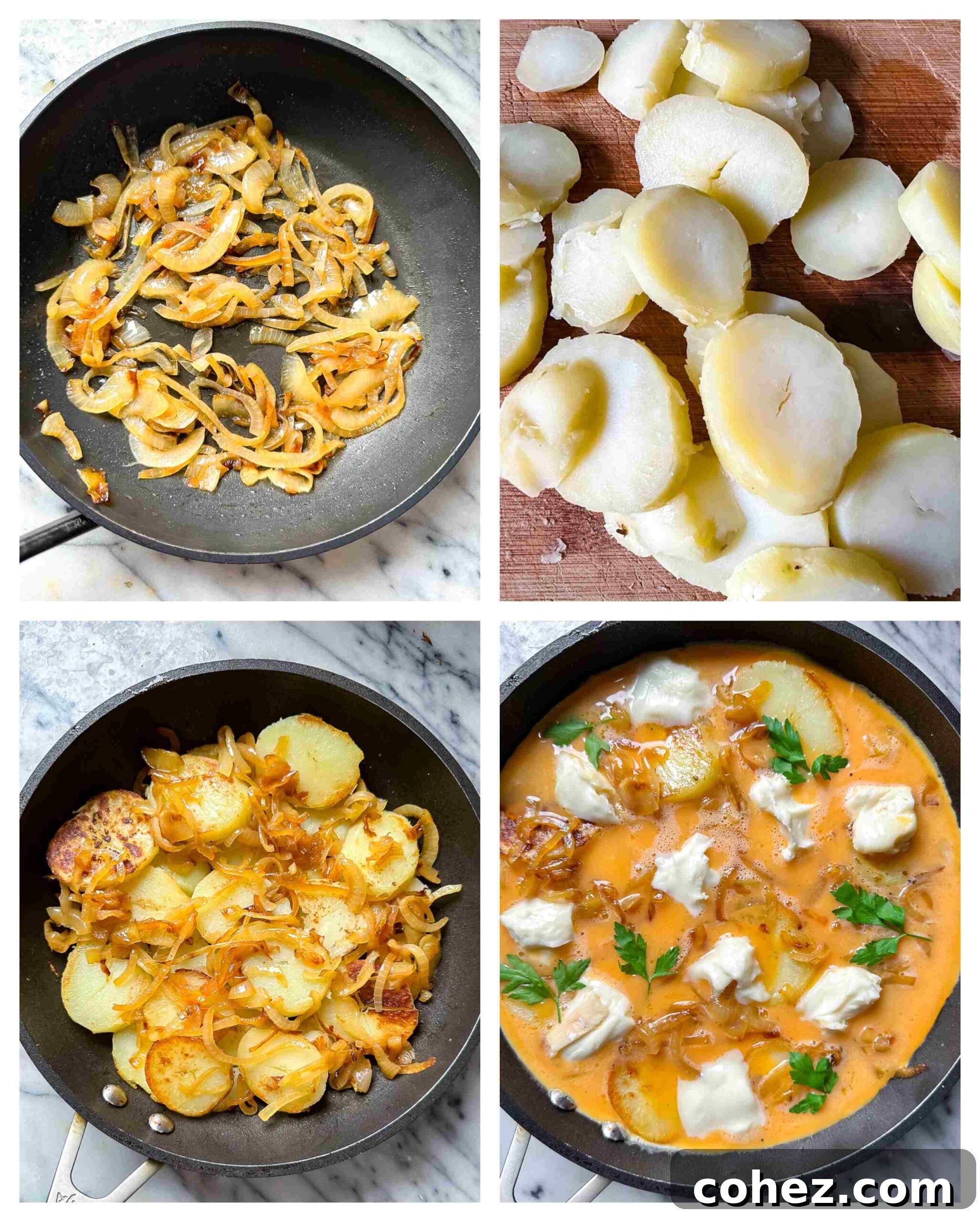
Boil the potatoes until tender and easily pierced with a knife. While the potatoes are cooking, slice the onion and cook in 1 tbsp of olive oil over very low heat in an 8-inch frying pan for 20 minutes with 1 tbsp of apple cider vinegar (optional). Stir occasionally until soft and beautifully caramelized. The onions should be completely tender with no crunch. Remove them to a plate. Preheat your oven to 200°C/400°F.
-
Allow the boiled potatoes to cool slightly, then peel and slice them into rounds. Add the remaining 1 tbsp of olive oil to the same pan where you cooked the onions, then add the potato slices. You can fry the potatoes until they are golden on the outside for added flavor and texture, or you can skip this step if you prefer. Frying enhances the overall taste of the frittata.
-
In a separate bowl, whisk the eggs with the single cream (or half and half if in the US) and season generously with salt and pepper to taste. Arrange the cooked potatoes and caramelized onions evenly in the frying pan. Pour the egg mixture over the potatoes and onions. Top with pieces of Taleggio cheese (ensure the rind is removed) or brie, and scatter fresh parsley over the top.
-
Transfer the pan to the preheated oven and bake for 15-18 minutes, or until the frittata is puffed up, golden, and fully set in the center. Carefully remove from the oven. Serve the frittata warm directly from the pan, or allow it to cool slightly and serve at room temperature. Enjoy this versatile and delicious dish!
Nutrition Information (Approximate Per Serving)
Calories: 407 kcal
Carbohydrates: 31g
Protein: 17g
Fat: 24g
Saturated Fat: 10g
Polyunsaturated Fat: 2g
Monounsaturated Fat: 9g
Trans Fat: 0.03g
Cholesterol: 282mg
Sodium: 986mg
Potassium: 823mg
Fiber: 4g
Sugar: 3g
Vitamin A: 1022 IU
Vitamin C: 34mg
Calcium: 209mg
Iron: 3mg
Nutrition information is automatically calculated and should only be used as an approximation. Individual results may vary based on exact ingredients and preparation methods.
Tried this recipe?
Let us know how it was!
Conclusion: Embrace the Frittata Lifestyle
This Potato and Onion Frittata with Taleggio cheese is more than just a recipe; it’s a testament to the magic that can happen when simple, overlooked ingredients are given a chance to shine. It’s a culinary hero that rescues those “nothing in the fridge” moments, transforming them into opportunities for delicious, fulfilling meals. Whether you’re seeking a hearty breakfast, a satisfying brunch, a light yet flavorful lunch, or a quick and easy weeknight dinner, this frittata fits the bill.
Its ease of preparation, combined with its incredible versatility and the comforting flavors of potatoes, sweet caramelized onions, and melting Taleggio, makes it a dish you’ll want to revisit time and again. So, next time you find yourself pondering what to make, remember this recipe. Gather those humble ingredients, follow our simple steps, and prepare to enjoy a truly delightful Italian frittata that will impress with its flavor and simplicity. Happy cooking!