
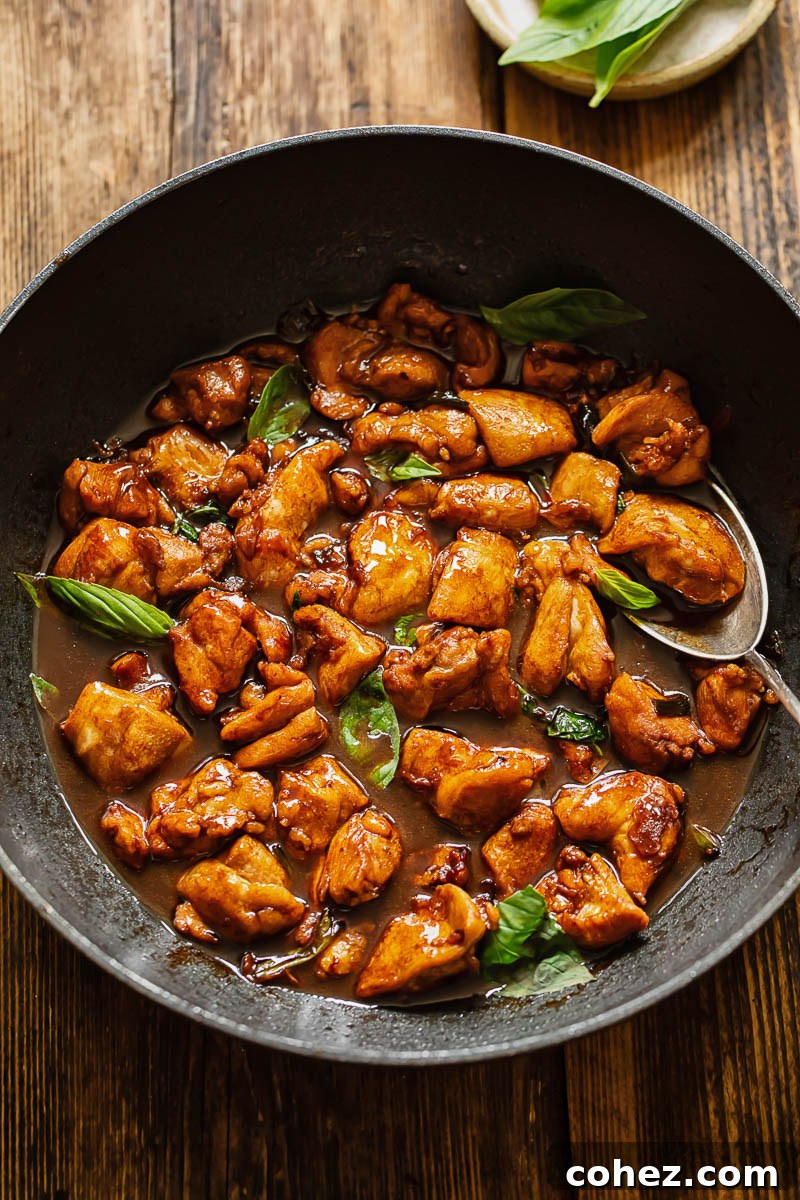
Craving that irresistible sticky, savory chicken? Chinese Three Cup Chicken, or San Bei Ji, is a timeless recipe that perfectly blends tradition with modern convenience. Imagine succulent, boneless chicken thighs generously coated in a rich, dark, and syrupy sauce, infused with the warm embrace of chili, garlic, and ginger, then beautifully finished with a scattering of aromatic basil leaves. Serve this culinary masterpiece simply with a side of fluffy white rice for a truly satisfying meal.
If you’re a fan of deeply savory Asian flavors, you might also enjoy the renowned Mongolian Beef recipe. While not authentically Mongolian, it shares a similar flavor profile and some key ingredients with Three Cup Chicken, offering a delicious alternative if you’re exploring other protein options.
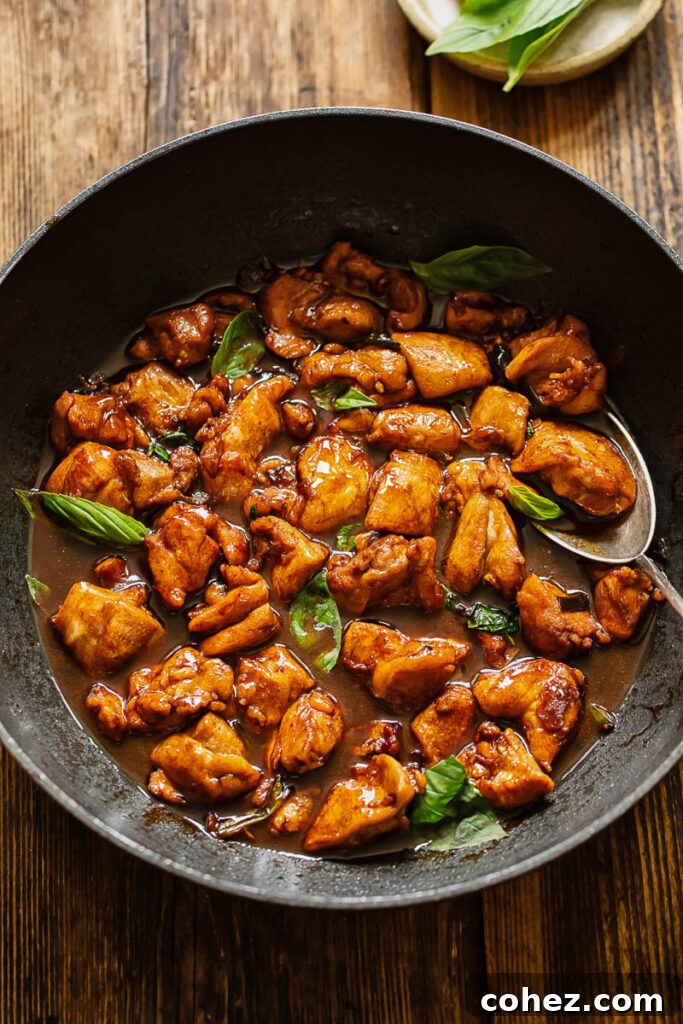
My culinary journey has often been guided by curiosity, leading me to order dishes purely based on their intriguing names. Sometimes this has resulted in delightful discoveries, like the whimsically named Bubble and Squeak, the surprisingly delicious Grasshopper Pie, or even the rather daring Spotted Dick (a traditional British pudding, I assure you!). However, not all adventures have been so rewarding. My most memorable (and alarming) culinary misstep involved “prairie oysters” – a dish I learned to look up *before* ordering. Lesson learned!
Yet, the most evocative and romantic-sounding dish names often emerge from Eastern cuisine, even through their English translations. Consider the poetic Bird’s Nest Soup, the intriguing Drunken Duck, the ancient Century Eggs, or the explosively flavorful Bang Bang Shrimp. And then there’s the captivating “Three Cup Chicken.” What exactly lies behind this mysterious moniker?
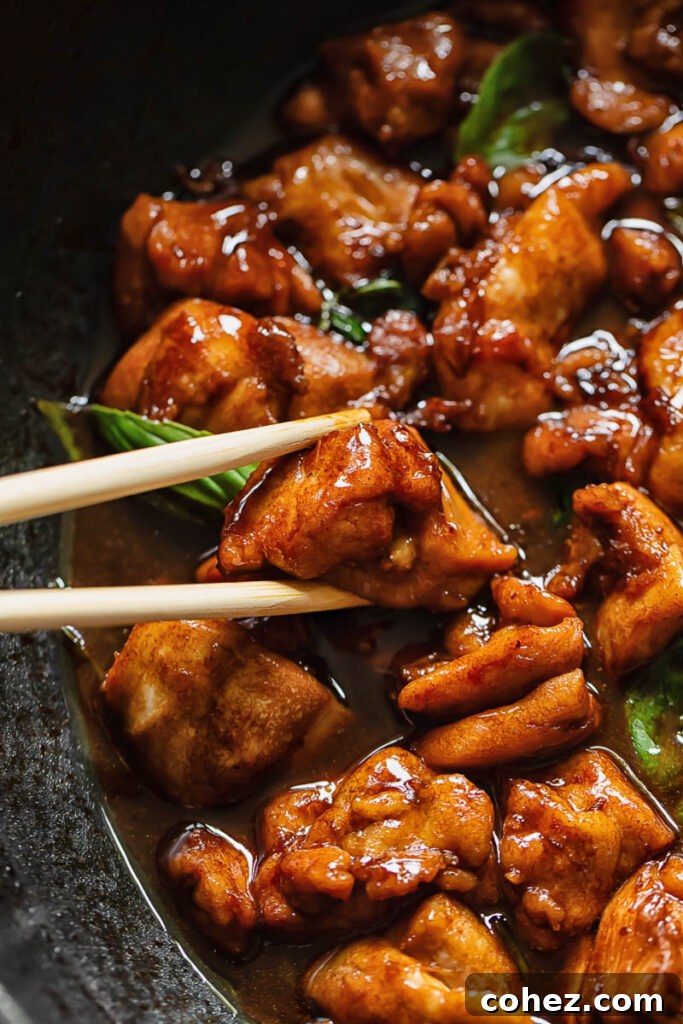
What is Three Cup Chicken (San Bei Ji)? Unraveling the Mystery
Unlike the deceivingly named “prairie oysters,” the “three cups” in Chinese Three Cup Chicken (known as San Bei Ji in Mandarin, meaning “three-cup chicken”) have genuine historical relevance to the dish. This iconic Taiwanese and Jiangxi Province specialty derives its name from the traditional ratio of three primary liquid ingredients: Shaoxing wine (or Chinese rice wine), soy sauce, and sesame oil. Historically, these ingredients were often measured in equal “cups” and used to braise a whole chicken in an earthenware pot.
While the original method involved a generous amount of oil and a long braise, modern adaptations have evolved for convenience and health-consciousness. Thankfully, contemporary recipes have thoughtfully balanced the quantities, transforming it into a more approachable and lighter dish without sacrificing its authentic flavors. The cumbersome whole chicken and earthenware pot have been replaced with easily manageable, stir-fry friendly chicken pieces, making San Bei Ji a perfect candidate for a quick, delicious, and satisfying weeknight dinner, often ready in under 30 minutes.
The magical combination of these three savory condiments forms the foundation of the dish’s distinctive thick, glossy, and intensely flavorful sauce. It boasts a complex umami profile, predominantly salty and earthy, beautifully complemented by a touch of sugar. The sugar not only adds a hint of sweetness but is crucial in achieving that signature syrupy, sticky texture that makes Three Cup Chicken so incredibly addictive. To elevate and add depth to this rich base, the classic Chinese trinity of fresh aromatics – ginger, garlic, and chili – is generously infused throughout the chicken, providing a vibrant lift and delightful pungency that awakens the palate.
Regional variations also contribute to the dish’s character. While the core “three cups” remain consistent, ingredients like green onions and specific basil types are often tied to whether the recipe originates from mainland China or Taiwan. For instance, Taiwanese versions frequently feature a more prominent use of Thai basil, known for its distinctive anise-like, liquorice flavor. Personally, I find the combination of both green onions, which lend a tangy, slightly sharp element, and Thai basil, which enhances the sauce’s sweet notes, creates a wonderfully balanced and aromatic experience. With all these insights, I confidently declare that Three Cup Chicken is thoroughly demystified and absolutely safe – and incredibly delicious – to eat!
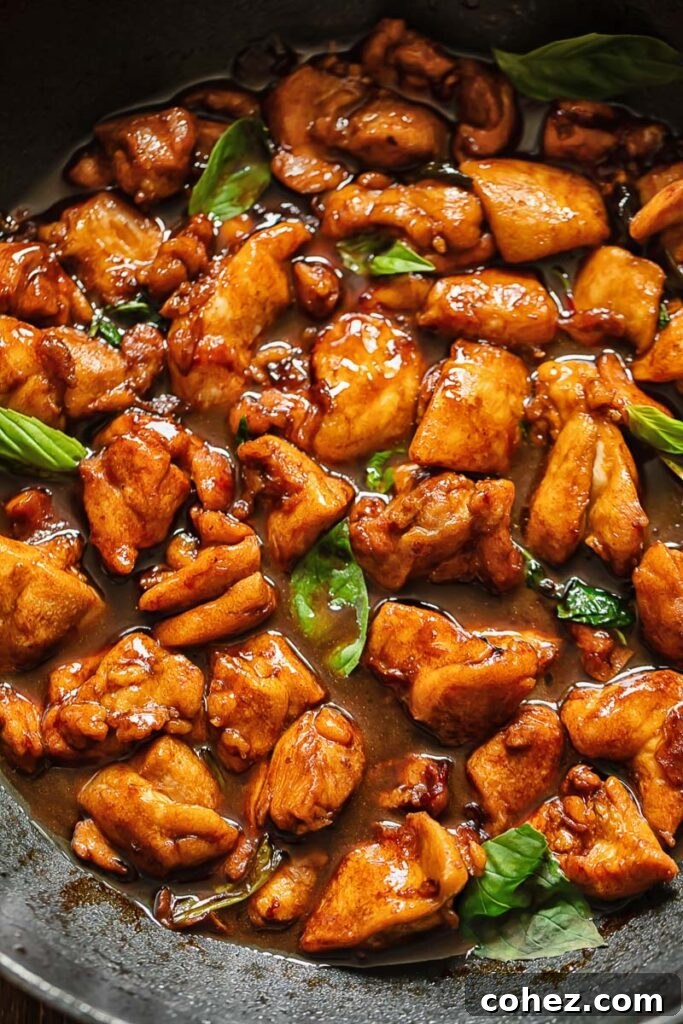
Essential Recipe Tips and Notes for Perfect Three Cup Chicken
- While a truly authentic, ancient San Bei Ji recipe might call for bone-in chicken pieces, for the sake of speed and ease in a modern kitchen, I highly recommend using boneless chicken thighs cut into bite-sized strips. This modification significantly reduces cooking time and makes the dish much simpler to enjoy, especially with chopsticks.
- Chicken breast can be used as an alternative, but boneless chicken thighs are generally preferred for this recipe due to their higher fat content, which results in a more tender, succulent, and flavorful outcome that resists drying out during cooking.
- The integrity of this namesake dish hinges on its three core components: Shaoxing wine, high-quality soy sauce, and toasted sesame oil. Do not omit or drastically substitute these ingredients, as they are crucial for achieving the distinctive and complex flavor profile that defines Three Cup Chicken.
- Thai basil, with its unique anise-like notes, is traditionally used and adds an authentic layer of flavor. It can typically be found in most Asian supermarkets. However, if Thai basil is not readily available in your area, fresh regular basil makes a perfectly acceptable substitute and will still provide a wonderful aromatic finish.
Serving Suggestions: Elevate Your Three Cup Chicken Meal
Traditionally, this exquisite Chinese chicken dish is served alongside a generous portion of steaming hot, plain white rice. The delicate, neutral canvas of the rice perfectly complements the rich, umami-packed flavors of the chicken, allowing its intricate taste profile to truly shine. However, your culinary creativity doesn’t have to stop there!
Unlike many other stir-fried dishes, Three Cup Chicken typically doesn’t incorporate a medley of vegetables directly into the mix. To ensure a balanced and complete meal, consider adding some vibrant vegetable side dishes. Low-prep options include oven-baked miso-glazed cabbage wedges, which offer a delightful texture and additional umami, or flavorful miso eggplant. Alternatively, if your wok is already out and hot, a quick prawn stir fry packed with bright, crunchy vegetables can be prepared in a flash, adding a fantastic textural and nutritional contrast to your main course.
Storage and Leftovers: A Flavorful Encore
As many connoisseurs of Asian cuisine will attest, dishes infused with aromatic ingredients like chili, ginger, and garlic often taste even better the next day! Three Cup Chicken is certainly no exception. The flavors continue to meld and deepen overnight, resulting in an even more complex and satisfying experience upon reheating.
To store any leftover Chinese chicken, transfer it to an airtight container and refrigerate for up to 3-4 days. When you’re ready to enjoy it again, reheat the chicken thoroughly in a wok or in the oven, covered with tin foil, until it reaches a safe internal temperature of 70°C (158°F). Always ensure reheated chicken is piping hot throughout before serving to maintain food safety.
More Delicious Asian-Inspired Recipes to Explore
- Szechuan Chicken
- Chinese Chicken Curry
- Crispy Honey Soy Pork Belly
- Easy Dan Dan Noodles
Chinese Three Cup Chicken (San Bei Ji) Recipe
By Julia Frey of Vikalinka
Prep: 10 mins | Cook: 15 mins | Total: 25 mins | Servings: 4 people
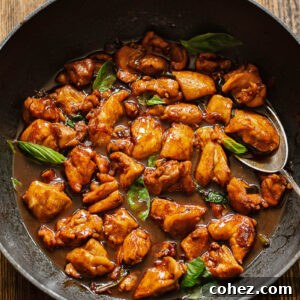
This Chinese Three Cup Chicken recipe features juicy boneless chicken thighs coated in a luscious, dark, and syrupy sauce, deeply flavored with chili, garlic, and ginger, and finished with fragrant basil.
Ingredients
Main Chicken Ingredients
- 600g / 1½ lbs skinless boneless chicken thighs, cut into bite-sized pieces
- 1/2 tsp salt
- 1/2 tsp white pepper
- 2 tsp cornstarch (cornflour)
- 1 tbsp vegetable oil
- 1 inch piece fresh ginger, peeled and cut into round coin-sized slices
- 4 cloves garlic, sliced
- 1 red chili, sliced (adjust to your spice preference)
- 2 green onions, cut into 2-inch pieces
- 2-3 tbsp Shaoxing wine (or dry sherry)
For the Sauce
- 75ml / 1/3 cup light soy sauce
- 1 tbsp toasted sesame oil
- 3 tsp sugar (or honey, to taste)
- 5-6 whole Thai basil leaves
- 1 tbsp Chinese chili oil, to serve (optional)
Instructions
-
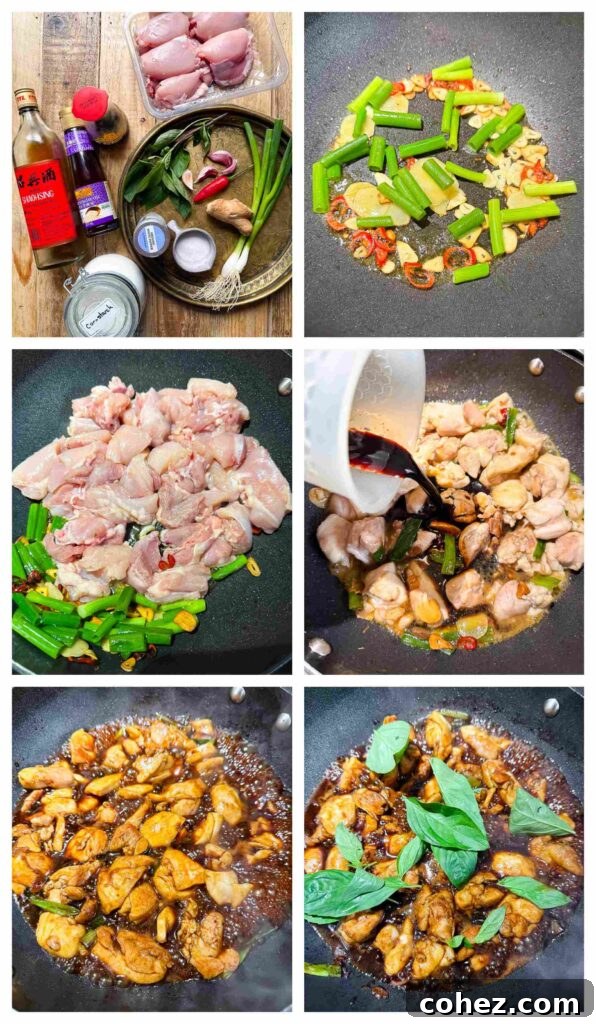
Begin by preparing the chicken. Cut the skinless, boneless chicken thighs into convenient bite-sized pieces. In a medium bowl, combine the salt, white pepper, and cornstarch. Add the chicken pieces to this mixture and toss thoroughly to ensure each piece is evenly coated.
-
In a separate small bowl, prepare your sauce by whisking together the soy sauce, sesame oil, and sugar. Set this aromatic sauce aside, ready for when it’s needed.
-
Heat the vegetable oil in a large wok or a heavy-bottomed skillet over high heat until it’s shimmering. Add the sliced ginger, garlic, red chili, and green onions. Stir-fry these aromatics for a brief 10-15 seconds to release their fragrances, being careful not to burn them. Push the aromatics to the sides of the wok, then add the coated chicken pieces. Brown the chicken evenly on all sides. Once browned, deglaze the pan with the Shaoxing wine, allowing it to simmer and reduce slightly.
-
Now, pour the pre-mixed sauce over the chicken, stirring to coat every piece. Let the sauce bubble and simmer for approximately 3 minutes, or until it has noticeably reduced and thickened into a rich, syrupy consistency. Finally, add the Thai basil leaves, allowing them to wilt into the sauce for a minute or two. Remove the wok from the heat immediately. Serve your delicious Chinese Three Cup Chicken hot with steamed rice and a drizzle of Chinese chili oil, if desired.
Notes
- An authentic version of this recipe would traditionally be made with bone-in chicken, but boneless chicken cut into strips cooks much quicker and is significantly easier to eat with chopsticks, making it ideal for a weeknight meal!
- While chicken breast can be used, chicken thighs are highly recommended as they yield a more tender, succulent, and flavorful result due to their higher fat content.
- For an authentic “Three Cup Chicken” experience, it is crucial to include all three namesake ingredients: Shaoxing wine, soy sauce, and sesame oil. These form the distinctive flavor profile of the dish.
- Thai basil, with its unique anise-like flavor, is readily available in most Asian supermarkets. If you can’t find it, regular fresh basil can be used as a suitable substitute.
Nutrition
Calories: 291kcal | Carbohydrates: 8g | Protein: 31g | Fat: 13g | Saturated Fat: 3g | Polyunsaturated Fat: 3g | Monounsaturated Fat: 6g | Trans Fat: 0.03g | Cholesterol: 143mg | Sodium: 1454mg | Potassium: 485mg | Fiber: 1g | Sugar: 4g | Vitamin A: 230IU | Vitamin C: 18mg | Calcium: 31mg | Iron: 2mg
Nutrition information is automatically calculated and should only be used as an approximation.