
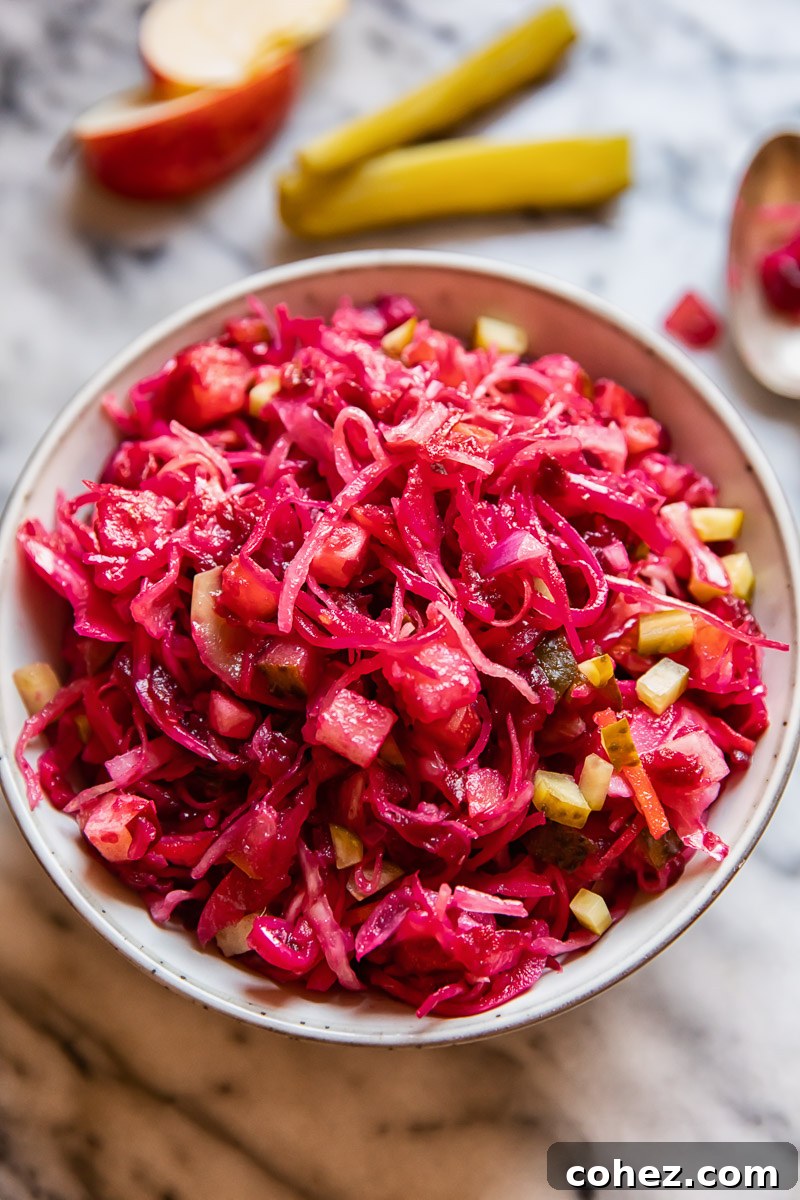
Authentic Russian Beet and Sauerkraut Salad: Your Essential Guide to Salat Vinegret
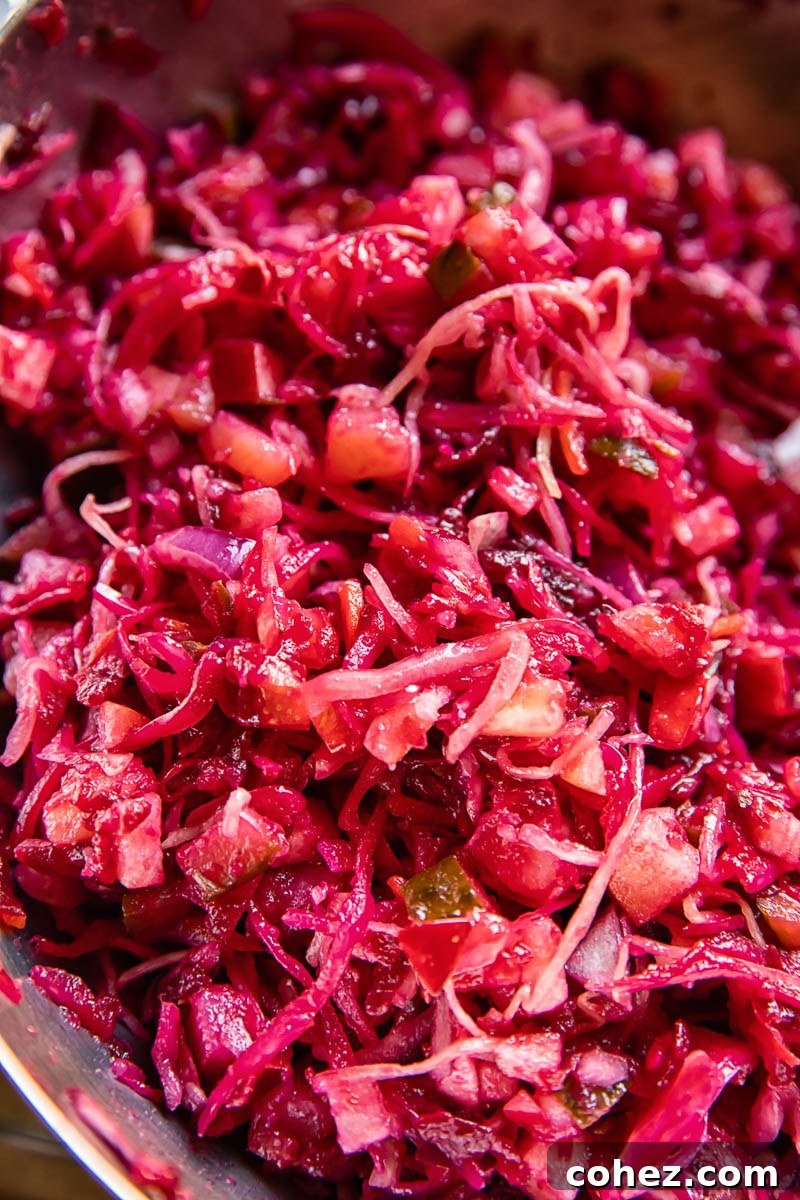
Embrace a culinary journey to Eastern Europe with this vibrant Beet and Sauerkraut Salad, affectionately known as Salat Vinegret. A cherished staple in Russian and Ukrainian homes, this salad is much more than just a side dish; it’s a hearty, nutritious, and incredibly flavorful vitamin booster, especially ideal during the cold winter months. Packed with earthy beets, tangy sauerkraut, and crisp pickles, it offers a refreshing burst of flavor and a wealth of health benefits.
This versatile salad pairs beautifully with a variety of main courses. Serve it alongside our Porcupine Meatballs in Creamy Tomato Sauce (Tefteli) for a truly authentic Russian meal, or explore our Russian Recipe Collection for even more inspiration to expand your culinary repertoire.
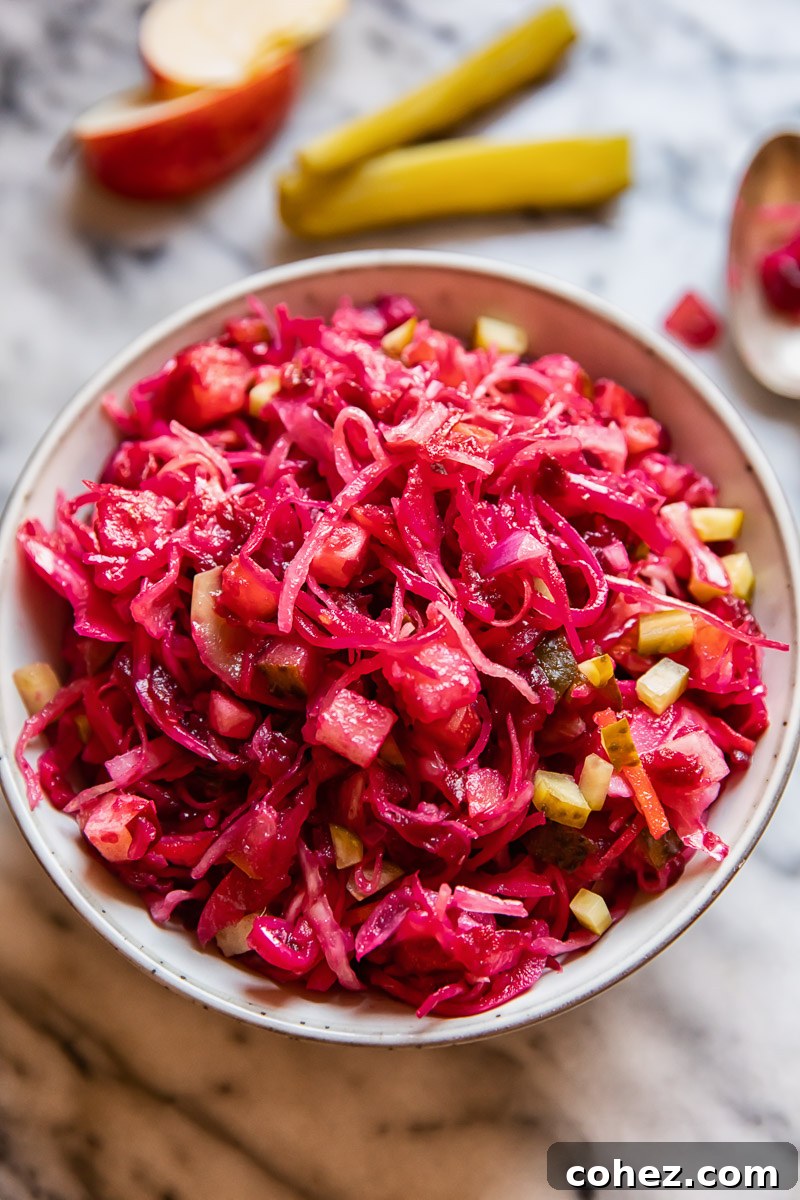
While the anticipation for this recipe has been brewing for months, it truly shines when the seasons turn colder. This is precisely when our bodies crave nourishing, flavorful dishes that remind us of home and provide essential nutrients. Salat Vinegret perfectly fits that bill, bringing a ray of sunshine and vitality to any meal.
What is Salat Vinegret? Exploring a Russian and Ukrainian Culinary Icon
Truth be told, this incredibly versatile salad is delightful in any season. However, its profound popularity during the colder months stems from its reliance on robust, preserved, and root vegetables. It’s a testament to traditional culinary wisdom, making the most of hearty root vegetables and fermented goods when fresh produce is less abundant. While summer invites us to feast on light, seasonal greens, autumn and winter call for comforting, vitamin-rich dishes like Vinegret.
So, what makes this salad so exceptionally special? At its heart lies homemade sauerkraut – an extraordinary source of probiotics. These beneficial microorganisms are crucial for maintaining a healthy gut microbiome, which in turn supports immune function, improves digestion, and can even influence mood. Beyond sauerkraut, Vinegret is typically built upon a foundation of tender boiled beets, hearty potatoes, crunchy dill pickles, and sometimes a hint of apple or onion, all brought together by a simple, savory dressing.
This salad is an unwavering autumn and winter staple found in virtually every Russian and Ukrainian household, universally known by the name Salat Vinegret. The name itself is widely believed to be derived from the French word ‘vinaigrette’, a nod to the distinctively sharp, tangy, and wonderfully acidic taste this salad delivers. Its unique balance of sweet, sour, and savory notes makes it an absolutely delicious accompaniment to a wide range of dishes, from rich meat stews to delicate fish fillets or even plant-based bean dishes.
Beyond being a stellar side, Salat Vinegret can easily stand on its own as a fulfilling and healthy lunch. It tastes particularly exquisite when paired with a thick slice of rustic dark rye bread, creating a simple yet deeply satisfying meal that evokes a sense of tradition and comfort. Its vibrant colors and complex flavors are a welcome addition to any table, offering both visual appeal and a palate-pleasing experience.
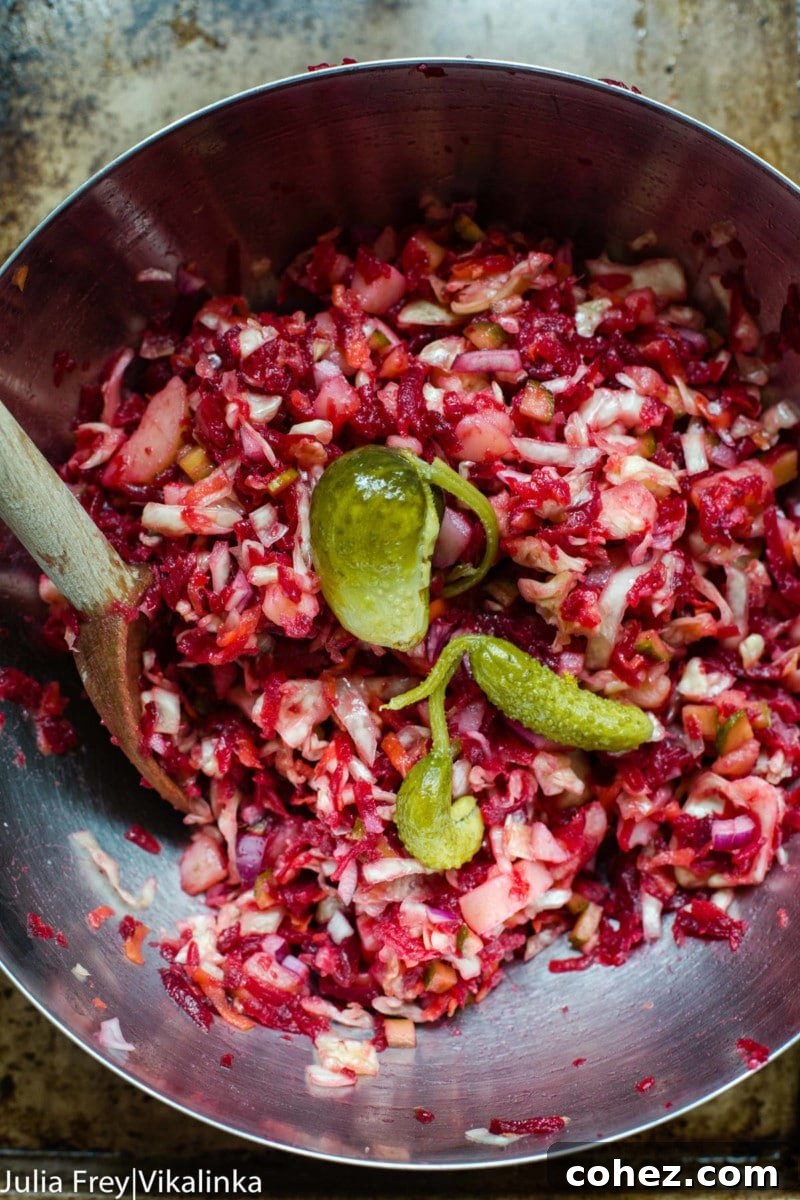
Why This Beet and Sauerkraut Salad Recipe Works Wonders for Your Health and Palate
This particular recipe for Beet and Sauerkraut Salad isn’t just about combining ingredients; it’s about creating a harmonious medley that delights the senses and nourishes the body. The unique blend of ingredients provides a captivating interplay of sweet, sour, and salty notes, creating a flavor profile that is both invigorating and deeply satisfying. Beyond taste, it delivers a formidable dose of essential vitamins, vital nutrients, and, crucially, beneficial probiotics!
This potent combination is precisely what our bodies often desperately need during the long, often dreary winter months. As days shorten and temperatures drop, a dish like Vinegret provides a much-needed immune boost and a burst of energy. I, personally, am captivated by the sheer visual appeal of this salad; the vibrant glut of jewel-toned vegetables creates a stunning presentation that brightens any meal and lifts the spirit.
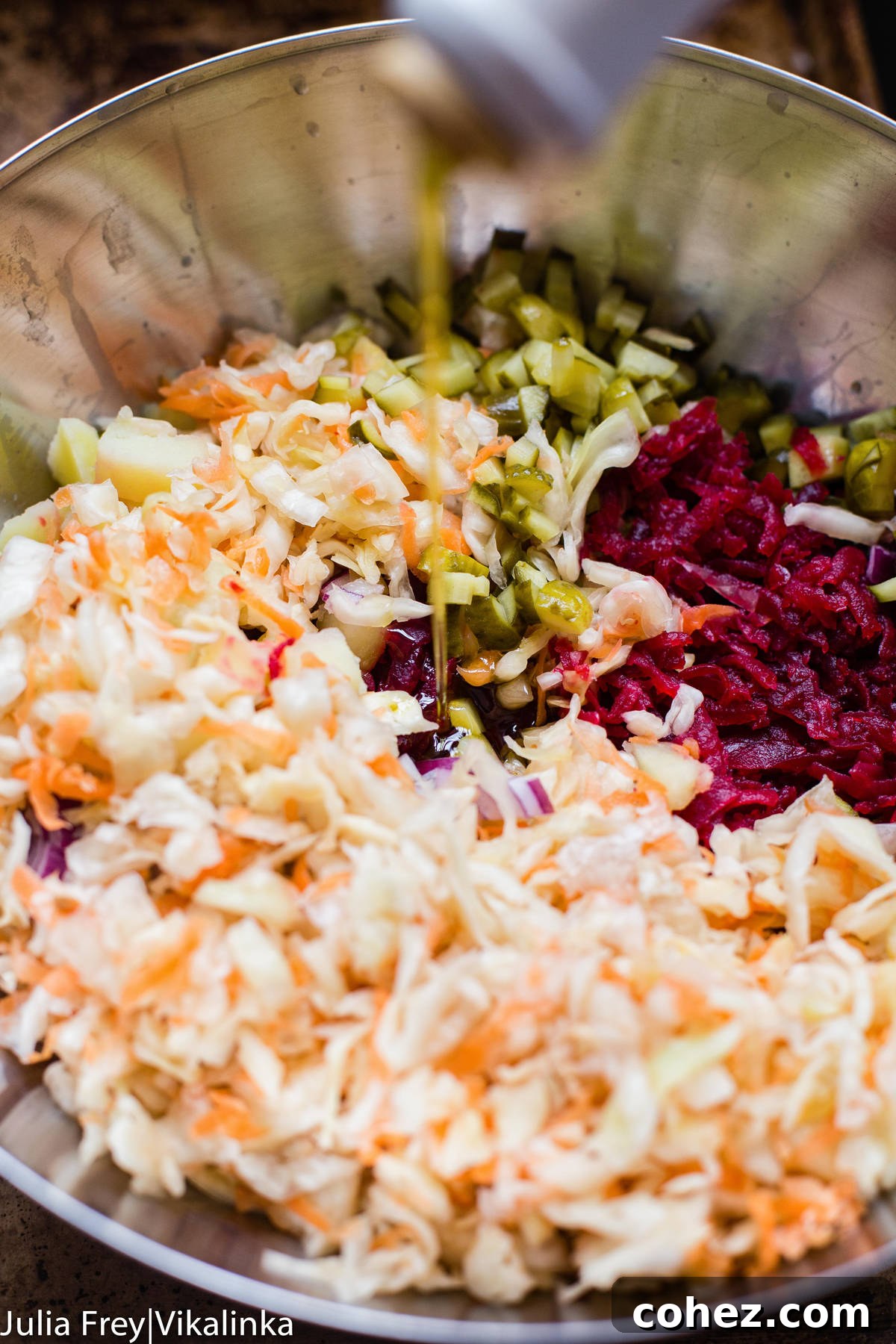
The dressing for Salat Vinegret is wonderfully simple, yet profoundly effective: a generous drizzle of unrefined sunflower oil. This choice is deliberate and traditional, as the pickles and sauerkraut already contribute a significant amount of vinegar and salt, meaning the salad requires very little additional seasoning. Unrefined sunflower oil is truly worth seeking out for its distinct, subtly nutty flavor that elevates the salad’s overall taste profile. It adds an authentic touch that refined oils simply cannot replicate. However, if unrefined sunflower oil is difficult to find in your local stores, a good quality extra virgin olive oil will serve as an excellent and equally delicious substitute, lending its own fruity notes to the blend.
Customizing Your Vinegret: Delicious Substitutions and Creative Additions
One of the beauties of traditional recipes like Salat Vinegret is their inherent flexibility, allowing for personal touches and dietary adaptations without sacrificing flavor. While our recipe offers a classic rendition, there are several ways you can customize it to suit your preferences or what you have on hand.
Sauerkraut Choices: If you’re short on time or simply don’t feel like embarking on the rewarding journey of making your own sauerkraut, high-quality ready-made versions are readily available. You can purchase excellent probiotic-rich sauerkraut in specialty health food stores, international markets, or even online. For a fresh take, you can also prepare this salad using finely shredded fresh cabbage. To achieve that characteristic tang, simply add about 1 tablespoon of white wine vinegar to the dressing or directly to the cabbage, adjusting to your taste.
Onion Preparation: The sharpness of raw red onion adds a distinctive bite to the salad, which is a hallmark of traditional Vinegret. However, if you find the taste of raw onions too strong or prefer a mellower flavor, you can sauté them gently in a little oil until they become translucent and slightly sweet. This will introduce an additional layer of savory depth and subtle sweetness to the salad, transforming its character in a delightful way.
Dressing Variations: While the classic dressing is a simple oil-based vinaigrette, those who favor all things creamy might enjoy a different approach. This salad can be wonderfully made using mayonnaise as the primary dressing. I fondly recall that as a child, I much preferred the creamy mayonnaise version. Now, I appreciate both equally, depending on my mood and the meal it’s accompanying. You could also experiment with a blend of oil and a touch of sour cream or Greek yogurt for a lighter, yet still creamy, alternative.
Additional Vegetables: Green peas are a traditional addition to many versions of Vinegret, providing bursts of sweetness and a lovely contrasting color. Personally, I tend to omit canned green peas due to their texture, but fresh or frozen (thawed) green peas would be a truly wonderful addition. Their natural sweetness and vibrant green hue would offer a beautiful counterpoint to the earthy beets and tangy sauerkraut. Other root vegetables like finely diced carrots can also be included for extra sweetness and nutritional value, as can bell peppers for a touch of freshness and crunch.
I sincerely hope that this unusual yet utterly delicious and wholesome salad will earn a permanent spot among your favorite recipes! Its unique flavor profile and health benefits make it a truly special dish.
Expert Tips for Crafting the Perfect Salat Vinegret
Achieving the perfect Salat Vinegret is a simple process, but a few key tips can elevate your salad from good to truly exceptional. These insights ensure optimal texture, flavor, and visual appeal for your traditional Russian beet salad.
Cooking Root Vegetables for Optimal Texture
- Boil with Skins On: Always boil your beets and potatoes unpeeled. This helps to retain their nutrients, prevents them from becoming waterlogged, and keeps their flavors distinct.
- Don’t Overcook: The key to a great Vinegret is firm-tender vegetables. Potatoes should be fork-tender but not mushy, typically around 15-20 minutes depending on size. Beets take longer, about 40-60 minutes, until they can be easily pierced with a fork but still offer a slight resistance. Overcooked vegetables will lead to a watery and unappealing salad.
- Cool Completely: Allow cooked vegetables to cool completely before peeling and dicing. This makes them easier to handle and ensures a better texture in the final salad. Ideally, refrigerate them for an hour or two after cooling to room temperature.
Preparing Sauerkraut and Pickles
- Thoroughly Drain Sauerkraut: Sauerkraut is packed in a brine that is very salty and acidic. Before adding it to the salad, take it out of its liquid and squeeze out as much excess moisture as possible with clean hands. This prevents the salad from becoming overly watery or too salty.
- Consistent Dicing: Aim for uniform dice on your potatoes, pickles, and onion. This ensures that every spoonful of salad offers a consistent texture and flavor experience. Small, even pieces also make the salad easier and more pleasant to eat.
Assembling and Seasoning
- Gentle Mixing: Once all ingredients are prepped, combine them gently in a large bowl. Beets tend to bleed their vibrant color onto other ingredients, which is part of Vinegret’s charm, but over-mixing can turn everything uniformly pink rather than showing distinct colors.
- Season to Taste (Carefully): Since sauerkraut and pickles are already quite salty, taste the salad before adding any extra salt. You might find it needs very little, if any, additional seasoning. Add freshly ground black pepper to enhance the flavors.
- Chilling is Key: While delicious immediately, Vinegret truly benefits from chilling. Allowing the salad to rest in the refrigerator for at least an hour (or even better, overnight) allows the flavors to meld and deepen, resulting in a much richer and more complex taste.
Serving Suggestions for Your Vibrant Vinegret
Salat Vinegret is remarkably versatile, making it an excellent addition to almost any meal. Its robust flavors and satisfying texture mean it can play many roles at your dining table.
- Classic Side Dish: Serve it as a bright and tangy counterpoint to rich, savory meat dishes, roasted chicken, or pan-fried fish. Its acidity cuts through the richness, cleansing the palate. It’s particularly fantastic alongside traditional Eastern European fare.
- Hearty Vegetarian Main Course: Pair a generous portion of Vinegret with a slice of dark rye bread for a wonderfully satisfying and healthy vegetarian lunch or light dinner. The combination of root vegetables, fermented goodness, and hearty bread is surprisingly filling.
- Festive Table Addition: Its vibrant colors make it a showstopper on any holiday or special occasion spread. It offers a refreshing alternative to heavier, creamier salads typically found at celebratory meals.
- Meal Prep Essential: Vinegret keeps exceptionally well in the refrigerator for several days, and its flavors often improve overnight. This makes it an ideal candidate for meal prepping, ensuring you have a healthy, delicious side or lunch ready to go throughout the week. Store it in an airtight container for up to 3-4 days.
Discover More Classic Eastern European Salad Recipes
If you’ve enjoyed the unique flavors of Salat Vinegret, you’ll surely love exploring other traditional salads from Russian and Ukrainian cuisine:
- Russian Potato Salad Olivier: The iconic festive salad, rich and creamy.
- Summer Tomato and Cucumber Salad: A fresh, light, and simple salad perfect for warmer weather.
- Walnut Beet Salad with Garlic Mayonnaise Dressing: Another beet-based delight with a creamy, garlicky kick and crunchy walnuts.
- Creamy Dill Cucumber, Radish and Egg Salad: A refreshing and herbaceous salad, ideal for spring and summer.
Beet and Sauerkraut Salad (Salat Vinegret)
Julia Frey of Vikalinka
20 mins
20 mins
40 mins
6-8
Ingredients
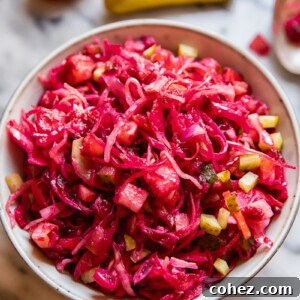
- 300g / 2 cups sauerkraut, well-drained
- 2 medium beets, boiled or roasted and grated
- 1 small red onion, finely diced
- 2-3 medium potatoes, boiled and diced
- 1 medium tart apple, diced
- 4 medium dill pickles, diced
- 3 tbsp extra virgin olive oil, or unrefined sunflower oil
- Salt and pepper to taste
Instructions
- Place unpeeled potatoes in a pot filled with water and bring to a boil. Cook for approximately 15-20 minutes, or until fork-tender but still firm. In a separate pot, boil unpeeled beets for about 40-45 minutes, depending on their size, until tender. Cool both vegetables until safe to handle. Peel and dice the potatoes, then peel and grate the beets.
- Finely dice the red onion, dill pickles, and the tart apple. Set aside.
- Take the sauerkraut out of its liquid and drain it thoroughly by squeezing out excess moisture with clean hands. This prevents the salad from becoming watery and overly salty.
- In a large bowl, combine the well-drained sauerkraut, diced potatoes, diced onions, diced apple, diced pickles, and grated beets. Drizzle with the extra virgin olive oil or unrefined sunflower oil. Taste the salad before adding salt and pepper, as the pickles and sauerkraut already contribute a significant amount of salt. Adjust seasoning as needed.
- For the best flavor, chill the salad in the refrigerator for at least one hour to allow all the delicious flavors to meld and deepen. Serve cold.
Nutrition Information (per serving, approximately)
Carbohydrates: 23g |
Protein: 3g |
Fat: 7g |
Saturated Fat: 1g |
Polyunsaturated Fat: 1g |
Monounsaturated Fat: 5g |
Sodium: 1086mg |
Potassium: 600mg |
Fiber: 5g |
Sugar: 8g |
Vitamin A: 119 IU |
Vitamin C: 18mg |
Calcium: 55mg |
Iron: 2mg
Nutrition information is automatically calculated and should only be used as an approximation. Actual values may vary based on specific ingredients and preparation methods.
Tried this vibrant recipe? We’d love to hear about your experience! Share your thoughts and tell us how your Beet and Sauerkraut Salad turned out by leaving a comment below. Your feedback helps other home cooks!