
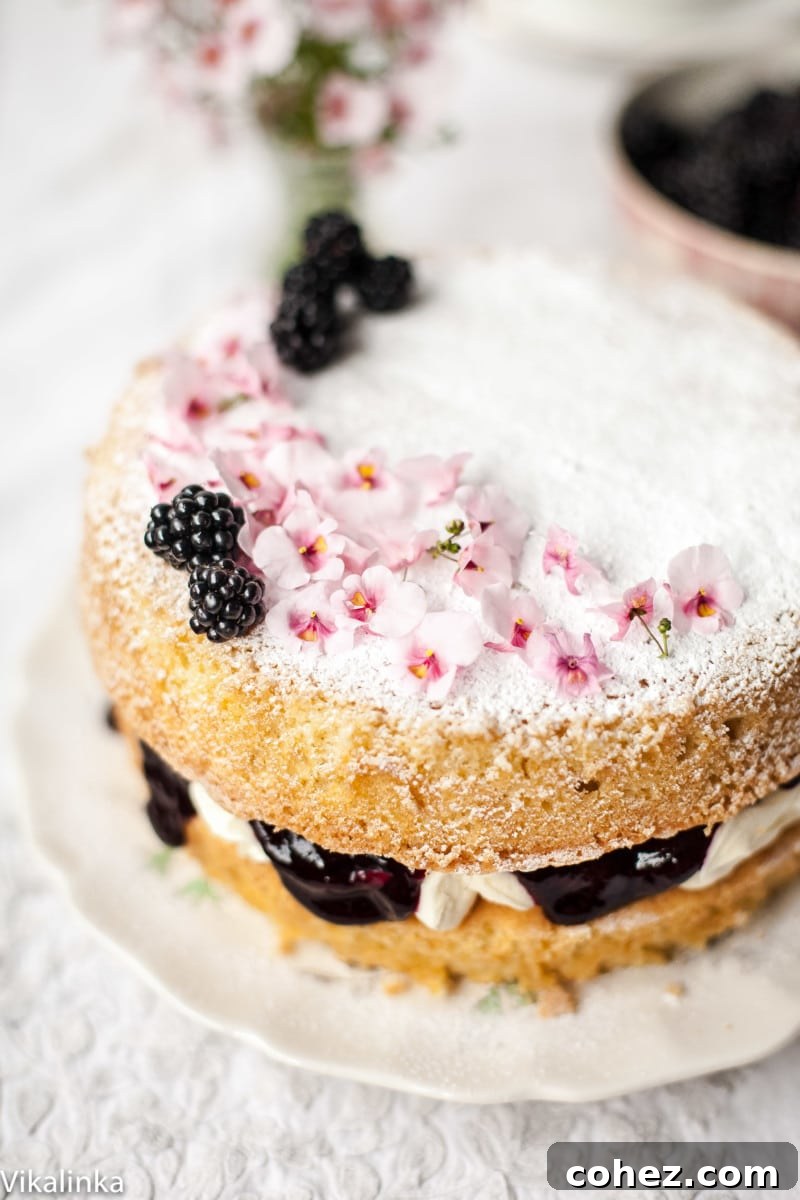
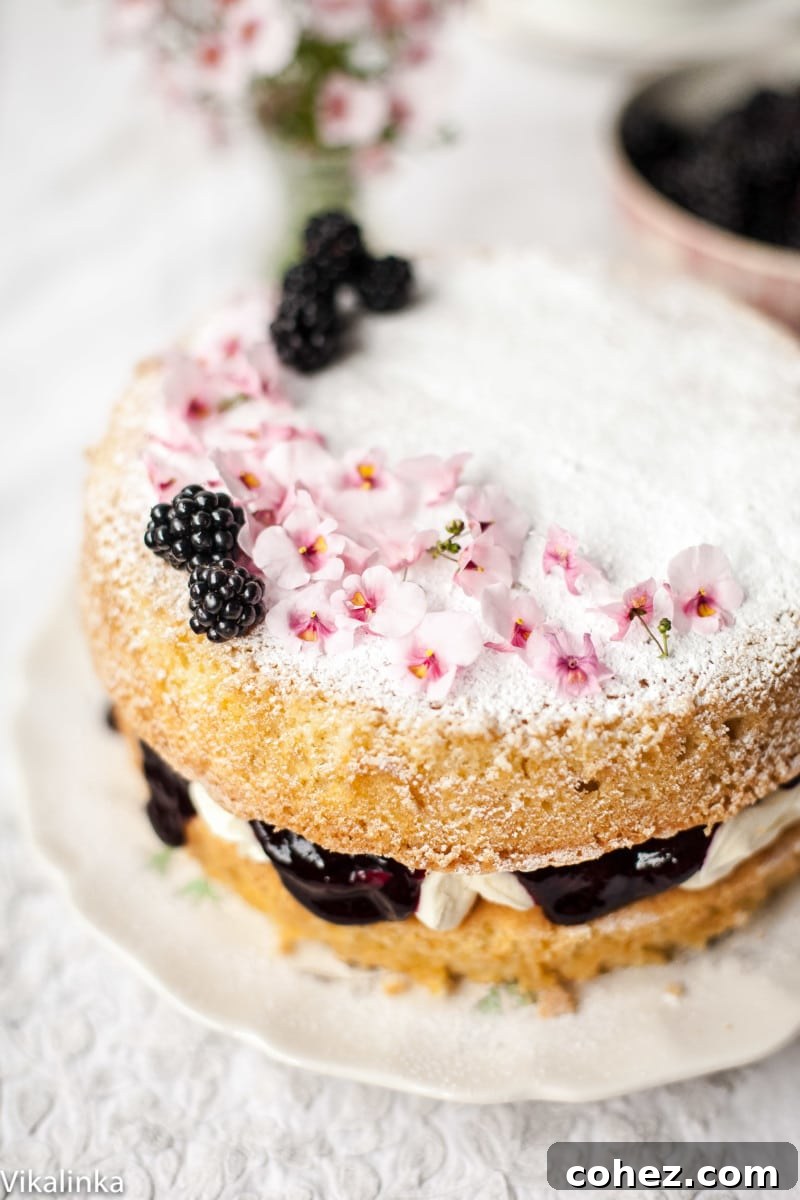
The Victoria Sponge Cake stands as a timeless classic for impeccable reasons. Imagine two exquisitely tender, buttery sponge cakes, generously filled with a luscious, airy mascarpone cream and a vibrant, homemade blackberry compote, then delicately dusted with a fine layer of icing sugar. This elegant dessert, both simple and sophisticated, promises a truly unforgettable taste experience.
For those who revel in the joy of home baking, you might also adore my Naked Cake with Crushed Strawberries, another delightful creation that celebrates fresh flavors and beautiful presentation.
A Modern Twist on a Beloved Classic
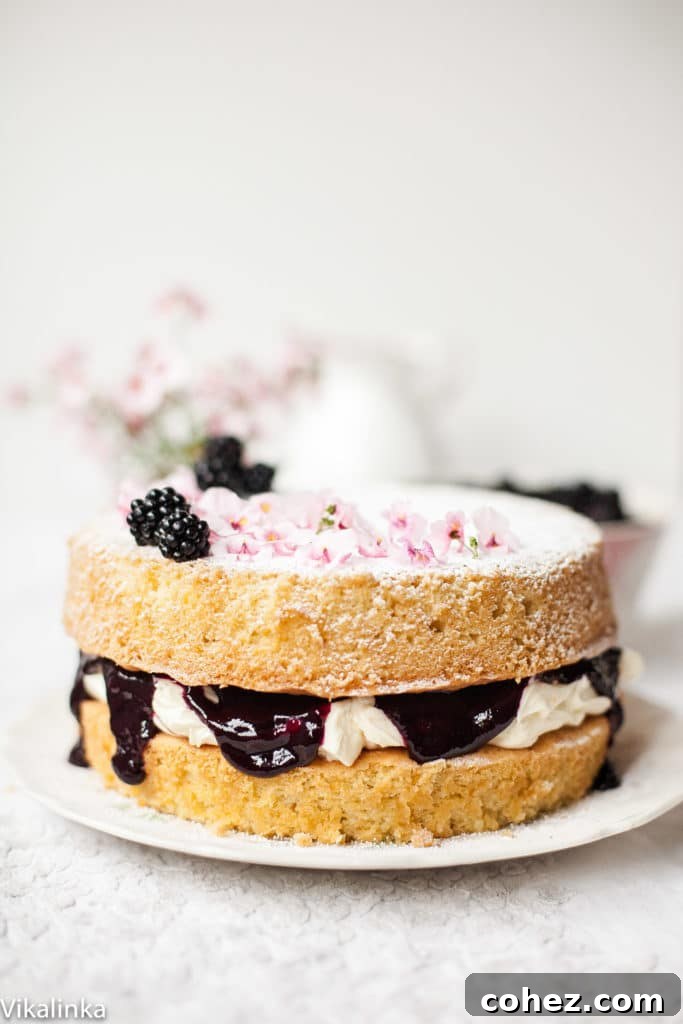
While the traditional Victoria sponge recipe is cherished, typically featuring buttercream or whipped cream alongside strawberry jam, I’m thrilled to share my unique interpretation today. My version elevates this quintessential British dessert by pairing its fluffy sponges with a rich mascarpone cream and a homemade blackberry compote. This personal twist transforms the familiar into something truly extraordinary, offering a delightful balance of tang and sweetness, richness and lightness.
The inspiration for this blackberry rendition struck after a wonderfully successful day of berry picking with my children. We quickly filled our containers with an abundance of wild blackberries. Returning home, we celebrated our harvest by indulging in a delightful afternoon tea, complete with slices of this very Victoria sponge cake. It was a perfect culmination of a day spent in nature, bringing forth a burst of fresh, seasonal flavor to our table.
What is the Victoria Sponge Cake: History and Appeal?
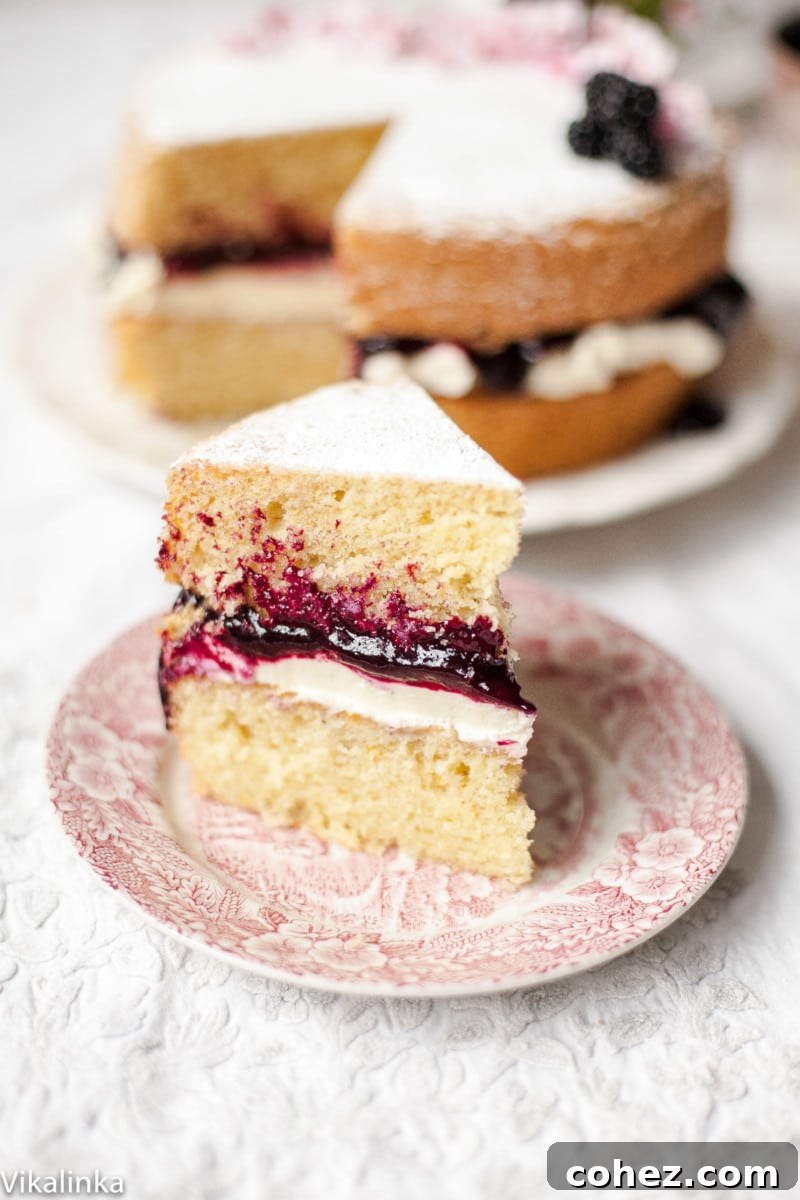
Steeped in British culinary history, the Victoria Sponge Cake is undeniably one of the nation’s most iconic desserts. Named in honor of Queen Victoria, who was famously fond of a slice of cake with her afternoon tea, it’s also affectionately known as the Victoria Sandwich. This beloved cake can be found gracing the counters of countless tea rooms, coffee shops, and cafes across the UK. However, as any true baking enthusiast knows, no store-bought version can truly compare to the unparalleled freshness and flavor of a homemade Victoria sponge.
The enduring genius of the Victoria sponge lies in its remarkable simplicity. It’s a testament to the fact that often, the most straightforward combinations yield the most profound culinary pleasures. Two impeccably light and fluffy sponges, simply united by a layer of cream and fruit preserve, create a harmonious balance of textures and tastes. Yet, when you elevate this classic with the addition of a luxurious mascarpone cream and a vibrant, homemade blackberry compote, you unlock a new dimension of deliciousness that is truly irresistible. This combination is so captivating, you might just find yourself craving this cake for years to come, with no other dessert quite measuring up.
Mastering the Classic Sponge Cake Recipe
At its heart, the classic British sponge cake recipe is remarkably simple, requiring just a few basic ingredients: butter, sugar, eggs, and flour. However, achieving that perfect, airy texture demands a few essential tricks. Traditionally, British recipes call for self-rising flour, which already contains a leavening agent. For those who, like me, prefer to work with regular all-purpose flour, a slight adaptation is needed. I always adjust my recipes to suit standard Canadian or any good quality all-purpose flour, incorporating baking powder and baking soda to ensure the ideal rise and delicate crumb. This flexibility makes the Victoria sponge accessible to bakers worldwide, regardless of their local flour varieties.
Key Ingredients for the Perfect Sponge
- Unsalted Butter: Always start with softened, unsalted butter. Room temperature butter creams beautifully with sugar, creating a light and airy base for your cake. The quality of your butter significantly impacts the final flavor.
- Caster Sugar: Fine caster sugar is preferred over granulated sugar because its smaller crystals dissolve more easily, leading to a smoother batter and a finer crumb.
- Large Eggs: Ensure your eggs are at room temperature. This helps them emulsify better with the butter and sugar mixture, preventing curdling and contributing to a cohesive batter.
- All-Purpose Flour: When using all-purpose flour instead of self-rising, it’s crucial to add the correct amounts of baking powder and baking soda. Sifting the flour with these leavening agents ensures even distribution and a lighter cake.
- Vanilla & Lemon Zest: Vanilla bean paste or extract adds a comforting, classic flavor, while a touch of fresh lemon zest brightens the entire cake, cutting through the richness and adding a subtle fragrant lift.
How to Make It: The Secrets to a Fluffy Victoria Sponge
The true secret to an incredibly soft, delicate, and moist Victoria sponge lies in the mixing technique. It all begins with the creaming method. You must start by creaming softened butter with fine caster sugar until the mixture becomes remarkably light, pale, and fluffy. This process is not just about combining ingredients; it’s about incorporating air, which is fundamental to the cake’s signature airy texture. Continue beating until the sugar is almost entirely dissolved, a quick test involves rubbing a tiny amount between your fingers – it should feel smooth, not grainy.
Next, introduce the large eggs one by one. After each egg addition, it’s vital to beat the mixture thoroughly for about a minute. This ensures that each egg is fully emulsified into the butter and sugar, preventing the batter from curdling and creating a stable base for your cake. Once the eggs are incorporated, stir in your vanilla bean paste or extract and the vibrant lemon zest, which will infuse the sponge with delightful aromas.
In a separate bowl, whisk together your sifted all-purpose flour with the baking powder, baking soda, and salt. This step is essential for distributing the leavening agents evenly. Gently fold the dry ingredients into the wet mixture until just combined. Overmixing at this stage can develop the gluten in the flour too much, leading to a tough cake, so mix only until no streaks of flour remain. The ideal consistency of your finished batter should be thick and smooth, much like a perfectly prepared buttercream. This is your indicator that you have achieved the perfect sponge batter, ready for baking.
Storage and Leftovers: Keeping Your Victoria Sponge Fresh
As with most freshly baked goods, the Victoria sponge cake is undeniably at its absolute best on the day it’s baked, when its sponges are at their freshest and most tender. However, if you find yourself with delightful leftovers, the cake will keep beautifully for a couple of days. To maintain its freshness and, more importantly, to prevent the cream filling from spoiling, it should always be stored in an airtight container in the refrigerator. Before serving, allow it to come to room temperature for about 30 minutes to an hour; this enhances the texture of the sponge and the cream, bringing out their full flavors.
More Delightful Sponge Cake Recipes
- Frostbitten Raspberry Cake – An advanced yet rewarding challenge.
- Rose Rhubarb Layer Cake – Another advanced option for adventurous bakers.
- Blackberry Tea Cake – A simpler, easy-to-make berry cake.
- Cherry and Apricot Sponge Cake – An easy and fruity delight.
Victoria Sponge Cake with Blackberry Compote
A classic British dessert gets a luxurious upgrade with rich mascarpone cream and a homemade blackberry compote. Perfect for afternoon tea or any special occasion.
Prep Time: 10 mins
Cook Time: 50 mins
Total Time: 1 hr
Servings: 8
Ingredients
For the blackberry compote
- 150g / 1 1/2 cup blackberries
- 100g / 1/2 cup sugar
- 2 tbs water
For the cake
- 250g / 1 cup unsalted butter, softened
- 250g / 1 1/3 cup caster sugar
- 4 large eggs
- 1 tsp vanilla bean paste or extract
- 250g / 1 3/4 cup all-purpose flour
- 2 1/2 tsp baking powder
- 1/2 tsp baking soda
- 1/2 tsp salt
- Zest of 1 lemon
For the mascarpone cream
- 250 ml / 1 cup mascarpone, chilled
- 1/4 cup icing sugar
- 175 ml / 3/4 cup double/heavy cream
- 1 tsp vanilla bean paste
Instructions
For the blackberry compote
- In a small saucepan, combine blackberries, sugar, and water. Cook over low heat for approximately 15 minutes, stirring occasionally, until the syrup thickens and coats the back of a spoon.
- Remove the saucepan from the heat. Carefully transfer the compote to a food processor or blender and process until smooth.
- For a seedless compote, push the mixture through a fine sieve, discarding the seeds. Set aside to cool completely.
For the cake
- Preheat your oven to 180°C (350°F). Grease and line the bottoms of two 8-inch (20cm) round cake pans with parchment paper. Set aside.
- In the bowl of a stand mixer fitted with the paddle attachment, cream the softened butter with the caster sugar until the mixture is very light, pale, and fluffy. This should take about 3-5 minutes.
- Add the eggs one by one, beating well for at least a minute after each addition to ensure proper emulsification.
- Stir in the vanilla bean paste (or extract) and the lemon zest until just combined.
- In a separate medium bowl, whisk together the sifted all-purpose flour, baking powder, baking soda, and salt.
- Gradually add the dry ingredients to the wet ingredients in the mixer, mixing on low speed until just combined. Be careful not to overmix; stop as soon as no dry streaks of flour are visible. Scrape down the sides and bottom of the bowl as needed.
- Divide the batter evenly between the two prepared cake pans. For precise results, you can weigh the batter in each pan to ensure identical cake sizes.
- Bake for 30-35 minutes, or until a cake tester inserted into the center comes out clean.
- Remove the cakes from the oven and let them cool in their pans on a wire rack for 20 minutes. After 20 minutes, carefully invert them onto the wire rack, remove the pans and parchment paper, and allow them to cool completely before assembly.
For the mascarpone cream
- In the bowl of a stand mixer, whip the chilled mascarpone with the icing sugar and vanilla bean paste for 1-2 minutes until smooth and well combined.
- Pour in the chilled double/heavy cream and continue to whip for another 2 minutes, or until the cream forms stiff peaks. Be careful not to over-whip, as mascarpone can separate.
Cake assembly
- Once the cake layers are completely cool, place one cake layer on your serving plate or cake stand.
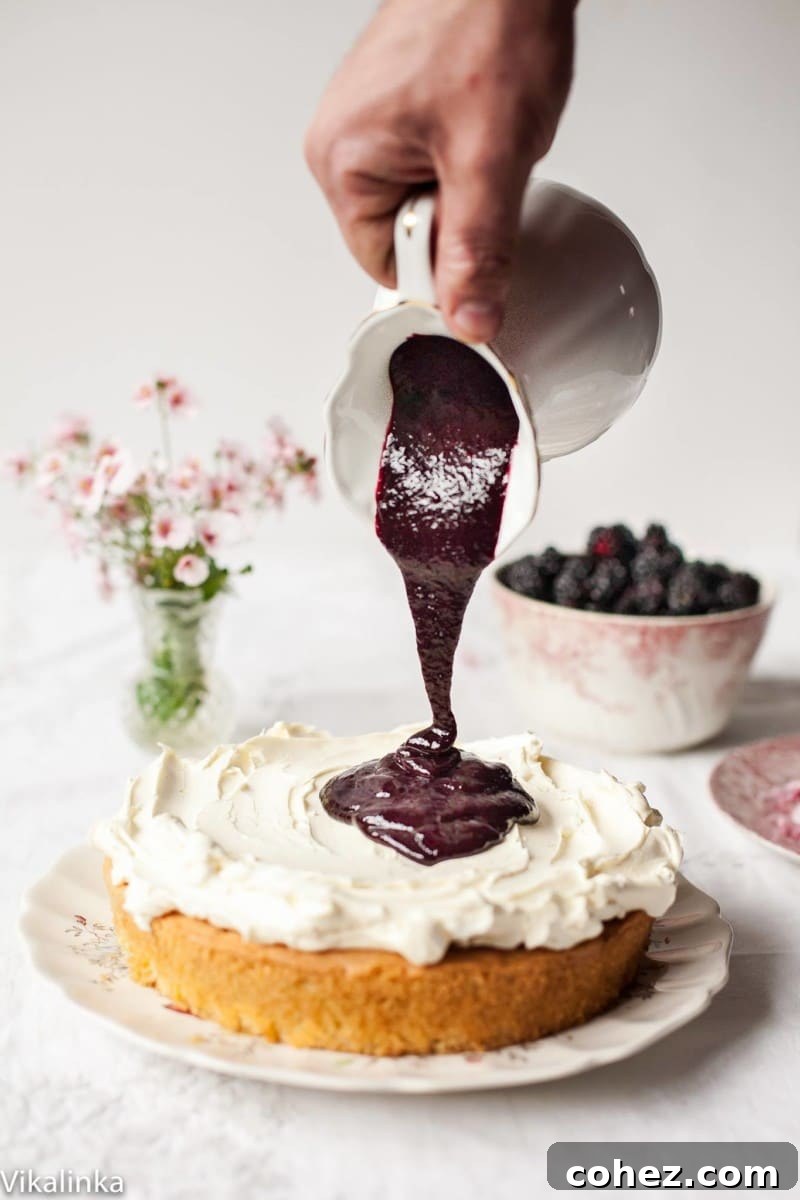
- Spread the prepared mascarpone cream evenly over the bottom cake layer.
- Carefully spoon the cooled blackberry compote on top of the mascarpone cream and gently spread it using an offset spatula, leaving a small border around the edge if desired.
- Place the second cake layer on top. For a traditional finish, dust the assembled cake generously with icing sugar using a fine-mesh sieve.
Notes
For US readers: To ensure your mascarpone cream doesn’t separate, it’s often best to whip the heavy cream separately to stiff peaks first, then gently fold in the mascarpone, icing sugar, and vanilla bean paste until just combined. This method provides more control and stability.
Nutrition
Nutrition information is an approximation and should be used as a guideline.
- Calories: 756 kcal
- Carbohydrates: 69g
- Protein: 9g
- Fat: 50g
- Saturated Fat: 20g
- Cholesterol: 143mg
- Sodium: 578mg
- Potassium: 286mg
- Fiber: 2g
- Sugar: 42g
- Vitamin A: 2042 IU
- Vitamin C: 5mg
- Calcium: 158mg
- Iron: 2mg
There you have it – a magnificent Victoria Sponge Cake with a delightful blackberry and mascarpone twist, ready to impress and delight. Enjoy the process of creating this beautiful cake, and even more, the joy of sharing it!