
Mastering Venison Steak Diane: A Gourmet Wild Game Recipe
Embarking on a culinary adventure with new ingredients can be both thrilling and a little daunting. For many years, my kitchen repertoire leaned towards more conventional meats, largely shaped by an urban upbringing in Russia where a stewed rabbit was considered an exotic delight. However, a delightful twist of fate recently introduced me to the world of wild game, specifically venison. This journey began unexpectedly during my honeymoon in a secluded Northern Ontario cabin, a generous gift from my in-laws’ friends. Upon arrival, we discovered a hidden treasure: a freezer brimming with an array of venison and moose products, from tender steaks to flavorful pepperoni and sausages. This eye-opening experience shattered my preconceived notions of wild game, revealing its incredible versatility and rich taste profile.
Despite my initial enjoyment of venison, I found myself at a loss when it came to preparing it. How does one transform such a unique meat into a truly memorable dish? My quest for the perfect venison recipe led me down countless internet rabbit holes, poring over hundreds of options, seeking inspiration. It was then that I stumbled upon a recipe that not only captivated my imagination but also promised a dish of refined elegance: Venison Steak Diane featured on Honest Food. The stunning photograph alone was enough to draw me in, and I sincerely hope my rendition inspires a similar reaction in you.
Unveiling the History and Allure of Steak Diane
Initially, the name “Steak Diane” evoked images of dated 1950s cuisine, a classic perhaps, but one I feared lacked the contemporary flair I sought. However, a quick dive into its history transformed my perspective entirely. Far from being an invention of some mid-century homemaker named Diane, the dish traces its roots to Roman mythology, honoring Diana, the goddess of the hunt. This powerful association immediately resonated with the venison I had on hand. Furthermore, I discovered that the sauce itself, often believed to be a beef accompaniment, originated in early 20th-century France and was specifically conceived to complement game meats like venison. This rich heritage, combined with a remarkably simple ingredient list, solidified my decision to give this classic a try.
The beauty of Venison Steak Diane lies not just in its historical significance but also in its ability to elevate wild game into a sophisticated, restaurant-quality meal. It’s a dish that speaks of tradition, yet feels utterly modern in its appeal. The delicate balance of rich flavors and tender meat makes it a culinary masterpiece that is surprisingly accessible for home cooks. Preparing this dish is an experience in itself, from the careful searing of the venison to the artful creation of its signature creamy sauce, each step contributing to a truly exceptional dining experience.
Crafting the Perfect Venison Steak Diane: Ingredients You’ll Need
One of the most appealing aspects of this recipe is its straightforward ingredient list. You don’t need a pantry full of exotic items to create this gourmet dish. The magic happens through the thoughtful combination and preparation of a few key components. For best results, always aim for high-quality ingredients, as each plays a vital role in the final flavor profile of your Venison Steak Diane.
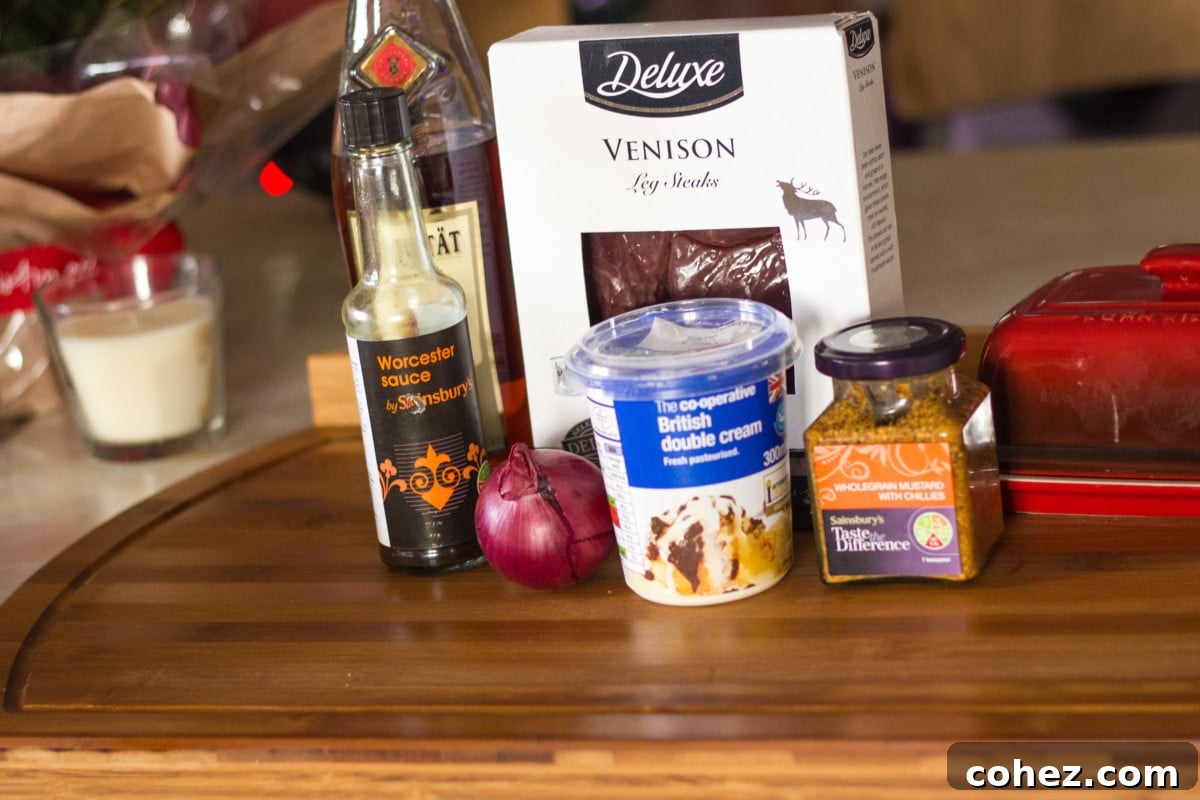
- Venison Steaks: 400g / 1 lb (preferably 1.25-1.5 inches thick for ideal searing)
- Onion: 1 small, finely diced
- Garlic: 2 cloves, minced
- Fresh Thyme: 3-4 sprigs (adds an earthy aroma)
- Worcestershire Sauce: 2 tsp (for depth of flavor and umami)
- Whole Grain Mustard (with chilies optional): 1 tbsp (adds a tangy, piquant note)
- Tomato Paste: 1 tbsp (for richness and color in the sauce)
- Unsalted Butter: 2 tbsp (for searing and building the sauce base)
- Double Cream / Heavy Cream: 1/4 cup (to create the luxurious, creamy finish)
- Beef Stock: 2/3 cup (the liquid foundation for the sauce)
- Brandy: 1/4 cup (or any dry white wine or whiskey for deglazing and complexity. While not strictly essential, it significantly enhances the sauce)
- Fresh Basil: 2-3 leaves, thinly sliced for garnish (a delightful, aromatic alternative to traditional parsley)
- Salt and Freshly Ground Black Pepper: To taste
Step-by-Step Guide: How to Master Venison Steak Diane
Preparing this dish is a methodical process, but each step is straightforward and contributes significantly to the final outcome. Precision and timing are key, especially when cooking venison, which can become tough if overcooked. Follow these detailed instructions to achieve a perfectly tender steak with a rich, flavorful sauce.
1. Preparing Your Venison Steaks
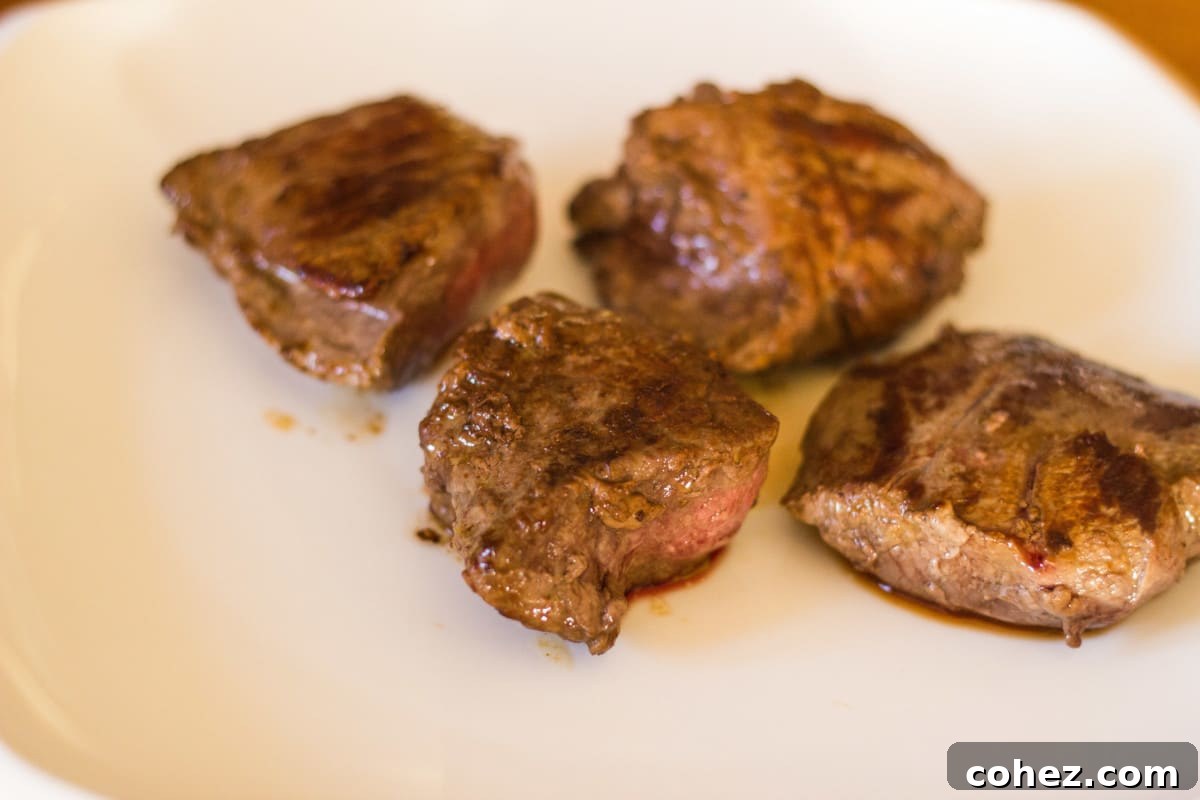
The first crucial step is to allow your venison steaks to come to room temperature. Remove them from the refrigerator about 20-30 minutes before cooking. This ensures more even cooking and prevents the exterior from burning before the interior reaches your desired doneness. Pat the steaks thoroughly dry with paper towels; moisture on the surface will hinder a proper sear, leading to steaming instead of browning. Season generously with salt and freshly ground black pepper on both sides. In a heavy-bottomed frying pan or cast-iron skillet, melt the butter over medium-high heat until it just begins to foam. Place your venison steaks in the hot pan, ensuring not to overcrowd it. Sear each side until a beautiful, deep brown crust forms. For steaks that are 1.25-1.5 inches thick, this typically takes about 6-7 minutes on the first side and 3-4 minutes on the second side. The goal is a pleasant browning on the outside while keeping the interior perfectly rare to medium-rare. Once seared, remove the steaks from the pan and let them rest on a plate, loosely covered with foil to keep warm. Resting is vital for the juices to redistribute, ensuring a tender and moist steak.
2. Building the Rich Diane Sauce
While your venison rests, turn your attention to the glorious Diane sauce, using the same pan to capture all the flavorful fond left behind by the steaks. Reduce the heat to medium. Add the finely diced onion to the pan and sauté for 2-3 minutes until softened and translucent, scraping up any browned bits from the bottom of the pan. Next, add the minced garlic and continue sautéing for another 30 seconds, stirring constantly, as garlic burns quickly and can turn bitter. Be mindful not to let it brown.
Now, it’s time for the brandy. Pour 1/4 cup of brandy (or your chosen alternative like dry white wine or whiskey) into the pan. This step, known as deglazing, adds incredible depth and complexity to the sauce. Allow the alcohol to cook down for 4-5 minutes, reducing significantly until a spoon drawn across the bottom of the pan leaves a clear trail. The alcohol itself cooks off, leaving behind its nuanced flavors. From personal experience, I can attest to the profound difference the brandy makes; it elevates an already simple sauce to something truly special.
Once the brandy has reduced, stir in the tomato paste, Worcestershire sauce, whole grain mustard, and beef stock. Add a pinch of salt and pepper to taste. Bring the sauce to a gentle simmer and cook, stirring occasionally, until it thickens to a luxurious consistency. The sauce should coat the back of a spoon beautifully, indicating it’s ready for the final touch.
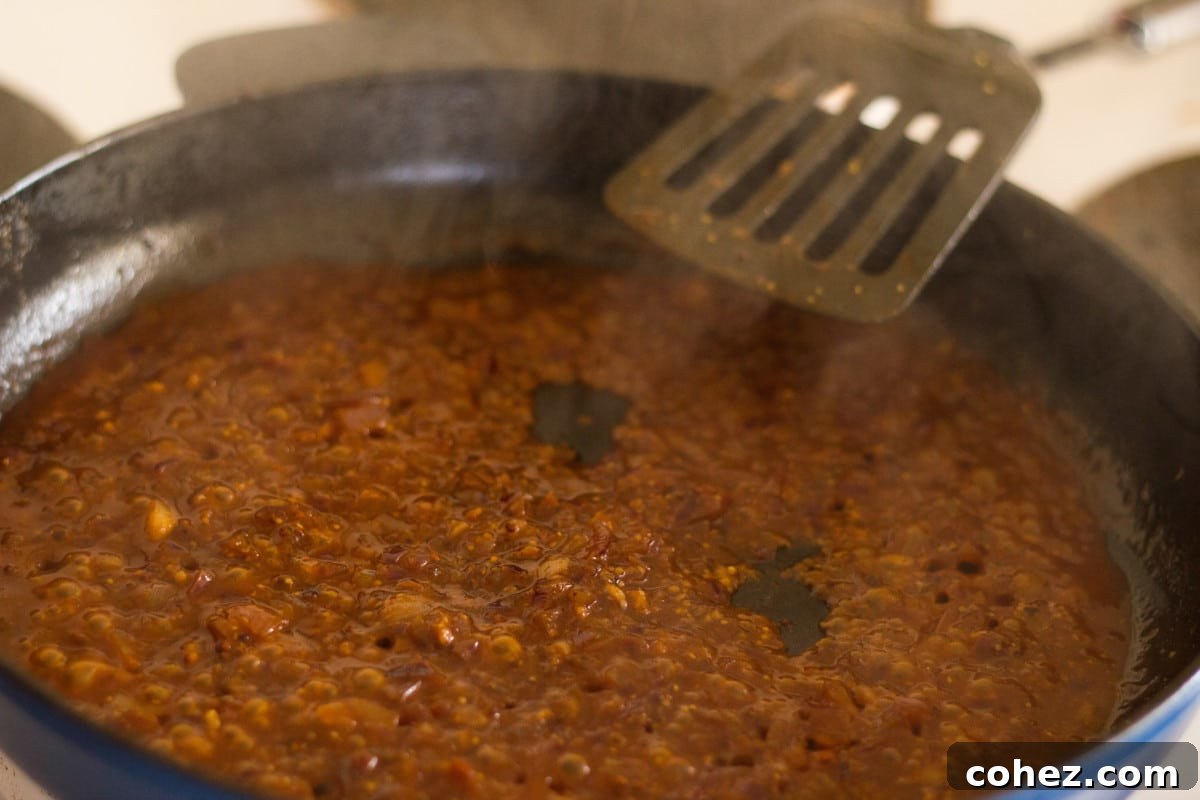
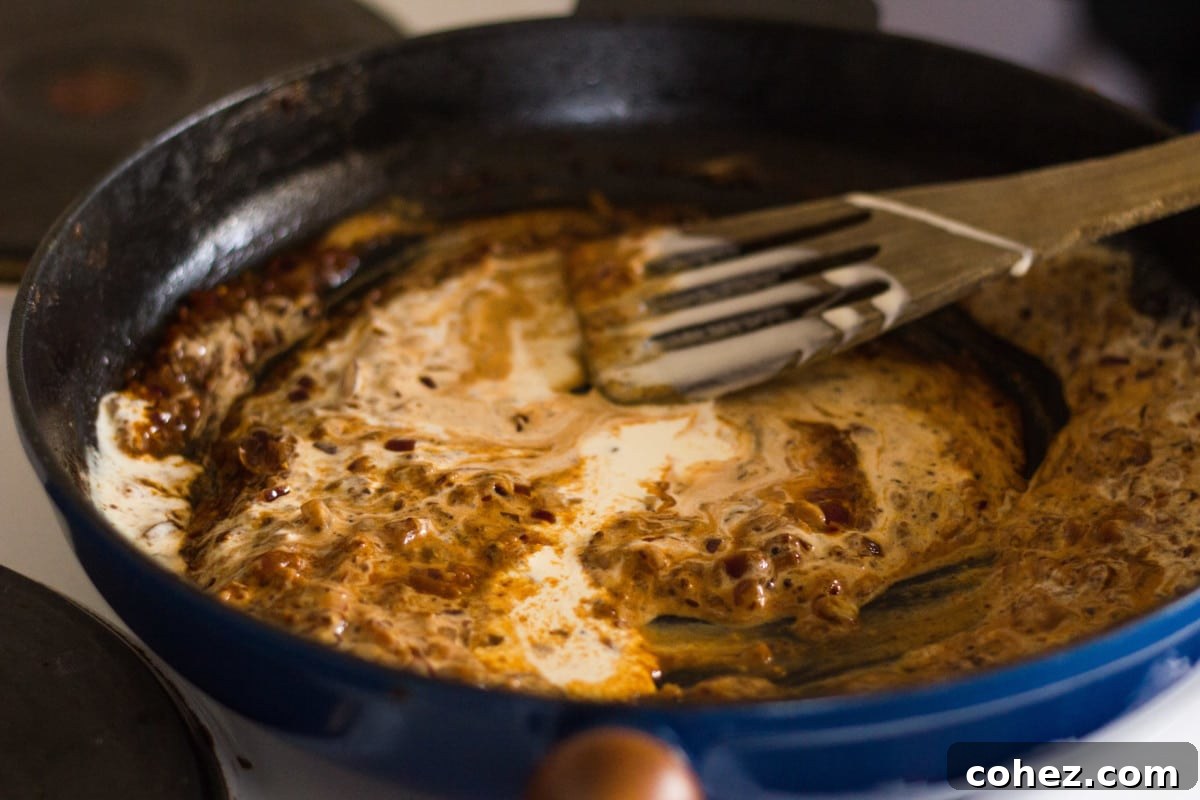
Remove the pan from the heat and allow the sauce to cool slightly, letting the vigorous bubbling subside. This is a critical moment for incorporating the cream. Gradually stir in the heavy cream. The amount is often a matter of personal preference, but I find that adding it until the sauce achieves a pleasing, creamy color and consistency is the perfect approach. This ensures a visually appealing dish that tastes as divine as it looks. Blend everything together until smooth. It’s important not to return the sauce to high heat after adding the cream, as this can cause it to separate. While a separated sauce would still taste wonderful, its smooth, elegant appearance would be compromised.
Serving Your Culinary Masterpiece
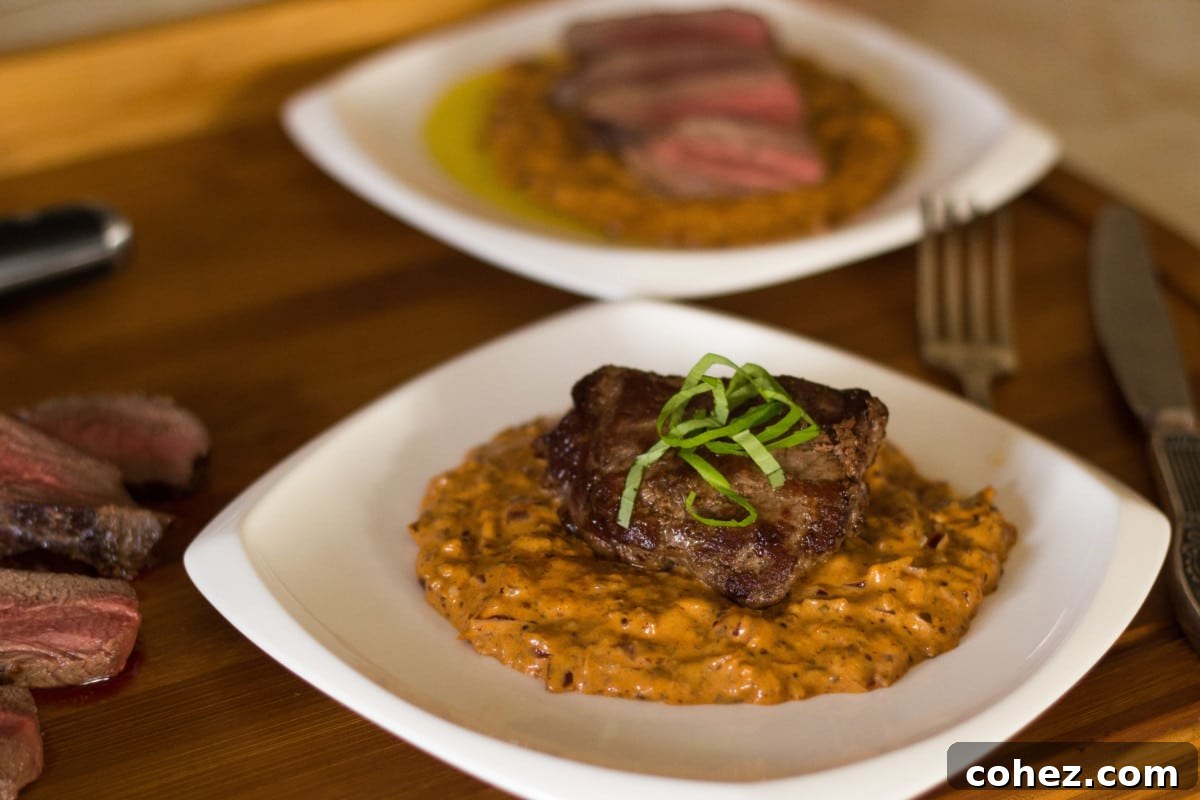
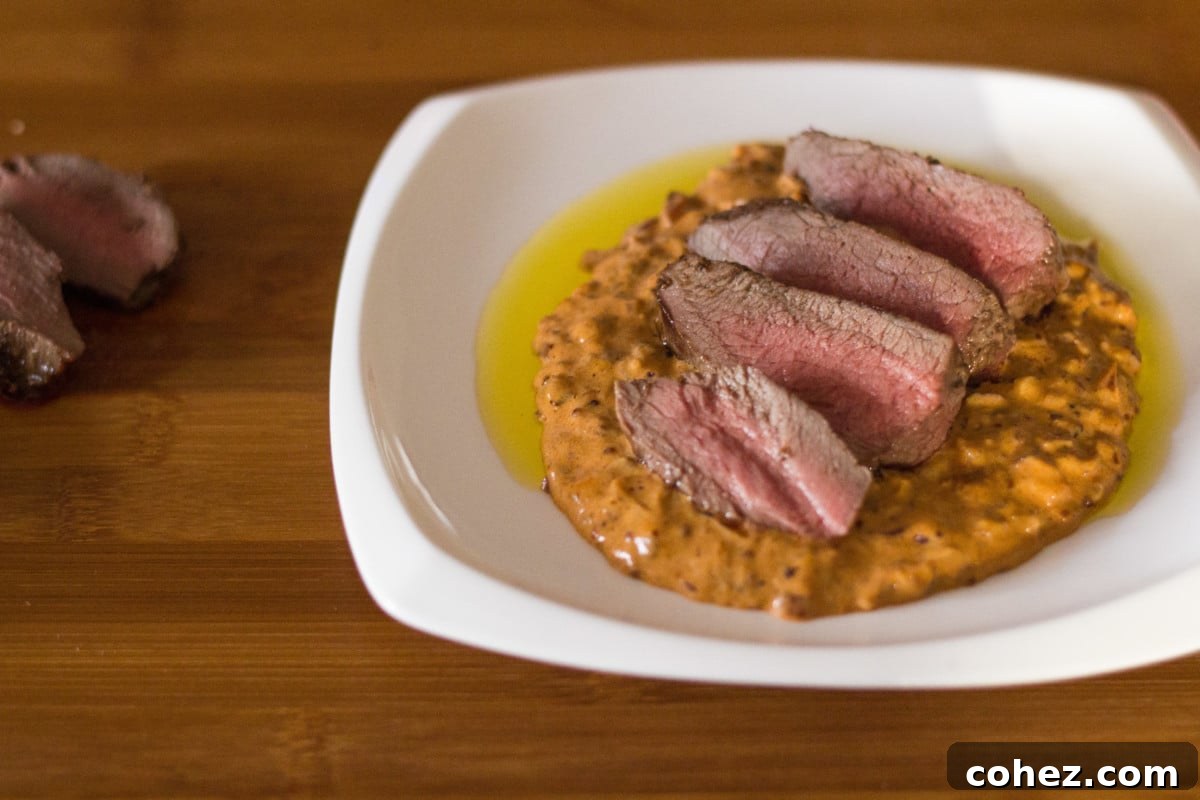
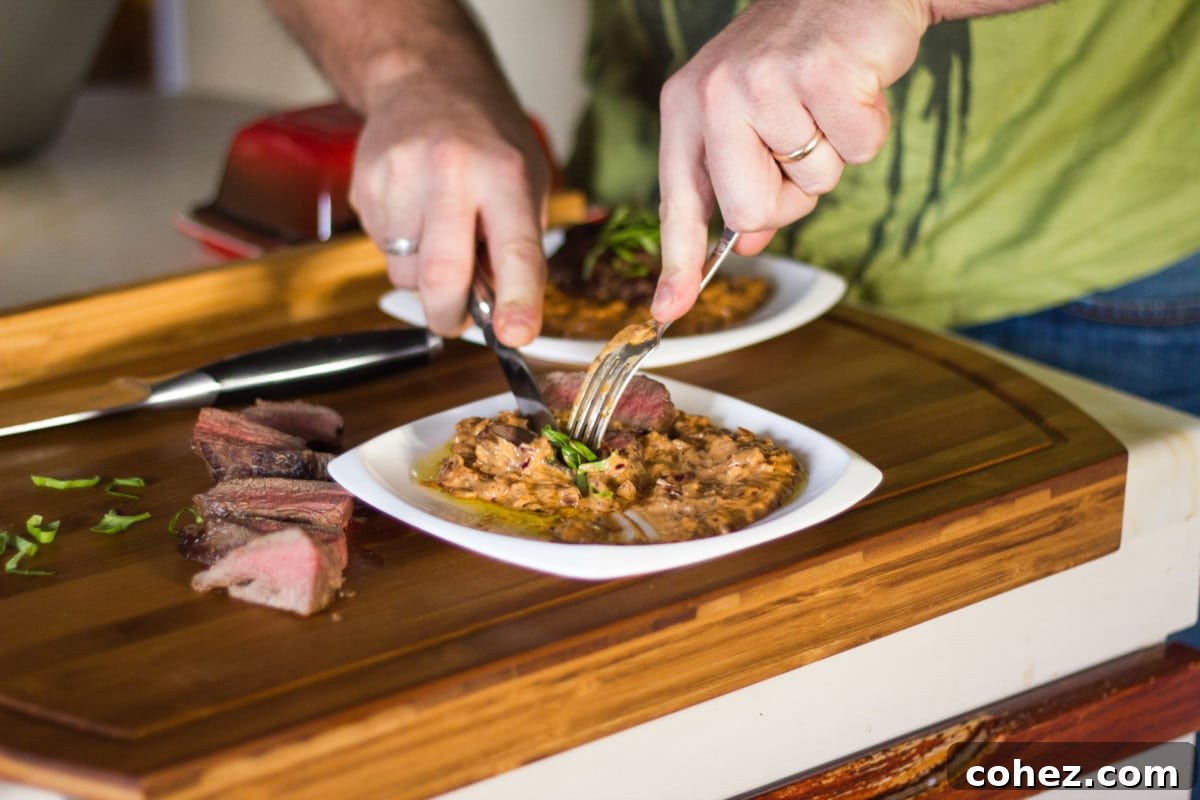
With your venison perfectly rested and your Diane sauce glistening, it’s time to assemble and serve this exquisite dish. You have the option to serve the venison steaks whole, allowing each diner to cut into the tender meat themselves, or slice them into elegant medallions before plating. Slicing against the grain often enhances tenderness and presentation, especially when serving a crowd or aiming for a refined aesthetic.
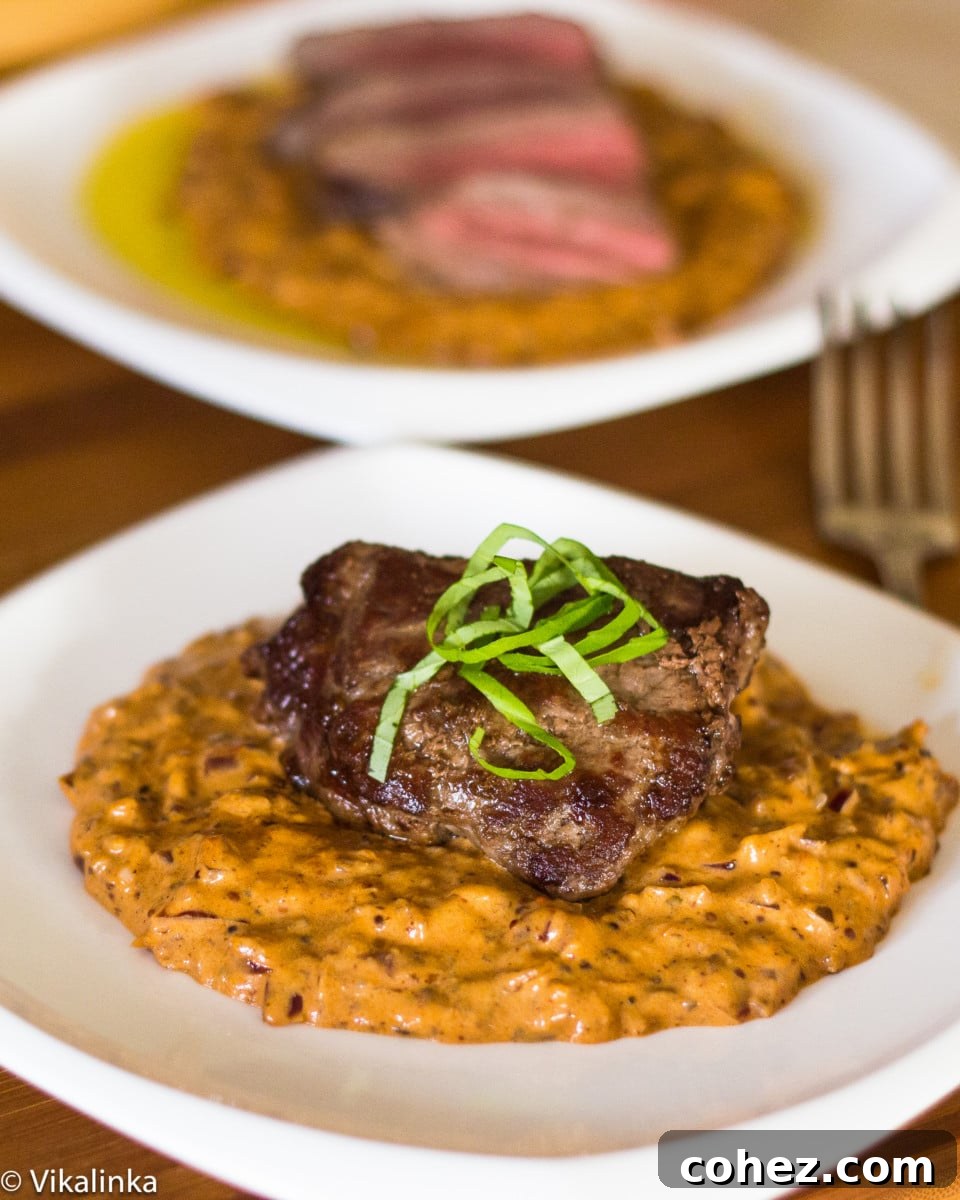
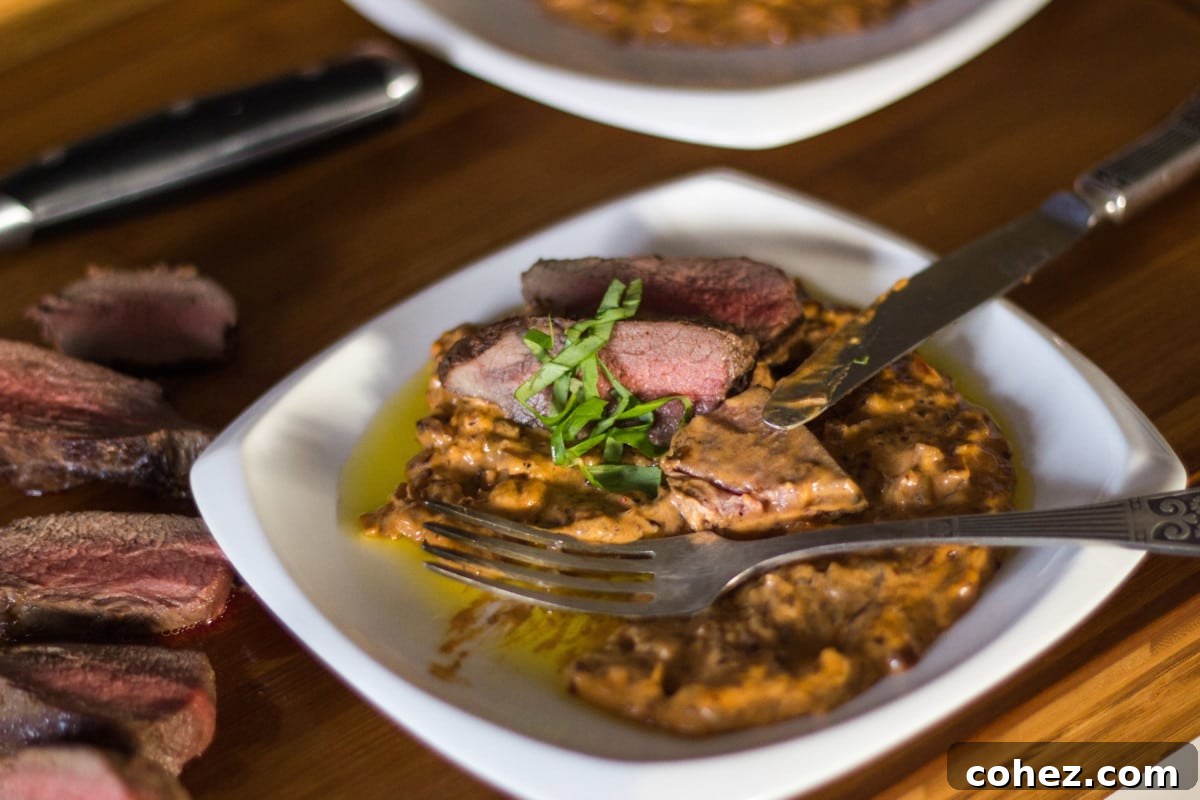
Spoon the rich, creamy Steak Diane sauce generously over the venison. The final flourish comes with the garnish. While traditionally parsley is used, I highly recommend fresh basil, thinly sliced. I discovered this through an “unintentional mistake” – I simply had a vibrant basil plant thriving on my windowsill! The sweet, peppery notes of basil provide a surprisingly outstanding counterpoint to the rich venison and creamy sauce, a substitution I wouldn’t trade for anything. This dish pairs wonderfully with simple sides like roasted potatoes, creamy mashed potatoes, or steamed green beans to let the venison truly shine.
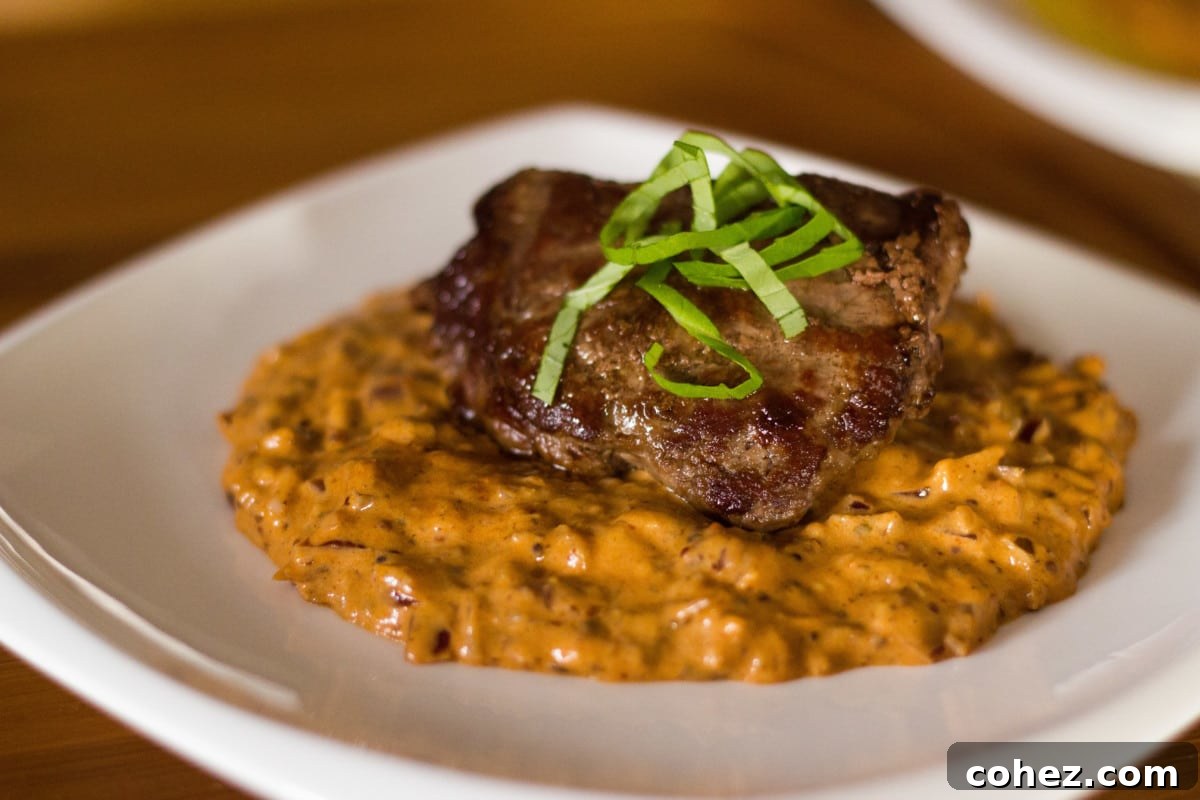
Is your appetite sufficiently piqued yet? The visual appeal alone is enough to make mouths water, but the true magic happens with the first bite.
The Unforgettable Taste Experience
My initial tasting of this Venison Steak Diane was an experience I won’t soon forget. Despite feeling a bit under the weather and primarily focused on capturing the perfect photograph in a fleeting moment of sunshine, I decided to take a small mouthful – purely for aesthetic purposes, or so I told myself. What happened next was nothing short of revelatory. All thoughts of my malaise vanished. The meat was incredibly tender, almost melting, and bursting with an unexpectedly rich and complex flavor that transcended any beef steak I had ever tasted. I immediately called for my husband, Brad, the ultimate taste-tester. It was a delightful mistake; the remaining steak vanished in seconds, a testament to its irresistible deliciousness.
The combination of the perfectly seared venison, with its subtle gamey notes, and the luxurious, creamy Diane sauce, infused with hints of brandy, mustard, and Worcestershire, creates a symphony of flavors. It’s a dish that feels indulgent yet refined, leaving a lasting impression. The intentional substitutions, like the fresh basil garnish, only added to its unique character. It’s moments like these in the kitchen, where a simple meal transforms into an extraordinary culinary memory, that truly highlight the joy of cooking.
Why Cook Venison Steak Diane at Home?
Beyond the sheer pleasure of creating something delicious, there’s a significant practical advantage to preparing a dish like Venison Steak Diane at home. Imagine ordering a similar wild game delicacy at a fine dining restaurant; you could easily expect to pay upwards of £20 or more per person. Yet, by following this recipe, the cost per serving is dramatically reduced, coming in at an astonishing £2 per person! This makes gourmet dining accessible and sustainable, allowing you to enjoy a luxurious meal without breaking the bank. It’s a testament to the power of home cooking – transforming humble ingredients and a little effort into an unforgettable, cost-effective culinary experience.
This recipe was beautifully adapted from the original found here, and I encourage you to explore it further for more inspiration. So, gather your ingredients, embrace the spirit of the huntress Diana, and bring this incredible Venison Steak Diane into your kitchen. You won’t regret it.