
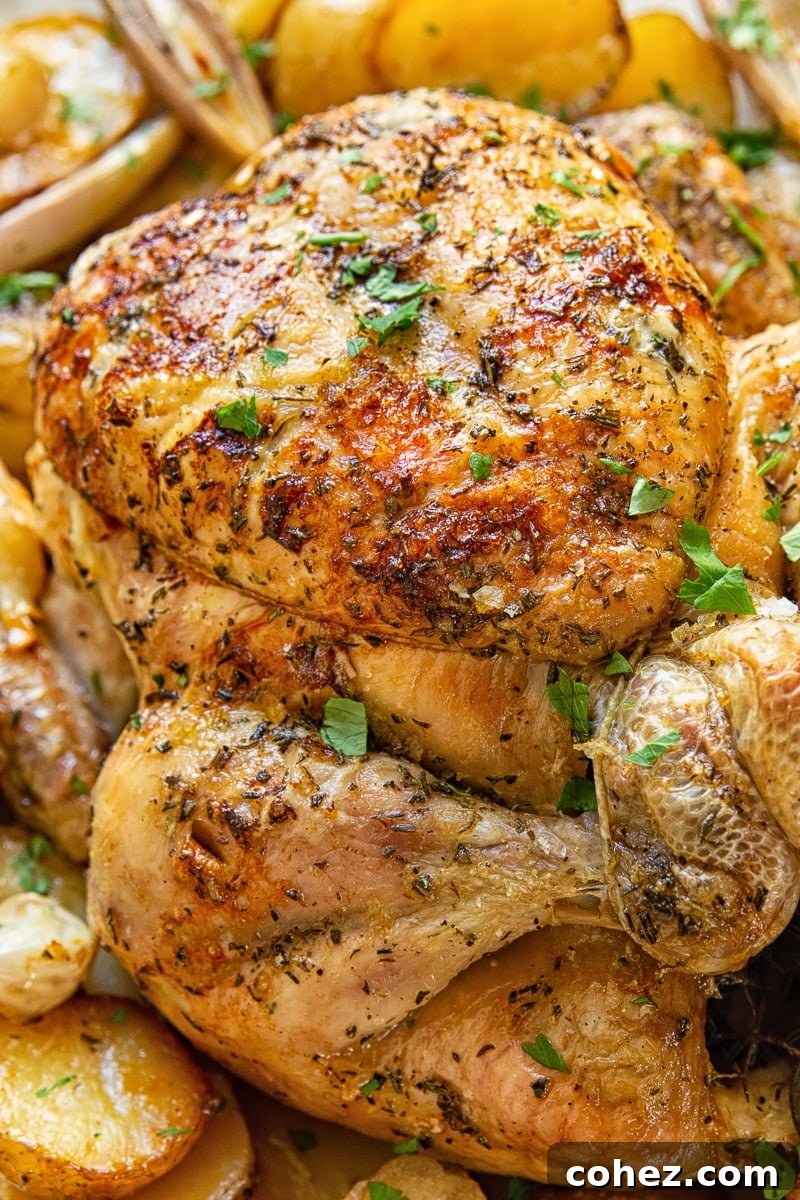
Unlock the secrets to a truly unforgettable roast chicken and potatoes with my tried-and-true recipe! Follow these straightforward steps to achieve a perfectly juicy chicken with irresistibly crispy skin, complemented by golden, fluffy roast potatoes. It’s the ultimate comfort food experience that, with just a few simple sides, transforms into a fantastic roast dinner – all achieved with surprisingly little hands-on preparation.
Roast chicken is a timeless staple in my kitchen, a dish I often return to for its universal appeal and comforting qualities. While this classic preparation is deeply satisfying, I also enjoy experimenting with different flavor profiles to keep things exciting. For a delightful departure from the traditional, I highly recommend exploring a vibrant Roast Chicken with Mango Chutney Glaze, offering a uniquely sweet and tangy taste sensation.
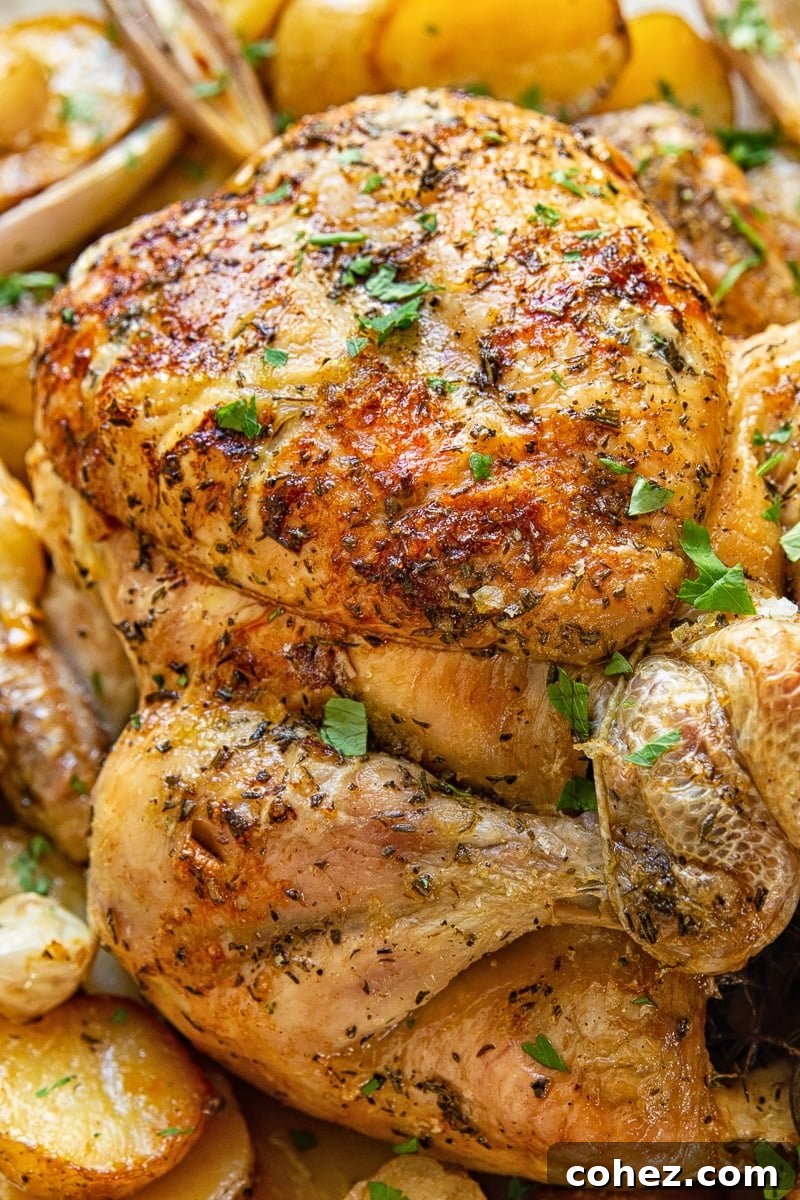
Rosemary and Thyme Roast Chicken and Potatoes: The Ultimate Comfort Classic
While my culinary adventures often take me to diverse corners of the world, exploring exotic flavors and techniques, my heart always returns to the ultimate comfort food: Rosemary and Thyme Roast Chicken and Potatoes. This dish isn’t just a meal; it’s a sensory journey back to childhood, conjuring cherished memories of warmth, family gatherings, and the enticing aromas wafting from my mother’s kitchen on special dinner nights. It’s a taste that resonates deeply, offering a sense of nostalgia and contentment that few other dishes can replicate.
Contrary to popular belief, preparing a simple yet spectacular roast chicken is far easier and quicker than many assume. You don’t need to reserve this culinary delight for grand holiday feasts or elaborate Sunday dinners. In fact, its straightforward nature makes it an ideal candidate for a weeknight meal, bringing a touch of homey elegance to even the busiest schedules.
Serving a beautiful roast doesn’t automatically mean you need to prepare an entire array of elaborate trimmings. Sometimes, simplicity is key, allowing the star of the meal to truly shine. A fresh and vibrant green salad tossed with a light vinaigrette, or a medley of perfectly roasted seasonal vegetables, can be the ideal accompaniment, hitting just the right spot without overwhelming the palate or demanding excessive effort.
One of the aspects I love most about this particular meal is its efficiency. It demands only about 15 minutes of active, hands-on preparation time. The vast majority of the cooking process unfolds effortlessly in the oven, allowing you to relax, attend to other tasks, or simply enjoy the inviting aromas filling your home, without constant supervision.
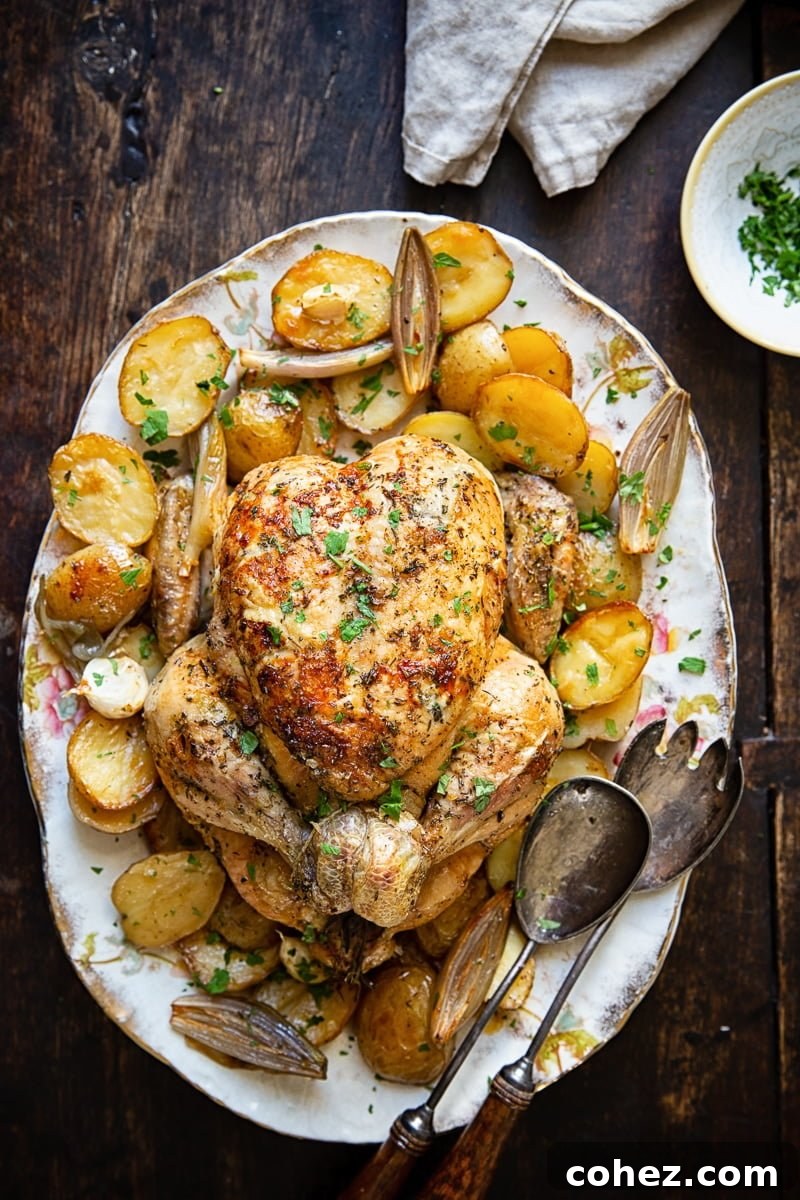
Mastering the Perfect Roast Chicken: Timing is Key
Achieving a perfectly cooked whole chicken often raises questions about exact timing. While traditional wisdom suggests approximately two hours for a 2kg (4lbs) chicken, I rely on a more precise and adaptable guideline: calculate 20 minutes of cooking time per pound of chicken, plus an additional 15 minutes. This formula provides an excellent starting point, allowing you to easily adjust the total cooking time based on the specific size of your bird, whether it’s slightly larger or smaller than average. Flexibility is crucial, and this method ensures consistent results.
However, the single most reliable method to guarantee your chicken is cooked to absolute perfection – ensuring it’s both safe to eat and wonderfully juicy – is to use a high-quality meat thermometer. Towards the end of the estimated cooking time, insert the thermometer into the thickest part of the chicken, typically the thigh, making sure not to touch the bone. The chicken is ready when the internal temperature registers at a safe and succulent 165°F (75°C).
For ease of use and accuracy, I personally favor digital, instant-read thermometers. Their clear displays and rapid readings take all the guesswork out of roasting, allowing you to pull the chicken from the oven at precisely the right moment.
Exceeding the 165°F (75°C) mark will inevitably lead to a dry, unappetizing chicken, a culinary mishap nobody desires. By using a meat thermometer, cooking times become helpful guides rather than rigid rules, empowering you to achieve consistently moist and tender results every single time. It’s the ultimate tool for confidence in the kitchen.

Infusing Unforgettable Flavor into Your Roast Chicken
Roast chicken sometimes unfairly earns a reputation for being bland, but this simply doesn’t have to be the case! Chicken is an incredibly versatile canvas for flavor, and with just a little attention and a few clever techniques, you can transform it into a truly aromatic and delicious centerpiece. Here’s how to elevate your roast chicken from good to outstanding:
- **Embrace Citrus:** Chicken has a natural affinity for citrus. By inserting a whole or halved lemon or orange into the chicken’s cavity, you allow its aromatic oils and juices to slowly infuse the meat from the inside out as it roasts. This subtle, fragrant burst of flavor penetrates deeply, adding brightness and depth without being overpowering.
- **Harness the Power of Herbs:** When it comes to herbs, any fresh variety is better than none. Herbs are fantastic for imparting complex flavors to chicken. My personal favorites for roasting are rosemary and thyme. These robust, “woodsy” herbs stand up exceptionally well to the high heat of the oven, releasing their aromatic compounds beautifully without burning or turning bitter. They do a magnificent job of permeating the chicken with their classic, earthy notes. Consider also adding sage or oregano for a different aromatic twist.
- **Strategic Garlic Infusion:** Garlic is a beloved companion to chicken, but its delicate nature requires a smart approach in the oven. Simply crushing and rubbing garlic on the chicken’s exterior will often cause it to burn and develop an unpleasant bitter taste. Instead, I recommend making small, shallow slits all over the chicken’s surface with the tip of a knife. Then, gently insert thin slices of garlic into these incisions. This method allows the chicken to be infused with garlic’s pungent, savory essence from within, protecting it from direct, harsh heat and ensuring a sweeter, more mellow garlic flavor throughout the meat.
- **The Magic of Salt and Pepper:** Don’t underestimate the power of simple seasoning. A generous application of coarse sea salt and freshly ground black pepper directly on the chicken’s skin and cavity before roasting is fundamental. The salt not only seasons the meat but also aids in drawing out moisture from the skin, which is crucial for achieving that coveted crispiness.
Expert Tips for a Flawless Roast Chicken
- **Trust Your Thermometer, Not Just the Clock:** The actual cooking time for a whole chicken can vary significantly due to its size and inconsistencies in oven temperatures. Rather than relying strictly on time estimates, always use a meat thermometer. Insert it into the thickest part of the chicken (avoiding the bone) and remove the chicken from the oven when it registers 165°F (75°C). This ensures your chicken is perfectly cooked, safe, and juicy every time.
- **Achieve Irresistibly Crispy Skin:** The secret to that coveted golden, crackling skin that defines a perfect roast chicken lies in one simple step: generously rubbing the skin with flaky sea salt before roasting. The salt works by drawing moisture out of the skin, allowing it to become incredibly thin, airy, and wonderfully crisp during the cooking process. Patting the chicken thoroughly dry with paper towels before salting also dramatically contributes to this effect.
- **The Critical Importance of Resting:** Once cooked, resist the urge to carve your chicken immediately. Allowing the chicken to rest, loosely tented with foil, for 15-20 minutes before carving is a non-negotiable step for optimal juiciness. This crucial period allows the muscle fibers to relax and reabsorb the flavorful juices that have migrated to the center of the bird during cooking. The result is a beautifully moist and tender chicken that truly melts in your mouth.
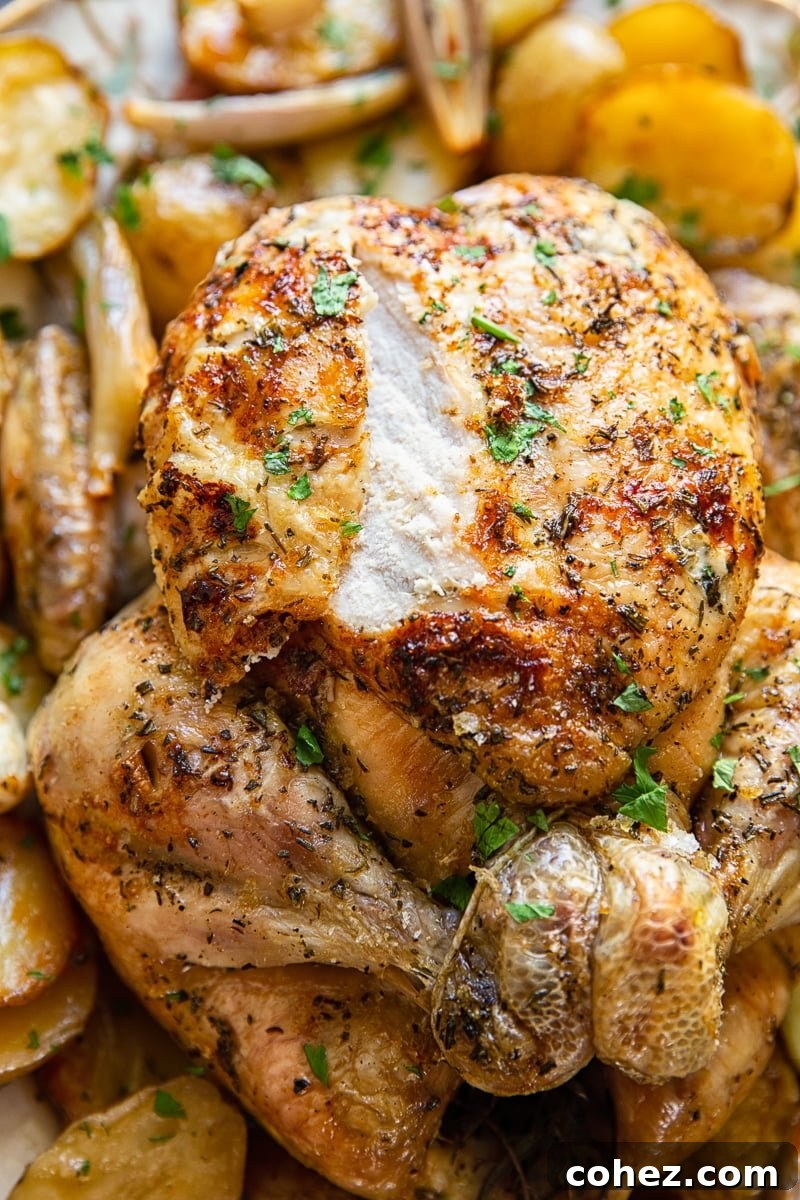
Beyond the Bird: Delicious Serving Suggestions
A perfectly roasted chicken and potatoes dish offers a versatile foundation for countless meal combinations. Serve yours with any vegetables that are fresh and in season for the freshest flavors. More often than not, I accompany my roast with a crisp, simple green salad, lightly dressed with a zesty vinaigrette. This fresh element provides a lovely contrast to the richness of the chicken and potatoes. I’ve also found that tender Maple Glazed Roasted Carrots and savory Crispy Brussels Sprouts with Honey and Bacon make exceptional side dishes that perfectly complement the rosemary and thyme infused chicken.
For everyday meals, I particularly appreciate the convenience of using the salad dressing as a light “sauce,” eliminating the need to prepare a separate gravy. However, for those occasions when the meal truly feels incomplete without that luxurious splash of gravy, my wonderfully Easy Homemade Gravy recipe comes to the rescue, adding an extra layer of indulgence to your roast dinner.
Making the Most of Leftovers: Storage and Creative Uses
Leftover roast chicken is a treasure trove of culinary possibilities, but proper storage is paramount for both safety and flavor. The best and safest way to store your cooked chicken is to remove the flesh from the bones as soon as it has cooled sufficiently (within two hours of cooking). This is because bacteria can more readily grow on bones and then spread to the meat. Place the shredded or diced chicken flesh into an airtight container and refrigerate promptly. It will keep beautifully for up to 2-3 days.
Don’t let the chicken carcass go to waste! This flavorful frame is the foundation for an incredibly rich and nourishing homemade stock, far superior in taste and quality to any store-bought variety. Simply follow my detailed instructions for Homemade Turkey Stock, a recipe that works just as perfectly for chicken carcasses, to create a versatile base for soups, stews, risottos, or simply for sipping on its own.
Leftover roast chicken meat can also be transformed into a myriad of delicious new meals. Think quick and easy chicken salads, hearty sandwiches, flavorful quesadillas or tacos, stir-fries, or even a comforting chicken pot pie. The possibilities are endless, making your initial effort stretch much further!
More Inspiring Chicken Recipes to Explore
- Spanish-style Baked Chicken Thighs and Potatoes
- French Chicken Casserole a la Normande
- Spatchcock Chicken in Spicy Yogurt Sauce
- Georgian Chicken Tabaka with Spicy Blackberry Sauce
Rosemary and Thyme Roast Chicken and Potatoes
Julia Frey of Vikalinka
15
2
2 15
4 people

Print Recipe
Equipment
-
Meat thermometer
-
Roasting pan
Ingredients
- 1.5-2kg / 3-4 lbs whole chicken
- 2-3 sprigs each of fresh rosemary and thyme
- 3 cloves garlic
- 1 lemon
- 1kg / 2 lbs potatoes (such as Yukon Gold or Russet)
- Salt to taste (flaky sea salt for skin)
- Pepper to taste
- 2 tbsp olive oil
- 5-6 shallots, halved, optional
Instructions
-
Preheat your oven to 375°F (190°C).
Finely chop half of your fresh rosemary and thyme sprigs. Peel the garlic cloves and slice them thinly. Using the tip of a sharp knife, make small, shallow slits all over the chicken’s skin, and carefully insert the garlic slices into these pockets. This method infuses the chicken with garlic flavor without burning it. -
Prick the lemon all over with a fork to release its juices and aromatic oils. Place the pricked lemon into the chicken’s cavity, along with the remaining half of the chopped herbs and any leftover sliced garlic. This will infuse the chicken from the inside.
-
Generously rub the entire surface of the chicken with olive oil. Then, sprinkle it liberally with a good pinch of salt (especially flaky sea salt for crispy skin) and freshly ground black pepper. Place the seasoned chicken into a large roasting pan and set a timer for 40 minutes.
-
While the chicken is roasting, prepare your potatoes. Wash them thoroughly and cut them into halves if they are small to medium-sized, or into quarters if using larger potatoes. Place the cut potatoes into a pot of heavily salted water and bring to a boil. Allow them to boil for precisely 7 minutes, then drain them completely in a colander. Cover the colander with a lid or a clean kitchen towel and set aside; the residual steam will gently fluff their exteriors, preparing them for perfect roasting.
-
Once the initial 40-minute timer for the chicken expires, carefully remove the roasting pan from the oven. Baste the chicken generously with the accumulated pan juices. Arrange the pre-boiled potatoes around the chicken in the pan. Dip a pastry brush into the delicious fat and juices at the bottom of the pan and brush it over the potatoes to ensure they absorb flavor and crisp up beautifully.
Return the pan to the oven for an additional 1 hour to 1 hour 20 minutes. Throughout this time, check periodically and gently turn the potatoes to ensure they roast evenly and develop a gorgeous golden, crispy exterior.
If you are including shallots, add the halved shallots to the roasting pan about 30 minutes before the chicken is estimated to be fully cooked. -
Remove the chicken and potatoes from the oven when the internal temperature of the chicken (measured in the thickest part of the thigh, not touching bone) reaches 165°F (75°C), and the chicken skin has turned a deep, inviting golden color. Transfer the chicken to a carving board or platter, loosely tent it with aluminum foil, and allow it to rest for a crucial 15-20 minutes before carving. This resting period ensures a supremely juicy and tender bird. Serve immediately with the roasted potatoes and your chosen side dishes.
Notes
- Cooking time may vary based on the specific size of your chicken and inherent variations in oven temperatures. To guarantee perfect doneness and juicy results, always use an accurate meat thermometer. Remove the chicken from the oven precisely when the thermometer reads 165°F (75°C) in the thickest part of the thigh, avoiding the bone.
- For achieving that desirable thin and crispy skin, generously rub the chicken with flaky sea salt after patting it thoroughly dry with paper towels. The salt effectively draws moisture out of the skin, allowing it to crisp up beautifully during roasting.
- Allowing the chicken to rest for 15-20 minutes, loosely covered with foil, after it comes out of the oven is a critical step. This resting period enables the meat fibers to relax and reabsorb the juices, resulting in a far juicier, more tender, and flavorful roast chicken.
Nutrition
Carbohydrates: 36g |
Protein: 47g |
Fat: 40g |
Saturated Fat: 10g |
Cholesterol: 163mg |
Sodium: 179mg |
Potassium: 1498mg |
Fiber: 7g |
Sugar: 3g |
Vitamin A: 330IU |
Vitamin C: 47.7mg |
Calcium: 115mg |
Iron: 9.9mg
Nutrition information is automatically calculated, so should only be used as an approximation and is based on one serving.
Tried this recipe?
Let us know how it was!