
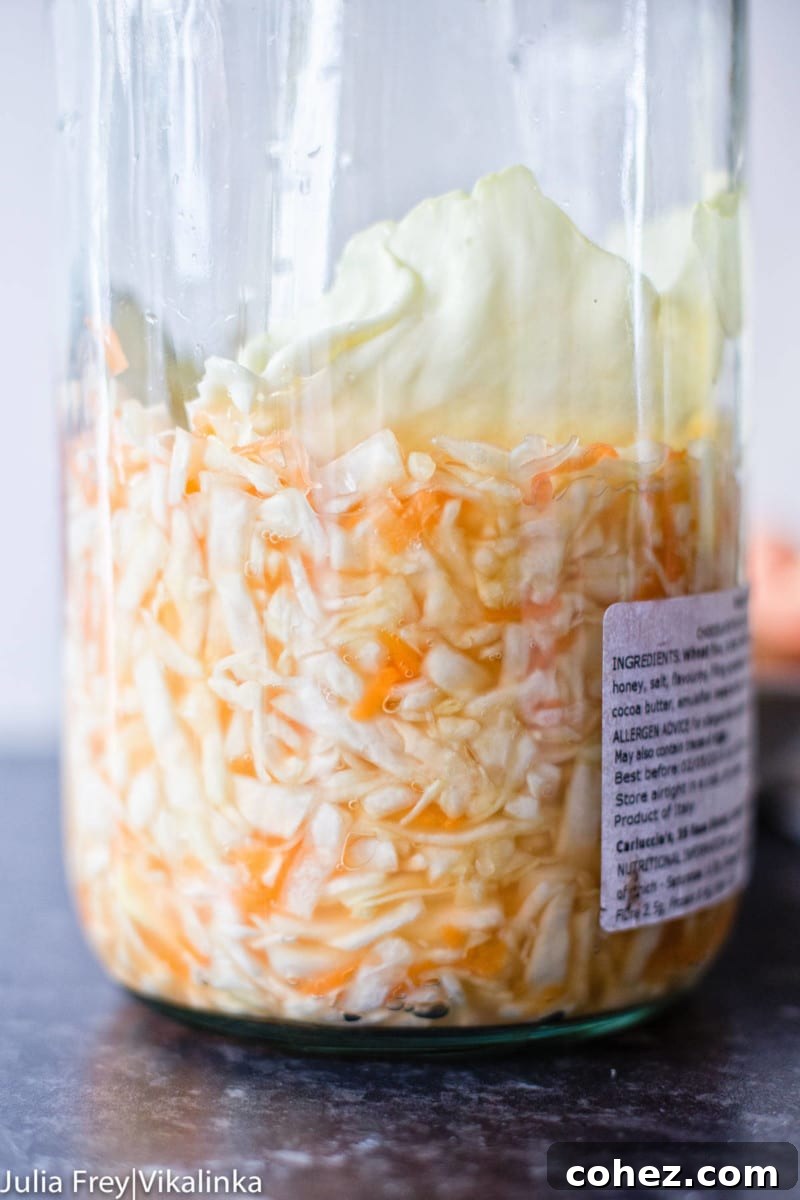
Discover the ultimate guide to crafting your own homemade sauerkraut – a simple, tried-and-true recipe that transforms humble cabbage into a crunchy, tangy, and incredibly beneficial fermented delight. This traditional staple boasts an underrated flavor profile and a wealth of health advantages, making it a versatile addition to any meal. Enjoy it plain, layered into hearty sandwiches, tossed into vibrant salads, or as a savory side to your favorite dishes!
This foundational recipe is the perfect starting point for delicious creations, including a refreshing Beet Sauerkraut Salad!
The world is a treasure trove of incredible culinary diversity, offering an endless array of fascinating flavors and cooking traditions. While I deeply appreciate exploring new tastes and global cuisines, my heart always returns to the comforting, familiar foods of my childhood.
This authentic Russian sauerkraut recipe holds a special place in my memory. It was one of the very first dishes I tackled when I started my own kitchen after getting married. I remember feeling quite apprehensive, convinced that making sauerkraut was an arcane art reserved only for all-knowing “babushkas” (grandmothers), and I doubted my ability to achieve their renowned quality. To my delightful surprise, the process proved to be as straightforward as boiling an egg, and the outcome was equally delicious!
The Ancient Art of Sauerkraut: More Than Just Cabbage
While often referred to as “sauerkraut” in English-speaking regions, the term “kvashenaya kapusta” (fermented cabbage) more accurately describes this traditional Eastern European staple. At its core, sauerkraut is a simple yet profound food: cabbage and carrots fermented naturally by lactobacillus bacteria. These beneficial microorganisms are the same ones responsible for the tangy goodness in yogurt and other cultured products, transforming vegetables into a nutritious and flavorful superfood. This ancient method of food preservation not only extends the shelf life of vegetables but also enhances their nutritional value and digestibility.
Originating potentially in China thousands of years ago, the practice of fermenting cabbage spread westward, becoming a cornerstone of diets in Central and Eastern Europe, particularly in Germany, Poland, and Russia. It provided essential nutrients during long winters when fresh produce was scarce, solidifying its role as a vital and beloved food.
Why Embrace Homemade Sauerkraut? Benefits Beyond Flavor
Choosing to make sauerkraut at home offers numerous advantages over store-bought versions. You gain complete control over the ingredients, ensuring no unwanted additives or preservatives. More importantly, homemade sauerkraut typically contains a richer, more diverse array of live probiotics, which are often pasteurized out of commercial varieties for extended shelf life.
Unlocking a World of Health Benefits
Sauerkraut isn’t just delicious; it’s a powerhouse of nutrition and a cornerstone of a healthy diet, particularly in Eastern European traditions. It has been enjoyed for centuries, not only for its robust flavor but also for its profound health benefits:
- Probiotics and Gut Health: The fermentation process enriches sauerkraut with a vibrant community of beneficial bacteria (probiotics). These microorganisms play a crucial role in balancing your gut microbiome, which is essential for healthy digestion, nutrient absorption, and even mood regulation. A thriving gut can significantly boost your overall well-being.
- Immune System Boost: A healthy gut is intimately linked to a strong immune system. The probiotics in sauerkraut help maintain the integrity of your gut lining, preventing harmful substances from entering the bloodstream and supporting your body’s natural defenses against illness.
- Rich in Vitamins and Minerals: Sauerkraut is an exceptional source of vitamins, particularly vitamin C, which is vital for immune function, skin health, and collagen production. It also provides vitamin K2, important for bone and heart health, as well as several B vitamins and essential minerals like iron, potassium, and manganese.
- Antioxidant Powerhouse: Cabbage itself is rich in antioxidants, and fermentation can even enhance their bioavailability. Antioxidants combat free radicals in the body, reducing oxidative stress and lowering the risk of chronic diseases.
The Taste and Quality Advantage
Beyond the health benefits, homemade sauerkraut simply tastes better. It offers a fresh, vibrant tang and crisp texture that is often missing from mass-produced versions. The satisfaction of creating such a nutritious and flavorful food with your own hands is an added bonus, connecting you to ancient culinary practices and a healthier way of eating.
Culinary Versatility: How to Savor Your Sauerkraut
Sauerkraut’s unique tangy flavor and satisfying crunch make it incredibly versatile in the kitchen. For centuries, it has been a staple in Eastern European cuisine, enjoyed in countless ways. If you’re wondering how to incorporate this delicious superfood into your diet, here are some ideas:
- Classic Pairings: Perhaps its most famous role is as a tangy accompaniment to rich meats like sausages, pork knuckles, or duck. The acidity of the sauerkraut cuts through the richness of the meat beautifully, creating a balanced and flavorful meal. Our family loves Kielbasa and Sauerkraut!
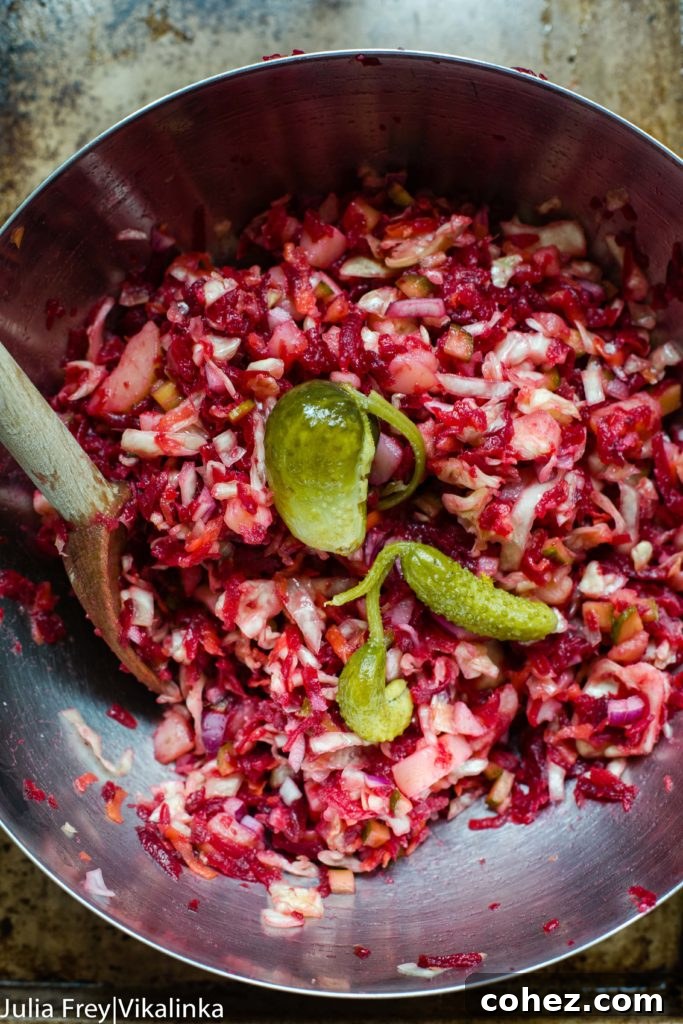
- Salads and Sides: Enjoy it cold, straight from the jar, as a refreshing side dish. It’s also fantastic mixed into salads, like the vibrant Beet Sauerkraut Salad, adding a probiotic boost and unique texture.
- Sandwich Sensation: Sauerkraut elevates any sandwich, particularly classic deli combinations. The iconic Reuben sandwich, with its corned beef, Swiss cheese, and rye bread, wouldn’t be complete without a generous helping of sauerkraut.
- Cooking with Sauerkraut: Don’t limit it to cold dishes! Sauerkraut can be added to hot foods like stews and soups. It’s a key ingredient in traditional Eastern European soups such as “shchi,” a hearty beef and cabbage soup, or used as a filling for pierogi and savory pastries.
Though I hadn’t made sauerkraut for many years, a desire to lead a healthier lifestyle prompted me to bring it back into our diet. The moment I took that first spoonful, I was instantly reminded of just how much I adored its taste. The health benefits were my initial motivation, but the sheer deliciousness has kept me making it ever since. I hope you’ll find the same joy and passion for this incredible fermented food!
Crafting Your Own Sauerkraut: A Simple Guide to Fermentation
Making sauerkraut at home is a wonderfully rewarding process that requires minimal ingredients and equipment. The magic happens through lacto-fermentation, where naturally present bacteria on the cabbage convert sugars into lactic acid, preserving the cabbage and developing its distinctive tangy flavor and gut-friendly properties.
Essential Ingredients
- Cabbage: Choose firm, fresh white or green cabbage.
- Carrots: Adds a touch of sweetness and color.
- Salt: Non-iodized sea salt or pickling salt is crucial. Iodine can interfere with the fermentation process.
- Sugar (optional): A small amount helps kickstart fermentation, especially in colder environments.
Step-by-Step Fermentation Process
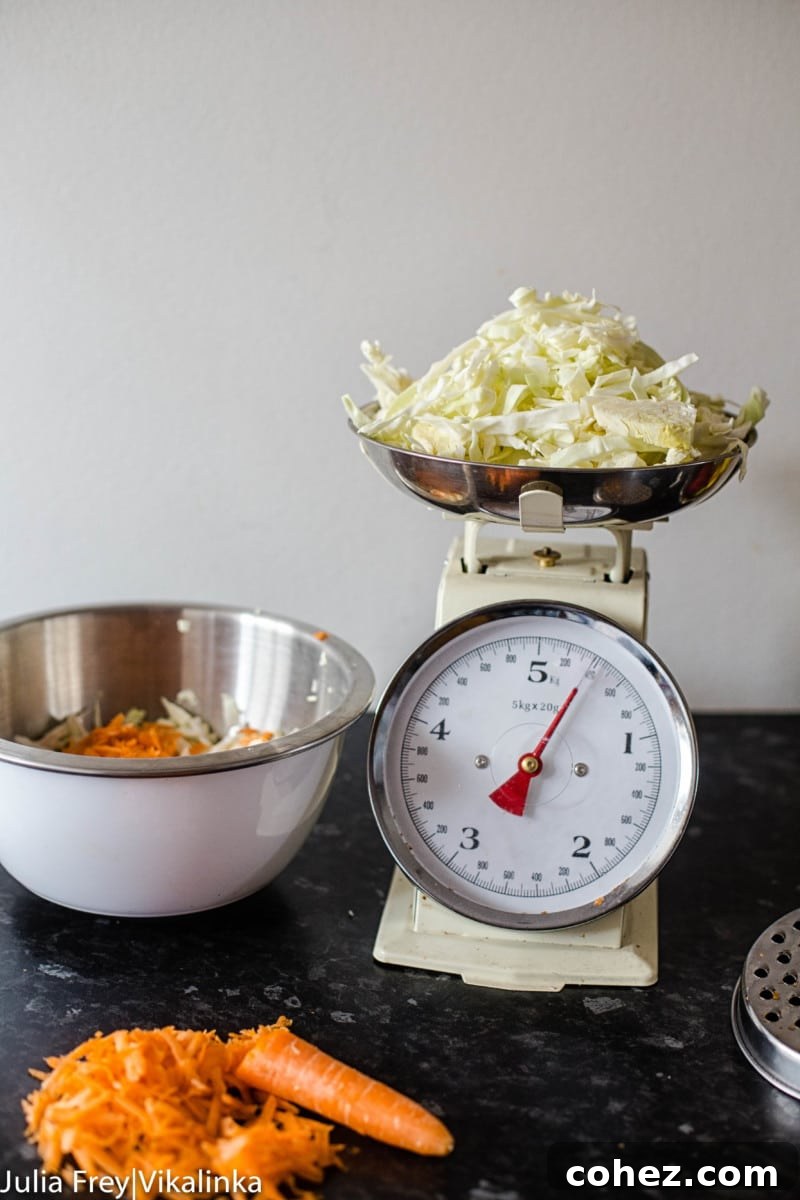
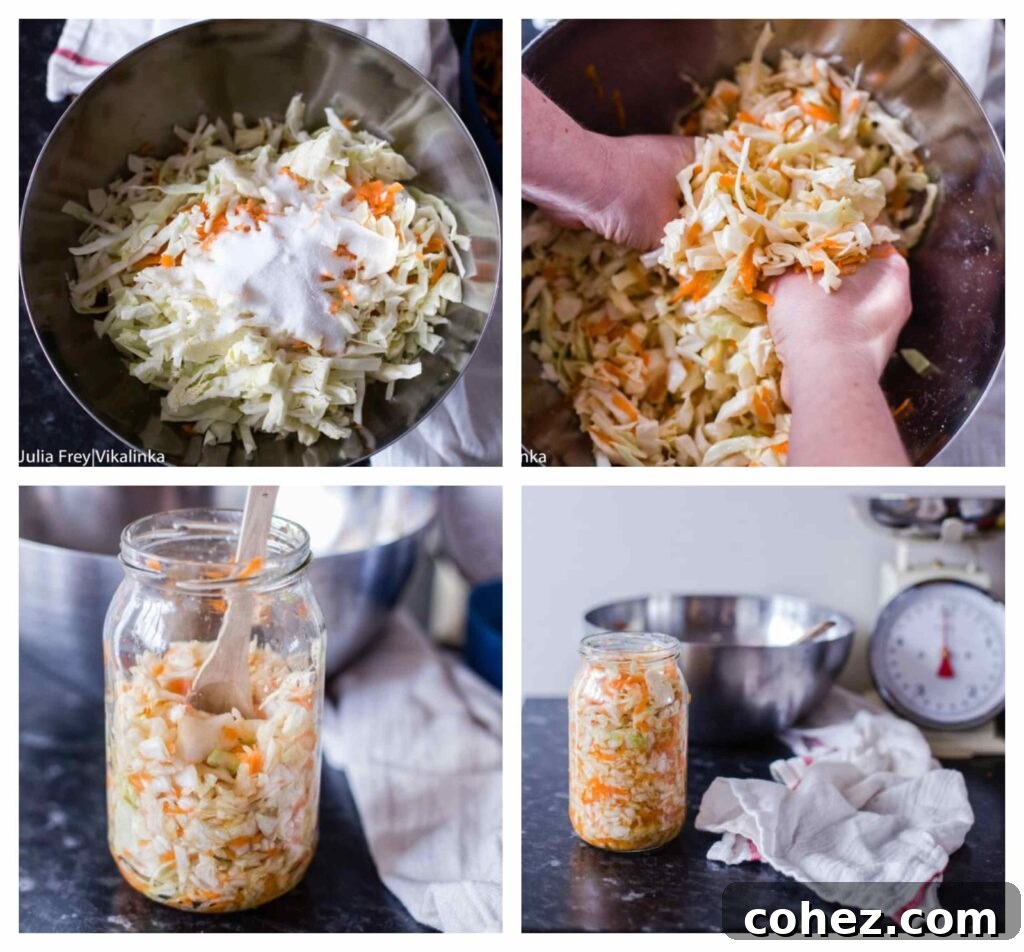
- Preparation: Wash the cabbage thoroughly and peel the carrots. Carefully remove one large, intact outer cabbage leaf and set it aside; this will be used later. Halve the cabbage, then quarter it. With a sharp knife, remove the tough core and any hard outer ribs. Slice the cabbage into thin strips, approximately 1/4 inch thick. Grate the carrots.
- Mixing and Massaging: In a large mixing bowl, combine the sliced cabbage, grated carrots, salt, and sugar (if using). Begin to massage these ingredients vigorously with your hands for about 2-3 minutes. This crucial step helps to break down the cabbage cell walls, allowing it to soften and release its natural juices, which will form the brine for fermentation.
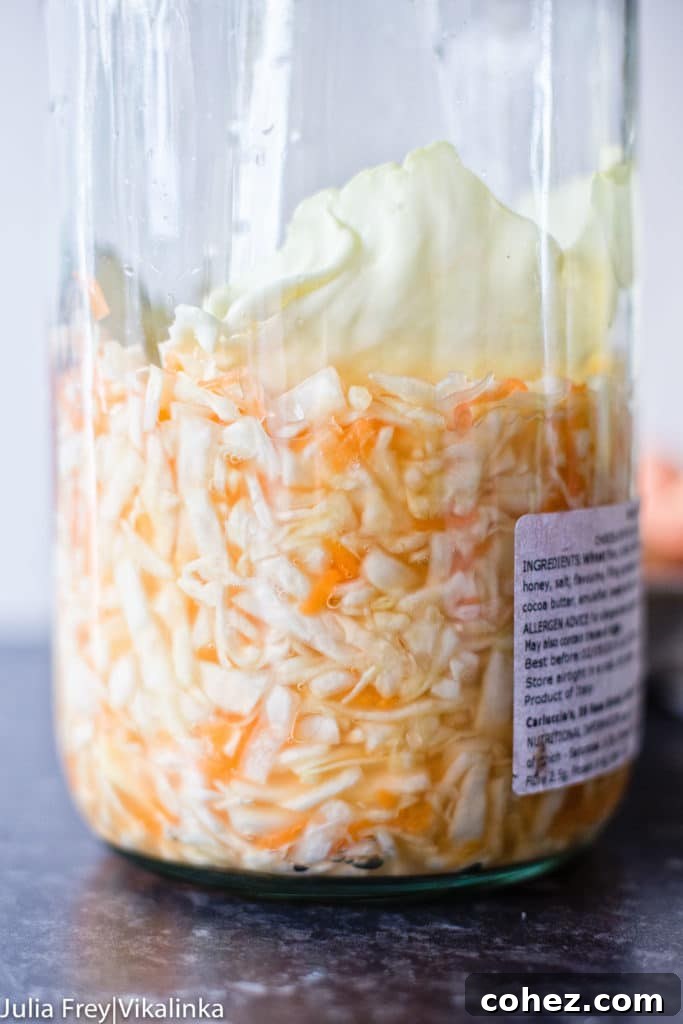
- Packing: Tightly pack the cabbage and carrot mixture into a clean, sterilized glass jar. Use a long-handled wooden spoon or your fist to press down firmly, extracting as much liquid as possible and eliminating air pockets. The goal is to ensure the liquid completely covers the cabbage, submerging it entirely. This anaerobic environment is key to preventing spoilage and promoting the right kind of bacterial growth. Place the reserved large cabbage leaf on top of the packed mixture, then weigh it down with a smaller water-filled jar or a fermentation weight to keep all solids submerged. Finally, cover the mouth of the jar with a layer of cheesecloth, securing it with a rubber band to allow airflow while keeping out contaminants.
- Fermentation Period: Leave your jar of sauerkraut to ferment at room temperature (ideally 65-72°F or 18-22°C) for approximately 3 days. The fermentation time can vary; colder temperatures may require a longer period. Each day, use the handle of a wooden spoon or a clean skewer to pierce the cabbage several times, reaching the bottom of the jar. This “burping” process releases gases (carbon dioxide) that build up during fermentation, preventing excessive pressure and ensuring even fermentation. Recover with the cheesecloth after each burping. You’ll notice bubbles forming, a tangy aroma developing, and the color of the cabbage subtly changing – these are all signs of successful fermentation.
- Storage: Once the sauerkraut has reached your desired level of tanginess and texture (usually after 3-7 days), remove the weight and cabbage leaf. Seal the jar with a tight-fitting lid and transfer it to the refrigerator. Refrigeration slows down the fermentation process significantly. Properly stored, homemade sauerkraut can last for several months in the fridge.
Tips for Success
- Choosing Your Cabbage: Select fresh, firm heads of cabbage with no visible blemishes. Organic cabbage is preferred as it often has a richer microbial community on its leaves.
- Sterilization Matters: Ensure all your equipment – jars, bowls, spoons – are thoroughly cleaned and sterilized to prevent the growth of undesirable bacteria.
- The Right Amount of Salt: Salt is not just for flavor; it inhibits spoilage bacteria while allowing beneficial lactobacillus to thrive. Too little salt can lead to mushy sauerkraut or mold. Use a scale for accuracy.
- Managing the Gas: Don’t forget to burp your jar daily to release built-up carbon dioxide.
- Temperature is Key: Consistent room temperature is ideal. Too cold, and fermentation is slow; too warm, and it can ferment too quickly, sometimes resulting in a less desirable flavor or texture.
Troubleshooting Common Sauerkraut Issues
- Too Salty? A little saltiness is normal, but if it’s overwhelmingly salty, you might have used too much. In the future, measure precisely. You can rinse fermented sauerkraut before serving to reduce saltiness.
- Too Soft/Mushy? This can be due to too little salt, fermenting at too high a temperature, or using old cabbage. Ensure your salt ratio is correct and keep the jar in a cooler spot.
- Mold? If you see fuzzy, colored mold (black, green, pink), discard the batch immediately. This usually happens if the cabbage isn’t fully submerged under the brine or if there’s contamination. White film (kahm yeast) is usually harmless and can be scraped off.
Unleashing Creativity: Flavor Variations to Explore
While traditional sauerkraut with just cabbage and carrots is delicious, there are endless possibilities to customize your batch with different spices and vegetables. Every family often has its own secret ingredient!
- Traditional Additions: Caraway seeds are a classic choice, offering a warm, earthy note. Juniper berries provide a slightly piney, peppery flavor that pairs beautifully with the tanginess. Dill seeds bring a fresh, herbaceous essence.
- Herbs and Spices: Experiment with bay leaves, mustard seeds, coriander seeds, or even a pinch of red pepper flakes for a subtle kick. Fresh garlic or ginger, finely minced, can add layers of aromatic flavor. Turmeric can lend a beautiful color and additional health benefits.
- Root Vegetables: Besides carrots, consider adding shredded beets for a vibrant color and earthy sweetness (as seen in our Beet Sauerkraut Salad), or celery root for a unique texture and flavor.
- Sweet Notes: A slice of apple or a few raisins can balance the tartness with a hint of natural sweetness.
More Eastern European Recipes
- Beef Stroganoff
- Siberian Meat Dumplings Pelmeni
- Borscht
- Strawberry Cheesecake Vatrushka Buns
- Lazy Cabbage Rolls
5 from 2 votes
Homemade Russian Sauerkraut
By Julia Frey of Vikalinka
Prep: 20 mins | Total: 20 mins
Servings: 20
Print Recipe
A nutritious traditional sauerkraut recipe.
Ingredients
- 1kg / 2.5 lbs 1 small head of white cabbage, sliced
- 2 carrots, grated
- 1½ tbsp salt
- 1 tsp sugar
Instructions
- Wash the cabbage and peel carrots. Remove a large outer leaf and set aside. Cut the cabbage in half and then in quarters, remove the core and tough outer ribs with a sharp knife, then slice the cabbage in approximately 1/4″ thin slices and grate the carrots.
- In a large mixing bowl combine the cabbage, carrots, salt and sugar, then start mixing ingredients with your hands while massaging them to soften the cabbage and allow it to release its juices for 2-3 minutes.
- Pack the cabbage and carrots tightly in a sterilized jar, use a long-handled wooden spoon to pack your cabbage and to release more juice. When your jar is full the liquid should cover the cabbage completely, which will preserve it from harmful bacteria. Cover the surface with a reserved cabbage leaf and weigh it down with a water-filled jar, then cover with a layer of cheesecloth. Leave your sauerkraut out to ferment for approximately 3 days. It might take longer if your house is cold. Each day pierce it with the handle of a wooden spoon to release gas, then cover it back up with a cheesecloth.
- Refrigerate the sauerkraut after the fermentation process is done.
Notes
This recipe yields a 1.5 litre jar of sauerkraut.
Nutrition
Serving: 20g | Calories: 32kcal | Carbohydrates: 7g | Protein: 2g | Fat: 0.1g | Saturated Fat: 0.04g | Polyunsaturated Fat: 0.03g | Monounsaturated Fat: 0.02g | Sodium: 454mg | Potassium: 213mg | Fiber: 3g | Sugar: 4g | Vitamin A: 1130IU | Vitamin C: 42mg | Calcium: 48mg | Iron: 1mg
Nutrition information is automatically calculated, so should only be used as an approximation.
Tried this recipe? Let us know how it was!