
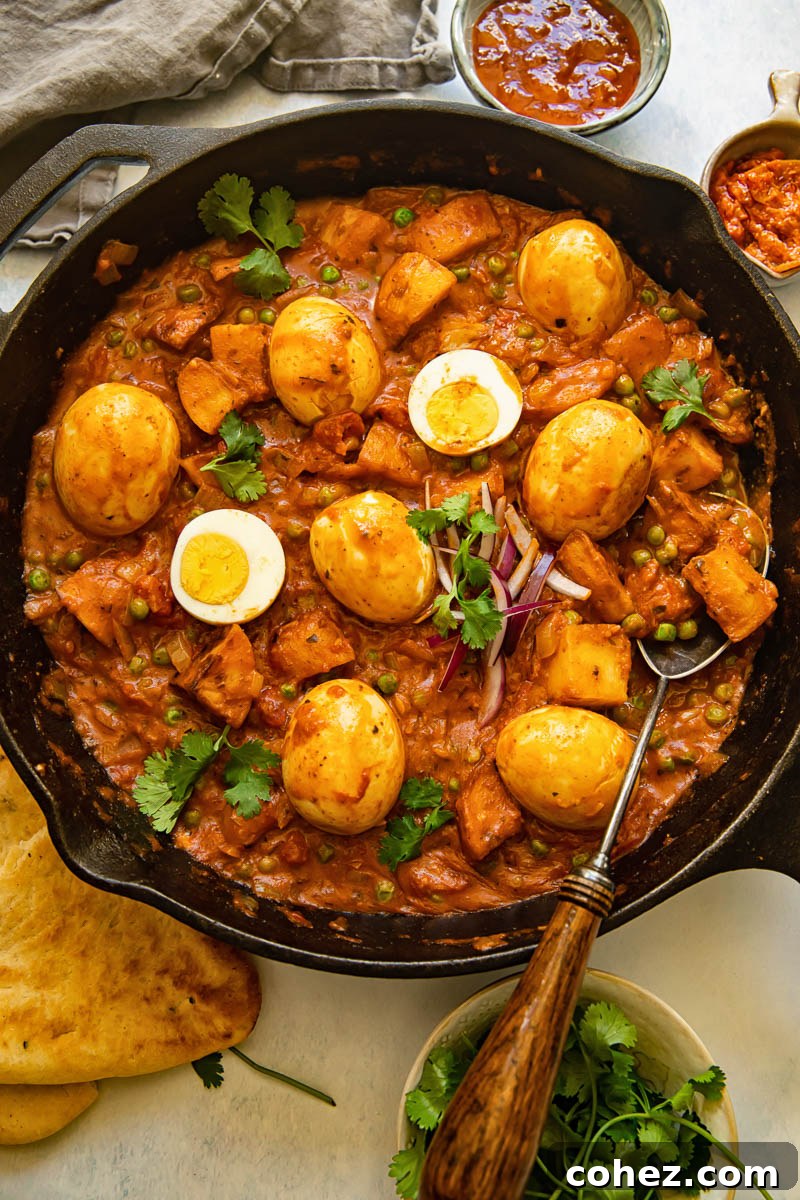
Experience the vibrant flavors of India with this remarkable Egg Curry recipe. Simple, yet exquisitely rich and aromatic, this Indian classic is set to become a cherished favorite at your dinner table, offering a delightful blend of mild spices and comforting textures. Prepare to discover why this wholesome and budget-friendly dish deserves a prime spot in your culinary repertoire!
India is a land renowned for its extraordinary culinary heritage, boasting an incredible array of curry recipes that captivate the senses. For those eager to explore more of these incredible dishes, a world of flavorful curries awaits.

While often overshadowed by its meatier counterparts, Indian Egg Curry (also known as Anda Curry) is a hidden gem that truly deserves widespread recognition. This humble yet hearty dish brilliantly showcases how eggs can transform a curry, adding not only a substantial protein boost but also a unique creaminess that elevates the entire meal. It’s a testament to the versatility of Indian cuisine and a delightful revelation for anyone seeking new and exciting vegetarian options.
The foundation of this particular egg curry recipe is a time-honored classic, providing a robust and aromatic base that can be easily adapted to suit various tastes and ingredients. Traditional additions like tender potatoes and sweet peas are always a winning combination, creating a fulfilling and well-rounded meal. However, the beauty of this base lies in its flexibility, inviting you to experiment with other vegetables and flavors.
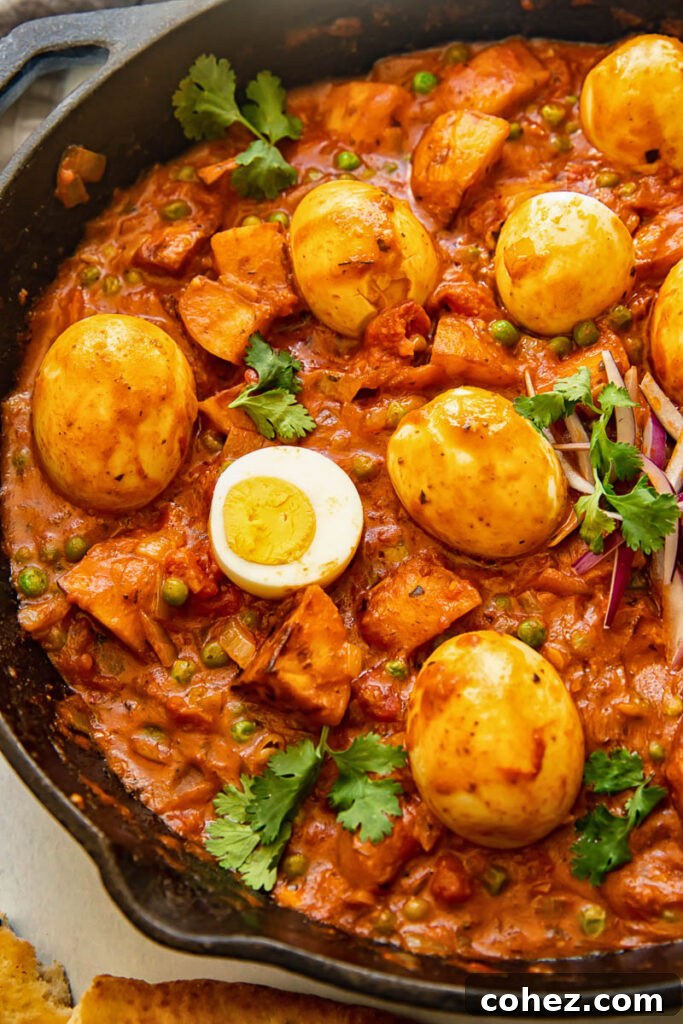
The true star of this dish, however, is the addition of perfectly hard-boiled eggs. These provide a wonderfully creamy texture to the rich, warming, and aromatic curry sauce. Beyond their comforting texture, eggs are an excellent source of high-quality protein, making this Indian egg curry a nutritious and satisfying meal that will keep you coming back for more.
Whether you’re a seasoned vegetarian or simply looking to incorporate more meatless meals into your diet, this egg curry offers a deeply flavorful and nourishing experience that is both easy to prepare and incredibly rewarding.
The Rich World of Vegetarian Curries in India
For many outside of India, the concept of a curry often revolves around meat-centric dishes like chicken tikka masala or lamb rogan josh. However, within India, vegetarian curries are not just common; they are a cornerstone of the culinary landscape, celebrated for their incredible diversity, depth of flavor, and nutritional value. India’s rich vegetarian tradition, rooted in cultural and religious practices, has fostered centuries of innovation in meatless cooking, resulting in a vast repertoire of truly stunning plant-based dishes.
The common misconception that meat is essential for flavor often overlooks the sophisticated techniques and extensive use of spices that define Indian vegetarian cuisine. Expert Indian cooks masterfully extract profound flavors from vegetables, lentils, dairy, and grains, creating curries that are just as, if not more, complex and satisfying than their meat counterparts. The secret lies in a diverse set of spices and meticulous cooking processes.
Building a fully stocked spice pantry can indeed be a daunting and costly endeavor for the average home cook, especially when many individual spices might only be used occasionally. Fortunately, the culinary world offers a convenient shortcut: high-quality curry pastes. These pastes are expertly blended to include a complex array of fragrant spices, offering an authentic taste without the need to buy and grind dozens of separate ingredients. Opting for a reputable brand (Patak’s is often a reliable choice) ensures a fantastic flavor profile. What’s more, a single recipe can be transformed into an entirely new dish simply by swapping out one curry paste for another, opening up a world of culinary experimentation.
Another fundamental and incredibly simple technique for building exceptional flavor in any curry involves the foundational trio of onion, garlic, and ginger. Sautéing these aromatics together in oil creates a deep, savory umami base that is absolutely vital for a good curry. This process, though seemingly basic, unlocks a cascade of flavors and fragrances that become the backbone of your dish.
While a quick fry of onions for 5-7 minutes will certainly work, dedicating a little more time to this step can yield even more remarkable results. Allowing your onions to slowly caramelize over low heat for 10 minutes or even longer will deepen their sweetness and develop a richer flavor profile. Just be sure to keep a close eye on them; if they appear to be browning too quickly or sticking, a splash of water will prevent burning and help them soften beautifully. This patient approach to aromatics is one of the key secrets to a truly outstanding curry.
Crafting Your Delicious Egg Curry: A Step-by-Step Guide
This delightful egg curry recipe is designed for ease and maximum flavor, starting with the simple preparation of its two main components: eggs and potatoes. Begin by boiling your eggs for approximately 10 minutes to achieve a firm, hard-boiled consistency. Immediately transfer them to an ice bath or a bowl of very cold water. This not only halts the cooking process, preventing overcooked, rubbery whites, but also significantly cools the eggs, making them much easier to peel. While the eggs are cooling, peel and cube your potatoes, then brown them in a little oil until they develop a beautiful golden crust. This step adds texture and prevents them from disintegrating later in the curry. Once browned, set them aside.
As highlighted earlier, the core methodology for building this curry is a fundamental technique invaluable for any aspiring home cook. It’s all about layering flavors to create a rich and harmonious sauce. This foundational approach can be applied to countless other curry variations, making it a powerful skill to master.
To simplify the process and avoid the need for an extensive collection of individual spices, utilizing a good quality pre-made curry paste is highly recommended. For this recipe, Tikka Masala paste is an excellent choice due to its balanced flavor profile and versatility, frequently used in popular dishes like chicken tikka masala and paneer tikka masala. Its warm, mildly spicy notes complement the eggs and potatoes beautifully.
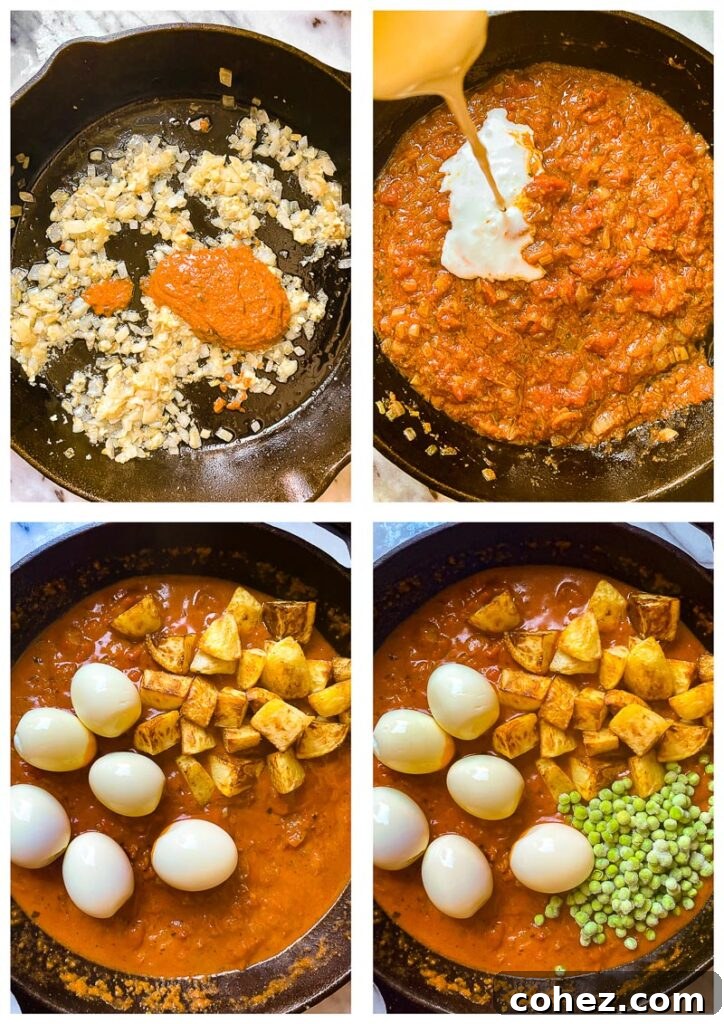
Before introducing the curry paste, the initial step involves sautéing the chopped onions. This is where patience pays off; allow the onions to soften and lightly caramelize over medium heat for several minutes. This crucial step extracts their natural sweetness and builds a fragrant foundation for your curry. Once the onions are translucent and slightly golden, add the minced garlic and grated ginger, cooking for another 30 seconds until their aromas are fully released. Be diligent during this stage to ensure nothing burns, which can impart a bitter taste to your dish.
Next, it’s time to incorporate the star spice blend: the curry paste. Stir-fry it for just a few seconds to toast the spices and enhance their aroma. Immediately follow with canned chopped tomatoes, allowing the mixture to simmer for about 5 minutes, letting the flavors meld. Finally, stir in the coconut milk, bring the curry to a gentle boil, then reduce the heat to a simmer for another 10 minutes to thicken the sauce and allow the spices to fully infuse. At this stage, gently fold in the peeled hard-boiled eggs, the browned potatoes, and the frozen peas.
The curry sauce might appear a bit thick at this point. Feel free to add a splash of water, a tablespoon at a time, until you reach your desired consistency. Continue to simmer the curry for an additional 10 minutes, ensuring the potatoes become tender without becoming mushy and falling apart. This final simmer allows all the ingredients to warm through and absorb the rich flavors of the sauce, resulting in a perfectly balanced and deeply satisfying Egg Curry.

Expert Recipe Tips for the Perfect Egg Curry
- Curry Paste Choice: While Tikka Masala paste offers a versatile and appropriate flavor profile for this recipe, feel free to experiment with other Indian curry pastes. Be aware that different pastes (e.g., Korma, Madras, Vindaloo) will result in distinctly different flavor experiences, allowing you to customize the dish to your preference.
- Onion Sautéing: The length of time you dedicate to frying the onions directly impacts the depth of flavor in your curry. For a richer, sweeter, and more complex taste, extend the sautéing time to 10-15 minutes over a low heat. If the onions begin to stick or brown too quickly, add a small splash of water to the pan to prevent burning and encourage gentle caramelization.
- Eggs: To ensure easier peeling and handling, always plunge hard-boiled eggs into cold water immediately after cooking. If time allows, boiling the eggs in advance (even a day before) can streamline your cooking process.
- Thickening the Sauce: If your curry sauce becomes too thick during simmering, a small amount of water or vegetable broth can be added gradually to achieve the desired consistency. Aim for a sauce that coats the back of a spoon without being overly watery.
- Don’t Overcook Potatoes: Keep an eye on the potatoes during the final simmer. They should be fork-tender but still hold their shape beautifully. Overcooked potatoes can become mushy and lose their appeal.
- Enhancing Freshness: A generous sprinkle of fresh cilantro (coriander) at the end not only adds a burst of vibrant color but also introduces a fresh, herbaceous note that perfectly complements the rich flavors of the curry.
Delightful Serving Suggestions for Your Egg Curry
A steaming pile of fluffy basmati rice is truly all you need to fully appreciate the aromatic depth and comforting richness of this Indian Egg Curry. It transforms this flavorful dish into a hearty and satisfying meal on its own. However, for those who love to elevate their curry dinners with a little variety and an authentic Indian spread, there are several wonderful accompaniments that can complete the experience.
To add an extra layer of flavor and texture, consider serving your egg curry with fragrant coconut rice, whose subtle sweetness beautifully balances the savory curry. For an additional protein punch and a different textual element, a side of comforting red lentil dal is an excellent choice. And no Indian meal is complete without warm, fresh bread; homemade naan bread or soft chapatis are perfect for soaking up every last drop of the delicious sauce.
To introduce contrasting flavors and enhance the complexity of your meal, always include a dollop of sweet mango chutney or a spicy Indian pickle on the side. These condiments offer bright, tangy, or fiery notes that cut through the richness of the curry. If you’re aiming to truly impress and create a grand Indian feast, consider adding another vegetable side dish like saag paneer (spinach with Indian cheese), which brings another dimension of flavor and texture to your spread.
Finally, a generous sprinkling of freshly chopped cilantro (coriander) not only adds a vibrant splash of green but also imparts a fresh, herbaceous aroma that brightens the entire dish, making it as appealing to the eye as it is to the palate.
Storage and Leftovers: Savoring Your Egg Curry Longer
One of the many joys of a well-made curry is how beautifully it develops flavor over time, and this Indian Egg Curry is no exception. In fact, allowing the leftovers to rest for a day or two in the refrigerator will only do wonders for its taste. The spices have more time to meld and deepen, resulting in an even more intense and harmonious flavor profile.
When properly stored, your egg curry can be kept for 3-4 days when refrigerated in an airtight container. This prevents any unwanted odors from permeating other foods in your fridge and keeps the curry fresh and delicious for future meals.
For longer storage, this egg curry freezes quite well, maintaining its quality for up to three months. Simply transfer it to a freezer-safe container, ensuring there’s minimal air exposure. Be aware that while the curry sauce and eggs will freeze and thaw perfectly, the texture of the potatoes might become slightly softer or mealy after freezing and reheating. Despite this minor change, the overall flavor will remain excellent.
To reheat, you have a couple of convenient options. For individual servings, the microwave works wonderfully: simply heat on medium power, stirring occasionally, until thoroughly warmed through. Alternatively, for larger portions or a more even reheat, transfer the curry to a saucepan and warm over medium-low heat on the stovetop. If using a saucepan, you may need to add a splash of water or vegetable broth to loosen the sauce to its original consistency and prevent it from sticking to the bottom of the pan. Ensure the curry is bubbling hot before serving.
More Delicious Vegetarian Curry Recipes to Explore
- Potato and Cauliflower Curry ‘Aloo Gobi’
- Chickpea and Butternut Squash Curry
- Paneer Tikka Masala
- Coconut Lentil Curry with Butternut Squash
- Sweet Potato and Lentil Curry
Egg Curry with Peas and Potatoes
Julia Frey of Vikalinka
10 mins
40 mins
50 mins
6

Ingredients
- 8 eggs
- 1 tbsp vegetable oil
- 2 potatoes
- 1 onion
- 1 tbsp garlic paste or 2 cloves garlic
- 1 tbsp grated ginger
- 3 tbsp curry paste, I used tikka masala
- 200g / 7oz canned chopped tomatoes
- 250ml / 1 cup coconut milk
- 150g / 1/2 cup frozen peas
- Cilantro, for garnish
Instructions
- In a large pot, cook the eggs for 10 minutes until hard-boiled. Immediately plunge them into cold water and let them cool completely, then peel.
- Peel and cube the potatoes. In a frying pan, brown them in vegetable oil until golden on the outside but not cooked all the way through. Remove to a separate plate.
- Add chopped onion to the pan and sauté over medium heat for 5-7 minutes until softened and translucent. Then add the garlic and ginger and cook for another 30 seconds until fragrant. Stir in the Indian curry paste and cook for a few seconds. Next, add the canned tomatoes and let the curry simmer for 5 minutes. Pour in the coconut milk, bring to a boil, then lower the heat and simmer for 10 minutes. Add the peeled eggs, browned potatoes, and frozen peas to the pan. If the sauce is too thick, add a splash of water. Let it simmer for another 10 minutes until the potatoes are tender but not falling apart.
- Garnish with fresh cilantro/coriander and serve hot with rice, naan bread, and mango chutney or a spicy pickle.
Notes
Nutrition
Carbohydrates: 20g |
Protein: 11g |
Fat: 15g |
Saturated Fat: 10g |
Polyunsaturated Fat: 1g |
Monounsaturated Fat: 3g |
Trans Fat: 0.02g |
Cholesterol: 218mg |
Sodium: 142mg |
Potassium: 601mg |
Fiber: 3g |
Sugar: 4g |
Vitamin A: 1631IU |
Vitamin C: 25mg |
Calcium: 81mg |
Iron: 4mg
Nutrition information is automatically calculated, so should only be used as an approximation.
Tried this recipe?
Let us know how it was!