
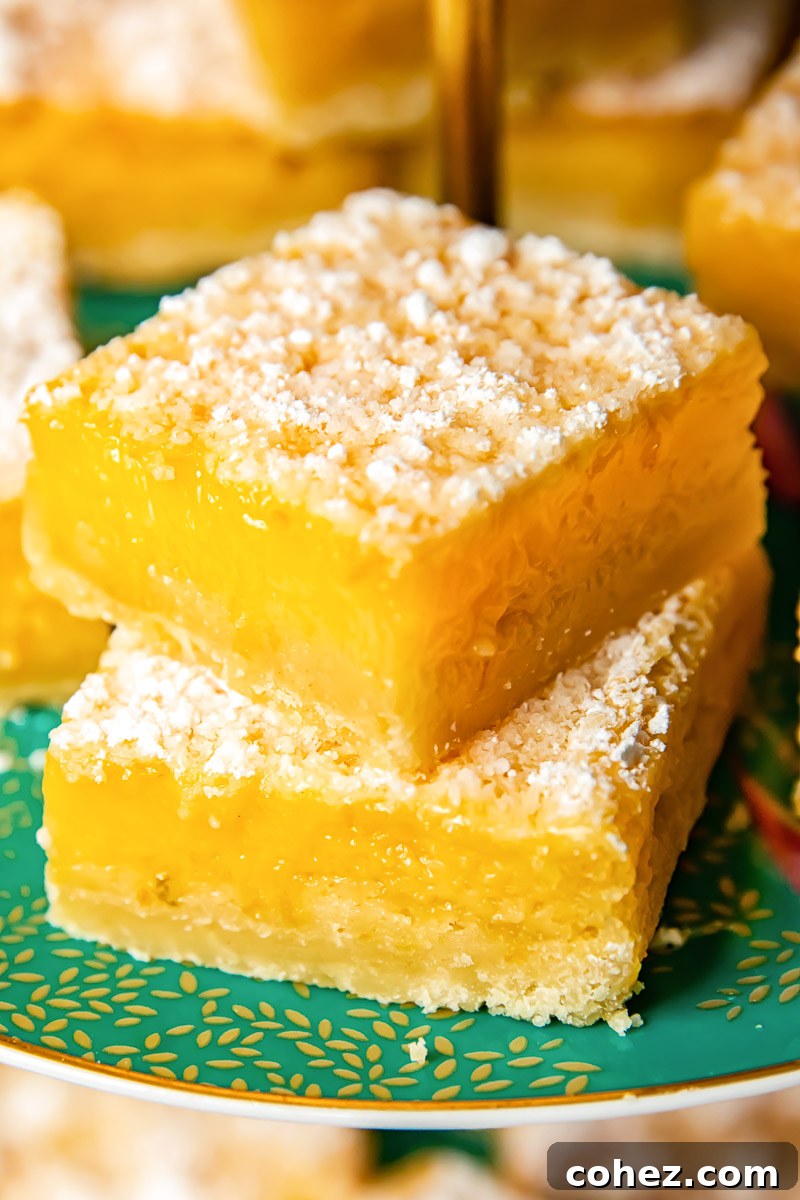
Brighten your day with a batch of irresistible homemade lemon bars, a quintessential sunshine dessert that promises pure delight in every bite. This classic treat features a divinely buttery and crumbly shortbread base, perfectly balanced with a vibrant, tangy lemon curd topping. Whether you’re a seasoned baker or just starting out, this easy-to-follow recipe will empower you to whip up these beauties with confidence. They’re simple to assemble yet deliver a heavenly delicious experience that will impress friends and family alike.
While a classic lemon curd holds a special place in my heart, for those who appreciate a unique twist, you might find yourself drawn to the bold flavor of a rhubarb curd. Its sassy pink hue and distinct tartness offer a delightful departure from the traditional. And if you’re looking to truly elevate your baking repertoire after mastering these curds, consider setting your sights on this show-stopping rose and rhubarb layer cake – a testament to how versatile these flavors can be.
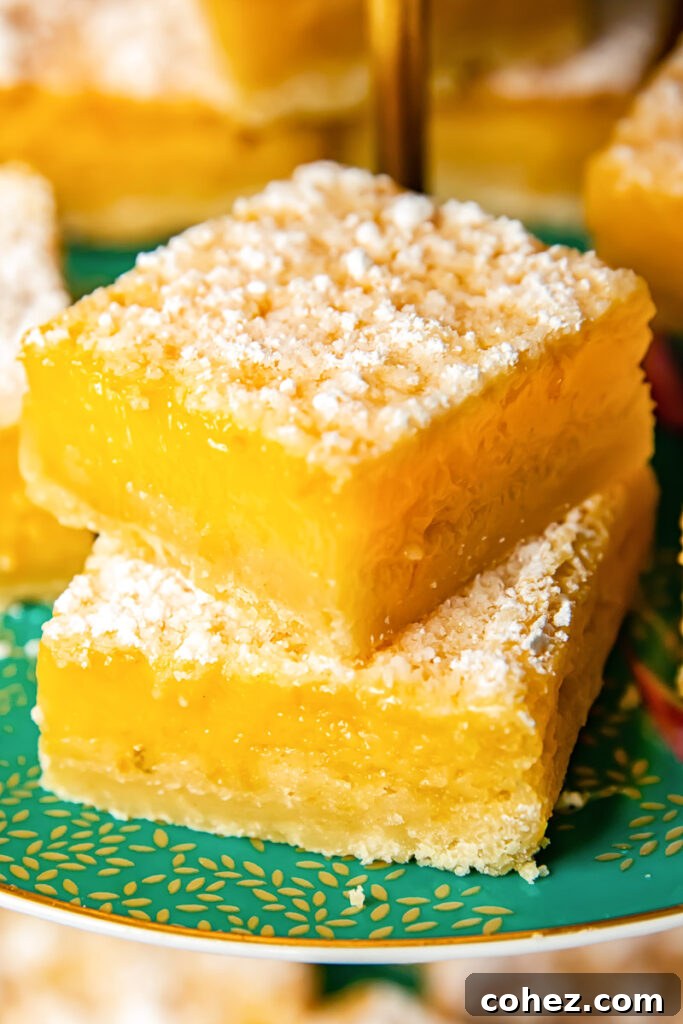
Easy Lemon Bars: Your Guide to Citrusy Perfection
Easy lemon bars are truly a mouthful of concentrated, citrusy sunshine. I understand that the world of baking can sometimes feel daunting, often demanding meticulous precision and endless patience. Frankly, I don’t always have an abundance of either! But the desire to enjoy freshly baked treats without the stress led me to perfect this simple lemon bar recipe, specifically designed for enthusiastic yet reluctant bakers seeking a quick and gratifying fix.
This delightful dessert is essentially a bake of two harmonious halves: a firm, flaky base and a smooth, zesty topping. I’ve carefully broken down the process into clear, manageable steps, ensuring you can flawlessly create a delicate shortbread crust that perfectly complements the silky, bright lemon curd. The beauty of this recipe lies in its simplicity and efficiency.
In under 50 minutes – a combined prep and baking time – you’ll transform a handful of pantry staples into a tray brimming with lemony happiness, ready to be sliced into elegant squares. The most challenging part, I assure you, is simply waiting for the bars to cool sufficiently before you can cut into them and enjoy. Trust me, the wait is worth it for perfectly set, clean-cut lemon bars. Go on, put the kettle on and let’s bake!
Crafting the Perfect Shortbread Base for Your Lemon Bars
The foundation of any exceptional lemon bar is a superior shortbread crust, and thankfully, this element is remarkably simple to master. Shortbread is a beloved classic, often featuring in “baking with kids” recipes due to its minimal ingredient list: typically just butter, plain flour, and sugar. This makes it an excellent opportunity to get younger family members involved in the kitchen, even if it sometimes results in a playful “flour snowstorm.”
For ultimate convenience and speed, I often turn to a This is an affiliate link.food processor to combine the shortbread ingredients. This method quickly brings everything together, creating a perfectly crumbly yet cohesive mixture. If a food processor isn’t available, don’t fret! A pastry cutter works wonderfully, or you can even use your fingertips to rub the butter into the dry ingredients until the desired texture is achieved – a slightly coarse crumb that holds together when squeezed.
A crucial tip for shortbread success is to avoid overworking the dough. Excessive handling can warm the butter too much, leading to a denser, more compact base rather than the light, melt-in-your-mouth crumb we’re aiming for. The goal is a delicate, tender shortbread that offers a satisfying snap when you bite into it, providing the ideal textural contrast to the smooth lemon topping. This simple attention to detail ensures your lemon bars are nothing short of perfection.

Crafting the Zesty Lemon Curd Filling: A Foolproof Method
For dedicated bakers who might have twirled around the kitchen with curd recipes before, you might notice that my lemon curd recipe for these bars takes a slightly different approach. This adaptation is intentional: I’ve specifically designed this curd to be quick, easy to assemble, and utterly foolproof, ensuring it’s the perfect companion to our simple shortbread base. This isn’t your traditional, intensely laborious stovetop curd.
Many more intricate curd recipes often call for a precise cooking method over simmering water (a bain-marie), combining only lemon juice, eggs, sugar, and butter, and stirring constantly until a thick, custard-like consistency is achieved. While delicious, this can be time-consuming and sometimes challenging for beginner bakers to get just right, risking curdling or an overly thin result.
To streamline the process and guarantee success for everyone, I’ve eliminated that often fiddly stovetop cooking step entirely. Instead, this recipe uses whole eggs and a small amount of flour to naturally thicken the mixture. This innovative approach means your lemon curd filling is immediately ready to pour over the pre-baked shortbread crust. It then sets beautifully in the oven alongside the crust, baking into a vibrant, firm, yet smooth layer. This simplified method ensures you get all the bright, tangy flavor of a classic lemon curd with none of the usual fuss, truly living up to the promise of “easy” lemon bars!
Expert Tips for Flawless Lemon Bars
- **Familiarize Yourself with the Recipe:** Before you even reach for your first ingredient, read the recipe from start to finish. This helps you understand the flow, anticipate steps, and ensures you have all necessary ingredients and equipment on hand. Measure all ingredients carefully, and pay close attention to the instructions and suggested cooking times. Remember, home ovens can vary, so always keep an eye out for visual cues mentioned in the recipe.
- **The Citrus Blend Advantage:** For an exceptionally bright and nuanced flavor, and to ensure optimal color, I’ve combined the juice and zest of both lemons and mandarin oranges in these bars. Lemons, especially during the off-season, can sometimes lack their peak vibrancy. The addition of mandarin oranges provides a perky boost, resulting in bars that are brighter in both hue and taste. Rest assured, they will still deliver that quintessential lemony flavor without tasting overly orange-like.
- **Embrace the Two-Half Approach:** As mentioned, this recipe is elegantly divided into two distinct halves: a buttery, crumbly shortbread crust and a smooth, tangy lemon curd filling. Understanding this structure helps simplify the baking process and ensures both components are perfected individually before coming together.
- **Achieve a Lump-Free Curd:** The key to a silky, professional-looking lemon curd is a perfectly smooth consistency. After combining your liquid ingredients, remember to sift in the flour and whisk vigorously. This helps prevent lumps from forming, guaranteeing a luscious, uniform filling that sets beautifully.
- **Patience is a Virtue (Especially When Cooling):** Once your lemon bars emerge from the oven, the temptation to slice into them immediately is immense! However, resisting this urge is critical for the best results. Allow them to cool completely at room temperature, then transfer them to the refrigerator to chill for several hours, ideally overnight. This extended cooling period allows the filling to fully set, resulting in perfectly firm bars and remarkably clean, sharp slices.
- **Effortless Removal with Parchment Paper:** To ensure your baked lemon bars lift cleanly and easily from the pan, always take a few moments to line your baking pan with parchment paper, leaving generous overhangs on all sides. These overhangs act as handles, allowing you to simply lift the entire slab of cooled bars out of the pan before cutting.
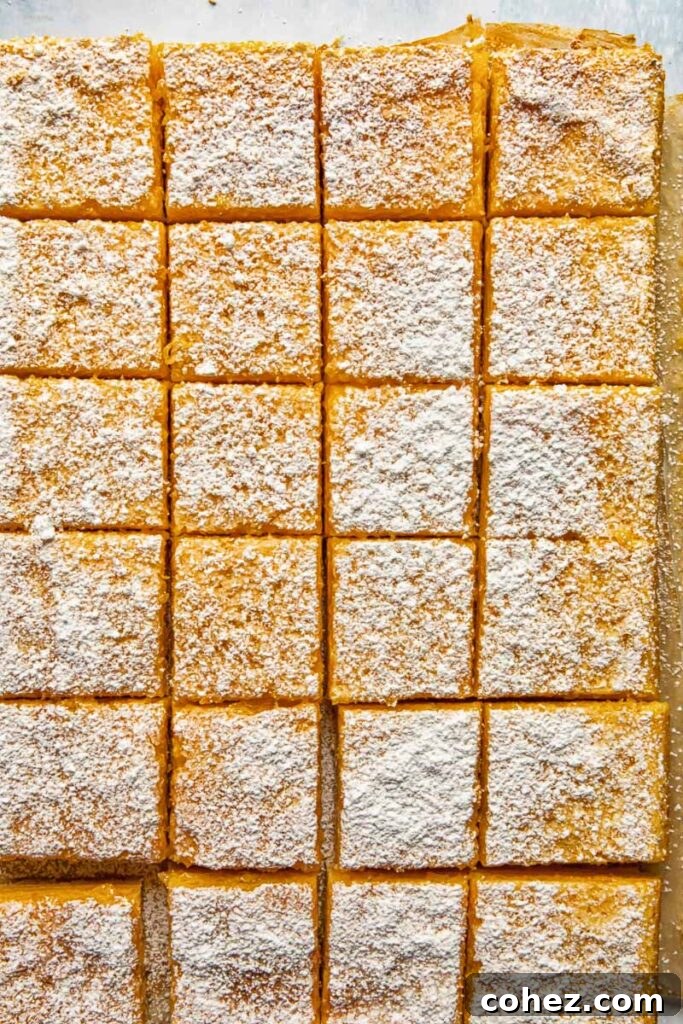
- **Precision Slicing:** For beautifully presented lemon bars, use the largest, sharpest knife you have. Slice through the length of the bake with a decisive motion. To maintain perfectly clean edges and prevent the filling from sticking or smearing between cuts, wipe your knife clean with a paper towel after each slice. This simple trick makes a significant difference in the final aesthetic.
Storage and Enjoying Your Leftover Lemon Bars
To preserve the fresh, vibrant flavor and perfect texture of your lemon bars, it’s essential to store them properly. Keep them cool; the refrigerator is undoubtedly the best place. Always store your lemon bars in an This is an affiliate link.airtight container. This not only maintains their moisture but also prevents them from absorbing any unwanted “fridgy” flavors. While these lemony lovelies are at their absolute peak within the first 3 days, they will happily keep for up to 5 days, continuing to offer a delightful citrusy treat whenever a craving strikes.
Other Delicious Desserts to Try
If you’ve enjoyed baking these luscious lemon bars and are eager to explore more delightful sweet treats, here are a few other recipes from my kitchen that I highly recommend:
- Easy Homemade Apple Crisp: A comforting classic, perfect for any season.
- Salted Caramel Pear Tarts (VIDEO): Elegant and indulgent, combining sweet pears with a hint of salt.
- Summer Peach Cake with Red Berries (VIDEO): A light and fruity cake, ideal for warm weather gatherings.
- Double Chocolate Mint Cookies: A rich and refreshing treat for chocolate and mint lovers.
Lemon Bars

Equipment
-
This is an affiliate link.9×13 baking pan
-
This is an affiliate link.Food processor (optional, for crust)
-
This is an affiliate link.Mixing bowl
Ingredients
For the Shortbread Crust
- 170g / 3/4 cup butter at room temperature, cubed
- 185g / 2 cups all-purpose (plain) flour
- 100g / 2/3 cup icing (powdered) sugar
For the Filling
- 3 lemons with zest
- 3 mandarin oranges with zest
- 35g / 1/4 cup all-purpose flour
- 6 large eggs
- 400g / 2 cups granulated sugar (or caster sugar)
- 1 tsp baking powder
- 1/2 tsp salt
- 1 tbsp icing (powdered) sugar (for dusting)
Instructions
-
Preheat your oven to 180°C/350°F. Line a 9×13 inch baking pan with parchment paper, ensuring the ends overhang to create “handles.” Set this prepared pan aside.
-
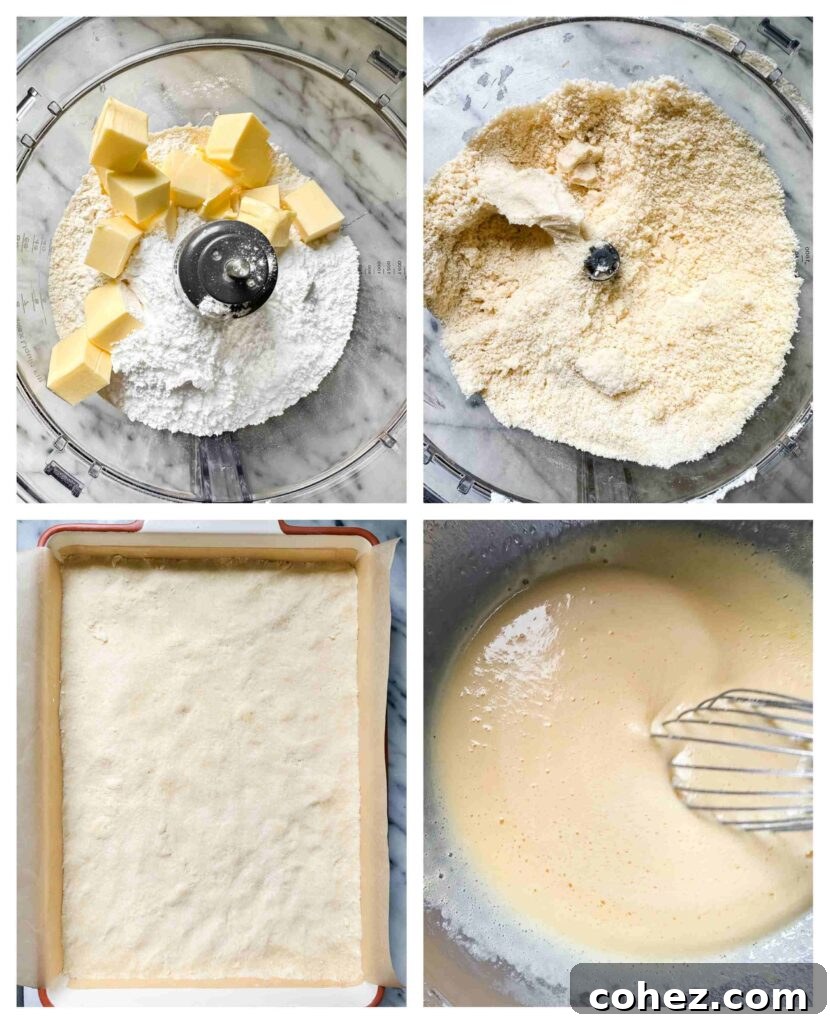
In a food processor, combine the flour, cubed room-temperature butter, and icing sugar. Pulse until the mixture forms coarse crumbs that, when squeezed in your hand, clump together. (Alternatively, you can achieve this texture by cutting the butter into the dry ingredients with a pastry cutter or your fingertips.)
-
Press the shortbread crumb mixture firmly and evenly into the bottom of the parchment-lined baking pan. Bake in the preheated oven for 20 minutes. The crust will appear pale and not fully browned at this stage.
-
While the shortbread crust bakes, prepare your lemon filling. In a large mixing bowl, zest the lemons and mandarin oranges. In a separate small bowl, squeeze enough juice from the lemons and mandarins to yield 155 ml (approximately 2/3 cup). Add this citrus juice to the bowl with the zest. Incorporate the eggs and whisk the mixture thoroughly. Sift in the flour and continue whisking until completely smooth and lump-free. Finally, add the baking powder, salt, and granulated sugar, mixing well until all ingredients are fully blended.
-
Remove the shortbread crust from the oven and immediately reduce the oven temperature to 160°C/325°F. Give the lemon filling another good whisk, then carefully pour it over the hot crust. Return the pan to the oven and bake for an additional 20-24 minutes, or until the filling is just set and slightly golden around the edges. It should still have a slight jiggle in the center.
-
Once baked, remove the pan from the oven and immediately sprinkle the top evenly with 1 tablespoon of icing sugar. Place the pan on a wire rack and allow the bars to cool completely to room temperature. For the absolute best texture and cleanest slices, I highly recommend chilling the lemon bars in the refrigerator overnight.
-
After thorough chilling, use the parchment paper overhangs to carefully lift the entire slab of lemon bars out of the pan. Place it on a cutting board. With a sharp knife, cut the slab into desired squares. For exceptionally neat edges, wipe the knife clean with a paper towel between each cut. Serve and enjoy!
Nutrition
Nutrition information is automatically calculated, so should only be used as an approximation.
Tried this recipe?Let us know how it was!