
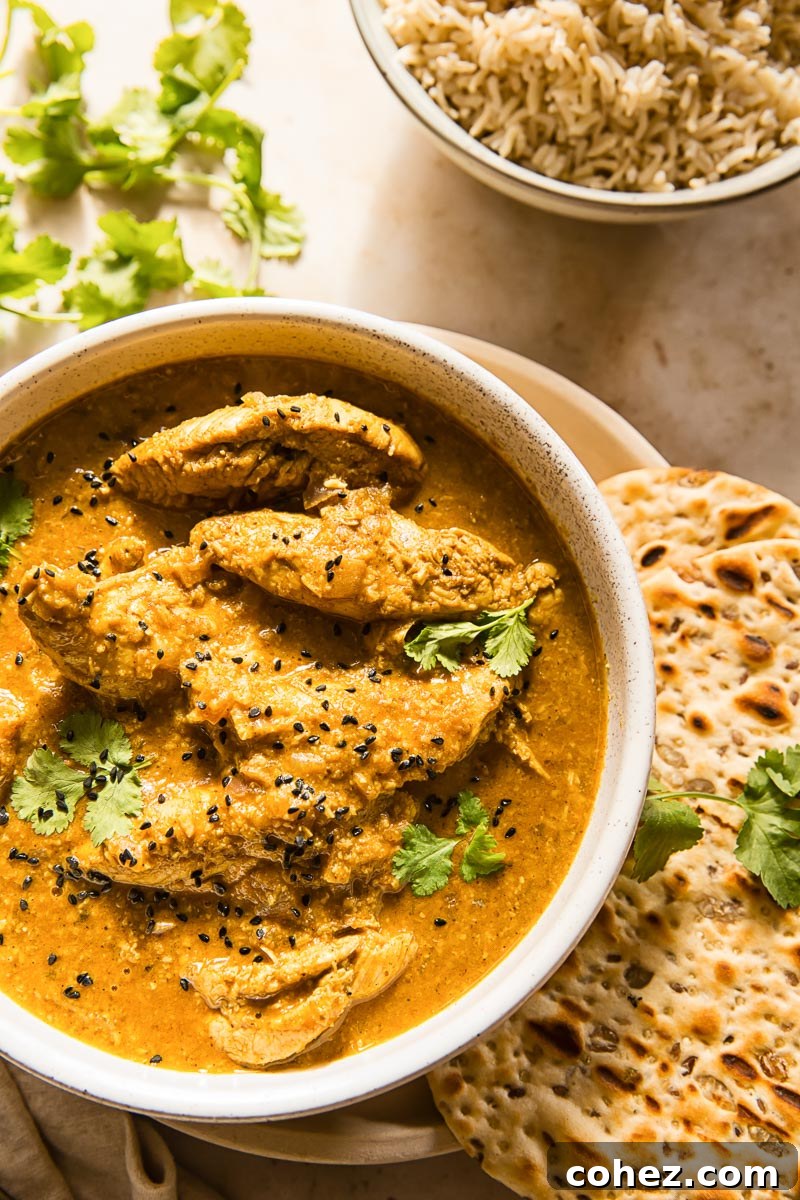
Discover the ultimate guide to crafting one of India’s most beloved and comforting chicken curries: Chicken Korma. This recipe delivers a dish that is exquisitely rich, delightfully mild, intensely aromatic, and utterly scrumptious! Achieving its signature creamy texture with the goodness of coconut milk and finely ground almonds, this version is also a fantastic dairy-free option, ensuring everyone can enjoy its luxurious flavors.
For those who appreciate a well-rounded Indian meal, this Korma pairs beautifully with traditional accompaniments. Imagine serving it alongside a hearty Nepalese Red Lentil Dal or a flavorful Moong Dal Tadka, creating a feast that’s both authentic and incredibly satisfying.
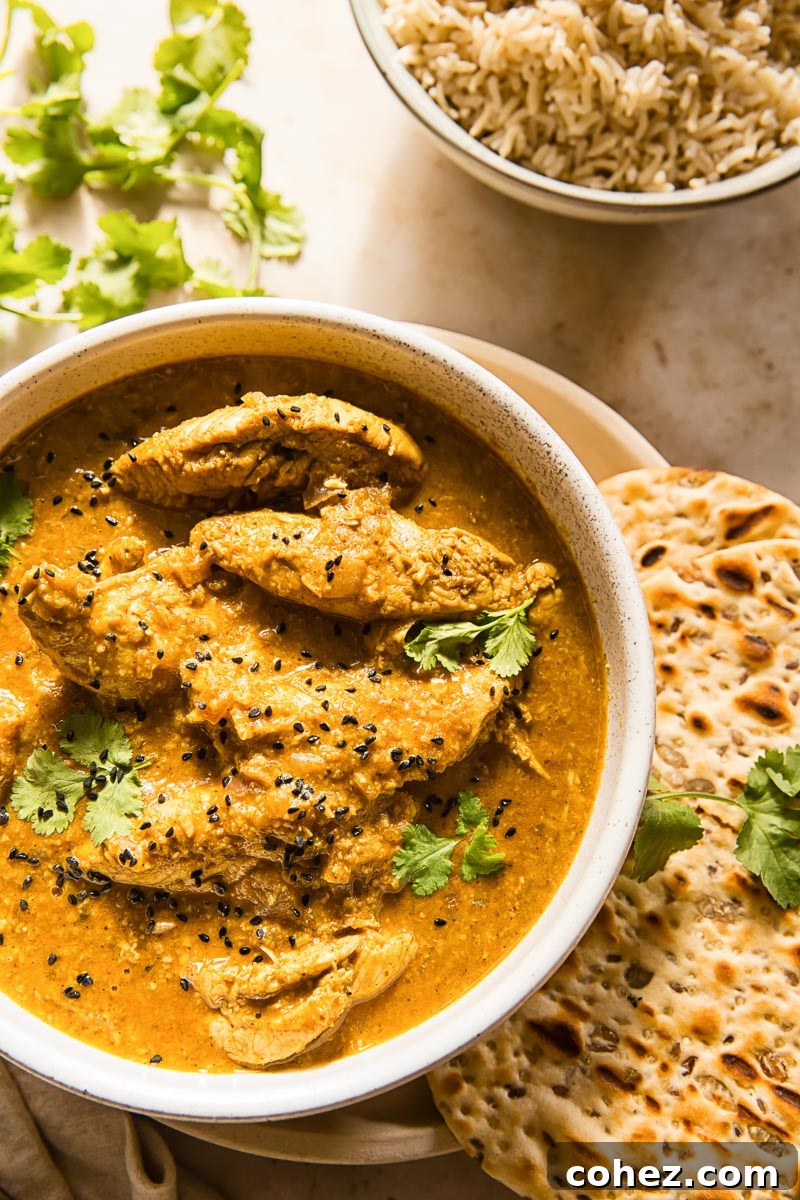
In Britain, curry holds a special place in culinary hearts, akin to how Mexican food is cherished in America or Chinese cuisine in Canada. It’s more than just a meal; it’s a cultural phenomenon, a go-to comfort food for nearly any occasion. Whether it’s a remedy after a long, stressful day, a warm embrace on a cold or rainy evening, a celebratory dish shared with loved ones, or simply a spontaneous craving, curry always fits the bill. The act of ordering a variety of dishes to share with friends and family makes it a communal experience, fostering togetherness and leaving everyone feeling utterly content.
Today, we’re diving into the recipe for Chicken Korma, a dish that holds a special place in my household. It was one of the very first curry dishes my children were enthusiastic to try, and for good reason. Its gentle nature and rich flavor profile make it incredibly approachable, even for the most discerning palates.
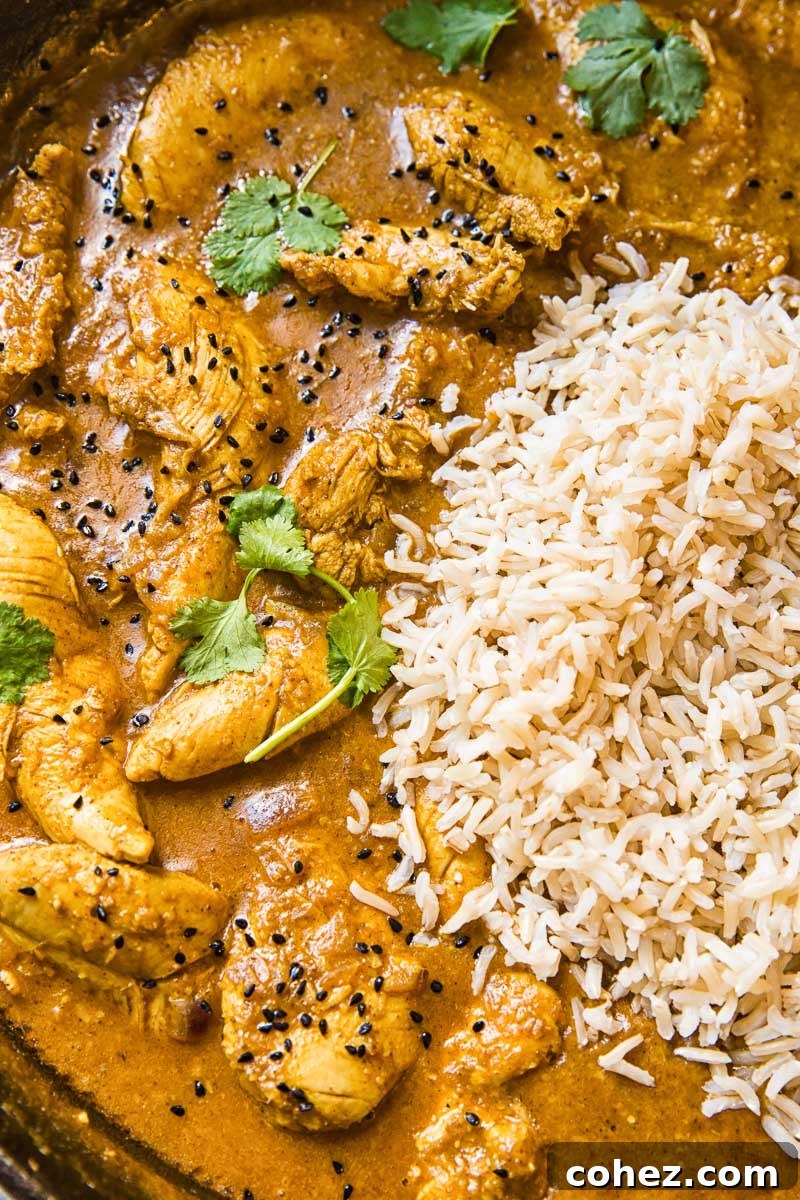
What is Chicken Korma? A Culinary Journey into Mildness and Richness
Chicken Korma stands apart from many other Indian curries due to its distinctive character. Renowned for its mildness and subtle sweetness, it offers a gentle introduction to the vibrant world of Indian cuisine. This makes it an ideal dish for those new to Indian food or anyone who prefers flavors that are rich and aromatic without being overwhelmingly spicy. Beyond its mild temperament, Korma is, quite simply, ridiculously tasty!
Defining Chicken Korma, however, can be nuanced, as recipes vary widely across regions and households. Despite these variations, a few core elements consistently define the dish. The ubiquitous presence of garam masala, a fragrant blend of ground spices, is non-negotiable, providing the curry with its signature depth of aroma. Equally crucial is the inclusion of ground nuts, typically almonds or cashews, which are instrumental in creating Korma’s characteristic rich, creamy texture and luxurious flavor. These nuts, when finely ground, dissolve into the sauce, contributing to its velvety consistency and a subtle nutty undertone that is truly irresistible.
Is Chicken Korma Spicy? Demystifying the Mildness
Typically, no, Chicken Korma is not spicy, at least not in the popular British Indian restaurant tradition. It’s celebrated for its very mild flavor profile, often featuring a hint of sweetness that appeals to a broad range of palates. What it lacks in heat, it more than makes up for in aroma. The blend of spices, even without intense chili, creates an incredibly fragrant experience. Your kitchen, and indeed your entire home, will be filled with an intoxicating scent that promises a truly delicious meal.
Building on this gentle, sweet flavor profile, I’ve even experimented with similar dishes to great success. If you find yourself captivated by the delicate balance of Korma, I highly recommend trying a Mango Chicken Curry for another delightful journey into mild, fruit-infused Indian flavors.
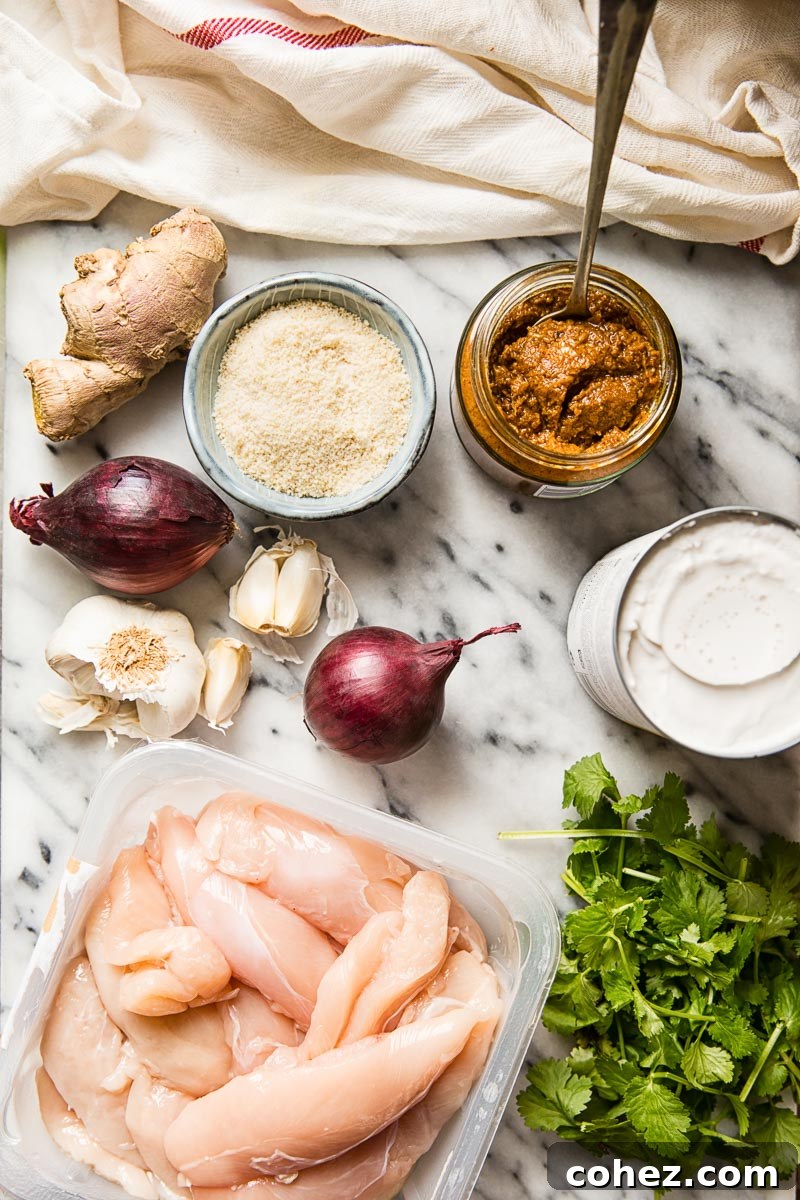
Crafting the Perfect Korma Sauce: Convenience Meets Authentic Flavor
While the idea of making an Indian curry from scratch can be incredibly appealing, it often involves an extensive list of individual spices and a significant time commitment. Achieving that truly authentic, balanced flavor profile requires not just skill and practice, but also a deep understanding of spice blending. For many, this level of dedication isn’t always feasible with busy schedules.
This is where high-quality, supermarket korma pastes become a culinary hero. They offer an incredible shortcut to phenomenal taste, packing all the complex flavors of numerous spices into one convenient jar. My personal favorite is Patak’s Korma Paste (ensure you get the paste, not the cooking sauce, as the paste provides a much richer flavor foundation), followed closely by the Korma paste from Marks and Spencer. Patak’s is particularly accessible, as it’s sold internationally and widely available, making it easy for home cooks everywhere to achieve fantastic results.
That being said, even with a superb curry paste as the foundation, there are a handful of fresh ingredients I always add to elevate my Chicken Korma sauce. These additions introduce fresh aromatics and enhance the overall richness and depth, transforming a good base into an extraordinary curry.
Unlocking the Flavor: Ingredients and Method for a Stellar Chicken Korma
Beyond the essential chicken, which can be either skinless, boneless chicken breasts or thighs (thighs often lend more moisture and flavor), the sauce itself doesn’t require an overwhelming number of ingredients. The curry paste forms the robust flavor base, and the remaining additions are what build the dish’s signature richness and creamy texture.
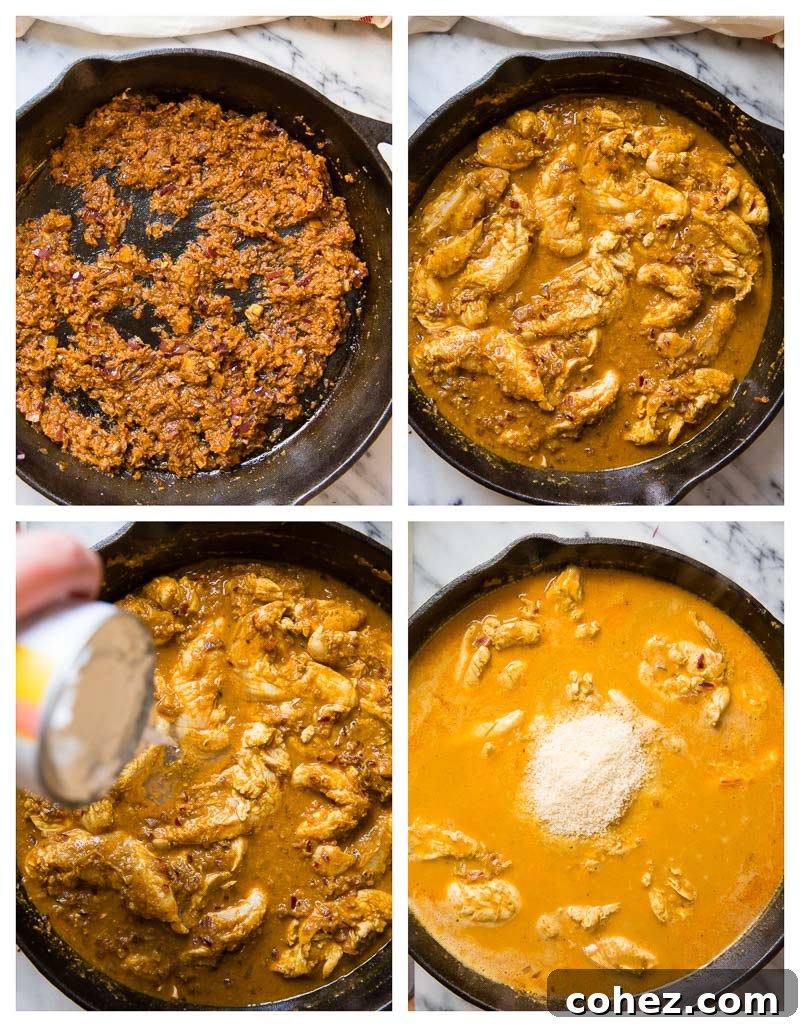
Every great Indian dish often begins with what I affectionately call the “holy trinity” of Indian cooking: onions, ginger, and garlic. I begin by slowly sautéing the finely chopped onions in a little oil. This slow cooking process is crucial; it allows the onions to caramelize gently, releasing their sweetness and building a foundational depth of flavor. To prevent burning and ensure even softening, I add a small splash of water occasionally, helping the onions to collapse into a beautiful, tender base. Once the onions are golden and soft, the aromatic fresh ginger and pungent garlic are added, cooked just until fragrant to unlock their full potential.
Next, the star of the show, the Korma paste, is stirred into the aromatic onion mixture. Cooking the paste for a minute or two, while continuously stirring, allows its complex spices to bloom and release their intoxicating aromas. Chicken pieces are then added directly to this fragrant paste, stir-fried until they are sealed on the outside. This quick searing helps lock in the juices and flavor, preparing the chicken for its slow simmer in the rich sauce.
The remaining steps are remarkably simple, yet yield profound results. In goes the creamy coconut milk, a touch of water (adjusted based on your paste’s consistency), and the finely ground almonds. This combination is whisked together, brought to a gentle boil, and then allowed to simmer on low heat for approximately 40 minutes. This simmering period is essential: it tenderizes the chicken, allows the flavors to meld beautifully, and gradually thickens the curry to its desired luscious consistency. While many Korma recipes traditionally use heavy cream, my preference for coconut milk offers a delightful depth of flavor and ensures this dish is dairy-free, a crucial consideration for my son and me, as we are both lactose intolerant. This swap means a creamy, rich Korma can be enjoyed by all without compromise.
Expert Tips for Your Best Chicken Korma
- **Embrace Quality Curry Paste:** Using a high-quality curry paste is an excellent strategy for incorporating a vast array of Indian spices without needing to stock dozens of individual ingredients in your pantry. Since the paste forms the very backbone of the flavor, investing in a good brand like Patak’s is money well spent.
- **Adjust Water to Paste Consistency:** Curry pastes can vary significantly in their moisture content. Patak’s paste, for instance, tends to be quite dry, often requiring the full amount of water suggested. If you’re using a runnier paste, you may need to reduce the amount of added water to achieve the perfect sauce consistency. Trust your judgment!
- **Slow-Cook Your Onions for Deep Flavor:** The longer and slower you cook your onions, the more flavor they will impart to your curry. Aim for a low heat and a minimum of 5 minutes, though extending this to 10-15 minutes (or even longer, if time allows) will develop a richer, sweeter foundation.
- **Choose Your Chicken Wisely:** While chicken breasts are convenient and easy to work with, chicken thighs often yield a moister, more flavorful, and more forgiving curry. If opting for thighs, boneless varieties will save you time and effort.
- **Ginger and Garlic Shortcuts:** For ultimate convenience without sacrificing flavor, consider using pre-made ginger paste and garlic paste. I always keep jars of these in my fridge; they are fantastic time-savers that make weeknight curry cooking a breeze!
Completing Your Indian Feast: Serving Suggestions for Chicken Korma
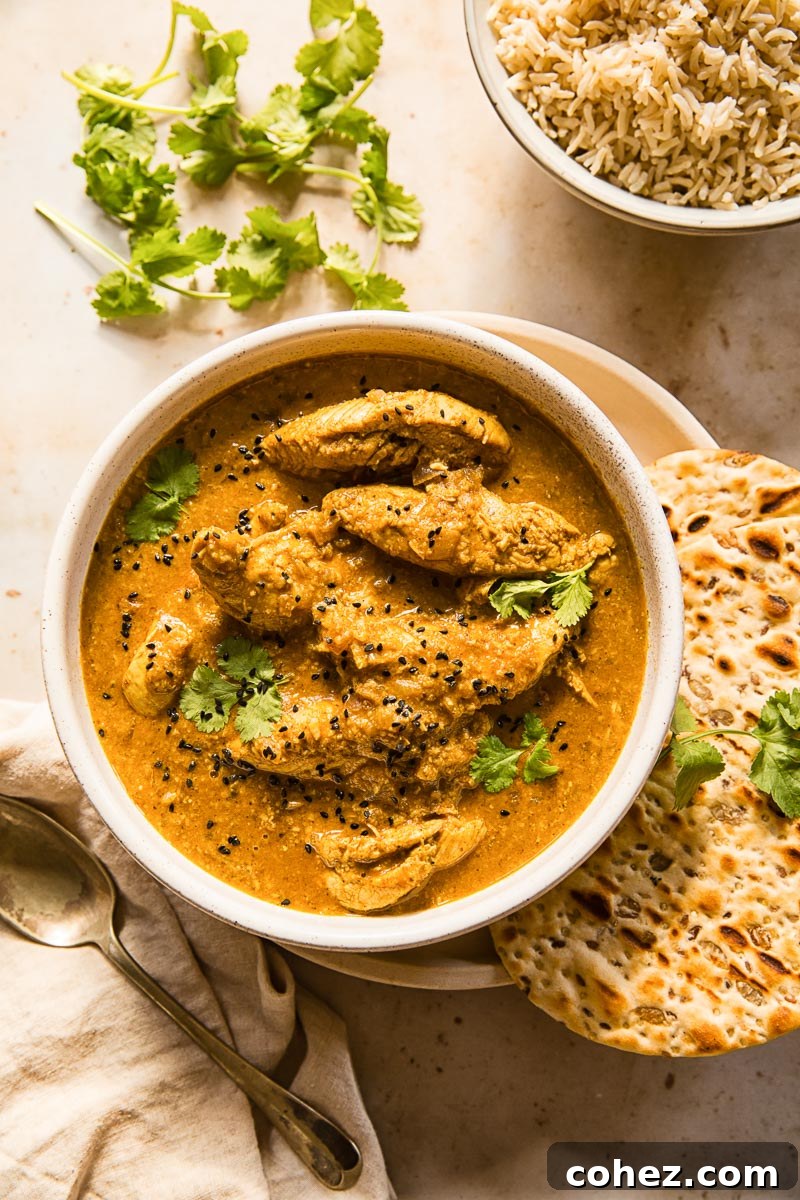
The true magic of an Indian meal often lies in the array of dishes spread across the table, a vibrant tapestry of flavors and textures. While Chicken Korma is undoubtedly the star, it shines even brighter when surrounded by complementary side dishes. The mainstays that are simply essential for any proper Indian table are fragrant basmati rice and warm, pillowy naan bread. The rice absorbs the rich sauce beautifully, while the naan is perfect for scooping up every last drop of the creamy curry.
To truly elevate your meal and make it a complete feast, I highly recommend including additional sides. Dishes like Saag Paneer, with its vibrant spinach and rich cheese, or a comforting Aloo Gobi, a simplified cauliflower and potato curry, are perfect for adding variety, color, and nutritional balance to the meal.
For an added layer of texture and fiber, consider opting for brown basmati rice instead of white. Its nutty flavor complements the Korma wonderfully. And speaking of excellent pairings, the Cauliflower and Potato Curry Aloo Gobi truly goes exceptionally well with this mild chicken recipe, offering a hearty vegetable counterpoint.
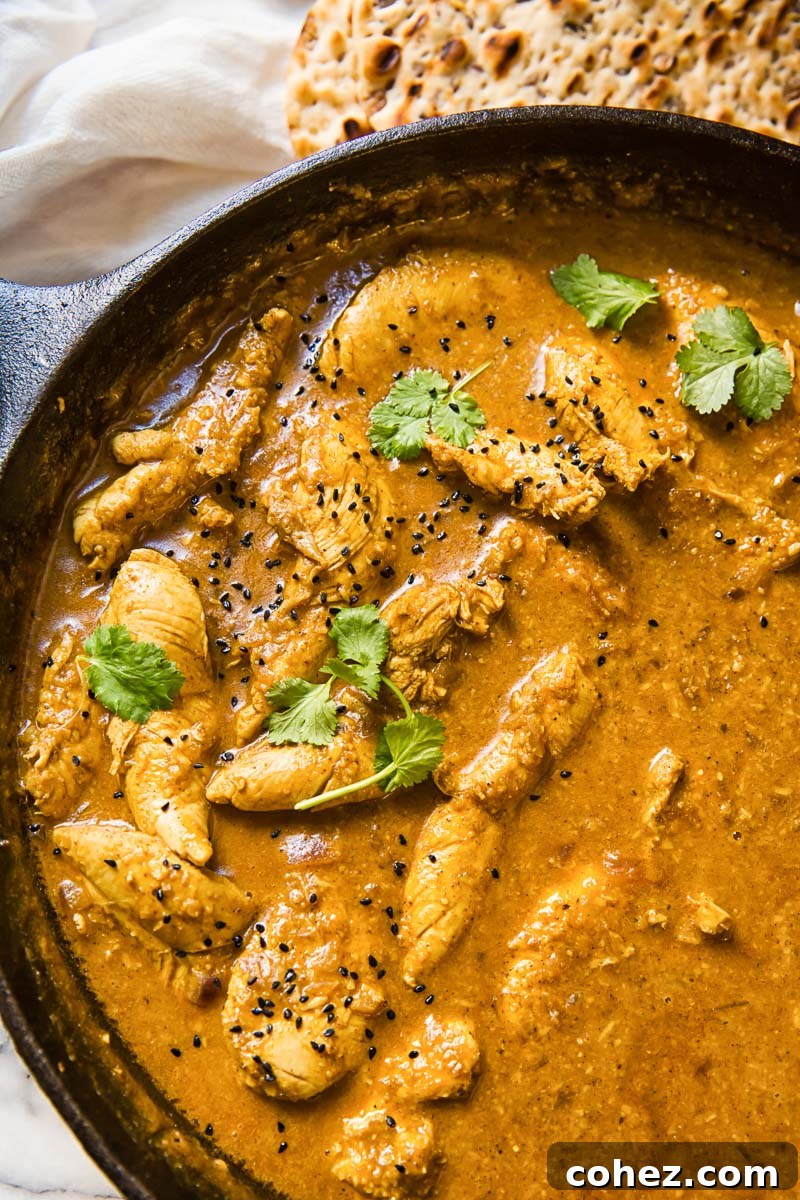
Finally, to finish the dish with a flourish and guarantee that coveted ‘wow!’ factor, always garnish generously. A sprinkle of fresh cilantro (or coriander, as it’s known in the UK) adds a bright, herbaceous note, while a scattering of nigella seeds provides a subtle oniony crunch and beautiful visual appeal. For an extra touch of richness and a tangy counterpoint, a small drizzle of plain yogurt can also be a lovely addition just before serving.
Storage and Leftovers: Enjoying Your Korma for Days to Come
One of the many wonderful things about curries is how well they store, often tasting even better the next day as the flavors have more time to deepen and meld. Leftover Chicken Korma can be easily refrigerated in an airtight container for 3-4 days, making it perfect for meal prep or a quick weeknight dinner.
When it comes to reheating, the best method is to use a saucepan or pot on the stovetop over medium-high heat. If the curry has thickened considerably in the fridge, add a splash of water or a little extra coconut milk to achieve your desired consistency. Bring it to a gentle boil, stirring occasionally, and it will be ready to serve. For those times when you need something even quicker, a microwave will also work effectively, though stovetop reheating often provides a more even warmth.
Curries are also fantastic candidates for stocking your freezer with convenient, made-ahead meals. If you plan to freeze your Chicken Korma, a crucial tip is to use full-fat coconut milk in the recipe. Reduced-fat coconut milk tends to develop a slightly grainy or separated texture after thawing, which, while not a safety concern, can be less pleasant to eat. Full-fat coconut milk holds up much better to freezing and thawing, preserving the creamy consistency of your delicious Korma.
More Delicious Indian Curry Recipes to Explore
- Chickpea and Butternut Squash Curry
- Indian Spiced Meatballs in Curry Sauce
- Butter Chicken
- Mulligatawny Soup
- Coconut Lentil Curry with Butternut Squash
Chicken Korma
Print Recipe
This chicken Korma recipe is rich, mild, aromatic and utterly delicious! Made creamy with coconut milk and ground almonds it is also dairy free!
Equipment
- Cast iron casserole dish
Ingredients
- 2 tbsp vegetable oil, or ghee
- 2 small onions, or 1 large
- 1 tbsp fresh ginger, grated
- 3 cloves garlic, pressed
- 250ml / 1cup Korma Paste, such as Patak’s
- 250ml / 1cup water, might not be necessary if paste is runny
- 1kg / 2lbs skinless, boneless chicken breasts, cut into chunks
- 400ml / 14 oz coconut milk, full fat works better
- 4 tbsp ground almonds
- 2 tbsp shredded coconut, optional
- salt to taste
- 1 tbsp Nigella seeds, optional
Instructions
- Fry onions in oil for 5 minutes over low heat in a large deep pan, then add grated fresh ginger and pressed garlic and cook for 2 minutes longer.
- Add the pre-made Korma paste and fry for 1-2 minutes over low heat. Add the chicken pieces and cook until just about sealed. Incorporate water, coconut milk, ground almonds, and desiccated coconut. Salt according to taste, as the amount will vary depending on your paste. Turn the heat up and bring to a boil. Once boiled, lower the heat and let the curry simmer uncovered for 30 minutes or until desired consistency.
- Sprinkle with fresh cilantro/coriander and Nigella seeds before serving with rice.
Notes
- Use your own discretion when adding water to the curry. I find it necessary when using Patak’s curry paste as it is quite dry. However, if using a runnier paste, adjust the amount of water.
- The more time the onions have to fry, the more flavor they will add to the curry. Use a low heat and a minimum of 5 minutes.
- I’ve suggested pressed garlic and grated ginger, but often I’ll use ginger paste and garlic paste instead. I usually have a jar of each in my fridge ready to go, and highly recommend it as a way to make cooking even easier.
- I’ve used chicken breasts in this recipe as they are easy to work with. But often I’ll go for chicken thighs instead, which are moister and more flavorful.
Nutrition
Nutrition information is automatically calculated, so should only be used as an approximation.
Tried this recipe?
Let us know how it was!