
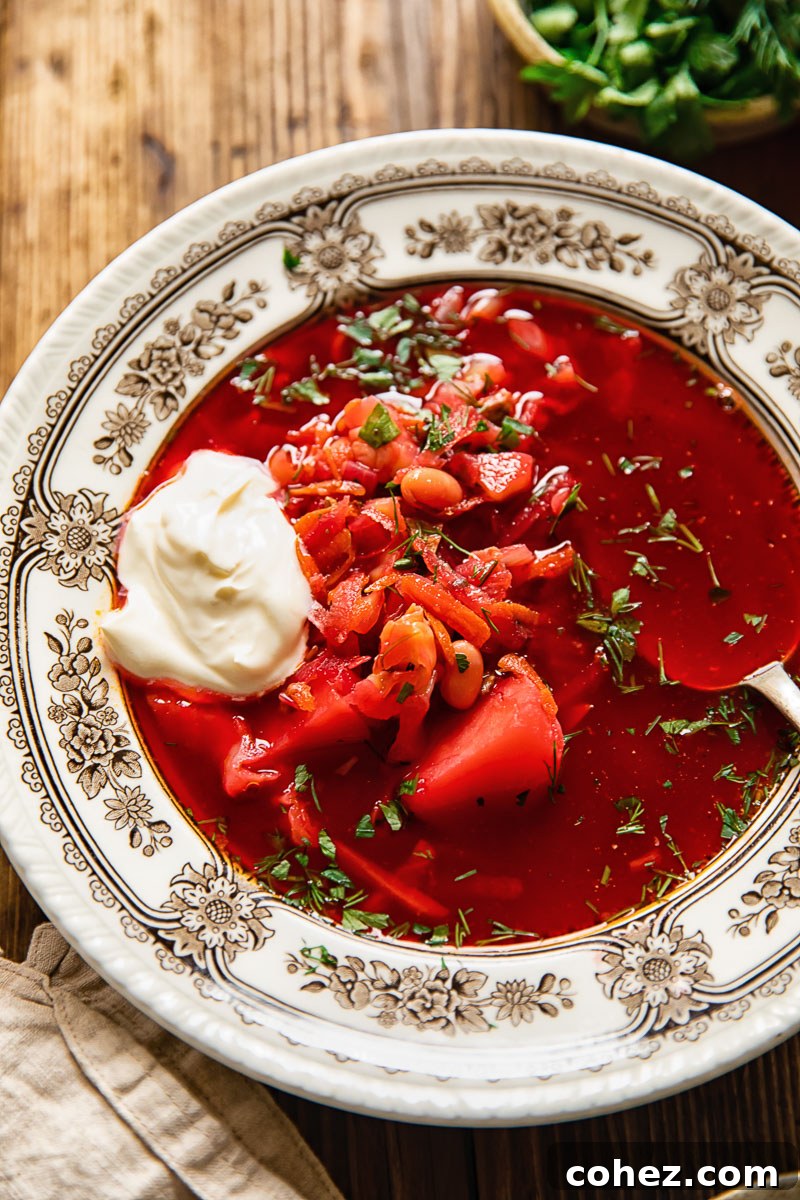
Experience the vibrant heart of Ukrainian cuisine with this exquisite Vegetarian Borscht. A true culinary masterpiece, this ruby-red beetroot soup is a feast for the senses, brimming with nourishing vegetables and profound flavors. Whether enjoyed as a comforting starter or a complete, satisfying meal, this meat-free borscht offers a lighter, yet equally filling, alternative to traditional versions, making it easier to digest without compromising on its rich taste.
For an authentic experience, serve this hearty soup with a thick slice of freshly baked rye bread, perfect for soaking up every last drop of its delicious broth.
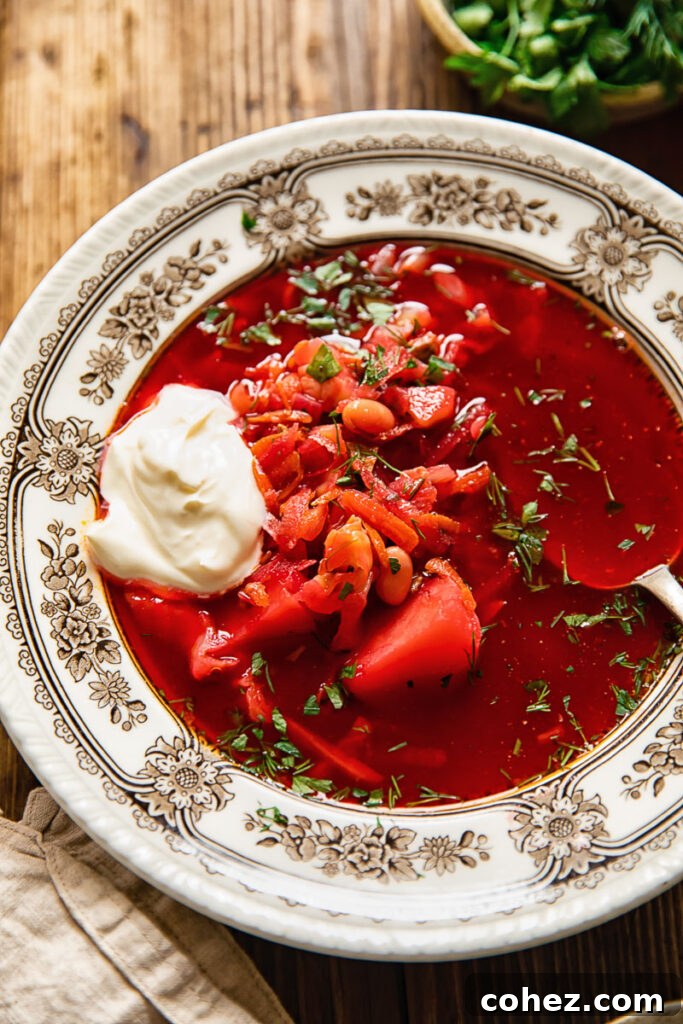
The name borscht itself carries centuries of history, stemming from the Old Slavic word for ‘cow parsnip’ or ‘hogweed.’ While these plants formed the foundation of early versions of the soup, lending it a distinctive sourness, rest assured that modern borscht, including this recipe, features no such wild greens. Instead, it celebrates a symphony of cultivated root vegetables and fresh produce.
As a family with deep appreciation for wholesome vegetables and cultural ties to the very region where borscht originated, this soup holds a special place in our hearts. It has evolved from its humble beginnings into a cherished dish, often gracing our tables during festive occasions like Christmas Eve and Easter, its vivid hues symbolizing warmth and celebration.
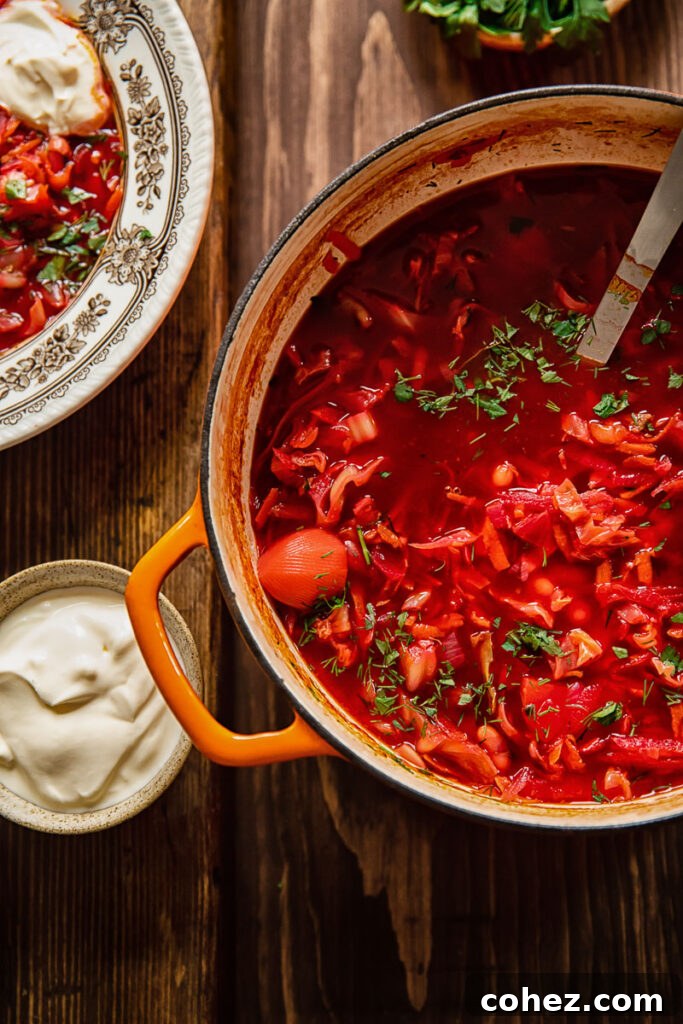
Understanding Borscht: A Culinary Journey Through History
Borscht, a dish now recognized globally, originated from very modest roots in what is present-day Ukraine. Initially, it was a staple for the rural poor, utilizing whatever ingredients were readily available, primarily wild plants. This humble “peasant food” has since undergone a remarkable transformation, evolving significantly in its ingredients, preparation, and even its characteristic color, captivating diners across the world.
The earliest forms of borscht bore little resemblance to the ruby-red soup we know today. Lacking beetroot, it was typically a clear or greenish broth, often slightly meaty due to additions of bones or small scraps, and notably sour from the fermentation of its main ingredient, hogweed. Historical accounts suggest it was even prized for its reputed ability to cure a medieval hangover!
Over the centuries, as culinary practices advanced and new ingredients became available, borscht began its fascinating evolution. Beetroot, first introduced in the 14th century, gradually became a defining component, imparting the soup’s iconic deep red color and earthy sweetness. This transformation allowed borscht to ascend from the simple fare of peasants to the lavish feast tables of European nobility, eventually spreading its appeal far beyond the continent to places like the United States.
Today, borscht is instantly recognizable by its stunning red shades, its harmonious balance of sour and earthy flavors, and its signature generous dollop of sour cream or crème fraîche. While red borscht is the most famous, variations abound. For a delightful summer twist, explore my recipe for green borscht, a refreshing alternative that beautifully showcases seasonal greens and contains no beets!
The Heart of Borscht: Essential Ingredients for Authentic Flavor
At its core, any authentic borscht celebrates the bounty of the earth’s roots. The foundational ingredients are beetroot, potatoes, carrots, and onions, each contributing distinct textures and flavors to the symphony. Cabbage stands as the sole non-root essential, adding a crucial crispness and bulk to the soup.
While traditional recipes often incorporate a small amount of meat, such as beef or chicken, along with a rich stock, embracing a vegetarian or even vegan approach, as in this version, yields a soup that is just as satisfying and deeply flavorful. My recipe demonstrates how mushrooms, tomatoes, and a careful selection of herbs can enhance the depth and complexity, providing a hearty and nutritious experience. Feel free to adapt with whatever beans or vegetables you have on hand, making it a versatile and economical dish.
The visual appeal of borscht is as important as its taste. The color is predominantly determined by your choice of root vegetables and their proportion. Beyond the well-known vibrant red, borscht can also be green (often made with sorrel) or even white. Interestingly, in some cultural or religious contexts, the specific color of borscht served can hold symbolic significance for different festive events.
Expert Tips and Recipe Notes for Perfect Borscht
- This vegetarian borscht is designed to be a substantial, stew-like soup. Expect it to be wonderfully thick, chunky, and deeply hearty – that’s precisely how it’s meant to be enjoyed!
- For the most intense and authentic earthy flavor, always opt for raw, uncooked beets. Their freshness will deeply color and flavor the broth. If fresh beets are unavailable, good quality vacuum-packed pre-cooked beets are a suitable alternative. Avoid canned beets, as they often lack the desired taste and texture.
- Incorporating dried mushrooms, especially porcini or a rich wild mushroom blend, into your stock infusion is a secret weapon for elevating this soup. They introduce an umami depth that beautifully complements the root vegetables. If dried mushrooms aren’t accessible, ensure you use a high-quality vegetable stock to form the flavorful base.
- In this meat-free rendition, cannellini beans stand in for the traditional beef. They provide a satisfying source of protein and a delightful textural bite, and their nutty flavor holds up well during cooking. However, feel free to experiment with other bean varieties from your pantry. Red kidney beans are excellent for maintaining the soup’s rich color palette, while borlotti beans offer a creamy, smooth texture.
- The final flourish is crucial! A generous sprinkle of fresh herbs like dill and parsley not only adds a burst of vibrant green but also provides a refreshing contrast to the earthy flavors of the soup. And, of course, no borscht is truly complete without a generous dollop of cooling sour cream or crème fraîche.
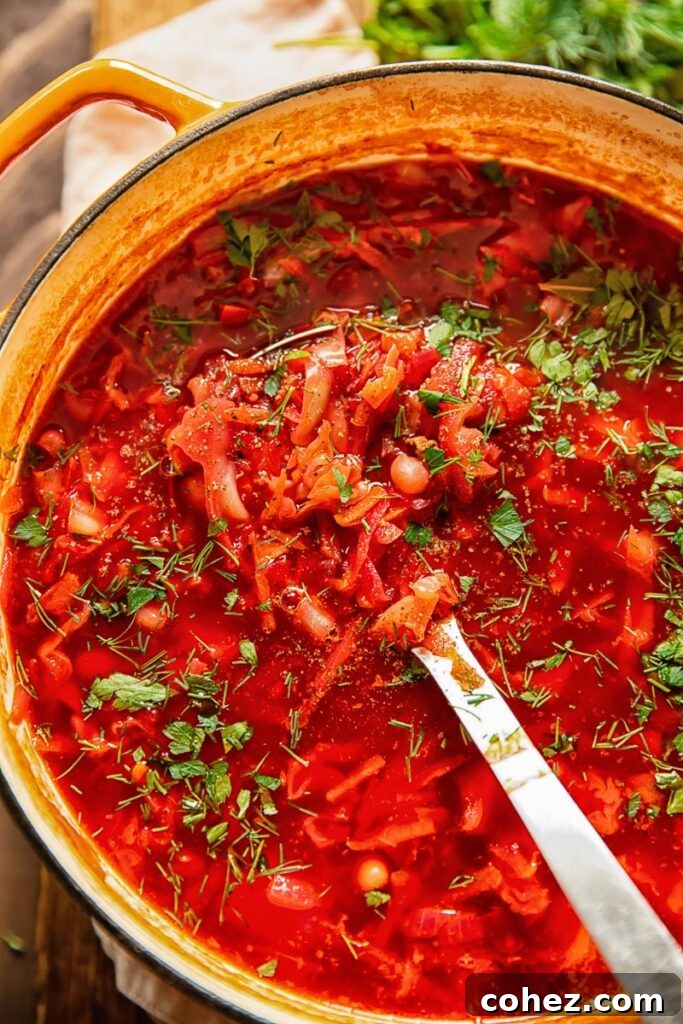
Serving Suggestions: Enhancing Your Borscht Experience
Historically, borscht was often served as a robust first course, paving the way for a main meal of meat and potatoes or other substantial dishes. However, culinary traditions evolve, and today, borscht is frequently enjoyed as a satisfying and complete meal in itself, especially this hearty vegetarian version.
To truly savor the authentic borscht experience, always serve it with a generous dollop of creamy sour cream or crème fraîche. This cooling addition perfectly balances the soup’s earthy and slightly tangy notes. A liberal scattering of freshly chopped herbs, such as fragrant dill and bright parsley, adds both visual appeal and a refreshing burst of flavor. I also highly recommend pairing your borscht with a few slices of crusty sourdough or another lovely fresh bread, ideally slathered with a smear of butter, perfect for dipping and scooping up every last drop.
Storage and Leftovers: Maximizing Your Borscht’s Freshness
One of the wonderful qualities of borscht is how well it keeps, and some even argue that it tastes even better on the second day after the flavors have had ample time to meld and deepen. Without the addition of sour cream (which is best added just before serving), any leftover borscht can be stored efficiently in an airtight container in the refrigerator for 2-3 days.
While technically possible to freeze, it’s generally not recommended for soups containing potatoes, as they tend to become grainy or mushy upon thawing and reheating. For the best texture and flavor, plan to enjoy your vegetarian borscht within a few days of preparation.
Explore More Delightful Vegetarian Soup Recipes
If you love hearty and wholesome vegetarian soups, be sure to check out these other delicious recipes:
- Hearty Harvest Minestrone Soup
- Comforting Curried Cauliflower and Cheese Soup
- Cream of Broccoli Soup with Smoked Gouda
- Flavorful Roasted Butternut Squash and Sweet Potato Soup
- Fresh Spring Minestrone Soup
Vegetarian Borscht
A vibrant vegetarian version of the legendary Ukrainian soup, packed with hearty vegetables cooked in a deeply flavorful broth.
Equipment
-
Large Pot
Ingredients
- 10g/1/3 cup dried porcini mushrooms
- 250ml/1 cup boiling water
- 2 litres/8 cups vegetable stock
- 2 bay leaves
- 1 medium beet, peeled and grated
- 180g/2 cups sliced cabbage
- 2-3 medium potatoes, cut into chunks
- 400g/14oz canned cannellini beans or kidney beans, drained
- 2 tbsp tomato paste
- 1 tbsp butter
- 1 tbsp olive oil or vegetable oil
- 2 medium carrots, grated
- 1 onion, chopped
- 2 cloves garlic, minced
- Salt to taste
- 1/2 lemon, juice only
- 2 tbsp fresh dill and parsley, for serving (optional)
- Sour cream or creme fraiche, for serving
Instructions
-
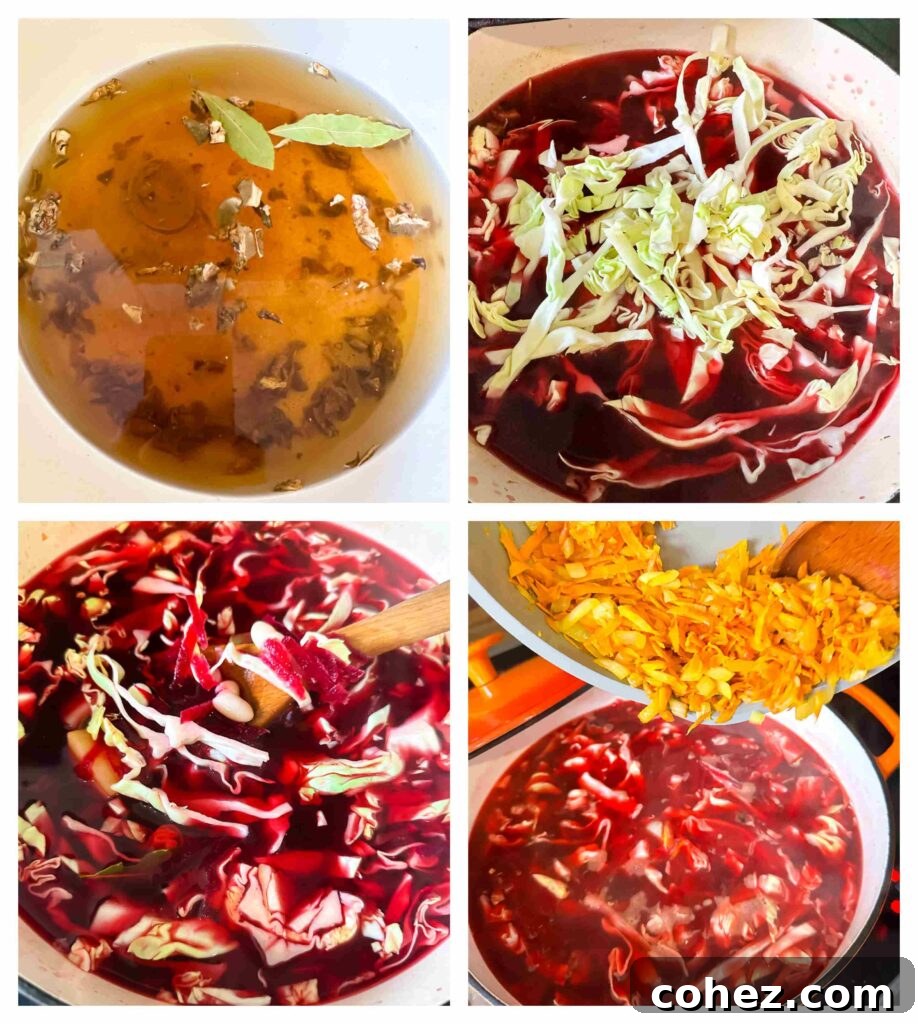
Pour the boiling water over the dried porcini mushrooms and set them aside to rehydrate for 20 minutes.
-
Meanwhile, prepare all your vegetables: peel and grate the beetroot, remove the core and slice the cabbage, grate the carrots, peel and cut the potatoes into even chunks, and finely chop the onion.
-
Once the mushrooms are rehydrated, carefully remove them from the liquid and chop them. Reserve the soaking liquid; it’s full of flavor and will be used in the soup.
-
Combine the vegetable stock, chopped rehydrated mushrooms, bay leaves, and the reserved mushroom liquid in a large soup pot. Bring this mixture to a gentle simmer. Once simmering, add the grated beets, potato chunks, drained beans, tomato paste, and sliced cabbage. Let it cook for 20 minutes, or until the potatoes are tender.
-
During the last 10 minutes of the soup’s cooking time, heat the butter and olive or vegetable oil in a separate pan over low heat. Add the chopped onion and grated carrots, sautéing gently until the onions are slightly softened and lightly browned. Then, stir in the minced garlic and sauté for another 30 seconds until fragrant. Add this aromatic sautéed mixture to the soup and continue cooking for 5 more minutes. Finish by stirring in the fresh lemon juice and seasoning with salt to taste.
-
Serve your delicious vegetarian borscht hot, garnished generously with fresh herbs (dill and parsley are highly recommended) and a dollop of sour cream or crème fraîche.
Nutrition
Nutrition information is automatically calculated, so should only be used as an approximation.
Tried this recipe?Let us know how it was!