
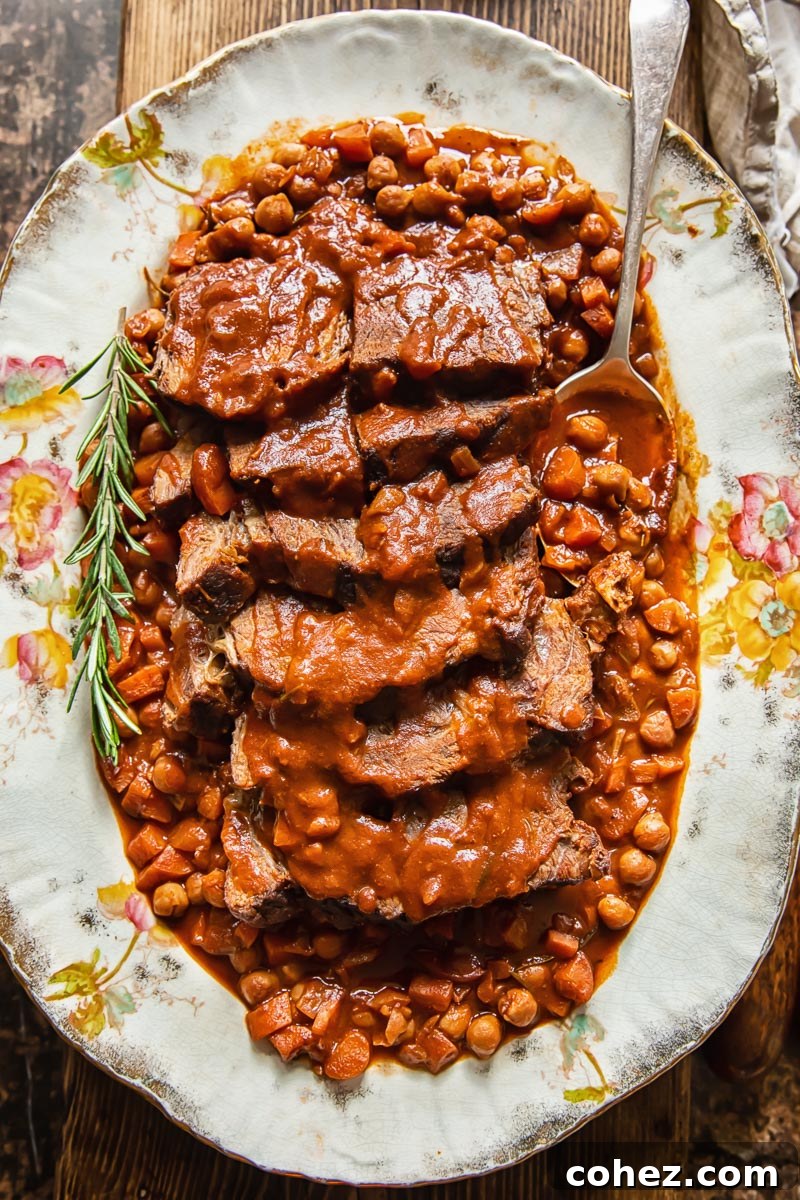
Experience the heartwarming embrace of a classic pot roast – the ultimate Sunday savior that promises a succulent slab of beef steeped in a rich, satisfying sauce, all without the need for constant stove-side attention. Once your prep is done, simply choose your preferred cooking method, then sit back, relax, and let the magic happen. This isn’t just a meal; it’s an experience designed to make your weekends truly your own.
There’s nothing quite like a perfectly cooked pot roast to bring warmth and comfort to your home. It’s a dish that embodies tradition, offering a deep, savory flavor that’s both rustic and refined. Imagine a tender, fall-apart beef roast, swimming in a velvety, vegetable-infused gravy, ready to be devoured by eager hands. It’s the kind of meal that makes memories and fills the house with an irresistible aroma.
To perfectly complement this magnificent centerpiece, consider serving it with Hasselback Potatoes with (or without) Gremolata or rich Scalloped Potatoes. Both are excellent choices for soaking up every last drop of that delectable sauce, ensuring no flavor goes to waste.
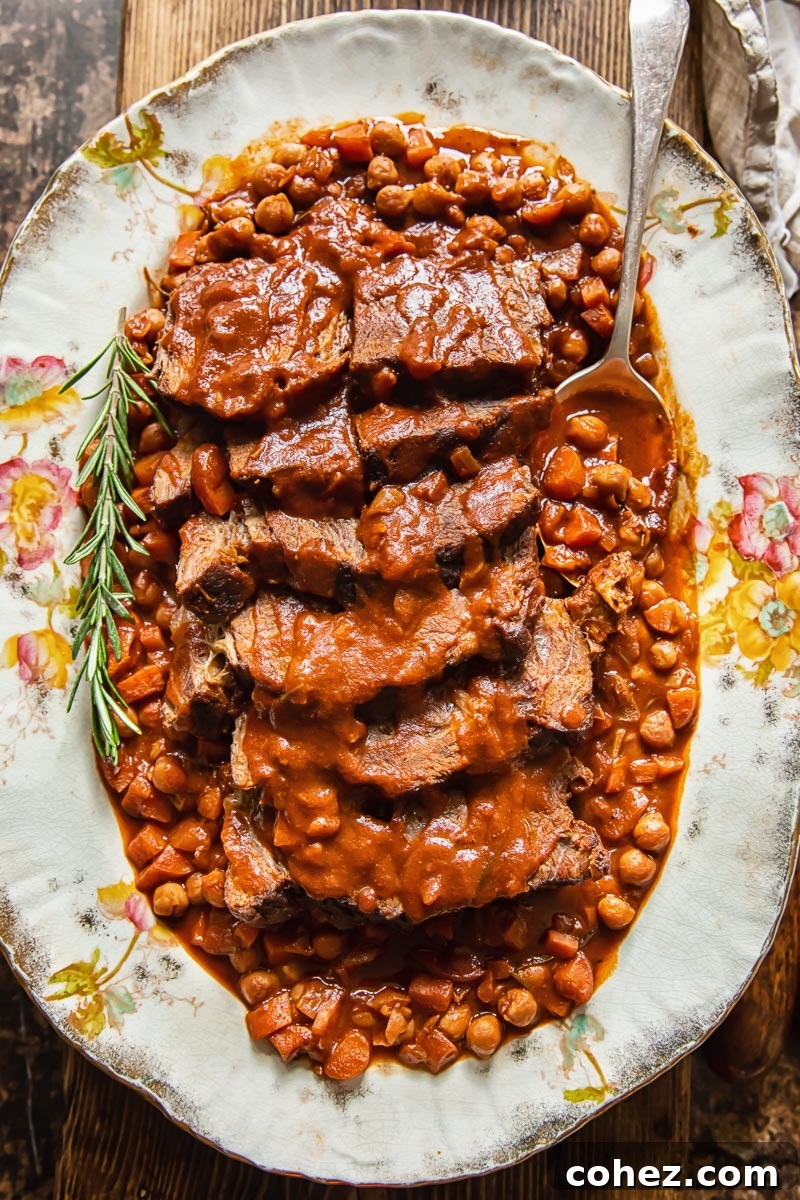
For many, Sundays are sacred. My personal ritual revolves around a leisurely morning, a refreshing long walk, and gathering for a substantial family meal. However, the last thing I want is to be confined to the kitchen all day, missing out on precious downtime. This pot roast recipe is specifically crafted to help you maximize your time doing what you love, while still delivering a spectacular meal with minimal fuss. It’s a testament to the beauty of slow cooking – flavor developed over time, not through endless supervision.
A traditional Sunday roast dinner, while cherished, can often feel like an intimidating culinary challenge. The fear of overcooking the meat, resulting in a dry and unappetizing dish, is a common concern for many home cooks. Achieving that perfect balance of crispy exterior and juicy interior requires precision and constant attention.
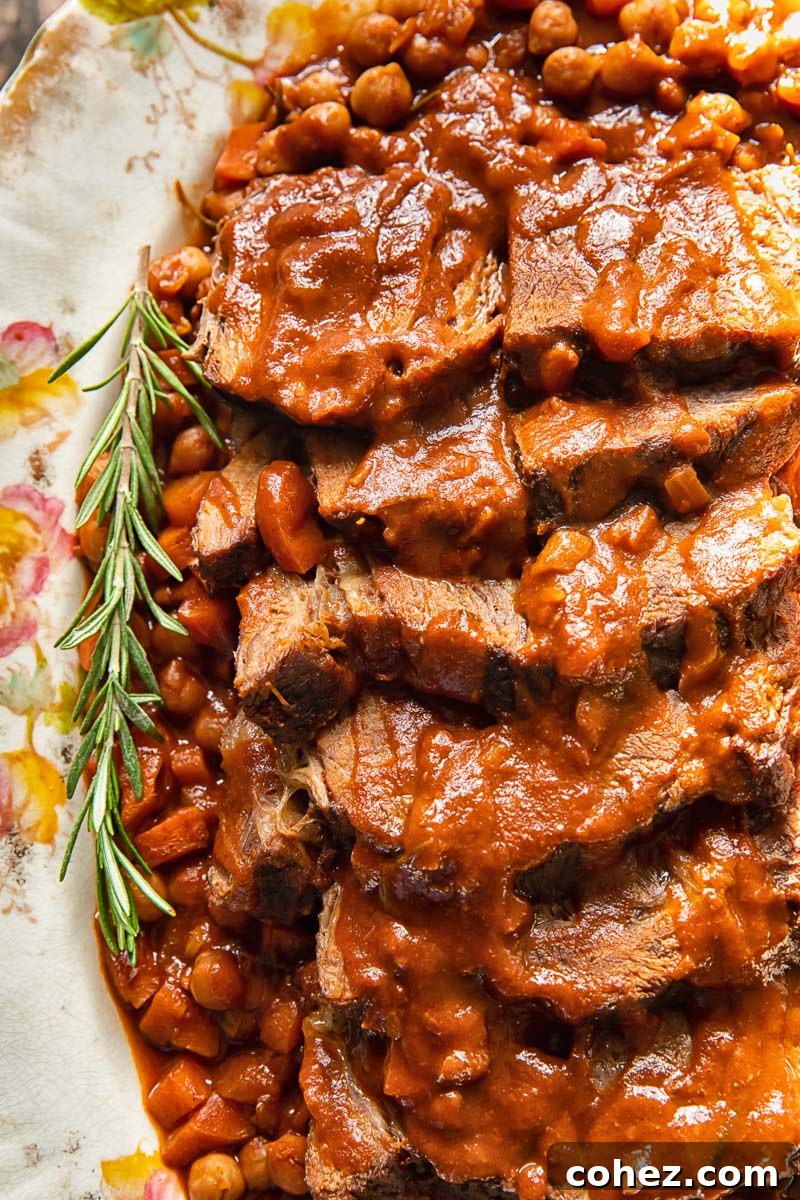
Pot roast, however, is your steadfast ally against such kitchen pitfalls. This method involves allowing a robust beef joint to slowly braise in a rich, aromatic bath of tomatoes, carrots, and onions for hours. This extended, gentle cooking process ensures that the meat remains incredibly moist, soaking up all the wonderful flavors from the sauce. The result is a beef joint so tender, it will effortlessly yield under the knife and melt in your mouth, eliciting satisfied sighs from everyone at the table. It’s a truly heavenly meal that proves some of the best dishes require patience, not endless effort.
What is the Best Cut of Beef for a Pot Roast?
It might sound counter-intuitive, but for a pot roast, the tougher cuts of beef often yield the most tender and flavorful results. This is fantastic news for your wallet, as these cuts are typically more economical. The magic lies in the slow, moist cooking environment of a pot roast, which breaks down tough connective tissues, transforming them into succulent gelatin and creating an incredibly tender texture. Choosing the right cut is the first step towards a truly memorable pot roast.
Here are the three most common and recommended cuts for achieving a perfect, melt-in-your-mouth pot roast:
- Beef Chuck Roast (Braising Steak in the UK): This is, without a doubt, my top recommendation for pot roast. Chuck roast comes from the shoulder of the cow, an area that gets a lot of exercise, making it inherently tough. However, it boasts a higher fat content and plenty of connective tissue. When cooked slowly, this fat renders down, infusing the gravy with an unparalleled richness and unctuousness, making it incredibly indulgent. The marbling within the chuck roast ensures the meat stays moist and flavorful throughout the long cooking process.
- Beef Brisket: Brisket is another excellent choice, though it is generally a leaner cut compared to chuck roast. Originating from the breast or lower chest of the cow, it can be tougher and chewier if not cooked for a sufficient amount of time. Brisket requires patience and a truly low-and-slow approach to break down its fibers, but the reward is a uniquely textured, deeply savory roast. When prepared correctly, it becomes incredibly tender and flavorful. For an incredible example, try my Instant Pot Brisket with Guinness Gravy.
- Top Round (Topside in the UK): As its name suggests, top round comes from the round primal cut, specifically the inner thigh muscle. This is the leanest of the three common choices because it’s a well-used muscle. Being the toughest and most prone to drying out, cooking top round demands careful attention to timing and braising technique. It’s essential to ensure it’s submerged in ample liquid and cooked just right to prevent it from becoming dry. When successfully braised, it offers a robust beefy flavor that is truly satisfying. You might also like my Coffee Rubbed Top Round Roast or a classic Slow Cooker Roast Beef.
Ingredients and Flavor Profile
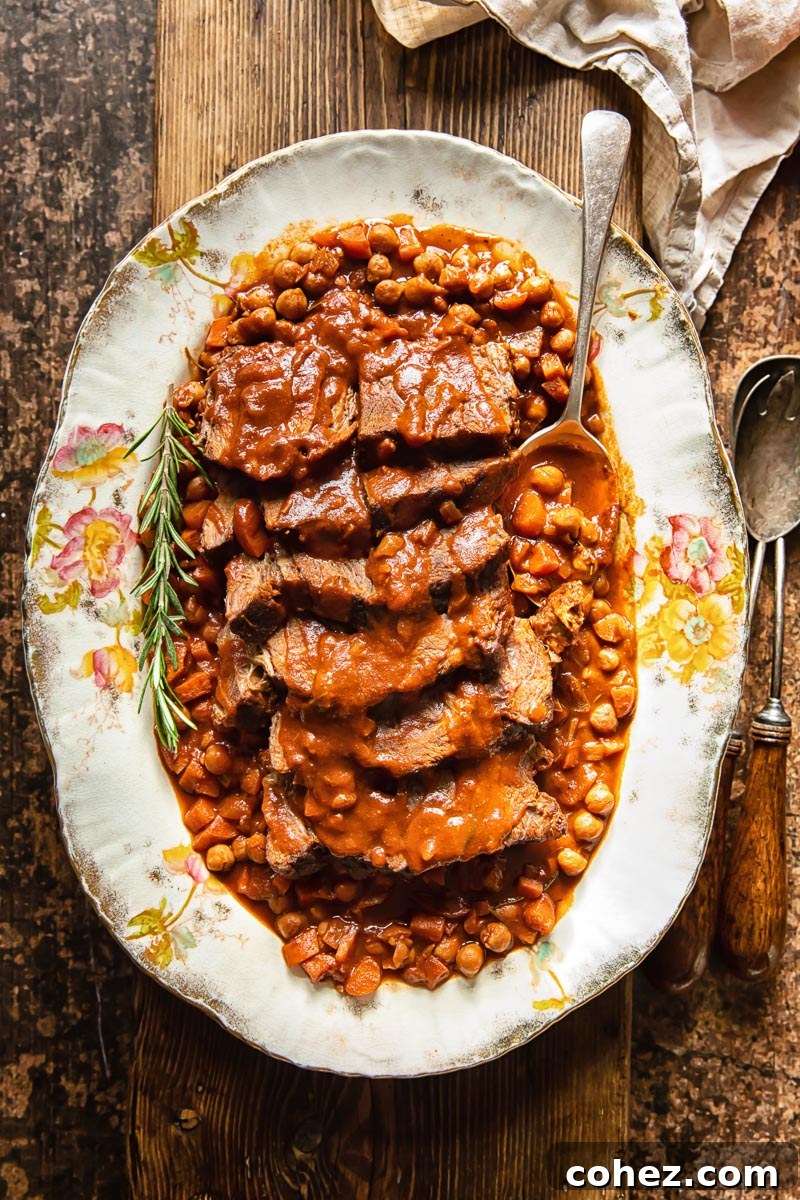
The beauty of pot roast lies in its versatility; it’s more of a cooking method than a rigid recipe, which means you have immense freedom to customize the flavors. Beyond the star of the show – the beef – the essential components for a delicious pot roast include a selection of hearty vegetables, aromatic herbs, and a flavorful liquid that will form the foundation of your rich sauce or gravy.
For my ideal pot roast, I prefer the meat to truly shine, so I opt for a relatively short and simple list of ingredients that enhance rather than overpower the beef. My go-to aromatics are carrots, onions, and garlic, which build a robust flavor base. For a touch of smoky warmth and depth, I incorporate Spanish paprika and ground coriander. These spices lend a subtle earthiness and a gentle smokiness that elevates the overall profile of the dish without being too assertive.
While some recipes include other common vegetables such as celery, mushrooms, parsnips, or even potatoes directly in the pot, I personally prefer to keep them separate. In my experience, chunky vegetables cooked directly with the roast can absorb too much of the precious braising liquid’s flavor, detracting from the meaty star of the dish. I find that serving them as separate side dishes allows them to maintain their own distinct textures and flavors, creating a more balanced meal.
When it comes to herbs, bay leaves and thyme are classic choices, offering an earthy, aromatic touch. However, feel free to experiment with what you have on hand or what appeals most to your palate. Fresh rosemary sprigs are another fantastic addition, imparting a fragrant, piney note that pairs wonderfully with beef.
You’ll often find pot roast recipes that call for ingredients like mustard or red wine. While these can certainly contribute to a complex flavor, I typically reserve them for more elaborate dishes. For me, pot roast is all about celebrating slow, laid-back Sunday vibes – a straightforward, comforting meal that doesn’t demand overly sophisticated flavor combinations. It’s about rustic simplicity and deep, satisfying taste.
How to Make the Sauce/Gravy
The sauce, or gravy, is the luscious backbone of any good pot roast, generously coating every tender slice of beef and serving as a delicious accompaniment to your chosen side dishes. The consistency and intensity of this gravy can vary significantly depending on your chosen cooking method, but rest assured, a perfectly rich and flavorful gravy is always achievable.
For instance, a pot roast prepared in a slow cooker often results in a thinner, more diluted gravy due to the minimal evaporation during the long, gentle cooking process. But fear not, all is certainly not lost! Once you’ve carefully removed your beautifully cooked beef joint from the slow cooker, you can easily transform the remaining liquid into a thick, velvety gravy. Simply whisk together a mixture of either melted butter and flour (creating a roux) or cornstarch and water (a slurry), then gradually stir it into the simmering sauce. Continue to cook, stirring constantly, until it reaches your desired lava-like consistency. This extra step is well worth the effort for a truly indulgent gravy that clings to every morsel.
Conversely, pot roasts cooked in an oven, especially in a Dutch oven with the lid slightly ajar during the final stages, might naturally yield a thicker sauce as some of the liquid evaporates. Regardless of the cooking vessel, the key is to taste and adjust the seasoning. The braising liquid is a treasure trove of concentrated flavors from the beef, vegetables, and herbs, so don’t be afraid to enhance it with a pinch more salt, pepper, or even a dash of Worcestershire sauce if it needs a little extra zing.
Ultimately, a perfectly crafted gravy should be a harmonious blend of richness and savory depth, complementing the tender beef without overpowering it. It’s the finishing touch that brings the entire pot roast experience together.
Recipe Tips and Notes
- Choose Your Beef Wisely: After numerous experiments with various cuts, I can confidently confirm that Beef Chuck Roast consistently delivers the deepest flavor and the most tender, melt-in-your-mouth texture for pot roast. Its marbling and connective tissue are key to its superior performance in slow cooking.
- Master the Vegetable Prep: For an exceptionally smooth and rich gravy, I highly recommend dicing your carrots and onions super small, similar to a mirepoix or soffritto. These tiny cubes will gently simmer down into a thick pulp, naturally thickening the gravy and allowing the luxurious texture of the meat to truly stand out as the star of the dish.
- Don’t Skip the Sear: This step is non-negotiable! Applying high heat to the surface of the beef before braising creates a beautiful brown crust through the Maillard reaction. This process caramelizes the natural sugars and proteins in the meat, significantly enhancing its natural flavors and aromas, adding incredible depth that cannot be achieved any other way. It’s not just a culinary trick; it’s science!
- Embrace Pulses: My recipe incorporates chickpeas, and I wholeheartedly encourage adding pulses to your pot roast. Not only do they make the meal more substantial and stretch it further, but they also provide a significant protein boost, making the dish more satisfying for everyone, including any meat-shy eaters at the table. Canned beans, such as cannellini or kidney beans, work equally well here, keeping your prep time minimal and maximizing your relaxation time.
- Select Your Cooking Method: The beauty of pot roast lies in its adaptability across various kitchen appliances. You can prepare this dish in a traditional oven, a slow cooker, or an Instant Pot (pressure cooker). Your choice will depend on the equipment you have available, how much active time you want to spend, and how quickly you desire to enjoy your meal. For the speediest path to a tender pot roast, the Instant Pot is unmatched, cooking in just about an hour!
Serving Suggestions
A hearty and comforting pot roast deserves equally thoughtful side dishes that complement its rich flavors. While a simple green salad can offer a refreshing contrast, I particularly love the added dimension that roasted vegetables bring to the table.
Consider serving your pot roast with crisp Roasted Tenderstem Broccoli with Lemon Garlic Vinaigrette or elegant Roasted Asparagus with Mornay Sauce and Breadcrumbs. Both offer a delightful texture and brightness that cuts through the richness of the beef and gravy, creating a balanced and satisfying plate.
Furthermore, you’ll definitely want something substantial to capture every last drop of that exquisite, savory gravy. For this, I would instinctively reach for creamy Herb and Garlic Mashed Potatoes, which absorb the gravy beautifully. And, of course, a lovely crusty Sourdough Bread is essential for mopping up any remaining sauce directly from your plate. These pairings turn a simple meal into a memorable feast.
Storage and Leftovers
One of the best things about a pot roast, besides its incredible flavor, is how wonderfully it transforms into delicious leftovers. Any remaining slices of roast beef are truly a sandwich’s best friend. To store, simply wrap the cooked meat tightly in clingfilm or place it in an airtight container, and it will keep perfectly in the fridge for 2-3 days. You can also store the gravy separately in an airtight container.
When reheating, gently warm the beef in its gravy on the stovetop over low heat or in the microwave until heated through, ensuring it doesn’t dry out. But be warned: the temptation to dive into a meat-stuffed, beefy sauce-soaked sandwich is often irresistible. Pot roast leftovers are famously delicious, often tasting even better the next day as the flavors have more time to meld. Think beyond sandwiches too: shredded pot roast makes excellent tacos, quesadillas, or even a rich beef pie.
More Slow Cooked Beef Recipes
- Irish Beef Stew
- Braised Beef Short Ribs
- Beef Bourguignon
- Beef in Truffled Cream Sauce
Pot Roast with Smoky Tomato Gravy
By Julia Frey of Vikalinka
Prep: 20 mins
Cook: 2 hrs 30 mins
Total: 2 hrs 50 mins
Servings: 8
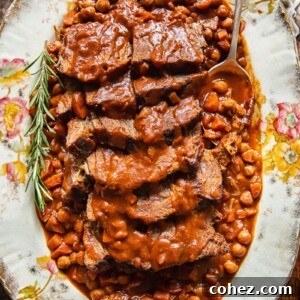
Braising in a rich hot bath of tomato, carrot and onion for hours until rested and tender, this pot roast will be the best you’ve ever made. Its smoky tomato gravy is simply divine!
Ingredients
- 1.6kg/3.5 lbs boneless beef chuck roast
- 2 tbsp olive oil, divided
- Salt and pepper, to taste
- 1 onion, chopped
- 2 carrots, diced
- 3 cloves garlic, minced
- 2 tsp Spanish smoked paprika
- 1 tsp dried coriander
- 375ml/1.5 cups tomato passata or canned crushed tomatoes
- 1 tbsp Worcestershire sauce
- 250ml/1 cup dry red wine (ensure it’s not cooking wine for best flavor)
- 2 sprigs fresh rosemary or 1 tsp dried rosemary
- 1/2 tsp salt
- 400g/14 oz canned chickpeas, drained
Instructions
Oven Method
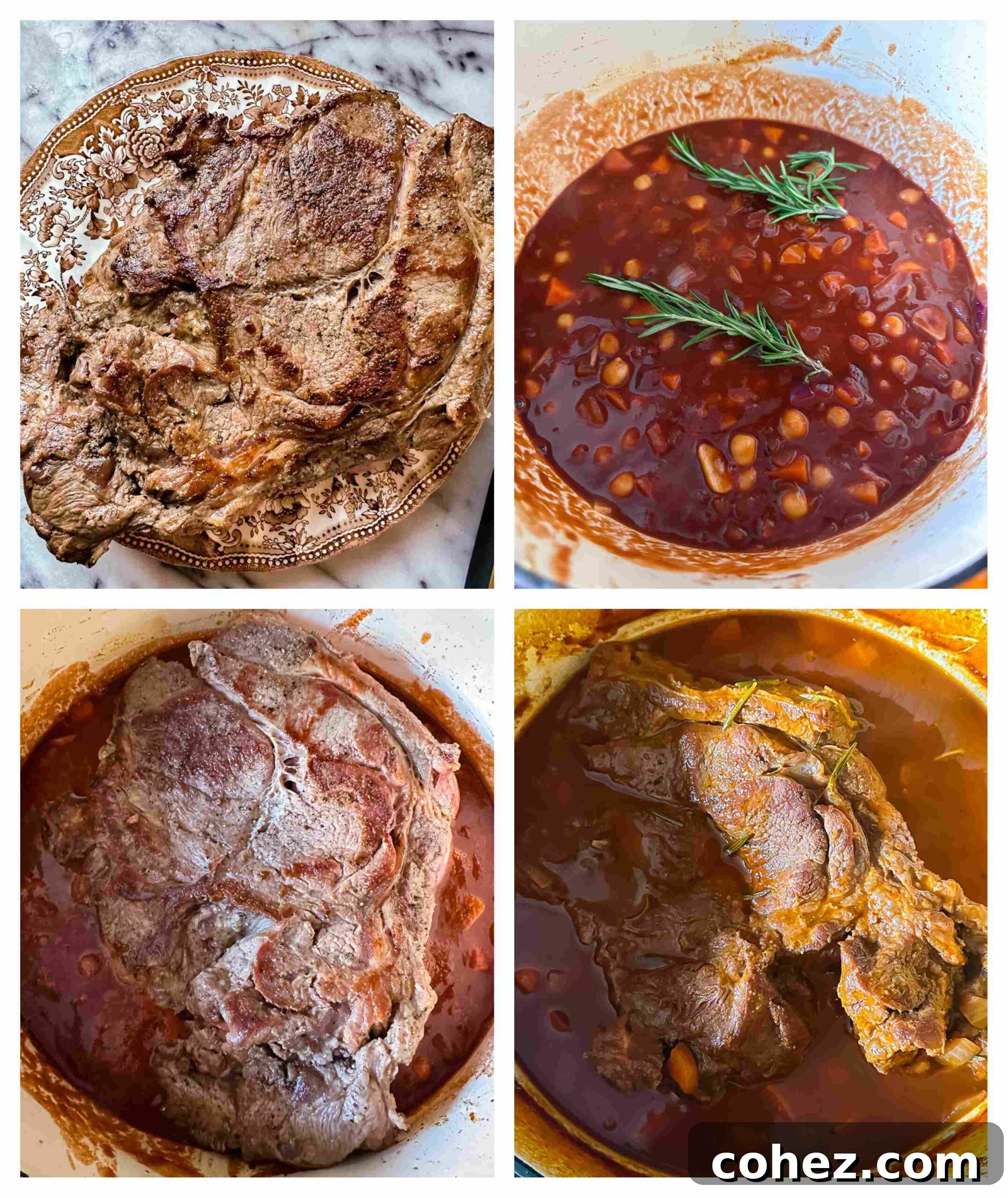
- Heat 1 tbsp of olive oil in a heavy-bottomed, oven-safe pot (like a Dutch oven) over medium-high heat. Season the beef chuck roast generously with salt and pepper. Brown the beef on all sides until a rich golden crust forms. This usually takes about 3-5 minutes per side. Remove the browned beef to a separate plate and set aside.
- To the same pot, add the remaining tablespoon of olive oil. Once heated, add the chopped onion and diced carrots. Sauté over medium heat for 7-10 minutes, stirring occasionally, until the vegetables begin to soften and lightly caramelize. Sprinkle in the smoked paprika and dried coriander, stirring well to coat the vegetables. Add the minced garlic and sauté for another 30 seconds until fragrant, being careful not to burn it.
- Pour in the dry red wine, scraping the bottom of the pan with a wooden spoon to deglaze and release all the flavorful browned bits. Bring to a simmer, allowing the wine to reduce slightly for a couple of minutes. Then, stir in the tomato passata (or crushed tomatoes), Worcestershire sauce, drained canned chickpeas, and 1/2 tsp salt. Add the rosemary sprigs and bring the mixture to a gentle simmer.
- Carefully place the browned beef chuck roast back into the pot, ensuring it’s mostly submerged in the sauce. Cover the pot with a tight-fitting lid and transfer it to a preheated oven at 150°C/300°F. Cook for 2 hours. Halfway through the cooking time (after 1 hour), gently flip the beef over to ensure even cooking and flavor distribution.
- After 2 hours, increase the oven temperature to 200°C/400°F and continue to cook for an additional 30 minutes, uncovered. This higher temperature will help to reduce and slightly thicken the sauce, concentrating its flavors. Once done, remove from the oven and let the roast rest for 10-15 minutes before slicing or shredding.
Slow Cooker Method
- Follow steps 1 and 2 of the Oven Method (searing the beef and sautéing the vegetables) in a separate pan on the stovetop.
- Once step 2 is complete, transfer the browned beef and the sautéed vegetable mixture (with all the sauce ingredients) into your slow cooker. Cover and cook on the LOW setting for 8-10 hours, or on the HIGH setting for 4-6 hours. The exact timing may vary slightly depending on your specific slow cooker model and your desired tenderness. In my Crock Pot, it typically takes 6 hours on High.
- If the sauce appears too runny after the meat is cooked, carefully remove the beef from the slow cooker and keep it warm (e.g., covered with foil). In a small bowl, whisk together 1 tsp of cold water and 3 tsp of cornstarch to create a slurry. Stir this slurry into the hot sauce in the slow cooker and continue cooking on high for another 15-30 minutes, or until the sauce thickens to your preferred consistency.
Instant Pot Method
- Using the “Sauté” function on your Instant Pot, heat 1 tbsp of olive oil. Season the beef chuck roast with salt and pepper and brown it thoroughly on all sides, about 3-5 minutes per side. Remove the beef and set aside.
- Add the remaining 1 tbsp of olive oil to the Instant Pot. Add the chopped onion and diced carrots, sautéing for 5-7 minutes until softened. Stir in the smoked paprika and dried coriander, then add the minced garlic and sauté for 30 seconds until fragrant.
- Pour in the red wine and deglaze the pot, scraping up any browned bits from the bottom. Add the tomato passata, Worcestershire sauce, drained chickpeas, salt, and rosemary sprigs. Place the browned beef back into the Instant Pot.
- Secure the lid and set the Instant Pot to “Manual” or “Pressure Cook” on HIGH pressure for 60 minutes. Once the cooking cycle is complete, allow for a natural pressure release (NPR) for at least 15-20 minutes before manually releasing any remaining pressure.
- Carefully remove the meat from the Instant Pot and keep it warm. If the sauce is too thin, press the “Sauté” button again to bring the liquid to a boil. In a small bowl, whisk together 3 tsp of cornstarch and 1 tsp of cold water to form a slurry. Slowly whisk this slurry into the boiling liquid and cook, stirring constantly, until the sauce thickens to your desired consistency. Turn off the Instant Pot immediately once thickened to prevent burning and pour the sauce into a serving dish.
Nutrition Information
Calories: 473kcal | Carbohydrates: 12g | Protein: 41g | Fat: 27g | Saturated Fat: 11g | Polyunsaturated Fat: 3g | Monounsaturated Fat: 14g | Trans Fat: 1g | Cholesterol: 137mg | Sodium: 783mg | Potassium: 945mg | Fiber: 3g | Sugar: 4g | Vitamin A: 2931IU | Vitamin C: 7mg | Calcium: 75mg | Iron: 5mg
Nutrition information is automatically calculated and should only be used as an approximation.
I hope this comprehensive guide inspires you to create your most delicious and memorable pot roast yet. It’s a dish that truly rewards the effort with unparalleled tenderness and flavor. Don’t forget to share your experience with us!