
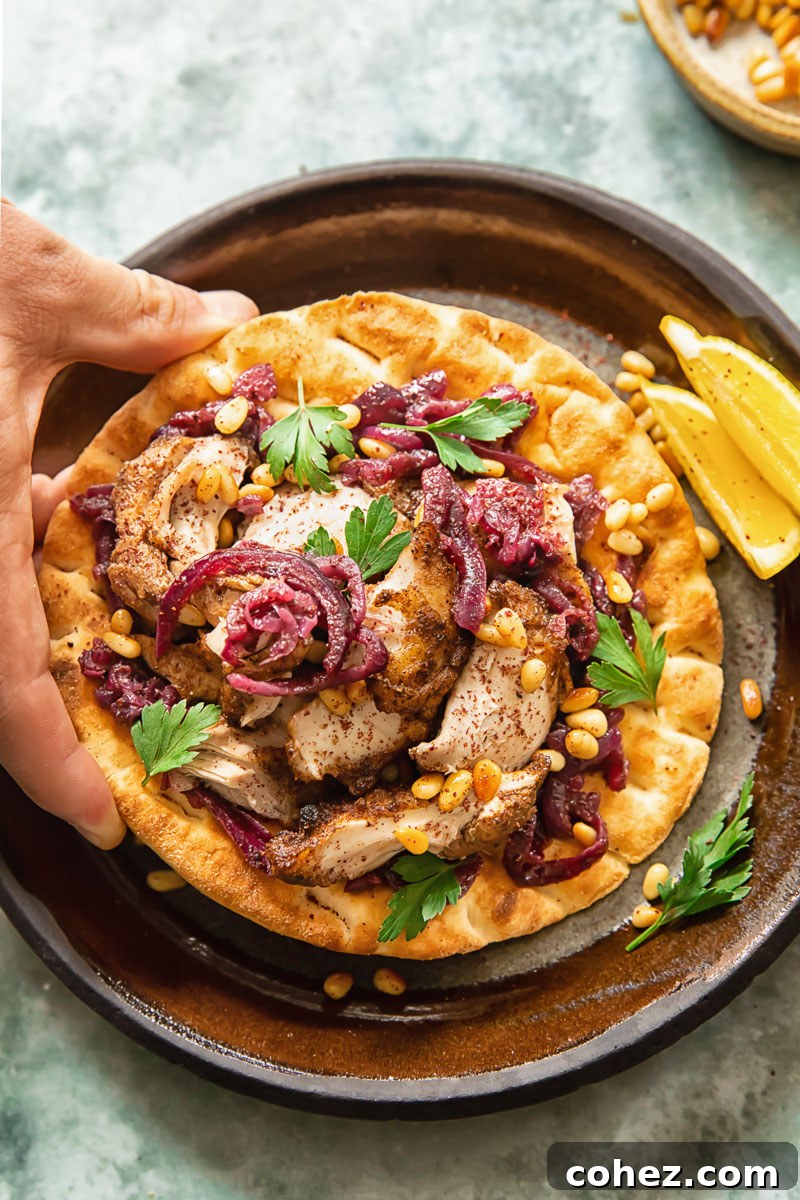
Chicken Musakhan: Your Guide to a Flavorful Palestinian Feast
Step into the vibrant culinary world of the Middle East with Chicken Musakhan, a dish that captures the essence of the souks with its aromatic spices and rich history. This fresh, flavorful, and incredibly satisfying homemade chicken and onion flatbread is poised to become your new favorite weekend fakeaway, offering a taste of authentic Palestinian hospitality right in your kitchen.
To truly complete your Middle Eastern culinary adventure, consider pairing Musakhan with other delightful dishes. Explore recipes for classic hummus with roasted za’atar chickpea topping, whip up some easy homemade flatbread, or add a vibrant vegetarian falafel salad bowl to your spread for a truly unforgettable meal.
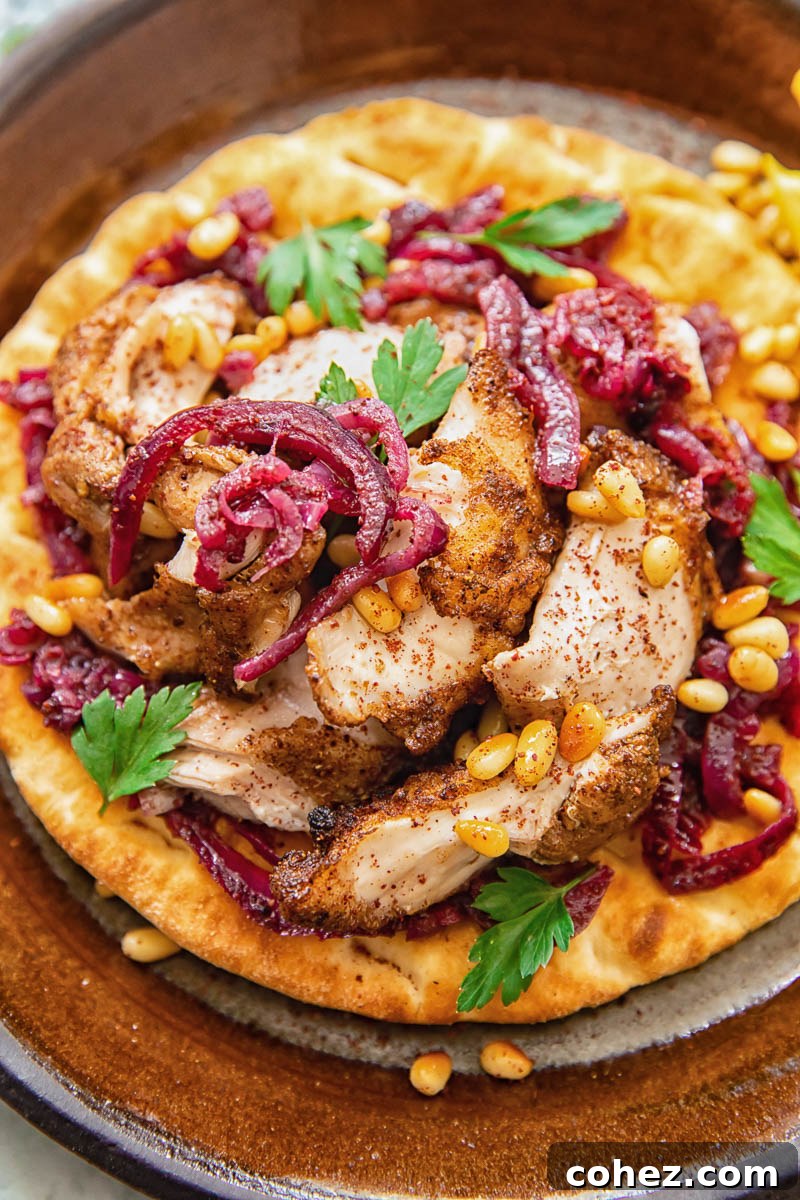
Sometimes, all it takes is a journey to spark a new culinary passion. A recent getaway to Tel Aviv with my husband deeply immersed me in the intoxicating flavors of the Middle East, inspiring a wave of new recipes for you to savor. It was there that I first tasted Chicken Musakhan, the cherished national dish of Palestine. Its mysterious allure and exotic flavor profile captivated me instantly, and I couldn’t wait to recreate its magic at home. Now, I’m thrilled to share this incredible recipe with you.
What is Musakhan? A Journey into Palestinian Culinary Heritage
If you consider yourself a kebab enthusiast, you might believe you’ve explored the full spectrum of Middle Eastern chicken recipes. Perhaps you effortlessly distinguish your chicken shish from your flavorful shawarma. However, for many, Musakhan remains a delightful discovery, a unique culinary experience I am genuinely excited to introduce.
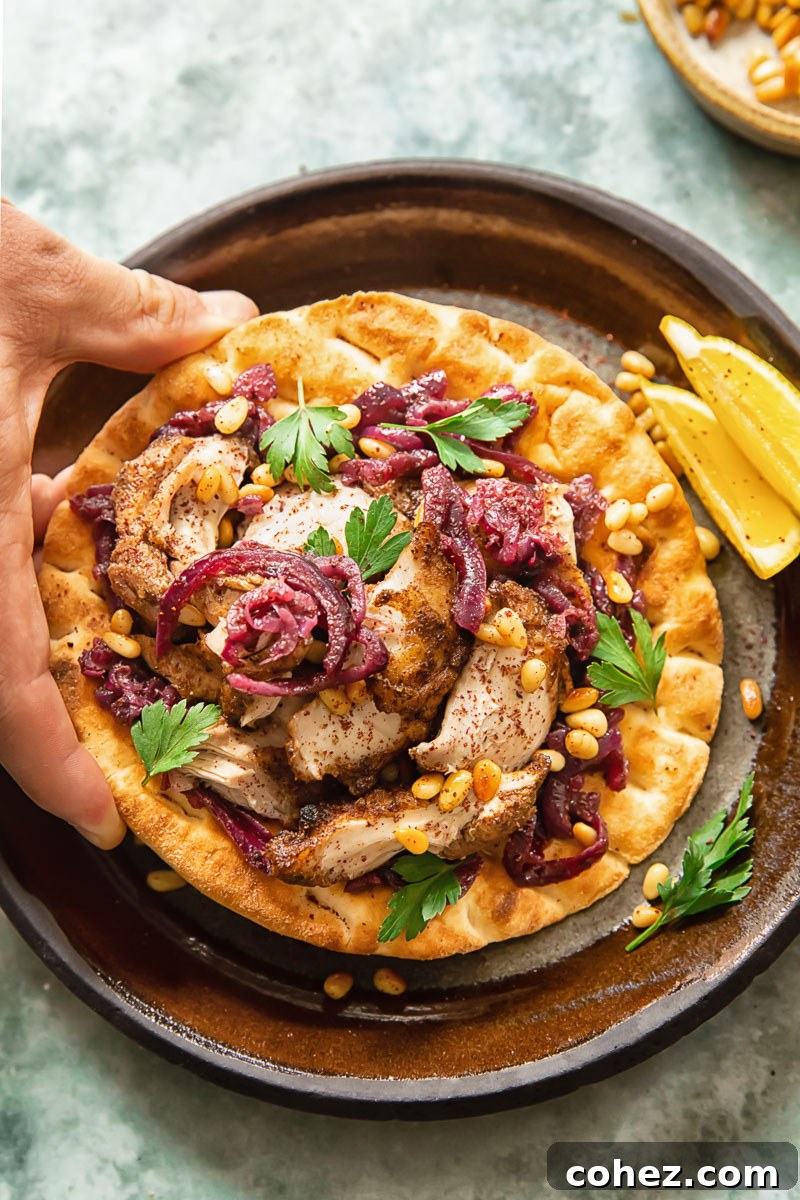
At its heart, Musakhan is a masterpiece of simplicity and profound flavor: succulent, marinated, and oven-roasted chicken served atop a bed of warm flatbread. What truly elevates this dish, setting it apart from other Middle Eastern chicken preparations, is the incredibly generous helping of soft, deeply spiced, and slightly snappy red onions, beautifully accented with toasted pine nuts. Forget the dry, ordinary kebabs; Musakhan offers a deliciously moist, finger-licking alternative that promises an explosion of flavors and textures in every bite.
More than just a meal, Musakhan is deeply woven into the fabric of Palestinian culture. Historically, it was a celebratory dish, prepared to mark the success of the olive harvest. This tradition underscores the importance of high-quality olive oil in the recipe, an ingredient that is not merely a cooking medium but a star in its own right. It’s a dish meant to be shared, eaten communally, and enjoyed with hands, embodying the warmth and generosity of Palestinian hospitality.
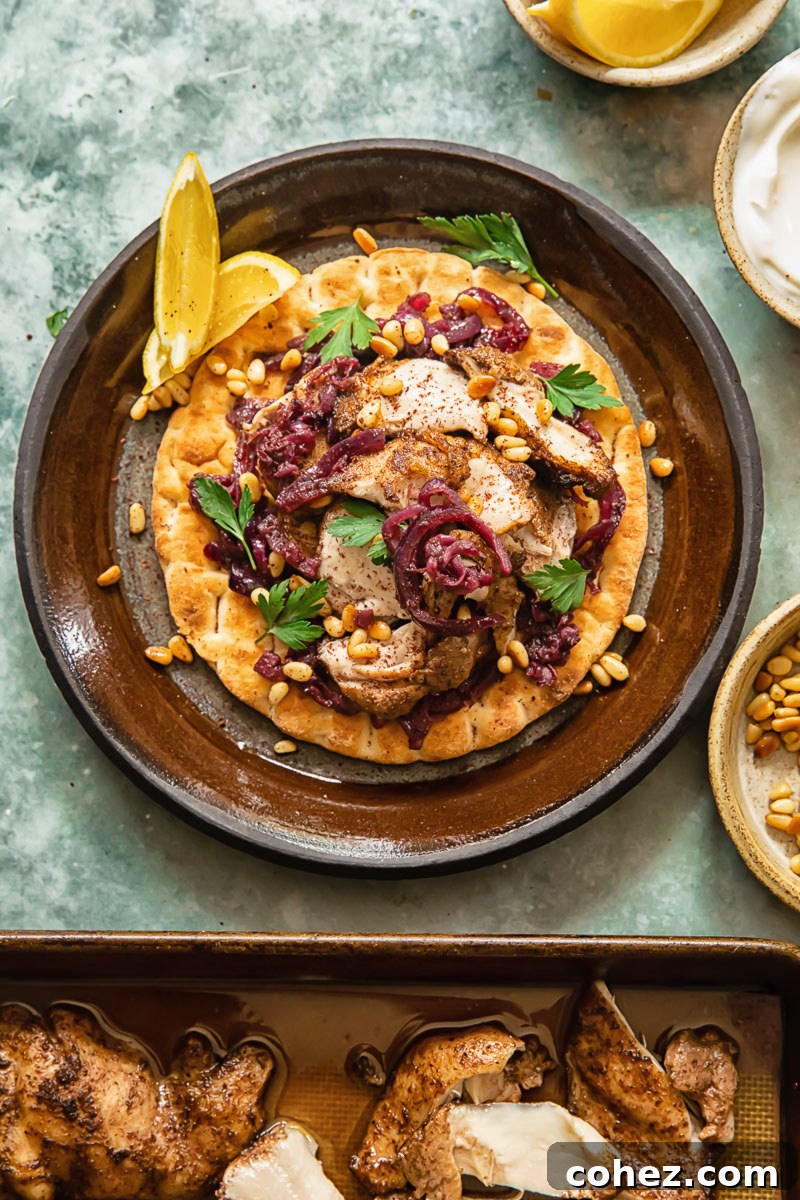
Key Ingredients and Flavors: The Soul of Musakhan
The magic of Musakhan lies in the thoughtful combination of its core ingredients, each playing a crucial role in creating its distinctive taste profile.
Palestinian Olive Oil: The Golden Elixir
Olive oil is not just an ingredient in Musakhan; it’s a testament to Palestinian heritage and culinary excellence. The region is renowned for producing some of the highest quality olive oil in the world, a tradition passed down through generations. The dish was, in its origin, conceived as a way to celebrate and showcase the superior quality of the year’s olive harvest. Consequently, authentic recipes call for a truly generous amount of this golden liquid. It infuses every layer of the dish, from the chicken marinade to the tender onions, imparting a rich, fruity depth that is absolutely indispensable.
Chicken: The Heart of the Dish
For convenience and consistent juiciness, I opt for skinless, boneless chicken thighs in this recipe. Dark meat inherently possesses more flavor and moisture, making it exceptionally well-suited to absorb the rich spice mixture. This choice ensures the chicken remains tender and succulent throughout the roasting process, yielding a flavorful experience in every bite. While traditionally a whole chicken might be used for celebratory banquets, thighs offer a practical and equally delicious alternative for everyday cooking, drastically reducing prep and cook time without compromising on taste.
The Dynamic Duo of Spices: Baharat and Sumac
Musakhan’s characteristic aroma and taste come primarily from two distinct, yet complementary, spices: Baharat and Sumac. These spices, while originating from different culinary traditions, are both essential and readily available in most well-stocked supermarkets or Middle Eastern specialty stores.
Baharat: The Warm and Earthy Blend
Baharat, meaning “spices” in Arabic, is a versatile Middle Eastern spice blend central to the chicken marinade. Its flavor profile is complex and inviting, characterized by warmth and earthiness from ingredients like clove, cinnamon, and cumin, perfectly balanced by sweet and smoky notes from nutmeg and paprika. Depending on the specific blend, you might also detect hints of cardamom, black pepper, and coriander, each contributing to its layered depth. Baharat transforms simple chicken into an aromatic delight, preparing it for its flavorful journey in the oven.
Sumac: The Tangy Zing
Sumac is a singular spice, derived from the dried and ground wine-red berries of the sumac shrub. Its most dominating characteristic is a bright, tangy, almost lemon-like flavor that introduces an incredible, slightly sour fizz to the dish. While it plays a role in the chicken marinade, sumac features more heavily and vibrantly in the spiced red onions. It’s the “zing” that cuts through the richness, providing a fresh, acidic counterpoint that is utterly crucial to Musakhan’s distinctive taste.
Sweet and Crunchy Companions: Red Onions and Pine Nuts
Beyond the chicken and spices, the caramelized red onions and toasted pine nuts are integral to Musakhan. The onions, slowly cooked in olive oil and sumac, transform into a soft, sweet, and tangy confit that forms the base of the dish. The pine nuts, briefly toasted to golden perfection, add a delightful crunch and a subtle nutty flavor, providing textural contrast and enhancing the overall richness. These elements are not mere garnishes; they are foundational to the Musakhan experience.
Recipe Tips and Notes for Perfect Musakhan
- Embrace the Oil: Don’t be surprised by the generous amount of olive oil called for in this dish! As mentioned, Musakhan was originally conceived to highlight the quality of Palestinian olive oil, making it a central feature. While I’ve subtly reduced the quantity compared to some highly traditional recipes for a lighter touch, there’s still a perfect amount to create that pleasing, lip-coating slick that is characteristic of an authentic Musakhan. It’s essential for achieving the right texture and depth of flavor.
- Chicken Cut Considerations: Traditionally, a whole chicken might be marinated, roasted, and then portioned for a grand Middle Eastern banquet, lending an undeniable air of ceremony. However, for everyday ease and faster cooking, using skinless, boneless chicken thighs is a fantastic adaptation. They cook quickly, stay incredibly juicy, and eliminate the hassle of bone-in prep. If you prefer to use a whole chicken or bone-in pieces, simply adjust your cooking time accordingly, ensuring it’s cooked through to a safe internal temperature.
- The Ideal Flatbread: The authentic flatbread for Musakhan is called Taboon, traditionally baked in a dome-shaped clay oven. While Taboon bread has a unique character, it might not be readily available in your local supermarket. Pita bread serves as an excellent and widely accessible substitute, effectively soaking up all the flavorful juices. For those who enjoy a richer, denser texture, naan bread can provide an even more substantial and satisfying “mattress” for your spiced chicken and onion topping. You could also try making your own simple flatbread for an extra homemade touch!
- Catering to Vegetarians: While Musakhan is a meat-centric dish, you can easily offer delightful vegetarian options to complement the meal. Consider serving a fresh and tangy fattoush salad, a creamy hummus, or a smoky baba ganoush. These vibrant side dishes ensure all your guests, including meat-eaters, have a diverse and enjoyable Middle Eastern feast.
Serving Suggestions: The Authentic Musakhan Experience
There’s more than one delightful way to present and enjoy this Palestinian chicken masterpiece. You can choose to serve it individually, meticulously arranging each plate to ensure perfect proportions and an appealing presentation. Alternatively, and perhaps most authentically, offer it family-style as a grand table centerpiece, inviting everyone to partake freely and enjoy the communal aspect of this magnificent dish.
Regardless of your chosen presentation, the journey begins with your flatbread, lightly toasted to prevent sogginess. This acts as the essential foundation, designed to graciously absorb all the delicious cooking juices and flavor-rich olive oil that permeate the dish.
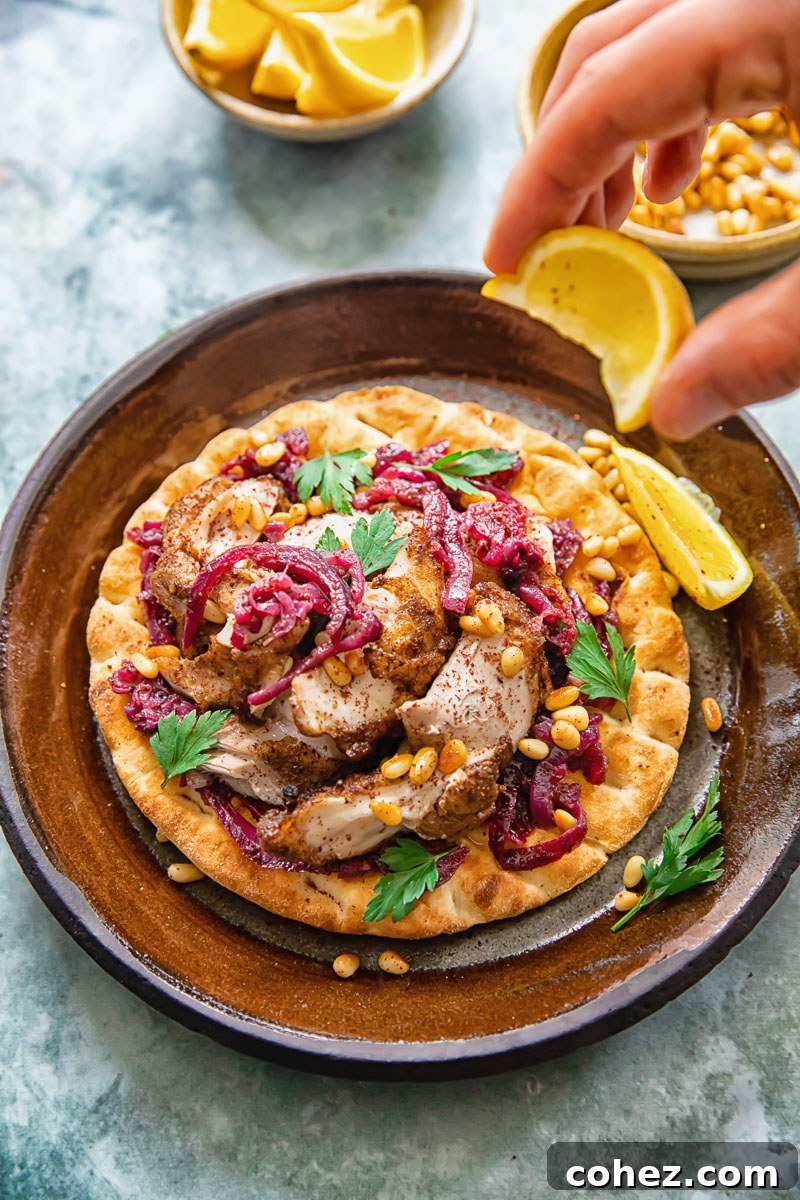
Next, generously mound the perfectly sliced, oven-roasted chicken over the flatbread, followed by a substantial spoonful of the soft, spiced red onions. Finish with a sprinkle of toasted pine nuts for added crunch and aroma, and serve a dollop of cool, plain yogurt on the side to complement the rich flavors. For an extra burst of freshness, a squeeze of fresh lemon juice just before serving is highly recommended.
The beauty of Musakhan lies in its interactive consumption. Don’t reach for a knife and fork! The traditional way to enjoy this dish is by hand: fold it over like a wrap, roll it up like a burrito, or simply tear strips of bread and pinch the flavorful filling. Things are bound to get deliciously messy, so be sure to have plenty of napkins on hand to fully embrace this delightful, tactile culinary experience!
Storage and Leftovers: Planning Ahead for More Flavor
Musakhan is an ideal dish for entertaining or meal prepping, as many of its components can be prepared in advance. Marinating the chicken a day ahead allows the flavors to deepen and intensify, resulting in an even more delicious and tender outcome. Simply store the marinated chicken securely in an airtight container in the refrigerator, ready for oven-cooking on the day of serving. The spiced onions can also be cooked the day before and gently reheated in the microwave or on the stovetop just before assembly.
Any leftover Musakhan components can be stored separately in airtight containers in the fridge for 2-3 days. The cold chicken is particularly versatile and makes a fantastic addition to a lunch box salad, a quick wrap, or even shredded for a unique sandwich filling. The onions can be enjoyed cold or reheated, retaining much of their delightful flavor.
More Middle Eastern Recipes to Explore
- Smoky Baba Ganoush with Sumac
- Middle Eastern Fattoush Salad
- Classic Hummus with Roasted Za’atar Chickpea Topping
- Middle Eastern Salad Bowl
- Israeli Salad with Lemon Garlic Tahini Dressing
Chicken Musakhan Recipe
By Julia Frey of Vikalinka
Print Recipe
Chicken Musakhan recipe delivers chicken, flavored with the aromatic spices of the Middle East and roasted in the oven till tender.
Ingredients
For the Chicken
- 2 tbsp olive oil
- 1 tbsp Baharat spice mix
- 1.5 tsp ground cumin
- 1 tsp salt
- 1.2kg / 3 lbs skinless, boneless chicken thighs
For the Onions
- 50ml / 1/4 cup olive oil
- 50g / 1/4 cup pine nuts
- 2 large red onions, sliced
- 1.5 tbsp sumac
- 2 tsp cumin
- 1/4 tsp black pepper, optional
Serve with
- Plain yogurt
- 6 flatbreads
Instructions
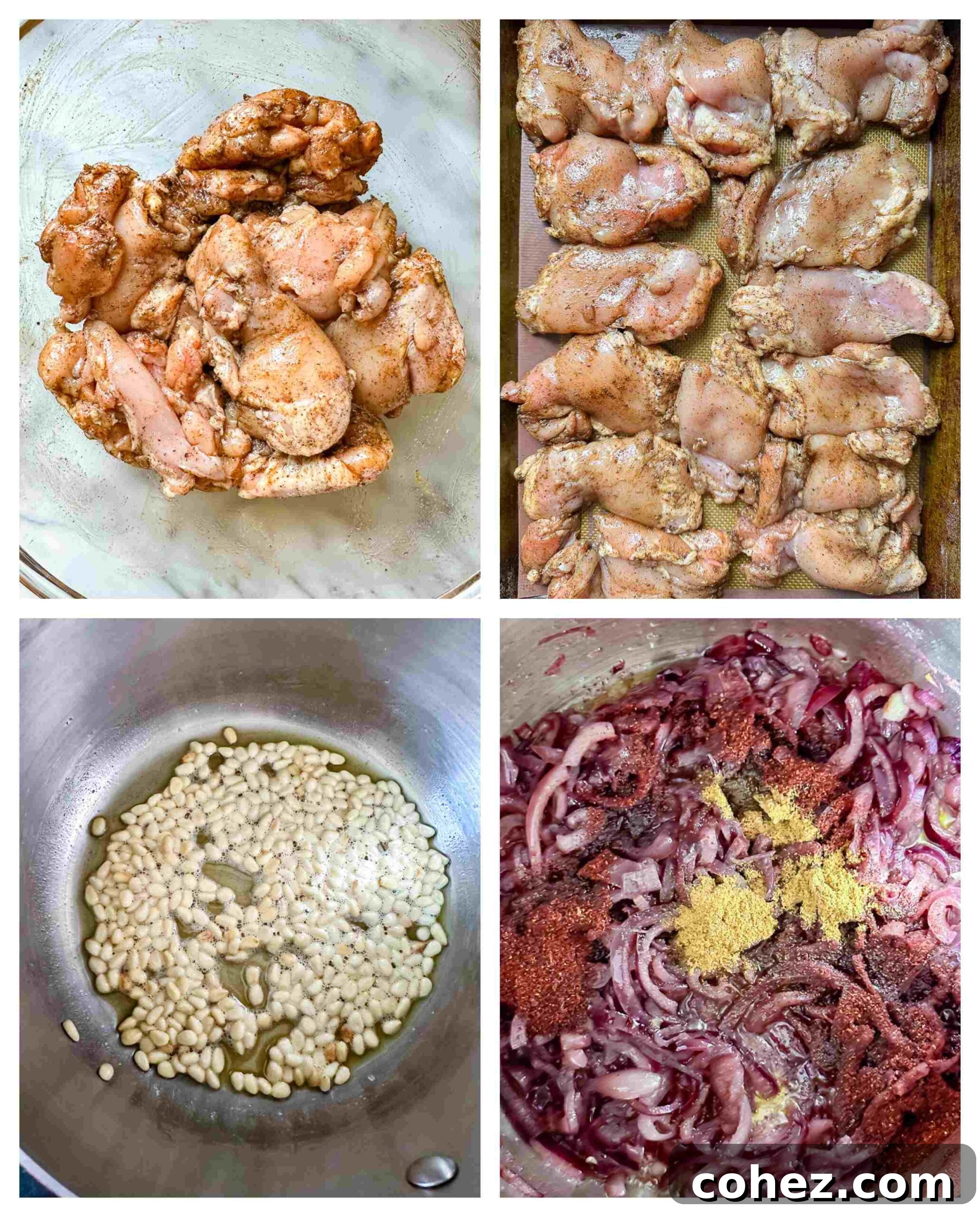
- Mix the olive oil, Baharat spice mix, ground cumin, and salt in a large bowl. Add the chicken and mix well to coat. You can marinate for 30 minutes for deeper flavor, or cook immediately if you are short on time.
- Spread the seasoned chicken on a baking tray and cook in a preheated oven at 200°C / 400°F for 30 minutes. For a slightly crisper finish, move the tray closer to the broiler and cook for an additional 2 minutes, watching carefully to prevent burning.
- While the chicken is roasting, begin preparing the onions. Slice the red onions. Heat the olive oil in a large saucepan, add the pine nuts, and cook until lightly toasted (about 1-2 minutes, depending on oil temperature). Remove the pine nuts with a slotted spoon and set aside in a bowl.
- To the same oil in the saucepan, add the sliced onions. Cook over low heat for approximately 20 minutes, or until they become very soft and translucent. Then, add the sumac, cumin, and black pepper (if using), stir to combine, and remove from heat.
- Lightly toast the flatbreads in the oven for a few minutes to warm them through and prevent them from becoming soggy. To assemble, top each flatbread generously with the sumac-flavored onions and roasted chicken. Drizzle any accumulated juices from the chicken baking tray over the top and sprinkle with the reserved toasted pine nuts. Serve immediately with a side of plain yogurt.
Nutrition
|
Carbohydrates: 28g
|
Protein: 45g
|
Fat: 28g
|
Saturated Fat: 4g
|
Polyunsaturated Fat: 6g
|
Monounsaturated Fat: 14g
|
Trans Fat: 0.04g
|
Cholesterol: 191mg
|
Sodium: 742mg
|
Potassium: 697mg
|
Fiber: 4g
|
Sugar: 3g
|
Vitamin A: 75IU
|
Vitamin C: 3mg
|
Calcium: 56mg
|
Iron: 4mg
Nutrition information is automatically calculated, so should only be used as an approximation.
Tried this recipe? Let us know how it was!