
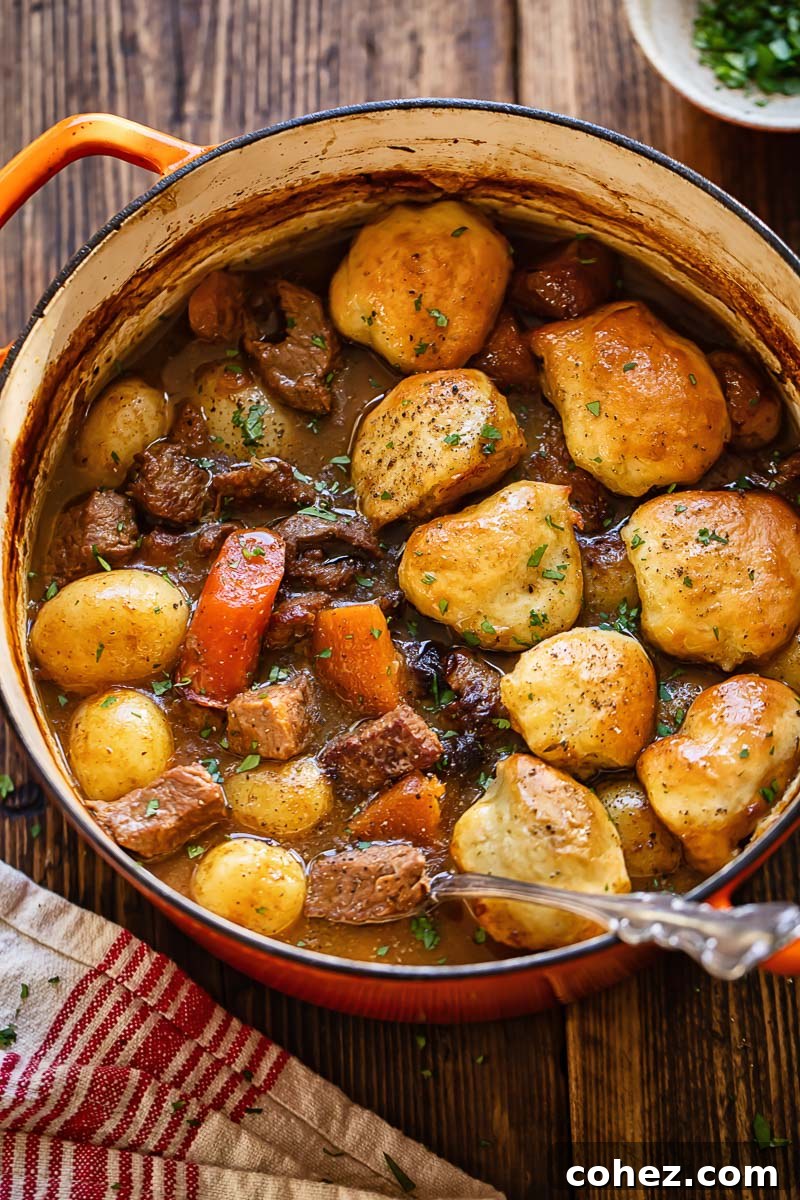
Beef stew with dumplings is more than just a meal; it’s a culinary embrace, a quintessential British winter classic that truly defines comfort food. This exceptional recipe elevates the traditional experience, bringing together succulent, slow-cooked beef and tender, melt-in-your-mouth root vegetables. These hearty ingredients simmer gently in a rich, velvety Guinness sauce, all crowned with delightfully light and buoyant buttermilk dumplings. This steamy cauldron of simmering stew isn’t just a dish; it’s a triumphant one-pot wonder that offers warmth and satisfaction as comforting and inviting as your favourite tartan blanket on a chilly evening. It’s the perfect antidote to a cold day, promising a depth of flavour and a hearty meal that nourishes both body and soul.
Perhaps you’ve always thought stew wasn’t for you? If your palate craves a vibrant symphony of bold and unexpected flavours, allow me to introduce you to solyanka. This Russian stew is unlike anything you’ve tasted before, a masterful blend of sweet and sour notes. It features tender beef, an array of smoked meats, earthy potatoes, and savoury mushrooms, balanced by the bright tang of pickles, briny capers, a squeeze of fresh lemon, and a generous dollop of sour cream. It’s a truly complex and intriguing dish that challenges any preconceived notions about stew. Have we managed to change your mind?
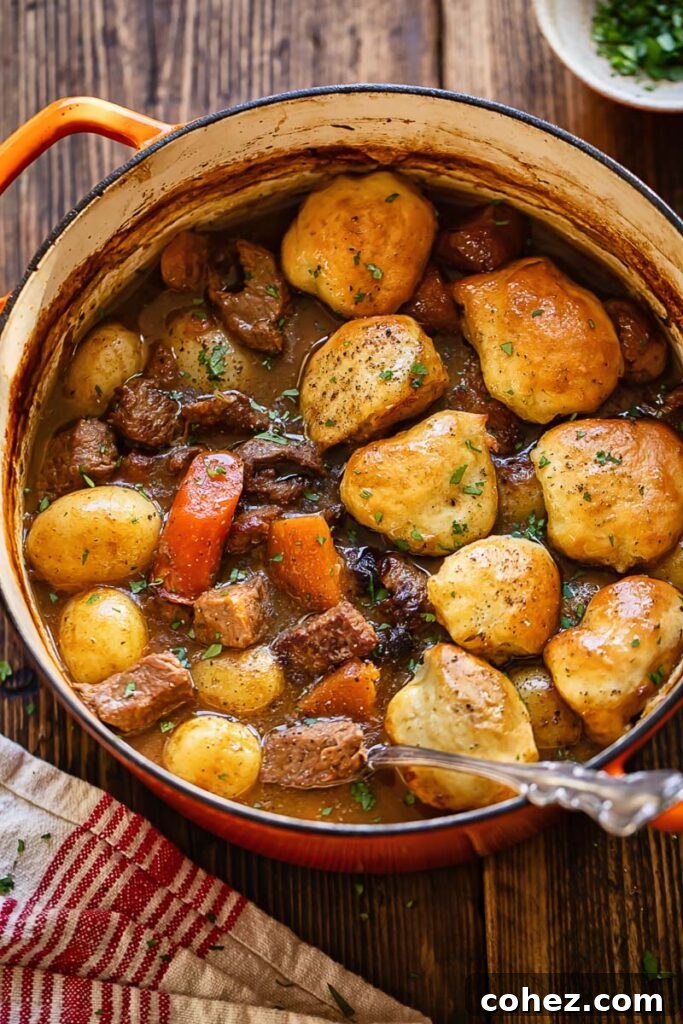
Having spent significant time in various cold climates, from my native Russia to snowy Minnesota and chilly Vancouver, before finally settling on the picturesque shores of the British Isles, I’ve come to understand a fundamental truth: food is fuel. More specifically, it’s the kind of fuel that does more than just fill your stomach; it radiates warmth from the inside out, providing deep comfort during long, dark winters. In this sense, stew stands out as the ultimate dish. Its power lies not only in its ability to satisfy hunger but also in its unparalleled capacity to provide warmth and a feeling of contentment.
What’s more, stew is typically crafted from inexpensive and readily accessible ingredients, making it a staple in kitchens around the world and a testament to clever, economical cooking. Given my background and appreciation for such dishes, it’s no surprise that my blog has become a veritable treasure trove of diverse stew recipes, each designed to bring comfort and flavour to your table, regardless of the climate outside.
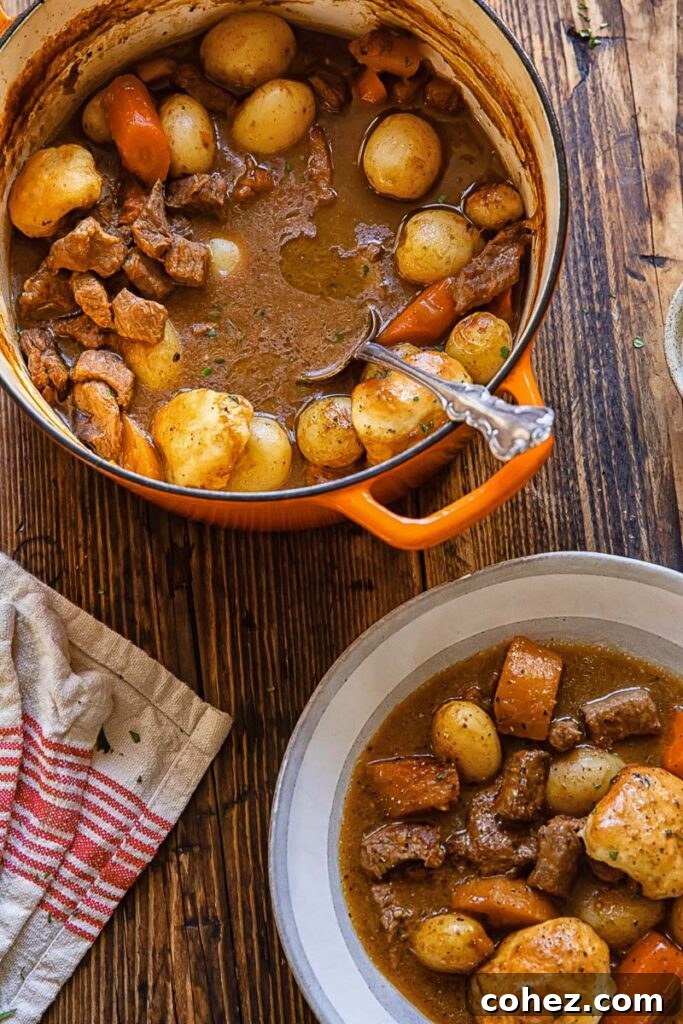
Classic British Beef Stew with Dumplings: A Winter Essential
Stew is a global culinary phenomenon, with countless beloved versions found in every corner of the world. From the communal warmth of Japanese hot pot to the aromatic complexity of Pakistani nihari, the soulful spices of Louisiana gumbo, and the rich paprika notes of Hungarian goulash, the variations are endless. More familiar European recipes include the elegant French beef bourguignon and the rustic Italian chicken cacciatore. Despite their diverse origins and flavour profiles, most stews share a few defining characteristics that make them universally appealing and deeply satisfying:
- One-Pot Wonder: The entire meal, meat and vegetables alike, cooks together in a single pot. This not only simplifies the cooking and clean-up process but also allows all the ingredients to meld their flavours, creating a richer, more cohesive dish.
- Low and Slow Cooking: Strews are typically cooked at a low temperature over an extended period. This method is crucial for several reasons: it breaks down tougher cuts of meat, rendering them incredibly tender, and softens chunky vegetables without turning them to mush. Most importantly, it allows the flavours to develop slowly and deeply, creating an intensely savoury and satisfying broth.
- Rich, Thick Gravy: A hallmark of any good stew is its thick, luscious gravy. This saucy base is often thickened with agents like flour, cornstarch, breadcrumbs, or grains, transforming into a rich, fluid gravy that coats every ingredient and acts as a delicious vehicle for all the accumulated flavours.
Of course, the United Kingdom offers its own distinct and beloved version of this global staple. For a classic British beef stew, the favoured meat tends to be a cheaper, tougher cut such as brisket, beef shin, or stewing steak. These cuts, when subjected to slow cooking, transform into incredibly tender, flavourful morsels, proving that economy can lead to exquisite taste. The choice of vegetables is equally important; typically, you’ll find onions, garlic, potatoes, carrots, and swede (also known as rutabaga). These solid root vegetables are chosen specifically for their ability to absorb the rich flavours of the stew without disintegrating, maintaining their texture and adding substantial body to the dish.
To truly elevate a British beef stew to something special, the liquid base is often made with a rich, dark beer. In this recipe, I’ve opted for readily available Guinness, but any stout, porter, or dark ale will contribute a wonderful malty depth and a distinctive, slightly tangy richness to the beefy mixture. This addition not only tenderizes the meat but also infuses the entire stew with an incomparable complexity.
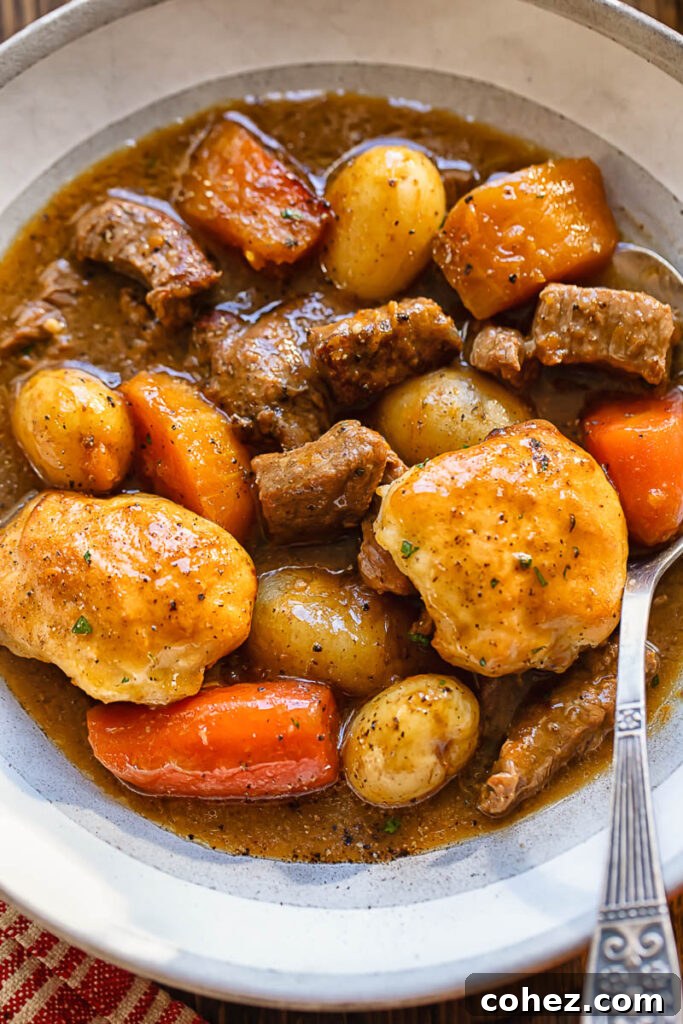
And finally, for the ultimate comforting experience, a truly traditional British stew is generously topped with delicious, fluffy dumplings. These rustic-looking, cloud-like cobbles serve multiple purposes: they are perfect for soaking up every drop of the delectable sauce and provide an additional, incredibly satisfying layer of comfort, transforming this classic midwinter dish into an even more indulgent and heartwarming meal.
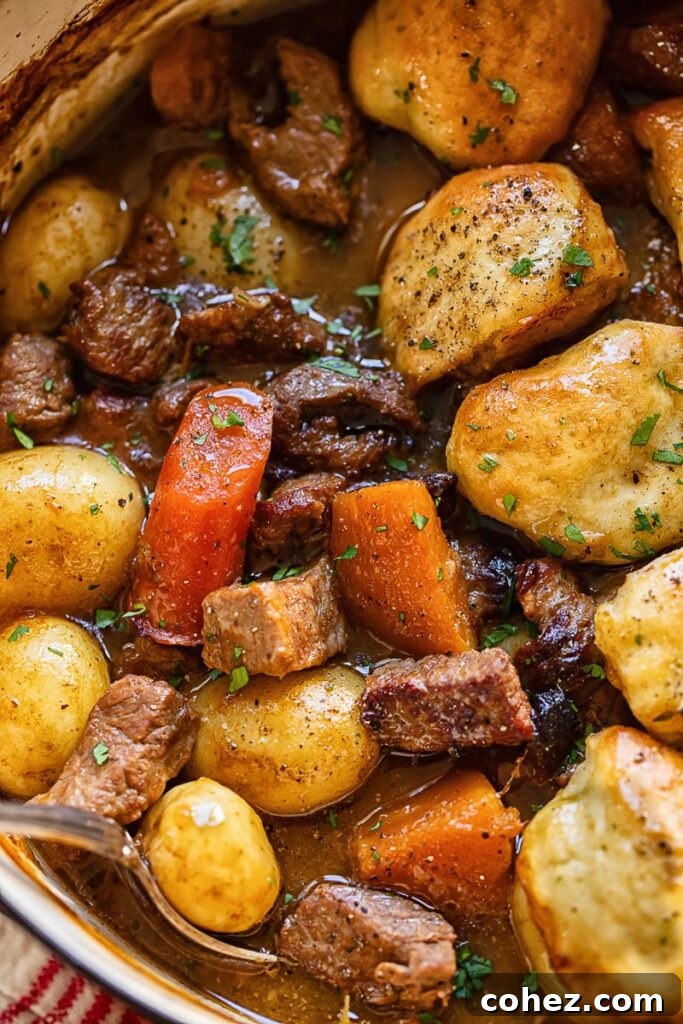
Homemade Buttermilk Dumpling Recipe: A Lighter, Fluffier Twist
Traditionally, British dumplings were famously made with suet, a type of rendered animal fat. Suet is a key ingredient in many of the UK’s most beloved and undeniably “stodgy” yet utterly irresistible steamed puddings, such as jam roly-poly and the famously named spotted dick (yes, it’s a real and delicious dessert!). However, in recent years, suet has somewhat fallen out of favour, and personally, I’m not particularly keen on using it in my cooking these days.
Instead of adhering to the typical British method and its traditional ingredients, I’m embracing an American technique for these dumplings, specifically by incorporating buttermilk. Buttermilk dumplings are a prominent feature in Southern American cooking, known for their incredible lightness and tender texture. While they may not be traditionally British, in my opinion, the results are simply unrivalled. These buttermilk dumplings are significantly lighter and delightfully fluffier than their suet-based counterparts, providing a perfect textural contrast to the rich, hearty stew.
Buttermilk, a cultured ingredient much like kefir or natural yoghurt, possesses a unique quality that is slightly effervescent and airy due to its acidity and the presence of lactic acid bacteria. It’s precisely these characteristics that encourage the formation of tiny bubbles within the batter as it cooks, resulting in the most tender and ethereal dumplings imaginable, rather than dense, floury stones that can sometimes be the outcome of simpler dumpling recipes. Sorry, traditional UK methods, but this American twist wins me over every time!
While this particular dumpling dough may require a few more ingredients than the most basic flour-and-water versions, and its wet, somewhat sticky consistency might initially seem unusual if you’re accustomed to a firmer dough, I urge you to trust the process. The slight extra effort is well worth it for the superior texture and flavour. So, gather your ingredients, trust the technique, and have your ice cream scoop at the ready for easy portioning – you’re about to create truly exceptional dumplings!
Recipe Tips and Notes for Perfect Beef Stew
- Choosing Your Beef: Don’t feel pressured to buy expensive cuts for stew. There are many reasonably priced beef options that become incredibly tender when slow-cooked. I’ve used stewing beef, but excellent results can also be achieved with beef shin or beef chuck, which you can cut into generous chunks yourself. These cuts are rich in collagen, which breaks down into gelatin during slow cooking, creating a wonderfully rich mouthfeel and fork-tender meat.
- Selecting Potatoes: For stew, opt for waxy potatoes over floury varieties. Waxy potatoes, like baby potatoes or red-skinned potatoes, contain less starch and more moisture, allowing them to hold their shape beautifully during the long cooking process without turning mushy.
- The Power of Root Vegetables: Root vegetables are truly the BEST choice for stew. Their robust nature means they can withstand extended cooking times without falling apart, and their dense structure allows them to soak up all the delicious flavours of the broth, enriching every bite. I’ve chosen thick-cut carrots and butternut squash for their sweetness and texture, but sweet parsnips or swede (rutabaga) are also fantastic alternatives that perform wonderfully in a slow-simmering stew.
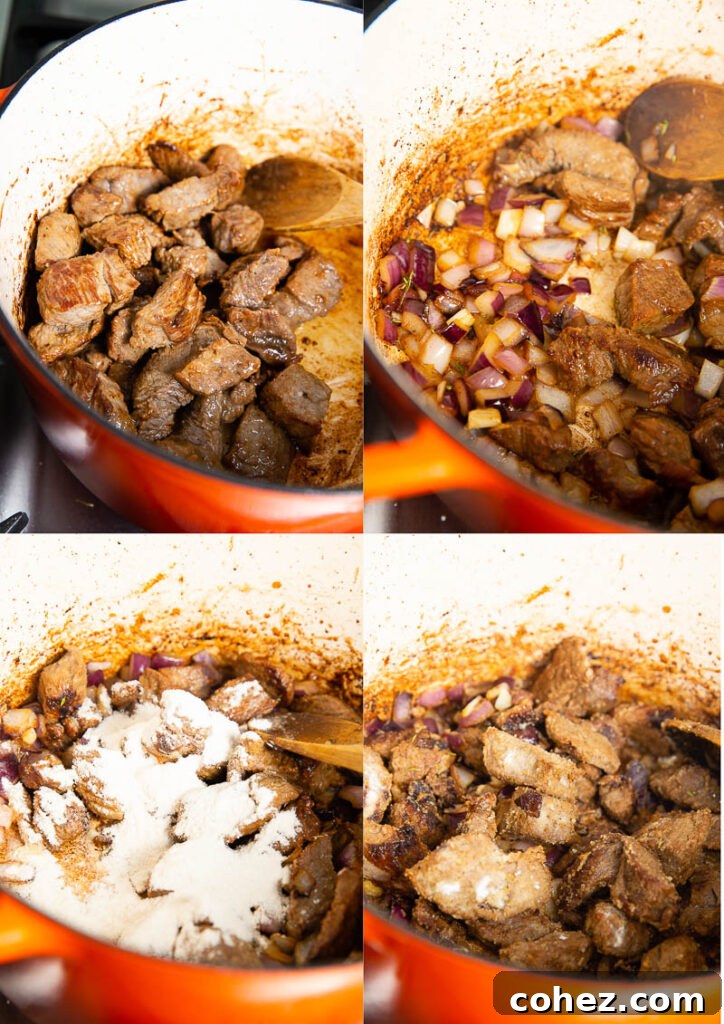
- Browning the Beef is Essential: Never skip the step of browning your beef! This crucial process, known as the Maillard reaction, creates a deep, caramelized crust on the meat, adding incredible savoury depths and a rich char to your stew that cannot be achieved any other way. It’s the foundation of rich flavour.
- Don’t Rush the Onions: Another fundamental step not to be overlooked is taking the time to properly sweat the onions. To truly unlock their natural sweetness and create a foundational flavour base for your stew, they need a good 8-10 minutes of gentle sautéing over low heat. Cook them until they become translucent and soft, but be careful not to cook them too high or they’ll burn and develop a bitter taste.
- The Magic of Deglazing: Once you’ve browned your beef and softened your onions, deglazing the pan is vital. This means adding liquid, in this case, beef stock and then Guinness, to the hot pan and vigorously scraping the bottom with a wooden spoon. Those “burnt bits” stuck to the bottom are not burnt waste; they are concentrated flavour, known as “fond,” and they make an absolutely vital contribution to the overall taste and complexity of your dish.
- Guinness Alternatives: If Guinness isn’t your preference, or you can’t find it, any dark beer or ale (like a stout or porter) will work beautifully, adding a similar malty richness. Red wine can also be a fantastic substitute for a slightly different, yet equally delicious, flavour profile. If you prefer to avoid alcohol, many excellent alcohol-free stouts are now available, including alcohol-free Guinness, which tastes just as good in this recipe.
- Gluten-Free Adaptation: This beef stew recipe is easily adaptable for those following a gluten-free diet. Simply substitute the flour used to thicken the sauce with cornstarch (or cornflour in the UK). Mix the cornstarch with a little cold water to form a slurry before adding it to the simmering stew to prevent lumps.
- Buttermilk Dumpling Advantage: While traditional British dumplings often rely on suet for richness and texture, my recipe opts for a lighter, fluffier approach. By using buttermilk, egg, and baking soda, these dumplings achieve an unparalleled airy and tender consistency that beautifully complements the rich, slow-cooked stew.
Serving Suggestions for Your Hearty Stew
Beef stew with dumplings is already a complete and wonderfully balanced meal, ticking all the essential nutritional boxes: a generous serving of vegetables, robust meaty protein, and a double dose of satisfying carbohydrates from both the potatoes within the stew and the fluffy dumplings on top. What more could one possibly ask for?
However, if you’ve truly worked up an appetite, perhaps after a long day “down a mine or ploughing the fields,” as in the old English days of yore, you might crave something extra to soak up every last drop of that incredible stewy sauce. In that case, consider pairing it with a classic colcannon mash, a creamy brown butter mash, or a hearty potato farl. These additions provide even more comforting texture and ensure no flavour is left behind. And if the carrots and squash in the stew aren’t quite fulfilling your daily plant quota, you might also enjoy a side of crispy Brussels sprouts with honey and bacon or perfectly tender roasted cabbage wedges for an extra boost of greens and vibrant flavour.
Storage and Leftovers: Easy Meal Prep for Busy Weeks
One of the many benefits of this Guinness beef stew is its incredible versatility and make-ahead potential. Whether you want to enjoy it today, plan it for a mid-week meal, or even prepare it for next month, this brilliantly beefy dish has got your back. It stores exceptionally well, making it a fantastic option for meal prepping.
You can keep any leftover stew safely stored in an airtight container in the fridge for up to 4 days. For longer storage, this stew freezes beautifully for up to 3 months. If you’re preparing this stew specifically to get ahead, a clever tip is to save the dumpling preparation for the day you’re actually planning to serve the meal. This ensures the dumplings are always fresh, light, and perfectly textured. When reheating frozen stew, simply thaw it overnight in the fridge and then gently reheat it in the oven. Add the freshly prepared dumplings on top during the final cooking stage, following the recipe instructions, to ensure they cook to golden, fluffy perfection.
More Hearty Stews to Try
- Hearty Turkey Stew
- Instant Pot Coq Au Vin
- Greek Butter Bean Stew
- Slow Cooker Campfire Stew
Beef Stew with Dumplings
Pin
Equipment
-
This is an affiliate link.Le Creuset Enamelled Cast Iron Dutch Oven
Ingredients
- 2 tbsp This is an affiliate link.olive oil
- 1 tsp salt and pepper
- 1 kg / 2 lbs stewing beef, diced
- 1 medium onion
- 3-4 sprigs thyme, or 1 tsp dried thyme
- 2 cloves garlic
- 2 tbsp flour
- 500ml / 2 cups water, or beef stock, divided
- 440ml / 1 can Guinness, or other stout (can use non-alchoholic beer)
- 1-2 This is an affiliate link.bay leaves
- 2 medium carrots, cut into large chunks
- 1/2 small butternut squash, cut into large chunks
- 1/2kg / 1 lb baby potatoes, or 4 large waxy such as red potatoes
For the dumplings
- 125ml / 1/2 cup buttermilk , or kefir
- 1 egg
- 1 tbsp This is an affiliate link.olive oil
- 120g / 1 cup all purpose flour
- 1/4 tsp baking powder
- 1/4 tsp garlic pwder
- 1/4 tsp onion powder
- 1/4 tsp salt
Instructions
-
Preheat the oven to 160℃/300℉
-
Heat the olive oil in a large Dutch oven/cast iron casserole pot and brown the beef chunks seasoned with salt and pepper over medium heat until golden. Do this in batches to avoid overcrowding.
-
Move the browned beef to one side of the pot and lower the heat, then add chopped onions and thyme, cook over low heat for 8-10 minutes until tender. Then add minced garlic and cook briefly for 30 seconds.
-
Add the flour and stir the beef, so it’s coated, then add the water or beef stock if using and scrape the bottom of the pot with a spatula to release the brown bits at the bottom. Add the Guinness, one or two bay leaves, turn the heat up and bring to a boil. Then cover with a lid and put in the preheated oven for 1 hour.
-
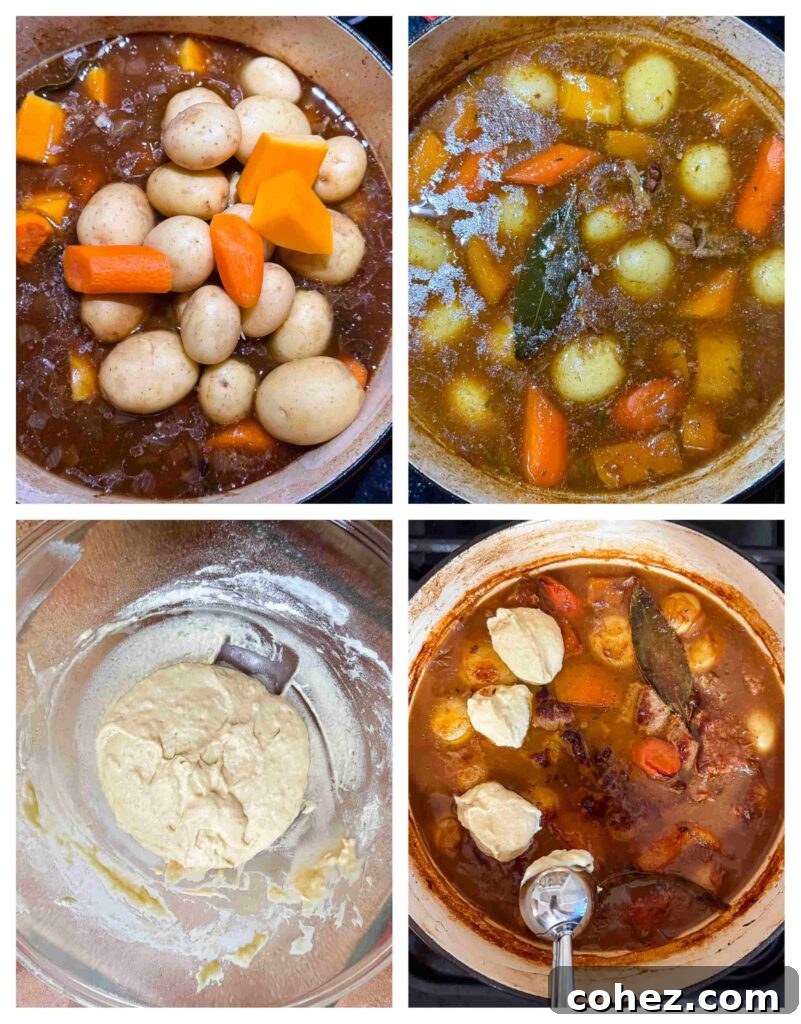
After one hour take out of the oven and add carrots, butternut squash, cut into large chunks and potatoes to the pot, stir and add 250ml/1 cup of water, cover with a lid and continue cooking the stew in the oven for 1 more hour.
-
Prepare the dumplings by mixing the buttermilk, egg, oil, flour, baking soda, garlic powder, onion powder, and salt with a wire whisk in a medium bowl. The batter will be sticky and have the consistency of a waffle batter.
-
Take the stew out of the oven and scoop the batter directly on top of the stew. You can use two spoons for easy release or an ice cream scoop. Cover with a lid and put in the oven for 10 minutes, then take the lid off and cook for 10 minutes longer until the dumplings are golden.
Nutrition
Nutrition information is automatically calculated, so should only be used as an approximation.
Tried this recipe?Let us know how it was!