
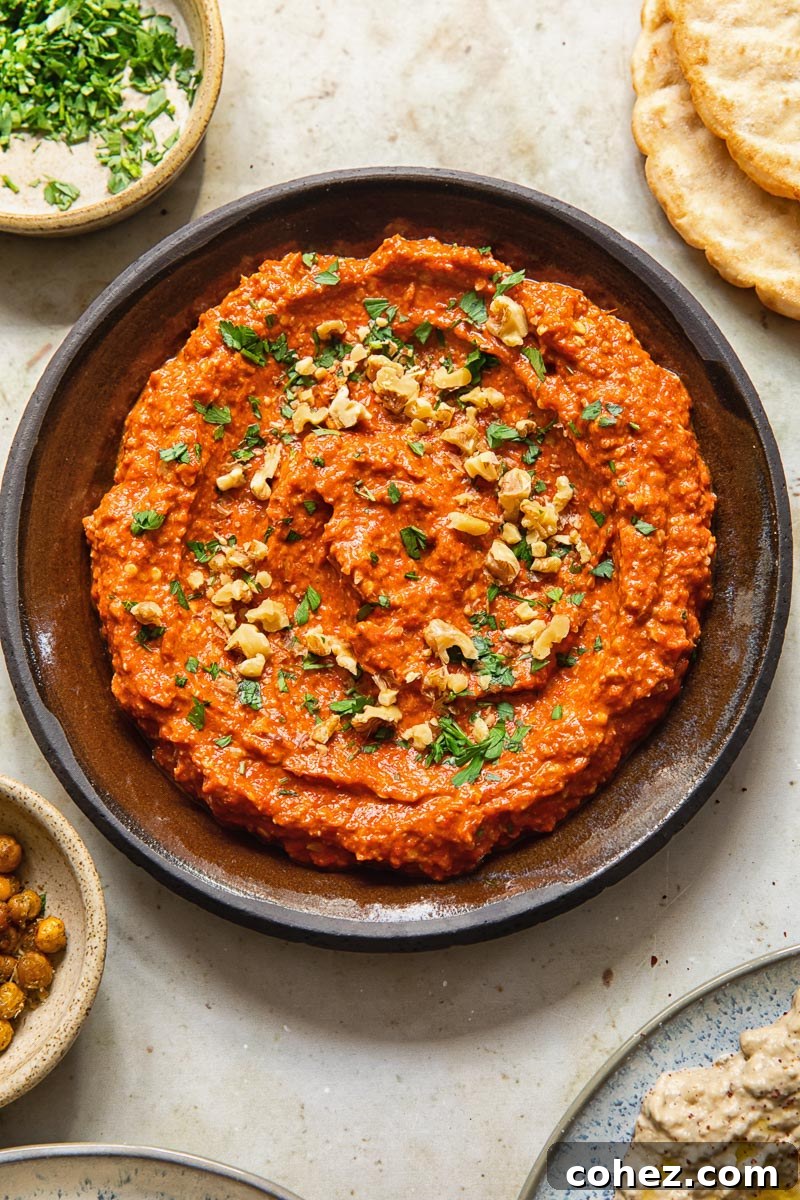
Muhammara, a luscious roasted red pepper and walnut dip, offers an exquisite journey into the heart of Middle Eastern cuisine. Its deep, rich red hue, coupled with a smoky, inviting aroma, evokes vivid images of bustling souks and vibrant spice markets at sundown. More than just a simple dip, this versatile and naturally vegetarian delicacy can transform any meal, adding a burst of complex flavors and a touch of exotic elegance. From elevating delicate white fish and succulent grilled chicken to serving as an unexpectedly exotic chutney on an elegant cheese board, Muhammara is a culinary marvel waiting to be explored. Its growing popularity worldwide is a testament to its irresistible taste and remarkable adaptability.
While Muhammara is undeniably a star of any mezze platter – a collection of small dishes served as appetizers – its culinary potential extends far beyond traditional beginnings. Imagine this vibrant sauce slathered generously onto a juicy burger, enriching grilled meats, or providing a sophisticated spread for a hearty sandwich. The unique blend of sweet, smoky, and tangy notes, beautifully balanced by the earthy crunch of walnuts, makes it a truly adaptable ingredient for both everyday family meals and impressive special occasions. Dive into the world of Muhammara and discover a taste that will captivate your senses and broaden your culinary horizons.
Muhammara: A Jewel of Levantine Cuisine and Syrian Heritage
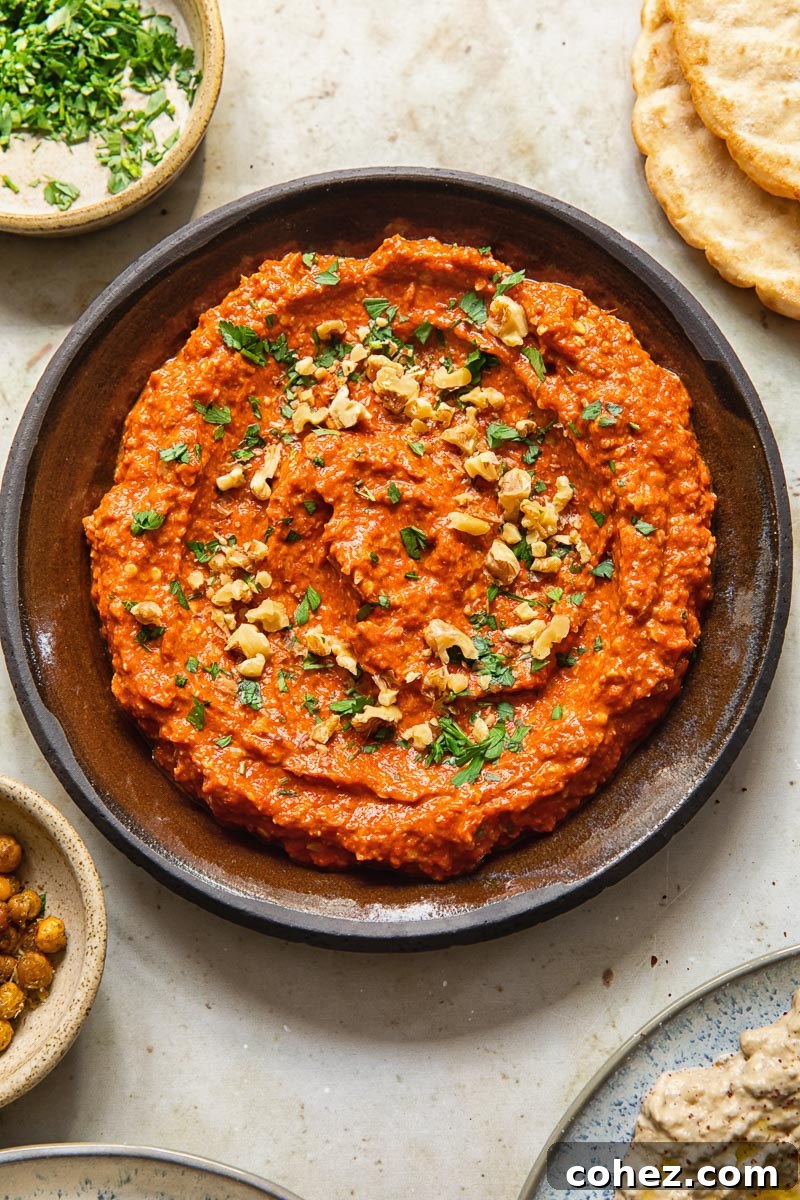
In the vibrant tapestry of Levantine cuisine, where beloved dips like Baba Ghanoush and Hummus typically reign supreme with their pale, creamy textures, Muhammara boldly stands out. It’s a brilliant splash of crimson color and an explosion of complex flavors that commands attention on any Middle Eastern table. Deriving its name from the Arabic word ahmar, meaning ‘red’, this intensely flavorful and vibrantly hued spread originated in Aleppo, Syria. Aleppo, a city with a culinary heritage stretching back millennia, is renowned for its sophisticated cuisine, and Muhammara is a proud emblem of its rich gastronomic tradition.
At its core, Muhammara is a tantalizing blend of deeply roasted red peppers, robust walnuts, fragrant garlic, a hint of breadcrumbs for texture, tangy pomegranate molasses, and a medley of distinctive Middle Eastern spices. This combination creates a symphony of flavors – sweet from the peppers, earthy and slightly bitter from the walnuts, pungent from the garlic, and a delightful sweet-sour tang from the molasses. This unique profile might evoke a sense of familiarity for those who appreciate Mediterranean flavors, perhaps reminding them of Muhammara’s Spanish cousin, Romesco sauce. While both share the smoky depth of roasted peppers, their signature nuts are the key differentiator: walnuts are the defining ingredient for Muhammara, while almonds are the hallmark of Romesco. Both sauces, however, excel at enhancing the taste of firm white fish, grilled vegetables, or simply enjoyed with a piece of warm, crusty bread.
The magic of Muhammara lies not only in its core ingredients but also in how they come together to create a harmonious and unforgettable taste. The roasting process caramelizes the peppers, bringing out their natural sweetness and imbuing them with a crucial smoky depth. Walnuts provide not just a rich, nutty flavor but also a satisfying textural contrast. Pomegranate molasses, a thick syrup made from reduced pomegranate juice, is indispensable, contributing a distinctive tartness and subtle sweetness that balances the richness of the other components. Spices such as cumin add earthy warmth, while Aleppo pepper or even a touch of smoked paprika adds a gentle, fruity heat that invites you to take another bite. This intricate balance makes Muhammara not merely a dip, but a true culinary experience, reflecting the nuanced and rich traditions of its Syrian homeland.
Crafting Authentic Muhammara: A Simple Step-by-Step Guide
Creating homemade Muhammara is a surprisingly straightforward process that yields incredibly rewarding and deeply flavorful results. The secret to its signature depth of flavor lies primarily in the careful roasting of the red peppers and garlic. While traditional methods might involve painstakingly charring these vegetables over an open flame or in a tandoor oven for that authentic smoky, ashy taste, modern kitchens can achieve equally fantastic results with the convenience and reliability of a conventional oven.
The Roasting Process: Building the Flavor Foundation
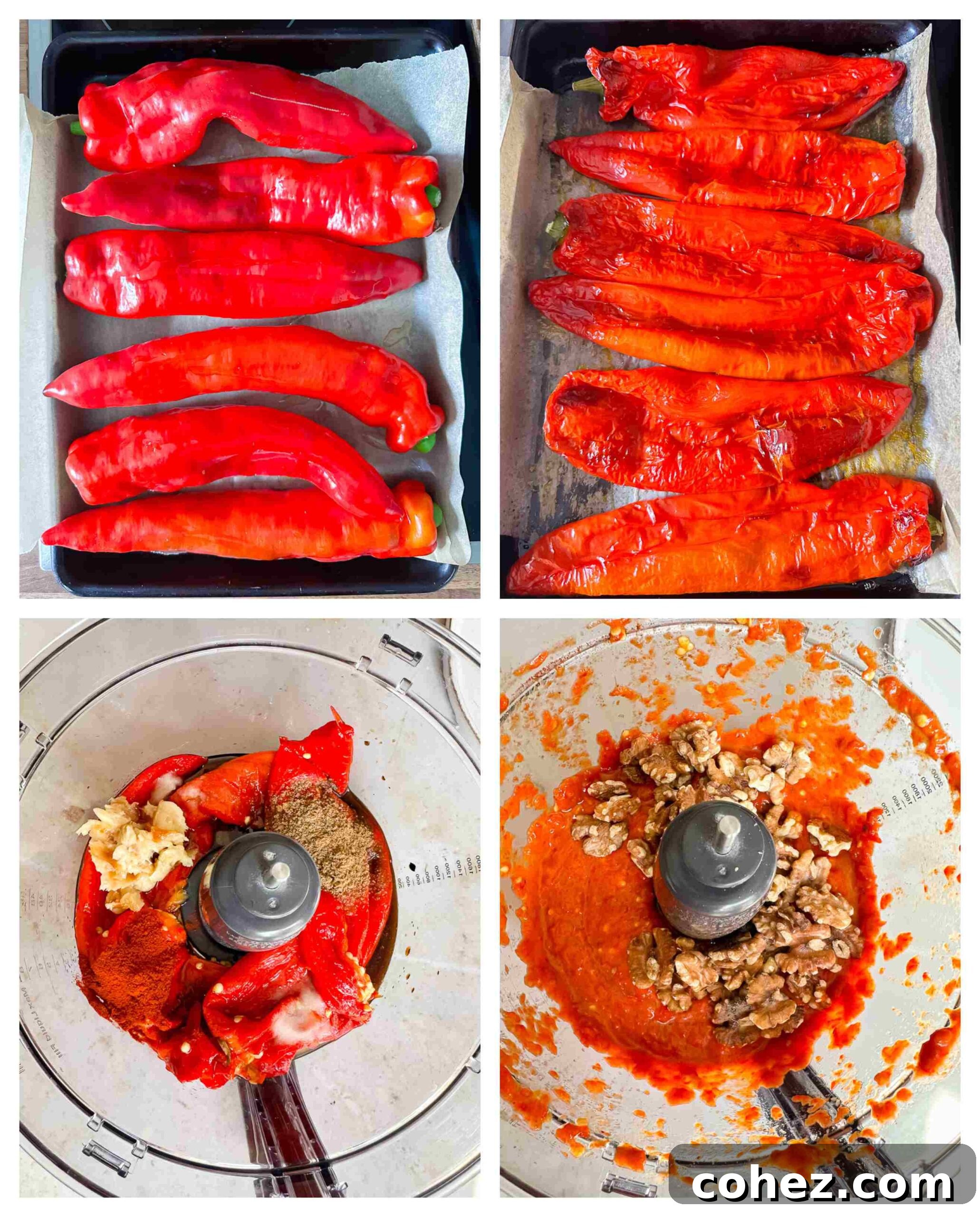
Begin by preheating your oven to a robust 200°C (400°F). Select sweet, ripe red peppers for the best flavor; pointed red peppers are often favored for their superior sweetness and lower water content, but any good quality red bell peppers will do. Arrange the whole peppers on a sturdy baking sheet. Drizzle them lightly with about 1 tablespoon of good quality olive oil – just enough to help them soften, caramelize, and prevent sticking. For the garlic, take a whole head, slice off the very top to expose the cloves, then drizzle with a touch more olive oil and wrap it snugly in aluminum foil to protect it from burning. Place the foil-wrapped garlic alongside the peppers on the same baking sheet. Roast for approximately 40 to 50 minutes, or until the peppers have completely collapsed, their skins are beautifully wrinkled and slightly charred in spots, and the garlic cloves feel incredibly soft and gooey when gently squeezed through the foil. This roasting step is crucial as it develops the deep, smoky sweetness that defines Muhammara.
Once roasted to perfection, carefully remove the pan from the oven. Immediately transfer the hot peppers to a bowl and cover them tightly with a clean kitchen towel or plastic wrap for about 10-15 minutes. This steaming process creates a humid environment that helps loosen their skins, making them much easier to peel. While the peppers are steaming, let the garlic cool slightly in its foil. Once both are cool enough to handle comfortably, proceed. Remove the stems from the peppers, deseed them thoroughly (as seeds can add bitterness), and peel the skins if you desire a smoother dip, though leaving some skin on can contribute to a rustic texture and additional smoky flavor. The roasted garlic cloves will be wonderfully sweet, mellow, and soft; simply squeeze them out of their skins into a small bowl.
Assembling and Blending: Bringing the Magic Together
While your peppers and garlic are cooling, take this opportune moment to prepare your walnuts. Lightly toasting the walnuts in a dry frying pan over low heat for about 5 minutes (stirring frequently to prevent burning) is a vital step. This process significantly enhances their natural fragrance and nutty flavor, while also reducing any raw bitterness. Once toasted, immediately remove them from the hot pan and let them cool completely to prevent them from becoming greasy or losing their crispness.
Now, it’s time to bring all these incredible components together. In the bowl of a food processor, combine the prepared roasted red peppers, the sweet and mellow roasted garlic cloves, 2 tablespoons of good quality olive oil, sherry vinegar (or balsamic vinegar for a slightly different tang), a teaspoon of ground cumin for earthy warmth, and half a teaspoon of salt. If using, add a touch of Aleppo pepper or smoked paprika for that characteristic smoky spice. Pulse the mixture until it is well blended into a vibrant, thick paste. Avoid over-blending at this initial stage; a little texture from the peppers is often desirable. For a truly authentic taste, you might also consider adding 1-2 tablespoons of finely ground stale breadcrumbs and a tablespoon of pomegranate molasses at this point, which contribute to both texture and the unique sweet-sour balance.
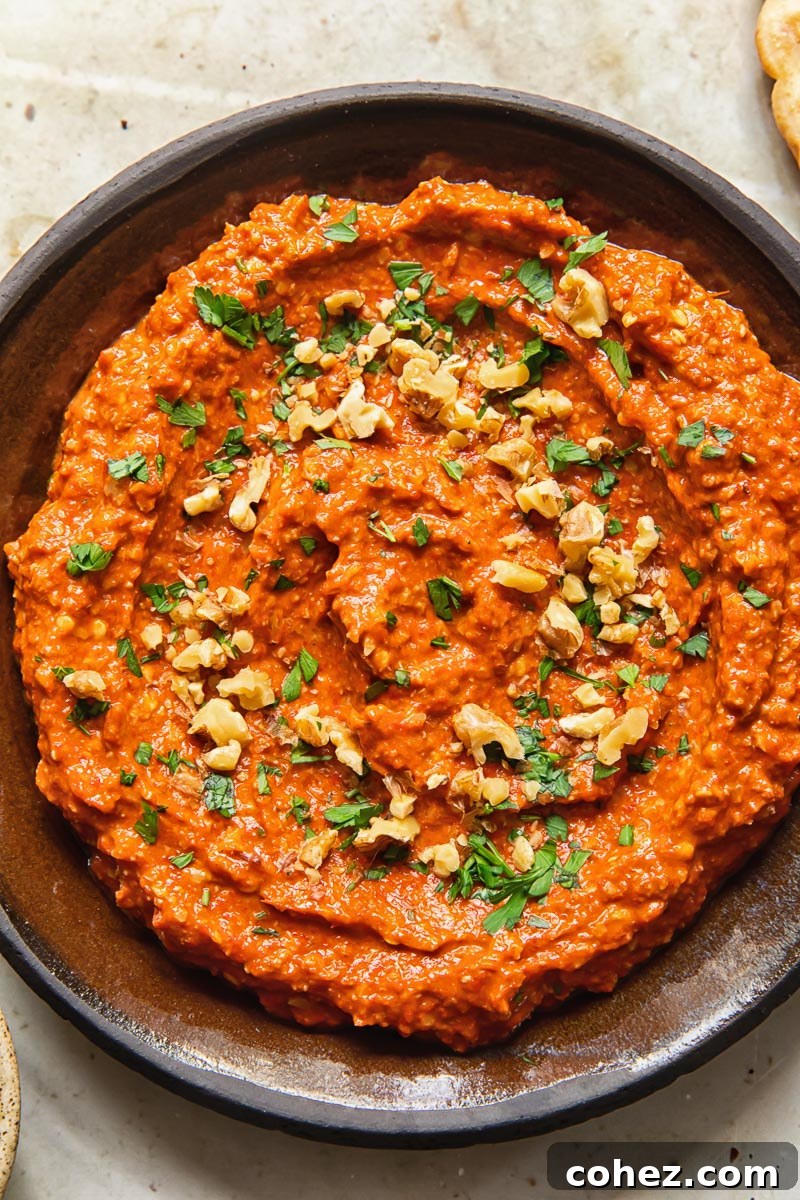
Finally, add the cooled toasted walnuts to the food processor. Give the mixture just a few brief pulses. The goal is to incorporate the walnuts and break them down, but it is crucial that small pieces of walnut still remain, providing that delightful textural contrast and nutty bite that is so characteristic of Muhammara. Over-blending the walnuts can turn the dip pasty and lose this appealing crunch. Taste and adjust seasonings as needed – perhaps a little more salt, a squeeze of fresh lemon juice, or another dash of pomegranate molasses if you desire more tang and sweetness. The result should be a rich, complex, and irresistible dip.
Versatile Serving Suggestions for Your Muhammara
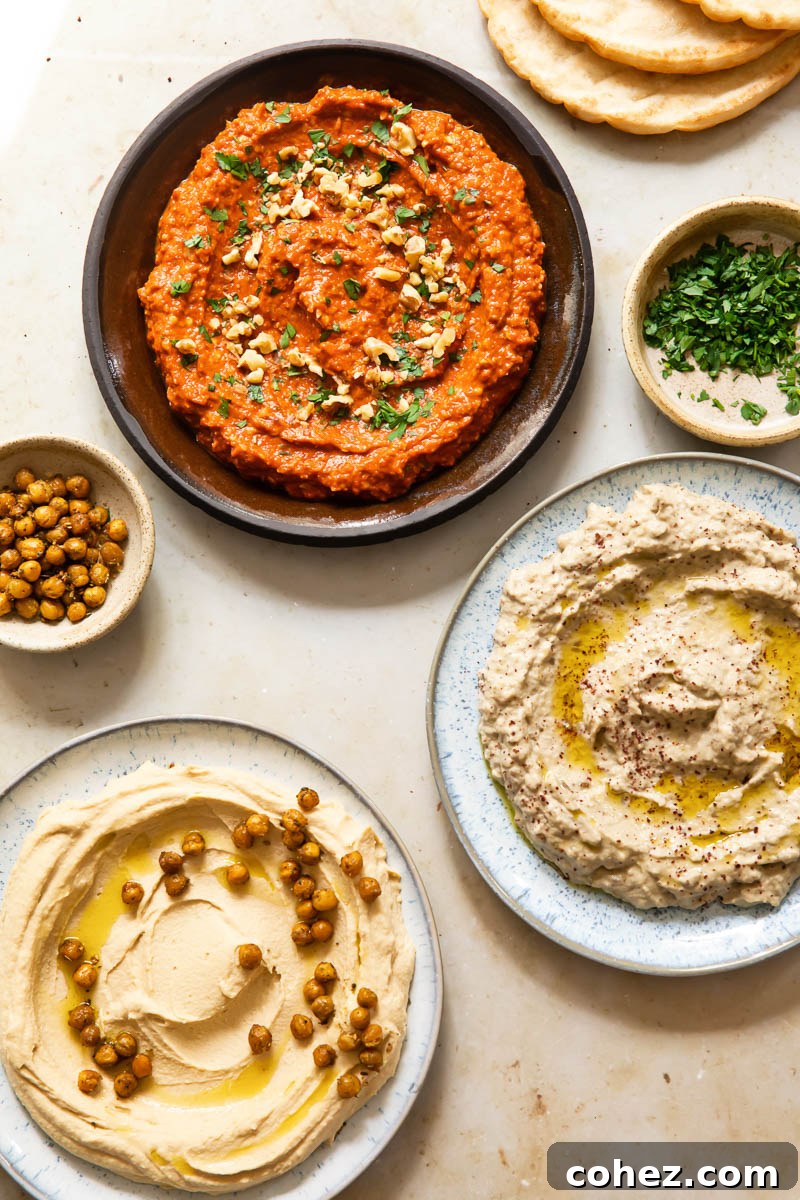
Muhammara’s versatility is undoubtedly one of its most charming attributes, solidifying its place as a beloved staple in many kitchens, both Middle Eastern and global. Whether you’re hosting a grand feast, preparing a casual gathering, or simply looking for a flavorful addition to your daily meals, this vibrant dip delivers an unmatched experience. There is truly nothing quite as inviting as a beautifully arranged table laden with a mezze spread, and Muhammara, with its glossy, rich red color and tantalizing aroma, instantly elevates the visual appeal of any spread, transforming a simple meal into a delightful work of art.
The Classic Mezze Experience
For an authentic and communal Middle Eastern dining experience, consider creating a bountiful mezze table. Pile your table high with an assortment of delights: serve Muhammara generously alongside warm, pillowy flatbreads or crispy pita chips, mounds of glistening marinated olives, fresh, herb-rich salads like tabbouleh or fattoush, and other complementary dips such as hummus and baba ghanoush. Add some succulent grilled halloumi cheese, tender chicken kebabs, or roasted seasonal vegetables for a complete spread. This encourages diners to graze and share, experiencing a symphony of textures and flavors. Muhammara’s vibrant color and complex flavor profile will undoubtedly be a highlight, providing a sophisticated and robust contrast to milder components.
Beyond the Mezze: Creative Culinary Pairings for Modern Meals
Do not confine Muhammara to just dips and appetizers; its robust and adaptable flavor profile makes it an excellent accompaniment to a vast array of main courses and everyday dishes. Consider it as a luxurious spread for gourmet sandwiches and wraps, adding an instant upgrade to your lunch. It pairs exceptionally well with grilled or roasted meats, providing a bright, tangy counterpoint to rich flavors. Imagine it alongside Spicy Lemon Za’atar Chicken or the comforting Chicken Musakhan, where its sweet and smoky notes can beautifully cut through the richness of the poultry. It also complements white fish and seafood magnificently, particularly when served simply baked, pan-fried, or grilled. For vegetarian and vegan enthusiasts, spread it generously on toasted bread with a sprinkle of plant-based feta, or dollop it onto a vibrant grain bowl, roasted vegetable platter, or even a hearty baked potato for an extra layer of flavor and nutrition.
Muhammara also shines in less conventional, yet equally delicious, roles. Use it as a vibrant base for a unique salad dressing by thinning it slightly with extra virgin olive oil and a squeeze of fresh lemon juice. Swirl a spoonful into a bowl of lentil soup or tomato-based stews for added depth and richness. Its deep, savory notes can even replace traditional tomato-based sauces in certain dishes, such as a creative pizza base or a flavorful sauce for pasta, offering a fresh and exciting perspective on familiar meals. For a stunning presentation, always garnish your serving bowl generously with a sprinkle of additional chopped walnuts, fresh parsley or cilantro, a final drizzle of high-quality extra virgin olive oil, and perhaps a scattering of jewel-like pomegranate seeds. This not only enhances its visual appeal but also adds fresh textural and flavor elements.
Recipe Tips and Notes for Perfect Muhammara
- Pepper Selection is Key: The quality and type of your red peppers significantly impact the final taste and color of your Muhammara. Opt for sweet, ripe red peppers – pointed varieties often yield a richer crimson color and are naturally sweeter and less watery than standard bell peppers when cooked. However, good quality red bell peppers work perfectly fine if that’s what’s readily available. For the deepest smoky flavor, consider charring the peppers over an open gas flame before roasting in the oven.
- Customizing the Spice Level: Traditional Muhammara often features Aleppo pepper (also known as Pul Biber), a moderately hot, fruity chili pepper integral to Syrian cuisine. If you prefer a milder dip or can’t easily find Aleppo pepper, smoked paprika is an excellent substitute, offering a beautiful smoky depth without overwhelming heat. For those who crave a fiery kick, a pinch of red chili flakes can be combined with paprika to achieve your desired spice level. The earthy warmth of ground cumin is also a fantastic addition that truly rounds out the flavor profile.
- Roasted vs. Raw Garlic: Roasting the garlic alongside the peppers is a transformative step. Keeping the whole bulb in its skin protects the cloves from burning and transforms them into soft, sweet, caramelized nuggets, lending an unparalleled mellow richness to the dip. While you can substitute with 2 cloves of raw minced garlic, the intense, sweet smoothness of baked garlic is truly unbeatable and highly recommended for an authentic and less pungent taste.
- Achieving the Perfect Texture: The beauty of Muhammara lies not just in its flavor but also its appealing texture. Aim for a dip that is not entirely smooth like hummus, but rather retains some delightful coarse bits from the walnuts and peppers, providing a pleasant and interesting mouthfeel. Pulsing the ingredients in the food processor, rather than continuous blending, helps achieve this desired rustic consistency. If you find your dip too thick, you can thin it with a little extra olive oil or water.
- The Pomegranate Molasses Factor: Pomegranate molasses is a traditional ingredient that adds a distinct sweet and sour note, crucial for balancing the richness of the peppers and walnuts. If you don’t have it, a combination of lemon juice and a tiny bit of honey or brown sugar can offer a similar tart-sweet balance, though the deep, complex fruitiness of pomegranate molasses is truly unique and worth seeking out for authenticity.
Storage and Leftovers: Maximizing Your Muhammara Enjoyment
One of the many appealing benefits of Muhammara, similar to other robust mezze dips, is its excellent keeping quality. It can be prepared ahead of time, making it an ideal choice for entertaining, efficient meal prepping, or simply ensuring you always have a delicious snack on hand. Stored in an airtight container in the refrigerator, Muhammara will stay wonderfully fresh and delicious for 4 to 5 days. In fact, many culinary enthusiasts find that its flavors deepen and meld even more beautifully after a day or two, thanks to the roasted garlic and spices having more time to integrate. Just be aware that the walnuts might lose some of their initial crispness over time, but the overall flavor and appeal remain outstanding.
For longer storage options, Muhammara can also be successfully frozen. To do so, transfer the dip into a freezer-safe container or heavy-duty freezer bag, leaving a small amount of headspace to allow for expansion. It can be frozen for up to 2-3 months without significant loss of quality. When you’re ready to enjoy it, thaw the Muhammara overnight in the refrigerator. Before serving, give it a good stir and consider adding a fresh drizzle of extra virgin olive oil, and perhaps a sprinkle of freshly chopped walnuts, to help restore its creamy texture and vibrant appearance after thawing. This ensures that even after freezing, your Muhammara remains as delightful as when it was first made.
More Delicious Middle Eastern Recipes to Explore
- Middle Eastern Fattoush Salad
- Chicken Musakhan
- Middle Eastern Salad Bowl
- Falafel Salad Bowl with Tabouleh and Hummus
Muhammara Recipe
Print Recipe
Muhammara is a rich, red and smoky Middle Eastern dip made from roasted red peppers, garlic and walnuts, perfect over chicken or white fish.
Ingredients
- 6 sweet red peppers, roasted
- 1 tbsp olive oil (for roasting peppers and garlic)
- 1 head garlic, roasted
- 1 tsp smoked paprika
- 2 tsp sherry vinegar or balsamic vinegar
- 2 tbsp olive oil (for blending)
- 1 tsp ground cumin
- 100g / 3.5 oz toasted walnuts
- 1/2 tsp salt (or to taste)
Instructions
- Preheat the oven to 200°C (400°F). Arrange the whole red peppers on a roasting pan and drizzle with 1 tbsp of olive oil. Take a large head of garlic, slice the top off to expose the cloves, place on a sheet of aluminum foil, drizzle with olive oil, and wrap the garlic head in the foil. Place both the garlic and peppers on the same roasting pan. Roast for 40 minutes, or until the peppers are soft and collapsed, and the garlic cloves are very tender.
- Carefully remove the pan from the oven. Cover the roasted peppers with a clean kitchen towel and let them cool for at least 10-15 minutes; this helps loosen their skins. Once the peppers are cool enough to handle, remove the stems, deseed them, and peel the skins if a smoother texture is desired. When the garlic is cool enough, squeeze the soft cloves out of their peels.
- Meanwhile, toast the walnuts in a dry frying pan over low heat for about 5 minutes, stirring frequently to prevent burning. Remove from the pan and let them cool completely.
- In a food processor, combine the prepared roasted red peppers, roasted garlic, smoked paprika, sherry vinegar (or balsamic vinegar), 2 tbsp olive oil, ground cumin, and salt. Pulse until the mixture is well blended into a vibrant, thick paste.
- Add the cooled toasted walnuts to the food processor. Pulse briefly a few times until the walnuts are incorporated and broken down, but still retain some texture. Avoid over-blending to maintain a pleasant mouthfeel. Taste and adjust seasoning as necessary.
Nutrition Facts
Calories: 205kcal | Carbohydrates: 10g | Protein: 4g | Fat: 18g | Saturated Fat: 2g | Polyunsaturated Fat: 9g | Monounsaturated Fat: 7g | Sodium: 200mg | Potassium: 337mg | Fiber: 4g | Sugar: 5g | Vitamin A: 3816IU | Vitamin C: 153mg | Calcium: 29mg | Iron: 1mg
Nutrition information is automatically calculated and should be used as an approximation.