
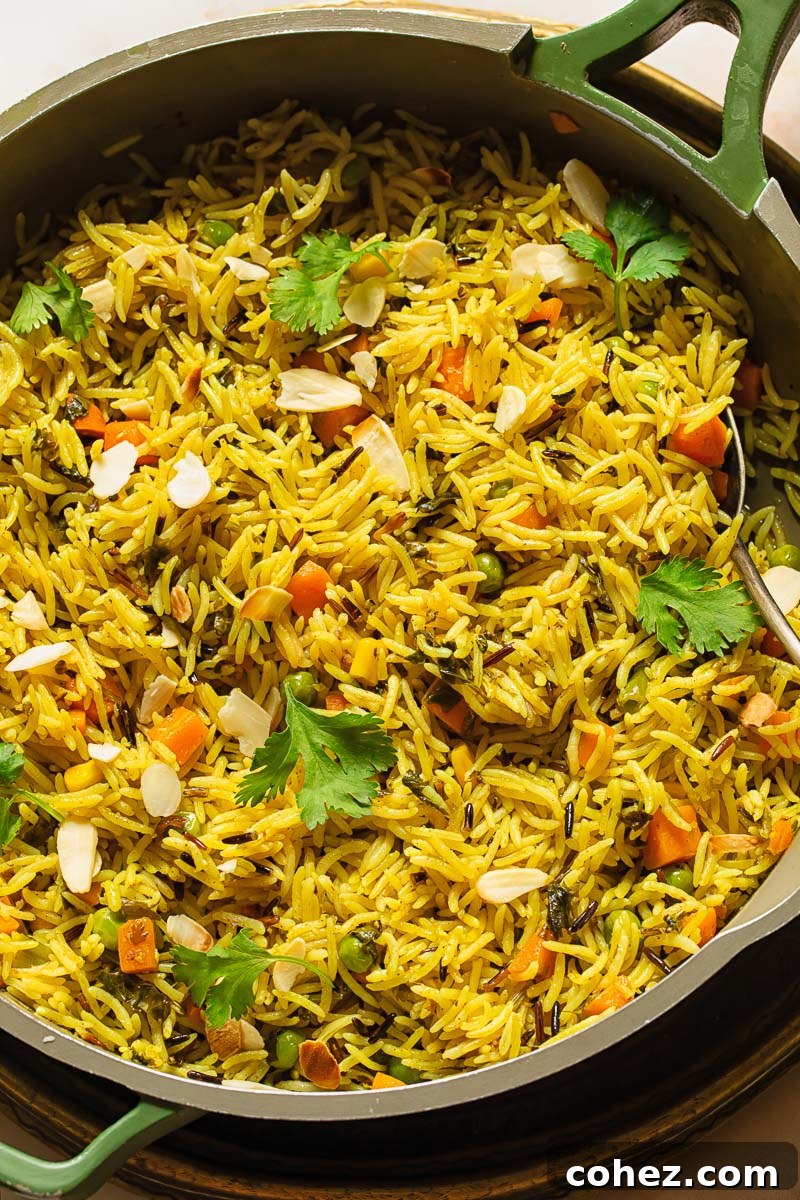
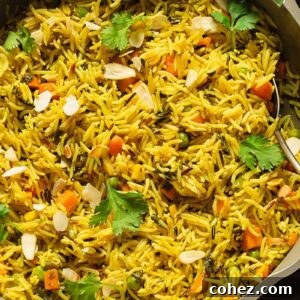
Imagine a culinary masterpiece where each grain of rice is a tiny canvas, painted with vibrant spices and infused with rich stock, then studded with tender vegetables and exotic nuts. This isn’t just a side dish; it’s an experience. Our Basmati and Wild Rice Pilaf with Vegetables is a truly sumptuous and satisfying accompaniment, ready to elevate any curry or stand proudly as a light meal on its own. Glistening with the rich aroma of ghee (or a healthy oil), the distinct strands of earthy rice burst with flavor, creating a symphony for your palate.
While this pilaf is undeniably special, for those truly grand occasions when only a show-stopping main will do, you can impress your guests with a beautiful chicken biryani. My rendition captures all the authentic, traditional biryani flavors, ingeniously brought together with modern, time-saving techniques, proving that extraordinary dishes don’t always demand endless hours in the kitchen.
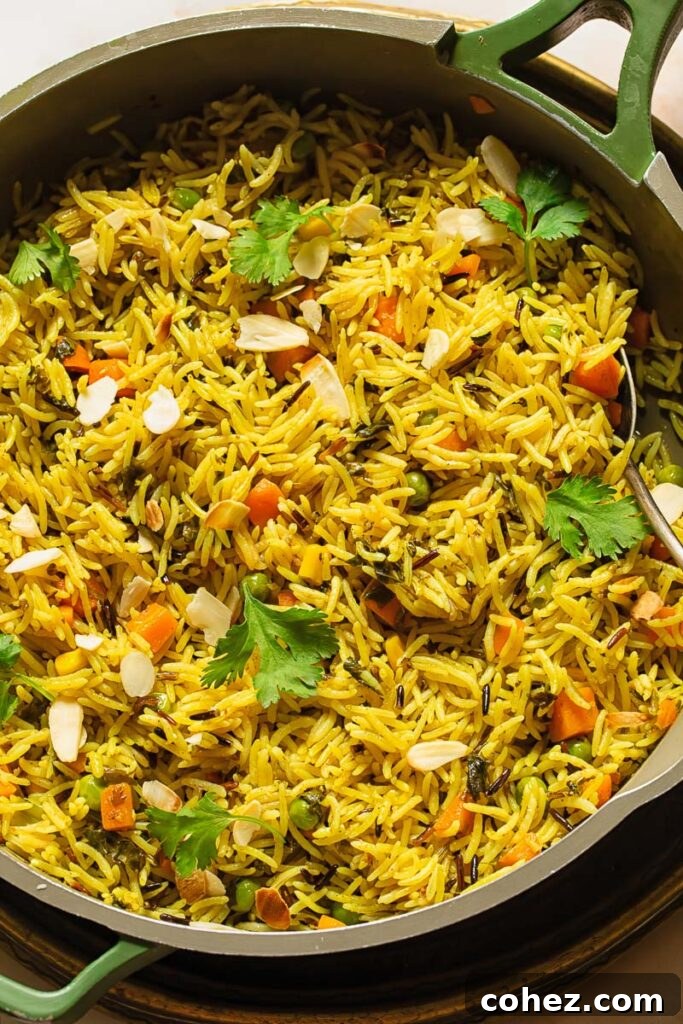
The name itself, “pilaf” or “pilau,” often sparks friendly debate. While in North America, this buttery, flavorful rice dish is commonly known as “pilaf,” across the Atlantic, particularly here in the UK, you’ll often hear it referred to as “pilau.” Both terms describe the same beloved preparation method for rice, with the slight linguistic variation depending on geographical location and regional dialect. Tracing its roots back to the Persian word pilaf, this dish can also be found spelled as pilav, pulao, or even the charmingly phonetic pillow rice in various culinary traditions around the world. Regardless of how you choose to pronounce or spell it, the essence of this aromatic rice creation remains universally appealing.
But what exactly defines a pilaf, and what makes it so much more captivating than simply boiled rice? Let’s delve into the culinary journey of this remarkable dish.
The Enduring Appeal of Vegetable Rice Pilaf
The esteemed rice pilaf recipe proudly originated in ancient Persia, a region renowned for its profound culinary heritage and exceptional rice preparations. In these parts of the world, rice is never relegated to being ‘just a side dish’; it is celebrated as a centerpiece, often taking hours of meticulous preparation to achieve perfection. With an exciting and flavorful vegetable rice pilaf like this one, it’s easy to understand why this humble grain commands such respect.
Unlike the common Western practice of simply boiling plain white rice to serve as a filler, the Middle Eastern and South Asian traditions elevate rice into an art form. The pilaf method transforms ordinary grains into a dish brimming with distinct flavors and textures, making it a true star on any table. This sophisticated approach to cooking rice ensures that every bite is a delightful experience, far surpassing the blandness often associated with unadorned boiled rice.
The distinct character of pilaf lies in the care and ritual invested in its preparation. It begins with a thorough washing of the rice until the water runs completely clear, a crucial step that removes excess starch, preventing stickiness and ensuring each grain remains separate and fluffy. Following this, the rice is often soaked, which helps in more even cooking and contributes to its tender texture. The next pivotal stage involves lightly frying the rice in a rich fat such as ghee, butter, or oil. This process, often referred to as “toasting” or “sweating” the rice, coats each individual grain, helping them maintain their shape and imparting a beautiful, slippery sheen. More importantly, it develops a deeper, nuttier flavor in the rice itself.
Finally, instead of being boiled in plain water, pilaf is cooked slowly and gently in aromatic stock, whether chicken, vegetable, or a combination. This slow simmering allows the rice grains to absorb every last drop of the flavorful liquid, infusing them with an incredible depth that plain water could never achieve. The result is perfectly cooked, separated, and wonderfully tasty grains of rice.
Spices are another quintessential hallmark of pilaf, acting as the soul of the dish. While the exact blend of spices varies from region to region and family to family, they typically form a heady and complex mix. Classic choices often include warming cardamom, fragrant bay leaves, and sweet cinnamon. In this particular Basmati and Wild Rice Pilaf recipe, I’ve curated a blend that balances warmth, earthiness, and a subtle kick. Turmeric lends its beautiful golden hue and earthy notes, while cumin and coriander provide a deep, aromatic base. A touch of cinnamon adds a hint of sweet warmth, and a dash of cayenne pepper introduces a subtle, intriguing heat that awakens the palate without overwhelming it.
Traditionally, many pilaf recipes begin with sautéing onions to build a foundational flavor. However, in my version, I’ve opted for fresh garlic and ginger to infuse the cooking oil. This choice creates a brighter, more pungent aromatic profile, adding a lively freshness that complements the delicate rice and vegetables beautifully.
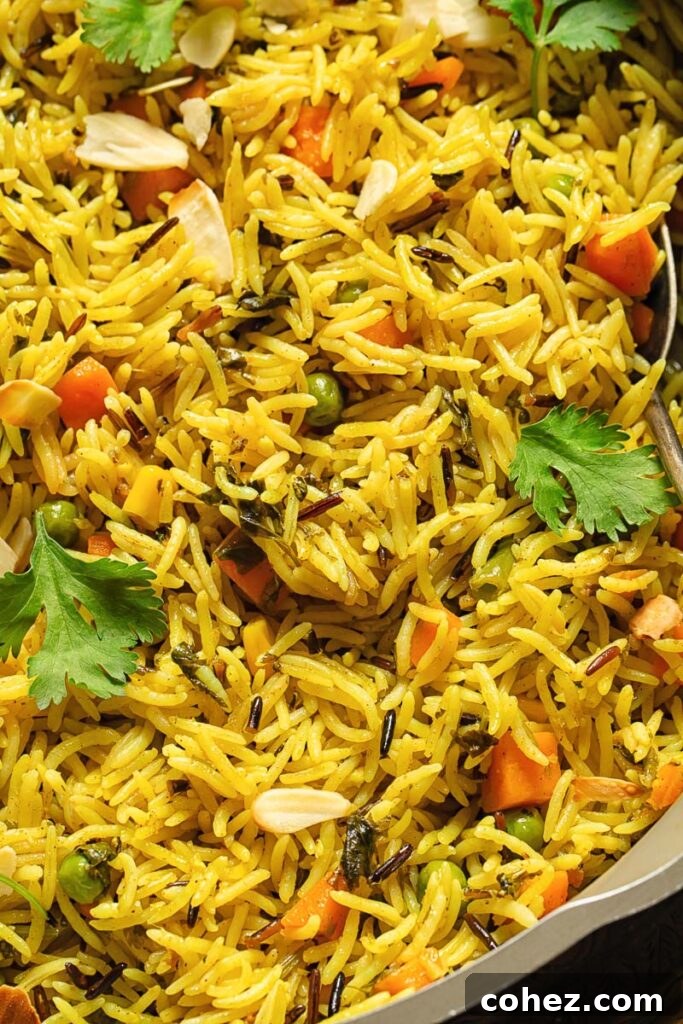
Another distinctive element of this recipe, setting it apart from more traditional pilafs, is the innovative combination of basmati rice with wild rice. Basmati rice is celebrated for its exquisite aroma, long grains, and fluffy texture when cooked. Wild rice, on the other hand, is a wholegrain, unrefined option that I’m particularly fond of for its nutty flavor, chewy texture, and significant nutritional benefits. Beyond its health advantages, the contrasting darker strands of wild rice interwoven with the pale basmati create an incredibly appealing visual tapestry, making the dish even more enticing.
The diversity of pilaf is truly astounding; no two recipes are ever exactly the same. Some versions, like this one, prominently feature a medley of fresh or frozen vegetables. Others might include small, tender pieces of meat, most commonly lamb or chicken, adding another layer of richness. In Turkey, for instance, a pilav might simply be prepared with rice, bulgur wheat, and sometimes, vermicelli noodles that are fried until dark and crispy, offering a unique textural contrast.
Finally, for a modern and incredibly convenient twist, I’ve drastically reduced kitchen time by incorporating a frozen vegetable mix. These pre-prepared pieces are uniformly cut to a perfect size, ensuring even cooking and seamless integration into the pilaf, allowing you to achieve authentic flavors with minimal effort. So, the question remains: will you embrace the simplicity and depth of this pilaf, or will you ever settle for plain rice again?
Recipe Tips and Notes for Perfect Pilaf
- I’ve used a harmonious basmati and wild rice blend for this recipe. If you decide to experiment with other types of rice, always be mindful of their individual cooking times. For example, brown rice generally requires a longer cooking duration. Always refer to the package instructions for specific guidance before combining different rice varieties.
- For an unparalleled depth of flavor and a wonderfully buttery essence, I highly recommend using ghee (clarified butter) if you can source it. Ghee is readily available in most larger supermarkets and Asian grocery stores and will significantly enhance the richness of your pilaf.
- To keep preparation quick and effortless, I’ve incorporated a convenient frozen vegetable mix. This not only halves your prep time but also ensures that the small, uniform pieces cook quickly and evenly. My preferred mix includes peas, carrots, green beans, and corn, but feel free to customize it with your favorite vegetables like broccoli florets, cauliflower, or fresh spinach.
- Fresh cilantro (also known as fresh coriander) is an absolute must for this dish! It’s incorporated both to infuse the broth with its vibrant aroma during cooking and as a fresh, bright garnish that adds an essential finishing touch.
- Finally, don’t skip the chopped nuts. A sprinkle of toasted flaked almonds or chopped cashews brings a delightful textural contrast and an elevated, sophisticated finish to the pilaf.
Serving Suggestions for Your Pilaf
The versatility of this special side dish means the options for serving are truly endless! While it pairs beautifully with almost anything, I particularly love it alongside a hearty, saucy curry. Here are some of my most popular curry main dishes that would complement this pilaf perfectly, allowing you to choose your ideal pairing:
- Indian Kofte Curry – A comforting dish featuring homemade spiced lamb (or pork) meatballs bathed in a thick, richly creamy gravy.
- Butter Chicken Curry – Tender chicken pieces marinated in a fragrant masala and yogurt sauce, then simmered in a mild and luxuriously creamy gravy.
- Chicken Curry with Potatoes – A flavorful and warming curry where spice-soaked potatoes and succulent chicken bob in a fragrant gingery-garlic sauce.
- Nepalese Red Lentil Dahl – A simple, honest, and satisfying meat-free option. Whether you consider it a side or a main, its wholesome goodness is undeniable.
- Chickpea and Butternut Squash Curry– A vibrant, wholesome, and incredibly flavorful stew packed with nutritious vegetables, perfect for a vegetarian meal.
Storage and Leftovers Made Easy
This delicious Basmati and Wild Rice Pilaf is excellent for meal prep and makes for fantastic leftovers. It will keep beautifully in an airtight container in the fridge for 3-4 days. When reheating, I recommend doing so on the stove top with a splash of extra stock or water to restore its moisture and texture. Don’t forget to leave it to sit covered for 5 minutes off the heat to allow the rice to reabsorb any remaining liquid, ensuring it’s perfectly fluffy.
This pilaf is also a great candidate for freezing. If you’re planning to batch cook, simply omit the fresh garnish of cilantro and nuts before storing. Transfer the cooled pilaf into a freezer-safe container, where it will keep well for up to 6 months. Thaw it overnight in the fridge before reheating thoroughly. A quick note: while still delicious, the rice might not be quite as fluffy and separated after a stay in the freezer, but its flavors will remain robust.
More Recipes to Try
- Homemade Naan
- Easy Saag Paneer
- Moong Dal Tadka
- Chicken Korma
Basmati and Wild Rice Pilaf with Vegetables
Equipment
-
Our Place Always Pan
Ingredients
- 300g / 1½ cup basmati and wild rice mix
- 2 tbsp vegetable oil, or ghee
- 1 tbsp grated ginger
- 2-3 cloves garlic, crushed
- 1 tsp salt
- 1/2 tsp turmeric
- 1 tsp cumin
- 1 tsp coriander
- 1/4 tsp cinnamon
- 1/2 tsp cayenne pepper
- 2 tbsp chopped cilantro (fresh coriander)
- 500ml / 18oz chicken stock, or vegetable stock
- 120g / 1 cup frozen veg mix (peas, carrots, green beans and corn), or your favorite mix
- 2 tbsp toasted flaked almonds, or chopped cashews
Instructions
-
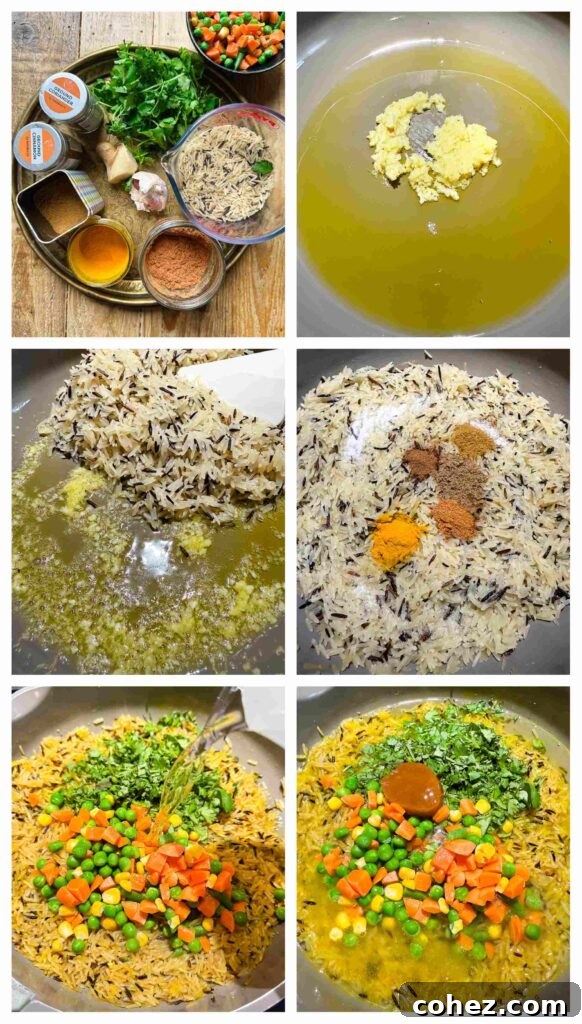
Wash the rice mix thoroughly until the water runs completely clear, then soak the rice in fresh water for 30 minutes. This step is crucial for achieving distinct, fluffy grains.
-
Heat the vegetable oil (or ghee) in a large, heavy-bottomed pan over medium-low heat. Add the grated ginger and crushed garlic, then stir-fry gently for about 30 seconds until fragrant. Drain the soaked rice completely and add it to the pan, continuing to fry and stir for another minute to coat each grain evenly.
-
Now, incorporate the salt, turmeric, cumin, coriander, cinnamon, and cayenne pepper. Stir well to combine the spices with the rice, cooking for another 30 seconds until the aromatics are intensely fragrant. Pour in the stock, add the frozen vegetables and the chopped fresh cilantro. Bring the mixture to a gentle simmer, then immediately reduce the heat to low, cover the pan tightly with a lid, and let it simmer for 15 minutes. After 15 minutes, remove the pan from the heat but keep it covered for an additional 10 minutes. This allows the rice to fully absorb all the liquid and steam, ensuring perfect texture.
-
Remove the lid, gently fluff up the rice with a fork to separate the grains, and garnish generously with more fresh cilantro and toasted flaked almonds or chopped cashews, if desired. Serve immediately and enjoy!
Notes
- I used a mix of basmati and wild rice for its unique texture and flavor profile. Other types of rice can be used, but this will impact the cooking time. Brown rice, for example, will take longer to cook, so always check the package instructions and adapt accordingly to ensure your rice is perfectly cooked.
- For a more authentic and deeply buttery flavor, use ghee if you can find it. It should be easy to locate in larger supermarkets and specialty Asian stores. Ghee will add an incomparable richness to the rice.
- I used a frozen vegetable mix to keep this recipe as quick and simple as possible, making it perfect for busy weeknights. My mix included peas, carrots, green beans, and corn, but other vegetables like broccoli florets, cauliflower, or fresh spinach will all work wonderfully as well.
- Make sure to add fresh cilantro/coriander both during cooking and as a garnish! It not only infuses the dish with its distinctive fresh flavor but also serves as the perfect vibrant visual accent.
- Chopped nuts are also important; they provide a delightful crunch and add to the overall texture and sophisticated finish of the dish, elevating it from good to truly exceptional.
Nutrition
Nutrition information is automatically calculated, so should only be used as an approximation.
Tried this recipe?Let us know how it was!