
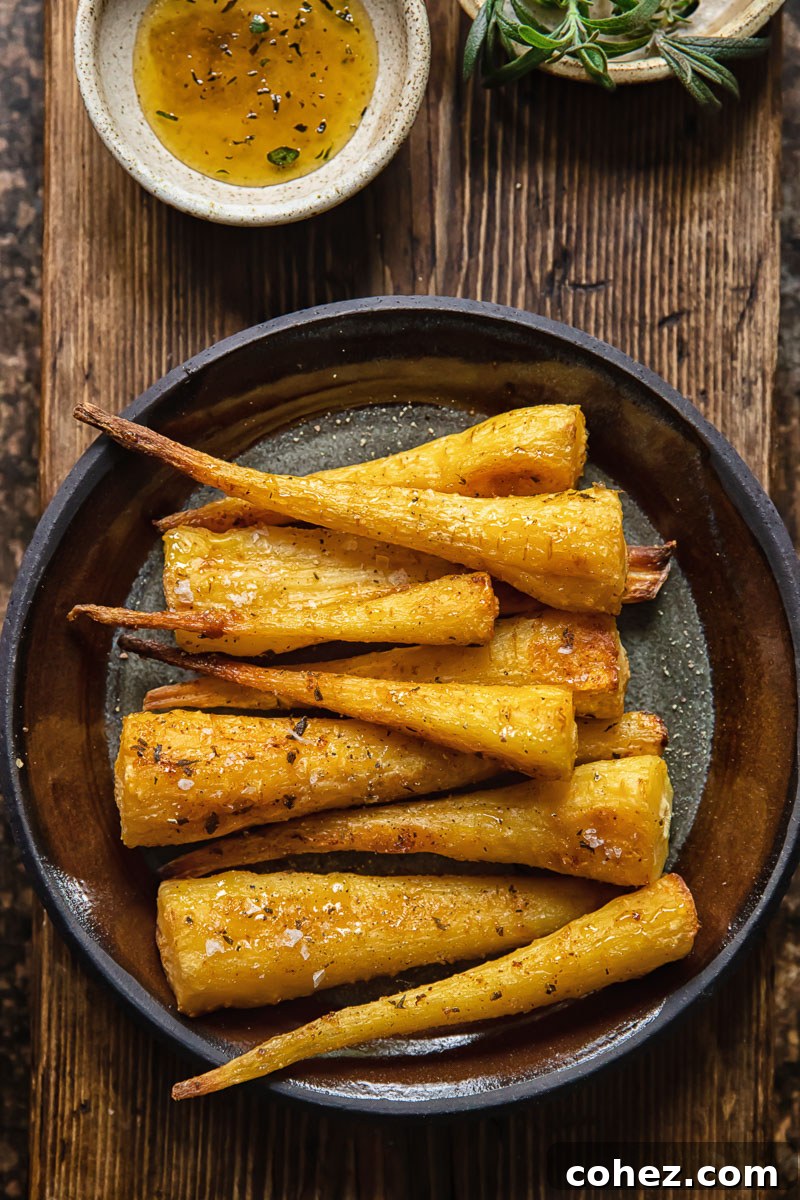
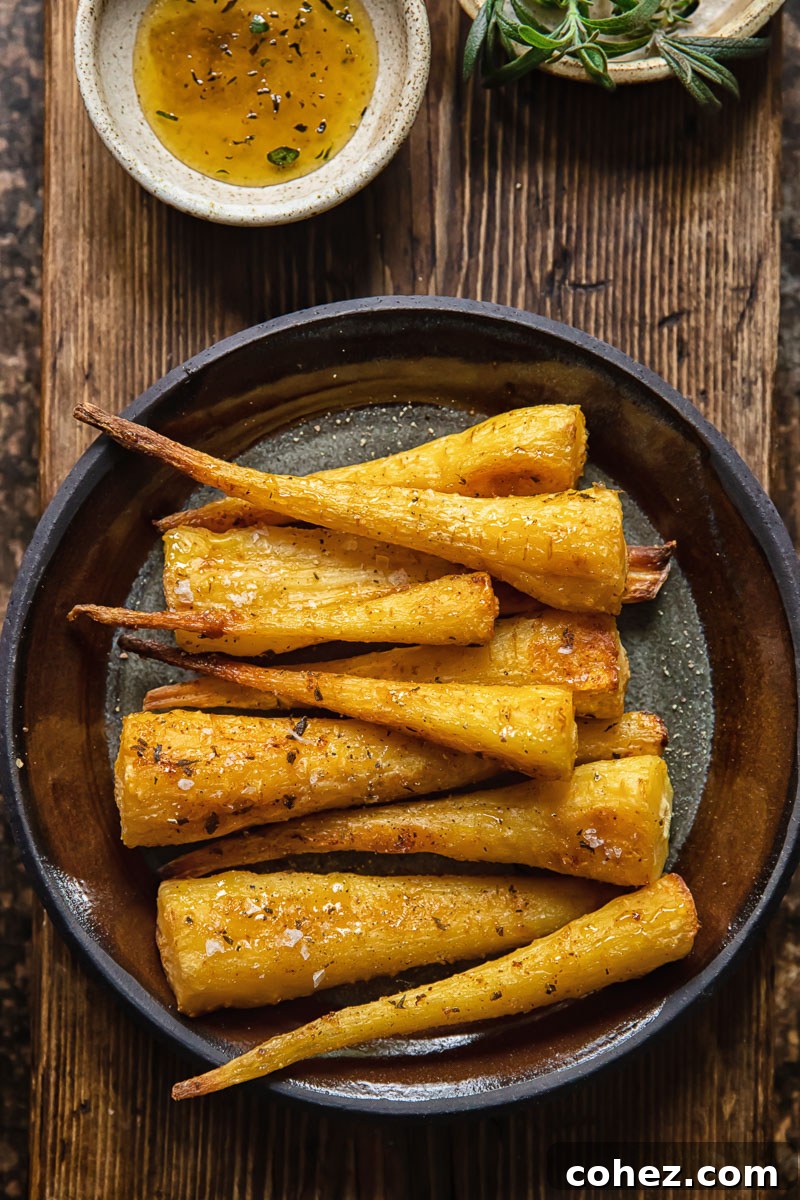
Welcome to a culinary journey that promises to transform your perception of root vegetables. Our **Honey Garlic Roasted Parsnips** are more than just a side dish; they’re a symphony of textures and flavors. Imagine parsnips, roasted to golden perfection, boasting a delightful crispness on the outside while remaining incredibly soft and fluffy within. Infused with the irresistible warmth of honey and aromatic garlic, these roasted beauties are destined to become the star of any roast dinner or a cherished addition to your festive holiday table.
While you savor the thought of these magnificent roasties, consider expanding your repertoire of vibrant vegetable accompaniments. For another equally stunning option, explore our Maple Glazed Carrots, offering a different sweet and savory profile to complement your meal. Both make for exceptional side dish choices, perfect for any occasion.
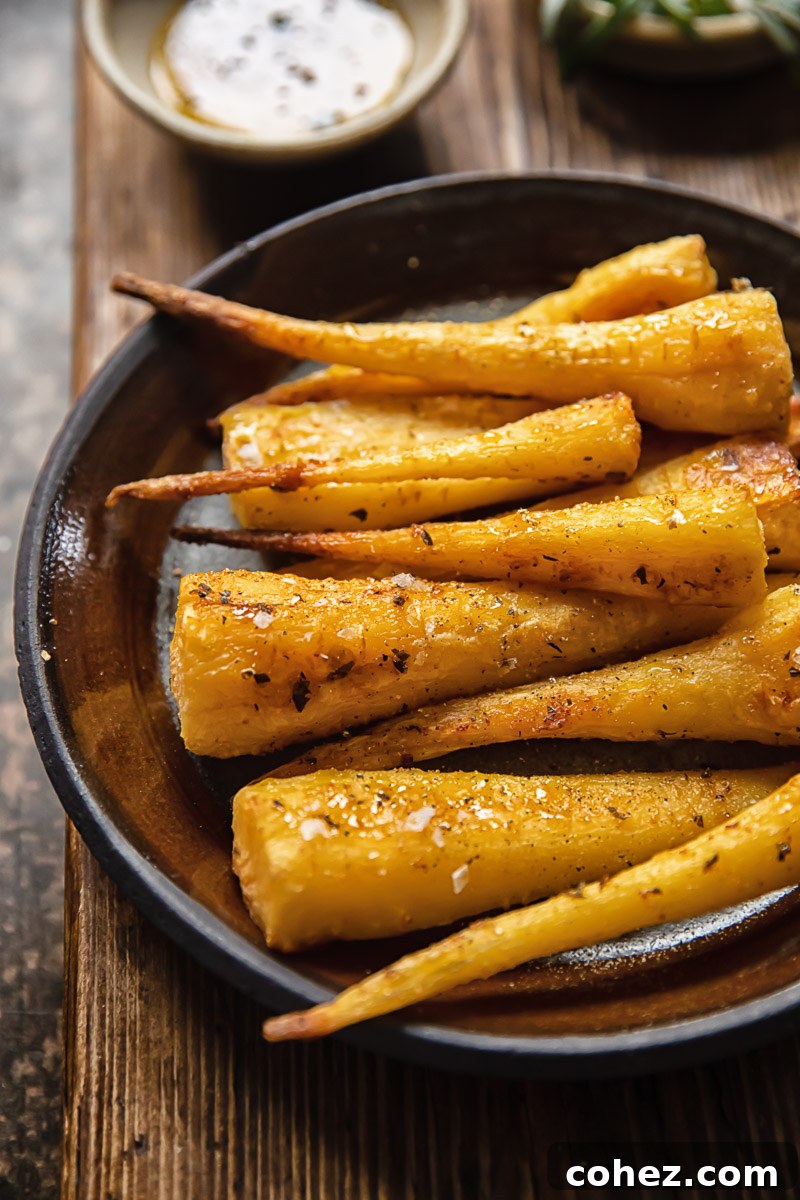
If you’ve been hoping to broaden your vegetable horizons, this recipe is precisely what you need. Parsnips, though often overlooked, offer a unique and delicious experience that deserves a place on your plate. My personal appreciation for parsnips truly blossomed over a decade ago when I moved to the UK.
Here in the UK, parsnips are an integral part of the cherished Sunday roast meal, a weekly tradition deeply woven into the culinary fabric. This prominence keeps them at the forefront of the vegetable world, a position they undoubtedly deserve. Their earthy sweetness, especially when transformed by roasting, brings an unparalleled depth of flavor to any spread.
While roasting is undoubtedly my favorite method for preparing parsnips, their versatility extends far beyond. These adaptable root vegetables can be wonderfully incorporated into hearty soups, rich stews, or even baked gratin-style for a creamy, comforting dish. Let your imagination be your guide; parsnips are surprisingly amenable to a myriad of culinary inspirations.
Why These Honey Garlic Roasted Parsnips Will Become Your New Favorite Side Dish
For those new to parsnips, fear not! These delightful root vegetables are closely related to carrots, meaning their flavor profile won’t be entirely unfamiliar. While they share a similar shape and are just as budget-friendly as carrots, parsnips possess a distinct, slightly less sweet and more earthy taste. This subtle difference is what makes them so captivating, offering a sophisticated twist to your meals.
When roasted with a thoughtful blend of savory seasonings, parsnips can even take on a texture reminiscent of perfectly roasted potatoes, yet they boast a significantly lower carbohydrate count. This makes them an excellent choice for those mindful of their carb intake. Beyond their carb-friendly nature, parsnips are also low in calories and packed with essential fiber and powerful antioxidants, solidifying their status as a true nutritional powerhouse for any diet.
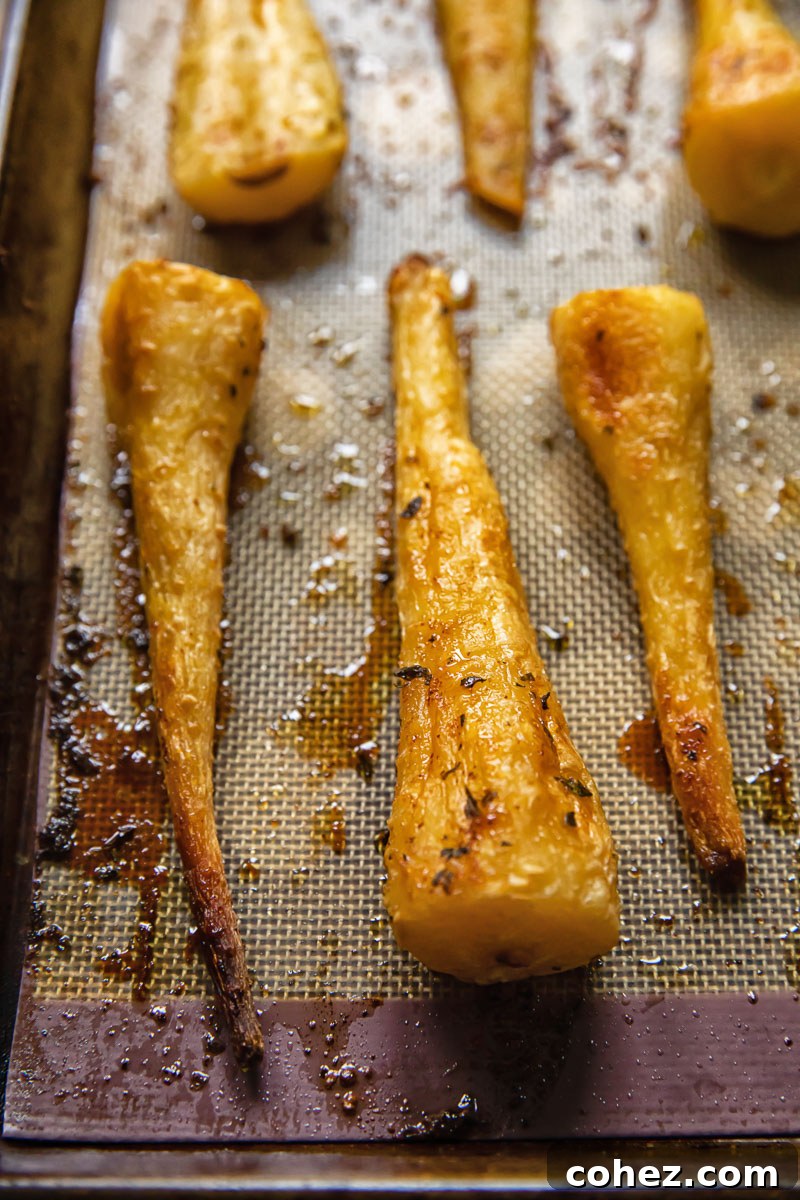
The reason roasting is my preferred cooking method for parsnips lies in its ability to dramatically enhance their natural sweetness. The dry heat of the oven coaxes out and caramelizes their sugars, intensifying their inherent flavor. Furthermore, I absolutely adore the textural transformation that roasting imparts. With just a touch of oil, parsnips develop an irresistible golden-crisp exterior, while their interiors remain wonderfully soft, tender, and fluffy. This delightful contrast is what makes them so utterly addictive.
This magical ability of roasting to elevate the sweetness and texture of vegetables is why it’s a cooking technique I return to time and again. For other delicious examples of how roasting brings vegetables to life, be sure to try my Roasted Garlicky Brussels Sprouts and Carrots or the incredibly flavorful Roasted Parmesan Broccoli. Each recipe demonstrates how simple roasting can unlock incredible depth and appeal.
Expert Tips for Perfect Honey Garlic Roasted Parsnips Every Time
Recipe Tips and Notes
Achieving perfectly roasted parsnips is surprisingly simple, but a few key techniques can elevate your dish from good to absolutely outstanding. Pay attention to these insights, refined over countless batches, to ensure your parsnips are consistently golden, crispy, and bursting with flavor.
- To Peel or Not to Peel: While peeling parsnips before cooking isn’t strictly necessary, I highly recommend it. The peeled surface tends to crisp up much more effectively in the oven, contributing to that desirable textural contrast. If you opt to cook yours unpeeled, ensure you scrub them thoroughly under running water to remove any dirt.
- Uniformity for Even Cooking: For consistent results, it’s crucial that your parsnips are either similar in size to begin with or are cut into uniform pieces. This ensures that all pieces cook at the same rate, preventing some from being undercooked while others are overdone. Aim for roughly 1-inch thick pieces, cutting larger parsnips lengthwise if needed.
- The Par-boiling Advantage: Some cooks prefer to roast parsnips from raw, but I find that par-boiling them for just 5 minutes beforehand makes a significant difference. This brief initial boil not only speeds up the overall cooking process in the oven but also contributes to a wonderfully fluffier interior texture, creating a better contrast with the crispy exterior. After par-boiling, make sure to drain them thoroughly and allow them to steam dry for a couple of minutes in the colander; excess moisture inhibits crisping.
- The Three-Stage Glaze Technique: The secret to truly exceptional honey garlic roasted parsnips lies in applying the glaze in three distinct stages.
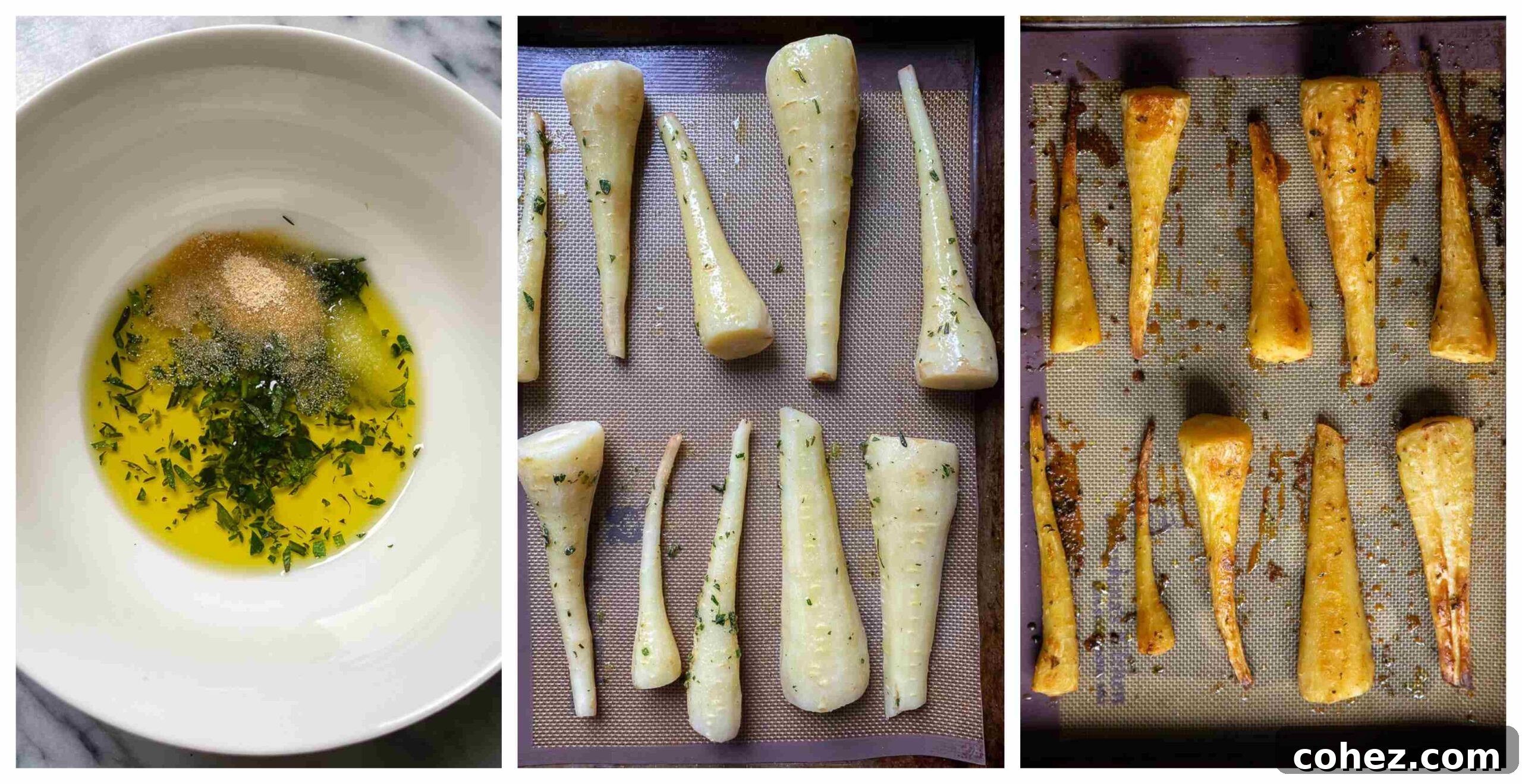
- Stage One (Initial Roast): We begin with a savory coating of oil, freshly chopped rosemary, garlic powder, and salt. This first application is crucial for building that initial crispy exterior and infusing the parsnips with foundational aromatic flavors. Applying it early allows the oil to properly coat and “fry” the parsnips in the oven.
- Stage Two (Caramelization Boost): The second glazing stage introduces the star ingredients: honey and Dijon mustard. It’s vital to add this sweet and tangy mixture halfway through the roasting process, not from the start. If you add honey too early, its sugars will burn before the parsnips have had a chance to roast and tenderize properly. The mustard, while optional, plays a crucial role in balancing the sweetness of the honey, adding a subtle tang and depth that prevents the dish from becoming cloyingly sweet.
- Stage Three (Finishing Touch): Finally, just as the parsnips emerge from the oven, brush them liberally with any remaining honey-mustard mixture. This last glaze provides a beautiful, glistening finish, ensuring maximum flavor and a stunning presentation. The residual heat from the parsnips will warm the glaze to perfection.
Serving Suggestions: The Ultimate Accompaniment to Any Meal
These Honey Garlic Roasted Parsnips are incredibly versatile, making them a fantastic addition to a variety of meals. While they are a customary fixture on holiday spreads, particularly during Thanksgiving or Christmas feasts, their deliciousness and ease of preparation make them suitable for any roast dinner, at any time of year.
As a perfectly balanced sweet and savory side, all you truly need is a robust, savory main dish to create a memorable meal. They pair exquisitely with classic roasts such as succulent roast beef, tender pork loin, or a juicy roast chicken. The sweet notes from the honey and the earthy undertones of the parsnips create a harmonious contrast with the richness of meat, perfectly balancing out your entire meal and leaving your guests thoroughly impressed.
Storage and Reheating: Enjoying Leftovers (If There Are Any!)
It’s rare to have leftovers of these delicious parsnips, but should you find yourself with a few extra, proper storage will ensure they remain enjoyable. Keep any remaining roasted parsnips in an airtight container and refrigerate promptly. They will maintain their quality and flavor for 3-4 days.
When it comes to reheating, you’ll have a few convenient options. While they can certainly be warmed up quickly in a microwave or even crisped up in an air fryer, I personally find that returning them to the oven yields the best results. This method helps to revive their crispy exterior and ensure they are heated through evenly without becoming soggy.
To reheat in the oven, preheat it to 200°C (400°F). Spread the parsnips in a single layer on a baking sheet and heat for 5-10 minutes, or until they are piping hot and have regained some of their initial crispness. This will bring them close to their freshly roasted glory.
More Favourite Side Dishes to Complete Your Meal
If you’re looking for more inspiration to round out your dinner table, here are some other beloved side dish recipes that are sure to please:
- Garlic Butter Sauteed Cauliflower with Breadcrumbs
- Creamy Celeriac and Potato Mash
- Brussels Sprouts with Honey and Bacon
- Savoury Sweet Potato Casserole
Honey Garlic Roasted Parsnips

Equipment
-
Enamel colander
-
Baking sheet
-
Pastry brush
Ingredients
- 750g / 1½ lbs parsnips
- 2 tbsp olive oil
- 1 sprig fresh rosemary, leaves chopped
- 1/2 tsp garlic powder
- 1/2 tsp salt
- 3 tbsp honey
- 1 tsp Dijon mustard
Instructions
-
Preheat your oven to 350°F (180°C). Peel the parsnips and cut them into uniform pieces to ensure even cooking. Place them in a pot of boiling water and par-boil for 5 minutes. Drain thoroughly in a colander and allow them to steam dry for a couple of minutes.
-
While the parsnips are drying, finely chop the fresh rosemary leaves. In a small bowl, combine the chopped rosemary, olive oil, garlic powder, and salt. Mix well to create your initial coating.
-
Arrange the parsnips in a single layer on a shallow baking pan lined with parchment paper. Using a pastry brush, generously brush the herb and oil mixture all over the parsnips. Roast in the preheated oven for 25 minutes. After this time, remove the pan from the oven, flip the parsnips over to ensure even browning, and return to the oven for another 15 minutes.
-
While the parsnips are in their second roasting phase, add the honey and Dijon mustard to the same small bowl where you mixed the oil and herbs (no need to wash it). Mix these ingredients thoroughly to create your honey mustard glaze. Once the parsnips have roasted for the additional 15 minutes, take them out of the oven. Brush the honey mustard glaze generously all over them. Return the parsnips to the oven for a final 10 minutes of roasting. Immediately after taking them out of the oven, brush them once more with any remaining glaze before serving for an extra shiny and flavorful finish.
Notes
- Peeling the parsnips before roasting isn’t strictly essential for edibility, but I highly recommend it. A peeled surface tends to become significantly crispier during roasting, enhancing the overall texture of the dish. If you choose to cook yours unpeeled, ensure they are thoroughly scrubbed clean first.
- To guarantee that all your parsnip pieces cook evenly and reach the perfect tender-crisp stage at the same time, it’s important to ensure they are uniform in size. If your parsnips vary greatly, take a moment to cut them so they are roughly the same thickness and length.
- While it is possible to roast parsnips from raw, I strongly advise par-boiling them for approximately 5 minutes beforehand. This small extra step drastically reduces the total roasting time and contributes to a much fluffier, more desirable interior texture once roasted. Remember to drain and steam dry them completely after par-boiling.
- The three-stage glazing process might seem a bit involved, but each application serves a distinct and vital purpose in building layers of flavor and achieving that coveted crispy-on-the-outside, fluffy-on-the-inside texture. For a more detailed explanation of why each step is important, please refer to the “Expert Tips for Perfect Honey Garlic Roasted Parsnips Every Time” section above.
Nutrition
Nutrition information is automatically calculated, so should only be used as an approximation.
Tried this recipe?Let us know how it was! We love hearing from you!