
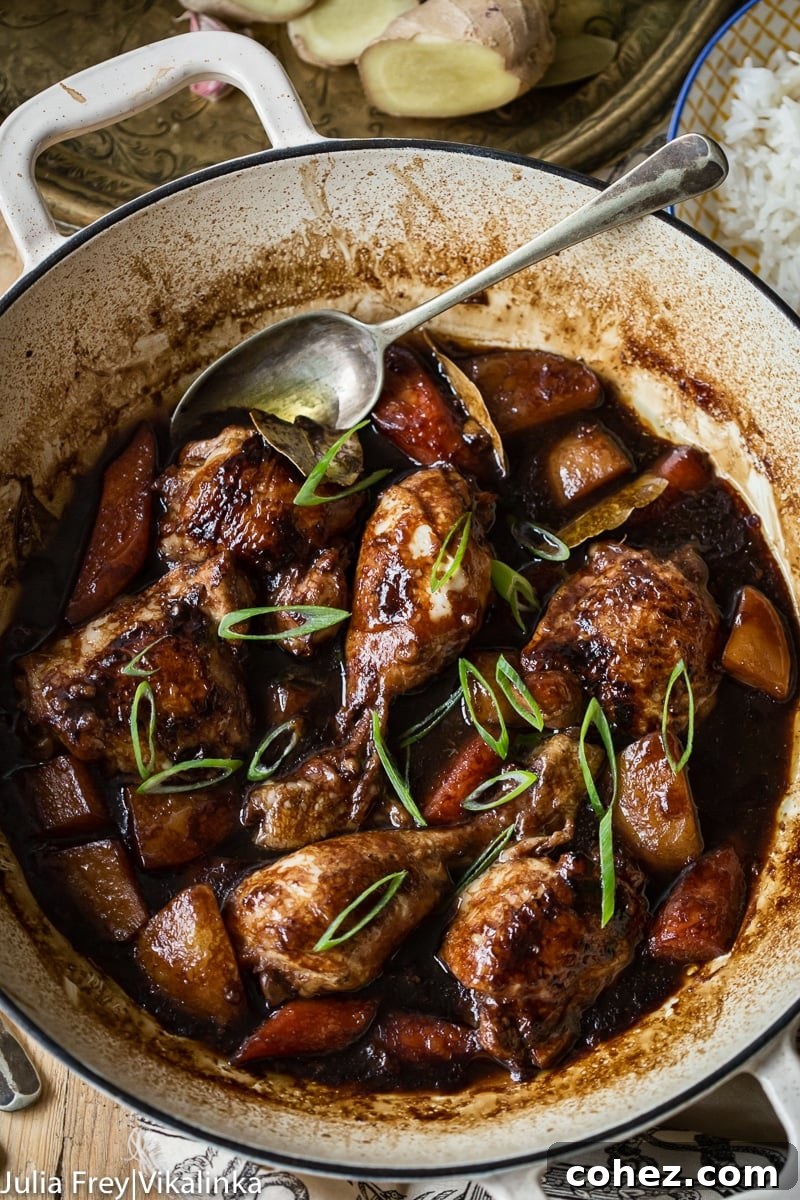
Embark on a culinary journey with Filipino Chicken Adobo, a dish that transcends mere sustenance to become a rich tapestry of flavor and cultural heritage. This recipe offers a delightful departure from your everyday meals, featuring tender chicken thighs and drumsticks slow-braised in a harmonious blend of pungent vinegar, savory soy sauce, aromatic garlic, and zesty ginger. Crafted from common pantry staples, Chicken Adobo delivers an unforgettable taste that is both exotic and deeply comforting.
For those eager to explore more traditional Filipino flavors, be sure to check out our Pancit Canton recipe, another beloved classic.
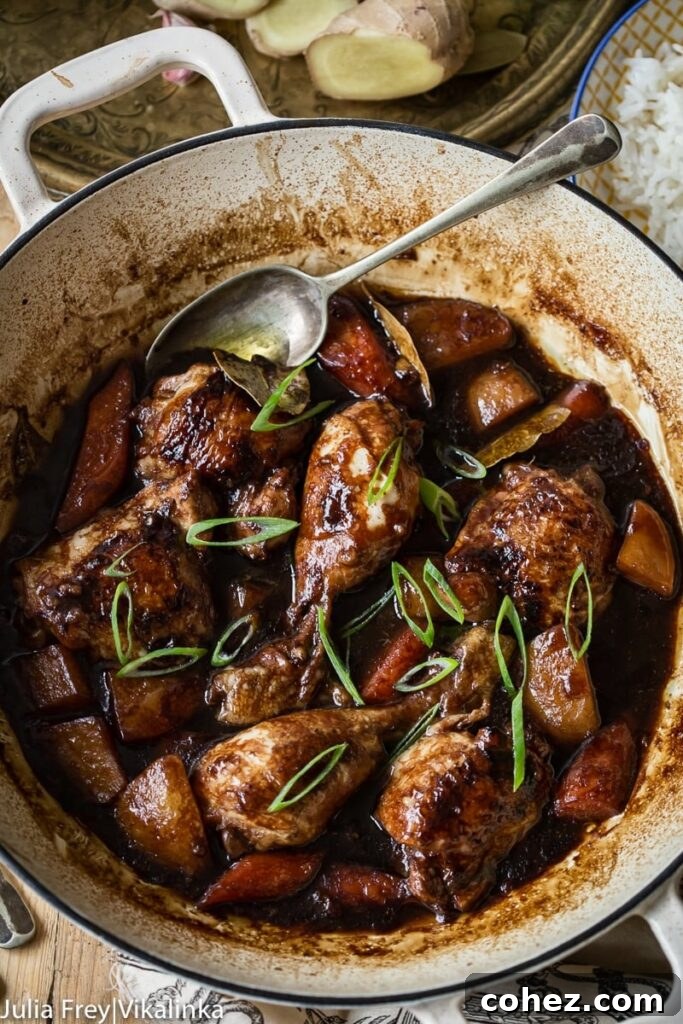
A Personal Connection to Filipino Cuisine
It might come as a surprise, given my background, that I hold a profound emotional attachment to all things Filipino, and particularly to this remarkable Chicken Adobo. My connection stems from a year spent immersed in the vibrant culture of the Philippines during my early twenties. While it was a period of significant personal growth and challenges, it was also a time when I fell deeply in love with the country and its resilient, warm-hearted people.
Among the many cherished memories and lessons I brought back, a handful of authentic recipes stood out. This Chicken Adobo recipe is one such culinary treasure. It’s truly fascinating how quickly the unfamiliar transforms into something profoundly comforting and familiar. This rich, savory stew, with its incredibly simple yet complex flavor profile, quickly became my go-to comfort food in a land vastly different from my own. It taught me that the best food often comes from the simplest, most accessible ingredients, transformed by tradition and love.
Understanding Filipino Cuisine
Filipino cuisine is a magnificent reflection of the nation’s unique geography and history. Comprising over 7,000 islands, the Philippines boasts a rich mosaic of cultures, each contributing to a wonderfully varied and complex culinary landscape. Over centuries, influences from Spanish, Chinese, Malay, and even American cultures have shaped the distinct flavors and cooking techniques found in Filipino dishes today.
A consistent thread woven through every Filipino meal is rice, served with almost every breakfast, lunch, and dinner, and often as a snack in between. This omnipresent staple means that many Filipino dishes are designed to be saucy, providing ample flavorful liquid to pour over and enhance the plain rice. To stand up to generous portions of rice, these sauces must be packed with intense flavors—acidic, salty, and pungent notes are frequently found in staple ingredients such as soy sauce, fish sauce, garlic, and rice vinegar.
Chicken Adobo perfectly exemplifies this culinary philosophy. It’s so emblematic of the nation’s palate that it is widely considered the national dish of the Philippines. Its characteristic salty and vinegary taste, while robust on its own, achieves perfect balance and mellowness when generously spooned over a mound of fluffy white rice. This interplay of strong flavors with a neutral base is a hallmark of Filipino dining.
What is Authentic Filipino Chicken Adobo?
At its heart, Filipino Adobo is more of a cooking process than a single recipe. The term “adobo” refers to a method of marinating and stewing meat (or sometimes vegetables or seafood) in a tangy and savory blend, primarily featuring vinegar, soy sauce, garlic, and black peppercorns. This technique not only imparts incredible flavor but historically also acted as a preserving agent, a crucial aspect in the tropical climate of the Philippines.
My particular recipe for Chicken Adobo is flavored with generous amounts of garlic and ginger, alongside the essential soy sauce and vinegar. This version is very traditional to the Isabela region of the Philippines, where I lived. While many recipes might focus solely on the chicken, I highly recommend adding carrots and potatoes, as they are a common regional addition that beautifully balance the intense adobo sauce by soaking up its rich flavors and adding a comforting texture.
Adobo boasts countless variations across the Philippines, with each family and region often having its unique spin. For instance, Pork Adobo is another incredibly popular and equally delicious variation, though it tends to be richer and fattier. If you choose to use pork instead of chicken, slow cooking is often recommended to achieve the most tender results. Other regional differences might include the addition of coconut milk (Adobong Gata), turmeric, or even different types of chilies, showcasing the incredible diversity within this national dish.
The Essential Ingredients and Their Role
The magic of Chicken Adobo lies in its deceptively simple ingredient list, where each component plays a crucial role in creating its iconic flavor profile:
- Chicken: Dark meat cuts like thighs and drumsticks are preferred for their rich flavor and ability to remain moist and tender during the slow braising process. They absorb the adobo sauce beautifully.
- Soy Sauce: Provides the foundational savory, umami, and salty notes. For a gluten-free option, Bragg Liquid Aminos or a gluten-free Kikkoman brand can be used.
- Rice Vinegar: This is the soul of Adobo, imparting its characteristic tanginess. The acidity not only tenderizes the chicken but also brightens the entire dish, cutting through the richness and creating that signature “sour-salty” balance. Adjusting the vinegar to your personal taste is key.
- Garlic: A generous amount of crushed garlic provides a pungent, aromatic depth that is fundamental to Filipino cooking.
- Ginger: Fresh grated ginger adds a warm, spicy, and slightly sweet undertone, enhancing the overall aromatic complexity of the stew.
- Bay Leaves: These fragrant leaves infuse the sauce with a subtle, herbaceous aroma that is classic in Adobo.
- Black Pepper: Freshly ground black pepper adds a gentle heat and pungent spice, rounding out the flavor profile.
- Carrots and Potatoes: While optional depending on regional variations, these root vegetables are excellent additions. They absorb the flavorful sauce, becoming tender and incredibly delicious, and help balance the dish’s strong flavors.
Serving Suggestions for Filipino Chicken Adobo
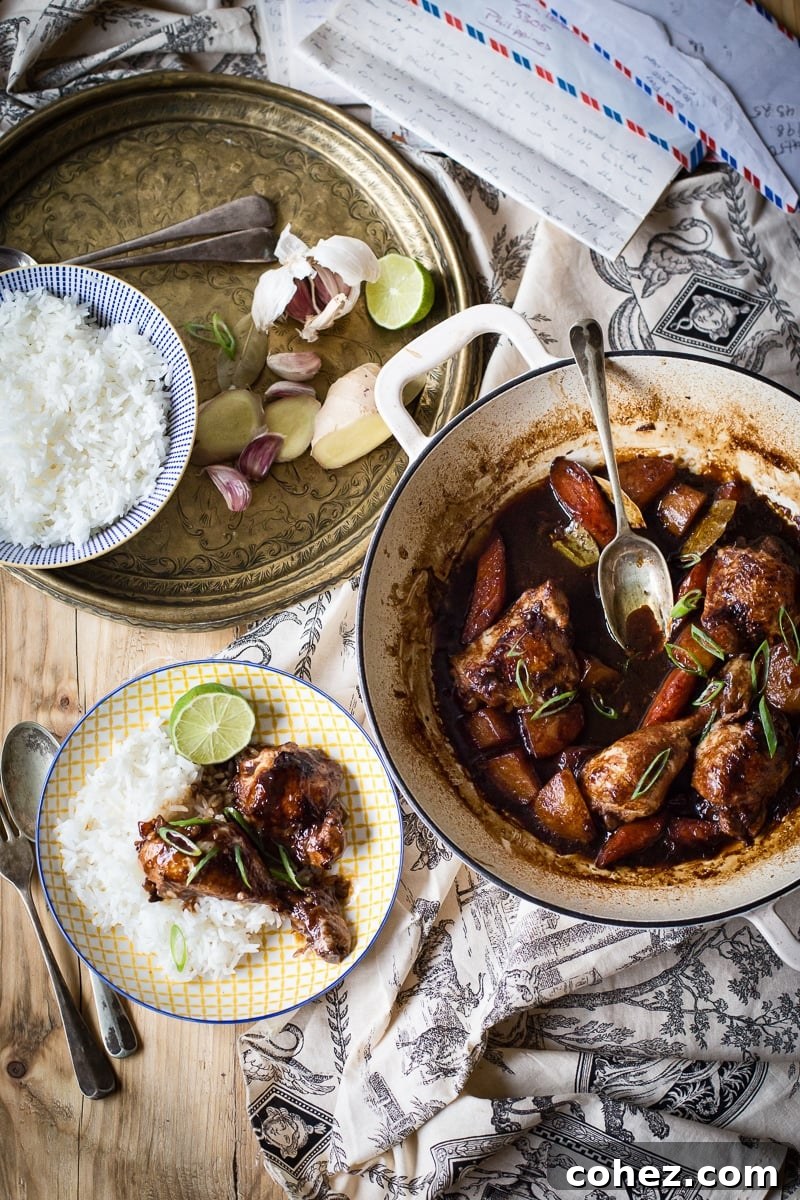
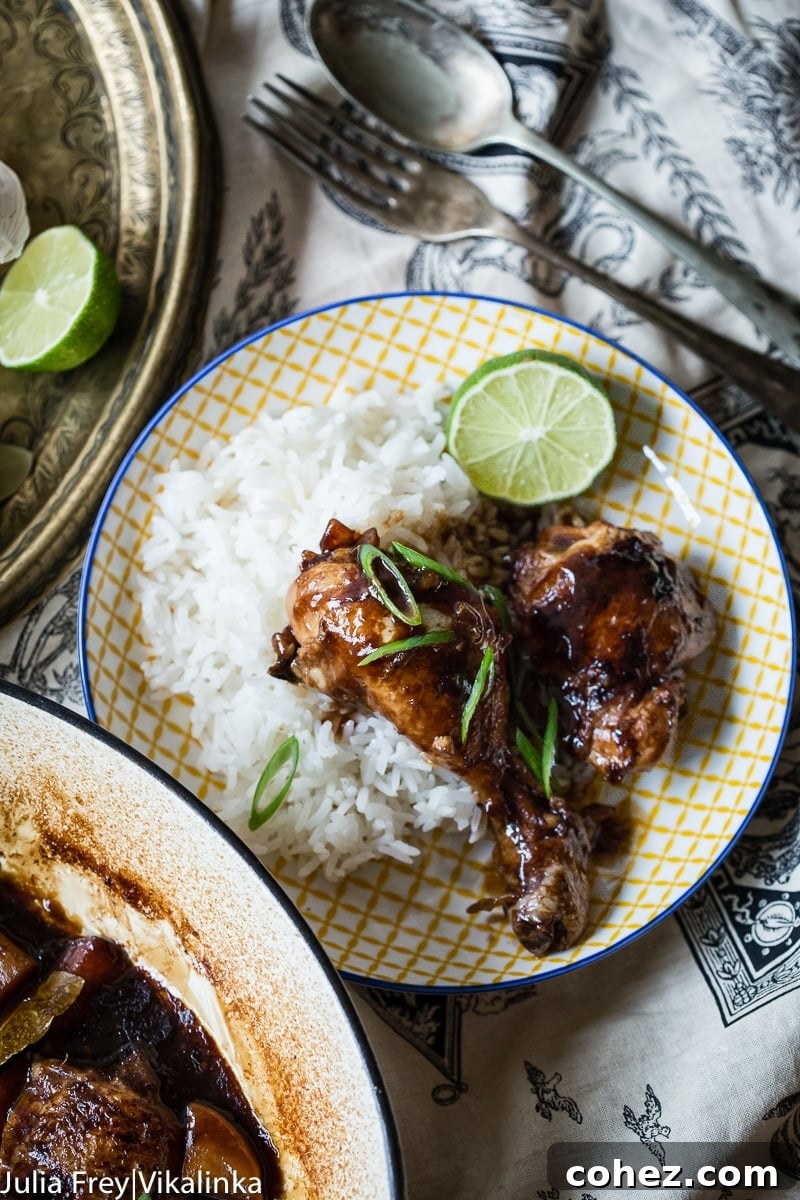
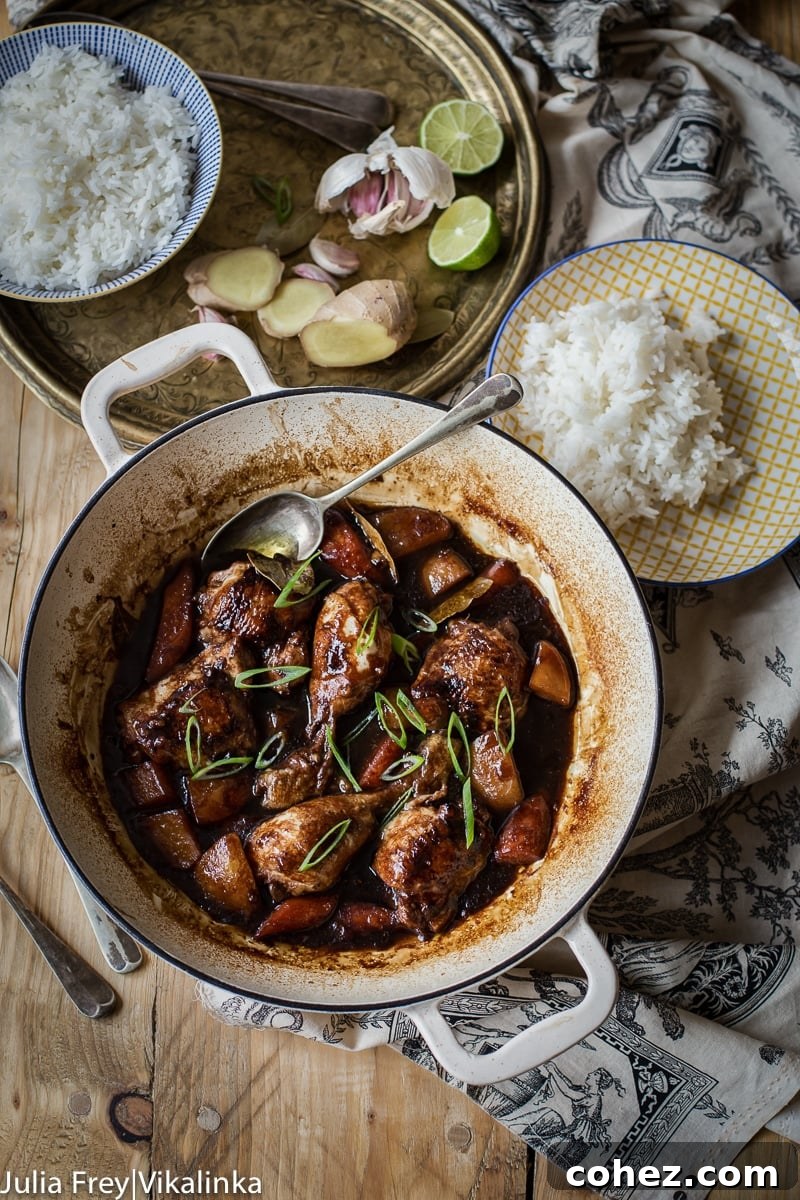
Filipino Chicken Adobo is traditionally served with a generous helping of plain, unsalted white rice. The rice acts as the perfect canvas, soaking up every drop of the rich, savory, and tangy adobo sauce, allowing the complex flavors to truly shine. To brighten the dish further, Filipinos commonly serve Adobo with tiny citrus fruits known as calamansi, often referred to as Filipino limes. Their unique tart and slightly floral taste is truly unparalleled and elevates the dish beautifully.
Unfortunately, calamansi are rarely found outside of the Philippines, which is a real shame given their distinctive flavor. As a widely available and excellent substitute, fresh lime wedges are highly recommended. A small squeeze of lime juice over individual portions before eating will add a delightful burst of acidity and freshness, mimicking the authentic calamansi experience. Garnish with sliced spring onions for a touch of freshness and color.
Expert Tips for the Perfect Chicken Adobo
- Marinating for Flavor: While marinating the chicken in the soy sauce, vinegar, garlic, ginger, and black pepper mixture for at least 30 minutes significantly enhances the flavor depth, if you’re short on time, you can reduce the marinating period or even skip it in a pinch. However, for the best results, allow the flavors to meld for the recommended time.
- Browning the Chicken: To achieve a beautiful golden-brown crust and prevent the chicken from steaming, ensure you don’t overcrowd your wok or pan during the browning stage. Cook the chicken in batches if necessary, leaving space between each piece. The chicken won’t be fully cooked through at this point, as it will finish cooking in the braising liquid.
- Slow Cooker Adaptation: This recipe adapts wonderfully to a slow cooker for a hands-off approach. Follow the initial steps up to browning the chicken and adding aromatics (step 3). Instead of simmering on the stovetop, transfer everything to your slow cooker and cook on low for 8 hours, or until the chicken is fork-tender. Stir in the cornstarch slurry at the very end to thicken the sauce to your desired consistency.
- Instant Pot Method: For a quicker cooking time, an Instant Pot can be used. Follow the recipe up to step 3. Then, cook at high pressure for 10 minutes, followed by a manual pressure release. Add the cornstarch slurry and use the Sauté function for a couple of minutes to thicken the sauce.
- Pork Variations: While chicken is traditional here, pork can be used in its place. For optimal tenderness, especially with pork, a slow cooker is highly recommended. Pork belly is the most authentic cut, offering a rich flavor profile. For a leaner option, pork shoulder works equally well.
- Chicken Cuts: While chicken thighs and drumsticks are preferred for their juiciness, chicken breasts can also be used if desired. Adjust cooking times accordingly to prevent them from drying out.
- Convenience Tip: On busy evenings, pre-made garlic paste and ginger paste can be a time-saving alternative to fresh ingredients. While fresh is always best, these jarred options are excellent for quick meal prep.
- The Role of Vegetables: The carrots and potatoes in this recipe are not just side dishes; they are integral components of the stew. They beautifully absorb the vinegary, savory sauce, adding a lovely sweetness from the carrots and a comforting starchiness from the potatoes, which helps to balance the overall flavor of the dish.
Storage and Leftovers
Filipino Chicken Adobo is one of those magical dishes that often tastes even better the next day! As the flavors meld and the vinegar mellows, the sauce develops an even richer depth. Leftovers can be stored in an airtight container in the refrigerator for 3-4 days. For longer storage, it can be kept in the freezer for up to three months.
To reheat, simply warm the adobo in a microwave or gently in a saucepan on the stovetop over medium-low heat. If the sauce has thickened too much in the fridge, you may need to add a splash of water to loosen it to your preferred consistency. Cover the pot with a lid to prevent the chicken from drying out. It should be thoroughly heated through in approximately 15 minutes.
More Asian-Inspired Chicken Recipes to Savor
- Shoyu Chicken Recipe
- Sticky Asian Chicken
- Honey Soy Chicken Thighs and Drumsticks
- Chicken Satay with Easy Peanut Sauce
Filipino Chicken Adobo

Equipment
-
Carbon steel wok
Ingredients
-
8 chicken pieces, legs and thighs -
125ml / 1/2-3/4 cup soy sauce, Bragg or Kikkoman brand for gluten-free version -
125ml / 1/2-3/4 cup rice vinegar, adjust to your taste -
2 tbsp vegetable oil -
2 inch long piece of ginger, grated -
5 cloves garlic, crushed -
2-3 bay leaves -
1/2 tsp fresh ground black pepper -
1-2 carrot, medium, cut in large chunks -
3 potato, medium, cut in large chunks -
125ml / 1/2 cup water -
1 tbsp corn starch -
1 tbsp water -
1 spring onion, optional -
1 lime
Instructions
-
In a large bowl, combine soy sauce, rice vinegar, 1 tbsp of vegetable oil, 4 crushed garlic cloves, half of the grated ginger, and black pepper. Add the chicken pieces and let them marinate for 30 minutes in the fridge.
-
In a wok or a deep pan, brown the chicken pieces for 3 minutes on each side. You may need to do this in batches to avoid overcrowding the chicken, which would cause them to steam instead of brown. Do not discard the marinade. The chicken will not be fully cooked at this stage; remove it from the pan to a plate and set aside.
-
To the same pan, add the remaining 1 tbsp of vegetable oil, sliced garlic, and the rest of the ginger. Stir-fry for 1 minute, being careful not to let them brown. Return the chicken to the pan, then add the reserved marinade, water, bay leaves, potatoes, and carrots. The sauce may not entirely cover the chicken initially. Turn the heat up to bring the sauce to a boil, then reduce the heat to low and let it simmer for 45 minutes, or until the carrots and potatoes are easily pierced with a fork and the chicken is cooked through.
-
In a small bowl, mix the cornstarch with 1 tbsp of water, ensuring there are no clumps. Add this cornstarch slurry to the sauce in the pan, mix thoroughly, and let it simmer for a couple more minutes. This will allow the sauce to thicken. Spoon the sauce over the chicken; it should be thick enough to coat the pieces. If the sauce is not thick enough, continue to cook it a bit longer until the desired consistency is reached. Sprinkle with sliced spring onion before serving.
-
Serve immediately with plain white rice and fresh lime wedges.
Notes
- For a slow cooker, follow the recipe until step 3, then transfer all ingredients to your slow cooker. Cook on low for 8 hours. Stir in the cornstarch slurry at the end to thicken the sauce.
- For an Instant Pot, follow the recipe until step 3. Then, cook at high pressure for 10 minutes, followed by a manual pressure release. Add the cornstarch slurry and thicken the sauce using the Sauté function for a couple of minutes.
Nutrition
Carbohydrates: 5g |
Protein: 23g |
Fat: 21g |
Saturated Fat: 8g |
Cholesterol: 87mg |
Sodium: 961mg |
Potassium: 299mg |
Fiber: 1g |
Sugar: 1g |
Vitamin A: 1451IU |
Vitamin C: 6mg |
Calcium: 25mg |
Iron: 2mg
Nutrition information is automatically calculated, so should only be used as an approximation.
Tried this recipe?
Let us know how it was!