
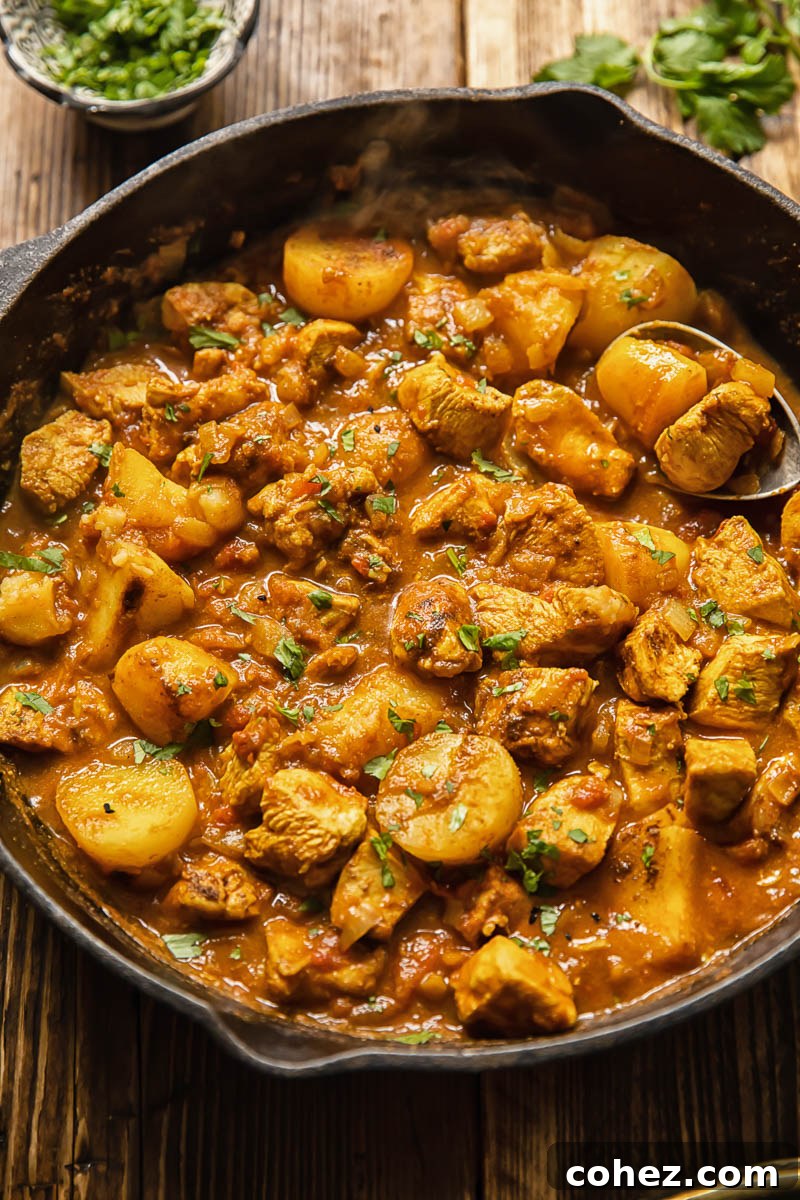
Experience the ultimate comfort food with this incredibly easy chicken curry with potatoes. Tender, succulent chicken breast pieces and perfectly spiced, fork-tender potatoes are bathed in a rich, aromatic Indian curry sauce that promises warmth and satisfaction in every bite. This dish is both honest and hearty, embodying the soul-soothing essence of traditional home cooking, and remarkably, it can be on your table in under 50 minutes. Forget bland takeaways – this homemade delight will quickly become a cherished family favorite.
For those who adore a flavorful chicken curry, our kitchen is a treasure trove of variations! If you lean towards something mild and creamy, our Chicken Korma recipe is a must-try. Craving a truly rich and decadent Butter Chicken Curry? We have you covered. For a heartier, biryani-style meal that truly fills you up, explore our Coconut Chicken and Rice with Green Beans. And if you’re looking to add a vibrant splash of color to your dinner, our Yellow Chicken Curry with Potatoes offers another delightful twist.
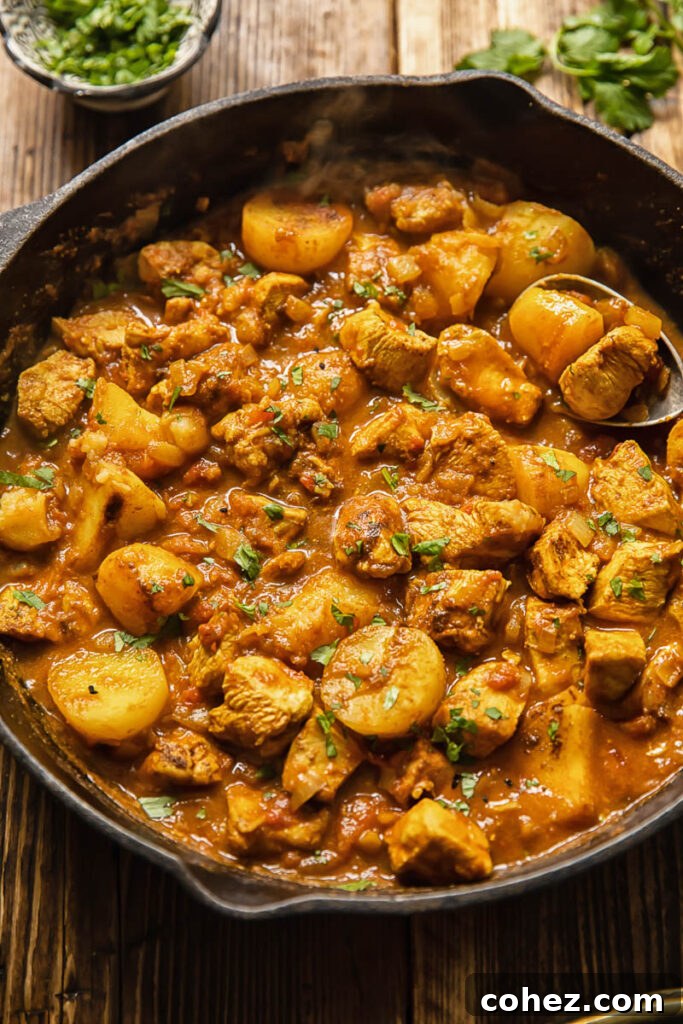
Homemade Chicken Curry: The Ultimate Comfort
In an era where every penny counts and the cost of living continues to climb, the shift towards homemade meals has never been more appealing. This easy chicken curry isn’t just a recipe; it’s a strategic culinary choice that offers immense value beyond the dinner plate. Opting for a homemade chicken curry instead of a takeout order is not just an economical decision; it’s a commitment to healthier eating, unparalleled customization, and a genuinely rewarding cooking experience. Let’s delve into why making your own curry is truly the superior choice.
Unbeatable Value and Health Benefits
One of the most compelling reasons to embrace homemade chicken curry is the significant cost savings. Restaurant takeaways, while convenient, often come with a hefty price tag that can quickly add up. Preparing a curry at home uses simple, readily available ingredients that are far more budget-friendly, allowing you to feed your family a nutritious and satisfying meal without breaking the bank. Beyond the financial aspect, the health benefits are substantial. When you cook at home, you have complete control over every ingredient. This means no hidden additives, artificial preservatives, excessive amounts of salt, or unwanted added sugars that are commonly found in commercial dishes. Every ingredient you choose is fresh, wholesome, and contributes to a healthier eating experience for you and your loved ones.
Tailored to Your Taste: Customization at Its Best
The beauty of cooking at home lies in its boundless flexibility. This homemade chicken curry recipe is a fantastic canvas for culinary creativity, allowing you to tailor it precisely to your family’s preferences and dietary needs. Do you prefer a milder curry or one with a fiery kick? Adjust the chili heat to your liking. Love the tang of tomatoes or the earthy goodness of extra potatoes? You can easily increase their quantities. The possibilities for substitutions and additions are endless. Swap out chicken breast for thighs, incorporate different vegetables like peas, spinach, or green beans, or even experiment with various spices to create a unique flavor profile. This level of personalization is simply unattainable with a standard restaurant order, making homemade curry a truly bespoke dining experience every time.
Time-Saving Convenience: Faster Than Takeout
While the allure of a quick takeout delivery might seem strong, consider the time it truly takes. From browsing menus and making a selection to placing the order, waiting for confirmation, and then patiently anticipating the delivery driver’s arrival, the entire process can often consume a significant chunk of your evening. In fact, in the time it often takes for a delivery from your local Indian restaurant to arrive, you could have already cooked, savored, and even started cleaning up after preparing this swift homemade chicken curry. With a prep time of just 10 minutes and a cook time of 40 minutes, a delicious, fresh, and healthy meal is ready faster than you might expect, proving that convenience doesn’t always come in a delivery bag. These four persuasive reasons highlight why making your own curry is not just a preference, but a smart choice. Who’s with me on this flavorful journey?
Substitutions and Variations for Your Chicken Curry
This humble and heartwarming chicken curry with potatoes is remarkably versatile, making it easy to adapt to your pantry staples and personal tastes. The key to its consistent success lies in adhering to the core spice blend; once you master that, you can confidently experiment with various ingredients without compromising on flavor.
Choosing Your Protein
For this recipe, we’ve opted for succulent chicken breast, as it’s effortlessly cubed into bite-sized pieces that perfectly complement the potatoes. However, if you prefer a richer, juicier texture, skinless and boneless chicken thighs make an excellent alternative. They cook up just as beautifully and absorb the aromatic spices wonderfully. For a plant-based twist, consider using firm tofu or paneer, ensuring they are pan-fried or baked beforehand to achieve a pleasant texture and prevent them from crumbling during cooking.
Exploring Vegetable Alternatives
The potatoes in this curry are a delightful addition, soaking up the flavors and adding a comforting heartiness. But don’t hesitate to explore other root vegetables or legumes. If you have sweet potatoes on hand, they make a fantastic, slightly sweeter substitution for regular potatoes, adding a different dimension to the dish. Butternut squash is another excellent choice, offering a creamy texture and sweet, earthy notes that pair wonderfully with the robust curry spices. For an extra boost of protein and a similar satisfying texture, chickpeas can be stirred in, absorbing the rich sauce beautifully. Simply drain and rinse canned chickpeas before adding them to the pot.
Boosting Your Greens
If you’re short on time or simply want to enhance the nutritional value of your meal, there’s no need to prepare separate vegetable sides. This curry is incredibly forgiving when it comes to adding extra greens. A handful or two of fresh or frozen green peas or crisp green beans can be tossed in during the last few minutes of cooking, adding vibrant color and a pleasant bite. Fresh spinach is another excellent addition; simply stir it in until it wilts, enriching the curry with its earthy flavor and a wealth of nutrients. This quick addition is perfect for ensuring everyone gets their daily dose of vegetables, keeping my “mom-conscience” perfectly clear!
Recipe Tips and Notes for a Perfect Curry
- **Fat Content Control:** This recipe uses a reduced amount of ghee or vegetable oil compared to many traditional curry recipes. We aim for the fat to be fully incorporated into the sauce, not floating in a pool on top. If you prefer a richer curry with a more generous sheen, feel free to add an additional tablespoon of your chosen fat at the start of cooking.
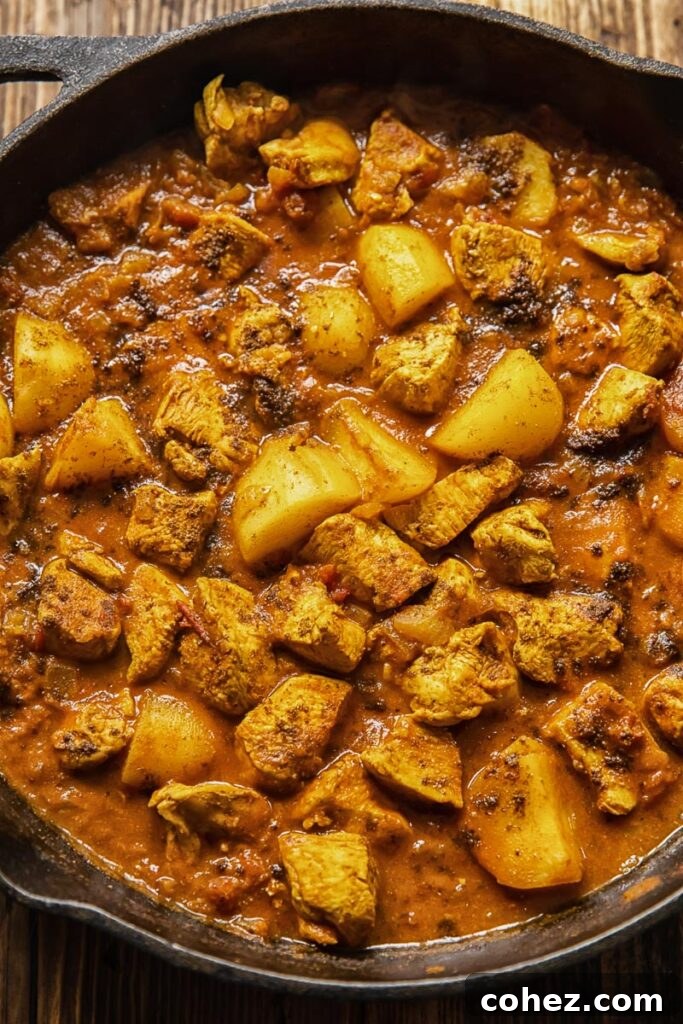
- **Mastering the Onions:** Sautéing the onions correctly is a fundamental step that builds the flavor foundation of your curry. Fry them over medium heat for about 10 minutes until they turn a beautiful light brown and become deeply caramelized. If you notice them starting to burn, add a small splash of water to cool the pan and deglaze it, allowing the onions to continue cooking evenly without scorching. This browning process is crucial for developing a rich, sweet base that will infuse the entire dish.
- **Garlic and Ginger Hacks:** While fresh garlic and ginger offer the most vibrant flavor, jarred minced garlic and ginger pastes are convenient kitchen shortcuts that can save you precious time. If you opt for these pre-processed versions, we recommend doubling the amount of garlic compared to fresh, as their potency tends to be a little milder. Ensure you cook them briefly (about 30 seconds) until fragrant before adding the dry spices.
- **The Power of Chili Powder:** For an authentic and satisfying heat, it’s vital to use pure ground dried chili powder in this recipe. This is not the same as the pre-mixed chili powder used for dishes like chili con carne, which often contains other spices like cumin and oregano and is generally milder. Look for pure chili powder or cayenne pepper for that true Indian spice kick.
- **Garam Masala: The Finishing Touch:** Garam masala is a fragrant blend of warm spices that adds a complex aroma and depth to Indian dishes. For optimal flavor, we sprinkle our garam masala at the very end of the cooking process, rather than adding it with the other dry spices earlier on. This method helps preserve its delicate aromas and ensures they shine through in the finished curry.
- **Coriander’s Dual Role:** This recipe thoughtfully utilizes both ground coriander and fresh cilantro (coriander in the US). Though derived from the same plant, they play distinct and equally important roles in building the curry’s flavor profile. Ground coriander provides a warm, citrusy, and earthy depth to the sauce, while fresh cilantro, added at the end, offers a bright, herbaceous, and refreshing counterpoint. You truly need both to achieve the full, layered flavor of this dish!
- **Potatoes: An Unsung Hero:** You might not typically find chicken curry with potatoes on a restaurant menu, but this combination is a revelation! My Indian friend, Sangheeta, first introduced me to it, and I’ve been a convert ever since. The soft potatoes exquisitely absorb all the earthy spices, creating an explosion of flavor with every bite. As an added bonus, potatoes are an economical way to stretch the meal, making it even more filling and budget-friendly. While some may debate its authenticity in restaurant settings, it’s undeniably a delicious and practical home-cooked variation.
- **Smooth and Creamy Finish:** For an extra layer of smoothness and to temper the spice edge, consider stirring in 125ml (approximately ½ cup) of full-fat natural yogurt or Greek yogurt, or alternatively, coconut milk, during the last few minutes of cooking. This addition creates a luscious texture and enriches the sauce beautifully.
Serving Suggestions to Complete Your Indian Feast
While an elaborate Indian takeaway feast might include an array of pappadums and samosas, a simple and satisfying curry night at home can be just as delightful without the fuss. We often pare back our sides, focusing on complementary flavors and textures that enhance the main dish. Here’s how we typically complete our homemade chicken curry experience:
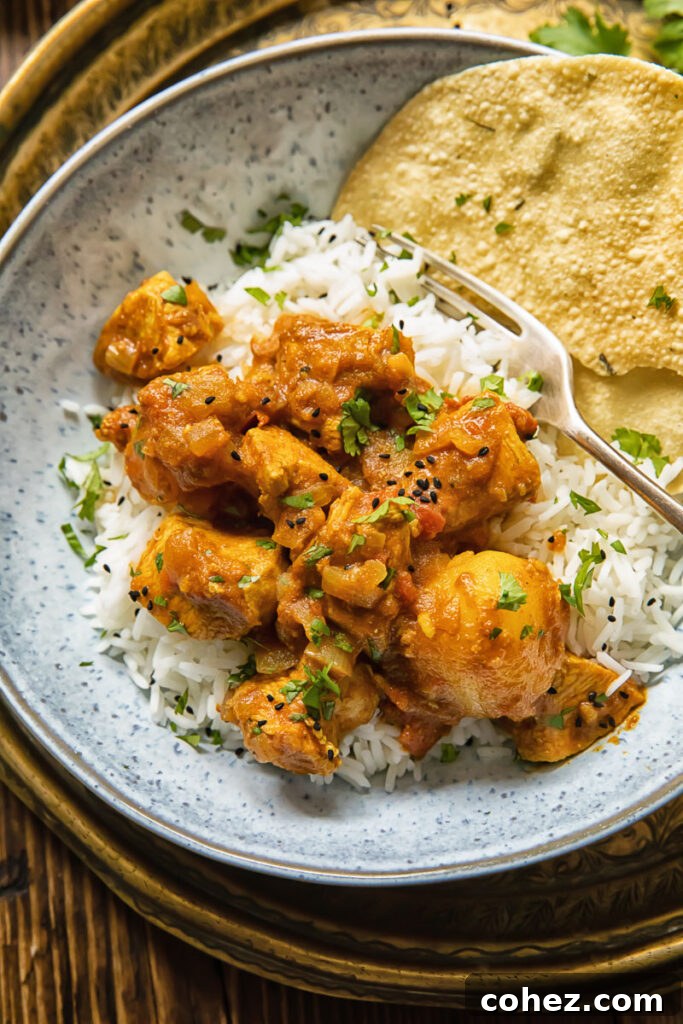
- **Rice:** A perfect base for any curry! Opt for fragrant Coconut Rice for a subtle sweetness that balances the spices, or simply serve with fluffy plain basmati rice. Both options beautifully absorb the rich curry sauce.
- **Bread:** No Indian meal is complete without warm, fresh bread to scoop up every last bit of that delicious sauce. Soft naan bread or traditional chapati are excellent choices. You can often find ready-made options in most supermarkets that simply require warming.
- **Vegetable Sides (Optional, but Recommended):**
- **Cauliflower and Potato Curry (‘Aloo Gobi’):** This classic vegetarian dish makes a wonderful side, offering a different blend of spices and textures. It can also serve as a delicious main course for any non-meat-eaters at your table.
- **Nepalese Red Lentil Dahl:** A creamy, protein-packed lentil stew that adds another layer of comfort and flavor, perfectly contrasting with the chicken curry.
- **Dal Makhani:** For a richer lentil experience, Dal Makhani offers a velvety texture and smoky depth that complements the chicken curry beautifully.
Storage and Leftovers: Maximizing Your Curry’s Flavor
One of the many joys of cooking curry is how wonderfully it transforms into an even more flavorful meal the next day. However, proper storage is key to maintaining its quality and safety.
Freezing Your Curry
If you’ve incorporated yogurt into your chicken curry, it’s important to note that it may not freeze particularly well. The dairy proteins in yogurt can separate and become grainy upon thawing, and the sauce might split when reheated. While still edible, the texture will be noticeably different. For optimal freezing, it’s best to prepare the curry without yogurt if you intend to store it long-term.
For yogurt-free curry, allow it to cool completely before transferring it to a freezer-safe, airtight container. It can be stored in the freezer for up to 3 months. When ready to enjoy, thaw the curry overnight in the refrigerator. Reheat gently on the stovetop over medium-low heat, stirring occasionally. If the sauce appears too thick, add a splash of water or chicken broth to achieve your desired consistency. Always ensure the chicken reaches a safe internal temperature (165°F or 74°C) throughout before serving.
Refrigerating Leftovers
Curry is famously one of those dishes that tastes even better the second time around, as the flavors have more time to meld and deepen in intensity. If you have any leftovers, allow them to cool completely before transferring them to an airtight container. Store it in the fridge for 3-4 days. To reheat, simply warm it on the stovetop over medium heat, stirring occasionally, until it’s piping hot throughout. Serve with fresh rice or naan for another delightful meal.
More Curries to Explore
If this easy chicken curry has ignited your passion for flavorful Indian and global cuisine, we invite you to explore more of our delicious curry recipes:
- Chicken and Sweet Potato Curry
- Indian Kofta Curry (Meatball Curry)
- Chinese Chicken Curry
- Thai Fish Curry
- Coconut Lentil Curry with Butternut Squash
Easy Chicken Curry with Potatoes

Equipment
-
Cast iron casserole dish
Ingredients
- 1-2 tbsp vegetable oil or ghee
- 1 large onion
- 4 cloves garlic, minced
- 1 tbsp grated ginger
- 1 tbsp ground coriander
- 1 tbsp ground cumin
- 1/2 tsp turmeric
- 1 tsp ground chilli powder or cayenne pepper
- 700g / 1.5 lbs chicken breast or skinless boneless chicken thighs, cubed
- 1 large potato, peeled and cut into chunks
- 400g / 14 oz canned chopped tomatoes
- 250ml / 1 cup water
- Salt to taste
- 1 tsp garam masala
- 2 tbsp fresh cilantro / coriander, chopped
Instructions
-
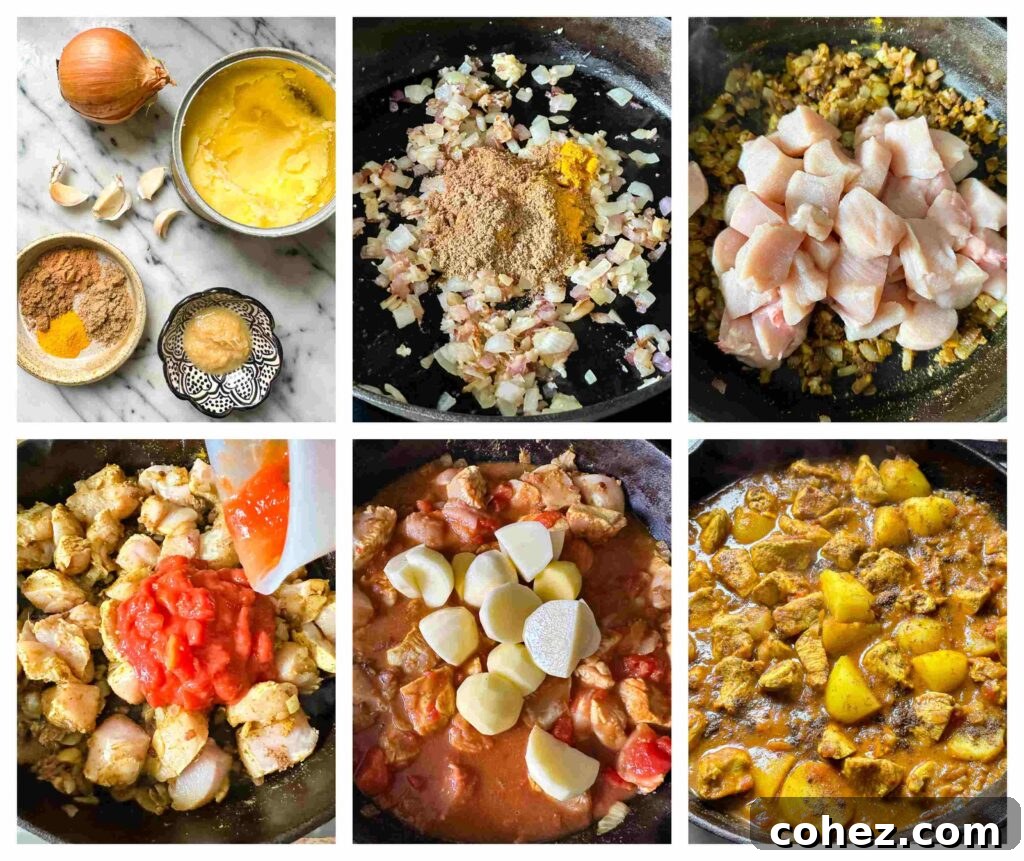
In a large, heavy-bottomed pan or cast iron casserole dish, heat the vegetable oil or melt the ghee over medium heat. Add the chopped onions and sauté for about 10 minutes, stirring occasionally, until they become soft, translucent, and turn a beautiful light brown. This caramelization is crucial for flavor development. If the onions start to burn, add a small splash of water to prevent scorching. Next, add the minced garlic and grated ginger, cooking for an additional 30 seconds while stirring constantly until fragrant. Stir in the ground coriander, ground cumin, turmeric, and chili powder (or cayenne pepper). Cook for another minute, stirring until the spices become aromatic and bloom in the hot oil.
-
Add the cubed chicken breast (or thighs) and the potato chunks to the pan. Sauté briefly for 2-3 minutes, stirring to lightly sear the chicken on all sides. Pour in the canned chopped tomatoes and water, adding a pinch of salt to taste. Bring the mixture to a gentle simmer, then cover the pan with a lid and let it cook for 10 minutes. After 10 minutes, uncover the pan and continue to cook for another 10-15 minutes, or until the sauce has thickened slightly and the potatoes are tender when pierced with a fork. The chicken should be thoroughly cooked through.
-
At the very end of the cooking time, once the chicken is fully cooked and the potatoes are tender, remove the pan from the heat. Sprinkle the garam masala evenly over the curry, followed by the chopped fresh cilantro. Stir gently to combine these final aromatics. Serve your easy chicken curry immediately with warm basmati rice and fresh naan bread.
-
(For an extra layer of authentic flavor, consider sprinkling some nigella seeds on top of your finished curry. These tiny black seeds, often found on naan bread, add a unique, slightly oniony and herbaceous note that elevates the dish!)
Nutrition
Nutrition information is automatically calculated, so should only be used as an approximation.
Tried this recipe?
Let us know how it was!