
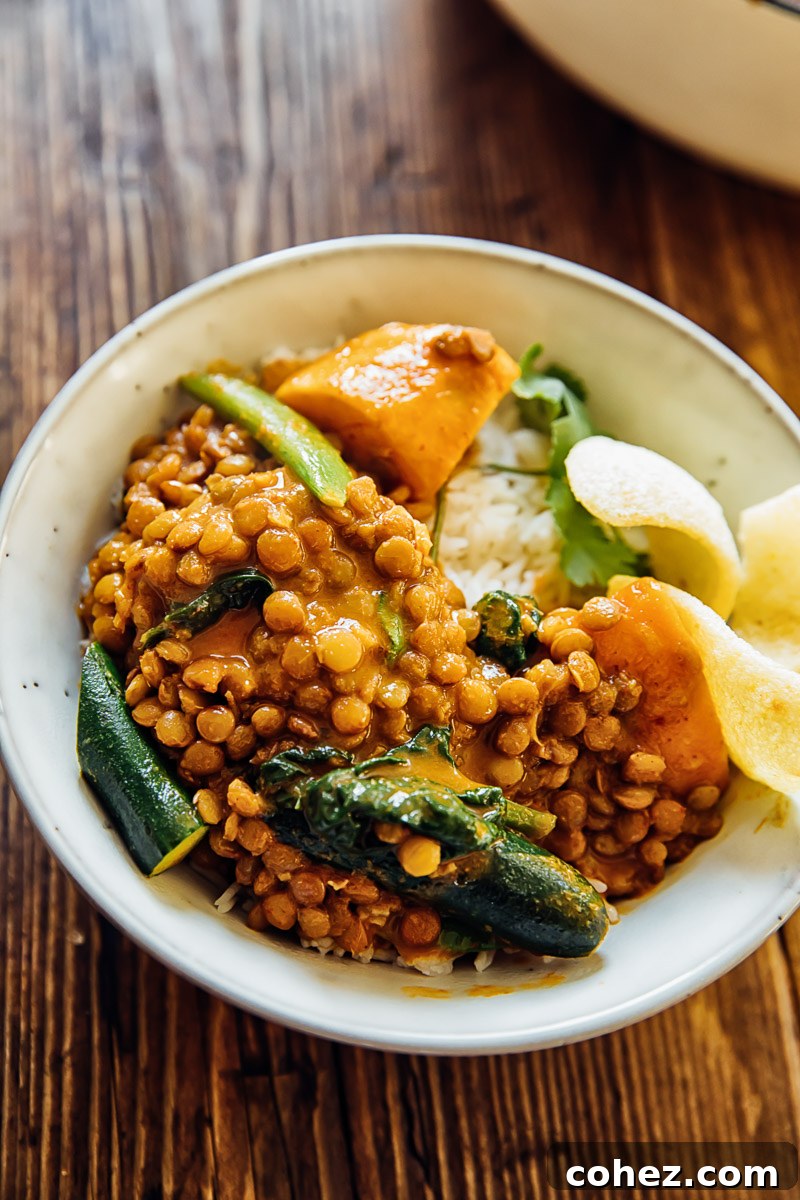
Delicious Sweet Potato and Lentil Curry: Your Ultimate Comfort Food
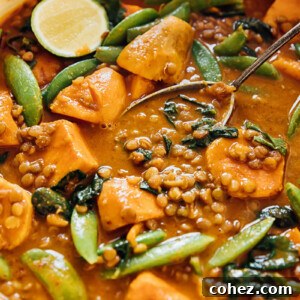
Imagine a symphony of earthy lentils, naturally sweet potatoes, and rich, creamy coconut milk mingling in a single, irresistibly flavorful curry. This Sweet Potato and Lentil Curry isn’t just a meal; it’s a culinary experience that perfectly balances comfort with vibrant, fresh flavors. Designed to be both deeply satisfying and remarkably easy to prepare, this dish is destined to become a firm favorite in your recipe repertoire, prompting you to return to it time and again.
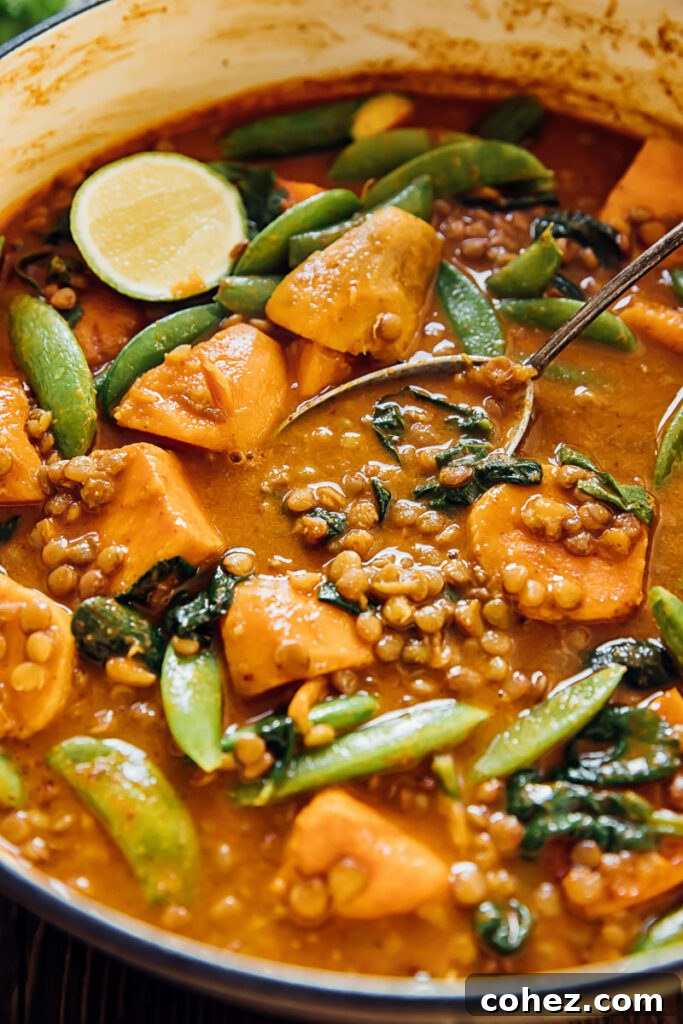
Why This Sweet Potato & Lentil Curry Will Become a Staple
Curries have long held a cherished spot at dinner tables worldwide, celebrated for their incredible versatility and the comforting warmth they bring, regardless of the season. From light summer meals to hearty winter stews, the array of flavors and textures possible in a curry is truly astounding. This particular Sweet Potato and Lentil Curry, with its delightful Thai-inspired notes, exemplifies everything a great curry should be.
It expertly marries the soulful satisfaction of classic comfort food with the invigorating freshness of wholesome, garden-fresh ingredients. The result is a dish that feels both familiar and exciting, offering a unique blend of tastes that awaken the palate. What sets this recipe apart is its ingenious combination of textures and flavors. We incorporate tender baby zucchini and crisp snow peas, which introduce a refreshing ‘pop’ and delightful crunch, elevating the dish beyond a mere stew. Meanwhile, the humble green lentils contribute a wonderful nutty depth and substantial body, creating a hearty foundation.
These are beautifully complemented by the natural sweetness of the sweet potatoes, which not only balance the curry’s spices but also add a creamy texture and significant bulk, ensuring every serving is incredibly filling and satisfying. It’s this thoughtful interplay of sweet and savory, creamy and crunchy, earthy and fresh, that makes this nutritious curry an absolute dream to cook and a joy to eat. It truly offers a bit of everything, harmoniously blended into a single, perfect bowl for a healthy weeknight dinner or a comforting weekend treat.
The Heart of the Flavor: Understanding Thai-Inspired Curries
Thai cuisine is renowned globally for its incredible diversity and vibrant flavors, with curries playing a particularly central and celebrated role. While there’s a vast spectrum of Thai curry styles, ingredients, and techniques, many share common characteristics, such as the frequent use of rich coconut milk. Pinpointing a single definition for Thai curry is challenging precisely because of this immense variety, but their complexity and aromatic profiles are unmistakable.
The distinctive red and green hues commonly associated with Thai curries are derived from the specific selection of chillies used in their paste. Red curries typically feature red chillies, often resulting in a slightly spicier and bolder flavor profile. Green curries, made with green chillies, tend to be fresher, sometimes milder, and possess a more herbaceous aroma. For home cooks, simplifying this intricate process is often best achieved by using a high-quality curry paste, which masterfully combines the right balance of spices and aromatics needed for your desired curry.
Given that curry paste forms the very essence of the dish’s flavor, this is one area where compromising on quality is ill-advised. A subpar curry paste can unfortunately undermine even the freshest ingredients, leading to a disappointing outcome. Investing in a reputable brand will make a noticeable difference in the final taste and aroma of your curry. Furthermore, for those adhering to vegetarian or vegan diets, it’s crucial to examine the ingredient list of your chosen curry paste carefully. While many commercial brands are suitable for vegans and vegetarians, some traditional varieties may include fish sauce or shrimp paste, which would make them unsuitable. Always double-check to ensure your curry paste aligns with your dietary preferences.
This particular recipe calls for red curry paste. Red curry paste is generally slightly spicier and offers broader versatility compared to green curry paste, which tends to have a more distinct and sometimes dominant flavor profile. Its balanced heat and complex aromatics make it an excellent choice for a wide range of dishes, including this delicious sweet potato and lentil creation.
For another fantastic lentil and coconut milk curry, be sure to explore our Coconut Lentil Curry with Butternut Squash!
Key Ingredients for a Perfectly Balanced Curry
The beauty of this sweet potato and lentil curry lies in its simple yet powerful combination of whole, nutritious ingredients. Each component plays a vital role in creating a harmonious and utterly delicious meal.
Sweet Potatoes: The Sweet Star
Sweet potatoes are more than just a delicious root vegetable; they are a nutritional powerhouse and a cornerstone of this recipe. Their natural sweetness provides a delightful counterpoint to the subtle heat and rich spices of the red curry paste, creating a beautifully balanced flavor profile. When cooked, they become wonderfully tender and contribute a creamy, comforting texture that enriches the curry’s consistency. Beyond taste and texture, sweet potatoes are loaded with essential vitamins, particularly Vitamin A, and dietary fiber, making this dish exceptionally healthy and fulfilling.
Green Lentils: The Hearty Hero
Green lentils are the unsung heroes of this recipe, lending an earthy, nutty flavor and a satisfying chewiness to every bite. They are masters at absorbing the aromatic liquids, becoming tender and plump as they simmer. Rich in plant-based protein and dietary fiber, lentils are excellent for making the curry substantial and incredibly filling, ensuring you stay satiated for longer. An added bonus: green lentils typically do not require pre-soaking, which significantly streamlines the cooking process, making this a truly easy and quick curry recipe perfect for weeknights.
Creamy Coconut Milk: The Velvety Foundation
Coconut milk is the indispensable ingredient that binds all the flavors together, imparting a luxurious creaminess and characteristic richness that is quintessential to Thai-inspired curries. It mellows the spices and provides a sweet, fragrant backdrop for the other ingredients, creating that signature velvety texture. While light coconut milk can be used to reduce the calorie count, opting for full-fat coconut milk will deliver the most decadent, satisfying mouthfeel and the fullest, most robust flavor. The trade-off in richness for calorie reduction is a personal choice, but for maximum indulgence and authentic taste, full-fat is highly recommended.
Fresh Vegetables: Vibrant Additions
To ensure a burst of freshness and diverse textures, this sweet potato and lentil curry thoughtfully incorporates a medley of quick-cooking vegetables. Tender baby zucchini adds a delicate, slightly sweet flavor and a tender bite that melts in your mouth. Crisp sugar snap peas contribute a delightful sweet crunch that contrasts beautifully with the softer elements, adding an exciting textural dimension. Finally, a handful of fresh spinach wilts down into the curry, contributing a touch of vibrant green and a significant boost of nutrients without overpowering the other delicate flavors. These vegetables not only enhance the nutritional value but also make the dish visually appealing and contribute to a well-rounded meal.
Aromatic Boosters: Curry Paste & Vegetable Stock
Beyond the main stars, Thai red curry paste provides the complex spice base, a convenient way to infuse authentic flavors without needing a vast array of individual spices. Vegetable stock adds vital depth and savory notes to the liquid base, enriching the overall flavor profile of the curry. While water can be substituted if needed, using stock will undeniably result in a more robust and flavorful dish.
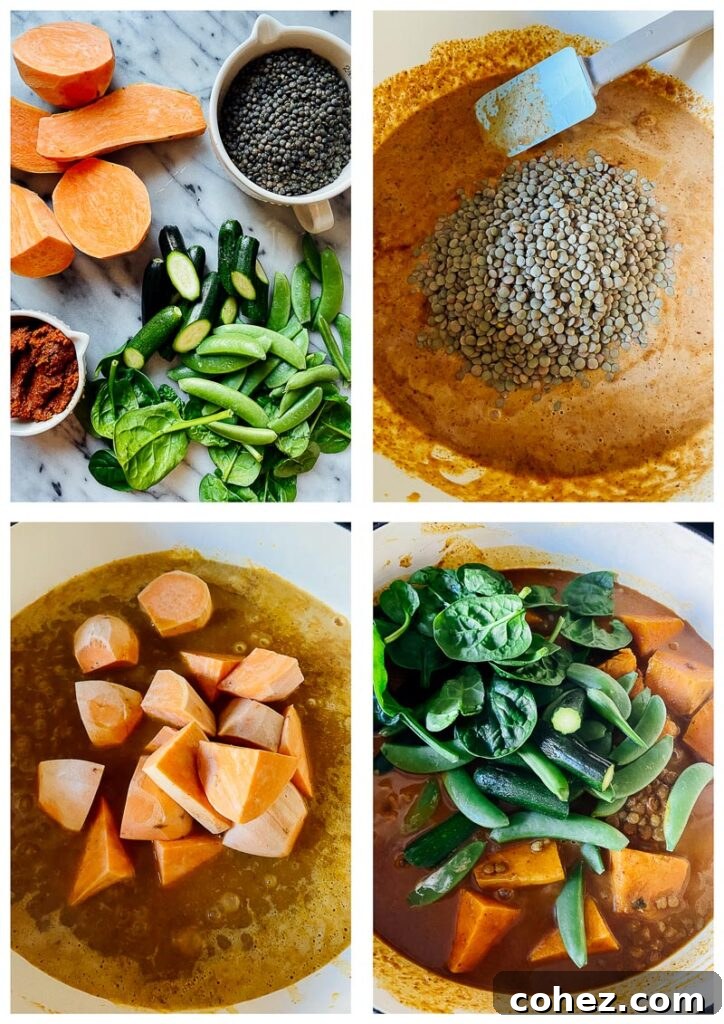
Crafting Your Curry: A Simple Step-by-Step Guide
Creating this flavorful Sweet Potato and Lentil Curry is surprisingly straightforward, making it an ideal choice for busy weeknights or when you crave a delicious homemade meal without extensive effort. Follow these easy steps to bring this vibrant, plant-based dish to life in your kitchen.
- Infuse the Aromatics: Begin by heating your pan over medium heat. Add the Thai red curry paste along with a small amount (just a couple of tablespoons) of the coconut milk. Stir constantly for a minute or two until the paste becomes wonderfully fragrant and its complex aromas are fully released. This crucial step, often referred to as “blooming the curry paste,” significantly deepens its flavor and ensures it integrates seamlessly into the sauce.
- Simmer the Hearty Base: Next, introduce the rinsed green lentils, the vegetable stock, and the remaining coconut milk to the pan. Bring this mixture to a gentle boil, then immediately reduce the heat to a steady simmer. Allow it to cook for approximately ten minutes, giving the lentils ample time to begin softening and to absorb the rich, aromatic liquids, laying the foundation for a truly flavorful curry.
- Add the Sweet Potatoes: Once the lentils have simmered for the initial ten minutes, carefully add the cubed sweet potatoes to the pot. Continue to simmer the curry for another ten minutes, or until the sweet potatoes are fork-tender. It’s important they are cooked through but still retain a slight firmness, preventing them from becoming mushy.
- Incorporate Fresh Greens: In the final stage of cooking, gently stir in the delicate baby zucchini, crisp sugar snap peas, and fresh spinach. Let the curry simmer for an additional 5-7 minutes. This short cooking time is intentional, ensuring these vibrant vegetables retain their beautiful color, a pleasant crispness, and their nutritional integrity, adding a refreshing textual contrast to the hearty base.
- Final Seasoning: Just before removing the curry from the heat, stir in the palm or brown sugar. If you choose to enhance the umami depth, also add the fish sauce at this point. Taste the curry and adjust seasonings as needed, adding a pinch of salt if omitting fish sauce or if more savory depth is desired. The sugar helps to balance the spices and acidity, creating a well-rounded flavor profile.
Recipe Tips & Creative Variations
This Sweet Potato and Lentil Curry is wonderfully adaptable, allowing you to easily customize it to your taste and what wholesome ingredients you have on hand. Here are some essential tips and creative variations to help you make this plant-based curry truly your own, ensuring a delicious and satisfying meal every time:
- The Power of Quality Curry Paste: While it’s certainly possible to meticulously measure out individual spices, a good quality, pre-made curry paste is undeniably the simplest and most effective way to infuse your curry with a complex, authentic flavor profile. It saves considerable time and effort, and ensures a perfectly balanced blend of aromatics and spices. Remember, quality matters here, so choose a reputable brand for the best results.
- Sweet Potato Alternatives: I’m a big advocate for sweet potatoes in this recipe due to their unique natural sweetness and delightful creamy texture. However, if you’re a fan of butternut squash, it makes an absolutely fantastic and equally nutritious substitute. Just remember that butternut squash typically takes slightly longer to cook than sweet potatoes, so you may need to add it a couple of minutes earlier to ensure it becomes perfectly tender.
- Versatile Vegetable Swaps: Feel free to experiment with other quick-cooking vegetables based on what’s in season or what you prefer. Green beans can be added or used in place of snow peas for a similar crisp-tender element. Other delicious additions could include sliced bell peppers, mushrooms, chopped kale, or even broccoli florets, all contributing to the curry’s nutritional richness and diverse textures.
- Coconut Milk Choices for Texture and Calories: For the creamiest texture and richest, most satisfying flavor, full-fat coconut milk is highly recommended. It creates a truly luxurious curry. While light coconut milk is a good option for reducing calories and fat content, be aware that it will result in a less rich and slightly thinner curry. Consider your priorities for taste and dietary needs when making your choice.
- Broth vs. Water for Flavor Depth: Using vegetable broth or stock will undoubtedly add more depth, complexity, and savory undertones to your curry compared to plain water. The broth enhances the overall richness. However, if you don’t have broth on hand, water will work perfectly fine as a liquid base; you might just need to adjust the final seasonings slightly more to compensate for the difference in flavor.
- Seasoning with Fish Sauce (or Salt for Vegan): Fish sauce is a common ingredient in Thai cuisine, contributing a unique umami depth and a salty kick. If you choose to omit it (for example, to keep the recipe vegetarian or vegan), remember that you’ll need to compensate for the lost saltiness. Sprinkle in a pinch or two of salt, taste, and adjust until the flavor is perfectly balanced to your liking. For a true vegan alternative, specialized vegetarian “fish sauces” or a dash of soy sauce and a squeeze of lime can mimic some of the umami profile.
- Boost the Protein Content: To make this sweet potato and lentil curry even more substantial and protein-packed, consider adding extra plant-based protein sources. Cooked chickpeas, pan-fried tofu cubes, or tempeh would all integrate beautifully, absorbing the curry flavors and significantly enhancing the meal’s nutritional profile, making it an even more complete main course.
- Adjusting Spice Levels to Your Preference: This recipe uses red curry paste, which provides a moderate heat. If you prefer a spicier curry, you can increase the amount of red curry paste slightly, or add a pinch of chili flakes during the initial blooming stage for an extra kick. For a milder version, simply use slightly less paste, or opt for a mild curry powder if a paste is too intense.
Serving Suggestions for a Complete Meal
This Sweet Potato and Lentil Curry is incredibly flavorful on its own, meaning you don’t need elaborate accompaniments to enjoy it fully. Keeping things simple often lets the curry’s complex, plant-based flavors shine through beautifully. However, if you’re looking to elevate your meal or add a bit more flair, here are some perfect serving suggestions to complete your dining experience:
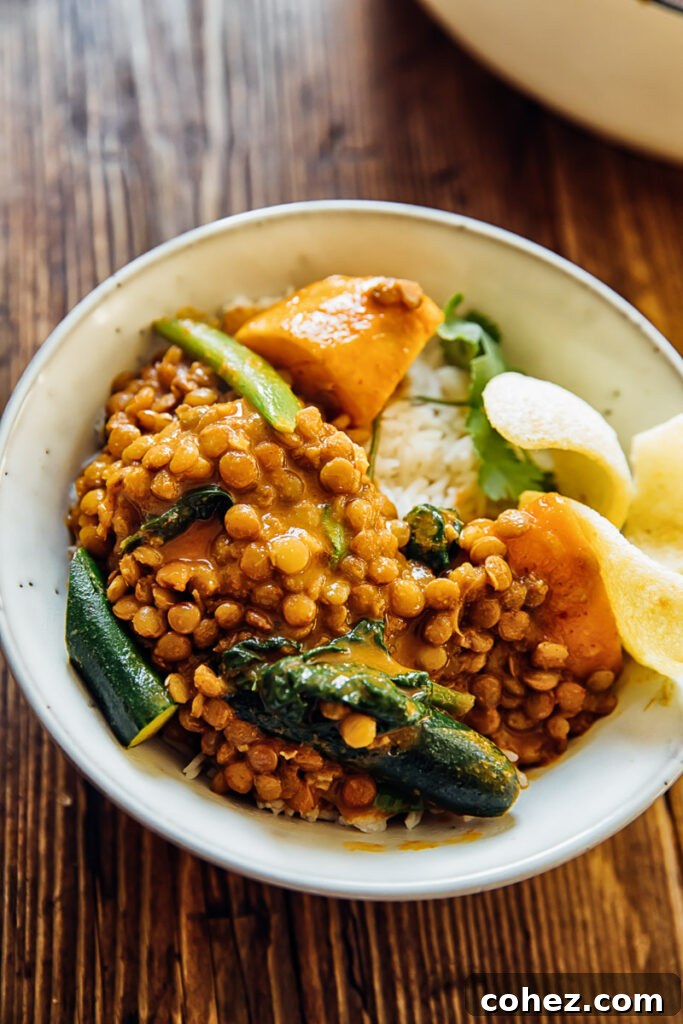
- Classic Steamed Rice: The most straightforward and universally satisfying pairing is a bed of fluffy steamed white or brown rice. The rice provides a neutral canvas that perfectly absorbs all the rich, aromatic sauce of the curry, making every bite delightful.
- Fragrant Coconut Rice: For an extra layer of tropical flavor that beautifully complements the creamy coconut milk in the curry, prepare a batch of coconut rice. Its subtle sweetness and fragrant aroma will enhance the overall experience, adding another dimension to your meal.
- Fresh Herbs for Garnish: A generous sprinkle of fresh chopped coriander (cilantro) or Thai basil just before serving adds a burst of vibrant color, a refreshing herbaceous note, and a pleasant aroma that brightens the entire dish, cutting through the richness.
- A Zesty Citrus Squeeze: A squeeze of fresh lime or lemon juice over your bowl right before eating can work wonders. The bright acidity cuts through the richness of the coconut milk and lifts all the complex flavors, adding a zesty zing that makes the curry taste even fresher.
- Warm Flatbreads: Serve alongside warm naan bread, roti, or paratha. These soft, chewy flatbreads are absolutely perfect for scooping up every last delicious drop of the curry sauce, ensuring no flavor goes to waste.
- Simple Green Side Salad: For an even lighter and fresher contrast, consider serving a simple, crisp green side salad with a light vinaigrette. This adds a lovely textural difference and a boost of fresh greens, making for a wonderfully balanced meal.
Storage and Meal Prepping Made Easy
One of the many wonderful qualities of this Sweet Potato and Lentil Curry is how exceptionally well it stores, making it an excellent candidate for convenient meal prepping. In fact, like many curries, the flavors often meld and deepen overnight, allowing the spices to fully integrate, making it taste even better the next day!
Refrigerator Storage
Any leftover curry will keep beautifully when stored in the fridge. Simply transfer it to an airtight container and consume within 3-4 days. Preparing a larger batch means you’ll have delicious, healthy lunches or dinners ready for days, making busy schedules much easier to manage.
Freezing Instructions
This curry freezes exceptionally well, offering a fantastic solution for busy days when you need a quick, healthy, and homemade meal. Allow the curry to cool completely to room temperature before portioning it into freezer-safe, airtight containers or heavy-duty freezer bags. It can be frozen for up to three months without loss of quality. When you’re ready to enjoy it, thaw the curry completely in the refrigerator overnight before reheating. For best results and food safety, ensure you consume it within 48 hours of thawing.
Consider making a double batch to have delicious, homemade meals ready to pull out of the freezer, saving you significant time and effort on hectic days, and ensuring you always have a wholesome option available.
Reheating Tips
To reheat leftovers, you have a couple of easy options. You can gently warm the curry in a saucepan over medium-low to medium heat on the stovetop, stirring occasionally until it is heated through evenly. Alternatively, individual portions can be quickly reheated in the microwave. If the curry appears too thick after storage, simply add a splash of water or vegetable stock to achieve your desired consistency and restore its original texture and sauce richness.
More Delicious Plant-Based Lentil Recipes to Explore
- Veggie Lentil Moussaka
- Mulligatawny Soup
- Dal Makhani
- Vegetarian Lentil and Butternut Squash Chili
Sweet Potato and Lentil Curry
Julia Frey of Vikalinka
10 mins
30 mins
40 mins
6
Ingredients
- 50g / 3.5 tbsp Thai red curry paste
- 400ml / 14oz coconut milk
- 250ml / 1 cup vegetable stock
- 200g / 1 cup green lentils
- 2 sweet potatoes, medium
- 5 baby zucchini
- 80g / 1 cup sugar snap peas
- 30g / 1/8 cup spinach
- 1 tsp palm or brown sugar
- 1 tsp fish sauce, optional
Instructions
- Add the Thai red curry paste to the heated pan with a couple of tablespoons of coconut milk and stir until the aroma is released. Add in the green lentils together with the vegetable stock and the rest of the coconut milk and bring to a simmer, lower the heat and simmer for 10 minutes.
- Add the cubed sweet potatoes and simmer for 10 minutes longer, then bring in the baby zucchini, sugar snap peas and spinach, allow to cook for 5-7 minutes longer. At the very end stir in the palm or brown sugar and the fish sauce if using.
Notes
- A vegetarian fish sauce substitute can be used to keep the recipe vegetarian.
- Green beans can be added or used in place of snow peas.
- Water can be used in place of vegetable broth or stock. The broth will add the most flavour to the curry, but either will work perfectly fine.
- Fish sauce is quite salty, so if you don’t use it, you will have to add salt yourself. Sprinkle in a pinch or two of salt and test to make sure you are happy.
- While light coconut milk can be good way to reduce calories, full-fat coconut milk will give the most creamy texture and satisfying flavour. For me the trade off isn’t worth it, but you may think otherwise!
Nutrition
Calories: 316kcal
|
Carbohydrates: 44g
|
Protein: 16g
|
Fat: 10g
|
Saturated Fat: 8g
|
Polyunsaturated Fat: 1g
|
Monounsaturated Fat: 1g
|
Sodium: 303mg
|
Potassium: 1467mg
|
Fiber: 15g
|
Sugar: 6g
|
Vitamin A: 13515IU
|
Vitamin C: 69mg
|
Calcium: 106mg
|
Iron: 6mg
Nutrition information is automatically calculated, so should only be used as an approximation.
Tried this recipe?
Let us know how it was!