
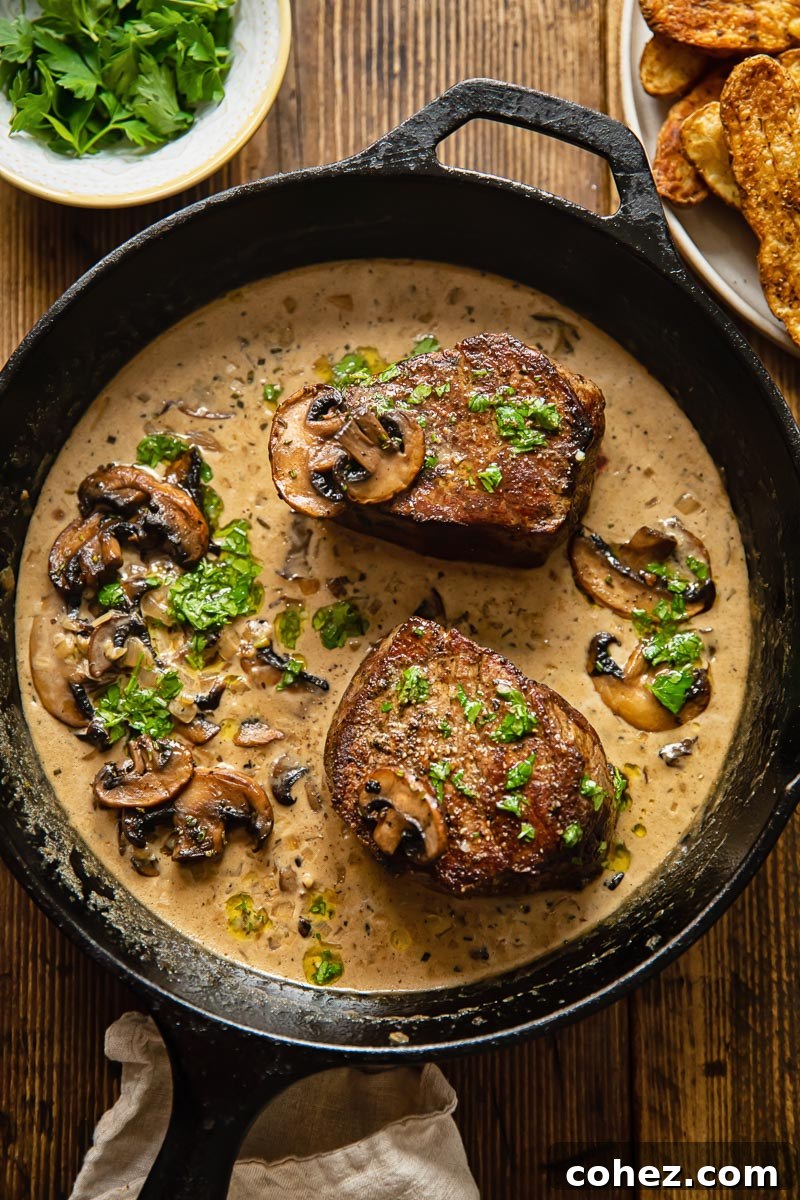
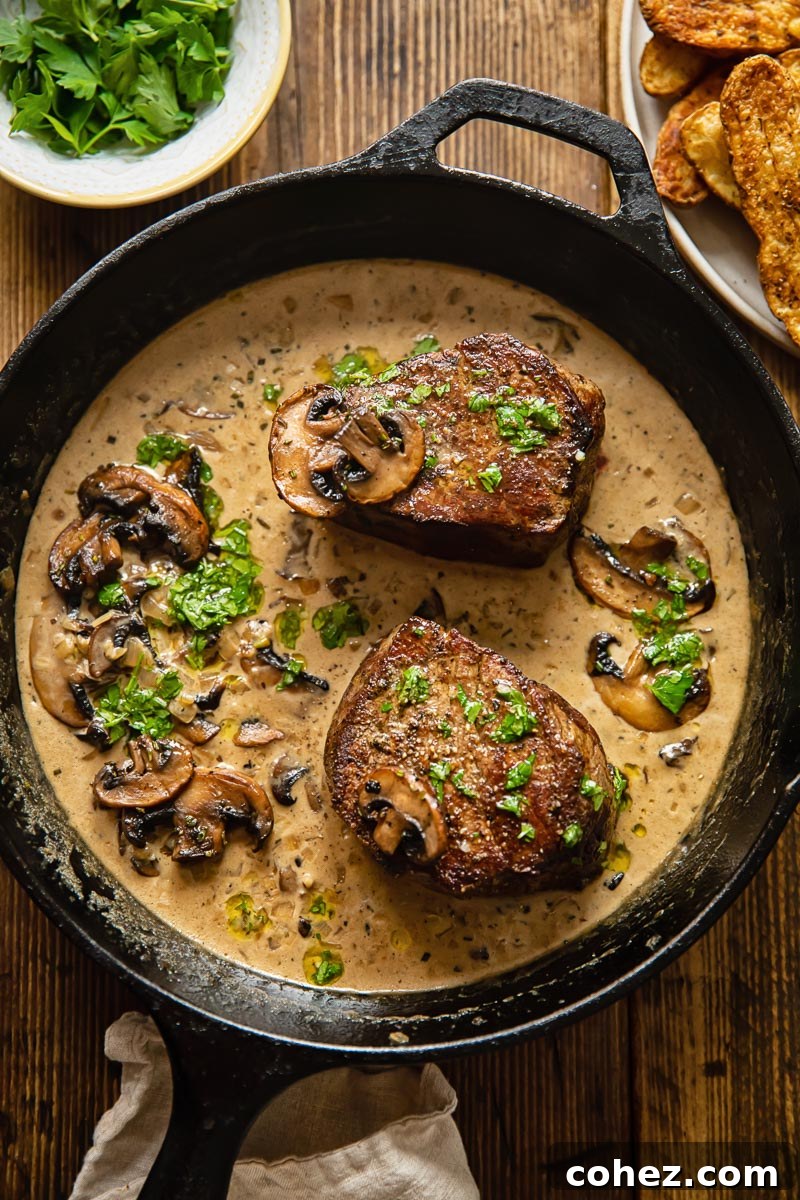
Mastering the art of cooking a succulent filet mignon at home is far simpler than you might imagine. Picture this: a rich, exquisitely tender beef steak, perfectly seasoned, and seared to a beautiful crust, served with an incredible accompanying sauce. This guide will reveal our tried-and-true method for achieving a flawless filet steak every time, turning your kitchen into a gourmet haven.
Filet mignon holds a revered position in the culinary world, synonymous with elegance and special occasions. While it stands out, it’s not the only showstopper in the steak family! For those who appreciate spectacular beef cuts, you might also enjoy exploring options like a Tomahawk Steak with Herb Butter, offering a different yet equally rewarding experience.
The Allure of Filet Mignon: A Cut Above
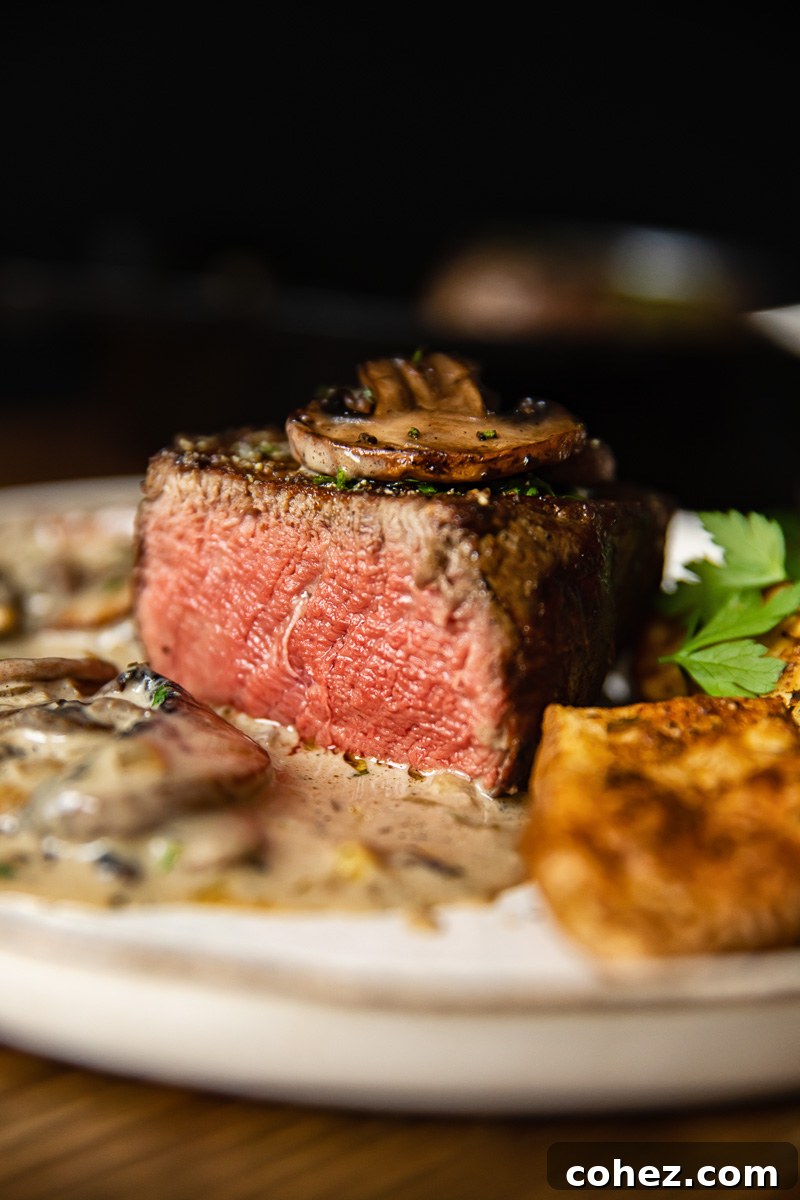
Filet mignon, often celebrated as the most elegant of steaks, is indeed the centerpiece of many memorable meals. Its legendary tenderness is its defining characteristic, frequently described as melting in your mouth. This premium cut, sourced from the highly prized beef tenderloin, boasts a fine grain and minimal marbling, resulting in its exceptionally smooth texture.
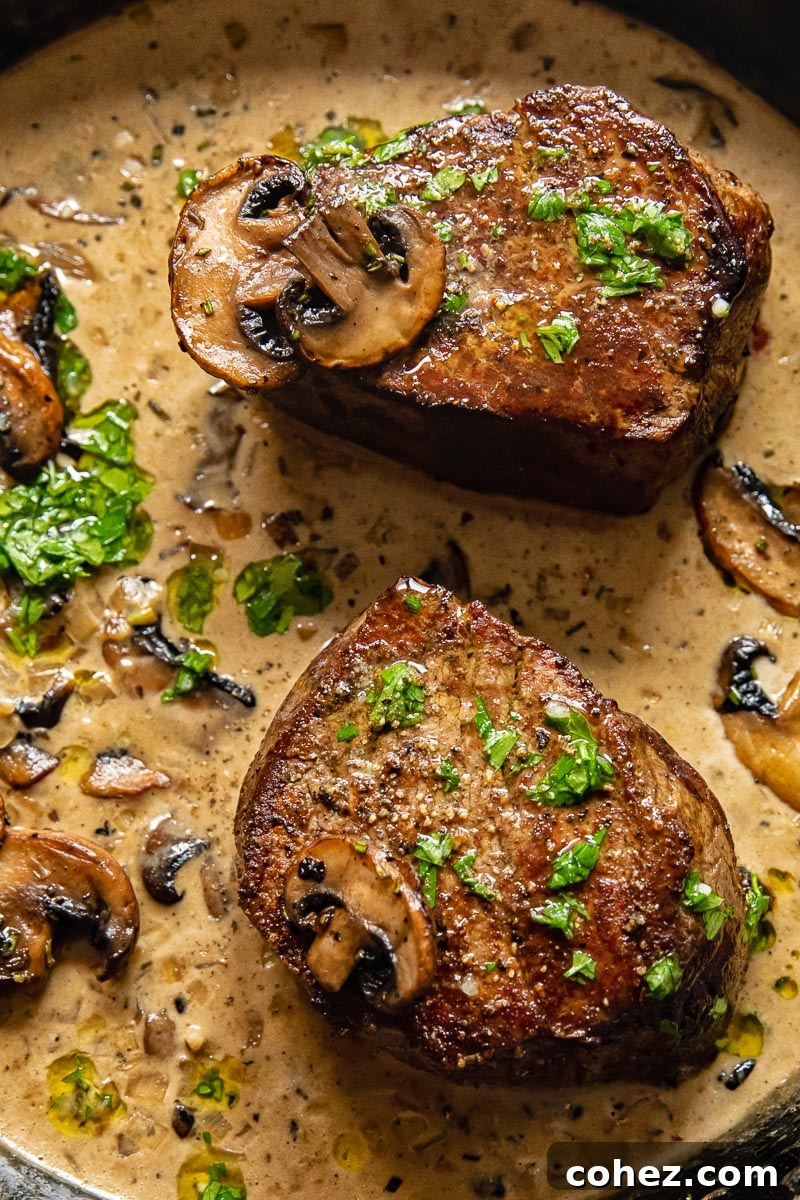
Due to its inherently lean nature, filet mignon truly shines when paired with a complementary sauce. The added richness and flavor from a well-crafted sauce enhance the steak’s delicate taste and moist texture, transforming a great meal into an unforgettable one.
It’s no secret that this highly coveted steak comes with a significant price tag. Investing in such a premium cut means you want to ensure it’s cooked to perfection. The thought of accidentally overcooking or mishandling an expensive piece of meat can be daunting, which is why many home cooks might hesitate.
This apprehension often leads people to order filet mignon at high-end restaurants, entrusting its preparation to a professional chef. While dining out offers a wonderful experience, the restaurant markup on an already pricey item can be substantial. The good news is, you don’t need to break the bank for a five-star steak experience. With the right techniques, you can achieve restaurant-quality filet mignon right in your own kitchen, saving money and gaining immense satisfaction. Let us guide you through a foolproof method for preparing this exquisite cut of beef at home. But first, let’s understand precisely what it is we’re cooking.
Filet Mignon vs. Fillet Steak: Understanding the Cut
Whether you call it “filet mignon” in the US or “fillet steak” in the UK, you’re referring to the same magnificent cut of beef. Both terms describe a steak taken from the tip of the beef tenderloin, also known as beef fillet. It’s essentially the same, just with different regional names. This prime cut is renowned for its exceptional tenderness, as it comes from a muscle that does very little work.
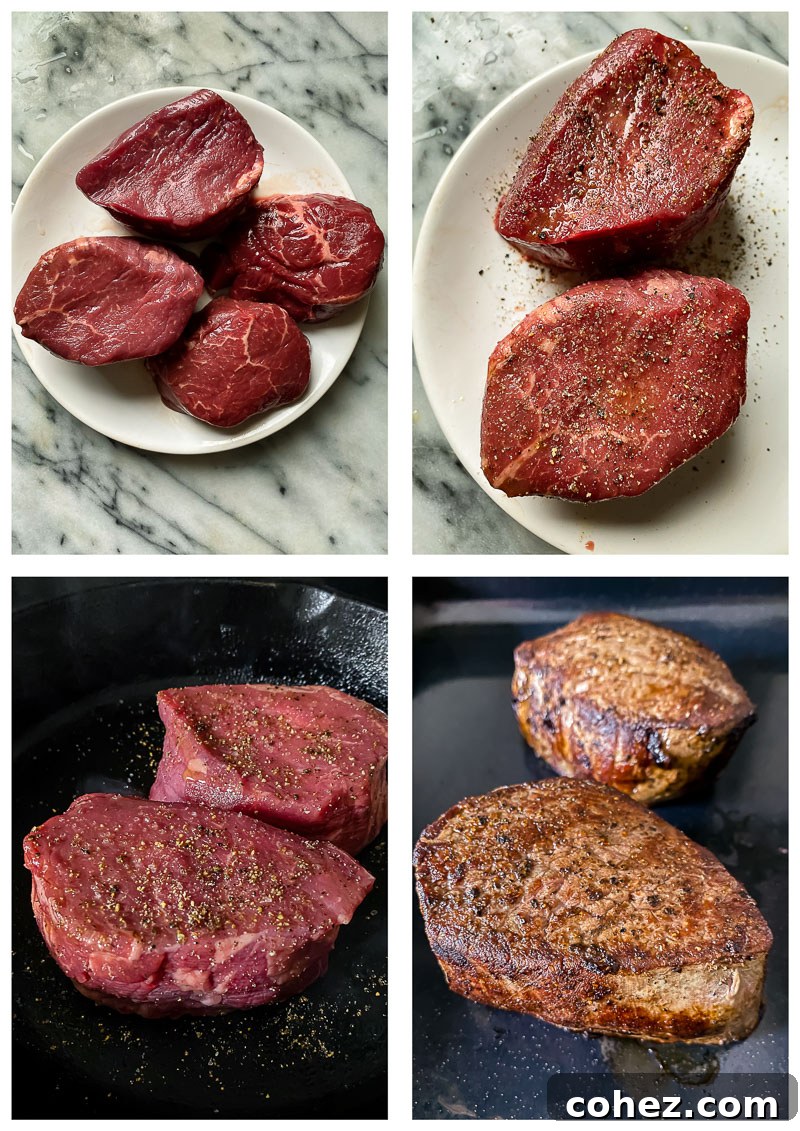
These steaks are typically quite thick, as you can observe in the accompanying images. While thinner cuts like a ribeye steak can be perfectly cooked entirely on a grill or in a pan, thicker fillet steaks often require a two-stage cooking process: an initial sear on the stovetop followed by finishing in the oven. This ensures an even cook from edge to center without over-browning the exterior.
It’s important to note that filet mignon steaks come in various sizes. For instance, the first photo in the collage displays both 4 oz and 8 oz cuts. Smaller steaks, around 4 to 5 oz, can often be cooked entirely in a hot pan, achieving perfect doneness relatively quickly. However, larger 8 oz steaks will almost always benefit from a few minutes in the oven to reach that ideal internal temperature for your preferred level of doneness, guaranteeing a juicy and tender result throughout.
Why Cook Filet Mignon at Home? The Gourmet Experience for Less
The decision to cook filet mignon at home isn’t just about saving money, though that’s certainly a significant benefit. It’s about taking control of your culinary experience, from selecting the finest cut to perfecting its preparation. When you cook this esteemed steak yourself, you gain:
- Cost Savings: Restaurant markups on filet mignon can be astonishing. Purchasing the raw cut from a butcher or a reputable grocery store and preparing it yourself can dramatically reduce the cost of enjoying this luxury.
- Customization: You dictate the seasoning, the exact level of doneness, and the richness of the accompanying sauce. Every element can be tailored precisely to your taste preferences.
- Freshness and Quality Control: By sourcing your own ingredients, you can choose the freshest produce and the highest quality beef, ensuring a superior flavor profile.
- The Joy of Cooking: There’s immense satisfaction in creating a truly gourmet meal from scratch. Impress your family or guests with your culinary prowess and savor the fruits of your labor.
Our method is designed to demystify the process, making it accessible even for those new to cooking premium steaks.
Essential Tips for a Perfect Filet Mignon
- Bring to Room Temperature: Always take your filet mignon steaks out of the refrigerator at least 30 minutes, and ideally an hour, before cooking. Allowing the meat to come closer to room temperature ensures more even cooking, preventing a cold center and overcooked edges.
- Pat Dry for Optimal Sear: Before seasoning, thoroughly pat the steaks dry with paper towels. Excess moisture on the surface will steam the meat instead of searing it, preventing that coveted crispy, brown crust known as the Maillard reaction.
- Simple Seasoning is Key: Filet mignon’s flavor is delicate and rich. A simple seasoning of coarse salt and freshly ground black pepper is usually sufficient. Press the seasoning into the meat with your palm or a spatula to help it adhere during cooking.
- Choose the Right Pan: A cast iron pan is the ideal choice for searing steaks due to its excellent heat retention and even heat distribution. If you don’t have one, any heavy-bottomed frying pan will also work well.
- Monitor Doneness with a Thermometer: The timings provided below are for 2 X 8 oz/225 g steaks and are designed to achieve a perfect medium-rare finish. For medium steaks, increase the oven time to 7-10 minutes. For precise results and to avoid overcooking an expensive cut, we highly recommend using a meat thermometer. Aim for 130-135°F (55-57°C) for medium-rare and 135-140°F (57-60°C) for medium, keeping in mind the temperature will rise slightly during resting.
- Always Rest Your Steak: This step is non-negotiable! After cooking, transfer the filet mignon to a plate or cutting board and cover it loosely with foil. Let it rest for at least 10 minutes. Resting allows the juices, which have been driven to the center during cooking, to redistribute throughout the meat, ensuring every bite is incredibly tender and moist.
- Pair with a Complementary Sauce: As filet mignon is lean, a flavorful sauce truly elevates the experience. While we highlight our popular Mushroom Marsala Sauce recipe here, we’ll also suggest other fantastic options to perfectly complement your steak.
Crafting the Perfect Accompaniment: Best Sauces for Filet Mignon
As previously mentioned, filet mignon’s unparalleled tenderness comes with a relatively lean profile. This makes a well-chosen sauce not just an enhancement but, in my opinion, an absolute necessity for the ultimate dining experience. A flavorful sauce adds moisture, richness, and an extra layer of complexity that beautifully complements the steak’s delicate beefy notes.
You can follow our recipe for the luscious Mushroom Marsala Sauce, which is a fantastic choice. However, another perennial classic often served with filet mignon is Béarnaise sauce. While traditionally known for being a bit tricky and labor-intensive to prepare, I’ve developed an easier version that ensures success. With the help of your blender, you can whip up this elegant sauce in less than 10 minutes, bringing that classic French bistro flavor to your table without the stress.
Beyond these classics, other creamy sauces I highly recommend include a rich Cognac Mushroom Steak Sauce, which adds a sophisticated depth, or a bright White Wine and Mustard Sauce for a tangy kick. If you’re looking to avoid cream, a vibrant option is the fantastic Sicilian Lemon Herb Sauce Salmoriglio. If you’re a fan of chimichurri, you will absolutely love this zesty, herbaceous alternative even more for its incredible freshness and zing!
Elevate Your Meal: Inspired Serving Suggestions
While steak and potatoes remain a timeless, winning combination, preparing filet mignon presents a wonderful opportunity to elevate your potato side dish. My personal favorite choice for this occasion is Hasselback potatoes with Gremolata, which are as impressive in appearance as they are delicious. Their crispy edges and tender interiors provide a delightful textural contrast to the steak.
To balance the richness of such a meal, incorporating a touch of freshness is essential. Depending on the season, I often reach for a crisp celeriac remoulade, offering a light, tangy, and refreshing element. Alternatively, a vibrant, herby summer tomato salad provides a burst of seasonal flavor and color, cutting through the richness beautifully.
Storage and Reheating Leftover Filet Mignon
If you happen to have any leftover filet mignon – a rare occurrence, we know! – store it promptly in the refrigerator. Place the steak in a single layer in an airtight container or wrap it tightly with plastic wrap. It will remain fresh for 3-4 days. Remember that cooked steak can release juices, so store it on a lower shelf in your fridge to prevent any leaks onto other food items.
Reheating steak can be tricky, as you want to warm it through without drying it out or overcooking it. Our recommended method involves a gentle, slow reheat followed by a quick sear:
- First, remove the steak from the fridge 30 minutes to an hour before reheating to allow it to slowly come to room temperature. This promotes more even warming.
- Preheat your oven to a low temperature of 135°C (275°F).
- Place the steak on a wire rack set over a baking sheet with sides. The wire rack allows air to circulate around the steak, ensuring it heats more evenly, while the baking sheet catches any released juices.
- Heat the steak in the oven until its internal temperature reaches around 45°C (110°F). This step is about gently warming the interior.
- Once the steak has reached this temperature, transfer it to a hot skillet with a little oil. Sear it quickly on each side, about 1 minute per side, to revive that beautiful crust and ensure it’s piping hot.
- Let the reheated steak rest on a plate for 5 minutes before serving to allow the juices to settle once more. This two-step process yields a surprisingly tender and flavorful leftover steak.
Perfect Filet Mignon with Mushroom Marsala Sauce – The Recipe
Recipe Details
- Rating: 4.50 from 2 votes
- Author: Julia Frey of Vikalinka
- Prep Time: 10 minutes
- Cook Time: 20 minutes
- Total Time: 30 minutes
- Servings: 2
Making filet mignon at home is easier than you think! Here is our reliable method for the fillet steak and a great sauce to serve alongside.
Equipment
- Cast iron skillet
Ingredients
For the Steaks:
- 2 X 8 oz/225 g filet mignon/fillet steaks
- Coarse salt and freshly ground pepper, to taste
- 1 tbsp vegetable oil
For the Mushroom Marsala Sauce:
- 1 tbsp olive oil
- 1/2 onion, finely chopped
- 1-2 cloves garlic, minced
- 100g/1 cup mushrooms, sliced (cremini or button work well)
- 2 tsp fresh rosemary or thyme, chopped
- 1 tbsp all-purpose flour
- 125ml/1/2 cup Marsala wine (dry or sweet, depending on preference)
- 250ml/1 cup chicken or beef stock
- 125ml/1/2 cup heavy/double cream
- Salt and pepper to taste
- 1 tbsp fresh parsley for garnish, optional
Instructions
- Prepare for Cooking: Preheat your oven to 200°C (400°F). Take the steaks out of the fridge at least 30 minutes before you intend to cook them to allow them to come to room temperature. Preheat a cast iron pan or another heavy-bottomed pan for about 5 minutes over high heat until it’s screaming hot. (Ensure your extractor fan is on or crack open a window to manage smoke).
- Season and Sear Steaks: Thoroughly pat the steaks dry with paper towels. Brush them lightly with vegetable oil on both sides, then generously season with coarse salt and pepper. Place the seasoned steaks onto the hot pan. Gently press down on the steaks with a spatula to ensure maximum contact with the pan’s surface. Sear for 2 minutes on each side without moving the steaks. Make sure to sear all sides of the steak equally (top, bottom, and edges) to build a beautiful crust.
- Finish in the Oven: Once searing is complete, immediately transfer the pan (if oven-safe) or the steaks to a small oven-safe pan. Finish cooking in the preheated oven for 5-8 minutes until the internal temperature reaches 55°C (130°F) for medium-rare, or 57°C (135°F) for medium. (These timings work for 8 oz steaks; reduce the oven time or skip it altogether if your steaks are smaller, e.g., 4 oz steaks may not need oven finishing).
- Rest the Steaks: Take the filet mignon out of the oven, transfer to a cutting board, and cover loosely with foil. Let the steaks rest for at least 10 minutes before slicing and serving. This crucial step allows the juices to redistribute, ensuring a tender and moist steak.
- Prepare the Mushroom Marsala Sauce: While the steaks are in the oven and resting, make your sauce. In the same pan you used for the steaks (or a clean one), heat the olive oil over low heat. Add the chopped onions and sauté for 5-7 minutes until softened and translucent. Add the minced garlic and cook for another 30 seconds, stirring continuously until fragrant. Add the sliced mushrooms with a pinch of salt, pepper, and chopped rosemary (or thyme). Increase the heat to medium and brown the mushrooms until they are golden and tender.
- Thicken and Finish the Sauce: Sprinkle the flour over the mushrooms and stir well to coat them, cooking for 1 minute. Deglaze the pan by pouring in the Marsala wine, scraping up any browned bits from the bottom of the pan. Let the wine bubble and reduce by half, which usually takes about 5 minutes. Then, add the chicken or beef stock and cook for another 5 minutes, allowing the sauce to thicken slightly. Finally, stir in the heavy/double cream and let it warm through, but do not boil. Taste the sauce for seasoning and add more salt or pepper if needed. Remove from heat.
- Serve: If using, sprinkle the sauce with fresh parsley before serving. Serve the perfectly cooked filet mignon immediately with the warm Mushroom Marsala Sauce.
Nutrition
Calories: 796kcal | Carbohydrates: 22g | Protein: 57g | Fat: 45g | Saturated Fat: 21g | Polyunsaturated Fat: 3g | Monounsaturated Fat: 18g | Cholesterol: 235mg | Sodium: 1500mg | Potassium: 1249mg | Fiber: 1g | Sugar: 9g | Vitamin A: 926IU | Vitamin C: 4mg | Calcium: 112mg | Iron: 5mg
Nutrition information is automatically calculated, so should only be used as an approximation.
FAQs About Filet Mignon
What exactly is filet mignon?
Filet mignon is a cut of beef from the smaller end of the tenderloin, or psoas major muscle, which runs along the spine of the cow. Because this muscle is not weight-bearing and does very little work, it is exceptionally tender, making it one of the most prized cuts of beef.
Why is filet mignon so expensive?
Its high cost is due to several factors: its tenderness, its relative scarcity (only a small portion of the tenderloin is considered filet mignon), and its desirable flavor and texture. It’s considered a premium cut, thus commanding a higher price.
How do I choose a good filet mignon?
Look for steaks that are bright red in color, with a fine grain and minimal visible marbling (intramuscular fat), as filet mignon is naturally lean. It should be firm to the touch and typically uniform in thickness. Opt for USDA Prime or Choice grades for the best quality.
What’s the best way to ensure my filet mignon is tender?
Beyond choosing a quality cut, proper cooking technique is key. Bringing the steak to room temperature before cooking, searing it quickly on all sides to create a crust, finishing it in the oven (especially for thicker cuts), and allowing it to rest adequately after cooking are all crucial steps to maximize tenderness and juiciness.
What internal temperature should filet mignon be cooked to?
- Rare: 120-125°F (49-52°C)
- Medium-Rare: 130-135°F (55-57°C) – most recommended for filet mignon
- Medium: 135-140°F (57-60°C)
- Medium-Well: 145-150°F (63-66°C)
- Well-Done: 150-155°F (66-68°C) – generally not recommended for filet mignon due to its leanness.
Remember that the temperature will rise a few degrees during resting, so pull the steak off the heat just before it reaches your desired final temperature.
What wine pairs well with filet mignon?
Filet mignon pairs wonderfully with medium-bodied to full-bodied red wines that have smooth tannins and aren’t overly aggressive, allowing the delicate flavor of the steak to shine. Classic choices include Pinot Noir, Merlot, Cabernet Franc, or a less tannic Cabernet Sauvignon. For the Marsala sauce, a good dry Marsala wine complements the dish beautifully.
Explore More Marsala Flavors
If you’ve enjoyed the rich notes of Marsala in our steak sauce, you’ll love exploring its versatility in other dishes:
- Meatballs with Marsala Cream Sauce
- Best Chicken Marsala
- Turkey Marsala Pot Pie
- Strawberry Marsala Cobbler
Conclusion: Your Journey to Filet Mignon Perfection
Cooking filet mignon at home is a rewarding culinary adventure that allows you to enjoy a luxurious meal without the restaurant price tag. By following our detailed guide, from selecting the right cut and mastering the pan-sear and oven-finish technique, to crafting a sublime sauce and understanding the importance of resting, you’re well-equipped to create a perfect, melt-in-your-mouth steak every time. Embrace the joy of home cooking and impress yourself and your loved ones with a gourmet experience that is both attainable and unforgettable. So, grab your pan, sharpen your skills, and get ready to savor the unparalleled delight of a perfectly cooked filet mignon.