
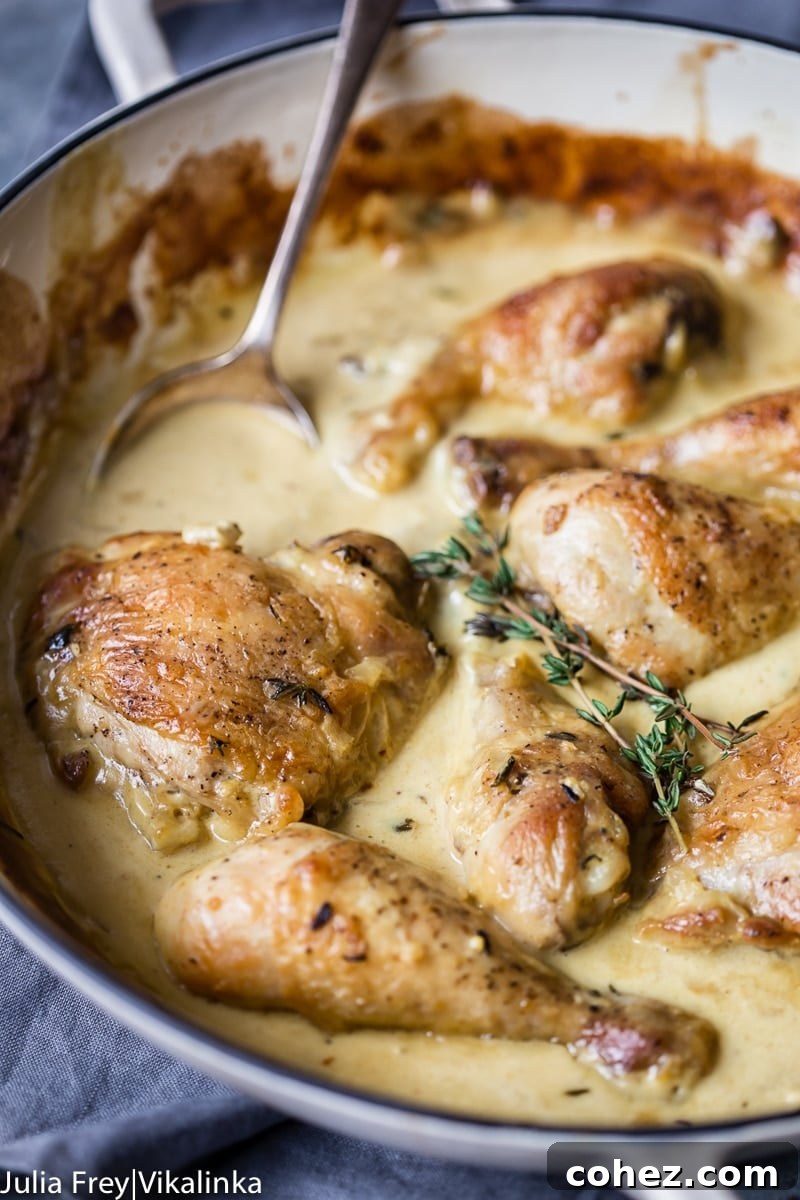
Exquisite Chicken in White Wine and Dijon Mustard Sauce: Your Gourmet Escape
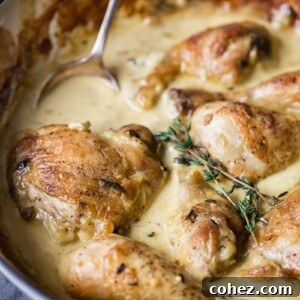
Elevate your weeknight dinner or impress your guests with this stunning **Chicken in White Wine and Dijon Mustard Sauce**. This French-inspired dish transforms humble chicken thighs and legs into a culinary masterpiece, perfectly browned then slow-braised in a rich, creamy white wine and **Dijon mustard** sauce. It’s an effortless journey to gourmet dining, promising tender, succulent chicken enveloped in a sauce you’ll want to savor every last drop of.
If you’re a connoisseur of classic French flavors, be sure to explore our other exquisite dishes like Cod with Mustard Sauce for another taste of culinary brilliance.
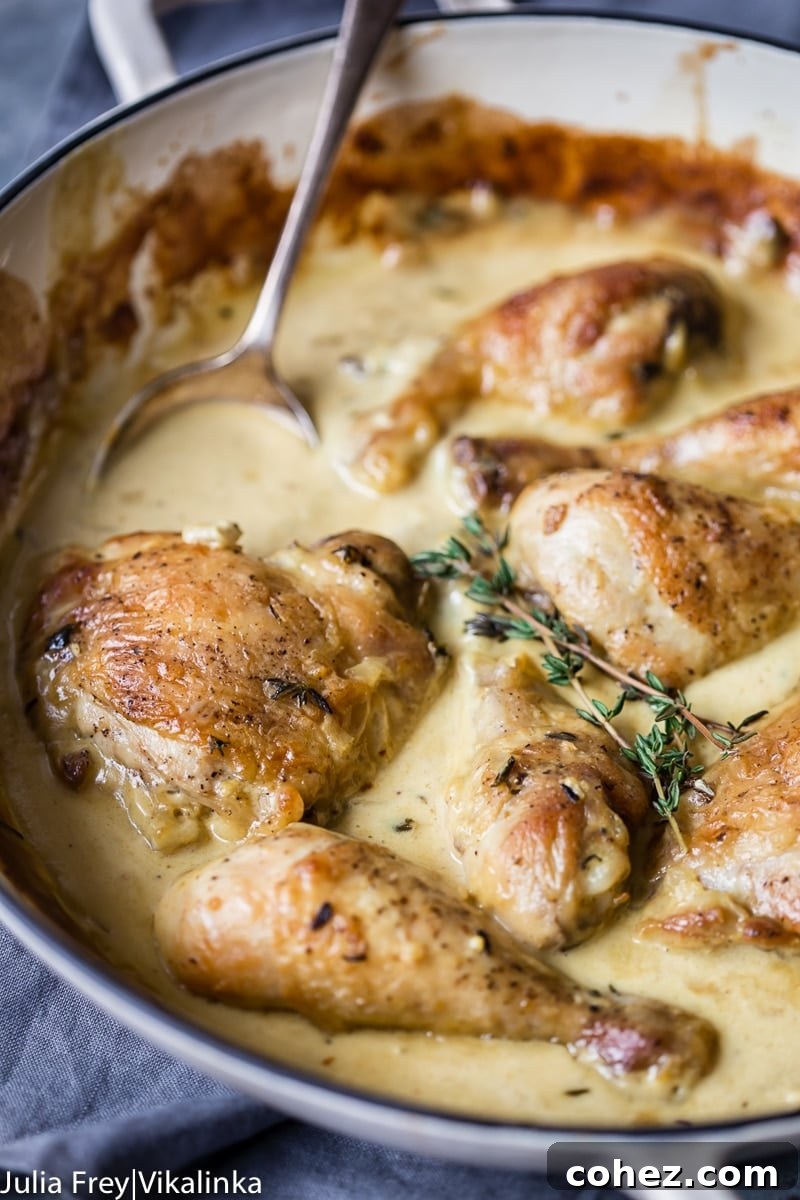
Chicken Dijon: A Taste of French Elegance at Home
My culinary journey with this delectable **Dijon Mustard Chicken** began during a memorable visit to a charming French restaurant in Prague. Every bite of their signature chicken dish whispered tales of traditional French cooking, leaving an indelible impression. The moment I tasted its rich, complex flavors, I knew I had to bring that magic into my own kitchen. This recipe is my successful recreation, refined over time to capture the authentic essence of that unforgettable meal, allowing you to enjoy a restaurant-quality experience from the comfort of your home.
The preparation for this extraordinary dish starts with perfectly searing chicken pieces until their skin develops a beautiful golden-brown hue and becomes wonderfully crispy. This initial step is absolutely crucial for locking in the chicken’s natural juices and creating a delightful textural contrast that elevates the entire dish. Following this browning, the chicken continues its transformation, slowly braising in the oven within a luxurious Dijon mustard sauce. This gentle, slow cooking process ensures the chicken becomes incredibly tender, practically melting in your mouth.
Just as the cooking nears its completion, a delicate touch of cream is introduced to the sauce. This vital addition performs a dual role: it expertly tames any potential sharpness from the mustard, creating a harmonious flavor profile, and simultaneously infuses the sauce with an irresistible velvety smoothness. The result is consistently tender and succulent chicken, enveloped in a sauce so rich, so creamy, and so bursting with flavor that you’ll find yourself craving every single drop. Be sure to have some warm, crusty bread readily available – you’ll definitely want it to sop up every last bit of this divine creation, ensuring no drop of the exquisite sauce goes to waste!
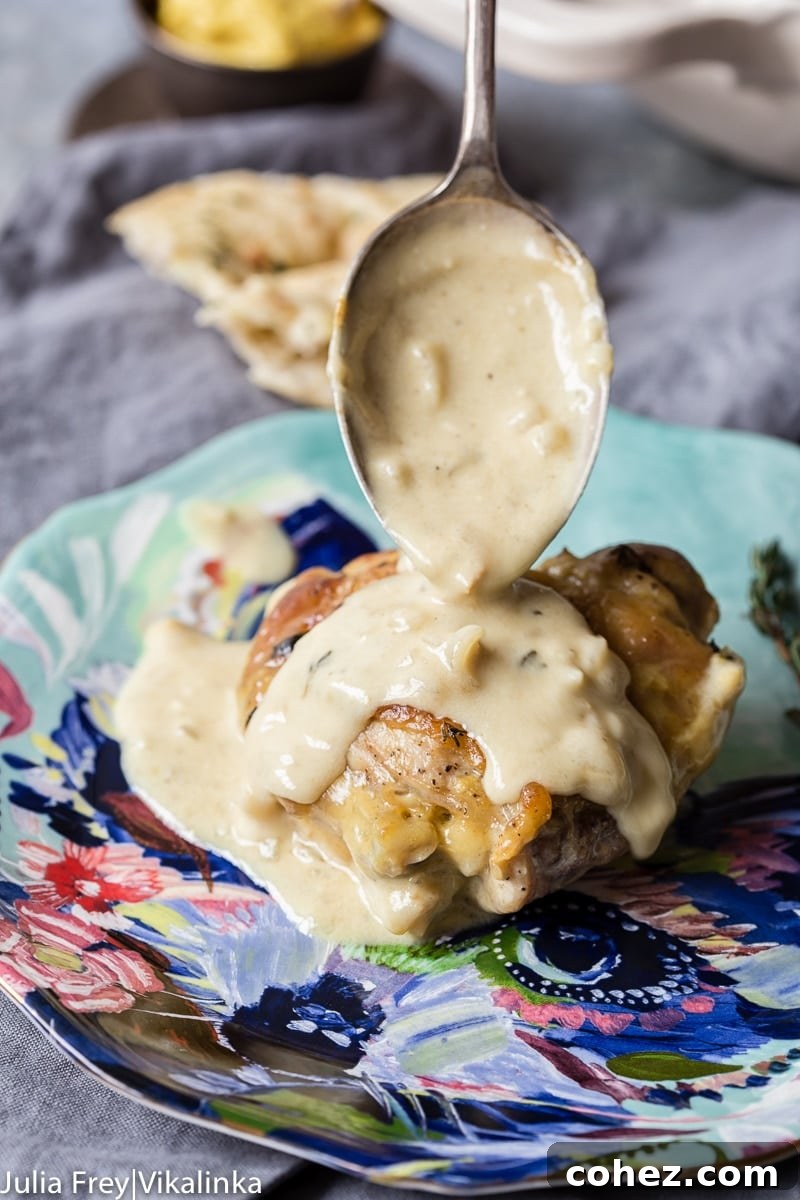
The Irresistible Allure of Mustard Sauce for Chicken
Many home cooks and food enthusiasts might wonder how a sauce with no cheese could achieve such a profound depth of flavor and be utterly addictive. The secret, undoubtedly, lies in the **quality of the mustard**. Having spent countless hours experimenting with various cream-based sauces, flavored with wine and a myriad of other ingredients, I embarked on creating this recipe with a unique and exciting challenge in mind: to craft a sauce where mustard stood as the sole, undisputed star of the flavor profile. Mustard, in its essence, is a remarkably potent, complex, and aromatic ingredient, and in this dish, it truly shines, showcasing its incredible versatility and sophisticated depth.
When I first conceived this recipe, I admit I had a few reservations about just how much mustard would be palatable in a single sauce. Would it be overpowering? Too sharp or acidic? My culinary experiments, however, quickly revealed that when meticulously balanced with other complementary ingredients like white wine, shallots, garlic, and finished with a touch of cream, mustard transforms into an incredibly nuanced and sophisticated flavor. It contributes a vibrant, zesty tang, a subtle, intriguing spice, and an amazing depth that other ingredients simply cannot replicate. This sauce is a testament to mustard’s incredible power – it’s bold yet perfectly balanced, complex yet comforting, and undeniably unforgettable.
Beyond its primary role in flavoring, the mustard also acts as an emulsifier, helping to bind the sauce ingredients together and contributing to its smooth, luscious texture. It brings a certain brightness that cuts through the richness of the cream and chicken, creating a dynamic interplay of flavors on your palate. This dish truly celebrates mustard not merely as a condiment, but as a foundational element, the very heart of a sauce that will captivate your senses and leave a lasting impression. It’s a culinary revelation that highlights the remarkable capabilities of this humble yet powerful ingredient.
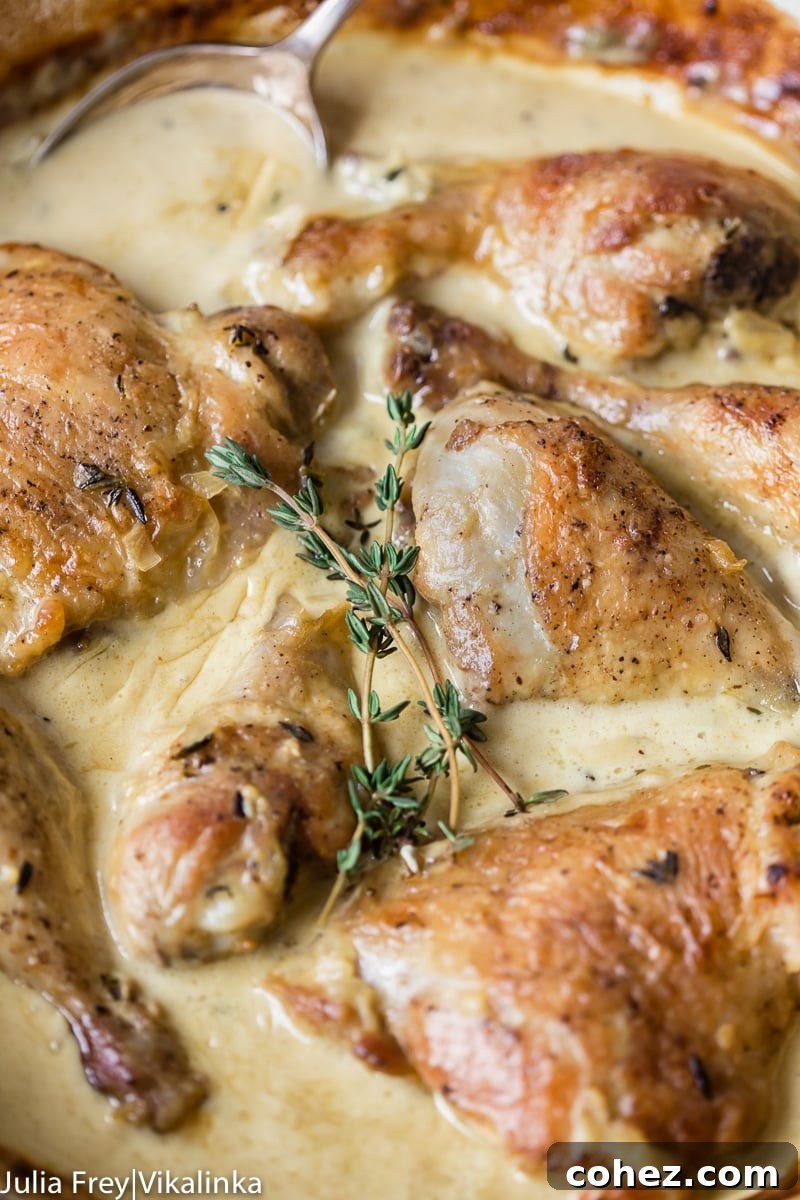
Choosing the Perfect Mustard for Your Dish
The selection of mustard is absolutely paramount to the overall success and flavor profile of this exquisite **Chicken in Wine and Mustard Sauce**. Here’s a crucial piece of advice I’ve learned through extensive cooking: if you don’t genuinely enjoy the taste of a particular mustard on its own, directly from the spoon, it’s highly unlikely you’ll appreciate its flavor when it’s incorporated into a complex sauce. Therefore, always make it a priority to select a mustard that you personally love and, perhaps even more importantly, invest in the best quality you can reasonably afford. A superior, well-crafted mustard will dramatically elevate the overall taste of your dish, lending it a refined character and depth that lower-quality varieties simply cannot achieve.
For those who are new to cooking with mustard as a primary flavor, it’s often advisable to begin your journey with milder-tasting options. This allows your palate to adjust to its unique pungency and complexity without being overwhelmed. Once you become more accustomed to its presence and role in a sauce, you can gradually venture into bolder, more assertive flavors if that aligns with your personal preference and culinary adventurousness. In this particular recipe, authentic French Dijon mustard is my unequivocally preferred choice. Its smooth texture, balanced acidity, and potent yet not overpowering tang perfectly complement the chicken and white wine, creating a harmonious and sophisticated flavor.
However, if you’re looking for an alternative or wish to add a different textural dimension, a high-quality wholegrain mustard can also work wonderfully. It introduces a pleasant, slightly coarse texture and a more rustic flavor profile, which can be delightful. Whichever type you ultimately choose, please, I implore you, steer completely clear of generic American yellow mustard. Its overly sweet, artificial, and intensely vinegary notes will unfortunately overpower and compromise the delicate balance and refined character we aim to achieve in this sophisticated French-inspired sauce. The beauty of this dish lies in its nuanced flavors, which an inferior mustard would undoubtedly diminish.
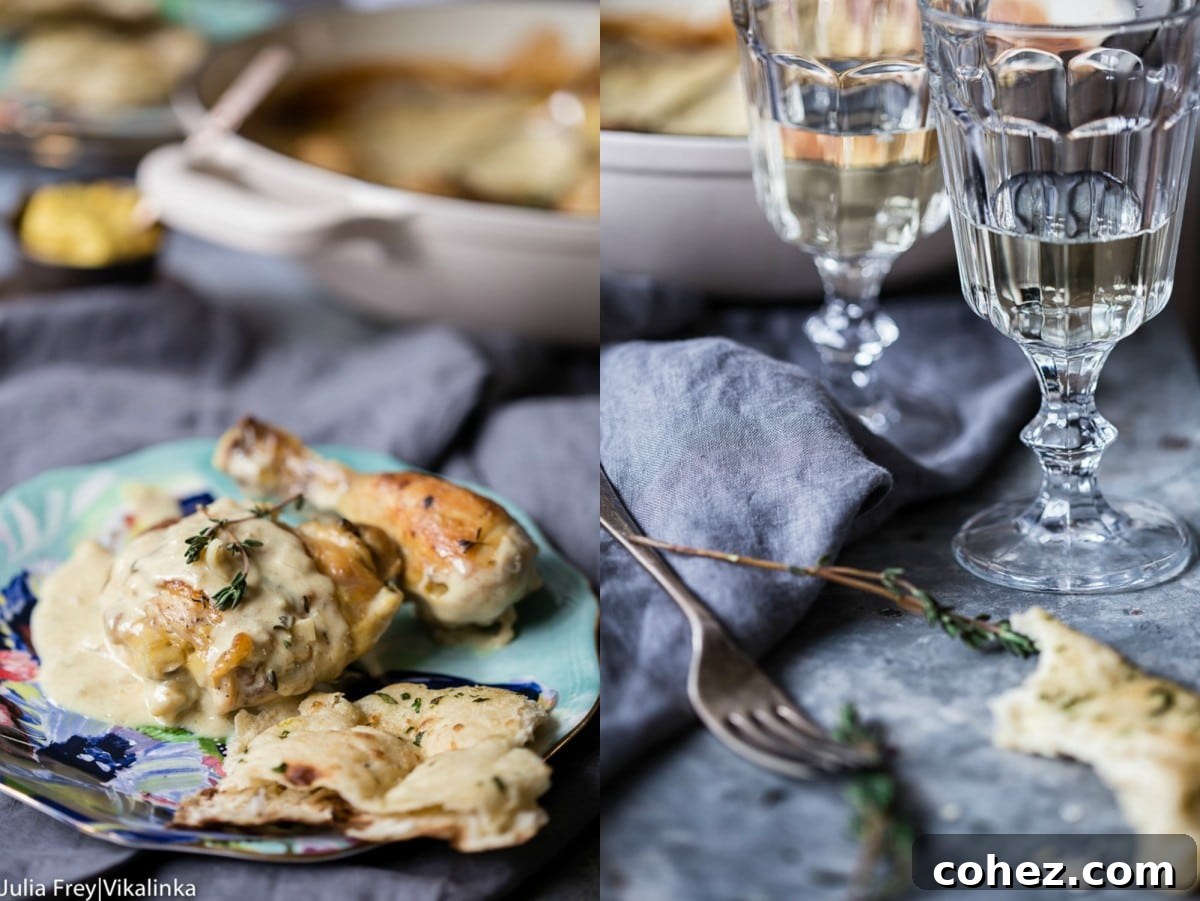
The Essential Role of White Wine in the Sauce
For me, white wine stands out as one of the most transformative and beloved ingredients in cooking. With minimal effort, it imparts an incredible depth of flavor and complexity that has the power to elevate a dish from merely good to truly extraordinary. In this **white wine and mustard sauce**, the wine is not just an optional addition; it is an indispensable component. It introduces a vital acidity that masterfully cuts through and balances the inherent richness of the cream, preventing the sauce from becoming heavy, cloying, or one-dimensional. Beyond its crucial balancing act, white wine layers in subtle fruity and aromatic notes, contributing to a truly sophisticated and multi-dimensional flavor profile that defines the elegance of this creamy mustard sauce.
When selecting a white wine for cooking, choose something dry and crisp that you would genuinely enjoy drinking. Varieties such as Sauvignon Blanc, Pinot Grigio, or even an unoaked Chardonnay work beautifully, as their inherent acidity and fruit notes will concentrate and integrate into the sauce without overpowering it. Avoid sweet wines, as they will alter the intended flavor balance of the dish. The alcohol cooks off during the braising process, leaving behind only the exquisite flavors and aromas, which mingle perfectly with the shallots, garlic, and thyme to build a robust foundation for the chicken.
While I highly recommend using white wine for its unique and irreplaceable contributions, I completely understand that some individuals may prefer not to use alcohol in their cooking. If you need a substitute, you can achieve a remarkably similar balance and flavor profile by replacing the specified amount of wine with an equal quantity of good quality unsweetened apple juice, fortified with one tablespoon of white wine vinegar. This combination will skillfully mimic both the delicate fruity notes and the crucial acidity that the wine provides, ensuring your sauce remains vibrant, exciting, and full of character. This thoughtful substitution allows everyone to enjoy the incredible depths of this French-inspired dish.
Ultimately, the sauce you’ll create is a culinary revelation: exquisitely creamy in texture, yet anything but bland. It’s vibrant, zesty, and surprisingly exhilarating, with each spoonful offering a complex interplay of flavors that dance on the palate. Honestly, if I were ever stranded on a desert island and faced with the impossible task of choosing only five foods to eat for the rest of my life, this mustard sauce would undoubtedly secure a top spot. It’s simply that good – a truly unforgettable culinary experience that epitomizes simple sophistication and pure comfort.
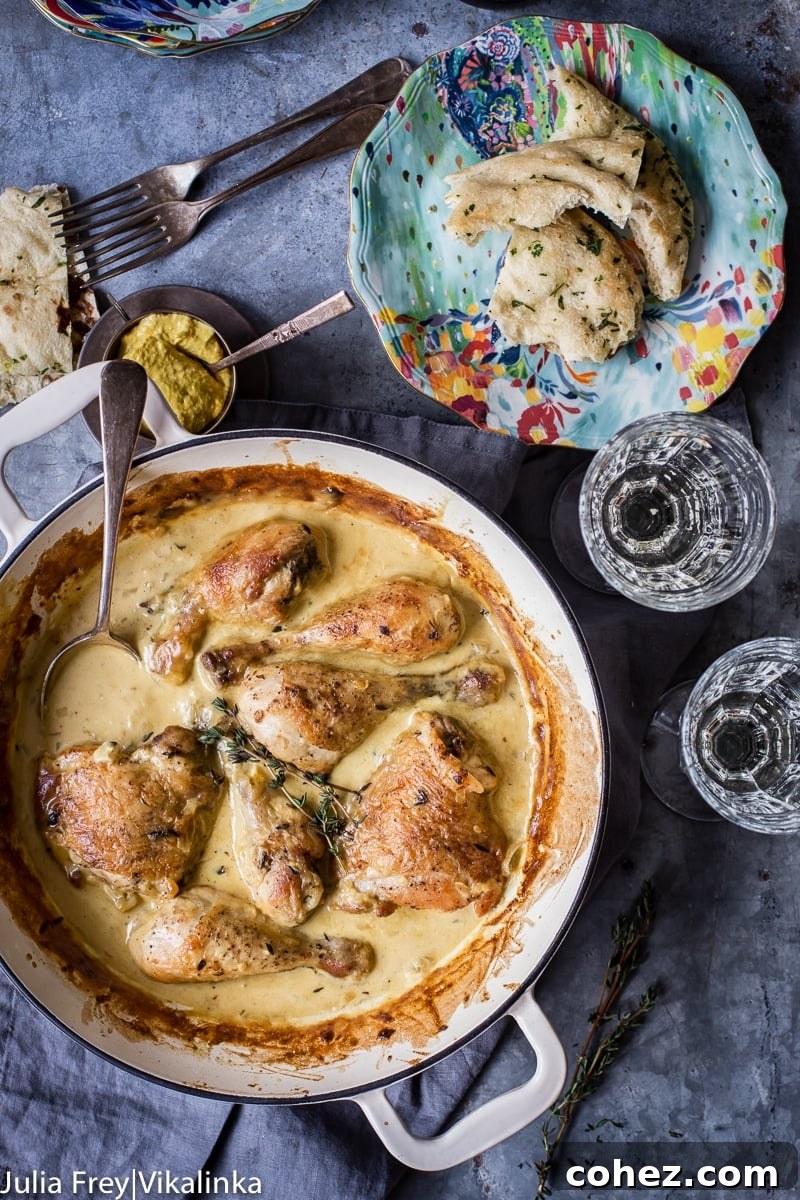
Choosing Your Chicken: Thighs, Legs, or Breasts?
In the majority of my savory recipes, I consistently lean towards using chicken thighs and legs, and for very compelling reasons. These cuts offer a winning combination of affordability, making gourmet cooking accessible, and, most importantly, superior flavor and texture. The higher fat content and bone-in structure of these cuts contribute significantly to a richer, more succulent, and deeply flavorful dish, especially when they are subjected to a slow braising process. The bones themselves release collagen, which enriches the sauce, adding body and depth that boneless cuts simply cannot achieve. My daughter, a discerning eater, wholeheartedly agrees with this preference, often requesting dishes made with these darker, more flavorful cuts.
However, I frequently find myself in a playful debate with my son and husband, who are staunch advocates of chicken breasts – a common preference, especially in Western cooking. This brings me to a frequent question I receive from readers: can chicken breasts be substituted in my recipes? The answer is generally yes, but it’s crucial to understand that cooking times will need careful adjustment, and the final texture will differ somewhat. Chicken breasts, being leaner and boneless, cook much faster and are inherently more prone to drying out if overcooked. They don’t offer the same depth of flavor that bone-in, skin-on thighs provide.
For optimal results when using chicken breasts in this **Chicken in Wine and Mustard Sauce** recipe, it is imperative to cook them carefully to ensure they remain tender and juicy, soaking up all the wonderful flavors of the Dijon mustard sauce without becoming tough or stringy. You’ll need to pay close attention to the clock and possibly use a meat thermometer to ensure they reach the safe internal temperature without exceeding it. For detailed guidance on adapting this recipe for chicken breasts, be sure to consult the specific tips and notes provided below. This will help you achieve a delicious outcome, regardless of your preferred chicken cut.
Essential Recipe Tips for Perfection
To ensure your **Chicken in Wine and Mustard Sauce** turns out perfectly every single time, achieving that coveted restaurant-quality finish, keep these invaluable tips and techniques in mind:
- Chicken Breast Adjustments: If you decide to opt for boneless and skinless chicken breasts instead of thighs and legs, it’s absolutely critical to significantly reduce the oven cooking time. A good rule of thumb is to cut the time by at least 20 minutes, possibly more, as breasts cook much faster. Overcooked chicken breasts will become dry and tough, losing their succulence. Monitor them closely to prevent this; they are done when they reach an internal temperature of 165°F (74°C).
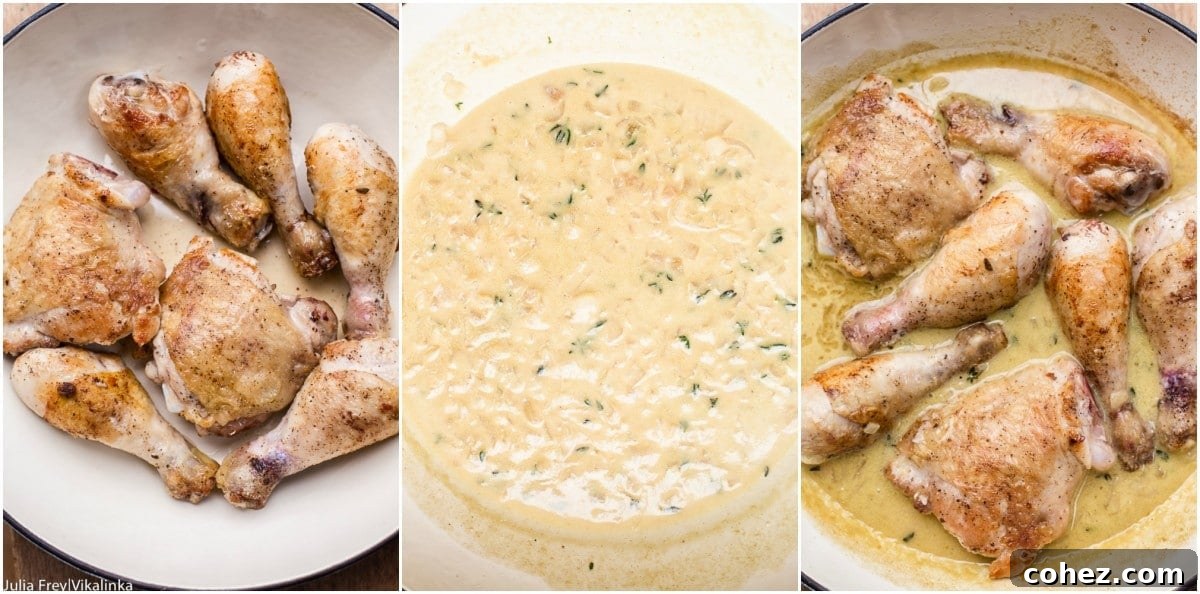
- The Art of Browning for Flavor: For chicken thighs and legs, the initial browning stage is non-negotiable and profoundly impacts the final flavor. You must sear the chicken pieces until they develop a deep, rich, golden-brown crust on all sides. This isn’t just for aesthetics; browning creates a caramelized exterior that is packed with flavor and forms a crucial layer of “fond” at the bottom of your pan. This fond, when deglazed, becomes the flavorful backbone of your sauce. A pale and soggy chicken skin is indeed one of the gravest culinary offenses, detracting significantly from both taste and textural enjoyment.
- Thickening the Sauce (Optional): Classic French sauces are generally renowned for their elegant, flowing consistency rather than being overly thick like a gravy. However, if your personal preference leans towards a more substantial, thicker sauce, you can easily achieve this. In step 3 of the recipe, just before you add the white wine, Dijon mustard, and chicken stock, simply stir in one tablespoon of all-purpose flour. Cook this flour with the shallots and garlic for about one minute, stirring constantly, to cook out its raw taste. Then, proceed with adding the liquids as instructed. This will create a slightly thicker, more opulent sauce without compromising its luxurious flavor.
- Don’t Skimp on Quality Ingredients: As passionately emphasized earlier, the quality of your Dijon mustard makes a world of difference in this dish. Similarly, choose a dry white wine that you would genuinely enjoy drinking, as its flavors will concentrate and become a prominent part of the sauce. Fresh, aromatic shallots and garlic also contribute significantly to building a robust and fragrant base for the sauce, providing an authentic French foundation.
- Fresh Thyme is Key: While dried thyme can be used in a pinch, fresh thyme sprigs infuse the sauce with a far more vibrant, authentic, and nuanced herbaceousness. Don’t be shy with it! The warmth of the braising process releases its beautiful aromatic oils, enhancing the overall sensory experience.
- Seasoning Throughout: It’s crucial to season your chicken thoroughly with salt and freshly ground black pepper before the browning stage. Additionally, always taste the sauce before adding the cream and adjust the seasoning as needed. Remember, building layers of seasoning throughout the cooking process is the secret to a truly complex and harmonious flavor profile.
- Gentle Simmering is Best: The braising process in the oven should be a gentle, consistent simmer, not a vigorous boil. This slow, controlled cooking allows the flavors to meld together beautifully and the chicken to become incredibly tender without toughening. The low and slow approach is key to developing that rich, deeply integrated flavor.
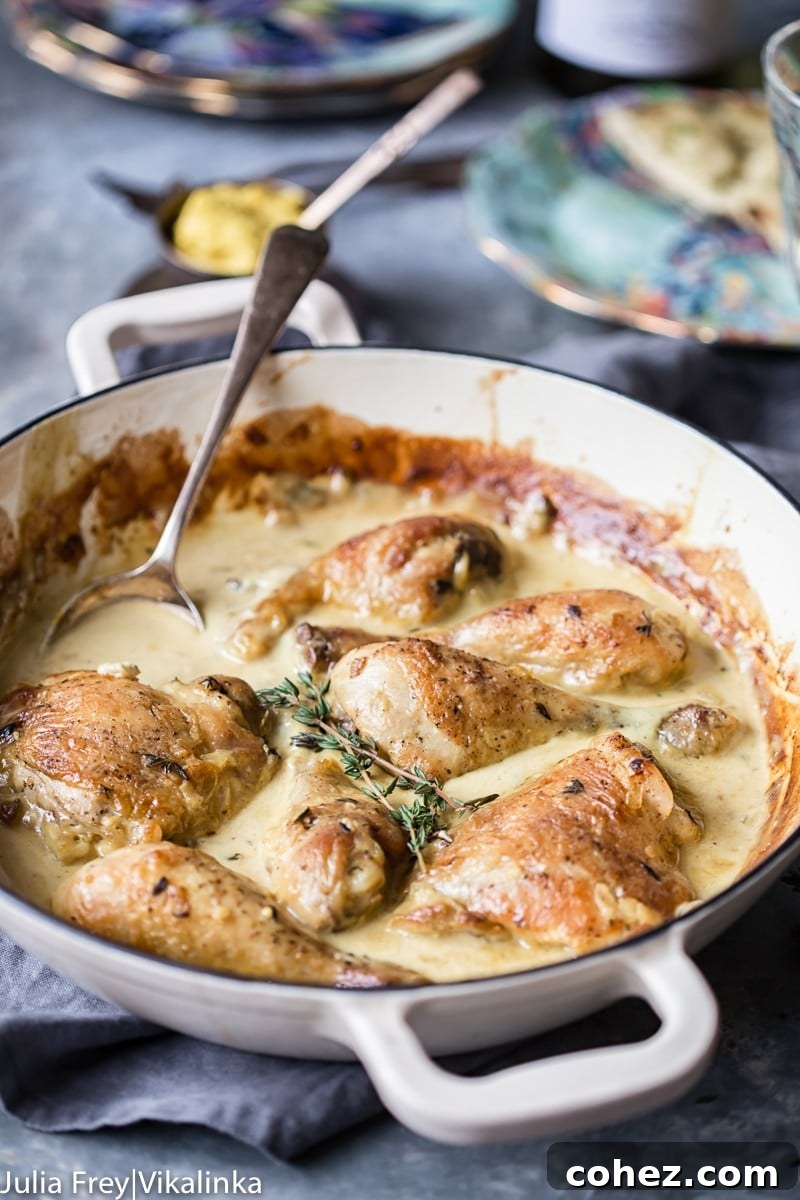
Perfect Accompaniments and Serving Suggestions
A dish as profoundly flavorful and satisfying as this **Chicken in Wine and Mustard Sauce** naturally demands equally delicious and thoughtful accompaniments to truly capture and complement its rich, aromatic sauce. The ultimate goal is to select side dishes that can wonderfully soak up every single drop of that incredible goodness, ensuring that no precious flavor goes to waste and enhancing the overall dining experience.
My absolute go-to choice for this exquisite dish is usually a hearty, rustic sourdough bread. Its delightfully chewy texture, combined with a subtle tangy flavor, makes it absolutely perfect for swiping up every last bit of the creamy, savory sauce. Alongside, a generous heap of fluffy garlic mashed potatoes provides an incredibly comforting and absorbent bed for the succulent chicken and its luscious sauce. The creamy potatoes beautifully complement the chicken, creating a harmonious and utterly satisfying combination. Alternatively, for those who appreciate a delightful textural contrast, crispy roast potatoes are also an excellent choice, offering wonderfully golden, crunchy exteriors and soft, tender interiors that stand up beautifully to the rich sauce.
To perfectly round out the meal and introduce a vital burst of freshness, I always make sure to include a tasty roasted vegetable. The inherent beauty of this dish lies in its remarkable versatility – almost any roasted vegetable will pair beautifully, adding color, nutrients, and another layer of flavor. Some of my personal favorites include tender Brussels sprouts and carrots, which offer a delightful sweet and earthy counterpoint to the savory chicken, or vibrant Tenderstem broccoli, lightly dressed with a zesty lemon-garlic vinaigrette for a touch of bright acidity. These thoughtfully chosen additions not only enhance the nutritional value of the meal but also complete the entire dining experience, making it truly satisfying, well-balanced, and memorably delicious. And for the ultimate indulgence, don’t forget to pour yourself a glass of the very same dry white wine you used for cooking to further enhance and celebrate the exquisite flavors of your meal!
Storage and Reheating for Delicious Leftovers
One of the many delightful joys of preparing this **Chicken in Wine and Mustard Sauce** is that, like many braised dishes, it often tastes even better the next day. The flavors have ample time to meld, deepen, and fully integrate, resulting in an even more complex and satisfying experience. Should you find yourself with leftovers – a rare occurrence, I assure you, given how delicious it is – they can be conveniently stored in the refrigerator. Simply transfer the cooled chicken and its accompanying sauce to an airtight container. Stored properly, they will keep beautifully for up to 5 days, making this an ideal dish for meal prepping or enjoying throughout a busy week.
When it comes to reheating, you have a couple of viable options. While a microwave will certainly work in a pinch for speed, I personally find that reheating on the stovetop yields far superior results. This method meticulously preserves the sauce’s smooth, creamy texture and ensures the chicken remains wonderfully tender and moist. To reheat in a pan, place the leftovers over medium-low heat. As the dish cools, the sauce might thicken slightly due to the reduction and the cream. If it appears too dense for your liking, simply add a splash of water, a little chicken stock, or even a touch more cream to achieve your desired consistency.
Crucially, ensure you cover the pan tightly with a lid or aluminum foil during the reheating process. This helps to create a steamy environment, which is essential for preventing the chicken from drying out as it gently warms. Allow it to heat slowly and gently for approximately 15 minutes, or until the chicken is heated through completely and the sauce is bubbling softly at the edges. This careful stovetop method ensures that your next serving is just as incredibly delicious, succulent, and aromatic as the first, transforming every leftover meal into a gourmet treat.
Explore More French Chicken Recipes
If you’ve thoroughly enjoyed the sophisticated and comforting flavors of our Chicken in Wine and Dijon Mustard Sauce, we warmly invite you to delve deeper into the rich and diverse tapestry of French cuisine. Here are more delightful chicken recipes that beautifully capture the essence of French culinary tradition, perfect for expanding your repertoire:
- Classic French Chicken Casserole
- Chicken Provençal
- Coq au Vin: The Ultimate One-Pot Dinner
- French Chicken Casserole à la Normande
- Chicken with 40 Cloves of Garlic
Recipe: Chicken in Wine and Mustard Sauce
Rating: 5 out of 5 stars (based on 22 votes)
By: Julia Frey of Vikalinka
Cook Time: 55 mins |
Total Time: 1 hr 5 mins
Ingredients
- 1 tbsp olive oil
- 1kg / 2 lbs chicken legs and thighs
- Salt and freshly ground black pepper, to taste
- 2 shallots, finely diced
- 2 garlic cloves, minced
- 3-4 sprigs fresh thyme
- 3 tbsp Dijon mustard
- 1/2 cup (125ml) dry white wine (e.g., Sauvignon Blanc, Pinot Grigio)
- 1 cup (250ml) chicken stock
- 1/2 cup (125ml) light cream / single cream (approx. 18% fat content)
Instructions
- Preheat your oven to 350°F (180°C).
- In a large, oven-safe frying pan or Dutch oven, heat one tablespoon of olive oil over medium-high heat. Season the chicken pieces (legs and thighs) generously with salt and pepper. Brown the chicken on all sides until deeply golden and crispy, but not cooked through. This usually takes about 5-7 minutes per side. Remove the browned chicken to a plate and set aside.
- Reduce the heat to low. To the same pan, add the diced shallots, minced garlic, and fresh thyme leaves. Cook gently for about 5 minutes, stirring occasionally, until the shallots are softened and translucent but without developing any color. Be careful not to burn the garlic.
- Pour in the white wine, Dijon mustard, and chicken stock. Stir well, making sure to scrape up any browned bits (fond) from the bottom of the pan; this adds immense flavor to your sauce. Bring the mixture to a gentle boil.
- Return the browned chicken pieces to the pan, nestling them into the sauce. Spoon some of the sauce over the chicken to ensure it’s well coated.
- Transfer the uncovered pan to the preheated oven and cook for 45 minutes. The chicken should become wonderfully tender and cooked through, and the sauce will have reduced slightly.
- Carefully remove the pan from the oven. Stir the light cream/single cream into the sauce until fully incorporated. Gently baste the chicken once more with the creamy sauce.
- Return the pan to the oven and continue to cook for an additional 10 minutes to allow the sauce to thicken slightly and the flavors to fully meld with the cream.
- Serve immediately with your chosen accompaniments, such as rice, creamy mashed potatoes, or roasted seasonal vegetables. Garnish with a fresh sprig of thyme for an elegant touch, if desired.
Recipe Notes
- Sauce Thickness: Classic French sauces are generally more fluid than thick gravies. If you prefer a thicker sauce, you can easily achieve this by whisking in 1 tablespoon of all-purpose flour with the shallots and garlic in step 3, cooking for 1 minute before adding the liquids (wine, mustard, stock).
- Wine Substitute: If you prefer not to use wine, substitute with 1/2 cup of unsweetened apple juice combined with 1 tablespoon of white wine vinegar. This mixture will provide a similar balance of fruitiness and acidity to the sauce.
- Chicken Breasts: If using boneless, skinless chicken breasts, adjust the oven cooking time to approximately 25-30 minutes total to prevent them from drying out. Monitor closely for doneness.
Nutrition Information (Approximate Per Serving)
Calories: 686kcal | Carbohydrates: 7g | Protein: 40g | Fat: 52g | Saturated Fat: 16g | Cholesterol: 258mg | Sodium: 405mg | Potassium: 640mg | Sugar: 2g | Vitamin A: 530IU | Vitamin C: 2.6mg | Calcium: 59mg | Iron: 2.2mg
Nutrition information is automatically calculated and should be used as an approximation only.