
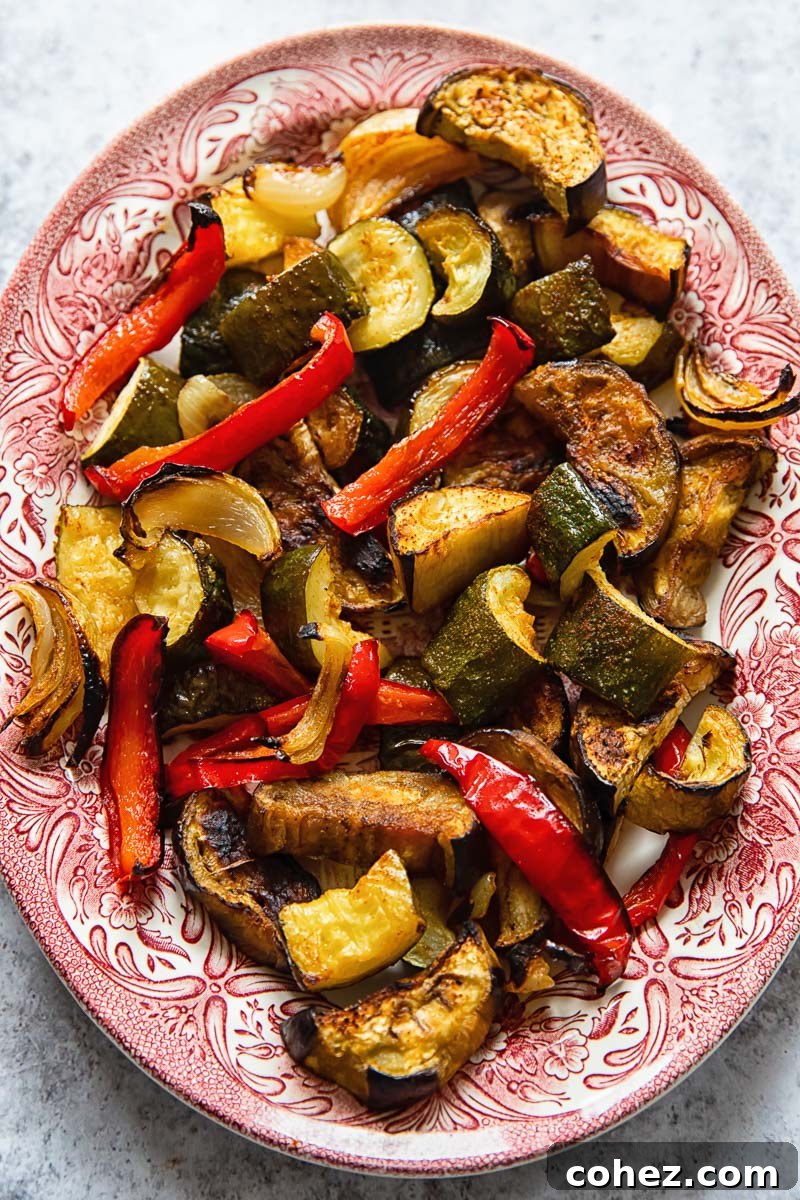
Unlock the full potential of your produce with oven-roasted vegetables! This simple yet transformative cooking method elevates humble greens and roots into an irresistibly sweet and savory sensation. With thoughtful seasoning, you’ll create a side dish worthy of any celebration.
This versatile recipe serves as the perfect foundation for many dishes, including my incredible Goat Cheese Sandwich with Roasted Vegetables!
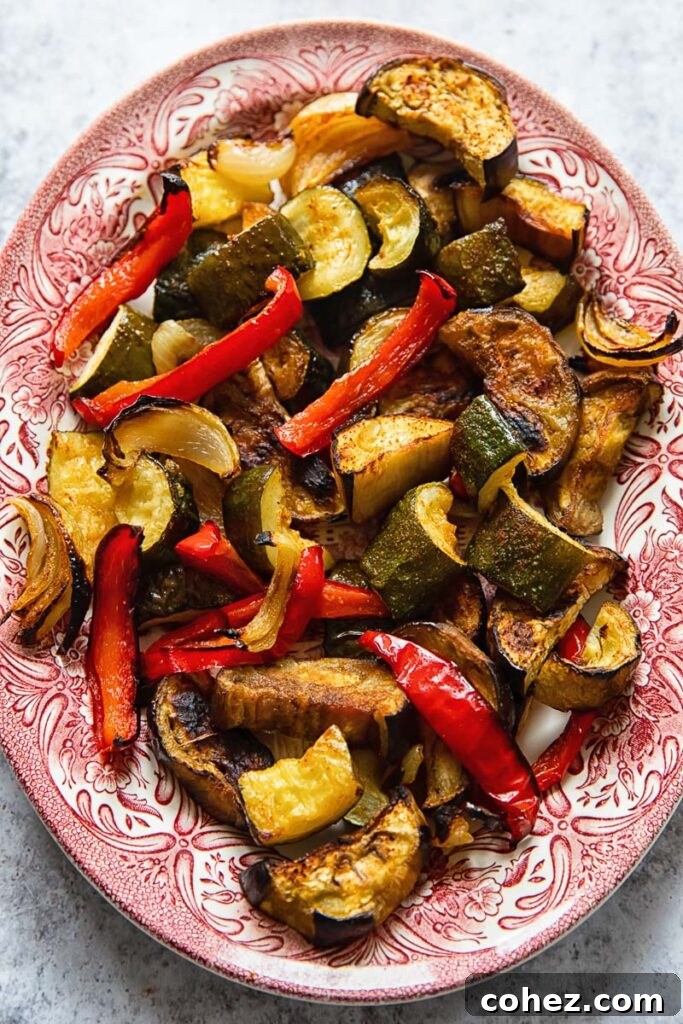
For many years, my experience with vegetables was limited to bland, steamed preparations, perhaps with a sprinkle of salt and a dab of margarine. It’s no wonder I once considered vegetables the most uninspiring part of any meal. This perception dramatically shifted the day I discovered the art of roasting. Roasting transforms vegetables from a mundane necessity into a deeply flavorful, moreish treat. It’s a culinary revelation that brings out an incredible depth of taste, making even the simplest vegetables truly shine. I’m thrilled to share one of my favorite approaches to this delightful cooking method with you today!
The Magic of Oven Roasting Vegetables
Oven roasting performs a spectacular transformation on even the most humble vegetable. This culinary magic happens primarily through two key processes: the evaporation of water and caramelization (the Maillard reaction). As vegetables roast at high temperatures, their internal moisture gradually escapes, concentrating their natural flavors. Simultaneously, the heat causes the sugars within the vegetables to caramelize, creating a beautiful golden-brown exterior and enhancing their inherent sweetness and savory notes. This process doesn’t just make flavors bigger and bolder; it brings out an extra layer of sweetness that was always present but often masked by other cooking methods.
Virtually any vegetable can benefit from roasting, but those that start with a higher sugar content—like carrots, onions, sweet potatoes, bell peppers, and squash—tend to develop the most profound and delightful flavors. The dry heat of the oven crisps the edges and tenderizes the interior, resulting in a texture that is both satisfying and incredibly appetizing. Beyond flavor, roasting can also help preserve the nutritional value of vegetables by cooking them quickly without excessive water, unlike boiling or steaming.
Choosing the Best Vegetables for Roasting
The beauty of roasted vegetables lies in the endless combinations you can create. A roasting pan can become a canvas for a million different vegetable mélanges, each promising a unique and delicious experience. While almost any vegetable will undergo a magical transformation in the oven, some combinations are simply exceptional. The secret often lies in how their individual flavors complement each other, and how well their textures align during the cooking process. My selected mix for this recipe offers a harmonious blend of savory, sweet, and subtly bitter notes, creating a truly mouthwatering combination that’s tough to beat.
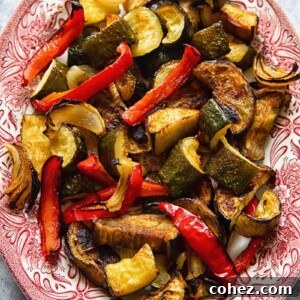
For optimal results, it’s wise to choose vegetables that have similar densities and therefore, similar cooking times. The selection used here—zucchini, eggplant, red pepper, and onion—are excellent choices because they tenderize at roughly the same rate when cut into appropriate sizes. This prevents some vegetables from becoming mushy while others are still undercooked. If you wish to incorporate harder vegetables like broccoli, cauliflower florets, Brussels sprouts, or chunks of potato or carrot, you’ll need to account for their longer cooking times. A common strategy is to add them to the pan 10-15 minutes before the softer vegetables, ensuring everything finishes cooking together beautifully.
Tips for Perfectly Roasted Vegetables
- **Uniform Cutting is Key:** For even cooking, ensure all your vegetables are cut into roughly the same size pieces. While eggplant can be slightly larger than zucchini due to its quicker cooking time, consistency is crucial. This prevents smaller pieces from burning while larger ones remain raw.
- **Don’t Overcrowd the Pan:** This is perhaps the most important rule for achieving perfectly caramelized vegetables. If the pan is too full, the vegetables will steam rather than roast, resulting in a soggy, pale outcome. Use two baking sheets if necessary, ensuring a single layer of vegetables with a bit of space between them for optimal air circulation and browning.
- **High Heat is Essential:** Roasting requires high temperatures to achieve that desirable crispy exterior and tender interior. A temperature between 400°F (200°C) and 425°F (220°C) is ideal for most vegetables.
- **Oil Generously, But Evenly:** Use enough olive oil (or your preferred high-smoke point oil like avocado oil) to coat the vegetables lightly but thoroughly. This helps with browning and prevents sticking. However, too much oil can make them greasy. Toss well to ensure an even distribution.
- **Seasoning Strategies:** Season with salt, pepper, and your chosen spices before roasting. Adding fresh herbs like parsley or cilantro is often best done after roasting to preserve their vibrant flavor and color.
- **Flip for Even Browning:** Halfway through the cooking time, give your vegetables a good toss or flip them with a spatula. This ensures all sides get exposed to the direct heat of the pan, leading to uniform caramelization and tenderness.
- **Parchment Paper for Easy Cleanup:** Lining your baking sheet with parchment paper is a simple trick for hassle-free cleanup. It also helps prevent sticking, especially with stickier vegetables like sweet potatoes or squash.
Variations and Flavor Profiles
The beauty of roasted vegetables lies in their versatility. They are truly a blank slate, ready to absorb and complement almost any flavor profile you desire. Don’t be afraid to experiment with your spice rack to create entirely new culinary experiences.
- **Mediterranean Magic:** A classic combination includes dried basil, oregano, thyme, and a hint of garlic powder. A squeeze of fresh lemon juice or a drizzle of balsamic glaze after roasting can further enhance these vibrant flavors.
- **Middle Eastern Enchantment:** For an exotic touch, try a blend of cumin, coriander, paprika, and a pinch of cinnamon or cloves. Serve these with a dollop of creamy hummus or a sprinkle of fresh mint.
- **Smoky & Spicy:** If you love a bit of heat, incorporate smoked paprika, chili powder, and a dash of cayenne pepper. A touch of chipotle powder can add a wonderful smoky depth.
- **Asian Inspired:** Ginger and garlic powder, a splash of soy sauce (or tamari for gluten-free) and a sprinkle of sesame seeds can transform your roasted veggies into an Asian-inspired delight.
- **Herbaceous Harmony:** Fresh herbs are a game-changer. Rosemary, thyme, and sage work wonderfully with root vegetables, while dill and parsley are excellent with lighter greens like asparagus or green beans. Add fresh herbs during the last 10 minutes of roasting or after they come out of the oven.
- **Garlic Lover’s Dream:** Simply roast with plenty of minced garlic or garlic powder. The garlic will soften and mellow, adding an incredible sweetness.
Remember, the vegetables themselves provide a robust base, allowing your chosen seasonings to truly sing. Feel free to mix and match your favorite spices to tailor this dish to your palate or to complement the main course you’re serving.
Serving Suggestions for Roasted Vegetables
The versatility of roasted vegetables knows no bounds! I’m personally a huge fan of serving them as a hearty side dish or even as a light, satisfying lunch all on their own – no other accompaniments required. Their rich flavors and tender texture make them incredibly fulfilling. However, if you’re looking to get more creative, here are a few other fantastic ways to incorporate this delicious dish into your meals:
- **Elevated Side Dish:** Pair them with grilled chicken, baked fish, roasted pork, or a juicy steak for a complete and balanced meal.
- **Mixed into Grains:** Stir them into fluffy couscous, quinoa, or rice for a flavorful and healthy grain bowl.
- **Sandwich & Wrap Fillers:** Layer them into sandwiches, wraps, or pita pockets with a smear of hummus or a dollop of goat cheese for a satisfying vegetarian option.
- **Pasta & Risotto Enhancers:** Fold them into your favorite pasta dishes or creamy risottos to add depth, texture, and a burst of vegetable goodness.
- **Savoury Galettes & Tarts:** Arrange them atop a savory galette or tart crust with some cheese for an impressive main course or appetizer.
- **Vibrant Salads:** Toss roasted vegetables with fresh greens, a light vinaigrette, and perhaps some feta cheese or nuts for a warm and hearty salad.
- **Breakfast & Brunch:** Serve them alongside scrambled eggs, omelets, or as part of a breakfast burrito for a nutritious start to your day.
- **Pizza Topping:** Use them as a delicious and healthy topping for homemade pizzas.
Storage and Leftovers
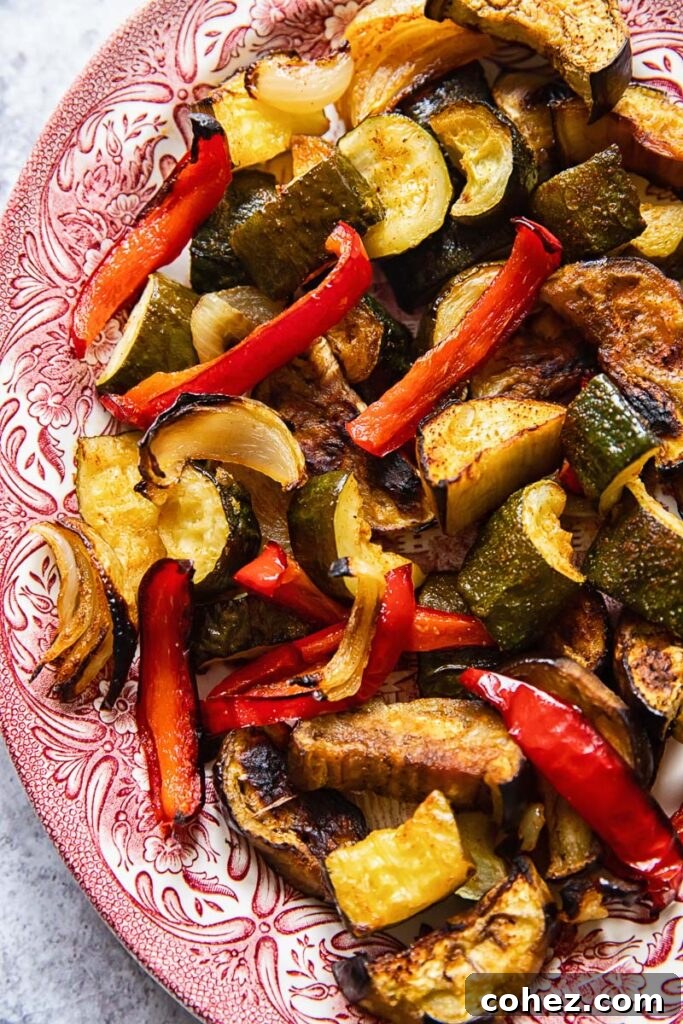
While freshly roasted vegetables, warm from the oven, are undoubtedly a delight, don’t underestimate their appeal the next day! Many people find that roasted vegetables are even better as leftovers, as the flavors have had additional time to meld and deepen, becoming more intense and harmonious. This makes them an excellent candidate for meal prepping.
To store your cooked vegetables, allow them to cool completely to room temperature first. Then, transfer them to an airtight container. They will keep well in the refrigerator for up to 3-4 days. This makes them perfect for quick additions to salads, sandwiches, or grain bowls throughout the week.
If you decide to reheat them, you have a few good options:
- **Microwave:** For convenience, the microwave is the simplest choice. Heat in short bursts, stirring occasionally, until warmed through. Be aware that this method might slightly soften their texture.
- **Air Fryer:** An air fryer is a fantastic option for reheating, as it can help restore some of that desirable crispiness. Reheat at around 350°F (175°C) for 5-7 minutes, shaking the basket halfway, until heated through and slightly re-crisped.
- **Oven:** For the best texture, especially if you have a larger batch, reheat them in the oven. Spread the vegetables on a baking sheet and heat at 375°F (190°C) for 10-15 minutes, or until hot and slightly re-crisped.
Avoid over-reheating, as this can dry out or overcook the vegetables.
More Delicious Vegetable Side Dishes
- Miso Roasted Carrots
- Roasted Tenderstem Broccoli with Lemon Garlic Vinaigrette
- Lemon Butter Green Beans
- Braised Red Cabbage
Oven Roasted Vegetables
By Julia Frey of Vikalinka
Cook: 40 mins
Total: 50 mins
Servings: 6
Print Recipe
Tender roasted vegetables with light spicing, perfect as a side or main.
Ingredients
- 2 zucchini/courgettes
- 2 eggplants/aubergine
- 1 red pepper
- 1 onion
- ½ tsp salt
- ½ tsp paprika
- ½ tsp garlic powder
- 2 tbsp olive oil
Instructions
- Preheat the oven to 200°C / 400°F. Cut the top off the eggplant and peel in stripes, removing approximately half of the skin (this helps oil to penetrate easier). Slice the eggplants and zucchini into 1 inch / 2.5 cm slices, then cut each slice in half. Cut the onion into wedges and red pepper into strips.
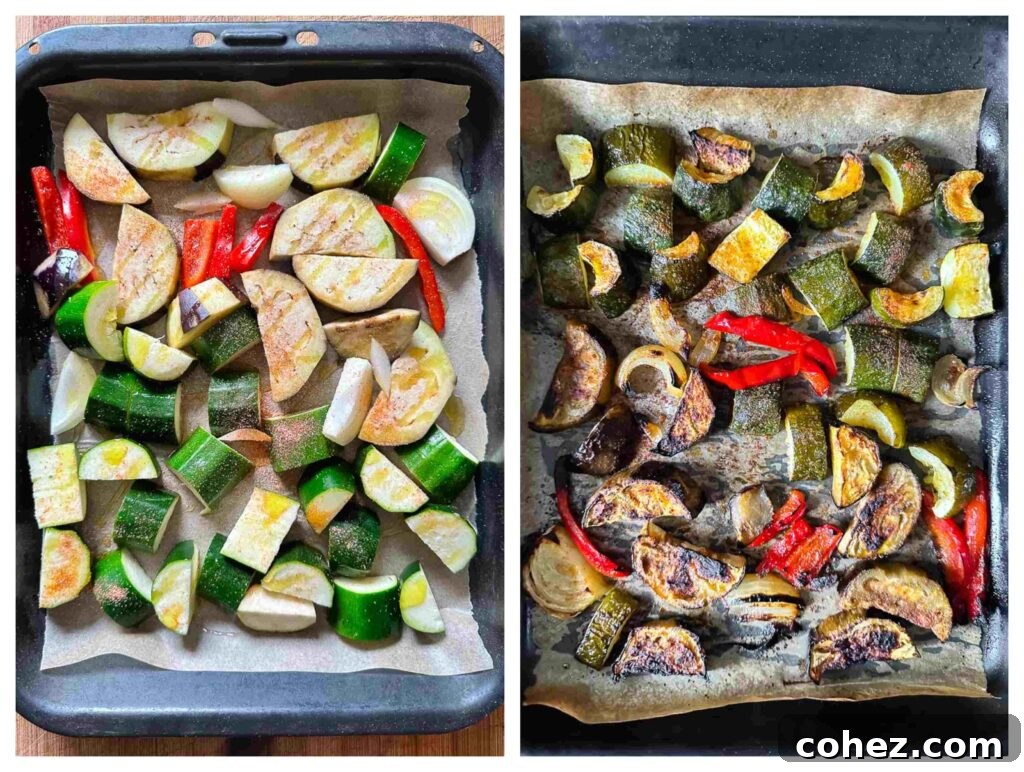
- Spread all the vegetables on a roasting pan and sprinkle with olive oil all over, then season with the salt, paprika, and garlic powder. Toss the vegetables to coat evenly. Ensure vegetables are in a single layer without overcrowding the pan.
- Roast in the preheated oven for 40 minutes, flipping them halfway through to ensure even browning and caramelization.
Nutrition Information (per serving)
Calories: 104kcal | Carbohydrates: 14g | Protein: 3g | Fat: 5g | Saturated Fat: 1g | Polyunsaturated Fat: 1g | Monounsaturated Fat: 3g | Sodium: 204mg | Potassium: 596mg | Fiber: 6g | Sugar: 9g | Vitamin A: 869IU | Vitamin C: 42mg | Calcium: 31mg | Iron: 1mg
Nutrition information is automatically calculated and should only be used as an approximation.
Frequently Asked Questions About Roasting Vegetables
- Can I use frozen vegetables for roasting?
- Yes, you can roast frozen vegetables! The key is to ensure they are spread in a single layer and not overcrowded, allowing moisture to evaporate. They might take slightly longer and might not achieve the same crispiness as fresh vegetables, but they will still be delicious. Do not thaw them before roasting; roast them directly from frozen.
- How do I prevent my roasted vegetables from getting soggy?
- Several factors prevent sogginess:
- **High Heat:** Ensure your oven is fully preheated to a high temperature (400-425°F or 200-220°C).
- **Don’t Overcrowd:** Give vegetables space on the baking sheet so moisture can escape, and they can brown properly. Use multiple sheets if necessary.
- **Dry Vegetables:** Pat any high-water content vegetables (like zucchini or mushrooms) dry before tossing with oil and spices.
- **Right Amount of Oil:** Use enough oil to coat, but not too much, as excess oil can lead to steaming.
- What’s the best temperature for roasting vegetables?
- For most vegetables, 400°F (200°C) to 425°F (220°C) is ideal. This high heat encourages caramelization and tenderizes the vegetables without making them mushy. Lower temperatures might steam them, while excessively high temperatures could burn the exteriors before the interiors are cooked.
- How long do different vegetables take to roast?
- Cooking times vary depending on the vegetable and how it’s cut. Generally:
- **Root Vegetables (potatoes, carrots, sweet potatoes):** 30-45 minutes
- **Cruciferous (broccoli, cauliflower, Brussels sprouts):** 20-30 minutes
- **Softer Vegetables (zucchini, bell peppers, onions, asparagus):** 15-25 minutes
Always check for fork-tenderness and desired browning. If combining different types, add harder vegetables first and softer ones later.
- Can I mix different types of vegetables on one pan?
- Absolutely! It’s encouraged. Just be mindful of their cooking times. Cut denser vegetables (like potatoes) into smaller pieces than softer ones (like bell peppers) to help them cook evenly. Alternatively, add longer-cooking vegetables to the pan first, then introduce quicker-cooking ones halfway through.
Embracing oven-roasted vegetables is a simple yet profoundly rewarding culinary journey. From transforming childhood perceptions of bland greens to creating a versatile, flavor-packed side dish, this method offers endless possibilities for delicious, healthy eating. With these tips and a little creativity, you’re ready to unlock the vibrant flavors and appealing textures that only roasting can provide. Enjoy the magic!